
My basket0 items
Best portrait lenses for the Nikon Z8 in 2026

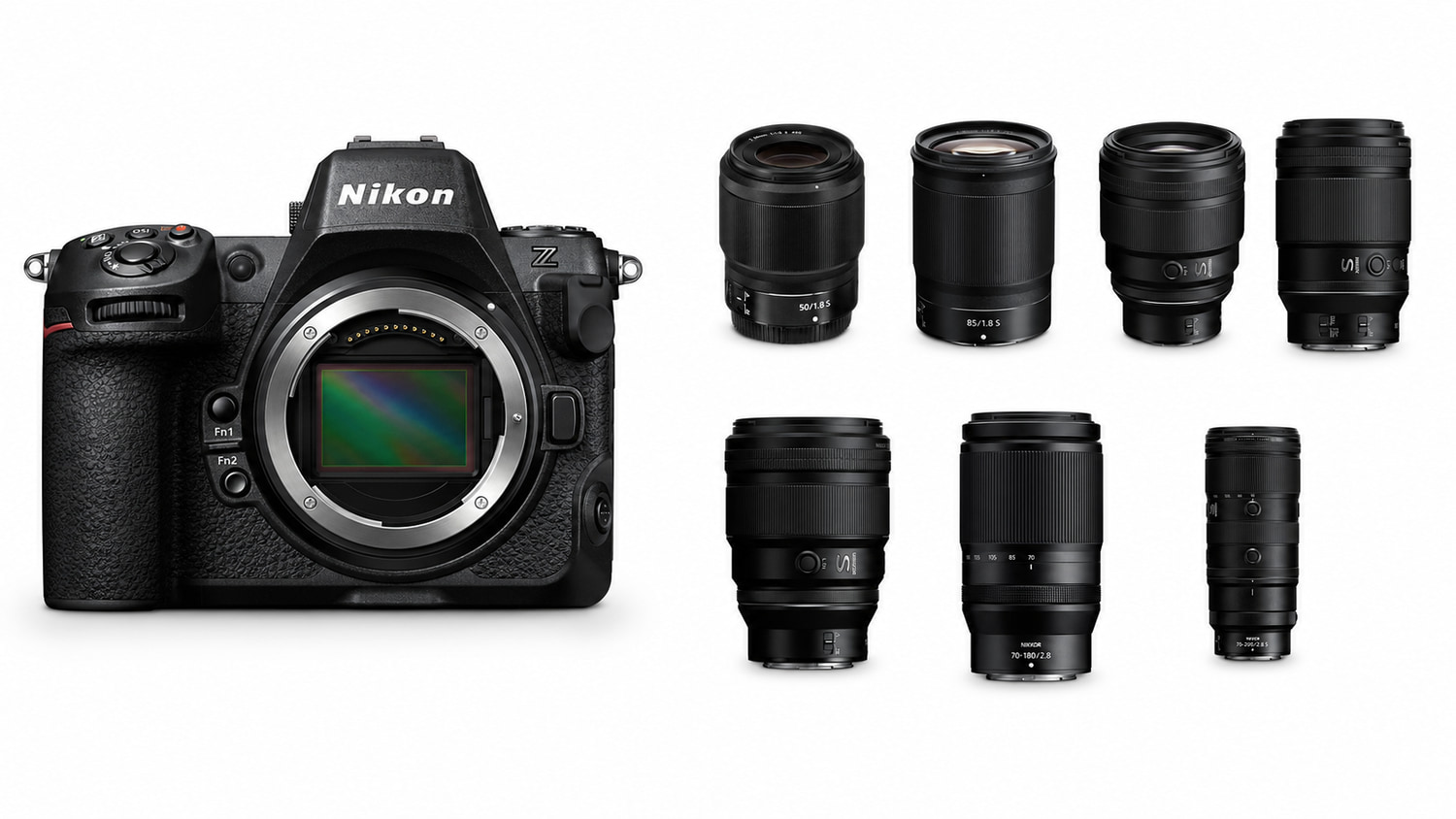
The most useful portrait lens is not necessarily the one that produces the strongest background blur. It is the lens that lets you work at a comfortable distance, keep a natural conversation going and frame the person without running out of room. That matters on the Nikon Z8, where seven excellent lenses can suit seven quite different ways of photographing people.
For most Z8 owners, the best place to start is the NIKKOR Z 85mm f/1.8 S. It gives the subject personal space, makes a distracting background easier to control and does not turn the Z8 into an unnecessarily heavy kit. A 50mm lens is still the better answer in a small home, while an event photographer may need the flexibility of a zoom. This guide explains those differences in practical terms.
The best Nikon Z8 portrait lenses at a glance
| Main use | Recommended lens | What it helps you do | Important limit |
|---|---|---|---|
| First dedicated portrait lens | NIKKOR Z 85mm f/1.8 S | Comfortable working distance, soft backgrounds and manageable weight. | Can feel too tight in a small room. |
| Family, travel and environmental portraits | NIKKOR Z 50mm f/1.8 S | Includes more of the setting and needs less room. | Close headshots require care with camera position. |
| Low-light, carefully directed portraits | NIKKOR Z 85mm f/1.2 S | The f/1.2 aperture admits plenty of light and can produce very shallow focus. | It is heavy and unforgiving at its widest aperture. |
| Beauty, jewellery and close detail | NIKKOR Z MC 105mm f/2.8 VR S | Moves from a portrait to true 1:1 macro detail. | Needs more working distance than an 85mm lens. |
| Fashion and outdoor portraits | NIKKOR Z 135mm f/1.8 S Plena | Selects a narrow part of the background and separates the subject strongly. | Needs a great deal of space and makes a heavy kit. |
| Weddings with lower kit weight | NIKKOR Z 70-180mm f/2.8 | Changes framing quickly without forcing you to move. | There is no optical VR in the lens. |
| Professional events and ceremonies | NIKKOR Z 70-200mm f/2.8 VR S II | Combines the full 70–200mm range, constant f/2.8 and optical VR. | Larger than a prime or the 70–180mm. |
Before choosing: start with the portraits you actually make
The Nikon Z8 has a 45.7-megapixel full-frame sensor. Full frame means that the sensor is close in size to a frame of 35mm film. Its high resolution can preserve fine detail and gives you some room for a modest crop. It can also reveal small focusing errors and camera movement. A high-specification body does not remove the need for a sensible shutter speed or a stable shooting position.
Think about your available space first. A 50mm lens can cover a parent and child on a sofa without sending you into the next room. An 85mm lens shows a tighter view from the same position, so you need to step back for the same composition. A 135mm lens needs considerably more room and makes most sense outdoors or in a deep studio.
Then consider the complete carrying weight. The Z8 weighs approximately 910g with battery and memory card. Add a lens close to one kilogram and you will feel the difference during a long wedding or a day on foot. A heavy lens can be entirely reasonable for a controlled session. It is less useful if it stays at home because you do not want to carry it.
Finally, do not buy an aperture number on its own. The aperture is the adjustable opening that admits light. A small number such as f/1.2 describes a large opening. It helps in dim light and can soften the background, but it also reduces depth of field: the area that appears acceptably sharp around the point of focus. With a moving child or two people standing at slightly different distances, f/2.8 may give you far more successful photographs than f/1.2.
For a first portrait lens
NIKKOR Z 85mm f/1.8 S: the best balance for most photographers
The 85mm f/1.8 S lets you photograph a head-and-shoulders portrait without standing uncomfortably close. That extra personal space often makes the conversation and expression feel more relaxed. It also narrows the part of the background included in the frame, so it is easier to avoid a sign, bright window or other distraction.

View the lens:NIKKOR Z 85mm f/1.8 S
Available as a kit:Nikon Z8 + Z 85mm f/1.8 S
Its f/1.8 maximum aperture is useful indoors and can make the background pleasantly soft when the person is separated from it. At roughly 470g, the lens still creates a substantial kit with the Z8, but it is much easier to hold throughout a session than the 85mm f/1.2 S or the 135mm Plena.
Consider a business portrait in an office. Place the person a few metres in front of the wall, step back for a half-length composition and work around f/2 to f/2.8. The face remains the clear subject, while enough of the room survives to give context. You do not need to use the widest aperture simply because it is available.
The limitation is working room. A full-length portrait may be difficult in a small flat. In that situation, the 50mm f/1.8 S is the more useful alternative. When there is enough space, the 85mm f/1.8 S is our clearest recommendation for a first dedicated portrait lens on the Z8.
NIKKOR Z 50mm f/1.8 S: when the setting belongs in the portrait
The 50mm f/1.8 S is a better fit when the location helps to tell the story. It works for a family at home, a craftsperson in a workshop or a traveller in a city street. The wider view also makes it easier to work in a bedroom, café or other confined space.

View the lens:NIKKOR Z 50mm f/1.8 S
Focal length describes the angle of view. From the same position, 50mm includes more of the scene than 85mm. You can therefore remain fairly close and still show some surroundings. The f/1.8 aperture helps in available light and can soften the setting without removing it completely.
Imagine photographing a child baking with a grandparent. The hands, kitchen and ingredients matter as much as the faces. A 50mm lens lets you keep those details. If you move very close for a headshot, however, the camera position can make the nose appear more prominent relative to the ears. Step back and keep the composition wider, or switch to 85mm for a tight face.
This is our preferred option for family, travel and environmental portraits. It cannot hide a cluttered background as easily as a longer lens, so you need to pay attention to the edges of the frame. That is not a weakness when the surroundings are part of the photograph; it is simply a different way of telling the story.
For very shallow focus and a directed session
NIKKOR Z 85mm f/1.2 S: a specialist tool, not an automatic upgrade
The 85mm f/1.2 S is for photographers who regularly work in low light or deliberately want a very narrow plane of focus. Used wide open, it can hold attention on the eye while allowing nearby detail to fall gently out of focus. That can suit beauty, fashion and carefully directed indoor portraits.

View the lens:NIKKOR Z 85mm f/1.2 S
Available as a kit:Nikon Z8 + Z 85mm f/1.2 S
Its f/1.2 aperture admits more light than f/1.8, but the sharp zone becomes thinner. On a three-quarter face, the farther eye may already look softer. The Z8 eye-detection system helps to place focus; it cannot stop the subject moving slightly after focus has been acquired.
During a calm session, you can ask the model to hold position and check the chosen eye before taking a short sequence at f/1.2. With a couple or an energetic child, f/1.8 or f/2.2 is often the honest choice. You retain the lens’s general rendering while giving yourself more margin.
Weight is the other reality. At approximately 1.16kg, the lens takes the Z8 kit beyond two kilograms. The 85mm f/1.8 S is more sensible for hours of walking or general portrait work. Choose the f/1.2 version because you know when you need its aperture, not because the smaller number looks better on a specification sheet.
NIKKOR Z 135mm f/1.8 S Plena: strong separation when space is available
The Plena creates a different kind of portrait. Its 135mm focal length includes a narrow section of the scene, which helps isolate a person against a distant background. It suits fashion, outdoor portraits, stage work and large studios where the photographer has room to step back.

View the lens:NIKKOR Z 135mm f/1.8 S Plena
The f/1.8 aperture and eleven-blade diaphragm are designed to keep out-of-focus areas smooth. The diaphragm is the set of blades that forms the aperture. It can affect the shape of unfocused highlights, but a good background still matters. Distant foliage or city lights will usually look more interesting than a wall immediately behind the subject.
In a park, you can frame a half-length portrait from several metres away and choose a small, clean section of the trees behind. The subject stands out without needing a studio backdrop. Some people also relax when the camera is not close to their face, although you still need to keep communication clear.
The trade-off is distance and weight. A full-length portrait at 135mm needs substantial room, and the lens weighs about 995g. The 85mm f/1.8 S is more versatile in everyday locations. The Plena is the stronger choice when its longer working distance and particular rendering are central to the job.
For beauty, jewellery and fine detail
NIKKOR Z MC 105mm f/2.8 VR S: portraits and true macro in one lens
The 105mm Macro becomes valuable when a session includes more than faces. It can photograph a portrait and then move in for make-up, a wedding ring, fabric or a small product without a lens change. That combination often matters more to beauty, wedding and craft photographers than an extremely wide aperture.

View the lens:NIKKOR Z MC 105mm f/2.8 VR S
Available as a kit:Nikon Z8 + Z MC 105mm f/2.8 VR S Macro
1:1 macro means that a small subject can be recorded at life size on the sensor at the lens’s closest focusing setting. The minimum focusing distance is 29cm. Optical VR reduces some movement from the photographer, but close-up work remains sensitive: a small movement forwards or backwards can shift focus away from an eyelash or stone.
At a wedding preparation, you could make a window-lit portrait and then photograph the ring and dress detail with the same lens. Its f/2.8 aperture gives a little more depth of field than an 85mm used at f/1.2, while 105mm and a distant background can still produce gentle separation.
It needs more room than 85mm and its focusing system has a long macro range to cover. A child running through a garden is better served by an 85mm lens or zoom. For beauty, close details and portraits within the same assignment, the 105mm is the most convincing option here.
For weddings and events
NIKKOR Z 70-180mm f/2.8: the zoom that is easier to carry all day
A wedding rarely lets the photographer choose the ideal distance. At 70mm, the 70–180mm can cover a couple or a small group. At 180mm, it can isolate an expression from the other side of the room. The ability to change framing without swapping lenses is its main benefit.

View the lens:NIKKOR Z 70-180mm f/2.8
The maximum aperture remains f/2.8 throughout the zoom range. A constant aperture means that the maximum value does not become smaller as you zoom in, so your exposure settings remain easier to manage. At approximately 795g, this lens is also relatively light for a bright telephoto zoom.
During a processional, you can start with a wider view and tighten the composition as the couple approaches. You stay out of the guests’ way and do not interrupt the moment. At the long end, f/2.8 can already give a soft background when there is enough distance behind the people.
The lens does not contain optical VR. The Z8 stabilises its sensor, but that only helps with your own movement. It cannot freeze a person walking. You still need a shutter speed suitable for the subject. Choose the 70–180mm when lower carrying weight matters more than the final 20mm and optical VR of the 70–200mm.
NIKKOR Z 70-200mm f/2.8 VR S II: the complete professional event zoom
The 70–200mm f/2.8 VR S II is designed for a photographer who cannot control the pace or position of the action. It moves quickly from a medium view to a tight portrait and reaches 200mm when you must remain at the back of a ceremony, theatre or sports venue.

View the lens:NIKKOR Z 70-200mm f/2.8 VR S II
The second-generation lens weighs approximately 998g without its tripod collar. Nikon rates its optical VR at up to six stops under specified test conditions. VR, or vibration reduction, compensates for some camera movement. It may allow a slower shutter speed with a still subject. It does not stop a dancer, child or walking couple.
At a ceremony, you can photograph an exchanged glance at 200mm and return to 70mm for a wider part of the scene without changing position. The f/2.8 aperture remains available throughout the range. It will not give the same shallow focus as an 85mm f/1.2 used wide open, but the long focal length and a distant background can still separate people very effectively.
This is our choice for professionals who need the full 70–200mm range and optical stabilisation. The 70–180mm remains more comfortable when lower weight is the priority. For a controlled portrait session where you can move freely, the 85mm f/1.8 S is simpler and less conspicuous.
Verdict: which portrait lens should you buy for the Nikon Z8?
For a first lens devoted to portraits, choose the NIKKOR Z 85mm f/1.8 S. It offers the most useful balance of working distance, low-light ability, background control and weight. It suits headshots, half-length portraits, couples and business portraits whenever you have enough room to step back.
The 50mm f/1.8 S is the better answer for family life, travel and small interiors. The MC 105mm f/2.8 VR S is the strongest option when make-up, jewellery and other close details are also part of the assignment. The 85mm f/1.2 S and 135mm Plena are specialist choices that justify their extra weight only when their aperture or working distance serves a clear purpose.
For weddings and live events, the choice is between comfort and coverage. The 70–180mm f/2.8 is easier to carry over a long day. The 70–200mm f/2.8 VR S II adds the complete range and optical VR. Both earn their place by helping you catch a moment when moving closer is not possible.
Before buying, check the room you normally have, the total weight you genuinely want to carry and the type of portrait you make most often. You can then compare the exact models in the Nikon Z lens category. A lens will not create a connection with the person for you, but the right one will give you the space to concentrate on that connection.
Frequently asked questions about Nikon Z8 portrait lenses
What is the best portrait lens for the Nikon Z8?
The NIKKOR Z 85mm f/1.8 S is the best balance for most photographers. It provides a comfortable distance, a soft background and a much more manageable kit than the 85mm f/1.2 S. In a small room or for portraits that include the setting, the 50mm f/1.8 S is often more useful.
Should I choose a 50mm or 85mm portrait lens for the Z8?
Choose 50mm for family, travel, environmental portraits and small rooms. Choose 85mm for headshots and half-length portraits when there is room to step back. The 85mm makes it easier to simplify the background and gives the person more personal space. Measure your usual working distance before buying.
Is the NIKKOR Z 85mm f/1.2 S better than the 85mm f/1.8 S?
Not for everyone. The f/1.2 lens admits more light and can create a very narrow sharp zone, but it is much larger and more demanding at its widest aperture. The 85mm f/1.8 S is lighter, already bright and easier for long sessions, moving children and everyday portraits.
Is 85mm or 105mm better for a face?
85mm is more versatile for general portrait work and needs less distance. The NIKKOR Z MC 105mm f/2.8 VR S is more useful for beauty, jewellery and close detail because it offers true 1:1 macro focus. It also asks for a little more working room.
Is a prime lens better than a zoom for portraits?
A 50mm or 85mm prime is usually lighter and brighter. A 70–180mm or 70–200mm zoom changes framing quickly when you cannot move. A prime suits a directed session; a zoom is often more practical for weddings, performances and events. Neither type is automatically better.
Is Nikon Z8 stabilisation enough with a telephoto lens?
The Z8 sensor stabilisation reduces some photographer movement. It does not freeze a person walking or turning. The 70–200mm f/2.8 VR S II adds optical VR, while the 70–180mm f/2.8 does not. In both cases, use a shutter speed that is fast enough for the subject.
Which Nikon Z lens should I use for weddings on the Z8?
The 70–180mm f/2.8 is easier over a long day when lower weight matters. The NIKKOR Z 70-200mm f/2.8 VR S II adds the full 200mm reach and optical VR. A bright 50mm or 85mm remains useful in tight, dark rooms and for a less conspicuous approach.
Should portraits always be photographed wide open?
No. A wide aperture softens the background but reduces depth of field. For two people, a three-quarter face or a moving subject, f/2.2, f/2.8 or f/4 can produce more successful frames. Background blur also depends on focal length and the distance between the person and the setting.
Sources and editorial verification
Sources reviewed and checks completed before publication.
Documentary MCZ DIRECT guide checked on 6 August 2026 against official Nikon specifications and the public MCZDIRECT catalogue. MCZDIRECT does not claim independent hands-on or laboratory comparison of every lens. Recommendations connect published characteristics with working distance, kit weight, practical use and stated limits. Availability may change after this check.
- Nikon official specifications — Nikon Z8
- Nikon official specifications — NIKKOR Z 50mm f/1.8 S
- Nikon official specifications — NIKKOR Z 85mm f/1.8 S
- Nikon Magazine — 5 things to try with the NIKKOR Z 85mm f/1.8 S
- Nikon official specifications — NIKKOR Z 85mm f/1.2 S
- Nikon official specifications — NIKKOR Z MC 105mm f/2.8 VR S
- Nikon official specifications — NIKKOR Z 135mm f/1.8 S Plena
- Nikon official specifications — NIKKOR Z 70-180mm f/2.8
- Nikon official specifications — NIKKOR Z 70-200mm f/2.8 VR S II
Leave a comment