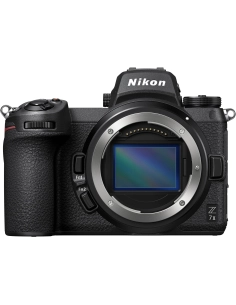
Nikon Z 7II
Available Nikon Z7 II configurations
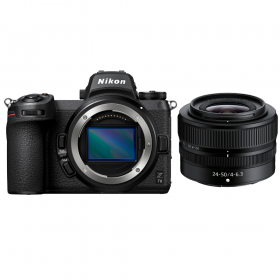
Nikon Z7 II + Z 24-50mm f/4-6.3
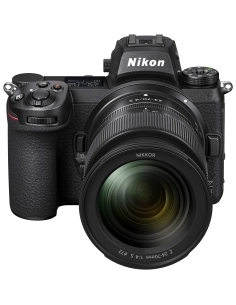
Nikon Z7 II noir + Z 24-70mm f/4 S
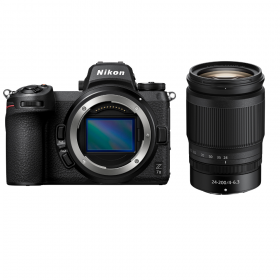
Nikon Z7 II + Z 24-200mm f/4-6.3 VR
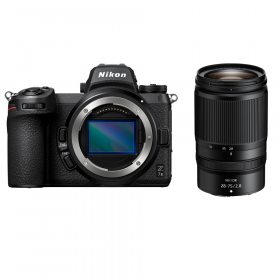
Nikon Z7 II + Z 28-75mm f/2.8
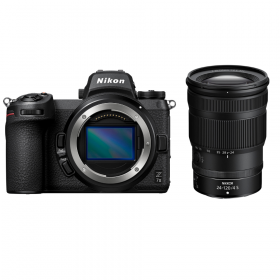
Nikon Z7 II + Z 24-120mm f/4 S
Nikon Z7 II + Z 24-70mm f/2.8 S
Nikon Z7 II FAQ
Who is the Nikon Z7 II for?
The Nikon Z7 II suits photographers who prioritise high-resolution stills for landscape, studio, portrait or reportage work. Its 45.7MP FX sensor favours detail, while the right kit depends on focal range, working weight and budget.
Should I choose the Nikon Z7 II body only or a lens kit?
Choose body only if you already own compatible Nikon Z lenses or want to select every focal length separately. A kit pairs the Z7 II with a specific lens. Compare the exact contents, current price and availability on each product page.
Which Nikon Z7 II kit is the most compact for travel?
The NIKKOR Z 24-50mm f/4-6.3 kit is the most compact option among the active configurations in this category. Its range is shorter and its maximum aperture varies, so check that both suit your framing and available light.
What is the difference between the 24-120mm and 24-200mm kits?
The 24-120mm f/4 S provides a constant f/4 aperture and S-Line construction. The 24-200mm f/4-6.3 VR extends telephoto reach with a variable maximum aperture. Choose according to light, framing, weight and preferred number of lens changes.
What is the difference between the 24-70mm f/4 S and 24-70mm f/2.8 S?
Both zooms cover the same range, but the 24-70mm f/2.8 S gains one stop throughout that range at the cost of more weight and a higher price. The 24-70mm f/4 S prioritises a more compact package while retaining a constant aperture.
Does the 28-75mm f/2.8 kit suit portraits and events?
Yes. Its standard range and constant f/2.8 aperture suit portraits, reportage and many event assignments. It starts at 28mm rather than 24mm, so compare available working distance, required framing and the need for a wider angle.
What is the difference between the Nikon Z7 II and Nikon Z8?
Both cameras provide 45.7 MP, but the Z8 uses a stacked FX sensor and EXPEED 7 processing for faster shooting and more advanced video. The Z7 II is lighter and remains focused on high-resolution stills at a different budget level.
What is the difference between the Nikon Z7 II and Nikon Z6 III?
The Z7 II prioritises resolution with 45.7 MP. The Z6 III uses a 24.5MP partially stacked FX sensor, EXPEED 7 processing and newer speed and video functions. Choose according to the need for fine detail, action or video production.
How many megapixels does the Nikon Z7 II have?
The Nikon Z7 II has a 45.7-million-effective-pixel FX sensor without an optical low-pass filter. At the maximum FX image size, files measure 8256 × 5504 pixels. Final resolution changes with the selected image area and size.
What is the Nikon Z7 II maximum burst rate?
The Nikon Z7 II reaches up to 10 fps depending on file format and settings. Nikon specifies up to 77 uncompressed 12-bit RAW files in one burst under its test conditions. Card, lens and camera settings affect actual speed and duration.
Does the Nikon Z7 II record 4K 60p video?
Yes. The Nikon Z7 II records 4K UHD at up to 60p. Image areas, formats, cards and available functions vary with frame rate and settings. External RAW video output can also require a paid upgrade and a compatible recorder.
Does the Nikon Z7 II detect human and animal eyes?
The autofocus system can detect human eyes and, in supported modes, the eyes of cats and dogs. Results vary with subject, distance, light, lens and AF-area mode. This should not be interpreted as universal detection for every animal species.
Does the Nikon Z7 II have in-body image stabilisation?
Yes. The Nikon Z7 II provides five-axis sensor-shift vibration reduction. Actual benefit depends on the lens, focal length, shutter speed, subject movement and shooting conditions. Some lenses also add their own optical VR stabilisation.
Which lenses are compatible with the Nikon Z7 II?
The Nikon Z7 II directly accepts NIKKOR Z lenses. Nikon F-mount lenses can be used with a compatible FTZ adapter, but autofocus, stabilisation and other functions depend on the lens. Check exact compatibility before buying or reusing an older optic.
Which memory cards does the Nikon Z7 II use?
The Nikon Z7 II has one CFexpress Type B/XQD-compatible slot and one UHS-II-compatible SD slot. Choose cards with the capacity and speed required by the selected stills or video format, particularly for bursts and high-bitrate 4K recording.
How much does the Nikon Z7 II weigh and which battery does it use?
The Nikon Z7 II uses an EN-EL15c battery. It weighs approximately 705 g with battery and memory card, or approximately 615 g body only without the body cap. Actual working weight increases with the lens, adapter, card and accessories.
MCZDirect
Sources and verification method
Last verified:12 July 2026
This category is verified as a comparison page for Nikon Z7 II offers: camera specifications, selection between the body-only camera and NIKKOR Z lens kits, and active MCZDirect catalogue contents.
Checks performed
- Verification of seven active offers: one body-only camera and six NIKKOR Z zoom-lens kits.
- Review of the 45.7MP FX sensor, shooting at up to 10 fps and the conditions attached to RAW buffer figures.
- Review of 4K/60p video, five-axis stabilisation and firmware 1.70.
- Verification of weight, EN-EL15c battery, card slots and relevant differences from the Z6 III and Z8.
Primary sources
- Nikon UK - Nikon Z7 II
- Nikon - Z7 II technical specifications
- Nikon Download Center - Z7 II firmware 1.70
- Nikon UK - Nikon Z6 III in numbers
- Nikon UK - Nikon Z8
The catalogue, prices and availability remain dynamic and are confirmed on each offer.