

Shopping Cart

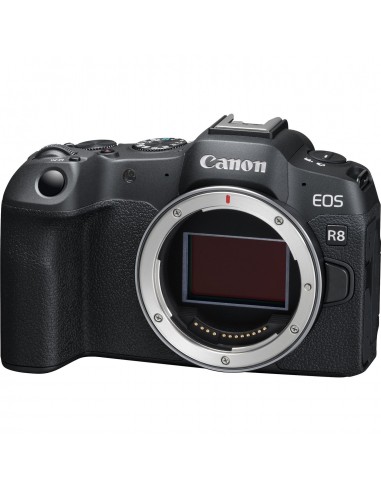
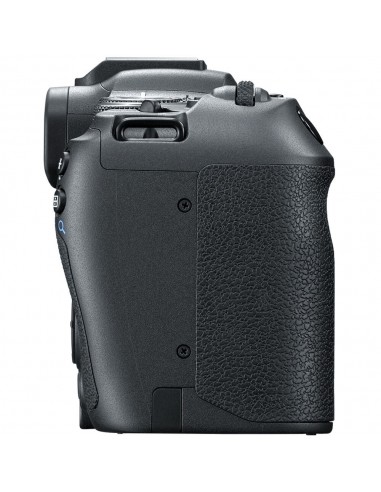
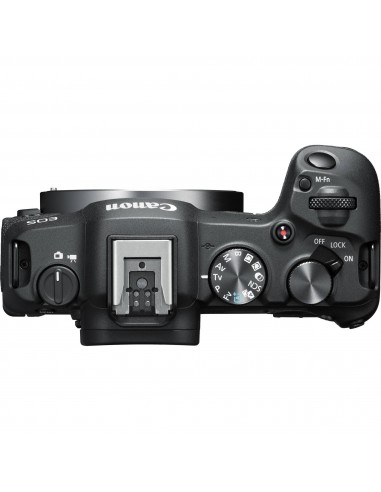
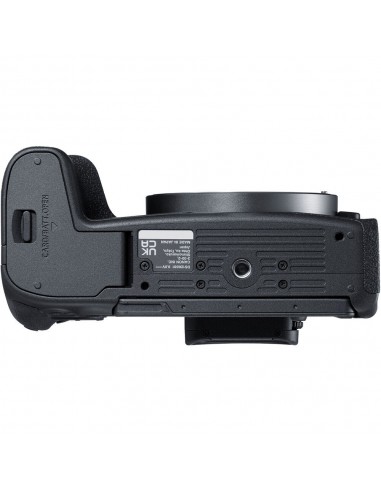
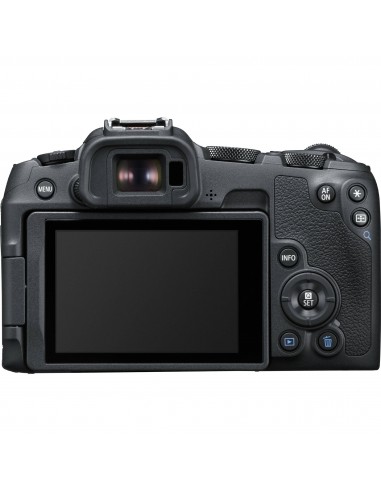

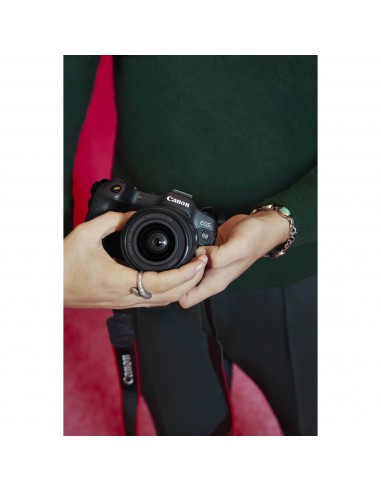
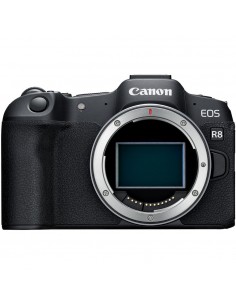
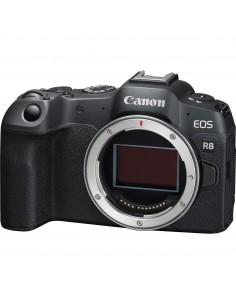
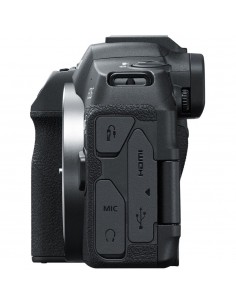
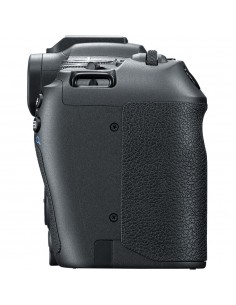
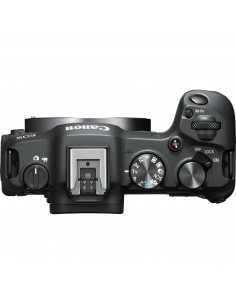
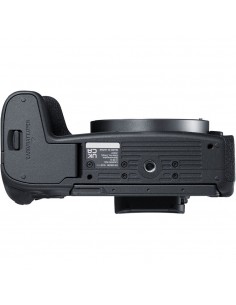
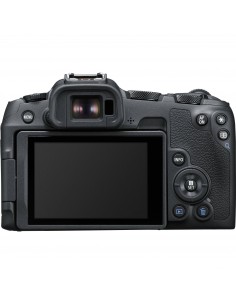



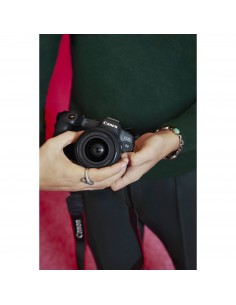
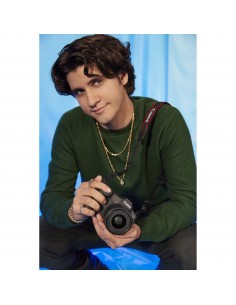
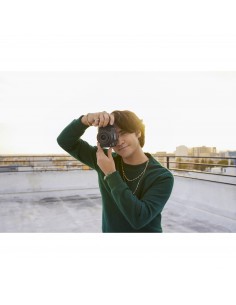
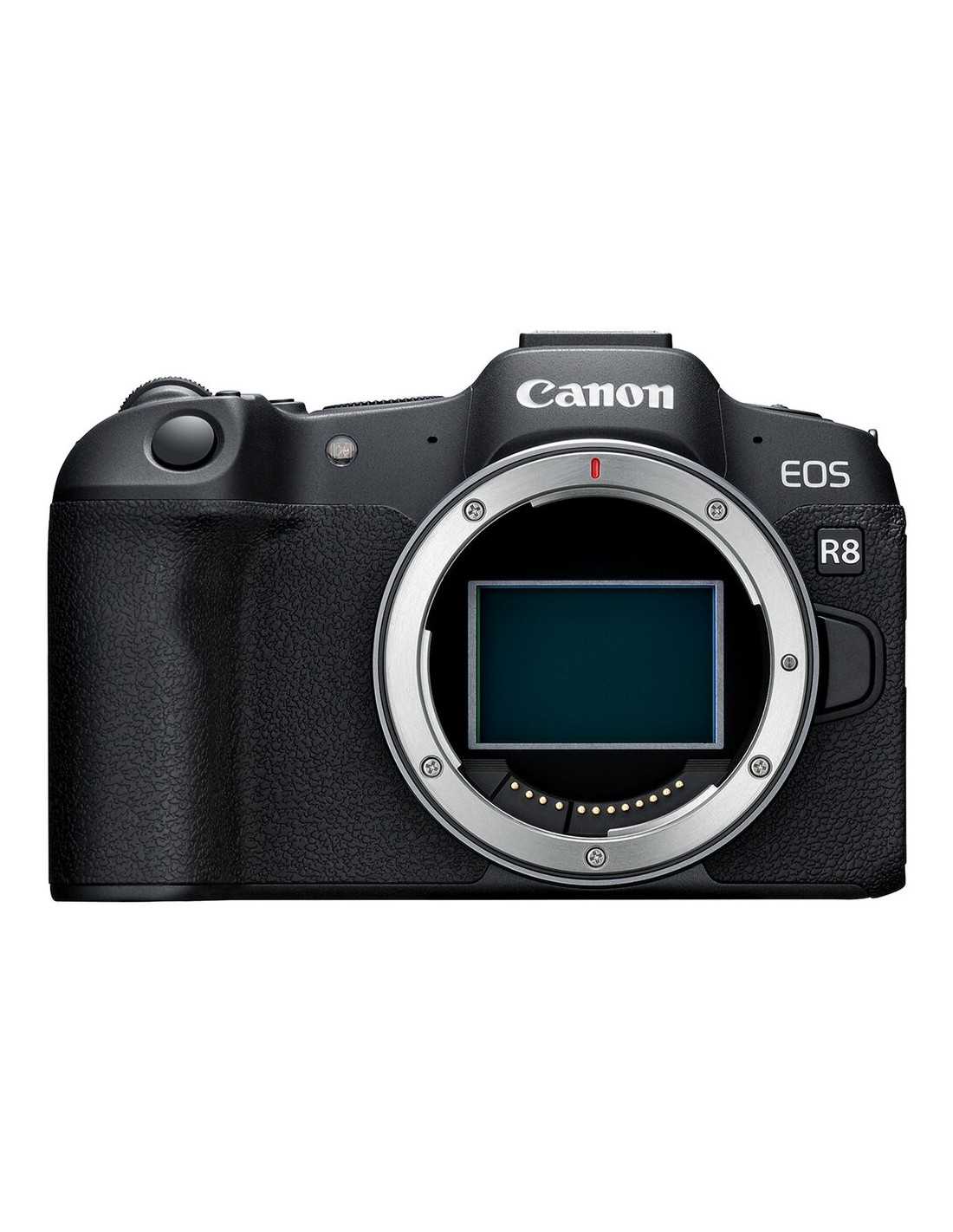

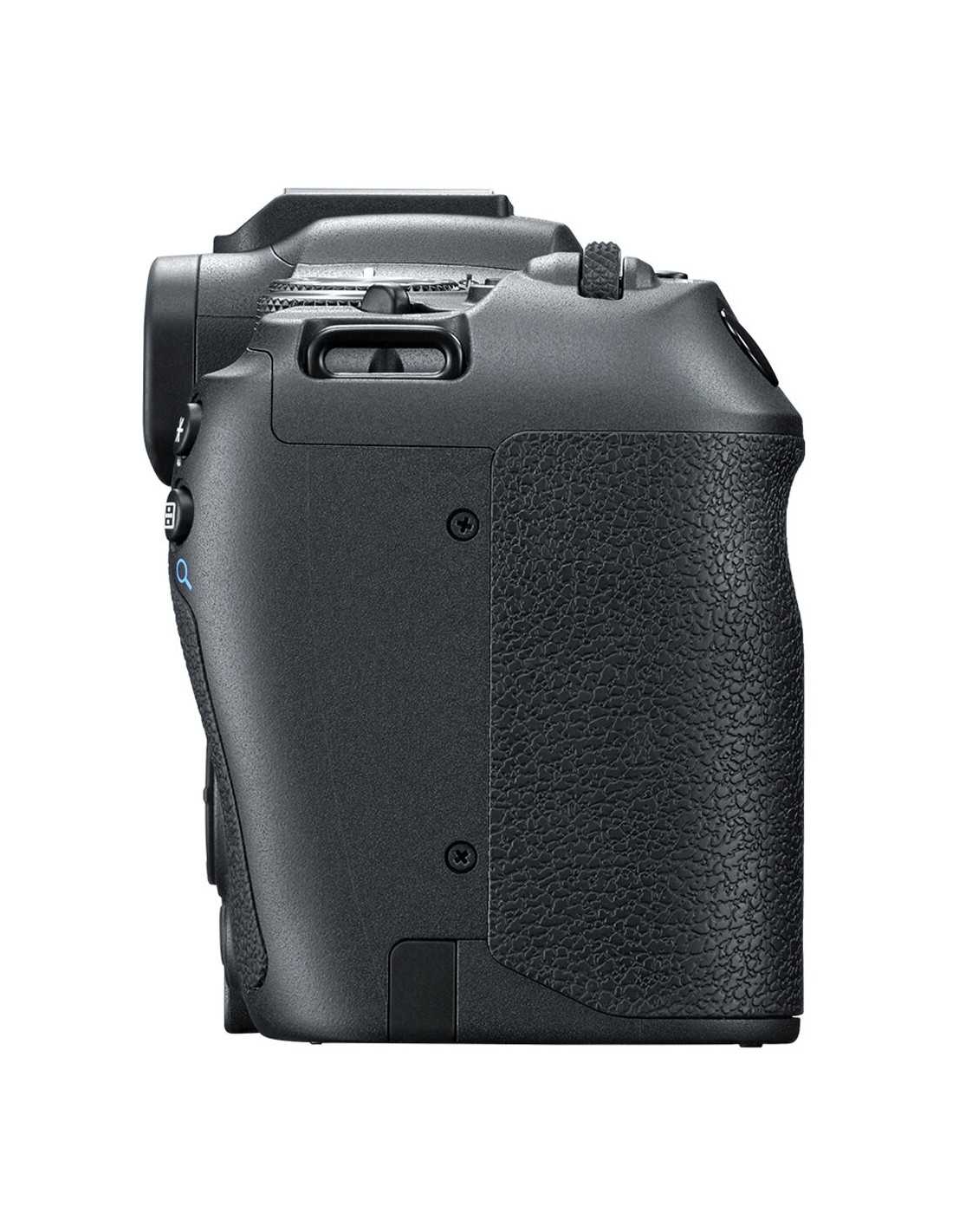


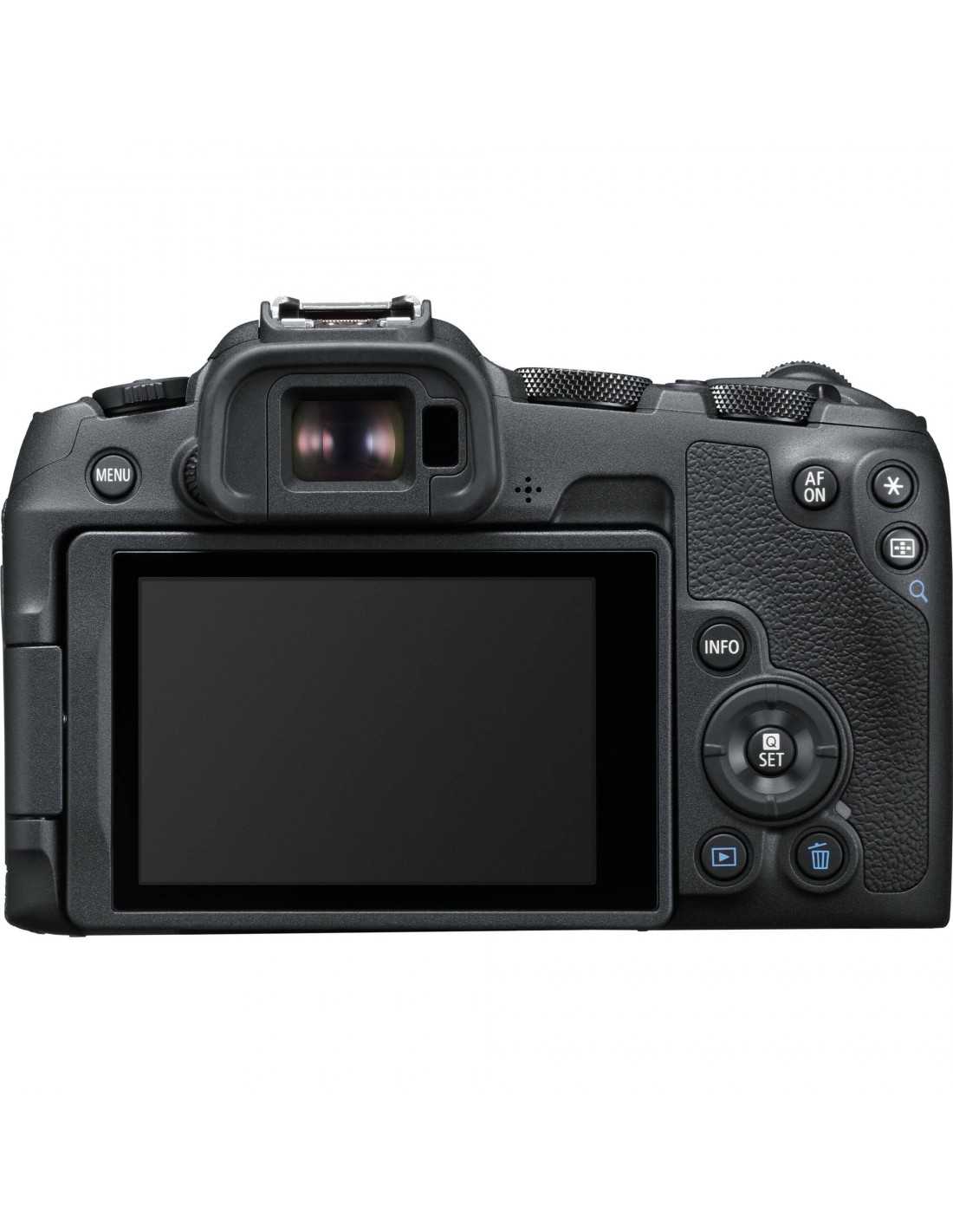


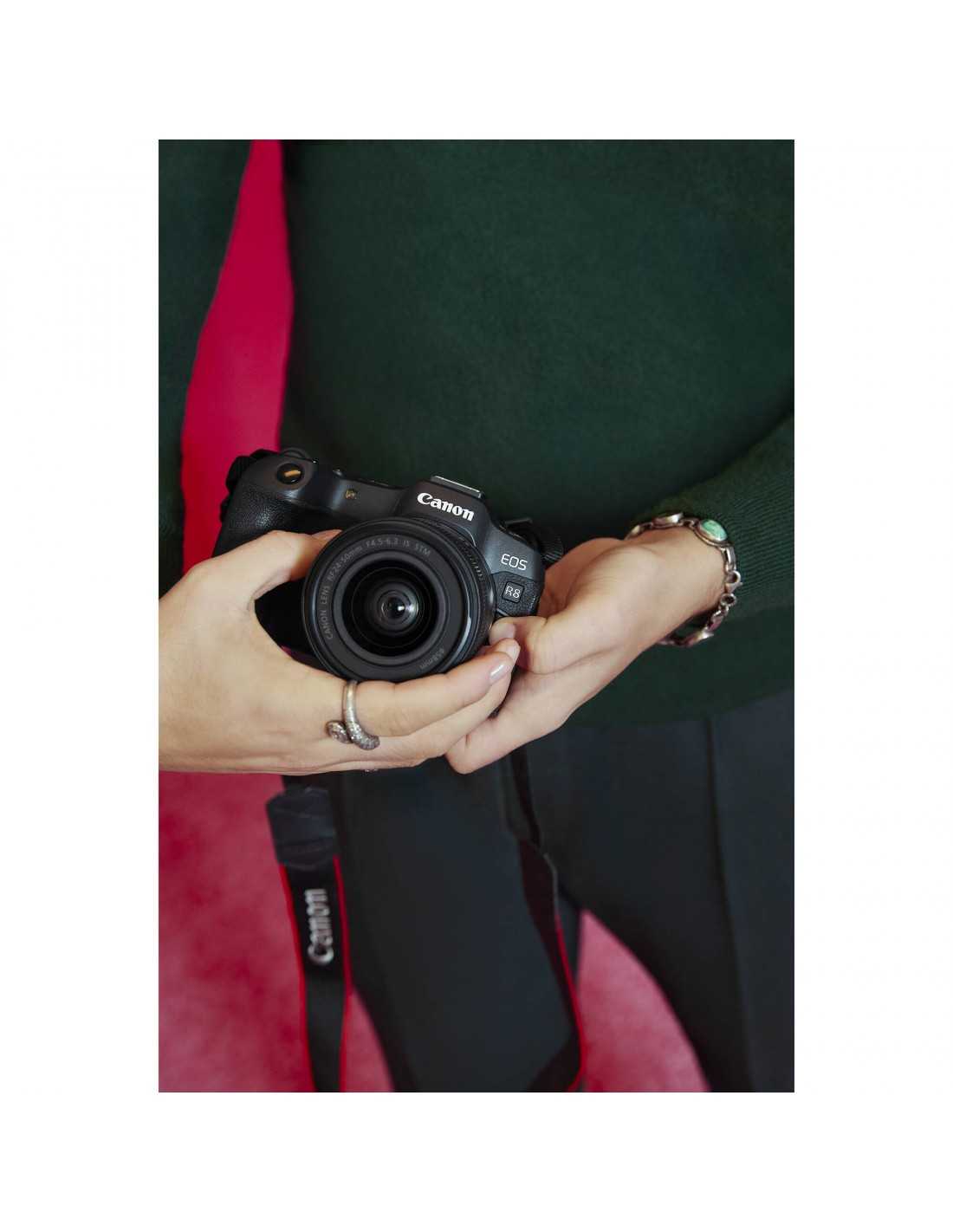
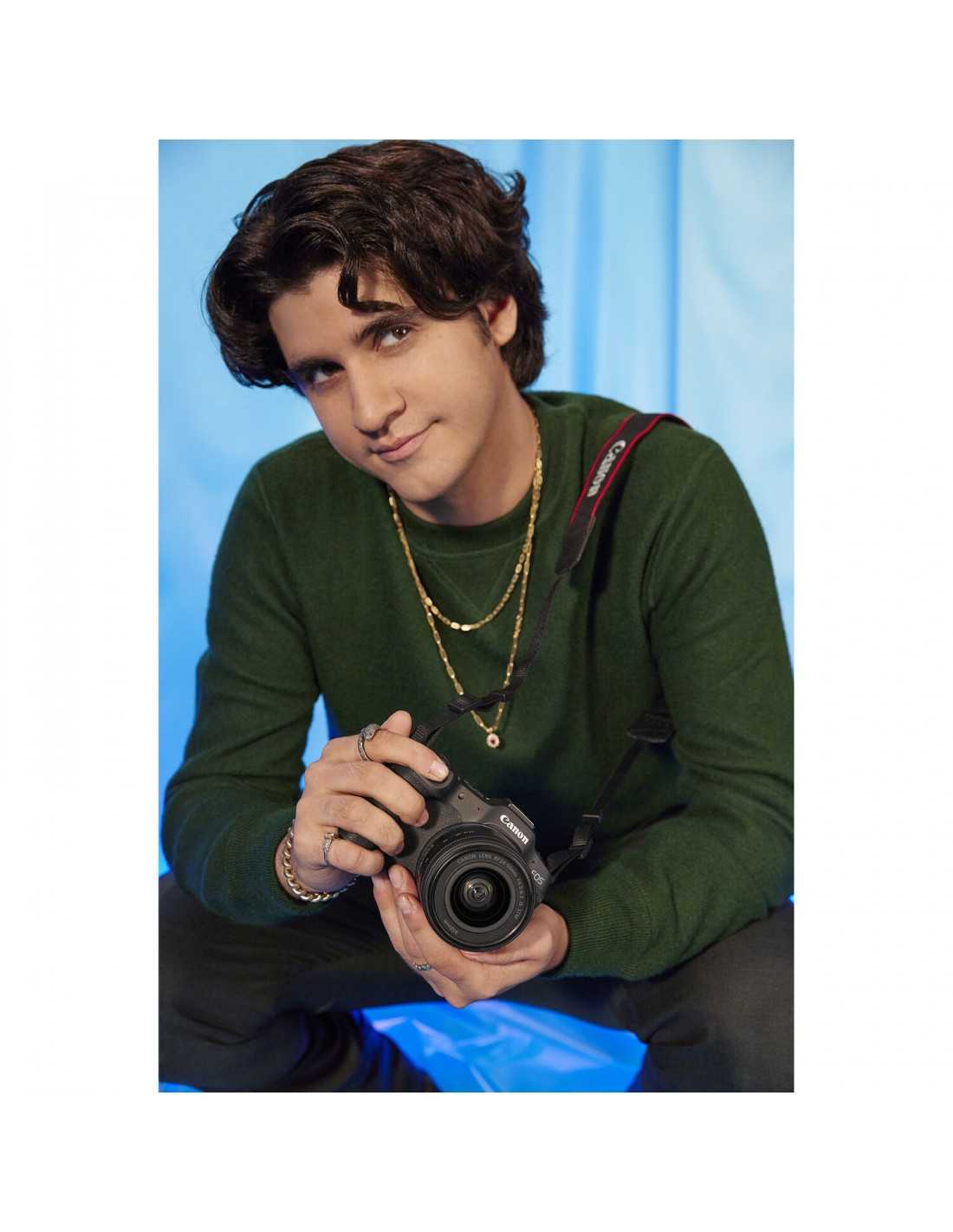
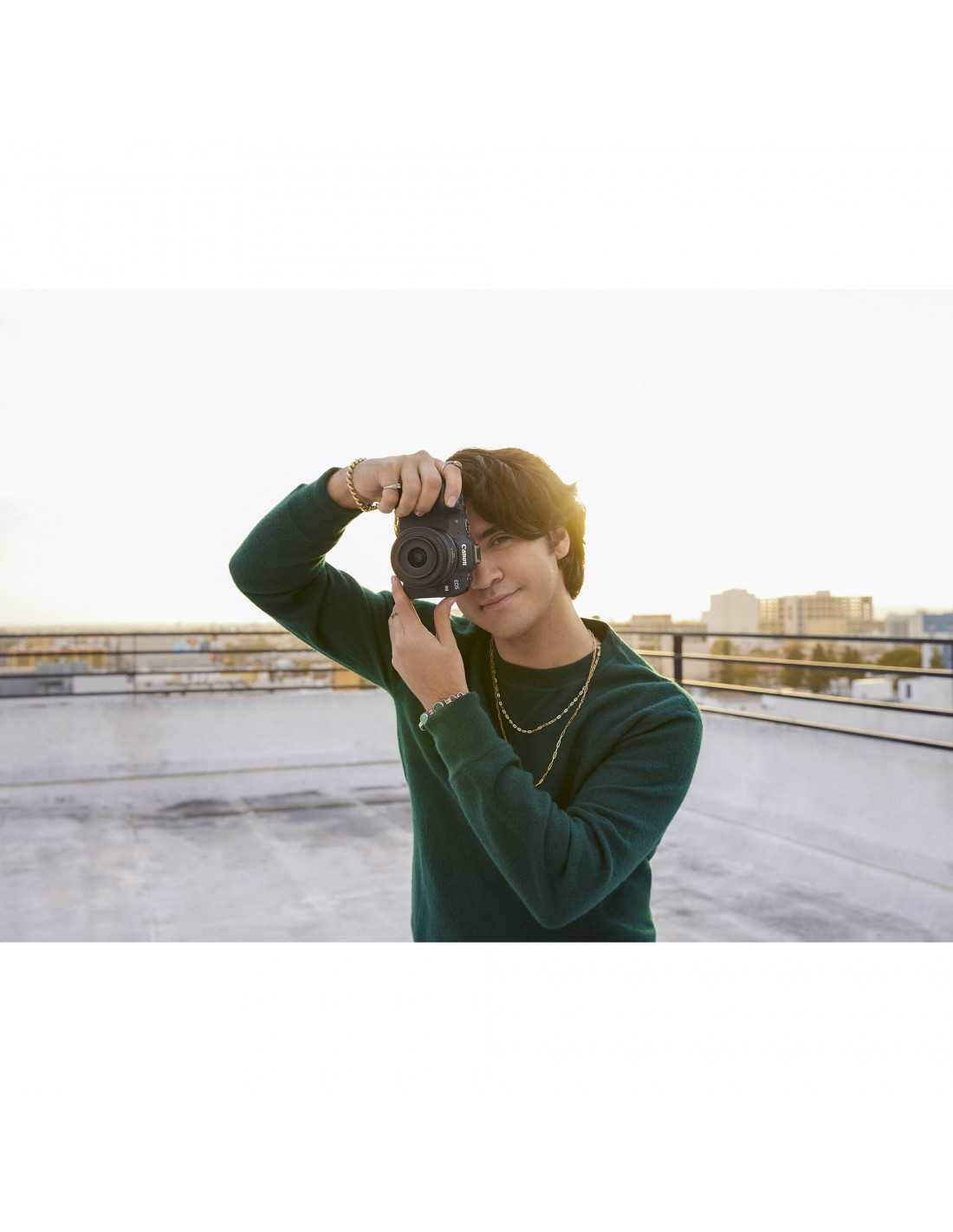
Canon EOS R8 Body - Full Frame Mirrorless Camera
IN STOCK
€1,031.70
€1,086.00-5%
- 100% newBrand-new and authentic product
- Final priceNo unpleasant surprises! The displayed price is the final amount paid for your purchase.
- Order before 2 pm: estimated delivery Thu 30 - Fri 31 JulEstimate based on available stock, order time, business days and carrier delivery times.
- 3-year MCZ DIRECT warranty
- Free delivery with insurance includedYour order is protected from dispatch to delivery: in case of loss, theft or damage during transport, your parcel is insured up to its value.
The Canon EOS R8 is a 24.2MP full-frame mirrorless camera recommended for photographers who want stronger image quality and autofocus without adding a heavy body to the bag. At 414g body only, it suits travel, portraits, lightweight reportage and mobile stills-and-video work. Dual Pixel CMOS AF II tracks people, animals and selected vehicles, while the electronic shutter reaches 40fps for short bursts of action. Oversampled 4K 60p from a 6K readout and Full HD 180p broaden its video use. The compromises are equally clear: there is no in-body stabilisation, only one SD card slot and the compact LP-E17 battery requires planning on long days. This body-only version makes particular sense if you already own an RF lens or want to choose the first optic around your work.
Canon EOS R8 body only: lightweight, responsive full frame
The Canon EOS R8 is a 24.2MP full-frame mirrorless camera for photographers who want stronger image quality and subject tracking without carrying a heavy body. Its appeal comes from combining a 414g body-only weight, Dual Pixel CMOS AF II, electronic bursts at up to 40fps and oversampled 4K 60p from a 6K readout. It is particularly well suited to travel, portraits, lightweight reportage and mobile stills-and-video work.
This listing is for the Canon EOS R8 body only. It is most relevant if you already own RF lenses, intend to adapt EF or EF-S glass, or prefer to select a lens around the assignment. The Canon EOS R8 body and kit category compares the active configurations without confusing this body-only page with products that include a lens.
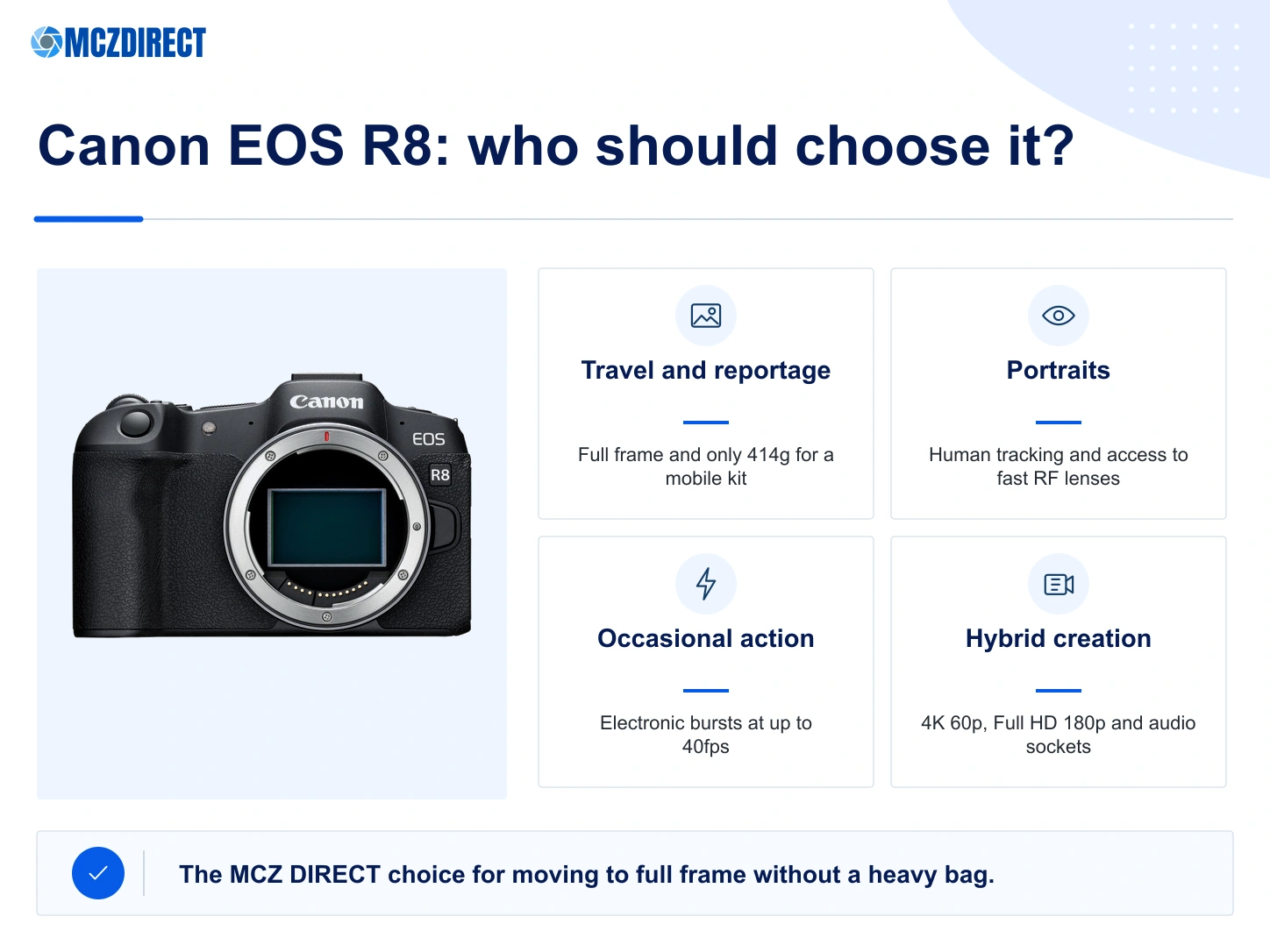
Canon EOS R8 essentials
- 24.2MP full-frame sensor that balances detail, low-light work and files that remain manageable.
- Approximately 414g body-only weight for travel, lightweight reportage or use as a compact second camera.
- Dual Pixel CMOS AF II with recognition of people, animals and selected vehicles to support subject tracking.
- Electronic bursts at up to 40fps to break down brief action, with the usual electronic-shutter precautions.
- 30fps RAW Burst with pre-shooting to retain frames captured before the shutter is fully pressed.
- Oversampled 4K at up to 60p from a 6K readout in Canon’s principal full-width mode.
- Full HD at up to 180p, Canon Log 3 and HDR PQ for slow motion and a more flexible video workflow.
- Vari-angle touchscreen plus microphone and headphone sockets for flexible framing, interviews and content creation.
- Canon RF mount for direct RF and RF-S use, with EF and EF-S lenses supported through a compatible adapter.
Who is the Canon R8 really designed for?
The R8 is a strong fit for someone moving to full frame, a working photographer who needs a small second body, or a hybrid creator who values portability. Its 24.2MP resolution balances useful detail, speed and manageable files. It is not a heavy professional body and does not have sensor-shift stabilisation or two card slots, so those differences should be considered before purchase.
| Use | What the R8 contributes | What to consider |
|---|---|---|
| Travel and reportage | Full frame, 414g body-only weight and subject-recognition autofocus | Choose a light lens and allow for a spare battery on longer days |
| Portraits and events | 24.2MP, human tracking and access to fast RF lenses | A single card cannot provide simultaneous in-camera backup |
| Occasional action | Electronic bursts up to 40fps and RAW pre-shooting | Check for rolling shutter and banding under some artificial lighting |
| Stills and video | Oversampled 4K 60p, Full HD 180p, Canon Log 3 and audio sockets | Without IBIS, a stabilised lens or support may become important |
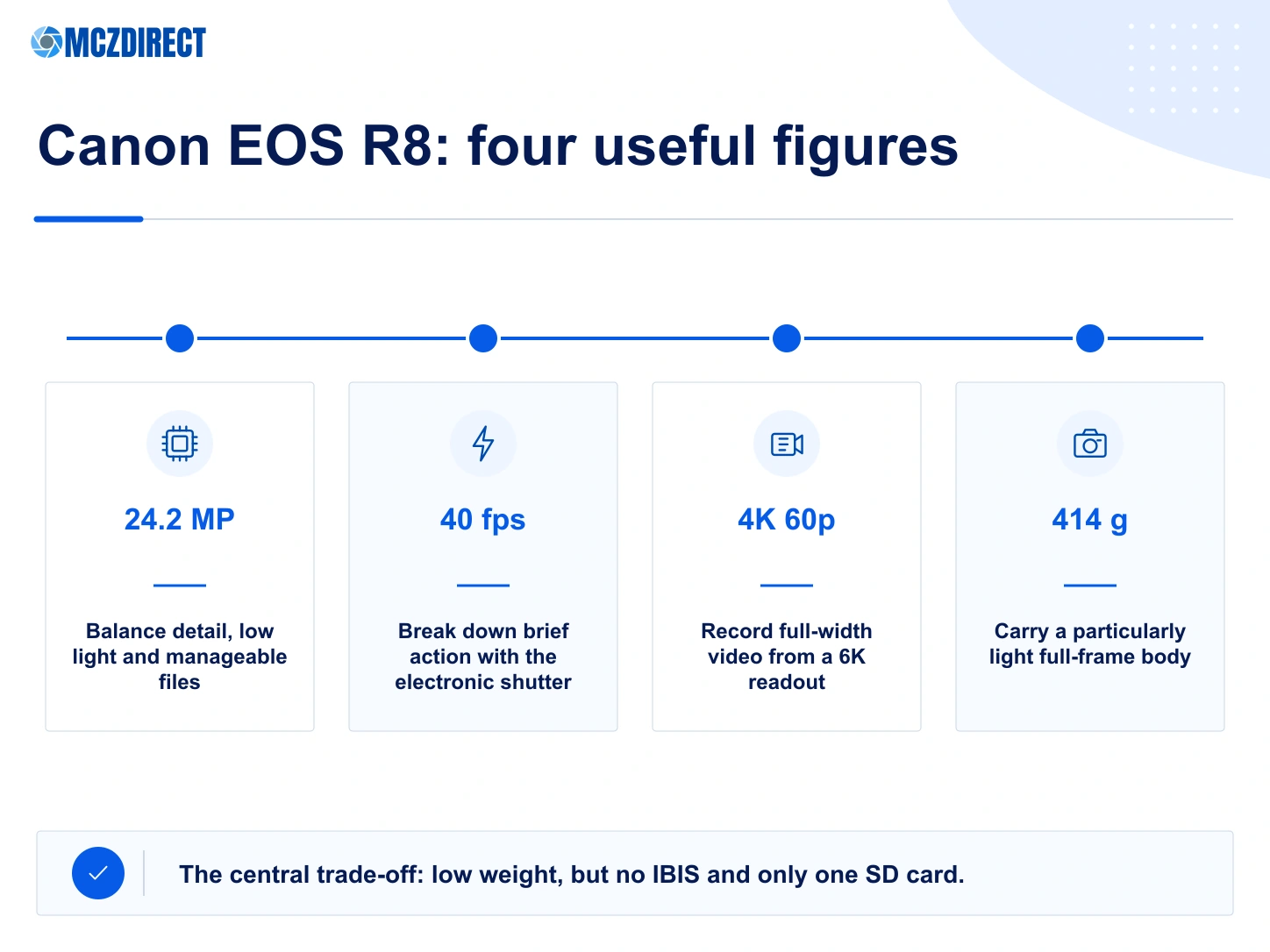
24.2MP full-frame sensor: a practical balance of detail and low light
The 35.9 × 23.9mm CMOS sensor produces 6000 × 4000-pixel images. This is sufficient for portraits, landscapes, events, online publishing and many print sizes while keeping files easier to process than those from a very high-resolution body. Full frame also provides more control over depth of field and uses the complete field of view of compatible RF and EF lenses.
Canon specifies a standard stills sensitivity up to ISO 102,400. That figure does not imply identical quality at every setting: exposure, available light, lens choice and processing remain decisive. The R8’s practical benefit is the combination of a large sensor, sensible resolution and a body that remains easy to carry.
| Feature | Practical benefit | Limitation to understand |
|---|---|---|
| 24.2MP full frame | Detail, depth-of-field control and lighter files than a very high-resolution body | Cropping latitude is lower than on a 40MP-or-higher camera |
| 414g body / 461g ready to shoot | Easy to carry and well matched to a small prime lens | A heavy lens can make the overall setup front-heavy |
| Up to 40fps | More frames to choose from during a gesture, take-off or brief expression | Results depend on the mode, lens, AF tracking and lighting |
| 4K 60p / Full HD 180p | Smoother action and practical slow-motion options | Data rate, heat, battery life and card capacity vary by setting |
Subject-detection autofocus and 40fps bursts, with electronic-shutter limits
Dual Pixel CMOS AF II recognises people, animals including dogs, cats, birds and horses, plus selected vehicles, aircraft and trains. Broad frame coverage and tracking help keep a moving subject in focus. The electronic shutter reaches up to 40fps, while RAW Burst records at 30fps and can retain images from 0.5 seconds before the shutter is fully pressed.
This speed does not make the R8 an uncompromised sports camera. Rapid movement may appear distorted with the electronic shutter, and some artificial lighting can create banding. Electronic first-curtain shooting is slower at approximately 6fps but reduces these effects. Select the shutter mode around the subject, lighting and need for geometrically accurate motion.
Stabilisation: what the Canon EOS R8 has and what it does not
The Canon EOS R8 has no sensor-shift image stabilisation, commonly called IBIS. For stills, stabilisation therefore comes from a lens equipped with optical IS. For video, digital stabilisation can complement a stabilised lens, with a crop that varies by setting. This matters for vlogging, telephoto work and handheld shooting in low light.
For a compact first setup, the EOS R8 with RF 24-50mm IS STM kit pairs the body with a small stabilised zoom. When comparing lenses, look for the IS designation and keep optical lens stabilisation, digital movie stabilisation and in-body stabilisation as three distinct features.
Oversampled 4K 60p and Full HD 180p video
The R8 records 4K UHD at up to 60p from a 6K sensor readout, without a crop in Canon’s main full-width mode. Cropped 4K, Full HD at up to 180p, Canon Log 3, HDR PQ and focus-breathing correction with compatible lenses provide further options. Internal movies use MP4, with H.264 or H.265 and IPB or IPB Light compression depending on the selected mode.
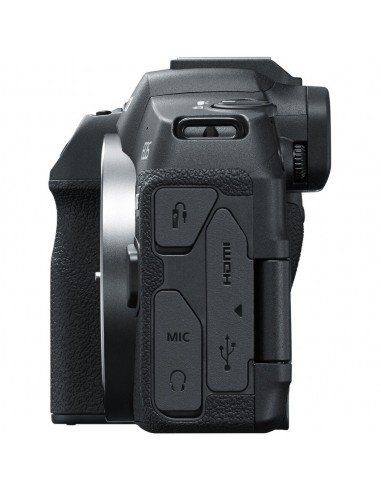
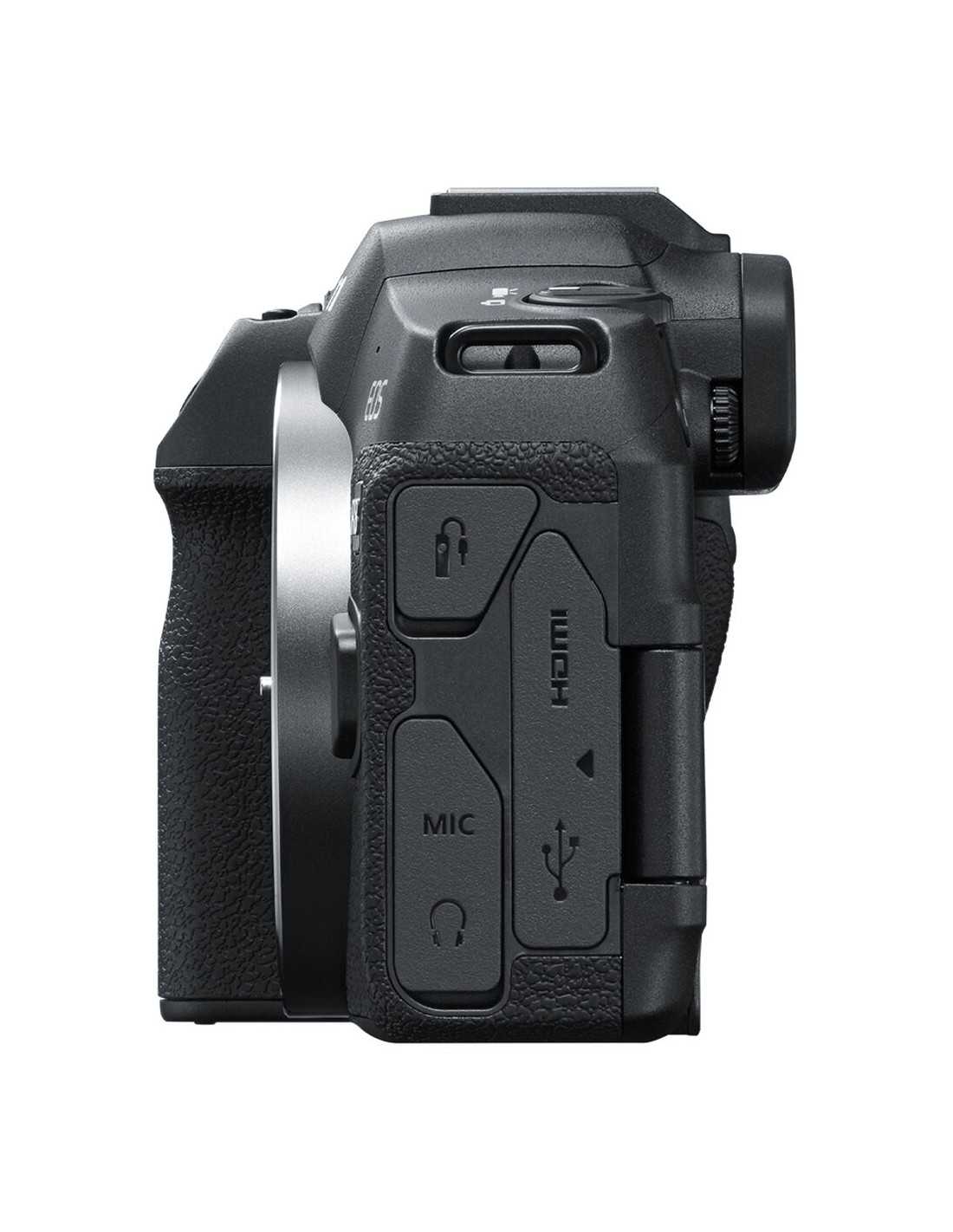
A 3.5mm microphone input, headphone output, Micro HDMI Type D and USB-C make the body easier to integrate into a creator setup. Available recording time depends on temperature, frame rate, card and active functions. For interviews or extended recording, test the complete combination of card, battery and final settings rather than judging the camera by the 4K 60p label alone.
One UHS-II SD card slot and the compact LP-E17 battery
The Canon EOS R8 has one UHS-II-compatible SD, SDHC or SDXC slot. A fast card is recommended for 4K video and sustained bursts, although the required capacity and speed class depend on the recording mode. Because there is no second slot, the camera cannot create a simultaneous in-camera backup on another memory card.
The supplied LP-E17 battery helps keep the body small. Canon rates approximately 370 shots with the screen or 220 with the viewfinder at 23°C under its test conditions. Video, wireless connections, cold weather, high viewfinder refresh and long bursts reduce real endurance. An LC-E17E charger is included with the European package, although a USB-C charger is not supplied.
Which lenses should you choose for the Canon EOS R8?
RF lenses mount directly and retain their full-frame field of view. RF-S lenses work in a 1.6x crop with reduced image resolution; EF and EF-S lenses need a compatible Canon EF-EOS R adapter, while EF-M lenses cannot be used. Body only is therefore a sensible option when you already own RF glass or EF lenses that you intend to adapt.
For travel, reporting and events, the EOS R8 with RF 24-105mm F4 L IS USM kit prioritises a versatile range, constant aperture and optical stabilisation. A fast 35mm or 50mm may suit discreet reporting and environmental portraits, while an 85mm favours tighter portraits. Compare complete system weight and balance, not only the camera specifications.
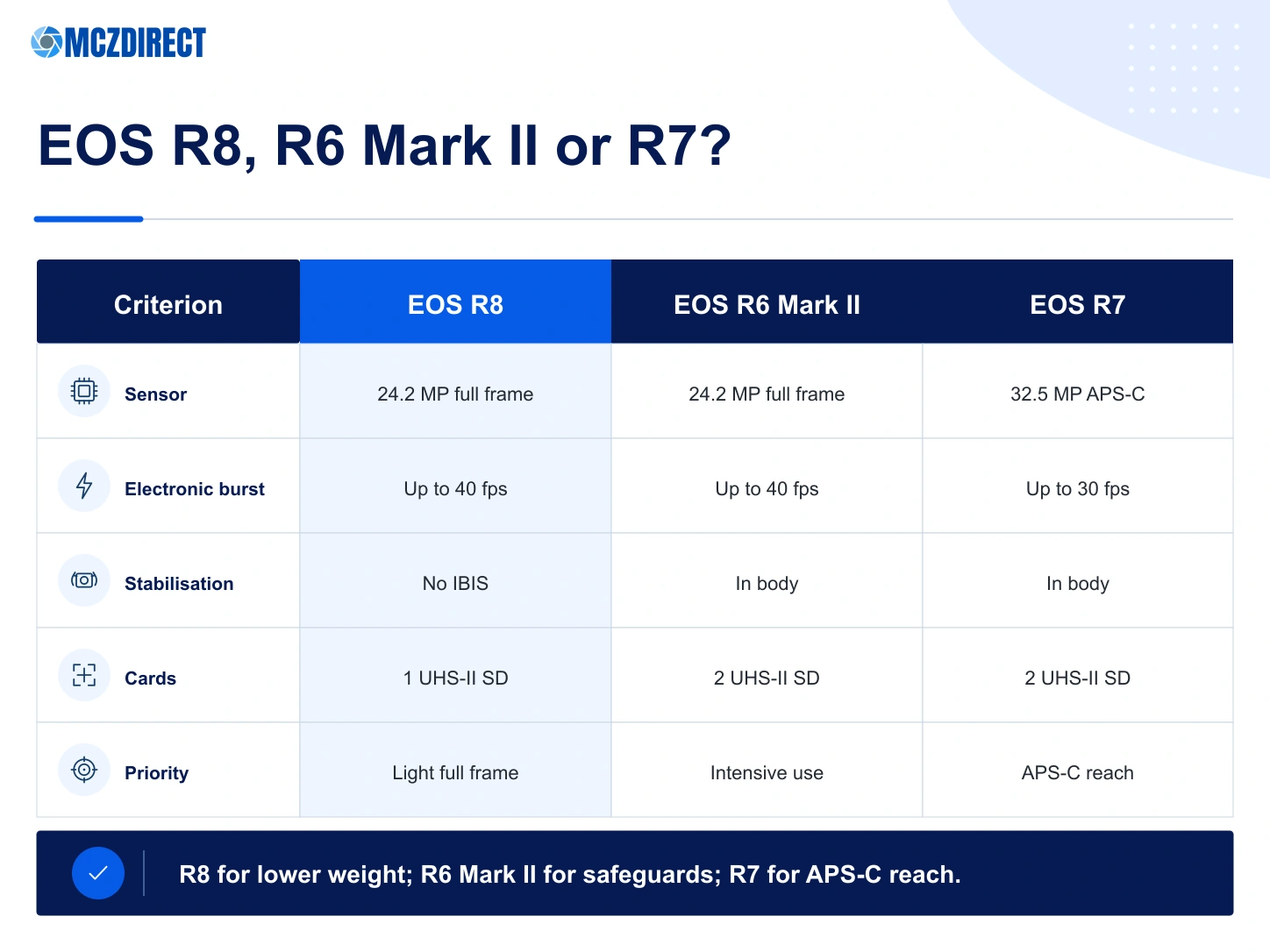
Canon EOS R8, R6 Mark II or R7: which should you choose?
The Canon EOS R6 Mark II is the more coherent event, wedding and intensive-use body when sensor stabilisation, two cards, a larger battery and fuller controls take priority. The R8 retains a clear advantage when weight and compact dimensions matter more than those working safeguards.
The Canon EOS R7 follows a different logic: its 32.5MP APS-C sensor narrows a telephoto lens’s field of view and suits birds, wildlife and sport. The simpler Canon EOS R10 prioritises low weight and an accessible route into the APS-C RF system. The R8 instead favours full-frame rendering, low-light work and a wider field of view. Place these cameras within the Canon EOS R range or compare our wider selection of mirrorless cameras.
| Criterion | EOS R8 | EOS R6 Mark II | EOS R7 |
|---|---|---|---|
| Sensor | 24.2MP full frame | 24.2MP full frame | 32.5MP APS-C |
| In-body stabilisation | No | Yes | Yes |
| Electronic burst | Up to 40fps | Up to 40fps | Up to 30fps |
| Storage | 1 UHS-II SD | 2 UHS-II SD | 2 UHS-II SD |
| Weight with battery and card | Approximately 461g | Approximately 670g | Approximately 612g |
| Best fit | Travel, portraits, lightweight video | Events, intensive use, backup | Wildlife, birds, APS-C sport |
Our verdict on the Canon EOS R8 body only
Position in the range. At MCZ DIRECT, we see the R8 as the most coherent Canon RF choice for a photographer who wants genuine full-frame quality in a light, responsive body, rather than as a primary camera built to secure a long professional assignment.
Direct comparison. Against the R6 Mark II, we recommend it when compactness matters more than IBIS, two card slots and extended battery life. Against the R7, we retain the R8 for portraits, travel, low light and full-frame rendering; the R7 remains stronger when apparent reach and APS-C cropping are the priorities.
Honest limitation. No in-body stabilisation, one SD card and the compact LP-E17 battery call for more deliberate planning during hand-held or all-day work. The 40fps burst is genuinely fast, but electronic shooting can produce rolling shutter or banding depending on movement and lighting. When those trade-offs are acceptable, the R8 offers an unusual balance of image quality, speed and low weight.
- Photo resolution
- 24 to 32 MP
- Sensor Resolution (Millions of pixels)
- 24.2MP
- Camera Format
- Full frame
- Memory card
- SD/SDHC/SDXC (UHS-II)
- Weight
- 461g
- Lens mount
- Canon RF
- Recommended use
- All-round use
Landscape
Photo / video
Portrait
Reportage
Travel
Vlogging - Video
- 4K / C4K
- Stabilization
- Without stabilisation
- Camera model
- Canon EOS R8
- Includes lens
- No
- Sensor size
- 35,9 x 23,9 mm
- Number of megapixels
- 20 to 30 MP
- Highest native ISO
- 51,200 to 102,400
- Level
- Advanced

CANONEOSR8
4549292204841
Canon EOS R8 Body - Full Frame Mirrorless Camera videos
Technical specifications
General
Brand
Canon
Product type
Mirrorless camera
Camera type
Interchangeable-lens digital camera
Product line
Canon EOS R
Product series
EOS R
Specific model
EOS R8
Release date
2023-04
Available languages
Multilingual, including English
Camera
Level
Advanced compact full-frame
Processor
DIGIC X
Image ratio
3:2
Image stabilization
No
Autofocus
Yes
Lens mount
Canon RF
RAW
Yes
File formats
Still image: JPEG, HEIF, RAW, C-RAW. Compression options and profiles according to Canon specifications.
Max burst speed
40 fps
Lens included
No
Uses
All-round use
Yes
Architecture
No
Landscape
Yes
Portrait
Yes
Travel
Yes
Reportage
Yes
Sports
No
Wildlife
No
Photo / video
Yes
Vlogging
Yes
Sensor
Sensor type
35.9 × 23.9mm full-frame CMOS sensor
Sensor size
35.9 x 23.9 mm
Crop factor
1.0x
Autofocus points
1053
Resolution
24.2 MP
Maximum resolution
6000 x 4000
Sensor cleaning
Yes
Standard ISO range
ISO 100-102400
Maximum native ISO
ISO 102400
Exposure
Metering modes
Real-time metering with image sensor, 384-zone metering: evaluative, partial, spot and centre-weighted average.
Metering zones
384
Fastest shutter speed
1/16000 s
Slowest shutter speed
30 s, Bulb
Bulb mode
Yes
AEB bracketing
Yes
Manual exposure
Yes
Self-timer
Yes
White balance settings
Auto white balance, daylight, shade, cloudy, tungsten, white fluorescent, flash, custom and colour temperature setting.
Aperture priority
Yes
Shutter priority
Yes
Display
Display type
Vari-angle touchscreen LCD monitor, 3.0-inch, approx. 1.62 million dots
Display size
3.0
Display resolution
1620000
Touchscreen
Yes
Live View
Yes
Viewfinder
Viewfinder
Yes
Viewfinder type
OLED electronic viewfinder, 2.36 million dots
Viewfinder coverage
100%
Flash
Built-in flash
No
Red-eye reduction
No
Flash sync speed
1/200 s
Flash modes
Canon-compatible external Speedlite flash; control via multi-function shoe depending on the model.
Flash technology
Canon Speedlite
Accessory shoe
Yes
Video
Video function
Yes
Full HD
Yes
4K UHD
Yes
6K video
No
7K video
No
8K video
No
Internal RAW recording
No
Clean HDMI output
Yes
Maximum video resolution
UHD 4K up to 60p from a 6K oversampled readout; Full HD up to 180p
Video frame rates
UHD 4K up to 50/60p from a 6K oversampled readout and Full HD up to 150/180p depending on system frequency
Video compression
MP4 using H.264 or H.265 with IPB or IPB Light compression depending on the selected movie mode
Video file formats
Internal movies: MP4; video codec and colour sampling depend on the selected mode
Audio
Built-in microphone
Built-in stereo microphone, 48 kHz, 16-bit, 2 channels
Storage
Internal memory
No
Dual card slot
No
Memory types
One SD, SDHC or SDXC card slot compatible with UHS-II
Card types
One UHS-II-compatible SD, SDHC or SDXC memory card
SD speed classes
Required capacity and video speed class depend on the selected stills or movie mode; check the Canon media table
Connectivity
HDMI
Yes
HDMI type
Micro HDMI Type D output
Microphone input
Yes
Microphone input type
3.5mm stereo mini jack
Headphone output
Yes
USB
Yes
USB type
USB Type-C, SuperSpeed Plus USB 3.2 Gen 2
Ethernet
No
Wireless
Wi-Fi
Yes
Bluetooth
Yes
NFC
No
GPS
No
Physical properties
Depth
7 cm
Width
13.25 cm
Height
8.61 cm
Body material
Magnesium-alloy body/chassis with glass-fibre reinforced polycarbonate components.
Colour
Black
Waterproof
No
Splash resistant
Yes
Shockproof
No
Dust resistant
Yes
AF assist light
Yes
Tally light
No
Minimum operating temperature
0 °C
Maximum operating temperature
40 °C
Battery
Battery
Canon LP-E17 rechargeable Li-ion battery
Photo battery life
Approx. 370 shots with the screen or 220 with the viewfinder at 23°C in power-saving mode
USB charging
Yes
USB power delivery
Yes
Charger included
Yes
Buying guidance
Best for
Travel, portraits, lightweight reportage, events with managed storage, content creation and hybrid photo-video work
Less suited to
Less suitable when in-body stabilisation, simultaneous card backup, maximum battery endurance or a heavier professional body are essential
Compatibility
RF and RF-S lenses mount directly; RF-S uses a 1.6x crop. EF and EF-S lenses require a compatible Canon EF-EOS R adapter. EF-M lenses are not compatible.
Note
This body-only offer includes no lens or memory card. The body has no sensor-shift stabilisation and only one card slot.
Canon EOS R8 FAQ
Who is the Canon EOS R8 designed for?
The Canon EOS R8 is for photographers and filmmakers who want full-frame image quality in a lightweight body. Its 24.2MP sensor, subject-detection autofocus, electronic bursts at up to 40fps and 4K 60p suit travel, portraits, lightweight reportage and hybrid content creation.
Is the Canon EOS R8 full frame?
Yes. The Canon EOS R8 uses a 35.9 × 23.9mm, 24.2MP full-frame CMOS sensor. Full-frame RF lenses therefore retain their intended field of view. RF-S and adapted EF-S lenses can operate with a 1.6x APS-C crop and reduced resolution.
Is this camera a Canon EOS R8 Mark II?
No. This listing is for the Canon EOS R8, the official name of the model introduced in 2023. Canon does not identify this product as EOS R8 Mark II, R8 Mark 2 or R8 II. Those search variations should not be used to identify the camera sold here.
When was the Canon EOS R8 released?
Canon introduced the EOS R8 in February 2023 and records it as marketed in April 2023. Dates can differ depending on whether they refer to the announcement, first availability or arrival at an individual retailer. This listing is for the EOS R8 from that generation.
Is a lens included with this Canon EOS R8?
No. This listing is for the Canon EOS R8 body only. The package includes the camera, covers, an LP-E17 battery, LC-E17E charger and strap, but no lens or memory card. This version suits buyers who already own an RF lens or want to select a specific optic.
Does the Canon EOS R8 have in-body stabilisation?
No. The R8 has no sensor-shift in-body stabilisation, or IBIS. For stills it can use optical stabilisation in compatible lenses. In video, digital stabilisation can complement an IS lens with a variable crop. Choose the lens and stabilisation setting carefully for handheld filming.
How fast is the Canon EOS R8 burst rate?
The R8 reaches up to 40fps with the electronic shutter, approximately 6fps with electronic first curtain, and 30fps in RAW burst mode with 0.5-second pre-shooting. Burst duration varies with format, card and settings. With electronic shutter, watch for possible distortion and banding.
Does the Canon EOS R8 record uncropped 4K 60p?
The main 4K mode at up to 60p uses the sensor width and an oversampled 6K readout. Other settings, including cropped 4K or digital stabilisation, can change the field of view. Available recording duration also depends on temperature, memory card and enabled functions.
Which memory card should you use in the Canon EOS R8?
The camera has one UHS-II-compatible SD, SDHC or SDXC slot. Required capacity and video speed class depend on format and frame rate. Choose a card validated for your most demanding mode and plan a backup after important sessions because there is no second in-camera copy.
Which lenses are compatible with the Canon EOS R8?
Canon RF lenses mount directly. RF-S lenses operate with a 1.6x APS-C crop. EF and EF-S lenses require a compatible Canon EF-EOS R adapter, while EF-M lenses cannot be used. Also check the lens stabilisation and combined weight for your intended use.
Which battery and charger are supplied with the Canon R8?
The package includes a Canon LP-E17 battery and LC-E17E charger. Canon rates approximately 370 shots with the screen or 220 with the viewfinder at 23°C in power-saving mode. Video, Wi-Fi, cold conditions, bursts and high viewfinder refresh rates reduce real endurance.
Canon EOS R8 or R6 Mark II: which should you choose?
The R8 prioritises compactness and low weight with a 24.2MP full-frame sensor. The R6 Mark II adds in-body stabilisation, two card slots and a larger battery. Choose the R8 for lightweight travel and creation; choose the R6 Mark II for demanding events and longer professional sessions.
Reviews Canon EOS R8 Body - Full Frame Mirrorless Camera
0 Rating
Customer photos
No customer photos yet
Tap to zoom

ALEX (In testing phase)