- -5%
Sony FE 400mm f/2.8 GM OSS
- 100% newBrand-new and authentic product
- Final priceNo unpleasant surprises! The displayed price is the final amount paid for your purchase.
- Order before 2 pm: estimated delivery Mon 17 - Tue 18 AugEstimate based on available stock, order time, business days and carrier delivery times.
- 3-year MCZ DIRECT warranty
- Free delivery with insurance includedYour order is protected from dispatch to delivery: in case of loss, theft or damage during transport, your parcel is insured up to its value.
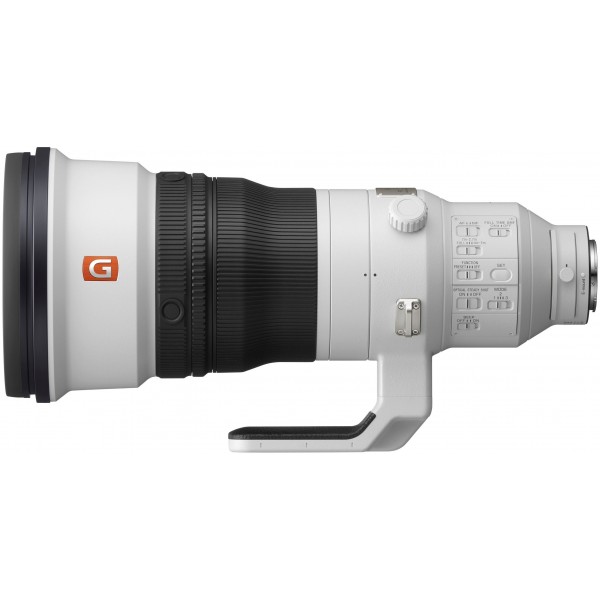
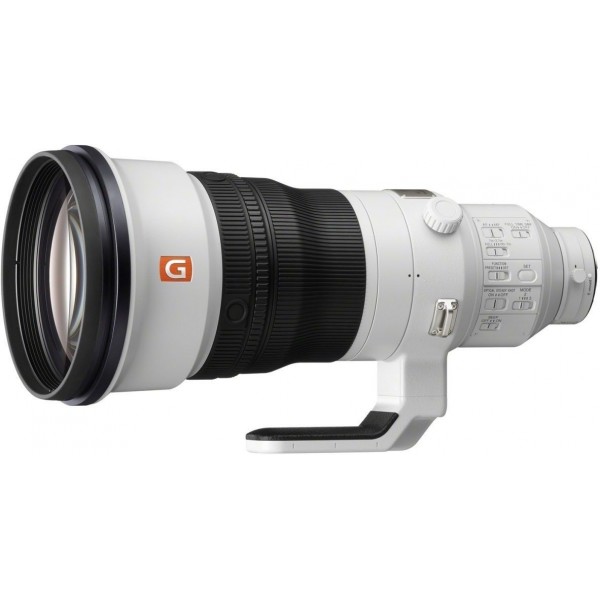
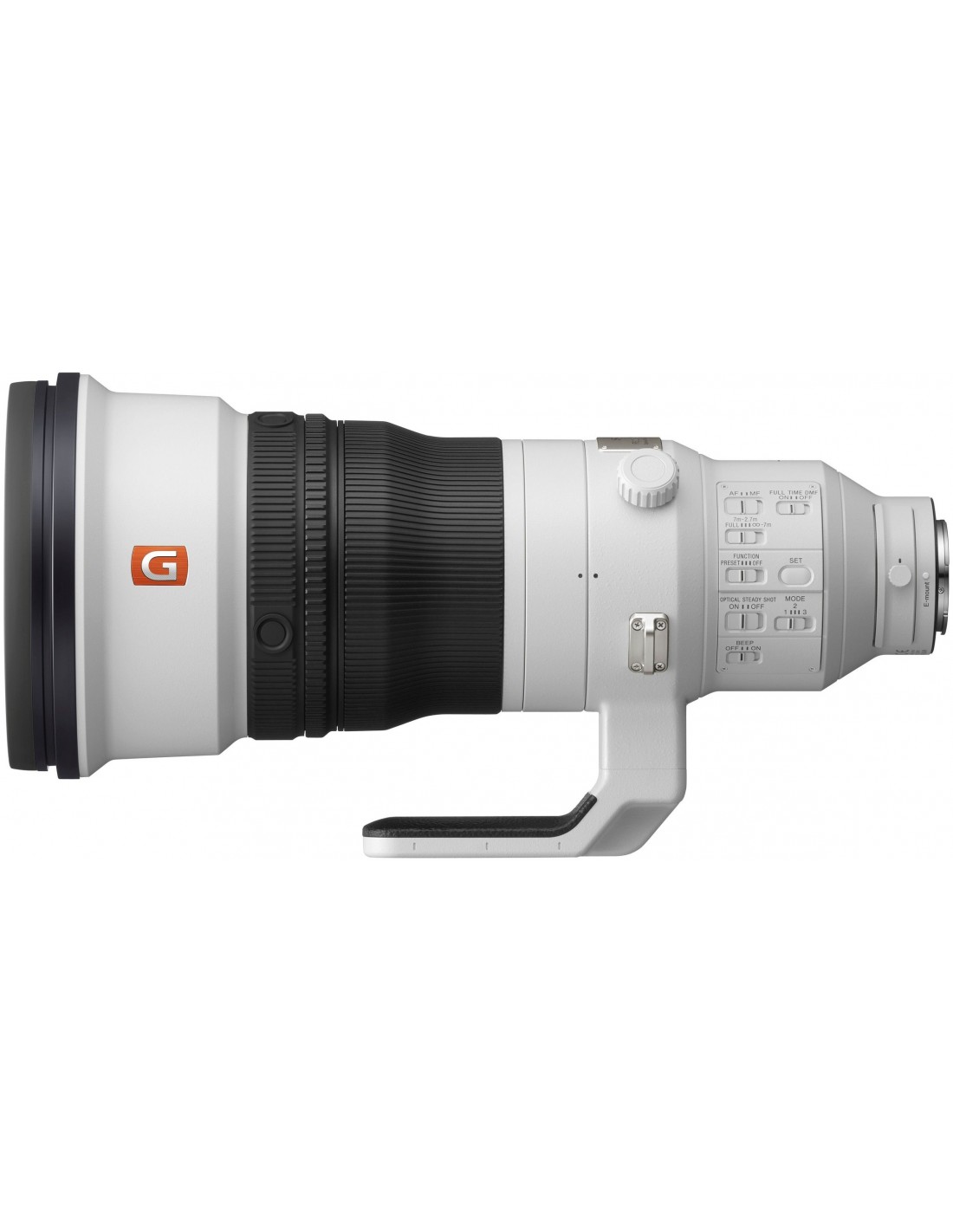
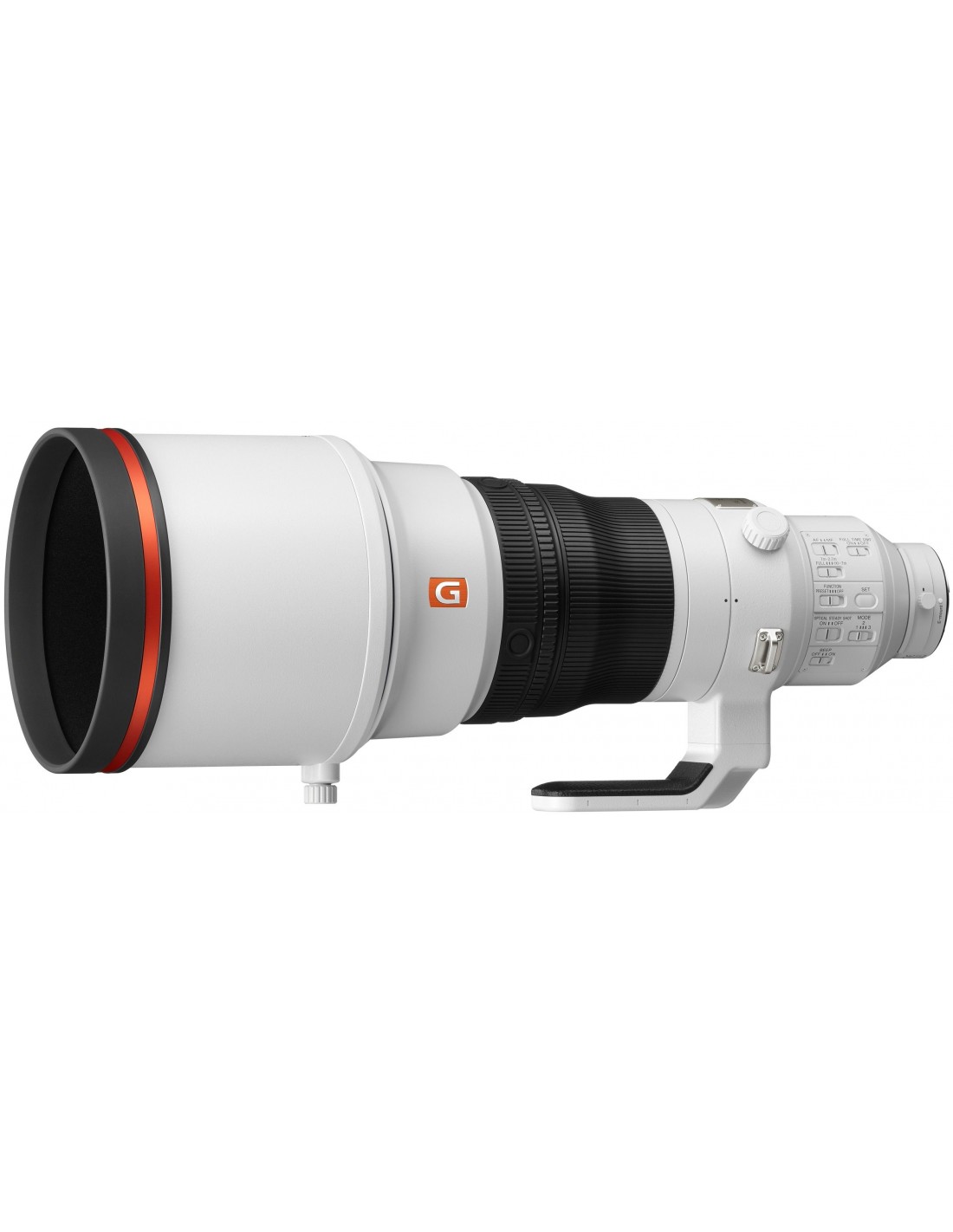
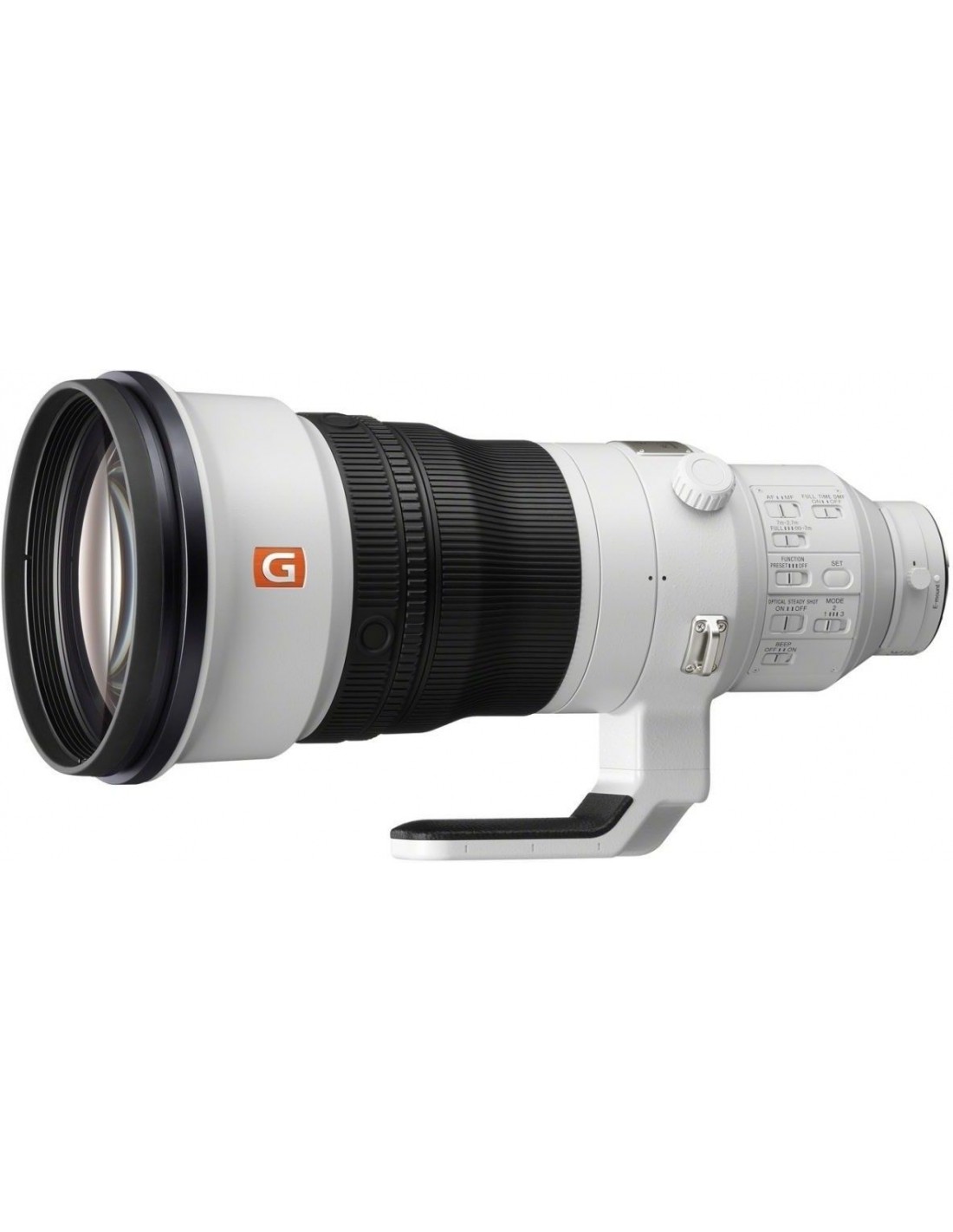
The Sony FE 400mm F2.8 GM OSS is a full-frame super-telephoto lens recommended for sports and wildlife photographers who need fast aperture performance at a substantial working distance. Its 400mm view isolates a player, vehicle or animal without becoming as restrictive as a 600mm prime, while F2.8 supports high shutter speeds under floodlights, at dawn or beneath tree cover. Two XD Linear Motors and Optical SteadyShot assist with moving subjects; supported Sony teleconverters extend the lens to 560mm F4 or 800mm F5.6. At 2.895kg with a 2.7m minimum focus distance, it rewards a planned position and often a monopod or tripod. It is recommended when reach, low-light performance and subject separation matter more than the framing flexibility of a zoom.
Complete your set
Combine compatible accessories and save. The more items you add, the bigger the discount.


memory card
SanDisk 128GB Extreme PRO UHS-II SDXC 300 MB/s memory card

warranty extension
2-year warranty extension
Sony FE 400mm F2.8 GM OSS: fast reach for professional sport and wildlife
The Sony FE 400mm F2.8 GM OSS is built for photographers who need to isolate distant action without giving up an F2.8 aperture. Its 400mm view suits football, athletics, motorsport, birds and wildlife, yet remains easier to acquire a moving subject with than a much tighter 600mm prime. F2.8 supports fast shutter speeds under stadium lighting, at dawn or beneath tree cover, while helping a clean subject stand out against a softer background.
The SEL400F28GM is nevertheless a specialist lens. It weighs 2,895g, measures 359mm in length and cannot zoom out when the action moves closer. In return, two XD Linear Motors, Optical SteadyShot and extensive focus controls are designed around fast-moving subjects. Compatible Sony teleconverters also extend it to 560mm F4 or 800mm F5.6.
Key strengths of the Sony FE 400mm F2.8 GM OSS
- 400mm fixed focal length for field sport, motorsport, birds and wildlife at medium to long working distances.
- F2.8 maximum aperture to maintain faster shutter speeds in lower light and separate the subject more clearly.
- Two XD Linear Motors that drive the focus group rapidly with compatible Sony camera bodies.
- Optical SteadyShot with Mode 3 to make framing unpredictable movement more manageable.
- G Master optical design with three fluorite elements and Nano AR Coating for control of aberrations, flare and contrast.
- 11-blade circular diaphragm for smoother transitions from the focused subject into the background.
- SEL14TC and SEL20TC compatibility for 560mm F4 and 800mm F5.6 configurations.
- Four focus-hold buttons positioned for access in different shooting orientations.
- Function ring, preset focus and full-time DMF for quicker control when the subject or shooting method changes.
- Dust- and moisture-resistant design with magnesium-alloy components and a fluorine-coated front element.

What 400mm F2.8 changes in real shooting
The difference from a slower zoom becomes most obvious when the shutter speed cannot drop. For an athlete, racing vehicle or bird in flight, F2.8 allows a lower ISO than F5.6 or F6.3 under comparable light and framing. The wider aperture also narrows depth of field, which can produce stronger subject separation but leaves less room for focusing error.
| Feature | Practical benefit | What to plan for |
|---|---|---|
| 400mm F2.8 | Fast long-lens framing for high shutter speeds and strong subject separation. | Depth of field is shallow and the angle of view is fixed. |
| Two XD Linear Motors | Focus drive designed for rapid changes in subject distance. | Performance also depends on the camera, AF area, subject detection and tracking settings. |
| Optical SteadyShot modes | A steadier view for static subjects, panning or irregular movement. | Stabilisation reduces camera movement, not movement within the subject. |
| 2.7m minimum focus | 0.16x maximum magnification for medium-size subjects and distant detail. | It does not replace a macro lens or a shorter telephoto at close range. |
| 2,895g and 359mm | Balance designed to make rotation and tracking less front-heavy. | A monopod, tripod or deliberate carrying system is sensible for long sessions. |
Football, athletics and motorsport: why 400mm works
From a touchline or trackside position, 400mm reaches action on the far side without imposing the extremely narrow view of a 600mm prime. It is well suited to football, rugby, athletics, motorsport and court sport from a controlled position. The F2.8 aperture matters after sunset, under floodlights and whenever a busy grandstand needs to become less distracting.
Position still matters. An athlete or vehicle that suddenly approaches can outgrow the frame, so professionals often keep a second body with a 70-200mm nearby. When the working distance is consistently greater, the Sony FE 600mm F4 GM OSS provides native reach without relying on a teleconverter.
Wildlife and birds: balancing light, distance and cropping
For wildlife, 400mm offers a useful balance between reach and subject acquisition. The view remains manageable when finding a bird in flight or following an animal that changes direction, while F2.8 helps at dawn, dusk and under foliage. A high-resolution body can add useful cropping headroom when the subject is still a little small in the frame.
Small or very distant birds may demand more reach. Teleconverters solve part of that problem, but they cannot remove heat haze or create light that is not present. When subject distance changes constantly, the Sony FE 200-600mm F5.6-6.3 G OSS offers much more framing flexibility, though it is considerably slower at the long end.
400, 560 or 800mm with Sony teleconverters
The SEL400F28GM supports the SEL14TC and SEL20TC. The 1.4x converter produces a 560mm F4 combination; the 2x reaches 800mm F5.6. Sony states that fast, precise autofocus and imaging performance are maintained with the supported converters. Longer focal lengths still magnify camera movement, focusing errors and atmospheric disturbance, so light and support become increasingly important.
| Configuration | Focal length and aperture | Best suited to | Trade-off |
|---|---|---|---|
| Lens alone | 400mm F2.8 | Sport, wildlife and lower-light action with maximum light intake. | May be short for a small bird or very distant wildlife. |
| With SEL14TC | 560mm F4 | Wildlife, birds and distant sport while retaining a useful aperture. | One-stop light loss and a tighter view to hold on the subject. |
| With SEL20TC | 800mm F5.6 | Small distant subjects in good light from a stable support. | Two-stop light loss and greater sensitivity to atmosphere and focus accuracy. |

Sony 300mm F2.8, 400mm F2.8, 600mm F4 or 200-600mm?
These lenses solve different field problems. The 300mm F2.8 is dramatically lighter and easier to swing for closer action. The 400mm adds reach without giving up F2.8. The 600mm F4 is the native long-distance option. The 200-600mm is the practical choice when framing must change quickly, but it needs substantially more light at 600mm.
| Lens | Focal length and aperture | Sony weight | Choose it when |
|---|---|---|---|
| Sony FE 300mm F2.8 GM OSS | 300mm F2.8 | 1,470g | Mobility, closer sport and a wider view are the priorities. |
| Sony FE 400mm F2.8 GM OSS | 400mm F2.8 | 2,895g | You need long reach and F2.8 in the same fixed lens. |
| Sony FE 600mm F4 GM OSS | 600mm F4 | 3,040g | Native distance matters more than the 400mm’s wider, faster view. |
| Sony FE 200-600mm F5.6-6.3 G OSS | 200-600mm F5.6-6.3 | 2,115g | Framing flexibility and value matter more than an F2.8 aperture. |

Autofocus, OSS and professional focus controls
The two XD Linear Motors work with a focus-range limiter, four customisable buttons, a function ring and full-time DMF. Preset Focus can memorise a distance and recall it quickly when action repeatedly returns to the same point. The function ring can also provide a controlled focus transition for video work.
Optical SteadyShot includes a panning setting and Mode 3 for easier framing of irregular action. It steadies the view and reduces photographer movement, but a suitable shutter speed is still required to freeze a ball, vehicle or bird. On a fully stable support, select the mode for the assignment rather than treating one setting as universal.
Weight, balance, support and the 40.5mm drop-in filter
At 2.895kg, the 400mm F2.8 deserves planning. Its optical balance reduces the front-heavy feel and makes direction changes more manageable, yet a long match or hide session still favours a monopod or tripod. The bearing-mounted collar offers 90-degree click stops for quick horizontal-to-vertical changes.
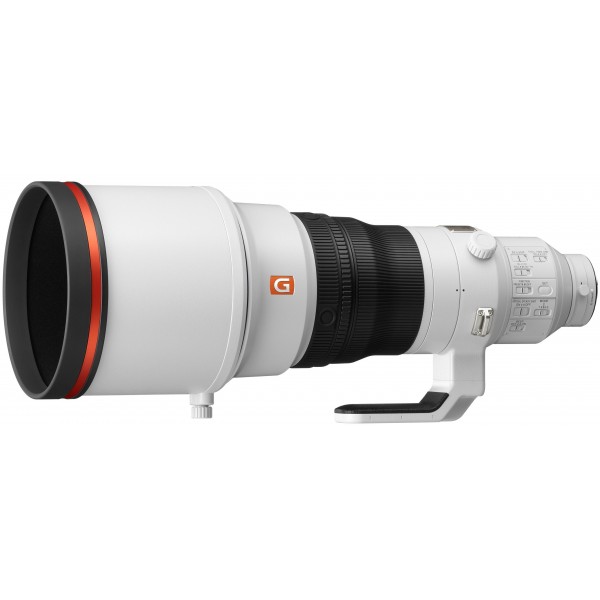
Filters fit into a 40.5mm rear slot rather than across the large front element. The supplied carbon-fibre hood controls stray light and protects the front. A hard case, lens strap and case strap are included to make transport more deliberate for an item whose size matters nearly as much as its weight.
Which Sony camera suits the FE 400mm F2.8 GM OSS?
The Sony Alpha 1 II combines resolution and speed for a broad professional brief. The Sony A9 III is centred on very fast action and assignments where global shutter makes a practical difference. The Sony A7R VI appeals when generous cropping latitude is a priority. More compatible lenses are available in the Sony lenses category.
Our verdict on the Sony FE 400mm F2.8 GM OSS
At MCZ DIRECT, we see the Sony FE 400mm F2.8 GM OSS as the choice for a sports or wildlife photographer who genuinely needs 400mm and F2.8 together, rather than as an occasional general-purpose telephoto. Its value is the combination: substantial reach, one stop more light than a 600mm F4 and a view that is still manageable for unpredictable action.
Against the 300mm F2.8 GM OSS, we recommend it when the extra 100mm prevents excessive cropping. Against the 600mm F4 GM OSS, it makes more sense when light falls or the subject works closer. Against the 200-600mm, it clearly favours aperture and subject separation over flexible composition.
The limitation is equally clear: 2.895kg, one fixed angle of view and an investment that demands a known working environment. For football, athletics, circuits, wildlife at first light and moving birds, that specialisation can be exactly why it earns its place.