
Shopping Cart
Last updated: March 2026 — Comparison based on our extended use of both bodies in the field.
You own a Canon EOS R5 and you're wondering whether the step up to the Canon R5 Mark II is worth it. It's the question thousands of Canon photographers have been asking since the Mark II launched in August 2024. Both bodies share the same megapixel count, the same RF mount, nearly identical dimensions. So what justifies the extra cost? And more importantly, will you actually see a real difference in your day-to-day images?
We've used both bodies side by side for several weeks to answer that question precisely. Here's our full Canon R5 vs R5 Mark II comparison, point by point, to help you make the right call.
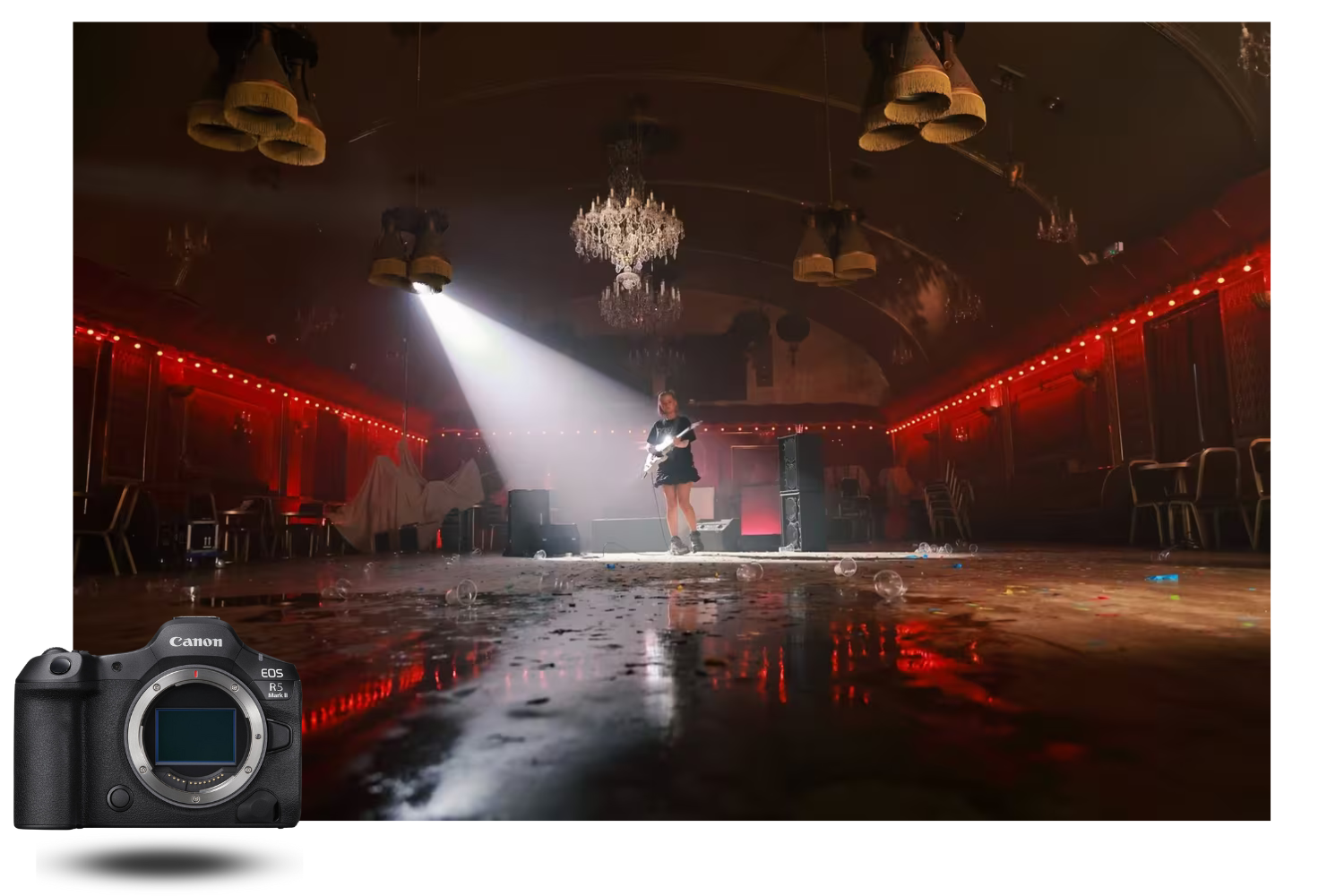
What hasn't changed between the Canon R5 and R5 Mark II
Before diving into the differences, let's start with what remains the same. This will help you gauge whether the Mark II's improvements actually match your real-world needs.
Both bodies share a 45-megapixel resolution on a full-frame 36 × 24 mm sensor. The Canon RF mount is identical — all your RF lenses work exactly the same way on either body, and EF-EOS R adapters remain fully compatible. The rear screen is unchanged: 3.2-inch, touchscreen, vari-angle, 2.1 million dots. The viewfinder retains its 5.76 million-dot resolution with 0.76× magnification.
The dual card slots (CFexpress Type B + SD UHS-II) carry over. The native ISO range remains 100–51,200 (expandable from 50 to 102,400). Mechanical shutter burst rate stays at 12 frames per second. Maximum mechanical shutter speed is still 1/8,000s. Weather sealing is at the same level on both bodies.
In short: if you primarily shoot in a calm, controlled manner — landscapes on a tripod, posed portraits in the studio, product photography — you won't see a dramatic difference in your files between the R5 and the R5 Mark II. The real step change lies elsewhere.
The sensor: same resolution, radically different architecture
This is the fundamental difference between the two bodies, and the one from which nearly every other improvement flows.
The original Canon R5 uses a conventional back-illuminated (BSI) CMOS sensor. The Canon R5 Mark II features a stacked back-illuminated (BSI) CMOS sensor. In a stacked sensor, the processing circuitry sits directly beneath the photosites rather than alongside them. The result: a 2.7× faster sensor readout.
In concrete terms, readout time drops from 16.3 ms on the R5 to 6.3 ms on the R5 Mark II. This difference has major implications for burst rate, rolling shutter, autofocus and video — all areas where the Mark II decisively outperforms its predecessor.
Raw image quality: subtle differences
In terms of pure resolution and detail at base ISO, the two bodies are virtually identical. A RAW file from the R5 and a RAW file from the R5 Mark II, processed with the same parameters, are nearly impossible to tell apart at normal viewing magnification. Only at 200% zoom can you detect a very slight sharpness advantage for the Mark II — a negligible benefit in practice.
Dynamic range is also very close: approximately 14 stops at base ISO on both models according to Photons to Photos measurements. High-ISO performance curves nearly overlap, with a slight edge for the Mark II from ISO 12,800 onwards, where it retains marginally more shadow detail.
Where the two do differ subtly is colour rendition. The original R5 exhibits a slight warm/reddish colour cast, particularly noticeable in cool tones (blue skies, water). The R5 Mark II delivers a more neutral, true-to-life rendering. For portrait photographers, the R5's warm cast can be an advantage — it flatters skin tones and gives images an appealing warmth straight out of camera. For landscape shooters, the Mark II's more neutral output is preferable, producing cleaner blues and greens that require less correction in post. The difference is subtle enough that most photographers won't notice it until viewing files from both cameras side by side under identical conditions, but it's consistent and measurable.
Image quality verdict
If you're happy with your R5's image quality, the Mark II won't revolutionise your files. Both sensors are excellent. The Mark II's advantage lies not in raw image quality but in the speed and features that the stacked sensor architecture makes possible.
Autofocus: the generational gap
This is where the difference between the Canon R5 and R5 Mark II is most striking. If you photograph moving subjects — children, sports, wildlife, events — the Mark II's autofocus is a genuine game-changer.
The Canon R5's AF system (recap)
The original R5 features an excellent Dual Pixel CMOS AF II system with 5,940 AF points, capable of operating down to EV -6. It detects people (eyes, face, head, body), animals (cats, dogs, birds) and motorsport vehicles. It's a remarkable AF system that remains, even in 2026, ahead of what many competing bodies offer.
What the R5 Mark II adds
The Mark II retains the same 5,940 AF points but pushes them further thanks to the DIGIC Accelerator processor. Here's what it brings on top:
Eye Control AF. The R5 Mark II tracks your iris movement within the viewfinder and places the AF point where you're looking. This technology, inherited from the Canon R1 and R3, does not exist on the original R5. In group portraits or wedding photography, it's a significant time-saver: instead of nudging the joystick to select your subject, you simply look at them and the camera understands. Calibration takes roughly 2 minutes and the system is sensitive to eye fatigue, but once mastered, it's a real advantage.
Register People Priority. The Mark II lets you store up to 10 faces with a priority order. Set the bride's face as priority 1, and the camera will track her even in a crowd. The original R5 doesn't have this feature.
Action Priority AF. Trained via AI, this mode recognises gameplay actions in football, basketball and volleyball, and anticipates the AF point shift toward the key player. The original R5 has nothing equivalent.
Improved upper-body and obstacle detection. The Mark II can maintain focus on a face even when an object (ball, racket, water splash) crosses in front. The original R5 loses focus more readily in these situations.
Extended AF sensitivity. The Mark II operates down to EV -6.5 versus EV -6 on the R5 — half a stop that can make the difference in the darkest environments.
Autofocus verdict
Autofocus is the number one reason to upgrade to the R5 Mark II if you shoot action. Eye Control AF, Register People Priority and Action Priority AF are Mark II exclusives that demonstrably improve your hit rate in the field. If you shoot posed portraits or landscapes, the original R5's AF remains excellent and more than sufficient.

Burst shooting and pre-capture: 30 fps vs 20 fps
With the electronic shutter, the R5 tops out at 20 fps. The R5 Mark II reaches 30 fps. With the mechanical shutter, both sit at 12 fps. On paper, the gap between 20 and 30 fps may seem minor — and for many photographers, it is. But there's an important nuance.
The Mark II's stacked sensor, with its 2.7× faster readout, produces images with dramatically less rolling shutter when using the electronic shutter. On the original R5, electronic shutter rolling shutter is pronounced enough to distort fast-moving subjects crossing the frame laterally (propellers, golf clubs, tennis rackets). On the Mark II, this issue is virtually eliminated. The upshot: you can use the Mark II's electronic shutter with confidence in almost any situation, whereas many R5 action shooters prefer sticking with the mechanical shutter at 12 fps to avoid artefacts.
Buffer: R5 goes deeper, R5 Mark II goes faster
Somewhat paradoxically, the original R5 offers a deeper buffer in raw frame count: 180 RAW at 20 fps (9 seconds of continuous shooting) versus 93 RAW at 30 fps on the Mark II (3.1 seconds). In JPEG, the gap is similar: 350 frames on the R5 versus 200 on the Mark II.
In practice, 3 seconds at 30 fps is more than enough for the vast majority of action sequences — a bird taking flight, a football goal, a jump. And the ability to dial the Mark II's burst rate down to 20 or 15 fps proportionally extends buffer depth.
Pre-capture: the R5 Mark II's exclusive weapon
This is where the Canon R5 Mark II opens up a decisive gap. The pre-capture function (pre-burst shooting) allows the camera to record continuously into its buffer memory as soon as you half-press the shutter button. When you fully press, the previous 15 frames are recovered and written to the card — roughly half a second of look-back time at 30 fps.
The original R5 does not have this feature at all.
For wildlife, sports and event photography, this is a considerable advantage. A bird launching from a branch, a sprinter's start, a fleeting smile: even if you press "too late," the R5 Mark II has already captured the moment. And unlike the Canon R6 II, R7 or R10 which offer a more limited pre-capture implementation (images grouped into a mosaic, delayed processing), the R5 Mark II saves each file individually, including in full-resolution RAW, numbered sequentially. It's clean, fast and immediately usable.
One practical consideration: the half-press duration appears to be unlimited — we tested holding it for over five minutes without issue. However, the pre-capture does keep the sensor active continuously, which draws additional battery power and generates some heat. For extended wildlife sessions where you might be waiting with the shutter half-pressed for long stretches, plan accordingly with spare batteries. There's also currently no way to assign a custom button to toggle pre-capture on and off quickly — you need to go through the menu, which is a minor inconvenience Canon may address in a future firmware update.
Burst and pre-capture verdict
If you rely on the electronic shutter for action (sports, wildlife), the Mark II is clearly superior thanks to its reduced rolling shutter and RAW pre-capture. If you primarily use the mechanical shutter at 12 fps, the practical difference is minimal.
Video: 8K 60p vs 8K 30p and much more
The Canon R5 was the first mirrorless camera to offer internal 8K video when it launched in 2020. But the limitations were real: 8K 30p maximum, rapid overheating (roughly 20 minutes in 8K 30p), no Canon Log 2, no built-in professional monitoring tools.
The Canon R5 Mark II addresses nearly all of these weaknesses. Here's a summary of the video differences:
| Feature | Canon R5 | Canon R5 Mark II |
|---|---|---|
| Max 8K | 8K DCI 30p (RAW or H.265) | 8K DCI 60p RAW Light + 8K 30p RAW/H.265 |
| Max 4K | 4K 120p | 4K 120p + 4K Fine oversampled from 8K |
| Max slow motion | 4K 120p (4× slow-mo) | 4K 120p + Full HD 240p (10× slow-mo) |
| Log profiles | Canon Log, Canon Log 3 | Canon Log, Canon Log 3 + Canon Log 2 |
| LUT in viewfinder | No | Yes |
| Built-in monitoring | Zebras only | Waveform, false colour, zebras, tally |
| Video pre-record | No | 3 or 5 seconds |
| Dual Shooting (stills + video) | No | Yes |
| Rolling shutter (video) | Visible on fast pans | Significantly reduced |
| HDMI port | Micro-HDMI (fragile) | Full-size HDMI Type A |
| 8K 30p duration (no grip) | ~20 minutes | ~26 minutes |
| Fan grip support | No | Yes (CF-R20EP) — 2h+ in 8K 30p |
| 4-channel audio | No | Yes (via multi-function hotshoe) |
The addition of Canon Log 2 is particularly significant. This profile, previously exclusive to Cinema EOS cameras (C70, C300, C500), delivers wider dynamic range than Canon Log and Log 3, and offers direct compatibility with Cinema EOS LUTs. For videographers who mix footage between an R5 Mark II and a Cinema EOS camera, colour matching in post is now far simpler.
The Dual Shooting mode, which lets you record Full HD video while simultaneously capturing burst stills, is another Mark II exclusive with no equivalent on the original R5.
Video verdict
If video represents a significant part of your work, the R5 Mark II is a major upgrade. Canon Log 2, 8K 60p, professional monitoring tools, full-size HDMI, fan grip support, video pre-record, Dual Shooting and 4-channel audio: the list of improvements is long and every point matters in a professional workflow. If you only shoot video occasionally, the R5 remains very capable at 4K and 8K 30p.
Stabilisation: 8.5 stops vs 8 stops
The Canon R5 Mark II offers IBIS stabilisation up to 8.5 stops (CIPA 2024 standard), compared to 8 stops on the original R5 (earlier CIPA standard). The numerical difference is modest, but the testing standards have evolved, making a direct comparison tricky.
In real-world use, we found no perceptible difference between the two bodies for stills. Both allow handheld shooting at remarkably slow shutter speeds. The real difference shows up in video, where the Mark II benefits from an improved Movie Digital IS mode and Peripheral Coordinated Control (coordinated edge-of-frame stabilisation with certain compatible RF lenses), delivering smoother results during handheld panning.
Ergonomics and connectivity: the small differences that matter
Both bodies share nearly identical dimensions (138.5 × 101.2 × 93.5 mm for the Mark II vs 138.5 × 97.5 × 88 mm for the R5). The Mark II is fractionally taller and heavier (746 g vs 738 g with battery and card) — a difference that's imperceptible in the hand.
Notable ergonomic changes on the Mark II:
Dedicated photo/video switch on top of the body, replacing the R5's ON/OFF toggle (which moves to the mode dial). It's a genuine time-saver for hybrid photo/video creators. The R5 requires going through the menu or mode dial to switch.
Full-size HDMI port (Type A) in place of the R5's micro-HDMI — far more robust and reliable for video shoots where the HDMI cable is under mechanical stress.
Multi-function hotshoe capable of powering compatible accessories directly (microphones, receivers). The original R5 has a standard hotshoe with no power delivery.
Tally light on the front face that glows red during video recording — people in front of the camera know when it's rolling. Absent on the R5.
Improved Wi-Fi with integrated MIMO antennae for faster, more stable transfers.
The R5 retains one advantage in a specific area: its IBIS multi-shot high-resolution mode which combines 16 exposures to produce a 400-megapixel file — a feature absent from the R5 Mark II. If you use this for product or architecture photography in the studio, it's a point to consider before selling your R5.

In-camera image processing: Mark II exclusives
The dual DIGIC X + DIGIC Accelerator processors in the R5 Mark II enable processing features that are impossible on the original R5 (which only has DIGIC X):
Neural Network Upscaling. The Mark II can quadruple the resolution of a JPEG/HEIF file directly in-camera, producing images of approximately 179 megapixels. The output is surprisingly clean on well-exposed files. The R5 doesn't have this feature.
Neural Network Noise Reduction. After capture, the Mark II can apply an advanced AI-based denoising algorithm to RAW files directly in the camera. Processing takes a few seconds per image but delivers results superior to conventional noise reduction. Absent on the R5.
Neither function works in real time (processing happens image by image post-capture), but they offer a productivity gain for photographers who want to deliver clean, high-resolution files without round-tripping through desktop software.
Battery life: advantage to the original R5
This is one of the few areas where the Canon R5 takes back the lead. The R5's CIPA battery rating is 490 shots on the LCD and 320 on the EVF. The R5 Mark II shows 630 shots on the LCD and 340 on the EVF. At first glance, the Mark II appears better, but the two were tested under different CIPA standards (the Mark II's 2024 standard is more favourable), and the original R5 with its LP-E6NH battery was measured under stricter conditions.
In real-world use, both bodies deliver similar performance in standard mixed shooting. The key difference: the R5 Mark II is more power-hungry when its exclusive features are active (pre-capture, Eye Control AF, MIMO Wi-Fi), which can noticeably reduce battery life. Pack a spare LP-E6P if you plan to use pre-capture heavily.
Worth noting: the R5 Mark II introduces the new LP-E6P battery, required for certain features (pre-capture, Dual Shooting, HDMI RAW output). Older LP-E6NH batteries remain compatible but with limitations. The original R5 works perfectly with LP-E6NH batteries.
Summary table: Canon R5 vs R5 Mark II
| Feature | Canon R5 | Canon R5 Mark II |
|---|---|---|
| Sensor | 45 MP BSI CMOS | 45 MP stacked BSI CMOS |
| Processor | DIGIC X | DIGIC X + DIGIC Accelerator |
| Sensor readout | 16.3 ms | 6.3 ms (2.7× faster) |
| Burst (electronic) | 20 fps | 30 fps |
| Pre-capture | No | Yes — 15 RAW frames |
| Eye Control AF | No | Yes |
| Register People Priority | No | Yes — 10 faces |
| Action Priority AF | No | Yes — 3 sports |
| AF sensitivity | EV -6 | EV -6.5 |
| Max 8K video | 8K 30p | 8K 60p internal RAW |
| Canon Log 2 | No | Yes |
| IBIS | 8 stops | 8.5 stops |
| Neural upscaling | No | Yes — up to 179 MP |
| 400 MP multi-shot | Yes | No |
| HDMI port | Micro-HDMI | HDMI Type A |
| Weight (with battery/card) | 738 g | 746 g |
So, should you upgrade from the Canon R5 to the R5 Mark II?
Here's our verdict, organised by shooting profile.
Yes, the upgrade is worth it if…
You shoot sports or action. The stacked sensor with reduced rolling shutter, the 30 fps burst that's genuinely usable with the electronic shutter, RAW pre-capture, Eye Control AF, Action Priority AF and Register People Priority form a package that represents a real performance leap over the original R5. If you cover competitions, sporting events or wildlife in action, the Mark II will let you capture shots the R5 simply cannot.
You're a professional videographer. 8K 60p RAW, Canon Log 2, professional monitoring tools (waveform, false colour), full-size HDMI, fan grip support, video pre-record, Dual Shooting and 4-channel audio make the R5 Mark II a video tool on an entirely different level from the original R5. If video accounts for more than 30% of your work, the investment is justified.
You shoot weddings or events. Eye Control AF to shift between subjects with a glance, Register People Priority to keep the bride in sharp focus at all times, pre-capture to never miss spontaneous moments, the photo/video switch for instant mode changes: these are tangible productivity gains in the field.
No, you can keep your R5 if…
You primarily shoot landscapes or architecture. Raw image quality is virtually identical between the two bodies. And the original R5 retains the edge with its 400 MP multi-shot mode, which remains unmatched for maximum resolution work in the studio or on a tripod.
You shoot posed portraits in a studio. With a stationary subject, controlled lighting and time to compose, the Mark II's advantages (speed, advanced AF, pre-capture) go unexploited. Image quality will be visually identical.
Your budget is tight. The original R5 remains an excellent camera in 2026. If you can put the price difference towards a quality RF lens instead of the body, your image quality will likely improve more noticeably.
The middle ground: buy the Mark II and keep the R5 as a second body
This is the route many professionals are taking. The R5 Mark II becomes the primary body (action, video, events) and the original R5 shifts to backup duty (landscapes, portraits, redundancy). Both share the same mount, the same lenses, the same accessories. The original R5 retains enough resale value on the used market to fund a significant portion of the upgrade.
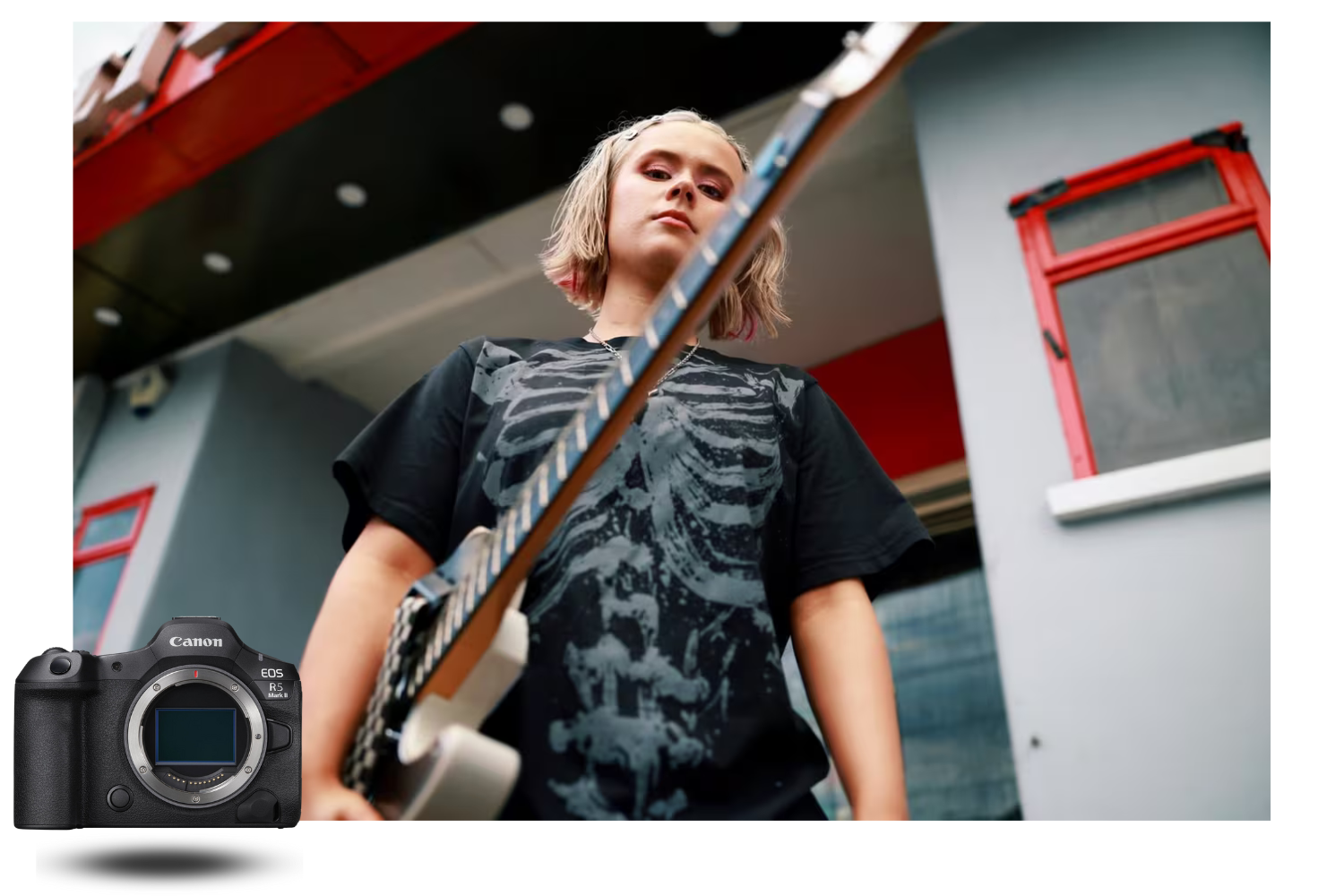
Conclusion
The Canon EOS R5 Mark II isn't a cosmetic refresh. It's a camera that addresses the original R5's weaknesses (electronic shutter rolling shutter, video overheating, less responsive AF on complex subjects) while adding exclusive features that didn't exist four years ago (RAW pre-capture, Eye Control AF, Canon Log 2, neural upscaling). The stacked sensor is the foundational change from which all these improvements stem.
That said, the original Canon R5 remains an excellent camera in 2026, capable of producing exceptional images in most situations. If your photography doesn't call for the Mark II's new capabilities, there's no urgency to upgrade.
The question isn't "Is the R5 Mark II better than the R5?" — it is, objectively, in almost every regard. The real question is: "Will your photography benefit from these improvements enough to justify the investment?" We hope this comparison helps you answer that.
One final thought: camera technology moves fast, but great images don't require the latest hardware. The original R5 has produced countless award-winning photographs and professional assignments over the past six years, and it will continue to do so. The Mark II simply raises the ceiling for what's possible in the most demanding shooting scenarios. Whether you need that higher ceiling depends entirely on how you shoot and what you shoot. Choose accordingly.
Discover the Canon EOS R5 Mark II on MCZ Direct: view our full product page with pricing, detailed specifications and fast shipping.
Comments (0)