- -5%
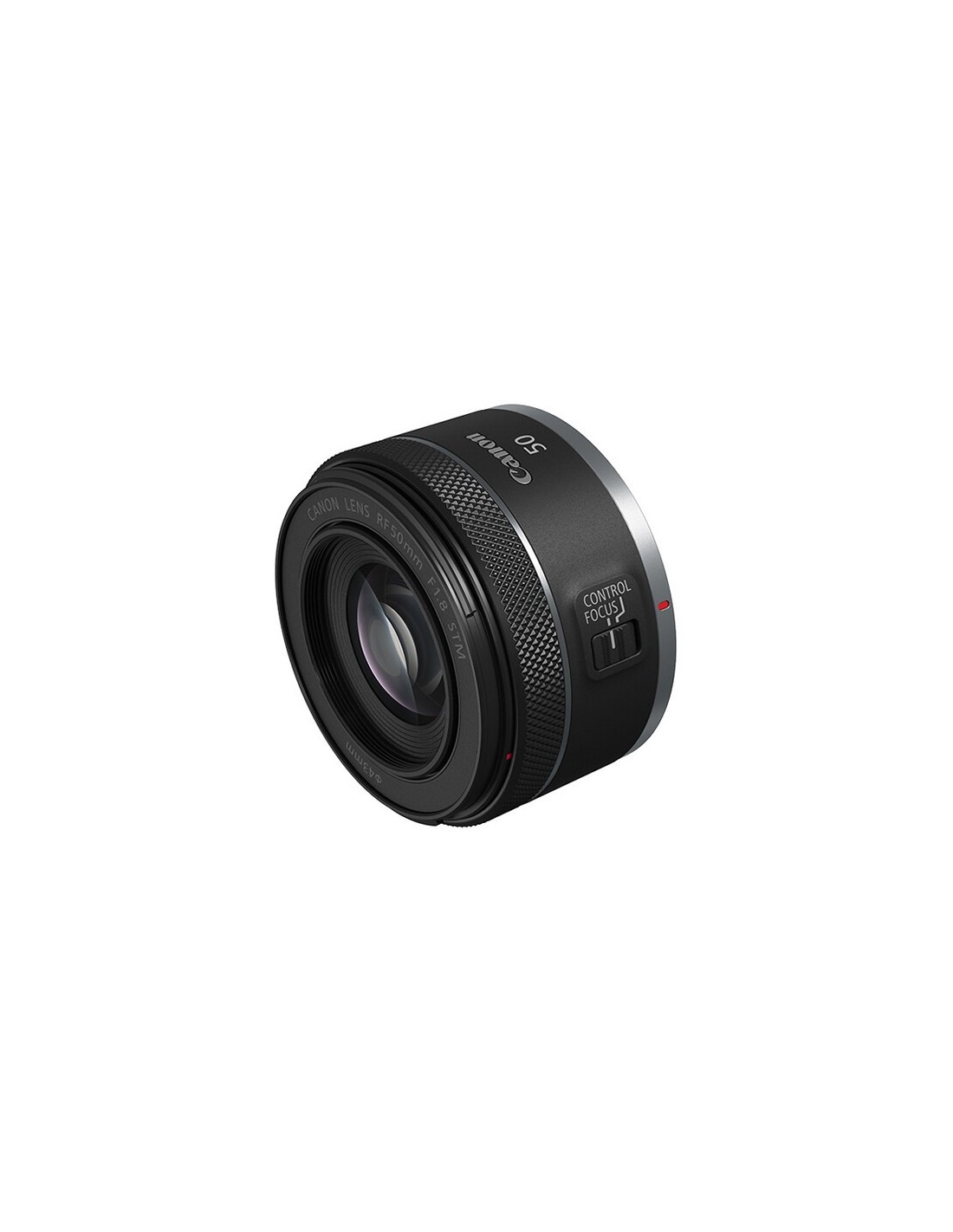
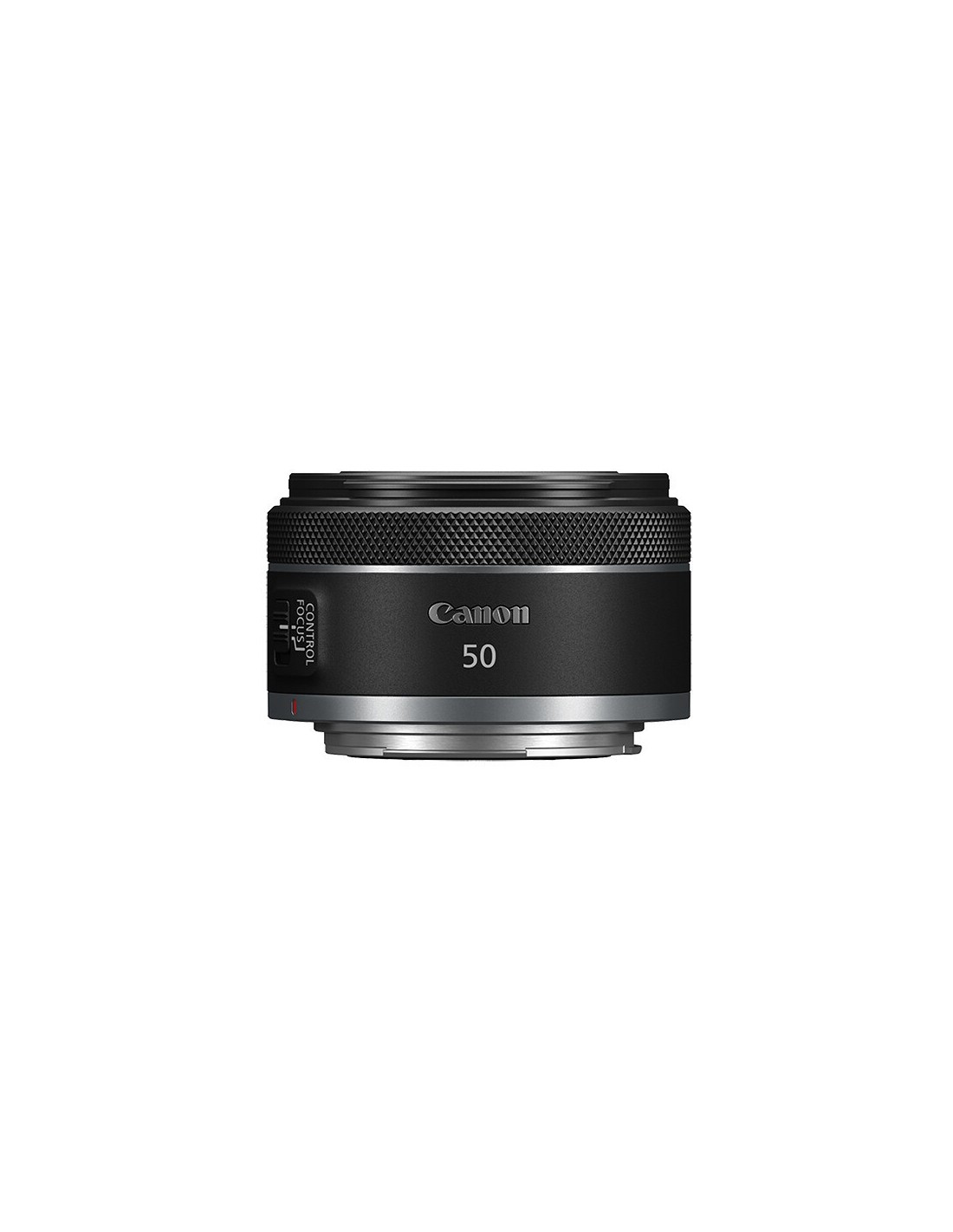
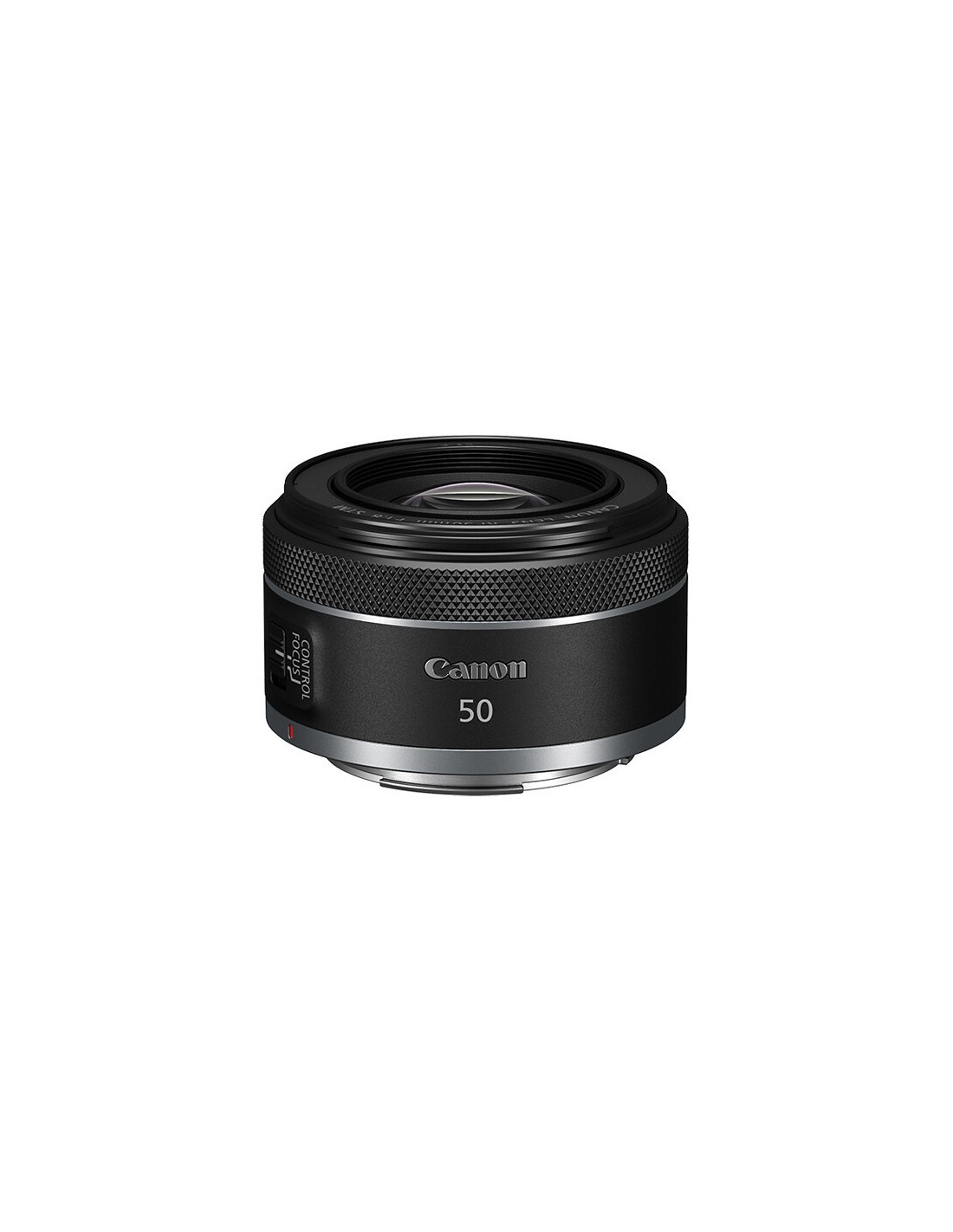
Canon RF 50mm f/1.8 STM
- 100% newBrand-new and authentic product
- Final priceNo unpleasant surprises! The displayed price is the final amount paid for your purchase.
- 3-year MCZ DIRECT warranty
- Free delivery with insurance includedYour order is protected from dispatch to delivery: in case of loss, theft or damage during transport, your parcel is insured up to its value.
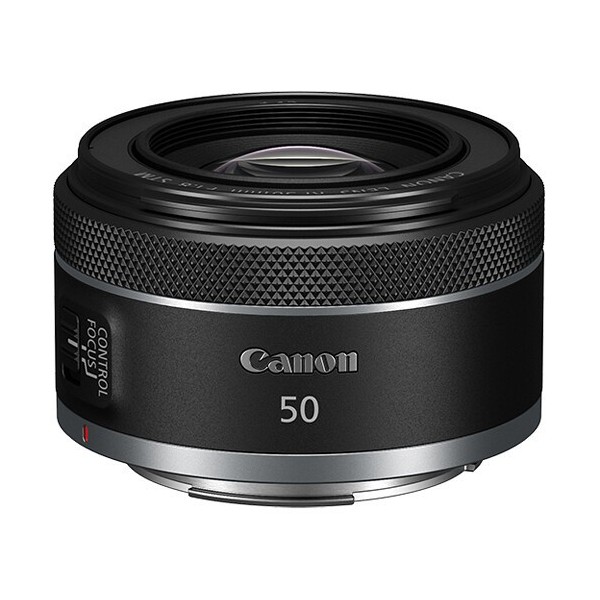
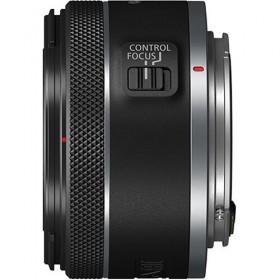
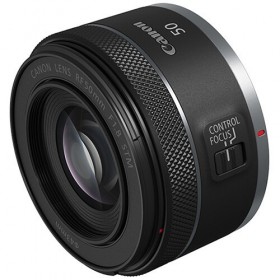
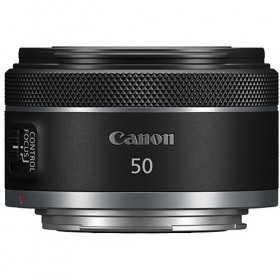
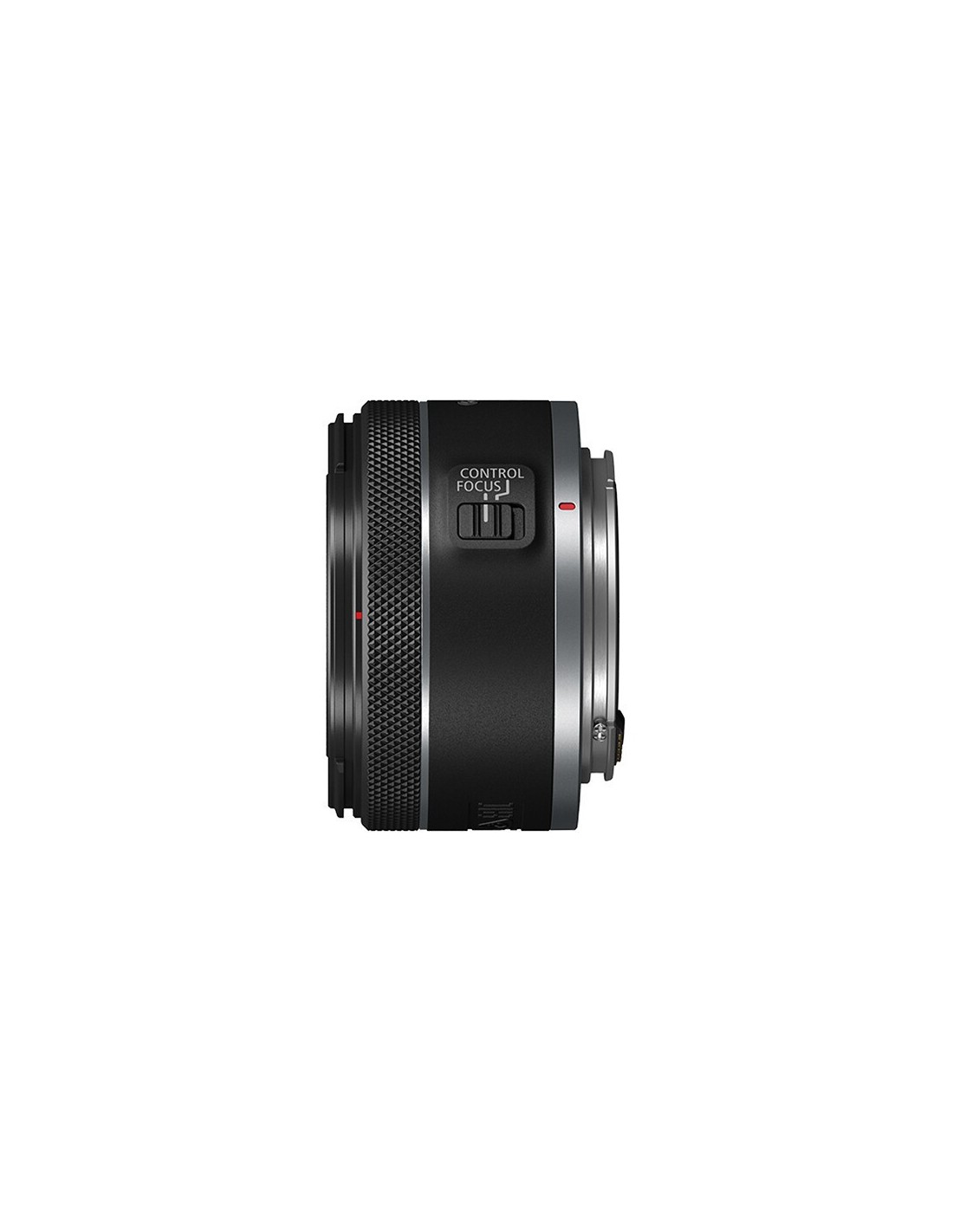
The Canon RF 50mm F1.8 STM is a full-frame standard prime for EOS R photographers who want a compact introduction to bright 50mm photography, and we recommend it for portraits, reportage, street work and low-light scenes. Its f/1.8 aperture helps maintain a practical shutter speed as light fades and can soften the background when the subject is close enough. At 160g, it remains discreet on a small body. STM autofocus, a 0.30m minimum focus distance and 0.25x magnification extend its usefulness to everyday details. There is no optical stabilisation, and on Canon APS-C cameras it frames roughly like an 80mm lens on full frame. It is a sensible choice for learning to compose with a prime while keeping the kit light.
Complete your set
Combine compatible accessories and save. The more items you add, the bigger the discount.


memory card
SanDisk 128GB Extreme PRO UHS-II SDXC 300 MB/s memory card

warranty extension
2-year warranty extension
Canon RF 50mm F1.8 STM: a simple prime that encourages better seeing
The Canon RF 50mm F1.8 STM is one of the smallest routes into bright Canon RF lenses. On a Canon EOS R8, it gives a natural view for environmental portraits, reportage and everyday scenes. Its practical value becomes most obvious as light falls or when a subject needs separating from the background without carrying a heavy lens. That simplicity also calls for technique: the photographer moves rather than zooms, focus must be placed carefully at f/1.8, and the lack of optical stabilisation needs accounting for.
Canon RF 50mm F1.8 STM key strengths
- 50mm full-frame focal length for environmental portraits, reportage, street photography and everyday subjects.
- f/1.8 maximum aperture for lower-light shooting and a softer background at close subject distances.
- 160g weight that keeps an EOS R setup light and discreet.
- 40.5mm barrel length for easy everyday carrying.
- STM autofocus suited to mixed stills and video use.
- 0.30m minimum focus distance for working with details without stepping far back.
- 0.25x maximum magnification for objects, food, flowers and everyday details without claiming true macro capability.
- Seven-blade circular diaphragm designed to maintain a pleasant out-of-focus background.
- One aspherical element within a 6-element, 5-group optical design.
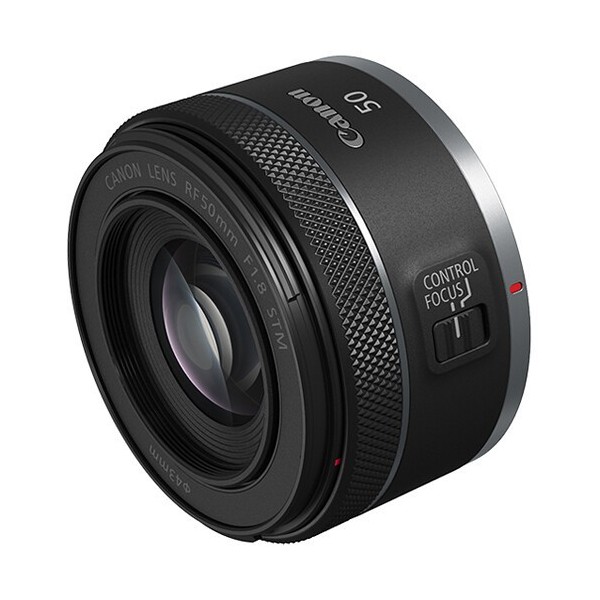
- 43mm front filter thread for compact protective, polarising or creative filters.
- Metal lens mount for a durable body connection.
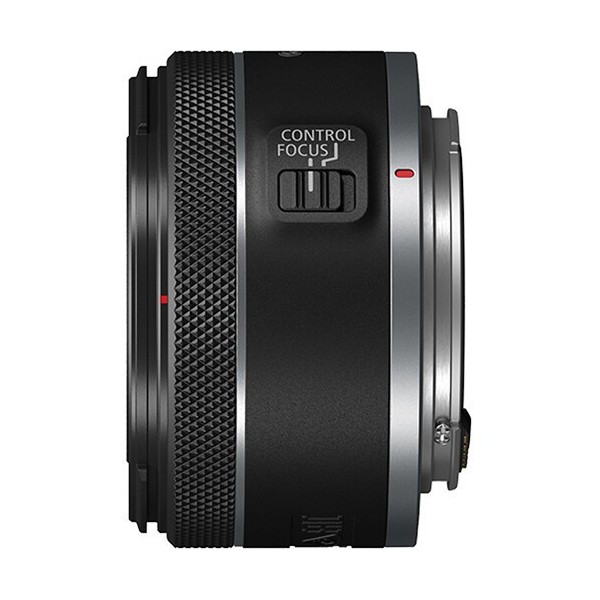
- Configurable ring used for focus or a camera setting according to the selector position.
What its specifications change in practice
| Specification | Practical benefit | What to consider |
|---|---|---|
| Fixed 50mm | A natural view that isolates a subject without becoming a telephoto lens. | Framing changes by moving, not zooming. |
| f/1.8 aperture | More scope indoors and a softer background at close range. | Depth of field becomes shallow, so focus accuracy matters. |
| 160g weight | A discreet setup for walking, travelling or long shooting days. | Canon does not describe it as dust- and moisture-resistant. |
| 0.30m and 0.25x | Convincing close views of everyday details. | 0.25x magnification is not 1:1 macro. |
| No optical IS | The lens remains exceptionally compact. | On a body without IBIS, watch shutter speed or use support. |

Portraits, reportage and low light: where does 50mm work best?
For portraits, 50mm retains some context and works naturally for half-length compositions or candid moments. In reportage and street photography, the small barrel helps the photographer remain discreet, although the fixed focal length means choosing a distance rather than turning a zoom ring. At f/1.8, the difference is most useful indoors, at dusk or when the background should recede. The Canon RF 35mm F1.8 Macro IS STM is more flexible when the surroundings need to stay in frame. For a tighter portrait from farther away, the Canon RF 85mm F2 Macro IS STM separates the face more strongly.
Full frame or APS-C: 50mm and 80mm-equivalent views tell different stories
On full frame, the RF 50mm retains a natural view that moves easily from environmental portrait to reportage and detail. On an APS-C Canon EOS R7 or Canon EOS R10, the field of view is roughly equivalent to 80mm on full frame. It becomes more specialised for tighter portraits, details and subjects photographed from farther away. The focal length printed on the lens does not change; the smaller sensor simply records a narrower portion of the image. In a small room, that APS-C view may require more working distance.
| Sensor | Resulting view | Most natural uses |
|---|---|---|
| Full frame | Standard 50mm | Environmental portrait, street, reportage, everyday work, low light |
| Canon APS-C | About 80mm equivalent | Tighter portrait, details, stage work, subjects photographed from farther away |

A light lens that rewards precise focusing
At f/1.8 and close range, a small change in distance can move the plane of sharp focus. For portraits, place the focus point on the eye and check the result when the subject moves. Stopping down to f/2.8 or f/4 increases the margin of sharpness; around f/5.6 to f/8, rendering becomes more even across the frame for urban scenes, reproduction or groups. The single ring can control manual focus or a camera setting. Filters use a 43mm thread, while the Canon ES-65B hood is sold separately. For handheld video, the lack of optical stabilisation makes body and support choice important.
Canon RF 50mm F1.8 STM or EF 50mm F1.8 STM?
The RF 50mm mounts directly on an EOS R mirrorless camera without an adapter. That is its clearest practical advantage over the EF 50mm F1.8 STM made for Canon DSLRs. Both lenses weigh almost the same and open to f/1.8, but the RF focuses at 0.30m with 0.25x maximum magnification, compared with 0.35m and 0.21x for the EF. If you already own the EF version and a Canon EF-EOS R adapter, the difference may not justify an immediate replacement. For a first EOS R purchase, however, the native RF lens provides the simpler, smaller and more integrated setup.
RF 50mm F1.8, F1.4 L VCM or F1.2 L: which should you choose?
| Criterion | RF 50mm F1.8 | RF 50mm F1.4 L VCM | RF 50mm F1.2 L |
|---|---|---|---|
| Maximum aperture | f/1.8 | f/1.4 | f/1.2 |
| Canon-listed weight | 160g | 580g | 950g |
| Filter | 43mm | 67mm | 77mm |
| Positioning | Compact and simple | Hybrid stills-video L-series | Maximum light and rendering priority |
| Logical choice | Mobility and learning | Intensive work and control | Portrait and low light when weight is secondary |

Our MCZ DIRECT verdict
At MCZ DIRECT, we see the Canon RF 50mm F1.8 STM as the most coherent choice for an EOS R photographer seeking a first bright prime that is light and easy to carry. It suits learning portraiture, street work and everyday photography better than intensive professional use that calls for protected construction and more complete controls.
Against the RF 50mm F1.4 L VCM, we recommend it when 160g weight and discretion matter more than the brighter aperture, iris ring and L-series build. The RF 50mm F1.2 L USM aims for another level of light gathering and rendering, with substantially more weight.
Its honest limitation is its simplicity: no optical stabilisation, no stated weather sealing and less even corner performance wide open than at middle apertures. That does not undermine its purpose. For learning subject placement, working with depth of field and keeping a 50mm lens in the bag, its balance remains difficult to overlook.
Technical specifications
General
Level
Properties
Focal length
Aperture
Zoom
Uses
Physical properties
Buying guidance
Canon RF 50mm F1.8 STM FAQ
Who is the Canon RF 50mm F1.8 STM for?
It suits EOS R photographers seeking a light prime for portraits, street photography, reportage, everyday scenes and low-light work.
Is the Canon RF 50mm F1.8 STM compatible with every EOS R camera?
Yes. Its RF mount works with full-frame and APS-C Canon EOS R mirrorless cameras. Sensor size only changes the field of view.
What view does the RF 50mm give on Canon APS-C?
On Canon APS-C, its field of view is roughly equivalent to 80mm on full frame, making it especially useful for tighter portraits.
Is the Canon RF 50mm F1.8 STM suitable for portraits?
Yes. On full frame, 50mm works for environmental and half-length portraits. The f/1.8 aperture helps soften the background.
Can it be used in low light?
Yes. Its f/1.8 maximum aperture gathers more light than a typical kit zoom, although shutter speed and ISO still need matching to the scene.
Does the Canon RF 50mm F1.8 STM have stabilisation?
No. The lens has no optical stabiliser. On a camera without in-body stabilisation, watch shutter speed or use support.
Is the RF 50mm F1.8 a macro lens?
No. Its 0.30m minimum focus and 0.25x magnification are useful for details, but they do not provide 1:1 macro reproduction.
What filter size does it use?
The Canon RF 50mm F1.8 STM accepts 43mm screw-in filters.
Is a lens hood included?
The compatible Canon ES-65B hood is optional and is not included in the standard Canon-listed box contents.
How does it differ from the RF 50mm F1.4 L VCM?
The F1.8 is far lighter. The F1.4 L VCM adds a brighter aperture, L-series construction and hybrid stills-video controls at a higher weight.
Should you choose 35mm, 50mm or 85mm?
A 35mm lens includes more surroundings, 50mm gives a natural view, and 85mm isolates the subject more strongly from farther away.
What is the difference between the Canon RF 50mm F1.8 STM and EF 50mm F1.8 STM?
The RF mounts directly on an EOS R mirrorless camera without an adapter and focuses at 0.30m with 0.25x magnification. The EF needs an EF-EOS R adapter, focuses at 0.35m and reaches 0.21x.