

My basket0 items


Find your orders, invoices and saved addresses all in one place.
The Canon RF 400mm F2.8 L IS USM is a professional fixed super-telephoto lens for sports, wildlife and press photographers who need speed, light and strong subject separation, and we recommend it when 400mm genuinely matches the working distance. Its f/2.8 aperture helps retain a fast shutter speed under cloud, in woodland or during evening events, while Canon-rated optical stabilisation of up to 5.5 stops steadies the view and reduces camera shake. Ring USM autofocus supports rapid distance changes. At 2,890g, however, the lens rewards deliberate positioning and suitable support rather than casual handheld use throughout the day. It is best suited to an experienced EOS R photographer who values performance at 400mm more than the framing freedom of a zoom.
Combine compatible accessories and save. The more items you add, the bigger the discount.
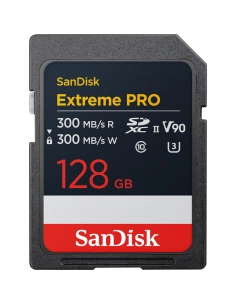
memory card

warranty extension
The Canon RF 400mm F2.8 L IS USM belongs beside a pitch, track or hide where the photographer already understands the likely subject distance. Four hundred millimetres reaches across a venue without imposing the very narrow field of view of a 600mm or 800mm lens. The f/2.8 aperture helps retain shutter speed as daylight fades and separates an athlete or animal from a distracting background. This performance comes with a clear commitment. At 2,890g, the RF 400 2.8 is neither a travel zoom nor a default telephoto choice. It works best when the shooting position is planned and the subject will remain within a predictable zone.

| Feature | Practical benefit | Consideration |
|---|---|---|
| 400mm f/2.8 | Fast shutter speeds and softer backgrounds when the subject remains distant | There is no way to widen the frame if the action approaches suddenly |
| Up to 5.5-stop IS | A steadier view and more latitude with a relatively still subject | Stabilisation cannot freeze subject movement |
| 2.5m and 0.17x | Tight details and smaller subjects at a reasonable working distance | Depth of field becomes very shallow near minimum focus |
| 2,890g and 367mm | A professional 400mm f/2.8 that is lighter than the earlier EF II generation | A monopod or support is sensible for a full match or long hide session |
| 52mm drop-in filter | Filter changes without touching the large front element | The compatible rear drop-in holder must be used |
| Assignment | What the RF 400 contributes | Useful reservation |
|---|---|---|
| Football, rugby and athletics | Reach across the venue while retaining a fast shutter speed | A second body or zoom helps when the action reaches the near touchline |
| Motorsport | Isolate the vehicle and track it along a known path | Panning still requires the correct IS mode and shutter speed |
| Mammals and woodland wildlife | F2.8 preserves light and separates the subject within cluttered vegetation | Very distant birds may justify native 600mm or 800mm reach |
| Press and outdoor events | Work at distance without surrendering the end of the day | Transport volume and venue access rules need advance planning |
| Rapidly changing distance | Image quality and light remain available within its working zone | A 100-300mm or 100-500mm zoom is more rational if subjects approach often |
The f/2.8 aperture primarily affects shutter speed and depth of field. It helps preserve short exposure times when an athlete, animal or vehicle is moving, then separates that subject from a distracting setting. Image stabilisation corrects some movement introduced by the photographer. It steadies composition, panning and relatively still subjects, but it does not slow the action. In practical use, shutter speed is often the decisive setting; IS then improves comfort and consistency.
The Canon RF 400mm F2.8 L IS USM accepts RF extenders. A 1.4x produces a 560mm f/4 combination, useful for wildlife or a deeper pitch while retaining a bright aperture. The Canon Extender RF 2x reaches 800mm f/5.6. Extra reach costs light and makes atmospheric disturbance between camera and subject more visible. An extender is valuable when the distance is genuinely substantial; it cannot replace a better position or stable air.

At 2,890g, brief handheld tracking remains realistic when a subject behaves unpredictably. For an entire match, a monopod is usually the sensible choice because it removes much of the load while preserving rapid movement around the touchline. A gimbal head on a tripod suits a fixed hide or planned position. Support is not only about camera shake. It helps maintain accurate tracking after several hours. The 367mm body also requires a bag and access plan suited to professional super-telephoto equipment.
| Lens | Choose it when | Main compromise |
|---|---|---|
| RF 400mm F2.8 L IS USM | Performance at 400mm, light and subject separation take priority | Fixed focal length, 2,890g and highly specialised use |
| RF 100-300mm F2.8 L IS USM | The same f/2.8 aperture is required but subject distance varies more | Native reach stops at 300mm |
| RF 100-500mm F4.5-7.1 L IS USM | Mobility and framing flexibility matter more than low-light work | A substantially slower aperture at long focal lengths |
| RF 200-800mm F6.3-9 IS USM | Reach and quickly finding wildlife in the frame are decisive | F9 at 800mm and less separation than f/2.8 |

The Canon RF 600mm F4 L IS USM provides more native reach for birds and distant wildlife. The 400mm f/2.8 frames wider and is one stop faster, an advantage at dusk, beneath woodland cover and whenever shutter speed must remain high. Adding a 1.4x makes the 400mm a 560mm f/4, close in purpose but not identical in framing. For subjects that remain much farther away, the Canon RF 800mm F5.6 L IS USM serves a different specialism.
The RF mount attaches directly to Canon EOS R cameras. The Canon EOS R1 prioritises response, vertical ergonomics and sustained professional work. The Canon EOS R3 remains a natural sports and wildlife partner with its integrated grip. The Canon EOS R5 Mark II provides more resolution when cropping matters. On an APS-C body, the angle of view resembles approximately 640mm on full frame: the subject fills more of the image, but tracking becomes less forgiving. The Canon RF lens category shows the other active focal lengths.
At MCZ DIRECT, we see the RF 400mm F2.8 L IS USM as the choice for a sports, press or wildlife photographer who frequently works around 400mm, rather than as a first professional telephoto lens. Its value is not focal length alone. F2.8 preserves shutter speed as light falls and gives the subject a presence that slower zooms struggle to reproduce.
Against the RF 100-300mm F2.8, we recommend it when reach at 400mm matters more than the ability to zoom out. Against the RF 100-500mm, we choose it for light and rendering, not mobility. Its limitation is equally plain: 2,890g, a fixed field of view and a highly specialised investment require regular use, controlled positioning and usually a monopod. For unpredictable distances, the zoom remains the more practical answer.

It serves sports, press and wildlife photographers who regularly work near 400mm and require an f/2.8 aperture. A zoom is usually more practical when distance changes constantly.
Yes. Four hundred millimetres covers much of a pitch and f/2.8 helps retain shutter speed as light falls. A second body or zoom remains useful for close action.
Yes, particularly for mammals, reasonably close birds and woodland subjects. Smaller wildlife that remains very distant may justify native 600mm or 800mm reach.
Yes for short sequences. At 2,890g, a monopod is preferable for a full match or long waiting period.
Canon lists approximately 2,890g. The lens is about 367mm long and 163mm in diameter.
It reduces blur caused by the photographer and steadies the view. It cannot freeze an athlete, animal or vehicle, which still needs an appropriate shutter speed.
Minimum focus is 2.5m, with a maximum reproduction ratio of 0.17x.
Canon RF 1.4x and RF 2x extenders are compatible, producing 560mm f/4 and 800mm f/5.6 combinations.
Choose the fixed 400mm when reach and performance at that focal length take priority. The 100-300mm retains f/2.8 and adapts better to changing distance.
The 400mm prioritises light, shutter speed and subject separation. The 100-500mm is lighter and more flexible for mobile work.
The 400mm frames wider and is one stop faster. The 600mm gives more native reach for birds and distant wildlife.
The RF mounts directly on EOS R and accepts RF extenders. An existing EF 400mm F2.8 III remains usable with an EF-EOS R adapter, so replacement is not automatic.
