

Shopping Cart

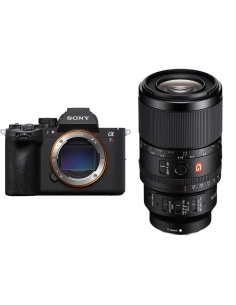
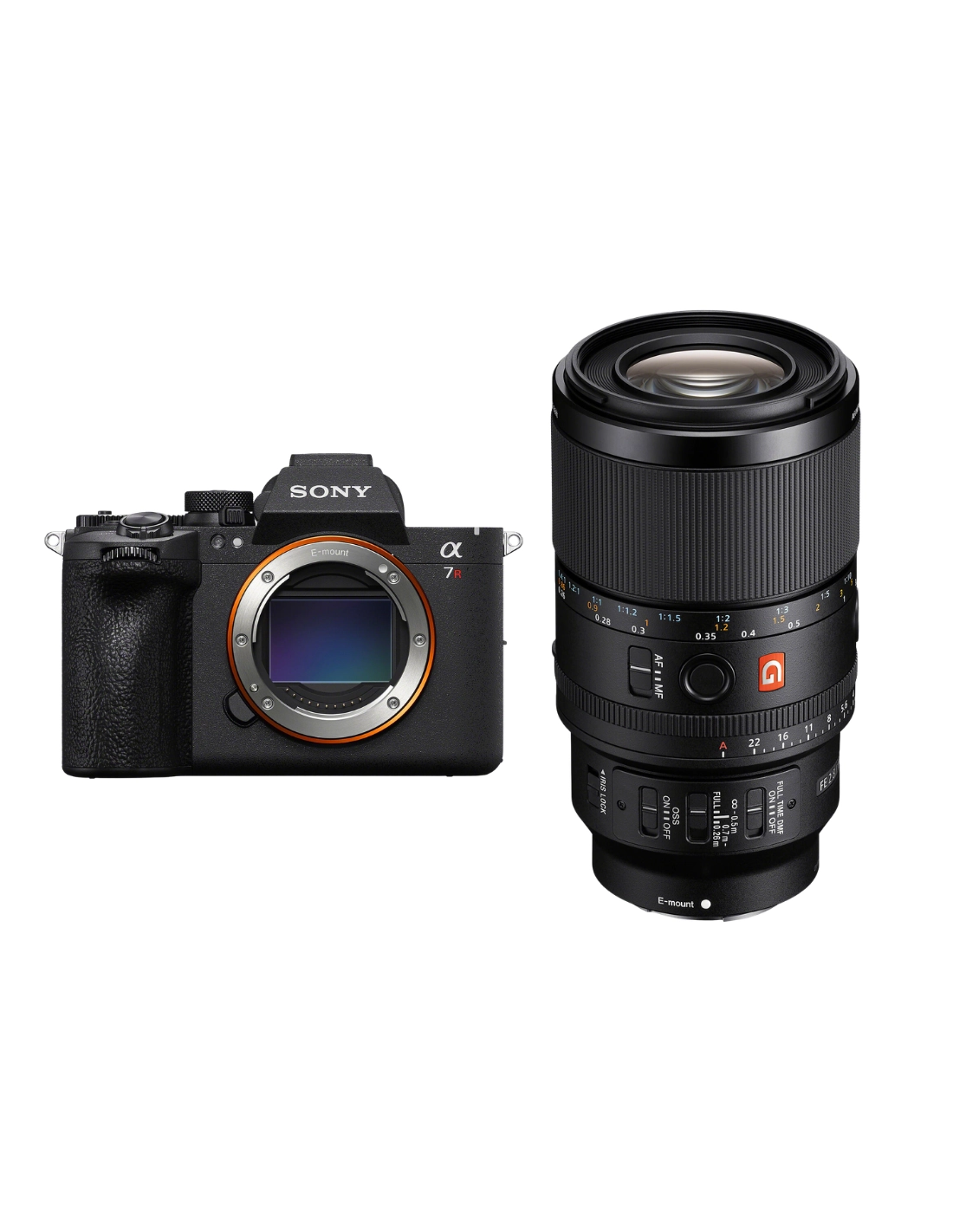
Sony A7R VI + FE 100mm f/2.8 Macro GM
IN STOCK
€5,018.85
€5,283.00-5%
- 100% newBrand-new and authentic product
- Final priceNo unpleasant surprises! The displayed price is the final amount paid for your purchase.
- Order before 2 pm: estimated delivery Tue 21 - Wed 22 JulEstimate based on available stock, order time, business days and carrier delivery times.
- 3-year MCZ DIRECT warranty
- Free delivery with insurance includedYour order is protected from dispatch to delivery: in case of loss, theft or damage during transport, your parcel is insured up to its value.
The Sony A7R VI with FE 100mm F2.8 Macro GM OSS is a full-frame mirrorless kit recommended for photographers who need exceptional detail in macro, product, reproduction, nature and close portrait work. Its native 1.4x magnification goes beyond life size, while optical stabilisation and the 100mm focal length support precise framing without placing the lens immediately against a small subject. The 66.8MP sensor provides substantial resolution for fine textures and considered cropping. This pairing is a strong choice for building a specialised workflow around accurate rendering, controlled close-ups and subjects whose smallest details matter.
A Sony A7R VI configuration built for fine detail
The Sony A7R VI and FE 100mm F2.8 Macro GM OSS form a specialised full-frame kit for photographers who need both high resolution and genuine optical magnification. The camera contributes a 66.8MP sensor, while the SEL100M28GM lens reaches 1.4x maximum magnification without an accessory. This combination is relevant to macro photography, products, jewellery, food, reproduction, flowers, insects, technical detail and close portraits. It can also produce highly detailed close-up video, provided that focus, subject movement and lighting are controlled with the same care as framing.
Our team has structured this page around the exact body-and-lens combination. The supplied lens is the E-mount FE 100mm F2.8 Macro GM OSS, model SEL100M28GM. It is not the older FE 100mm F2.8 STF GM OSS, which is a different optic with a different purpose. Making that distinction clear matters because searches for “Sony 100mm GM” can refer to either product.
Why the A7R VI and 100mm Macro GM make sense together
The practical value of the kit lies in how camera resolution and lens magnification serve the same detail-led workflow. The 66.8MP files retain fine texture and allow considered cropping, while native 1.4x magnification goes beyond the conventional life-size 1:1 ratio. The result is not merely a body and lens sharing the same mount. It is a pairing designed around revealing small structures accurately. That makes its role different from a standard zoom kit intended to change focal length quickly across travel, event or general documentary work.
Key points to consider before choosing
| Criterion | What this kit provides | Practical consequence |
|---|---|---|
| Resolution | 66.8MP full-frame sensor | Fine textures and cropping latitude, with demanding storage requirements |
| Macro capability | Native 1.4x maximum magnification | A subject can be reproduced beyond life size on the sensor |
| Minimum focus | 0.26m from the sensor plane | Actual clearance in front of the lens is shorter than 26cm |
| Stabilisation | Optical SteadyShot optimised for macro | Reduces camera movement but cannot freeze a moving subject |
| Combined weight | Approximately 1,359g with battery and card | Support and carrying choices matter during long sessions |
What native 1.4x macro magnification means
At 1.4x, the image projected onto the sensor is 1.4 times larger than the real subject. The lens therefore moves beyond the 1:1 ratio commonly described as life size. This is useful for isolating the structure of a material, a small mechanism, jewellery, a plant surface or a technical component. Maximum magnification is reached only at the shortest focus distance; it decreases naturally as the camera moves away. The lens also supports the optional Sony SEL14TC and SEL20TC teleconverters. Sony specifies up to 2.8x with the SEL20TC, but neither teleconverter is part of this kit.
Minimum focus and working space in front of the subject
The quoted 0.26m minimum focus distance is measured from the sensor plane, not from the front element. The physical space available in front of the lens is therefore shorter. This difference affects lighting placement, the risk of shading the subject and the room available around an insect or delicate object. A 100mm focal length still gives a more useful working perspective than a short macro lens when some separation is required. We recommend assessing subject size, intended magnification and lighting together rather than treating 26cm as the clearance in front of the lens.
Using 66.8MP for texture, reproduction and cropping
The A7R VI resolution becomes particularly valuable when an image must describe a finish, engraving, surface, fabric or manufacturing detail. It also leaves room for moderate cropping when the final framing cannot be achieved safely at capture. That resolution makes technique more visible as well: small focus errors, vibration and insufficient shutter speed can all reduce the expected detail. Stable support is useful whenever the subject allows it. Large files also require suitable memory cards, computer performance, storage and backup. Those workflow needs should be considered part of the configuration rather than an afterthought.
Focusing controls designed for close work
The FE 100mm F2.8 Macro GM OSS uses four XD linear motors to drive a floating focus group. Its controls allow rapid movement between autofocus and manual focus when the intended plane of sharpness needs direct adjustment. Autofocus is useful for active subjects and changing distance, while magnified manual focus can be more predictable for a stationary object. At high magnification, depth of field can be extremely narrow, so focus should be checked on the actual feature that needs to be sharp. No focus system can compensate for a subject that moves outside that plane during exposure.
What optical stabilisation can and cannot do
The lens includes Optical SteadyShot specifically optimised for close-up work and communicates with compatible Alpha bodies. It reduces the effect of photographer movement and can support measured handheld stills or video. It cannot stop an insect moving, a flower shifting in the wind or the camera changing its distance to the subject. At high magnification, even a small forward or backward movement changes the focus plane. For repeatable product and reproduction work, a tripod, copy stand or supported rail remains the more controlled solution despite the presence of stabilisation.
Depth of field, lighting and precision
Close focus produces shallow depth of field even when the aperture is stopped down. Aperture choice must balance the required sharp zone against shutter speed, ISO and diffraction. For static objects, controlled continuous light or flash can keep sensitivity lower and reveal form consistently. For living subjects, shutter speed must still address subject movement. Focus stacking can extend apparent depth when several planes must look sharp, but it requires a stable subject and a suitable assembly workflow. These decisions are intrinsic to macro photography and are more important than relying on a single automatic setting.
Product, jewellery, food and reproduction photography
This pairing is well suited to small products, watches, jewellery, cosmetics, ingredients, documents and technical components whose surface matters. The camera records extensive detail, while the 100mm focal length leaves useful space for positioning lights compared with a short macro. For flat artwork or documents, careful sensor-to-subject alignment helps keep the image plane consistent. For three-dimensional products, the viewpoint and depth of field should be chosen according to the information the picture needs to communicate. The same kit can therefore support both polished commercial imagery and accurate technical records.
Flowers, insects and nature details
Outdoors, 100mm and 1.4x magnification provide access to petals, veins, mineral surfaces and small animals. The focal length helps avoid placing the front of the lens directly against a subject, but it does not remove wind or movement. A short burst may improve the chance of catching the exact focus plane, while diffusion or compact lighting can control harsh shadows. The high-resolution sensor reveals both good technique and mistakes, so our team recommends reviewing critical images at high magnification during the session rather than waiting until the files reach the computer.
Can a 100mm macro lens also handle portraits?
Yes. A 100mm focal length supports close portraits from a comfortable camera-to-subject distance, and the F2.8 aperture with an 11-blade circular diaphragm can separate the subject from the background. The high level of recorded detail may require thoughtful light and processing when a softer rendering is preferred. If portraits and available light are the primary requirements, the Sony A7R VI with FE 85mm F1.4 GM II is the more dedicated option. This 100mm kit is stronger when portraits must share a workflow with true macro capture.
Detailed close-up video
The 100mm macro lens can create precise detail sequences for products, nature, food, craft and institutional films. Four XD motors are designed for fast, quiet focus operation, and optical stabilisation assists controlled movement. The A7R VI offers recording options up to 8K 30p and 4K 120p, but the correct mode also depends on crop, codec, heat, battery life and media requirements. A rail, video tripod or planned manual focus movement often provides more repeatable results than unrestricted handheld motion. Sound recording should also be considered when the camera is close to a working mechanism.
Which A7R VI configuration should you choose?
| Configuration | Primary role | Choose it when |
|---|---|---|
| 100mm F2.8 Macro GM OSS | Native 1.4x macro and fine detail | Product, reproduction or close-up work is central |
| 70-200mm F4 Macro G OSS II | Telephoto framing flexibility | You accept 0.5x maximum magnification to vary focal length and distance |
| 24-105mm F4 G OSS | Everyday versatility | You want one zoom for travel, documentary and portraits |
| 24-70mm F2.8 GM II | Professional event coverage | Rapid framing changes matter more than specialised macro |
| Camera body only | Freedom to select a lens | You already own a suitable Sony E-mount macro lens |
Memory cards, battery and file management
Both A7R VI slots accept UHS-I/II SD and CFexpress Type A cards. A fast UHS-II SD card covers many stills and video settings, while CFexpress Type A is preferable for sustained bursts and the most demanding recording modes. The 66.8MP files consume space quickly, especially during focus brackets or repeated bursts. The camera uses the NP-SA100 battery and BC-SAD1 charger. No memory card is included. Choose capacity and sustained write performance according to the format, frame rate and expected session length rather than the headline speed alone.
Exactly what is included
The kit contains the Sony Alpha 7R VI camera body and FE 100mm F2.8 Macro GM OSS SEL100M28GM lens. Camera and lens accessories are separated in the In the box section so the supplied configuration is easy to verify. The lens set includes the ALC-SH173 hood, ALC-F67S front cap, ALC-R1EM rear cap and soft case. A teleconverter, memory card, filter and macro lighting are not supplied.
Our team’s recommendation
We recommend this pairing when macro and detail are a genuine production priority rather than an occasional extra. Its strongest argument is the alignment between a very high-resolution sensor and an optic that exceeds 1:1 reproduction without an accessory. Before committing, consider whether a fixed 100mm lens provides enough flexibility for the rest of your work. You can compare all current combinations in the Sony Alpha 7R VI category. When fine structures, small products or close subjects define the assignment, this kit has a clear and useful purpose.

SONYA7RVIFE100F28MACROGM
9503986339665
Technical specifications
General
Brand
Sony
Product type
Full-frame mirrorless camera with 100mm macro prime lens kit
Camera type
Interchangeable-lens digital camera
Product line
Sony Alpha
Product series
Alpha 7R
Specific model
ILCE-7RM6
Available languages
Multilingual, including English
Release date
June 2026 (announced May 13, 2026)
Lens mount
E-mount
Camera
Level
Professional
Processor
BIONZ XR2 with integrated AI processing unit
Image ratio
3:2
Image stabilization
Yes
Autofocus
Yes, Fast Hybrid AF
Lens mount
Sony E
RAW
Yes, Sony ARW 6.0
File formats
JPEG, HEIF, Sony ARW 6.0 RAW, XAVC HS, XAVC S-I and XAVC S
Has 360 mode
No
Max burst speed
30 fps
Lens included
Yes
Kit configuration
Sony Alpha 7R VI with FE 100mm F2.8 Macro GM OSS
Included lens count
1
Included lens 1
Sony FE 100mm F2.8 Macro GM OSS
Lens 1 model
SEL100M28GM
Lens 1 mount
Sony E
Lens 1 format
Full Frame
Lens 1 focal length
100mm
Lens 1 max aperture
f/2.8
Lens 1 stabilization
Yes, Optical SteadyShot
Image Stabilization Type
Image sensor-shift mechanism with 5-axis compensation
Stabilization Compensation Effect
Center 8.5 stops and periphery 7.0 stops (CIPA 2024)
Stabilization Modes
Still images: On/Off; movie: Dynamic active / Active / Standard / Off
Pixel Shift Multi Shooting
Yes (4 shots / 16 shots)
Continuous drive speed
Electronic shutter Hi+: 30 fps; mechanical shutter Hi+: 10 fps
Recordable frames buffer
JPEG Fine L 215; RAW 150; RAW+JPEG 135; RAW compressed HQ 65; RAW lossless 60
Focus system type
Fast Hybrid AF (phase-detection AF / contrast-detection AF)
Focus points
Still images: max. 759 points; movies: max. 759 points
Focus Sensitivity Range
EV-6 to EV20; EV-11 to EV20 in Bright Monitoring
Subject recognition
Auto, human, animal, bird, insect, car, train, airplane
Clear Image Zoom
Still images: approx. 2x; movies: approx. 1.5x (4K/8K), approx. 2x (HD)
Other Features
Soft Skin Effect, Creative Look, Picture Profile, Time-lapse, Auto Framing, Pre-Capture, HDR, Framing Stabilizer
Accessibility
Screen Reader, Focus Magnifier, Focus Map (Movie), Peaking, Subject Recognition AF, touch controls
Playback Modes
Enlarged display, protect, rating, shot mark, divider, crop, photo capture
Lens Compensation
Shading, chromatic aberration, distortion, breathing (movie)
Uses
All-round use
Yes
Architecture
Yes
Landscape
Yes
Portrait
Yes
Travel
Yes
Reportage
Yes
Sports
Yes
Wildlife
Yes
Photo / video
Yes
Vlogging
No
Sensor
Sensor type
Full-frame Exmor RS CMOS sensor
Sensor size
35,9 x 24,0 mm
Resolution
66 MP
Standard ISO range
ISO 100-32000
Photo Resolution
L: 9984 x 6656 (66 M); M: 6528 x 4352 (28 M); S: 4992 x 3328 (17 M)
Sensor Resolution (Millions of pixels)
Still images: approx. 66.8 MP max.; movies: approx. 55.8 MP max.
Camera Format
35mm full frame (35.9 x 24.0 mm), Exmor RS CMOS sensor
Number of Pixels (total)
Approx. 72.6 megapixels
Still image recording format
JPEG, HEIF, RAW Sony ARW 6.0
Image Quality Modes
RAW, JPEG, HEIF (4:2:0 / 4:2:2), RAW & JPEG, RAW & HEIF
14bit RAW
Yes
Anti-Dust function
Yes
Exposure
ISO Sensitivity
Still images: ISO 100-32000 (expandable 50-102400); movies: ISO 100-32000
Metering
1200-zone evaluative metering; EV-5 to EV20 sensitivity
Exposure Compensation
+/- 5.0 EV (1/3 EV or 1/2 EV selectable)
Anti-flicker shooting
Yes
Shutter type
Electronic: 1/8000 to 30 s; mechanical: 1/8000 to 30 s; Bulb; movies: 1/8000 to 1 s
Color Temperature Range
2500 K - 9900 K
Display
LCD Screen type
8.0 cm (3.2-type) type TFT
LCD Number of Dots
2,095,104 dots
LCD Adjustable Angle
Opening angles: up 98°, down 40°, side 180°, rotation 270°
Touch Panel
Yes
Viewfinder
Viewfinder Type
1.6 cm (0.64-type) electronic viewfinder (Quad-XGA OLED)
Viewfinder Number of Dots
9,437,184 dots
Viewfinder Magnification
Approx. 0.90x with 50 mm lens at infinity
Finder Frame Rate Selection
STD 60fps / HI 120fps
Flash
Flash Sync. Speed
1/250 s (35mm full frame), 1/320 s (APS-C)
Flash
Sony α System Flash via Multi Interface Shoe; +/- 3 EV compensation; pre-flash TTL
Video
6K video
No
7K video
No
8K video
Yes
Maximum video resolution
8K 7680 x 4320
Video frame rates
8K up to 29.97p; 4K up to 119.88p; Full HD up to 119.88p
Video Resolution
8K 7680 x 4320 up to 29.97p; 4K 3840 x 2160 up to 119.88p; Full HD up to 119.88p
Video Compression
XAVC S: MPEG-4 AVC/H.264; XAVC HS: MPEG-H HEVC/H.265
Movie recording formats
XAVC HS 8K, XAVC S-I 4K/HD, XAVC S 4K/HD, XAVC HS 4K; 4:2:2 10bit depending on mode
RAW output
Yes (HDMI)
Proxy recording
Yes
Slow & Quick Motion (S&Q)
Yes
Movie Functions
TC/UB: Yes
USB streaming
MJPEG/YUV420; 3840x2160 up to 30p, 1920x1080 up to 60p, 1280x720 up to 30p; LPCM 2ch
Network streaming
3840x2160/2560x1440/1920x1080/1280x720; H.264 or HEVC/H.265; AAC-LC 2ch; RTMP/RTMPS/SRT
Audio
Audio Recording Format
LPCM 2ch/4ch 48/96 kHz 16/24 bit, PCM 2ch/4ch 32 bit float depending on accessories
Microphone
Built-in, stereo
Speaker
Built-in, monaural
Storage
Dual card slot
Yes
Memory types
CFexpress Type A / SD UHS-II
Card types
CFexpress Type A and SD/SDHC/SDXC UHS-I/UHS-II
Memory card
Slot 1 and 2: SD UHS-I/II or CFexpress Type A
Connectivity
HDMI OUTPUT
HDMI Type-A: 8K 29.97/25/23.98p; 4K up to 59.94p; 1080 up to 59.94p; Raw 16bit
USB Type-C terminal
PORT1: SuperSpeed USB 10 Gbps (USB 3.2); PORT2: Hi-Speed USB 480 Mbps (USB 2.0)
Audio terminals
3.5 mm stereo mic; 3.5 mm stereo headphone
PC / remote / sync
PC: Mass-storage / MTP; Bluetooth remote control; sync terminal: yes
Multi Interface Shoe
Yes, with digital audio interface
Wireless
Wireless connectivity
Wi-Fi 802.11a/b/g/n/ac/ax 2.4/5/6 GHz; Bluetooth 5.3
Physical properties
Weight
Approx. 622 g body only; approx. 713 g with battery and memory card
Dimensions
Approx. 132.7 x 96.9 x 82.9 mm; 132.7 x 96.9 x 72.8 mm grip-to-monitor
Operating Temperature
0 - 40 °C / 32 - 104 °F
Battery
Supplied Battery
One rechargeable battery pack NP-SA100
Battery Life
Still: approx. 600 viewfinder / 710 LCD; actual movie: 135/140 min; continuous movie: 215/215 min
USB Power Supply
USB power supply and internal USB-C charging with USB Power Delivery
Power Consumption
LCD: still 3.5 W / movie 5.8 W; viewfinder: still 4.2 W / movie 5.8 W
Buying guidance
Best for
Macro photography, product photography, jewellery, food, reproduction, flowers, insects, nature details and close portraits.
Check before buying
General one-lens travel, wide scenes, rapid focal-length changes or deep macro work without suitable support and lighting.
Compatibility
The included SEL100M28GM is a full-frame Sony E-mount lens directly compatible with the A7R VI; optional SEL14TC and SEL20TC teleconverters are supported.
Note
Teleconverters are not included. Native magnification is 1.4x; the optional SEL20TC raises it to 2.8x. Stabilisation does not freeze subject movement.
Included lens
Lens type
Full-frame medium telephoto macro prime lens
Lens series
Sony G Master
Focal range
100mm
Optical construction
17 elements in 13 groups
Optical stabilisation
Yes, Optical SteadyShot optimised for macro
AF drive
Four XD linear motors with floating focus group
Minimum focusing distance
26cm
Maximum magnification
1.4x without teleconverter
Maximum aperture
f/2.8
Minimum aperture
f/22
Diaphragm blades
11, circular diaphragm
Optical zoom
Prime lens, no zoom
Lens weight
646g
Filter diameter
67mm
Lens length
14.79cm
Lens diameter
81.4mm
Dust/splash resistance
Yes, dust- and moisture-resistant design
Sony A7R VI 100mm Macro GM kit frequently asked questions
What is the Sony A7R VI with 100mm Macro GM kit?
It pairs the high-resolution full-frame Sony A7R VI with the FE 100mm F2.8 Macro GM OSS lens. This configuration is intended for macro, product, reproduction, nature-detail and close portrait work.
Is the FE 100mm F2.8 Macro GM OSS lens included?
Yes, this page covers the kit containing the A7R VI body and SEL100M28GM lens. The camera and lens, with their respective accessories, are listed separately in the box contents.
What is this Sony A7R VI macro kit suitable for?
It suits macro, product, jewellery, food, reproduction, flower, insect and close portrait photography. The fixed 100mm focal length is specialised and does not replace a general-purpose zoom.
What does the Sony 100mm 1.4x macro ratio mean?
At maximum magnification, the lens projects an image onto the sensor that is 1.4 times larger than the real subject. It therefore exceeds 1:1. Sony specifies up to 2.8x with the optional SEL20TC, which is not included.
What is the minimum focus distance of the Sony 100mm Macro GM?
Minimum focus distance is 0.26m, measured from the sensor plane rather than the front of the lens. The space actually available in front of the lens is therefore shorter and varies with the configuration.
How is the Sony A7R VI 100mm Macro kit stabilised?
The SEL100M28GM has Optical SteadyShot optimised for macro and communicates with the compatible camera stabilisation system. This reduces camera movement but cannot freeze a moving subject or motion caused by wind.
How much does the Sony A7R VI with 100mm Macro GM weigh?
The combination weighs approximately 1,359g before accessories, calculated from the 713g camera with battery and card plus the 646g lens. Final weight varies with filter, plate, lighting and other accessories.
Is the Sony A7R VI with 100mm Macro GM suitable for portraits?
Yes, the 100mm focal length supports close portraits from a comfortable distance and F2.8 helps separate the subject. For work centred mainly on portraits and low light, an 85mm F1.4 remains the more specialised choice.
Is this kit suitable for product photography and reproduction?
Yes, its high resolution and 1.4x ratio suit small objects, jewellery, textures, documents and technical details. For consistent results, plan stable support, controlled lighting and careful alignment between camera and subject.
Is the Sony A7R VI 100mm Macro kit suitable for video?
Yes, it supports detailed close-up sequences with optical stabilisation and focusing driven by four XD linear motors. For macro video, carefully control depth of field, subject movement, focus transitions and lighting.
Sony 100mm Macro GM or Sony 90mm Macro G OSS: which should I choose?
The 100mm reaches 1.4x without accessories, compared with 1x for the 90mm, and belongs to the G Master range. The 90mm is lighter and may be sufficient when life-size reproduction already meets the requirement.
Sony 100mm Macro GM or 70-200mm F4 Macro G OSS II: which should I choose?
The 100mm prioritises specialised close-ups with native 1.4x magnification; the 70-200mm prioritises framing flexibility and variable distance with a 0.5x maximum ratio. Choose according to the magnification actually required.
Which memory cards should be used with the Sony A7R VI?
Both slots accept UHS-I/II SD and CFexpress Type A cards. A fast UHS-II SD card covers many settings; CFexpress Type A is preferable for sustained bursts and the most demanding video modes. No memory card is included.
Should I choose this kit or the Sony A7R VI body only?
Choose this kit when macro and detail-led work are central to your practice. Body only is more logical if you already own a Sony E macro lens or need to select a different focal length for your subjects.
Reviews Sony A7R VI + FE 100mm f/2.8 Macro GM
0 Rating
Customer photos
No customer photos yet
Tap to zoom
ALEX (In testing phase)