- -5%
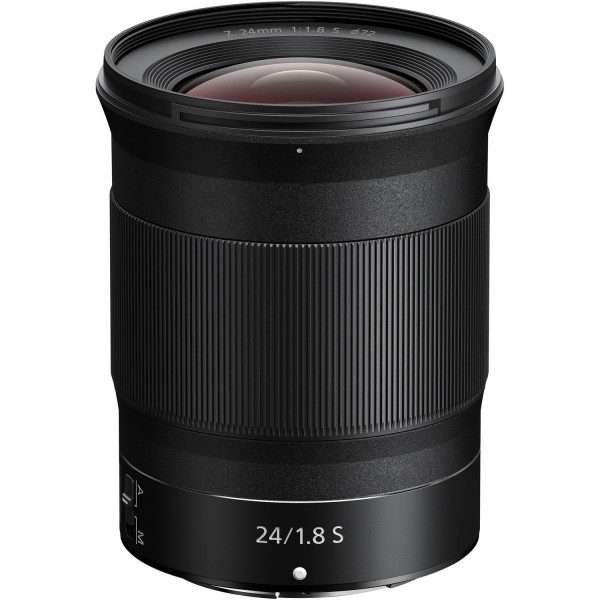
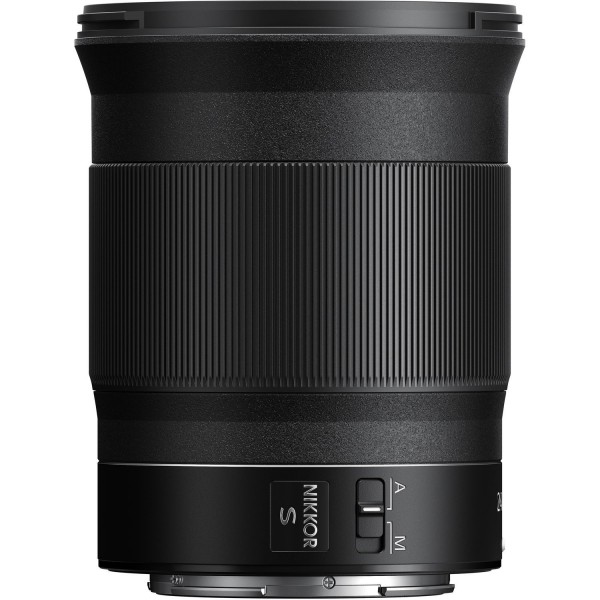
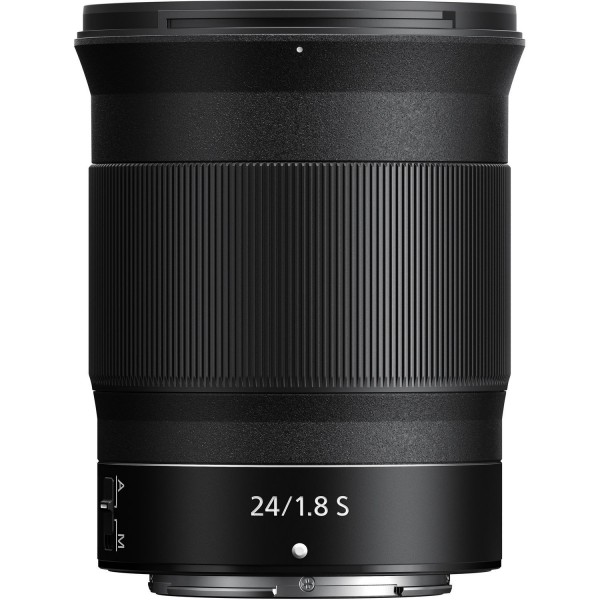
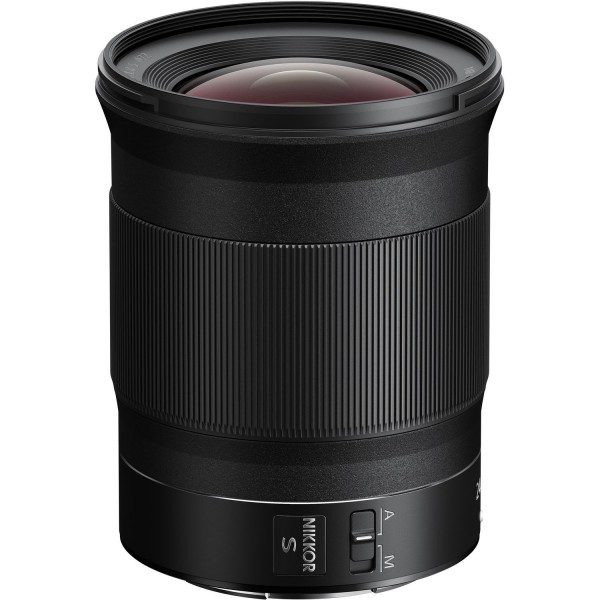
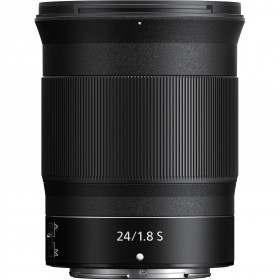
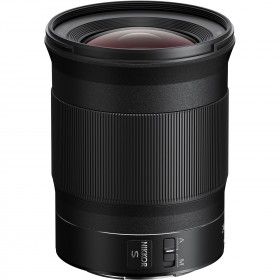
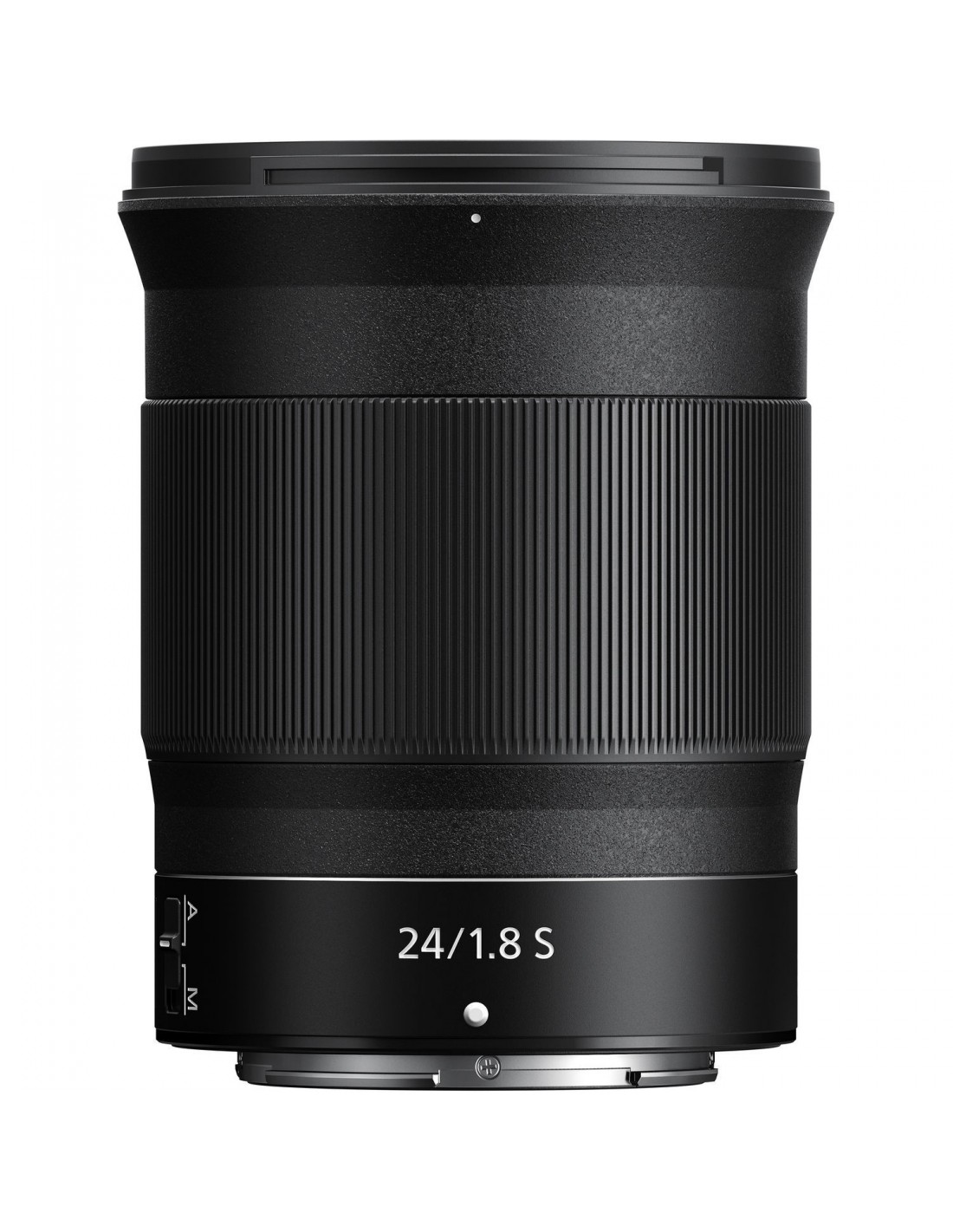
Nikon NIKKOR Z 24mm f/1.8 S
- 100% newBrand-new and authentic product
- Final priceNo unpleasant surprises! The displayed price is the final amount paid for your purchase.
- 3-year MCZ DIRECT warranty
- Free delivery with insurance includedYour order is protected from dispatch to delivery: in case of loss, theft or damage during transport, your parcel is insured up to its value.
The NIKKOR Z 24mm f/1.8 S is a fast wide-angle prime for Nikon Z photographers combining landscapes, architecture, documentary work and available light, and we recommend it when context should remain visible without the stronger perspective of a 20mm lens. Its f/1.8 aperture helps protect shutter speed indoors, work at dusk and separate a close subject. The 24mm view remains natural enough to include people within their surroundings. Nikon states 450g, 0.25m minimum focus and a 72mm filter thread. With no optical VR, it can use in-body stabilisation on compatible cameras for static scenes. It is a compelling option for photographers who already value the 24mm view and prefer a consistent prime to the flexibility of a zoom. It also suits carefully planned everyday professional work.
Complete your set
Combine compatible accessories and save. The more items you add, the bigger the discount.


memory card
SanDisk 128GB Extreme PRO UHS-II SDXC 300 MB/s memory card

warranty extension
2-year warranty extension
NIKKOR Z 24mm f/1.8 S: describe the location without losing the subject
The NIKKOR Z 24mm f/1.8 S sits between an ultra-wide view and a classic documentary focal length. It describes a room, street or landscape with enough space to understand the location, while retaining more natural proportions than a 20mm lens when people are included.
Its f/1.8 aperture supports shutter speed as much as background separation. Indoors or at dusk, it helps freeze a gesture without an unnecessary rise in ISO. At close range, it can also isolate a detail. The 450g weight and absence of optical VR place it in a quality-led working role rather than the category of a tiny casual prime.
Key strengths of the NIKKOR Z 24mm f/1.8 S
- 24mm and 84° on FX to describe a location with manageable perspective.
- f/1.8 aperture for interiors, dusk and night-sky work.
- Focus from 0.25m to bring a detail close while retaining context.
- S-Line optics with one ED and four aspherical elements.
- Multi-focus AF for accurate focusing across distances.
- 72mm filter thread for ordinary polarisers and ND filters.
- Nine rounded blades for smoother transitions behind a close subject.
- Control ring to customise a function on compatible cameras.
- Native Nikon Z mount with no adapter and compatible corrections.

What the specifications change in practical use
The 24mm is not designed to fill the frame with one isolated subject. It shows the relationship between a person, building or object and the surroundings. That makes it useful for documentary, weddings and travel. Work close enough to the action and remove details that do not support the story.
At f/1.8, a faster shutter becomes possible in a room or night street. In-body stabilisation can help with a static setting, but it does not freeze a dancer or pedestrian. The practical value of the wide aperture is protecting shutter speed before chasing dramatic blur.
| Specification | Practical benefit | Plan for |
|---|---|---|
| 24mm and 84° on FX | Broad context with moderate perspective | Keep faces away from corners |
| f/1.8 | More room indoors and at dusk | Reduced depth at close range |
| 0.25m and 0.15x | A nearby detail within the location | Not true 1:1 macro |
| 450g | Solid balance on an FX camera | Larger than a small street prime |
| No optical VR | Body stabilisation helps static scenes | Shutter speed must follow the subject |
Which assignments suit this lens?
| Assignment | What the lens provides | Useful reservation |
|---|---|---|
| Landscape | 24mm balances foreground and horizon | Check all four corners |
| Architecture | 84° with manageable correction | Keep the camera level |
| Documentary and weddings | f/1.8 protects shutter speed indoors | Work close enough for gestures to read |
| Street photography | Broad context with a natural view | Accept a 450g working lens |
| Video | Quiet AF and reduced breathing | Test recording-mode crop |

24mm: four uses that benefit from its balance
Landscape : place and foreground, keep a distant subject readable. Architecture : controlled lines, level before correction. Documentary : person and context, work close to the action. On DX : about 36mm equivalent, a natural everyday view.
24mm: broad context with a natural reading of the scene
A 24mm lens clearly describes the surroundings without immediately imposing the exaggerated look of an ultra-wide angle. That makes it easy to use for landscape, architecture and documentary work. A foreground, a person and the wider location can share the frame while edge stretching remains manageable. Perspective rules still apply: moving close enlarges the foreground, stepping back restores more familiar proportions, and tilting the camera makes vertical lines converge.
This relatively natural view helps build a coherent sequence. A 24mm establishing shot can sit beside pictures from a 35mm or 50mm lens without a violent change in visual language. For a wedding, business assignment or journey, it explains where the action takes place. Keep faces away from the extreme corners and decide which details genuinely support the subject. The purpose is not to fit everything in, but to show enough context for the moment to make sense.
Landscape: depth, fine detail and clean edges
In landscape work, 24mm leaves room for sky and foreground while keeping a mountain or building large enough to read. S-Line construction is intended to produce consistent detail, which matters on a high-resolution camera. At f/1.8 that consistency supports night work and close subjects. In daylight, f/5.6 or f/8 increases depth. Focus should follow the composition rather than defaulting to infinity when an important foreground sits only a few metres away.
A distracting edge can weaken the whole photograph. Scan each corner before releasing the shutter and remove a branch, sign or shadow that has no purpose. This habit often improves the result more than a later crop. A polariser can manage water and foliage reflections, but it may darken the sky unevenly at 24mm. A moderate setting generally looks more natural than maximum polarisation.
Architecture: level the camera and leave correction room
The 24mm works for a facade, room or street when space is limited. To retain vertical lines, keep the sensor parallel to the building. A levelled tripod makes this precise, but viewfinder guides are often enough when working handheld. If the camera must point upwards, leave extra space for perspective correction and the resulting crop. Software then becomes a finishing tool rather than a rescue operation.
The 0.25m minimum focus distance can emphasise a material, handle or piece of furniture while the room remains visible. Nearby forms grow quickly, so this perspective should match the brief. In architectural or property work, consistent camera height and axes across a set matter as much as the sharpness of one picture. A coherent series gives the viewer a more reliable understanding of the place.
Documentary and weddings in available light
The f/1.8 aperture gives this 24mm a clear role indoors. It helps protect shutter speed for someone walking, dancing or interacting while keeping ISO under control. The broad view describes the relationship between people and place. The photographer still needs to work close enough for the gesture to remain visible. From too far away, the frame fills with information and no action becomes dominant.
At maximum aperture, a close subject can separate from the background, but 24mm is not a conventional portrait focal length. It is a storytelling lens. During a wedding it pairs naturally with a 50mm or 85mm: the 24mm covers the room, preparations and groups; the longer lens isolates expressions. This division is more effective than asking one focal length to solve scenes requiring very different working distances.
On a DX camera: a view close to 36mm equivalent
Mounted on a Nikon Z DX camera, the 24mm frames like roughly 36mm on full frame. It is no longer a true wide angle, but becomes an appealing everyday and street focal length. The f/1.8 aperture remains useful indoors. At 450g, it is manageable on a Z50 II or Z fc, although the combination feels more front-heavy than a small DX prime.
Choose according to the view required. A focal length around 16mm is better when a broad DX angle is the goal. When the photographer wants a classic 35mm-style perspective with a fast aperture, the 24mm is a high-quality native option. It also makes sense for someone planning a future move to full frame, where the lens will recover its true 24mm coverage without an adapter.
72mm filters and deliberate work in natural light
The 72mm thread accepts a polariser, ND or protective filter. A polariser can reduce selected reflections on water or foliage and reveal colour, but it should not be applied automatically. An unnaturally dark sky or completely flat reflective surface may weaken the picture. Watch the entire frame while rotating the filter and stop when the effect supports the subject.
An ND filter allows a longer daylight exposure for water or cloud movement. With longer times, tripod rigidity, wind and stray light matter more. A 72mm filter can be shared with smaller lenses through step-up rings, whereas adapting a small filter to this lens risks vignetting. A consistent filter system saves space and makes preparation much quicker during a working day.
24mm, 20mm or 14-30mm: choose by assignment, not hierarchy
The 24mm is the natural choice for including people within a landscape, documentary work and architecture with some working room. The 20mm provides more space indoors and a broader night sky, making it more specialised for astrophotography. Both open to f/1.8 and omit optical VR. On a stabilised body, sensor movement can help with static scenes but never freezes a moving person.
The 14-30mm f/4 S gives up two stops of light compared with f/1.8, but covers several focal lengths and reaches 14mm. For a daylight hike, journey or property assignment where viewpoints change quickly, that flexibility may win. At MCZ DIRECT, we recommend the 24mm to photographers who already understand this focal length and need it in low light. If the priority is exploring different angles, the zoom is often the stronger first purchase.
The rest of the kit also matters. A photographer already carrying a 14-30mm may add this 24mm specifically for evening events, interior documentary work or night landscapes. Someone starting from a 50mm can use the 24mm as a clear contextual counterpart, moving between a broad scene and a tighter interpretation without excessive overlap. With a 35mm already in the bag, the difference is smaller, so the purchase should be justified by the wider field, the f/1.8 aperture or both.
Before an assignment, it is worth deciding which lens stays on the camera. The 24mm works best when the photographer moves into the scene and uses distance deliberately. Swapping constantly between nearby focal lengths slows the rhythm and increases the chance of dust reaching the sensor. A two-lens plan, such as 24mm with 50mm or 85mm, gives each optic a clear role. The broad lens establishes place and relationships; the longer lens isolates expressions, details or a quieter moment.
There is also a practical file-management benefit to a considered focal length. Frames made from a consistent position and perspective are easier to sequence in an album, editorial story or architectural presentation. The 24mm does not guarantee coherence, but its balanced view encourages it. For photographers who recognise that perspective in their strongest work, the fixed focal length becomes less of a restriction and more of a reliable visual reference.
How does it fit within the Nikon Z range?
The NIKKOR Z 20mm f/1.8 S provides more room for the Milky Way or a very tight interior. The 24mm feels more natural and requires less caution with people near the edges.
The NIKKOR Z 14-30mm f/4 S covers 14 to 30mm and adapts quickly to a location, but f/4 leaves much less freedom in low light. A prime suits a photographer who knows the required view; the zoom fits an unpredictable day.
| Criterion | Z 24mm f/1.8 S | Z 20mm f/1.8 S | Z 14-30mm f/4 S |
|---|---|---|---|
| Main view | Wide prime | Ultra-wide prime | Ultra-wide zoom |
| Aperture | f/1.8 | f/1.8 | Constant f/4 |
| Nikon weight | 450g | 505g | 485g |
| Filters | 72mm | 77mm | 82mm |
| Choose for | Landscape and documentary | Astro and interiors | Daylight flexibility |

Our verdict
At MCZ DIRECT, we see it as the wide prime for landscape, architecture and documentary photographers who work in available light without wanting an extreme perspective. It pairs especially well with a 50mm or 85mm lens.
The 20mm f/1.8 S is stronger beneath the stars or where space is genuinely restricted. The 14-30mm f/4 S remains more flexible in daylight. The honest limitation is commitment: a 450g 24mm makes sense when this view is already central to the photographer’s work.