- -5%
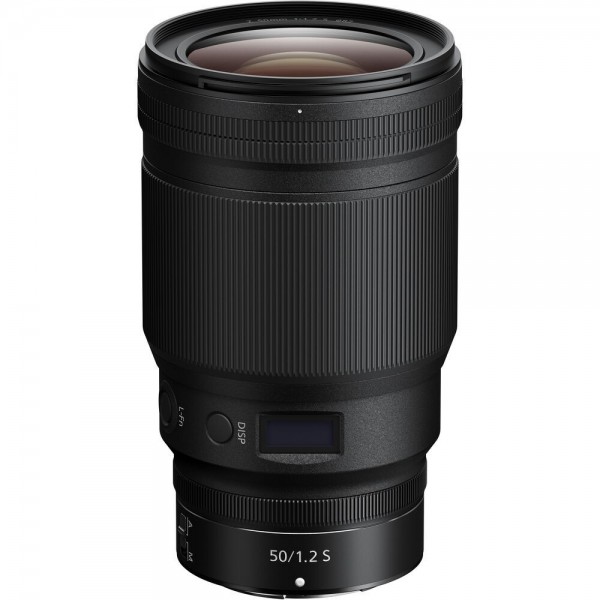
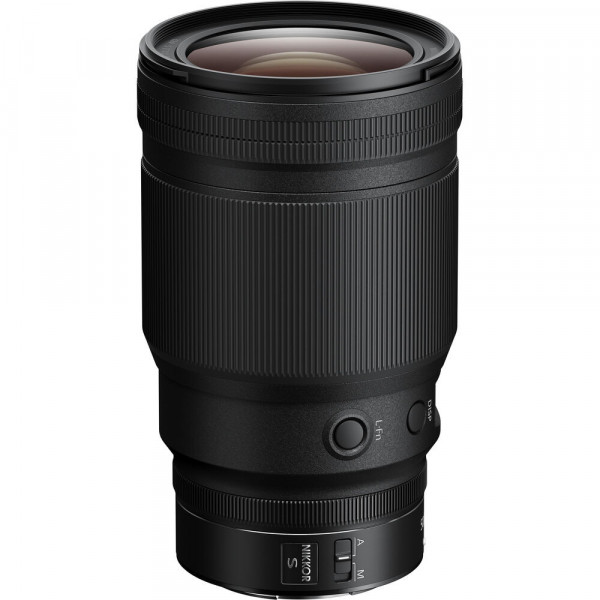
Nikon Z 50mm f/1.2 S
- 100% newBrand-new and authentic product
- Final priceNo unpleasant surprises! The displayed price is the final amount paid for your purchase.
- Order before 2 pm: estimated delivery Mon 17 - Tue 18 AugEstimate based on available stock, order time, business days and carrier delivery times.
- 3-year MCZ DIRECT warranty
- Free delivery with insurance includedYour order is protected from dispatch to delivery: in case of loss, theft or damage during transport, your parcel is insured up to its value.
The NIKKOR Z 50mm f/1.2 S is a Nikon Z lens for portrait, wedding and editorial photographers who want a natural perspective combined with a very wide aperture, recommended for portraits, weddings, stage work, editorial details and available-light video. It helps you isolate a face or gesture without the distant feel of a telephoto lens. The f/1.2 aperture helps protect shutter speed in lower light and gives stronger control over subject separation. The central point to plan for is its 1,090 g weight, lack of optical VR and extremely shallow depth of field at f/1.2. It is a sound choice when these assignments appear regularly and a specialised prime will be more useful to your work than the immediate framing flexibility of a zoom during demanding professional assignments.
Complete your set
Combine compatible accessories and save. The more items you add, the bigger the discount.


memory card
SanDisk 128GB Extreme PRO UHS-II SDXC 300 MB/s memory card

warranty extension
2-year warranty extension
NIKKOR Z 50mm f/1.2 S: a bright 50 mm lens for portraits
The NIKKOR Z 50mm f/1.2 S is designed for portrait, wedding and editorial photographers who want a natural perspective combined with a very wide aperture. It helps you isolate a face or gesture without the distant feel of a telephoto lens. Its fixed perspective becomes easy to anticipate with practice, while the f/1.2 aperture adds available-light headroom.
Nikon states 1,090 g, a 82 mm filter thread, 0.45 m minimum focus and 17 elements in 15 groups. The limitation to include from the outset is its 1,090 g weight, lack of optical VR and extremely shallow depth of field at f/1.2. The sections below connect each number to a practical decision.
Key strengths of the NIKKOR Z 50mm f/1.2 S
- Fixed 50 mm view to isolate a face or gesture without the distant feel of a telephoto lens.
- Bright f/1.2 aperture for available light and controlled separation.
- S-Line construction for demanding rendering and stronger aberration control.
- 0.45 m minimum focus to move from a portrait or scene to a close detail.
- 1,090 g Nikon weight to consider alongside the body, strap and assignment length.
- 9-blade diaphragm for gradual transitions around the focus plane.
- Internal focusing to track the subject without extending the barrel.
- 82 mm filter thread to share selected accessories with lenses of the same size.
- Customisable control ring for quick access to a chosen camera function.

What the specifications change in practical use
f/1.2 helps protect shutter speed and creates a clear separation between subject and background. It also requires disciplined focusing and is rarely the best aperture for a group.
The 0.45 m minimum distance is useful for clothing details, hands or documentary objects. Its 0.15x reproduction remains far from macro work. This behaves more like a specialist lens than a small walk-around fifty. During a long assignment, camera balance and carrying method matter as much as the quoted weight.
| Specification | Practical benefit | Plan for |
|---|---|---|
| 50 mm f/1.2 | isolate a face or gesture without the distant feel of a telephoto lens | Frame by moving |
| 1,090 g | Specialist construction | Assess the complete camera load |
| 0.45 m close focus | Close details without changing lenses | 0.15x is not macro |
| 9 blades | Smoother transitions | Background placement still matters |
| No optical VR | Simple bright-prime design | Stabilisation does not freeze the subject |
Which assignments suit this prime lens?
| Assignment | What the lens provides | Useful reservation |
|---|---|---|
| portraits | 50 mm and f/1.2 | its 1,090 g weight, lack of optical VR and extremely shallow depth of field at f/1.2 |
| Available light | f/1.2 supports shutter speed | Watch the focus plane |
| Portraits | isolate a face or gesture without the distant feel of a telephoto lens | Organise light and background |
| Video | Stable perspective and discreet AF | Test support and AF transition |
| DX camera | View similar to 75 mm | Tighter than full frame |

50 mm: four practical reference points
Full frame : portraits, isolate a face or gesture without the distant feel of a telephoto lens. DX format : about 75 mm equivalent, a tighter view. f/1.2 : available light, protect shutter speed or lower ISO. 0.45 m : close detail, the 0.45 m minimum distance is useful for clothing details, hands or documentary objects. Its 0.15x reproduction remains far from macro work..
A normal perspective with specialist-lens dimensions
A 50 mm full-frame view suits half-length portraits, gestures and everyday editorial details without looking unusually wide or compressed. That familiar perspective is useful when the photographer wants a calm visual language. It can still feel too tight in a small room and cannot reach a distant subject. The focal length is versatile because it sits between 35 and 85 mm, not because it can cover every framing problem.
Once a few working distances become familiar, the lack of zoom can speed up decisions. The photographer knows where to stand for one person, a small group or an object on a table. The NIKKOR Z 50mm f/1.2 S makes most sense for someone who already works this way and now needs more control over light and focus. A zoom or lighter fifty is more appropriate when that preference is still being discovered.
f/1.2 protects shutter speed but demands focus discipline
In a dark room, f/1.2 can keep shutter speed useful without forcing ISO higher immediately. That benefit appears in a quiet expression, a moving hand or a scene lit by a window. It can also calm a busy setting. Camera stabilisation only addresses movement from the photographer, so a person speaking or walking still requires a suitable shutter speed regardless of the aperture available.
At portrait distance, the focus margin is very small. The nearer eye may be crisp while the far eye already softens. For a couple or group, f/2 or f/2.8 generally yields more usable pictures while retaining strong separation. Reserve f/1.2 for frames that benefit from that selectivity. A consistent assignment is stronger when aperture follows the people in each scene instead of imposing the same shallow look everywhere.
Portrait distance comes before background blur
The fifty allows easy conversation with the person and suits a torso, hands or clothing details. For an extreme headshot, moving too close changes perspective; an 85 mm provides a more comfortable position. Subject-to-background distance has a large effect on separation. Moving someone away from a wall often improves the result more than opening the lens another fraction of a stop.
Nine rounded blades support smooth transitions, but bright lines or lamps can still distract. A small change in camera position alters how the setting sits around the face. The lens rewards that preparation. It creates strong separation once the frame is already organised, yet it cannot replace composition. A convincing portrait retains shape and intention rather than reducing every scene to a sharp eye over an anonymous background.
Weddings, editorial work and stage lighting
During wedding preparations, 50 mm isolates a gesture without pulling the photographer away from the room. At a reception it suits conversations and small groups when enough space is available. On stage, f/1.2 helps maintain shutter speed under changing light. Watch highlights on skin and costume, because slightly conservative exposure protects the RAW file more effectively than trying to recover clipped areas later.
The 1,090 g weight must be part of the assignment plan. This is not a small walk-around fifty. A supportive strap, suitable grip and rotation with another lens reduce fatigue. If f/1.2 is used for only a handful of pictures, the 50mm f/1.8 S handles the rest more easily. If wide-aperture work defines the coverage, the weight has a clearer professional reason.
Tracking people who move through a narrow focus plane
Multi-focus design helps the lens shift focus quickly. Eye detection supports portrait work, but tolerance remains narrow. Forward movement changes distance more aggressively than lateral movement. For someone walking, a short burst, a protected shutter speed and a slightly smaller aperture often produce a better sequence than insisting on f/1.2 for every frame.
An interview subject can lean out of focus in video. f/2 still gives marked separation and a more natural transition. Test AF speed on the camera: an abrupt pull can attract attention, while an overly slow transition leaves the face soft. The control ring and information panel make settings accessible, but a stable camera distance and realistic depth of field determine whether the shot remains usable.
S-Line correction around windows and stage lights
The 17-element design includes two ED and three aspherical elements. Nano Crystal and ARNEO coatings aim to retain contrast with a window or stage light in frame. The benefit is practical during ceremonies, interviews and editorial sets. The hood still matters, and moving the camera slightly can remove a local reflection more effectively than relying on coatings alone.
A high-resolution body also makes small focus errors easier to see. Stopping down can strengthen the usable plane without removing the character of the fifty. Judge the result at delivery size: print, album, screen or video. Technical performance only matters when it supports that final form. A perfectly sharp test corner is less useful than reliable focus on the expression the client expects.
0.45 m close focus for details, not life-size work
Minimum focus covers a hand, watch, bouquet or plate during documentary work. The 0.15x reproduction ratio is not enough for jewellery or small mechanisms, where the MC 105mm f/2.8 VR S provides true 1:1 magnification. The fifty is better when a detail should retain some context and belong to the same visual language as the portraits around it.
At this distance, f/1.2 leaves a three-dimensional object only partly sharp. Use f/4 or f/5.6 when the complete form must be described, and a wider aperture when one logo or texture should lead the frame. Magnified review prevents focus from landing on a secondary edge. The closer the subject, the more the photographer has to choose between description and deliberate abstraction.
50mm f/1.2 S versus lighter Nikon Z alternatives
The 50mm f/1.8 S weighs about 415 g, less than half the f/1.2 model. It is better for travel, long events and photographers who mostly work at f/2.8 or smaller. The f/1.2 S adds low-light reserve, stronger focus control and a more substantial build. It is justified when these benefits remain visible in delivered assignments rather than only in occasional experiments.
The 35mm f/1.2 S keeps more context and works better in confined documentary spaces. The 50 mm produces a calmer, tighter view. Choose between them by looking at successful recent frames, not bokeh alone. When important pictures repeatedly sit around 50 mm and wide apertures solve real lighting or background problems, the specialist model becomes coherent.
Our verdict on the NIKKOR Z 50mm f/1.2 S
At MCZ DIRECT, we recommend it to portrait and wedding photographers who already use 50 mm as a main view and want to preserve the light of the location. It provides a natural perspective, extensive depth control and a build suited to demanding Nikon Z bodies. Its strongest case is a repeated need to protect shutter speed or isolate an expression without moving to a telephoto distance.
The 50mm f/1.8 S is our choice when mobility and comfort matter more. The 35mm f/1.2 S is better when the place has to remain prominent. Weight and focus precision are the honest limitations of this 50mm f/1.2 S. Accepted for a clear practice, they define a specialist tool. When they would be endured on every job, the lighter alternative is likely to produce more photographs.
How does it fit within the Nikon Z range?
The 50mm f/1.8 S is substantially smaller and is enough when f/1.2 is not essential. The 35mm f/1.2 S keeps more of the surroundings and suits close documentary work better.
A zoom remains more flexible when framing changes constantly. The NIKKOR Z 50mm f/1.2 S becomes stronger when portraits, weddings, stage work, editorial details and available-light video are regular assignments and its specialist rendering justifies its 1,090 g weight, lack of optical VR and extremely shallow depth of field at f/1.2.
| Criterion | 50mm f/1.2 S | 50mm f/1.8 S | 35mm f/1.2 S |
|---|---|---|---|
| Central use | portraits | Alternative perspective | Complementary focal length |
| Aperture | f/1.2 | f/1.8 | f/1.2 |
| Nikon weight | 1,090 g | 415 g | 1,090 g |
| Reproduction | 0.15x | Portrait and detail | Portrait |
| Choose it when | isolate a face or gesture without the distant feel of a telephoto lens | Mobility or another view | A complementary need |

Our verdict
At MCZ DIRECT, we see the NIKKOR Z 50mm f/1.2 S as a coherent choice for portrait, wedding and editorial photographers who want a natural perspective combined with a very wide aperture. It stands out when the job is to isolate a face or gesture without the distant feel of a telephoto lens, not as a general replacement for every focal length.
We would recommend the NIKKOR Z 50mm f/1.8 S instead if its perspective or easier handling fits the assignment better. The point to plan for with the NIKKOR Z 50mm f/1.2 S is its 1,090 g weight, lack of optical VR and extremely shallow depth of field at f/1.2. Choose it when that constraint is acceptable and portraits, weddings, stage work, editorial details and available-light video genuinely recur in your work.