- -5%
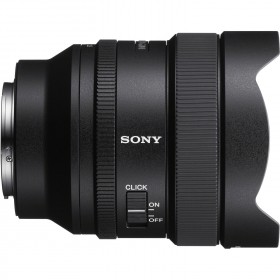
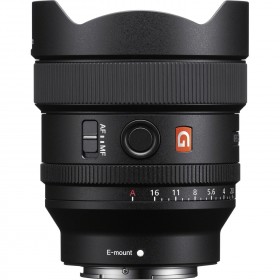
Sony FE 14mm f/1.8 GM
- 100% newBrand-new and authentic product
- Final priceNo unpleasant surprises! The displayed price is the final amount paid for your purchase.
- Order before 2 pm: estimated delivery Mon 17 - Tue 18 AugEstimate based on available stock, order time, business days and carrier delivery times.
- 3-year MCZ DIRECT warranty
- Free delivery with insurance includedYour order is protected from dispatch to delivery: in case of loss, theft or damage during transport, your parcel is insured up to its value.
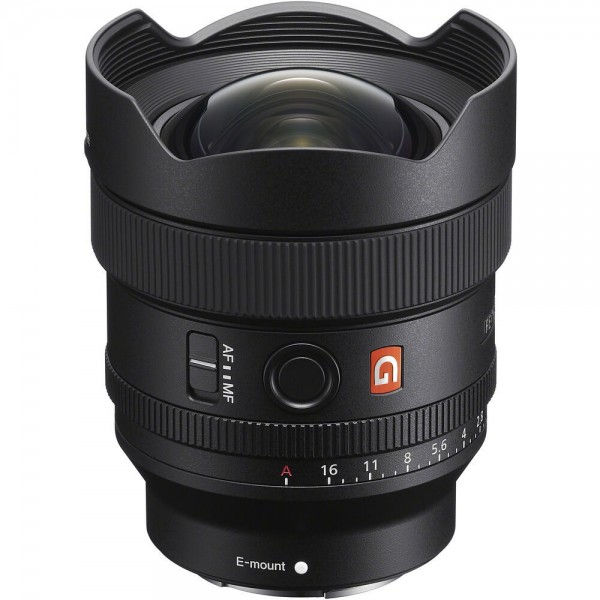
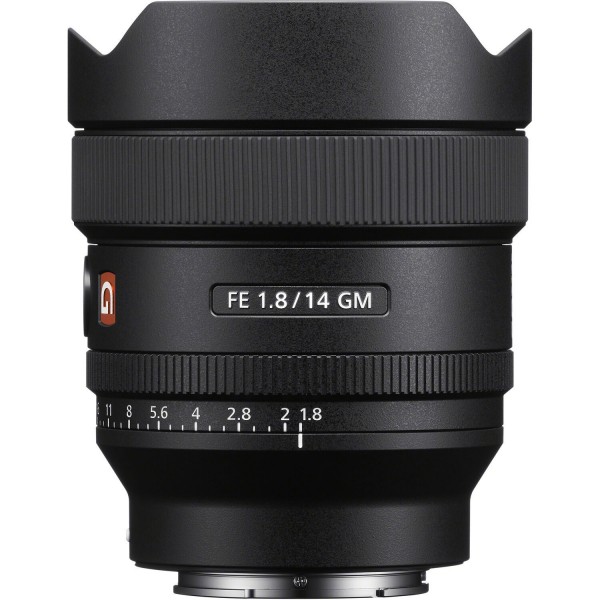
The Sony FE 14mm F1.8 GM is a full-frame ultra-wide prime for photographers who want to show a broad scene without carrying a heavy zoom, and we recommend it for night skies, landscape, architecture, interiors and immersive video. Its F1.8 aperture helps when light falls, while its 460g weight makes a specialist 14mm lens realistic to carry on a hike, city break or video job. Fast autofocus is useful when a foreground subject enters the frame as well as for moving video work. It does ask for deliberate composition: perspective is strong, and there is no standard front filter thread. Instead, it accepts rear gel filters. It makes most sense when 14mm is genuinely part of how you see a scene.
Complete your set
Combine compatible accessories and save. The more items you add, the bigger the discount.


memory card
SanDisk 128GB Extreme PRO UHS-II SDXC 300 MB/s memory card

warranty extension
2-year warranty extension
Sony FE 14mm F1.8 GM for night skies, landscapes, architecture and ultra-wide video
The Sony FE 14mm F1.8 GM, model SEL14F18GM, is a full-frame Sony E-mount prime for photographers who need an extremely wide view, strong low-light capability and a lens that remains easy to carry. Its 114-degree field of view can connect foreground, sky and setting in one frame; on an APS-C camera, it gives roughly a 21mm equivalent view. F1.8 is useful for night landscapes, low-lit interiors and video on a stabilised camera. This is not a general-purpose lens. It rewards careful placement, so that converging lines and edge stretching contribute to the picture rather than distract from it.
Sony FE 14mm F1.8 GM key strengths
- 114-degree full-frame angle of view for foreground, wide sky and interior volume in one composition.
- F1.8 maximum aperture to keep more light for night work, city scenes and indoor video.
- 460g body weight for an ultra-wide bright prime that is realistic to carry all day.
- Two XA elements to maintain detail across the frame in landscape, architecture and starry scenes.
- One Super ED and two ED elements to reduce colour fringing around stars, branches and high-contrast edges.
- Two XD linear motors for fast, quiet autofocus in video and when a subject moves through the foreground.
- 0.25m minimum focus for combining a close subject with a broad background in one image.
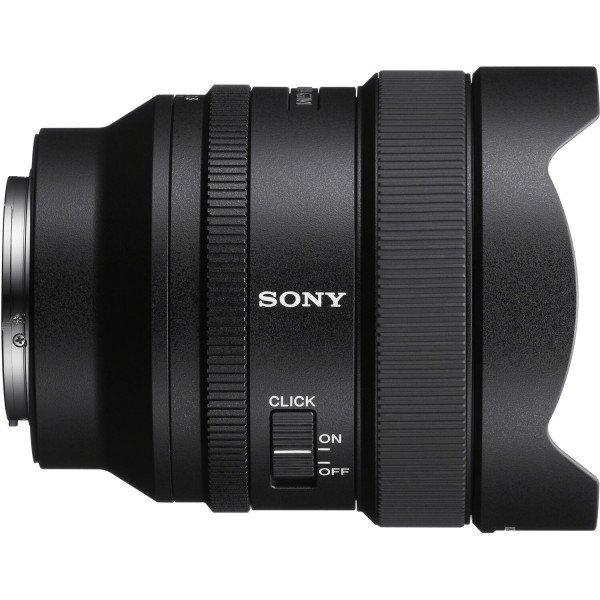
- De-clickable aperture ring for tactile stills control or smoother exposure changes during filming.
- Rear gel-filter holder for filter use when the curved front element has no standard screw-in filter thread.

A 14mm lens is for shaping space, not simply fitting more into the frame
At 14mm, the distance between lens and foreground can matter as much as the main subject. A rock, flower, doorway or leading line placed close to the camera becomes prominent and leads the eye into the image. That is how an ultra-wide view gives a landscape or architectural frame depth. From too far away, a lone subject can get lost in empty space, so the better solution is usually to move closer or use a longer focal length.
Indoors, the 114-degree view can show the scale of a room, venue or building when there is no space to step back. The trade-off is predictable: tilting the camera can make verticals lean, while people or furniture near an edge can look stretched. Keeping the camera level and leaving breathing room around people turns 14mm from a visual trick into a controlled compositional tool.
For landscape work, it suits photographers who build an image around a strong foreground. The Sony FE 20mm F1.8 G is easier when you want a less extreme wide-angle view. The Sony FE 12-24mm F2.8 GM brings more framing flexibility, whereas this 14mm prime keeps the advantage in weight and F1.8 when that faster aperture is genuinely useful.
Which situations make the most of 14mm?
| Work | What 14mm adds | What to watch |
|---|---|---|
| Night sky | A broad field and F1.8 for combining sky with landscape. | Tripod, precise focus and corner checks still matter. |
| Landscape | A close foreground can create depth towards the horizon. | Without a foreground or leading line, the frame can lose structure. |
| Architecture and interiors | Show a space when there is limited room to step back. | Keeping the camera level reduces leaning verticals. |
| Immersive video | A wide, compact view with a de-clickable aperture ring. | Stabilisation comes from the body, while perspective needs intentional staging. |

F1.8 after dark: more light, but still no substitute for technique
For night-sky photography, F1.8 admits more light than an F2.8 ultra-wide. Depending on the sky and the intended result, that can support a shorter exposure or lower ISO. The two XA elements, Super ED, two ED elements and Nano AR Coating II are there to keep contrast and detail more controlled around bright points and difficult lighting. A tripod remains the foundation of sharp star images; F1.8 does not replace stable support.
Fourteen millimetres also gives more latitude before apparent star movement becomes obvious than a longer lens. The best settings still depend on the camera, direction, latitude and how closely the final image will be inspected. It is worth checking the corners on location, then adjusting aperture, shutter time and manual focus rather than relying on one universal astrophotography setting.
For video, the aperture is often less about background blur and more about preserving a suitable shutter speed indoors or at dusk. The aperture ring can be de-clicked, and the two XD motors support quiet focus transitions. Stabilisation comes from a compatible Sony body, not from the lens itself: the 14mm F1.8 GM has no optical OSS.
Sony 14mm F1.8 GM or another Sony ultra-wide?
| Lens | Choose it when | Choose another option when |
|---|---|---|
| FE 14mm F1.8 GM | 14mm, night work and compactness are real priorities. | You regularly need to change framing without moving. |
| FE 12-24mm F2.8 GM | 12, 14, 18 or 24mm may all be needed on the same outing. | F1.8 and lower carry weight matter more than zoom flexibility. |
| FE 20mm F1.8 G | You want a bright wide-angle view that is less extreme for travel or reportage. | The frame must be substantially wider than 20mm. |
| FE 16-35mm F2.8 GM II | Travel, events and video require several focal lengths in one lens. | A dedicated 14mm and F1.8 answer a more specialised need. |
Filters, controls and everyday handling: the details worth deciding before purchase
The petal hood is fixed and the front element has no standard circular filter thread. For ND or graduated filters, photographers need either a compatible external filter holder or the rear gel-filter slot with its cutting template. Rear gels are light and practical for certain work, but they do not solve every task in the same way as a large front filter system. It is worth deciding which approach fits your long-exposure workflow before the first trip.
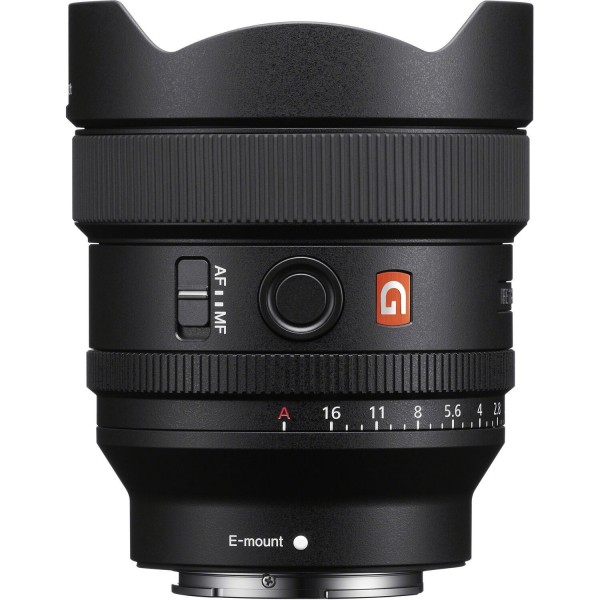
At 460g and 83 by 99.8mm, the Sony 14mm F1.8 is considerably easier to carry than a fast ultra-wide zoom. A focus-hold button and AF/MF switch let you change working behaviour without opening a menu. Its construction is resistant to dust and moisture for normal photographic use, but it should not be described as waterproof; protecting camera and lens in persistent rain remains sensible.
The Sony FE 16-35mm F2.8 GM II is the stronger choice when 14mm is only one of several required frames during travel, events or video work. In contrast, a Sony A7 IV + FE 14mm F1.8 GM pairing suits a versatile system with a dedicated ultra-wide, while Sony A7R V + FE 14mm F1.8 GM makes sense for photographers who want to retain more detail in landscapes, architecture and large prints.

Specifications translated into shooting decisions
| Feature | Practical benefit | Plan for |
|---|---|---|
| F1.8 to F16, 9 blades | Gather more light at night and control depth around a near foreground. | At F1.8, check focus and edge detail for the subject. |
| 0.25m and 0.1x | Place a close detail against a very wide setting. | A subject too close to an edge can appear stretched. |
| Two XD motors | Move focus quickly in video or between foreground and infinity. | A suitable AF area is still more useful than letting the whole frame decide. |
| No standard front filter thread | Keep a front element suited to such a wide view. | Allow for rear gels or an external holder for ND and graduated filters. |
| No OSS, 460g | Carry a light lens that benefits from compatible in-body stabilisation. | For long exposures, stability begins with a tripod. |
Our verdict on the Sony FE 14mm F1.8 GM
At MCZ DIRECT, we see it as the right choice for full-frame Sony photographers who genuinely use 14mm for night skies, architecture, interiors or landscapes built around a foreground. Its appeal is not only the extreme angle: it combines that view with F1.8 and a 460g weight, so it can be carried without turning a camera bag into a production case.
Against the Sony FE 12-24mm F2.8 GM, we recommend it when 14mm is your preferred framing and F1.8 matters more than zoom range. The Sony FE 20mm F1.8 G is a better fit for a less radical bright wide-angle, while the FE 16-35mm F2.8 GM II is more rational for assignments with constantly changing framing. Sony A7 IV and Sony A7R V kits then let you prioritise versatility or resolution.
Its limitation deserves to be clear: a fixed 14mm can be too wide, can visually stretch edges when placement is careless, and has no optical stabilisation. Front filters also require an external holder, or rear gel filters. Choose it when those constraints match your practice; it then has a coherent place in a full-frame Sony system rather than becoming a dramatic lens left in the bag.
Technical specifications
General
Properties
Focal length
Aperture
Physical properties
Questions fréquentes sur ce produit
Is the Sony FE 14mm F1.8 GM good for astrophotography?
Yes. Its 14mm field is very wide and F1.8 admits more light. A tripod, careful focus and adapted exposure are still essential.
Is the Sony 14mm F1.8 GM good for landscapes?
Yes, especially when you compose with a nearby foreground. It can create depth between a detail close to the camera and the horizon.
Can SEL14F18GM be used for architecture or interiors?
Yes. It is useful when space is limited, but keeping the camera level and watching edge subjects remains important.
What view does it give on Sony APS-C?
It gives about a 91-degree field of view and a roughly 21mm full-frame equivalent framing.
Does the Sony FE 14mm F1.8 GM have optical stabilisation?
No. It has no optical OSS, although it can benefit from stabilisation in a compatible Sony camera body.
Can you use filters on the Sony 14mm F1.8 GM?
It has no standard front filter thread. It accepts rear gel filters and can be used with a compatible external filter holder.
What is the minimum focusing distance?
It focuses down to 0.25m with 0.1x maximum magnification, helping combine a close subject with a very wide setting.
How much does the Sony 14mm F1.8 GM weigh?
It weighs about 460g, which keeps it easy to carry for a full-frame F1.8 ultra-wide prime.
Sony 14mm F1.8 GM or 12-24mm F2.8 GM?
Choose the 14mm when F1.8, lower weight and this exact framing matter most. Choose the 12-24mm when multiple ultra-wide focal lengths are needed on one outing.
Sony 14mm F1.8 GM or 20mm F1.8 G?
The 14mm is more immersive and more demanding to compose. The 20mm is often easier for travel, reportage and a versatile wide-angle role.
Is the Sony FE 14mm F1.8 GM good for video?
Yes, thanks to its wide view, XD motors and de-clickable aperture ring. Stability still depends on the camera body, technique and support.
Is the Sony 14mm F1.8 GM weather resistant?
Its construction is resistant to dust and moisture, with fluorine coating on front and rear elements. That should not be treated as full waterproofing.
Who is the Sony FE 14mm F1.8 GM for?
It suits photographers who intentionally use an extreme wide view for night skies, landscape, architecture, interiors or video and accept the constraints of a fixed lens without OSS.