

Shopping Cart


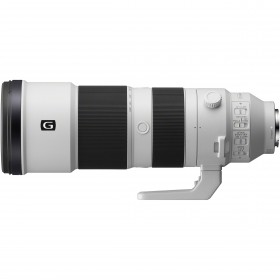


Sony FE 200-600mm f/5.6-6.3 G OSS
IN STOCK
€1,617.85
€1,703.00-5%
- 100% newBrand-new and authentic product
- Final priceNo unpleasant surprises! The displayed price is the final amount paid for your purchase.
- Order before 2 pm: estimated delivery Thu 23 - Fri 24 JulEstimate based on available stock, order time, business days and carrier delivery times.
- 3-year MCZ DIRECT warranty
- Free delivery with insurance includedYour order is protected from dispatch to delivery: in case of loss, theft or damage during transport, your parcel is insured up to its value.
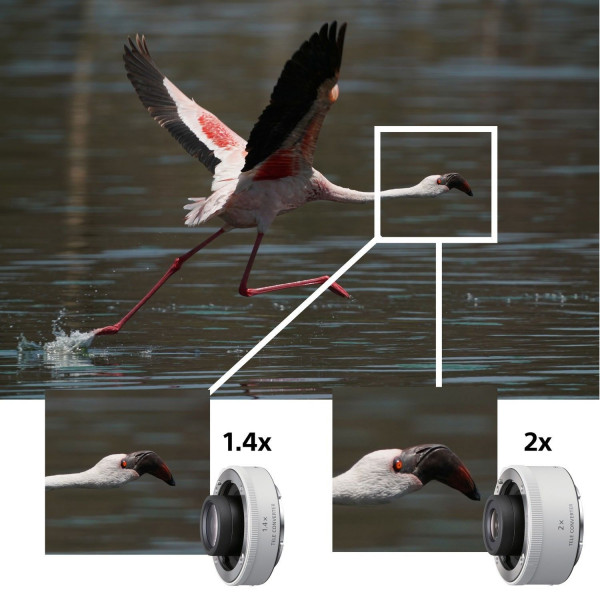
Introducing the Sony FE 200-600mm F5.6-6.3 G OSS, a super-telephoto zoom lens perfect for wildlife photography and more. Its extensive focal range of 200 to 600 mm, extendable to 840 mm or 1,200 mm with 1.4x and 2.0x teleconverters, allows you to capture distant subjects with exceptional image quality. Aspherical and ED glass elements ensure superb resolution throughout the zoom range, while Sony's Nano AR Coating reduces flare and ghosting. The fast and precise autofocus, combined with Optical SteadyShot image stabilization, guarantees sharp and detailed shots, even in challenging conditions.
Introducing the Sony FE 200-600mm F5.6-6.3 G OSS lens—a versatile super-telephoto zoom lens designed to meet the demands of professional and enthusiast photographers alike. Whether you're capturing wildlife in its natural habitat, fast-paced sports action, or distant landscapes, this lens delivers exceptional image quality and performance. Its robust construction and advanced optical design ensure that you can rely on it in various shooting conditions.
Elevate your photography by adding the Sony FE 200-600mm F5.6-6.3 G OSS to your gear today.
Key Features of the Sony FE 200-600 mm F5.6-6.3 G OSS:
Extensive Focal Length Range: With a focal length spanning from 200mm to 600mm, this lens offers remarkable versatility, allowing you to capture subjects both near and far with ease.
Optical SteadyShot Image Stabilization (OSS): Built-in stabilization minimizes camera shake, ensuring sharp images even when shooting handheld at extended focal lengths.
Fast and Quiet Autofocus: The Direct Drive SSM (DDSSM) system provides swift and silent autofocus performance, making it ideal for capturing wildlife and sports without disturbing the scene.
Advanced Optical Design: Incorporates five Extra-low Dispersion (ED) glass elements and one aspherical element to reduce chromatic aberrations and deliver high-resolution, high-contrast images throughout the zoom range.
11-Blade Circular Aperture: Produces beautiful, creamy bokeh, allowing your subject to stand out against a smoothly defocused background.
Robust and Weather-Resistant Build: Designed to withstand challenging environments, the lens features dust and moisture resistance, ensuring reliability in various shooting conditions.
Internal Zoom Mechanism: Maintains a constant lens length during zooming, providing better balance and handling, especially when using a tripod or monopod.
Recommended Uses:
Wildlife Photography: Capture detailed images of animals from a distance without disturbing their natural behavior, thanks to the lens's super-telephoto reach.
Sports Photography: Freeze fast-moving athletes in action with the lens's rapid autofocus and extensive focal length, allowing you to shoot from the sidelines with precision.
Nature and Landscape Photography: Frame distant landscapes or isolate specific natural elements with clarity, utilizing the lens's versatile zoom range.
Aerial Photography: Ideal for shooting from helicopters or drones, offering the flexibility to capture unique perspectives of expansive scenes.
Technical Specifications:
Mount: Sony E-mount, compatible with full-frame and APS-C Sony mirrorless cameras.
Optical Construction: 24 elements in 17 groups, including 5 ED glass elements and 1 aspherical element for superior image quality.
Aperture Range: Maximum aperture of f/5.6-6.3; minimum aperture of f/32-36, providing control over depth of field in various shooting scenarios.
Minimum Focus Distance: 2.4 meters, enabling close-up shots of distant subjects with excellent detail.
Maximum Magnification Ratio: 0.2x, suitable for capturing fine details from afar.
Filter Diameter: 95mm, allowing the use of a wide range of filters for creative effects.
Dimensions: 111.5mm in diameter and 318mm in length, offering a balanced and ergonomic design for comfortable handling.
Weight: Approximately 2,115 grams, ensuring stability during handheld shooting or when mounted on support systems.
Image Stabilization: Optical SteadyShot with selectable modes to accommodate different shooting conditions and panning techniques.
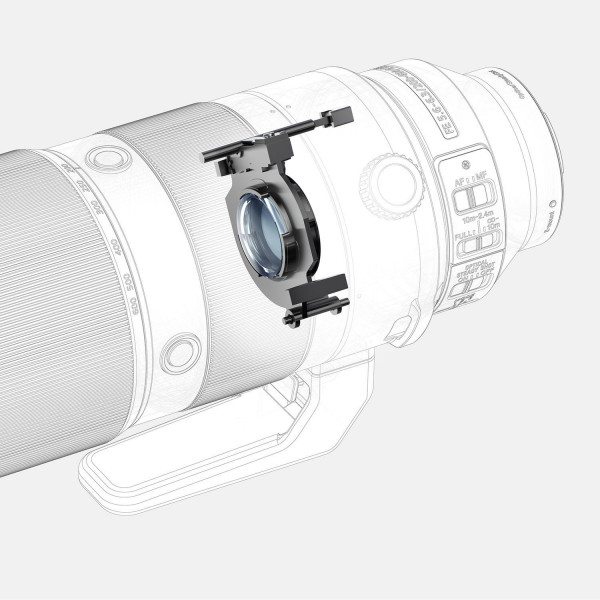
Teleconverter Compatibility: Compatible with Sony's 1.4x and 2.0x teleconverters, extending the maximum focal length to 840mm or 1,200mm, respectively, while maintaining exceptional image quality.
Customizable Focus Hold Buttons: Equipped with multiple focus hold buttons positioned around the lens barrel, providing intuitive and quick control during shooting.
Supplied Accessories: Includes a removable petal-shaped lens hood to reduce flare and protect the front element.
In summary, the Sony FE 200-600 mm F5.6-6.3 G OSS lens is an indispensable tool for photographers aiming to capture distant subjects with outstanding image quality. Its extensive focal length range, effective image stabilization, and durable construction make it a versatile choice for various photographic genres, including wildlife, sports, and nature photography. Whether you're a professional or an avid enthusiast, this lens will expand your creative possibilities and help you achieve stunning results.
Don't miss the opportunity to enhance your photography kit. Order the Sony FE 200-600mm F5.6-6.3 G OSS today and bring your most ambitious photographic visions to life.
- Lens mount
- Sony E
- Recommended use
- Sports / wildlife
Video / stabilized - Stabilization
- Yes
- Lens type
- Telephoto zoom
- Focal length
- Super telephoto
Telephoto - Maximum aperture
- f/4.5 and slower
- Aperture options
- f/4 and above
- Photo use
- Sport
Wildlife - Lens format
- Full frame

SONYFE200600GOSS
4548736099739
Technical specifications
General
Brand
Sony
Product type
Photo lens
Lens type
Telephoto zoom
Lens series
G
Aperture options
f/4 and above
Lens mount
Sony E-mount
Photo use
Sport; Wildlife
Lens format
Full frame
Properties
Full frame
Yes
Image stabilization
Yes
Lens construction
17-24
Magnification factor
0.2
Minimum focusing distance
240 cm
Lens hood included
Yes
Focal length
Focal length
200-600
Minimum focal length
200 mm
Maximum focal length
600 mm
Aperture
Minimum aperture
f/32-36
Maximum aperture
f/5.6-6.3
Diaphragm blades
11 (circular aperture)
Zoom
Zoom option
Yes
Optical zoom
3x
Physical properties
Weight
2115 g
Length
31.8 cm
Diameter
111.5 mm
Reviews Sony FE 200-600mm f/5.6-6.3 G OSS
0 Rating
Customer photos
No customer photos yet
Tap to zoom

ALEX (In testing phase)