- -5%
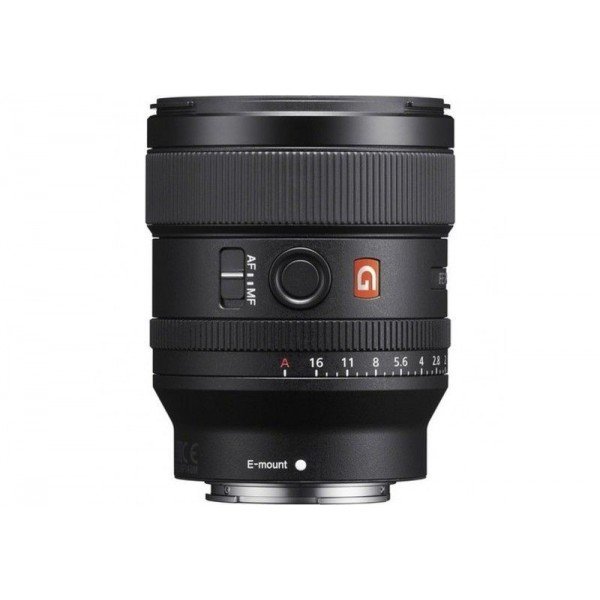
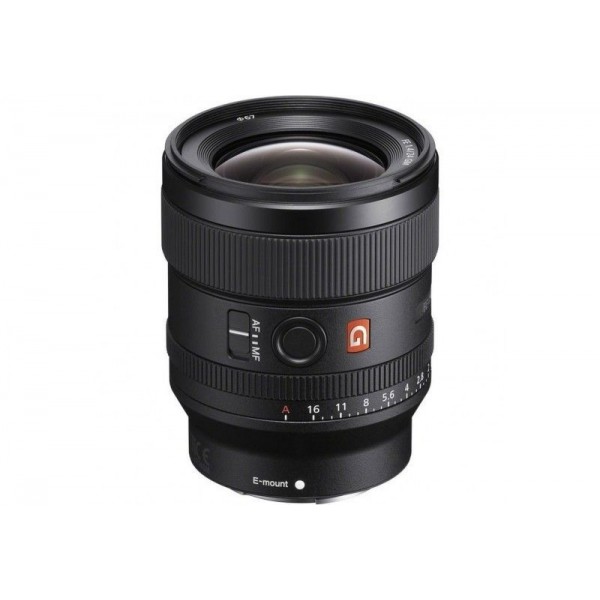
Sony FE 24mm F1.4 GM
- 100% newBrand-new and authentic product
- Final priceNo unpleasant surprises! The displayed price is the final amount paid for your purchase.
- Order before 2 pm: estimated delivery Mon 17 - Tue 18 AugEstimate based on available stock, order time, business days and carrier delivery times.
- 3-year MCZ DIRECT warranty
- Free delivery with insurance includedYour order is protected from dispatch to delivery: in case of loss, theft or damage during transport, your parcel is insured up to its value.
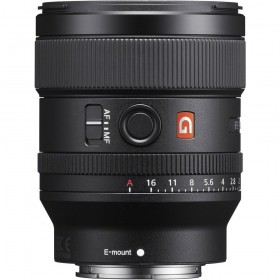
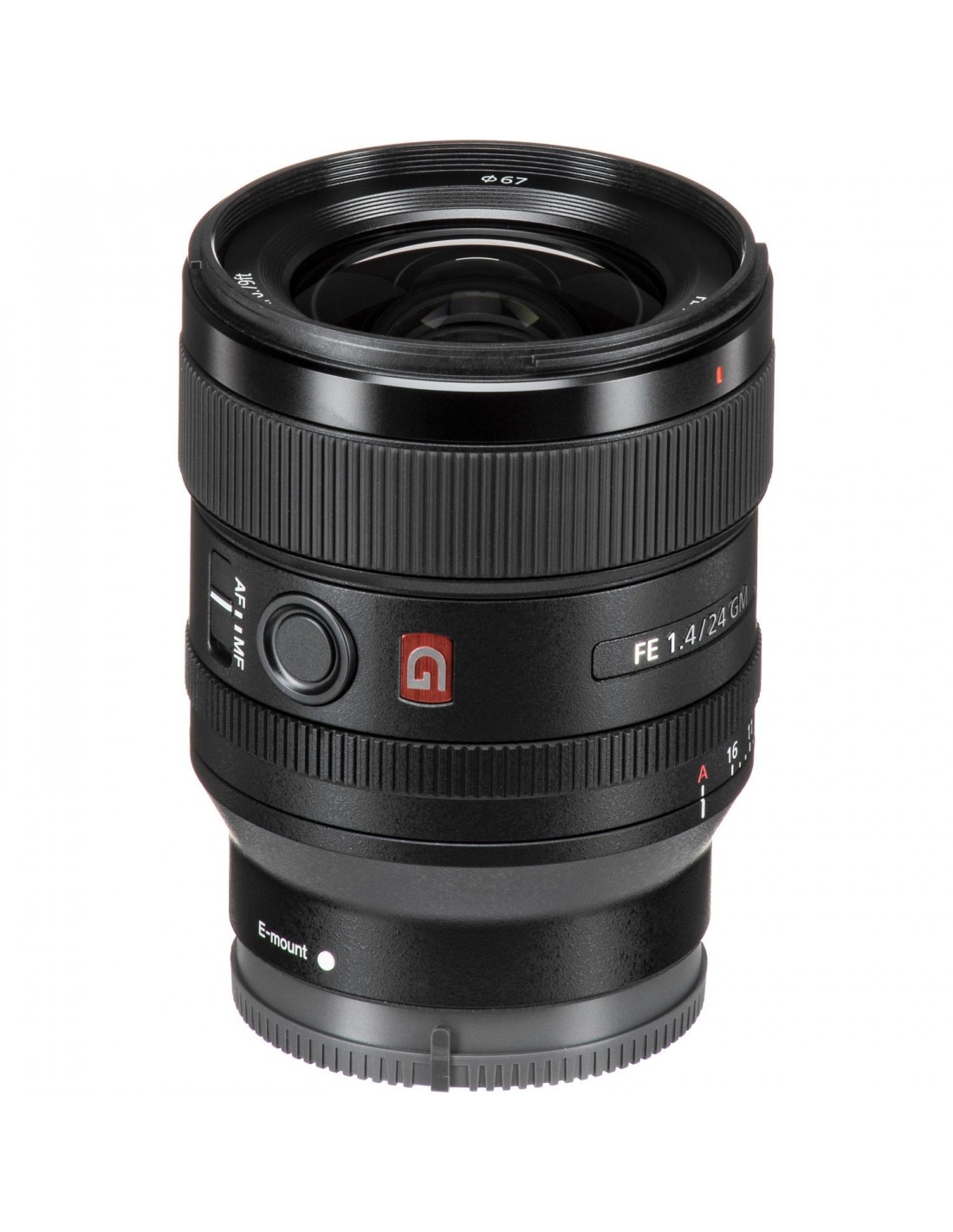
The Sony FE 24mm F1.4 GM is a full-frame wide-angle prime for Sony photographers who need strong low-light capability without carrying a heavy professional zoom. We recommend it for astrophotography, night landscapes, documentary work, weddings and environmental portraits, where the setting should remain part of the story. Its F1.4 aperture helps preserve shutter speed or keep sensitivity under control, while the 445g body remains manageable for handheld work. A 0.24m minimum focus distance also gives foreground details more presence. The trade-offs are equally clear: framing is fixed, there is no optical OSS, and people near the edge of a 24mm frame need careful placement. It is a sound choice when available light, portability and a deliberate wide-angle view matter more than zoom flexibility.
Complete your set
Combine compatible accessories and save. The more items you add, the bigger the discount.


memory card
SanDisk 128GB Extreme PRO UHS-II SDXC 300 MB/s memory card

warranty extension
2-year warranty extension
Sony FE 24mm F1.4 GM for night landscapes, reportage and astrophotography
The Sony FE 24mm F1.4 GM, model SEL24F14GM, is a full-frame prime built for wide views when light is limited. Its 24mm angle keeps the surroundings visible, whether the subject is a starry sky, an interior, a dance floor or a person placed within a location. F1.4 provides useful shutter-speed or ISO latitude and can soften a distant background when the foreground is close. At 445g, it is easier to carry than a fast professional zoom. The compromise is a fixed frame, no optical stabilisation and a perspective that rewards careful camera position whenever people enter the edges of the image.
Sony FE 24mm F1.4 GM key strengths
- A fixed 24mm focal length that keeps the setting visible in landscapes, documentary scenes and environmental portraits.
- An F1.4 maximum aperture for greater shutter-speed or ISO latitude as available light falls.
- Two XA and three ED elements designed to support fine detail and control aberrations across a wide frame.
- Careful rendering of point light sources for stars, street lights and other night scenes.
- An 11-blade circular diaphragm for smoother out-of-focus areas when the main subject is close.
- DDSSM autofocus drive for precise focusing in stills and moving-image work.
- A 0.24m minimum focus distance that lets a foreground object become part of a wider composition.
- A 445g weight that remains practical for travel, reportage and use on a stabilising rig.
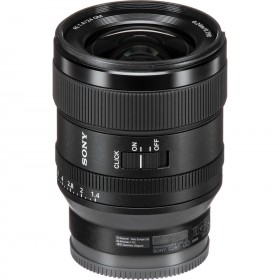
- A de-clickable aperture ring and direct controls that make the lens easier to move between stills and video.
- A 67mm front filter thread and dust- and moisture-resistant design for straightforward use within a field kit.

Astrophotography, landscapes and interiors: what 24mm and F1.4 change
For astrophotography, 24mm is wide enough to combine a substantial part of the sky with a readable foreground. F1.4 gathers twice as much light as F2, which may allow a shorter exposure or lower ISO depending on the scene. The advantage is not simply a brighter file: a shorter exposure can also reduce apparent star movement. Point-light rendering and corner performance therefore matter, particularly on a high-resolution camera.
In landscape and architectural work, the view feels expansive without reaching the highly exaggerated perspective of a 14mm lens. It works well when foreground, subject and distance need to remain connected. Indoors, 24mm gives more room to describe a space, although tilting the camera strongly will make vertical lines converge. F1.4 is most useful in available light; when several planes need to be sharp, stopping down and supporting the camera is often the better decision.
The Sony FE 20mm F1.8 G makes more sense when the sky, real-estate interior or foreground needs a wider view. The Sony FE 14mm F1.8 GM goes wider again and requires more deliberate composition. The 24mm remains the more natural all-round choice when one trip includes landscapes, people and documentary work.
Where does the Sony 24mm F1.4 GM fit?
| Situation | What the lens provides | What to anticipate |
|---|---|---|
| Astrophotography | A wide view, F1.4 and controlled point-light rendering for sky and landscape together. | Focus, corner quality and exposure time still need attention. |
| Landscape and architecture | An expansive view that connects foreground, main subject and distance. | Tilting the camera exaggerates converging lines. |
| Wedding and reportage | A person can remain part of the location even when working room is limited. | Keep faces away from the corners. |
| Video and content creation | A wide frame, 445g weight and de-clickable aperture ring. | No in-lens OSS; stabilisation comes from the camera or support. |
| Close foreground work | The 0.24m focus distance gives a nearby detail visual weight. | A 0.17x ratio is not macro magnification. |

Reportage, weddings and environmental portraits at 24mm
At a wedding or on an assignment, 24mm lets the photographer stay close to the action while showing the room, the guests and the atmosphere. It is particularly useful on a dance floor or in a confined preparation space where stepping back is difficult. F1.4 helps as illumination drops and can create useful subject separation when the person is close and the background is distant. The strength of the frame is that the location continues to explain the moment.
Working this close requires care. A face near a corner may appear stretched, while a steeply tilted camera exaggerates verticals. For environmental portraits, keep the subject away from the extreme edges and let the surroundings occupy those areas. The Sony FE 24mm F2.8 G is the more sensible choice when discretion and minimum size matter more than F1.4. The Sony FE 16-35mm F2.8 GM II becomes preferable when subject distance changes constantly and zoom flexibility prevents missed framing.
A 0.24m minimum focus distance can also bring a bouquet, instrument, dish or architectural detail into the foreground. The 0.17x maximum magnification does not make this a macro lens, but it offers a dynamic way to connect a small object with its location. At close distance and F1.4, depth of field is shallower than many photographers expect from a wide-angle lens.
Specifications translated into shooting benefits
| Specification | Practical benefit | Limit or precaution |
|---|---|---|
| 24mm on full frame | Keep context around the subject without moving to an extreme ultra-wide view. | Perspective changes markedly with camera distance and angle. |
| F1.4 aperture | Gain low-light latitude and separate a close subject from the background. | Depth of field becomes shallow at close distances. |
| 0.24m minimum focus | Build a strong foreground into a landscape, product or documentary frame. | The 0.17x ratio remains well short of macro. |
| 445g weight | Carry a fast prime without the bulk of an F2.8 professional zoom. | One fixed focal length covers fewer framings. |
| No optical OSS | A compatible camera body can provide sensor stabilisation. | Stabilisation cannot stop a moving subject. |
Autofocus, video, APS-C use and limits to understand
The DDSSM drive handles focusing, while a focus-hold button, AF/MF switch and aperture ring remain available on the barrel. The aperture clicks can be disabled for smoother changes during video recording. Actual AF behaviour still depends on the camera, focus area and type of subject. A small focus error may be unobtrusive in a wide establishing shot, but it becomes obvious when a close detail is recorded at F1.4.
There is no optical OSS in the lens. A compatible Sony body can stabilise the sensor and reduce photographer movement, but it cannot freeze a walking subject or a dancer. On APS-C, the field of view is similar to roughly 36mm on full frame. That becomes a useful moderate wide angle for street and everyday reportage, although it loses some of the breadth sought for night skies and tight interiors.
The simplest limitation is the fixed focal length. When the shooting position is restricted, the photographer must accept the available frame or change lenses. The Sony Alpha 7 V + FE 24mm F1.4 GM kit is a coherent starting point for this style of work; photographers who already own a camera can choose the lens alone and build around it within the full-frame Sony lens system.

Sony 24mm GM, 20mm G, 24mm F2.8 G or 16-35mm GM II?
| Lens | Choose it when | Main compromise |
|---|---|---|
| Sony FE 24mm F1.4 GM | You need F1.4, a natural wide view and 445g for night work or reportage. | Fixed focal length without OSS. |
| Sony FE 20mm F1.8 G | Astrophotography, interiors or landscapes require a wider field. | More pronounced perspective and an F1.8 maximum aperture. |
| Sony FE 24mm F2.8 G | A very small street and travel kit matters more than maximum aperture. | Two stops less light at maximum aperture. |
| Sony FE 16-35mm F2.8 GM II | Framing must change quickly without moving position. | Heavier and one stop slower than an F1.4 prime. |
Our verdict on the Sony FE 24mm F1.4 GM
At MCZ DIRECT, we see this as the Sony photographer’s specialist 24mm for astrophotography, night landscapes, documentary work and environmental portraiture. Its appeal comes from combining a wide view, F1.4 and a 445g body. That balance keeps the location in the frame, makes limited light easier to manage and remains practical to carry.
We would steer towards the Sony FE 20mm F1.8 G when a wider field is essential, the 24mm F2.8 G when size comes first, and the 16-35mm GM II when framing changes throughout the assignment. Those alternatives are not lesser lenses; they suit different positions and working methods.
The limitations are honest: no zoom, no optical OSS and a perspective that requires care around people at the frame edges. Choose the SEL24F14GM when those constraints fit your work and F1.4 genuinely helps at night, indoors or during reportage. In that setting, its combination is difficult for a zoom to replace.
Technical specifications
General
Properties
Focal length
Aperture
Physical properties
Questions fréquentes sur ce produit
Is the Sony FE 24mm F1.4 GM suitable for astrophotography?
Yes. Its 24mm view, F1.4 aperture and controlled point-light rendering suit night skies combined with a landscape. Accurate focus and exposure time remain essential.
Is the Sony 24mm F1.4 GM a good landscape lens?
Yes. It connects foreground, main subject and distance effectively. Stopping down is often preferable when several planes need to remain sharp.
Can the Sony 24mm F1.4 GM be used for weddings?
Yes, particularly for preparation, dance-floor and atmosphere pictures. Faces should be kept away from the extreme corners.
Is the Sony FE 24mm F1.4 GM good for portraits?
It works well for environmental portraits where the location matters. A 50mm or 85mm is generally easier for tight head-and-shoulders framing.
Does the Sony 24mm F1.4 GM have optical OSS?
No. The lens has no optical OSS. A stabilised Sony body can reduce photographer movement but cannot freeze a moving subject.
What is the SEL24F14GM minimum focus distance?
Minimum focus distance is 0.24m and maximum magnification is 0.17x.
What filter size does the Sony FE 24mm F1.4 GM use?
It accepts 67mm screw-in filters.
How much does the Sony 24mm F1.4 GM weigh?
The Sony FE 24mm F1.4 GM weighs 445g.
Can the Sony 24mm F1.4 GM be used on an APS-C camera?
Yes. On APS-C, its field of view is similar to approximately 36mm on full frame.
Sony 24mm F1.4 GM or Sony 20mm F1.8 G?
The 20mm covers a wider view for night skies and tight interiors. The 24mm provides F1.4 and a more natural perspective when people share the frame.
Sony 24mm F1.4 GM or Sony 24mm F2.8 G?
Choose the F1.4 for low light and subject separation. The F2.8 G is much smaller for travel and street photography.
Sony 24mm F1.4 GM or Sony 16-35mm F2.8 GM II?
The 24mm prioritises F1.4 and lower weight. The 16-35mm is more flexible when the photographer cannot change position.
Is there a Sony FE 24mm F1.4 GM II?
No. This lens is officially designated SEL24F14GM and Sony does not identify it as a GM II model.