

My basket0 items







Find your orders, invoices and saved addresses all in one place.
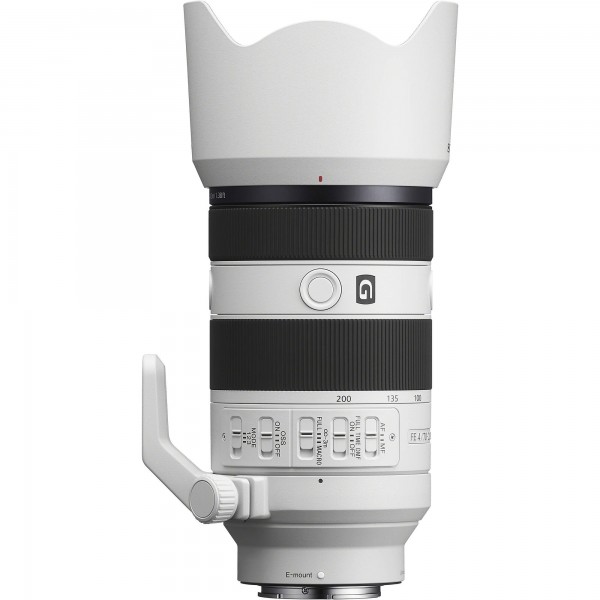
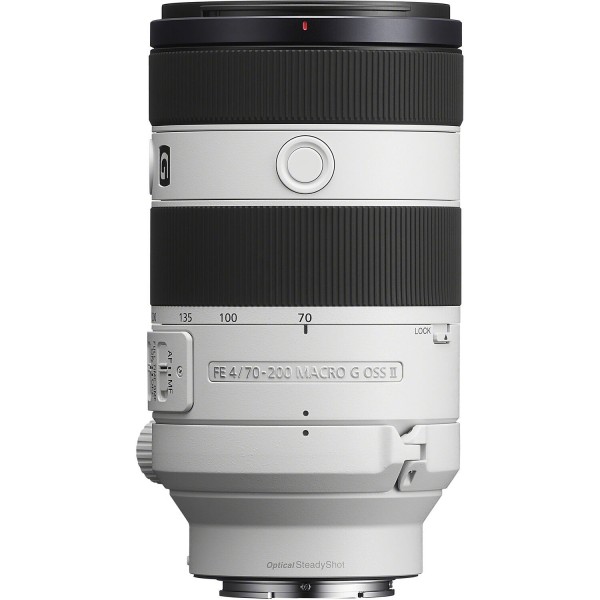
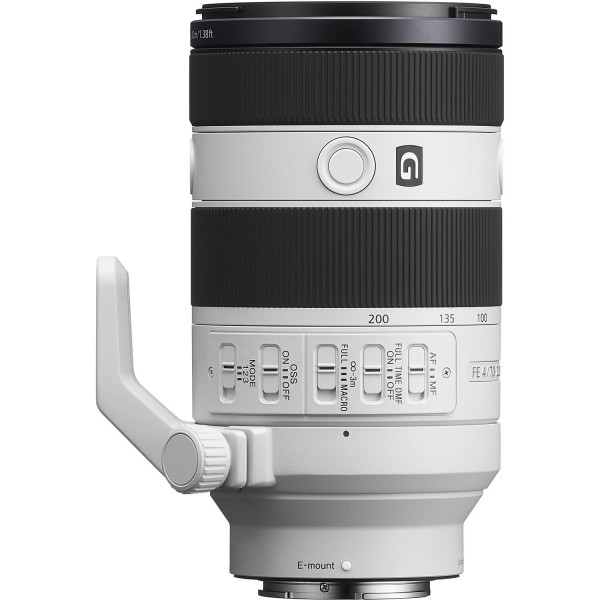
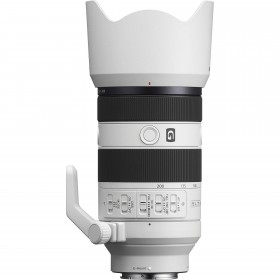
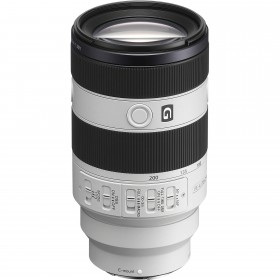
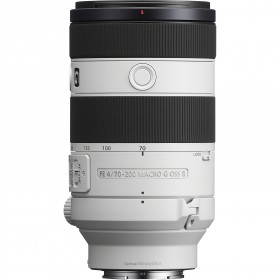
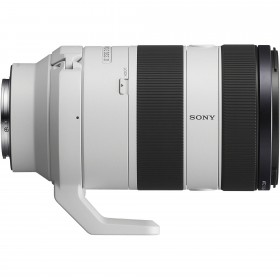
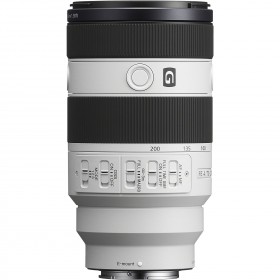
The Sony FE 70-200mm F4 Macro G OSS II is a full-frame E-mount telephoto zoom for photographers who want portraits, travel, reportage and close nature details covered by one lens they will actually carry. We recommend it to Sony users who value mobility and close focusing more than the extra light of a heavier 70-200mm F2.8. Its constant F4 aperture keeps the maximum exposure unchanged through the zoom range, OSS helps when shooting handheld, and its 0.5x magnification lets you move from a person to a flower or product detail without packing a dedicated macro lens. Four XD Linear Motors support responsive focusing, while 70-200mm gives useful working distance. It is a sensible option for a mobile Sony kit that still needs credible photo and video versatility.
Combine compatible accessories and save. The more items you add, the bigger the discount.
memory card

warranty extension
The Sony FE 70-200mm F4 Macro G OSS II is for Sony photographers who need a working telephoto zoom without weighing down every outing. From 70 to 200mm, it handles an outdoor portrait, an event where you cannot step closer, a compressed landscape and the small nature details that appear during a walk. Its value is not simply the range printed on the barrel. It saves lens changes when the subject or the available distance changes quickly. At 70mm, you can retain context around a person; at 135 or 200mm, it becomes easier to simplify the background and isolate an expression, a gesture or a detail.
This is a Sony G lens, not a G Master. That matters because it is not trying to be the same answer as the FE 70-200mm F2.8 GM OSS II. The priority here is portability, close-focus flexibility and a lens that remains comfortable over a long day. At about 794g without its tripod collar, it is notably easier to carry than the 1,045g F2.8 GM II. That difference is practical on a city break, a hike or a full day of reportage. The barrel extends while zooming, so it is not an internal-zoom design. Sony includes a zoom lock for transport, which is useful when the lens is stored in a bag.
A constant F4 aperture means the maximum aperture does not change when you move from 70 to 200mm. In an outdoor portrait, a ceremony or a daytime sports sequence, that makes exposure decisions more predictable. It does not make F4 equal to F2.8 in low light. The F2.8 version still has a one-stop advantage and can produce a shallower depth of field at comparable framing. This Sony 70-200mm F4 is therefore most convincing in daylight, well-lit locations or with Sony bodies that remain comfortable at the ISO sensitivity the scene requires, rather than for someone whose normal work is dark venues without added light.
The unusual part is its 0.5x maximum magnification throughout the 70-200mm range. That is not 1:1 macro, but it is meaningfully more useful than a conventional telephoto zoom that forces you to step back as soon as a detail becomes interesting. At 70mm, the 0.26m minimum focus distance works for an object, texture or flower in context. At 200mm, 0.42m lets you keep some distance while managing the background. You can move from a portrait to a ring, leaf or product detail without changing lenses. For regular specialist macro work, especially where reproduction ratio is the deciding factor, the Sony FE 100mm F2.8 Macro GM remains the more focused choice.

A 70-200mm lens is not merely a way to make a distant subject larger. Each focal length changes the relationship between subject and environment. At 70mm, an outdoor portrait can still show its setting. Around 135mm, the frame becomes more selective, which suits reportage, ceremonies and portraits. At 200mm, you can work farther from the subject and simplify the background, provided shutter speed remains appropriate when the subject moves.
| Focal length | Useful situation | Practical result |
|---|---|---|
| 70mm | Environmental portrait, travel, distant street scene | Keeps more of the surroundings to explain where the subject is. |
| 100-135mm | Reportage, ceremony, outdoor portrait | Tightens the frame without excessive distance and makes the background simpler. |
| 200mm | Daytime sport, stage, nature detail, discreet portrait | Lets you stay back and select a precise expression or detail. |
| Close range at 70-200mm | Flower, object, texture, product detail | The 0.5x capability gives room for close work without a lens change. |

Optical SteadyShot primarily helps with the photographer's movement. It can make handheld framing steadier as shutter speed drops, but it does not stop a child, animal or athlete. In those scenes, an appropriate shutter speed remains the first decision, followed by the right AF area and subject-detection setting on the camera. The four XD Linear Motors and floating focus groups offer a concrete benefit here: they support acquisition and tracking when the action is brief, without removing the need to choose the camera settings carefully.
The better option is defined by the constraint that appears most often in your photographs. The 70-200mm F4 Macro II favours mobility, close detail and broad use. The 70-200mm F2.8 GM II is the stronger choice when one extra stop in low light and more background blur are regular requirements. The 100-400mm GM takes over when reach, not proximity or weight, is the reason images are missed. These are different tools rather than interchangeable upgrades.
| Lens | Choose it for | Deciding point |
|---|---|---|
| FE 70-200mm F4 Macro G OSS II | Travel, portraits, reportage, close nature, video | 794g, constant F4 and 0.5x close-up capability throughout the range. |
| FE 70-200mm F2.8 GM OSS II | Weddings, performance, lower-light sport, portraits with stronger blur | One additional stop at F2.8, with a higher 1,045g carrying weight. |
| FE 100-400mm F4.5-5.6 GM OSS | Wildlife, outdoor sport, genuinely distant subjects | 400mm provides more framing margin when 200mm is no longer enough. |

For photographers moving between reportage and wildlife, the Sony FE 100-400mm GM OSS is the logical step when subject distance becomes the main issue. When that need is even more clearly wildlife at a distance, the Sony FE 200-600mm G OSS serves another type of work. Conversely, neither replaces the compact flexibility of this F4 Macro II for walking, portraits and travel.
The Sony FE 70-200mm F4 Macro G OSS II accepts Sony 1.4x and 2x teleconverters. That is useful when a trip or nature walk occasionally needs more reach without committing to a second telephoto zoom. The trade-off is a smaller maximum aperture, so you need more light, higher sensitivity or a slower shutter speed. The 2x converter also takes maximum magnification to 1:1. That can be valuable for a close image, but it does not automatically replace a dedicated macro lens for a macro-focused practice.
| Set-up | Range and maximum aperture | Realistic use |
|---|---|---|
| Lens alone | 70-200mm, F4, 0.5x | The most mobile option for portraits, reportage, travel and nature details. |
| With 1.4x teleconverter | 98-280mm, F5.6, 0.7x | For a modest reach increase outdoors while keeping the combination manageable. |
| With 2x teleconverter | 140-400mm, F8, 1:1 | For occasional reach or 1:1 magnification when there is generous light. |
Video users also have specific reasons to consider this lens. Sony states that focus breathing, axial shift and focus shift while zooming are reduced, and manual focus has a linear response. That will not make an unplanned moving shot effortless, but it helps changes in focus and focal length feel less intrusive. For an interview, a product detail, a ceremony or a nature sequence, 70-200mm lets you stay outside the scene while keeping a controlled frame.
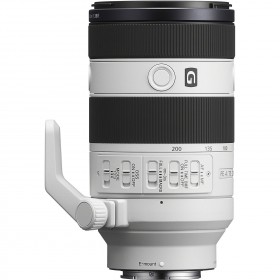
The stated dimensions are 82.2mm in maximum diameter and 149mm in length at 70mm. That does not make the lens small in the way a prime lens is small, but it helps explain why it sits comfortably in a bag built around a Sony mirrorless body. The tripod collar is useful when the lens will stay on a support for a long sequence, while the 72mm filter thread keeps filter choice straightforward for photographers who use protection, neutral density or polarising filters. Before choosing a filter, consider the intended use: a polariser can be useful for certain landscape or water scenes, whereas an ND filter is more relevant when video shutter speed must remain controlled.
The nine-blade circular aperture is also relevant in use, not as an isolated number. When a portrait or a close detail is photographed at the longer end of the range, it helps transitions outside the focus plane appear more rounded. The effect still depends on subject distance, background distance and focal length. At F4, the lens can separate a subject well at 135 or 200mm, but it should not be chosen solely to imitate the more pronounced blur of an F2.8 lens. A photographer who values a lighter kit and a little more context around the subject will often appreciate that balance.
At MCZ DIRECT, we see it as the 70-200mm for the Sony photographer who wants to take the lens everywhere: traveller, outdoor portrait photographer, reportage shooter or close-nature enthusiast. It is less suited to the specialist who works in dim venues every week and needs F2.8 first.
We recommend it when weight, close focusing and flexibility matter as much as aperture. Against the Sony FE 70-200mm F2.8 GM OSS II, it is the more rational choice when most work happens outdoors, you walk for long periods and 0.5x close-ups are genuinely useful. For a ready-made camera and lens pairing, the Sony Alpha 7 V + FE 70-200mm F4 Macro II and Sony A7R VI + FE 70-200mm F4 Macro II address kit intent without confusing it with the lens-only choice.
The central compromise is straightforward: F4 admits half as much light as F2.8. If indoor sport, concerts or dark weddings are routine work, the F2.8 lens remains more comfortable. And if 1:1 macro is the core of your practice, a dedicated macro lens is the better fit.
Choose the Sony FE 70-200mm F4 Macro G OSS II when you need a stabilised Sony telephoto zoom for outdoor portraits, reportage, travel, close nature and video, with a weight that remains realistic for a full day out. Its useful range, stable aperture and close-up capability often remove the need for a second lens. For a wider comparison by focal length, aperture and use, browse our Sony lenses.

Yes. It covers full-frame 35mm sensors and can also be used on Sony APS-C E-mount cameras.
F2.8 provides one extra stop of light and potentially shallower depth of field. The F4 Macro II is lighter and offers 0.5x magnification.
It reaches 0.5x maximum magnification across the zoom range. It does not reach 1:1 without the 2x teleconverter.
Yes, especially in daylight or good light. The XD motors support autofocus and subject tracking, while OSS steadies the frame. An appropriate shutter speed is still needed to freeze the subject.
Yes. At about 794g, it is easier to carry for long periods than the 70-200mm F2.8 GM II.
Yes. It includes Optical SteadyShot, which helps with camera shake rather than subject movement.
Sony 1.4x and 2x teleconverters are compatible, providing 98-280mm F5.6 and 140-400mm F8 respectively.
Yes. With the 2x teleconverter, maximum magnification becomes 1:1, while maximum aperture becomes F8.
Yes. Focal lengths between 100 and 200mm allow comfortable working distance and a simpler background.
No. The barrel extends while zooming, and a zoom lock is provided for transport.
Yes. It is designed with reduced focus breathing, axial shift and focus shift while zooming.
It accepts 72mm filters.
No. It has dust and moisture resistance and a fluorine-coated front element, but Sony does not guarantee complete weather sealing.
