• -5%
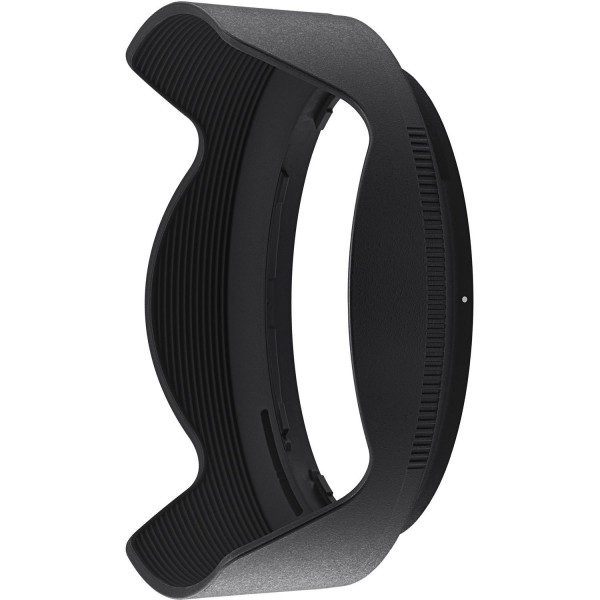
Nikon NIKKOR Z 20mm f/1.8 S lens hood, designed for reduced flare and improved image quality
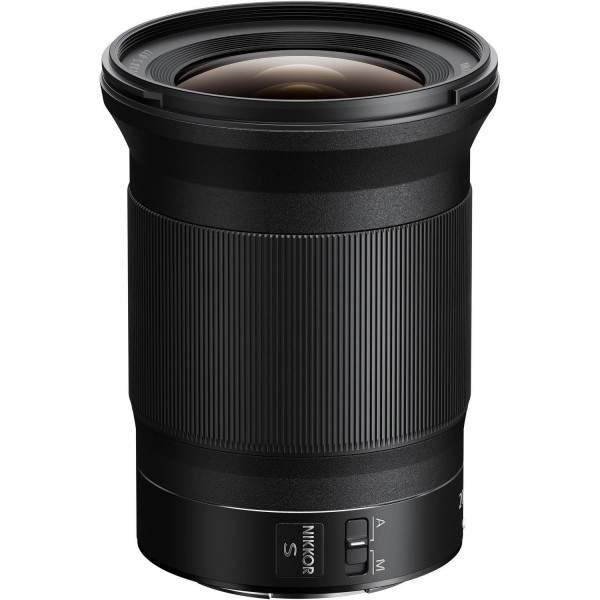
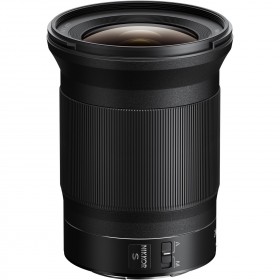
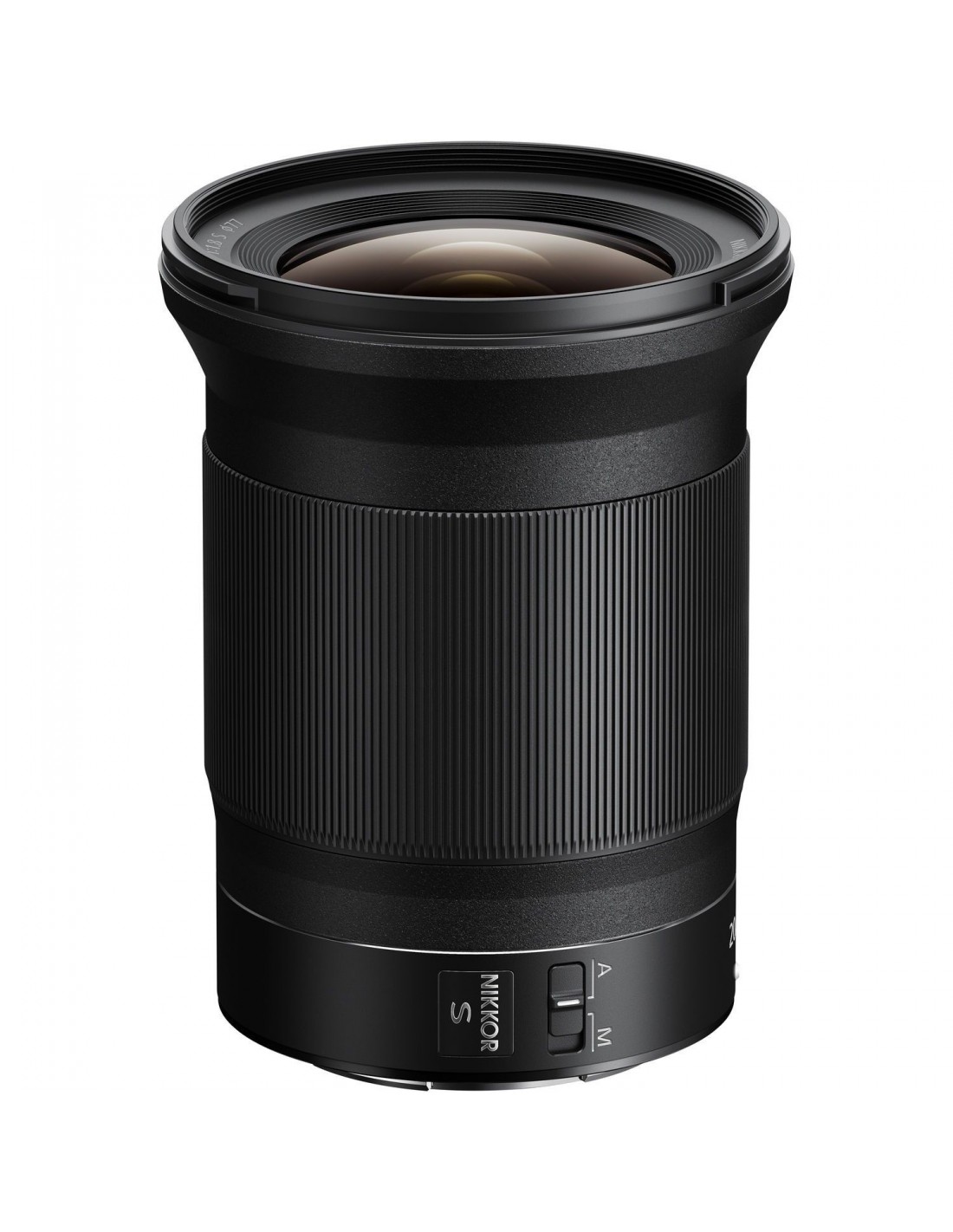
Nikon NIKKOR Z 20mm f/1.8 S lens with visible controls and smooth barrel finish
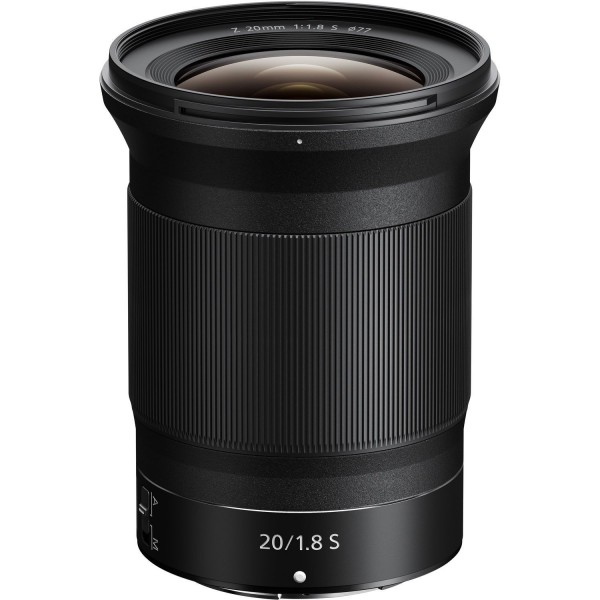
Nikon NIKKOR Z 20mm f/1.8 S lens with smooth surface and wide angle
Nikon NIKKOR Z 20mm f/1.8 S lens hood, designed for reduced flare and improved image quality
Nikon NIKKOR Z 20mm f/1.8 S lens with visible controls and smooth barrel finish
Nikon NIKKOR Z 20mm f/1.8 S lens with smooth surface and wide angle

Nikon NIKKOR Z 20mm f/1.8 S

IN STOCK
€865.45 €911.00-5%
  • 100% newBrand-new and authentic product
  • Final priceNo unpleasant surprises! The displayed price is the final amount paid for your purchase.
  • Order before 2 pm: estimated delivery Mon 17 - Tue 18 AugEstimate based on available stock, order time, business days and carrier delivery times.
  • 3-year MCZ DIRECT warranty
  • Free delivery with insurance includedYour order is protected from dispatch to delivery: in case of loss, theft or damage during transport, your parcel is insured up to its value.
100% BRAND NEW - FINAL PRICE - DELIVERED TO YOUR DOOR WITHIN 6-14 DAYS

The NIKKOR Z 20mm f/1.8 S is a fast ultra-wide prime for Nikon Z photographers working in astrophotography, landscapes, architecture or interiors, and we recommend it when a broad view and low-light freedom matter more than zoom flexibility. Its f/1.8 aperture helps keep stars tighter, protect shutter speed or avoid an unnecessary rise in ISO. Focus down to 0.20m also lets a close foreground lead into a much wider setting. At 505g, and without optical VR, the lens benefits from a steady camera or tripod according to the subject. It is a strong choice for photographers who genuinely need a native 20mm prime, consistent S-Line rendering and the convenience of standard 77mm screw-in filters. It also works well for deliberate interior video.

Compatible pack

Complete your set

Combine compatible accessories and save. The more items you add, the bigger the discount.

1 5.00%2 8.00%3 10.00%4+ 12.00%
Main productNikon NIKKOR Z 20mm f/1.8 S

Nikon NIKKOR Z 20mm f/1.8 S

€865.45
Compatible
SanDisk 128GB Extreme PRO UHS-II SDXC 300 MB/s memory card

memory card

SanDisk 128GB Extreme PRO UHS-II SDXC 300 MB/s memory card

€210.00€199.50
Compatible
2-year warranty extension

warranty extension

2-year warranty extension

€69.24
0% off
No accessory selectedUse the standard buy box to buy the product alone.
€865.45
 

NIKKOR Z 20mm f/1.8 S: a broader view when light is scarce

The NIKKOR Z 20mm f/1.8 S is for photographers who know why 20mm matters. It provides noticeably more room than a 24mm lens inside a building, near a facade or beneath a starry sky. The f/1.8 aperture turns that coverage into a genuine low-light tool by protecting shutter speed, containing ISO or shortening a night exposure.

This is not a tiny walk-around prime. Nikon states 505g and a 108.5mm length. In return, S-Line optical design, multi-focus autofocus and advanced coatings aim for consistent detail towards the edges. The absence of optical VR is manageable, but it requires a clear distinction between a static scene and a moving subject.

Key strengths of the NIKKOR Z 20mm f/1.8 S

  • 94° FX field to include a broad sky, room or facade with little working space.
  • f/1.8 aperture for more control over shutter speed and ISO at night.
  • Focus from 0.20m to place a close detail in front of a broad setting.
  • S-Line optics with three ED and three aspherical elements for consistent rendering.
  • Multi-focus AF to maintain accurate focus from close range to infinity.
  • 77mm filter thread for ordinary screw-in polarisers and ND filters.
  • Nine rounded blades for smoother transitions when a subject is close.
  • Quiet controls useful for video and discreet stills work.
  • Native Nikon Z mount with compatible camera automation and no adapter.
Recommended uses, strengths and main limitation of the NIKKOR Z 20mm f/1.8 S
The MCZ DIRECT choice for astro, night landscape and genuinely confined spaces.

What the specifications change in practical use

At maximum aperture, the main benefit is choice. Under a night sky, exposure can be shorter; indoors, shutter speed can follow a person; at blue hour, ISO can remain more controlled. Stopping down still makes sense when broad depth is needed. f/1.8 is available when the scene requires it, not a setting that should be imposed on every photograph.

The 20mm exaggerates differences in distance. A nearby object grows while the background recedes. This creates depth but demands a clean frame. With people, working too close can distort a face; in architecture, tilting the camera converges verticals. Placement matters just as much as optical sharpness.

NIKKOR Z 20mm f/1.8 S: specifications translated into practical consequences
SpecificationPractical benefitPlan for
20mm and 94° on FXMore room than a 24mm lensWatch corners and subject scale
f/1.8Low-light freedom for astro and interiorsDepth becomes shallow at close range
0.20m and 0.19xA close foreground with broad contextNot true 1:1 macro
505gBuild appropriate to an S-Line ultra-wideInclude camera and tripod weight
No optical VRBody stabilisation can help with static scenesStabilisation never freezes the subject

Which assignments suit this lens?

NIKKOR Z 20mm f/1.8 S: recommended uses and useful limitations
AssignmentWhat the lens providesUseful reservation
Astrophotography20mm, f/1.8 and careful point-source renderingTripod, focus and condensation still matter
LandscapeBroad foreground and 77mm filtersGive every edge a purpose
Architecture and interiorsCoverage when working room is scarceKeep the camera level
Immersive documentaryShow a person within the locationKeep faces away from corners
VideoQuiet AF and reduced breathingControl camera movement
Practical framing and uses across the focal range of the NIKKOR Z 20mm f/1.8 S
At 20mm, photographer position influences the result as much as the f/1.8 aperture.

20mm: four situations where the view makes a difference

Astro : milky way and landscape, keep a broad sky above a readable foreground. Landscape : visual depth, move close to a useful foreground element. Architecture : limited space, show more while keeping the camera level. Video : immersive view, film confined spaces with slow movement.

Astrophotography: why 20mm and f/1.8 work so well together

A 20mm lens covers enough sky to place the Milky Way above a meaningful foreground without making the whole scene feel like an extreme panorama. The f/1.8 aperture gathers four times as much light as f/3.6. In practice, that freedom can be used to lower ISO, shorten the exposure so stars remain tighter, or retain more detail in the landscape. A sturdy tripod, careful manual focus on a bright star and a magnified sharpness check are still essential. The aperture creates options; it does not replace a sound night-photography routine.

Point sources reveal corner aberrations quickly, which is why consistent rendering across the frame matters. Nikon uses three ED and three aspherical elements, with Nano Crystal coating, to control colour and stray light. Real conditions introduce other limits: condensation, wind and light pollution can spoil an otherwise well-planned exposure. A lens heater, dim red torch and composition prepared before darkness may contribute as much to a successful session as another camera setting.

Landscape at 20mm: give the foreground a clear job

An ultra-wide lens makes distant features look smaller. A mountain that dominates the view can become a thin strip unless the foreground provides scale and direction. At 20mm, a path, rock, plant or reflection can guide the eye towards the main subject. The 0.20m minimum focus distance encourages a close viewpoint, but nearby objects grow dramatically. Check all four corners and make sure a secondary object has not become more important than the landscape itself.

In daylight, f/5.6 or f/8 generally provides more useful depth than the maximum aperture. Stopping down as far as possible is not automatically better because diffraction eventually softens fine detail. When the foreground is very close and the horizon must remain crisp, two focus positions can be combined if nothing moves. The lens supplies the field of view; camera height, distance and the balance between visual masses determine whether the final picture remains easy to read.

Architecture and interiors: manage lines before correction

In a confined room, a hall or at the foot of a building, 20mm provides space that a 24mm lens cannot always find. It does not remove perspective rules. Tilt the camera upwards and vertical lines converge; with a broad field, the effect becomes obvious. Keeping the sensor level and selecting a considered height gives editing software a cleaner starting point. Leaving room around the building also prevents an important edge from being lost when perspective is corrected.

People close to a corner can appear stretched. For a group or a wedding scene, keep faces away from the extreme edges and step back whenever the room allows it. The 20mm is strongest when the environment matters, rather than as a close portrait lens. Property photography brings an additional responsibility: a broad view should explain the space without misrepresenting its proportions. Credibility is more useful than making every room look implausibly large.

Focusing at 0.20m: combine a close detail with its setting

The 0.19x maximum reproduction ratio is not macro, yet it is enough to bring a flower, tool or architectural detail close while retaining a broad background. At f/1.8 and minimum distance, the subject can separate more clearly than the focal length suggests. The effect comes from proximity: the near object grows while the setting recedes. It produces an immersive frame when that perspective supports the story rather than being used only for novelty.

Depth of field becomes shallow at close range even with a wide lens. Autofocus should therefore be placed on the precise part that matters. A small AF point or magnified manual focus gives more control with a static object. Stopping down increases depth but requires a slower shutter or higher ISO. In-body stabilisation can reduce camera movement on compatible bodies, although a flower moving in the wind still needs a subject-appropriate shutter speed.

77mm filters: a straightforward landscape system

The 77mm front thread takes a circular polariser or ND filter without a specialist holder. This is a practical advantage over ultra-wide lenses with a protruding front element. A polariser can control some reflections and deepen the sky, but its effect may look uneven across a 94-degree view. Rotate it while watching the complete frame and reduce the strength when one area of the sky becomes much darker than the rest.

An ND filter extends exposure for moving water or clouds. Long exposures also reveal tripod vibration, stray light and every mark on the filter. A step-up ring can share a 77mm filter with smaller lenses and keep the bag organised. At night, remove any filter that has no clear purpose. Each extra glass surface can create a reflection around a bright lamp or star, even when the filter itself is of good quality.

Video: broad framing, quiet focus and controlled movement

The 20mm suits an establishing shot, a tight interior, a presenter in context or a moving view through a small space. On an FX camera it remains broad, although a cropped 4K mode or electronic stabilisation may narrow the field. Test the actual recording mode before relying on the focal length. Nikon designed the lens to reduce focus breathing, so framing changes less during a focus transition. AF area and transition speed still need to match the subject.

Forward motion looks pronounced with an ultra-wide lens. An uneven walk, tilted horizon or abrupt turn quickly becomes uncomfortable to watch. Hold the camera close, move slowly and keep a visual reference in the frame. These choices often create a more professional result than a dramatic move. When filming a person at close distance, leave enough space for facial proportions to remain natural and use the environment as part of the composition.

20mm, 24mm or 14-30mm zoom: three different working methods

The 20mm gives a broader view than the 24mm and retains the f/1.8 aperture. It is the stronger choice for a night sky, very tight interior or low-light scene where ISO should not rise too quickly. The 24mm feels more natural for documentary work and fits a series containing people more easily. Both primes require the photographer to move or change lenses when framing needs alter significantly.

The NIKKOR Z 14-30mm f/4 S reaches 14mm, zooms through several useful views and weighs 485g. Its f/4 aperture gathers much less light, but it accepts screw-in filters and can be a more flexible daylight travel lens. At MCZ DIRECT, we would choose the 20mm for photographers who genuinely use f/1.8 and want strong rendering across the frame. For daylight hiking or varied architectural work, the 14-30mm may be the more rational tool.

A useful way to decide is to review the last few assignments rather than imagine every possible scene. If most wide frames were made after sunset, inside confined spaces or with stars in the composition, the 20mm prime solves a recurring problem. If focal length changed constantly and the work was mainly done at comfortable shutter speeds, a zoom will save more time. This distinction keeps the purchase tied to pictures that are actually made, not to an abstract preference for aperture or coverage.

How does it fit within the Nikon Z range?

Against the NIKKOR Z 24mm f/1.8 S, the 20mm provides more room and suits night skies or tight spaces better. The 24mm feels more natural when people regularly enter the frame.

The NIKKOR Z 14-30mm f/4 S reaches 14mm and changes framing without a lens swap, but its f/4 aperture gathers far less light. Decide according to how often low-light work and zoom flexibility are genuinely required.

20mm f/1.8, 24mm f/1.8 or 14-30mm f/4?
CriterionZ 20mm f/1.8 SZ 24mm f/1.8 SZ 14-30mm f/4 S
Main viewUltra-wide primeWide primeUltra-wide zoom
Aperturef/1.8f/1.8Constant f/4
Nikon weight505g450g485g
Filters77mm72mm82mm
Choose forAstro and interiorsLandscape and documentaryDaylight flexibility
NIKKOR Z 20mm f/1.8 S compared with the closest Nikon Z lenses
The 20mm leads when light is scarce and 24mm is not broad enough.

Our verdict

At MCZ DIRECT, we see it as the choice for night-landscape, architecture and interior photographers who need a native fast prime rather than a slower zoom. Its value is strongest when f/1.8 and the 94-degree field are used together.

We would recommend the 24mm f/1.8 S for more natural documentary work and the 14-30mm f/4 S for daylight hiking or assignments with varied framing. The honest reservation is its size: 505g is reasonable, but this is not a casual pocket prime.

Lens mount
Nikon Z
Recommended use
Landscape / architecture
Stabilization
No
Lens type
Wide angle
Focal length
Ultra-wide angle
Maximum aperture
f/1.7 - f/2
Aperture options
Up to f/1.8
Photo use
Architecture
Interior
Landscape
Portrait
Reportage
Lens format
Full frame
NIKONZ20F18S
4960759903372

Technical specifications

General
Brand
Nikon
Product type
Camera lens
Lens type
Wide angle
Lens series
NIKKOR Z S-Line
Aperture options
Up to f/1.8
Lens mount
Nikon Z
Photo use
Reportage; Landscape; Architecture; Interior; Portrait
Lens format
Full frame
Level
Suitable for professionals
Yes
Properties
Full frame
Yes
Image stabilization
No
Lens construction
14 elements in 11 groups (3 ED and 3 aspherical)
Magnification factor
0.19x
Focus mode
Autofocus and manual
Minimum focusing distance
0.20 m
Lens hood included
Yes
Focal length
Fixed focal length
Yes
Focal length
20 mm
Minimum focal length
20 mm
Maximum focal length
20 mm
Aperture
Minimum aperture overall
f/16
Minimum aperture
f/16
Maximum aperture
f/1.8
Diaphragm blades
9 rounded blades
Zoom
Zoom option
No
Uses
Landscape photography
Yes
Portrait photography
Yes
Travel photography
No
Reportage photography
Yes
Sports photography
No
Wildlife photography
No
All-round photography
No
Video
Yes
Physical properties
Weight
505 g
Filter size
77 mm
Length
10.85 cm
Diameter
84.5 mm
Dust and splash resistant
Yes
Buying guidance
Best for
Ideal for: landscape, portrait, reportage, video.
Compatibility
Nikon Z-mount lens for full-frame FX Nikon Z mirrorless cameras; also usable on DX-format Nikon Z bodies with DX crop.
Warning
This lens has no built-in optical VR; stabilization depends on the compatible Nikon Z camera used.

Nikon NIKKOR Z 20mm f/1.8 S FAQ

Who is the NIKKOR Z 20mm f/1.8 S for?

It mainly suits astrophotography, landscape, architecture and confined interiors.

Does the NIKKOR Z 20mm f/1.8 S cover full-frame Nikon Z cameras?

Yes. It is a native Nikon Z lens designed to cover the FX format.

Can it be used on a Nikon Z DX camera?

Yes. The view is then roughly equivalent to 30mm on full frame.

What is the maximum aperture?

Maximum aperture is f/1.8, providing more low-light freedom.

Does it have optical VR?

No. It can use in-body stabilisation on compatible Nikon Z cameras.

What is the minimum focus distance?

Nikon specifies 0.20 m.

Which filters fit?

The front thread accepts 77 mm screw-in filters.

Is it a macro lens?

No. Maximum reproduction is 0.19x, useful for detail but different from true 1:1 macro.

Is it useful for video?

Yes. Quiet autofocus and reduced focus breathing support broad shots and prepared transitions.

What is included in the box?

NIKKOR Z 20mm f/1.8 S lens, LC-77B front cap, LF-N1 rear cap, HB-95 hood and CL-C1 case

Reviews Nikon NIKKOR Z 20mm f/1.8 S

0 Rating

0.0
out of 5 stars

0 Rating

Customer photos

No customer photos yet
  • Reviews (0)
ALEX (In testing phase)
Hello! Welcome to our online store 👋 Would 👍 🐦‍🔥you like help with products, orders, or shipping?
Product added to compare.