- -5%
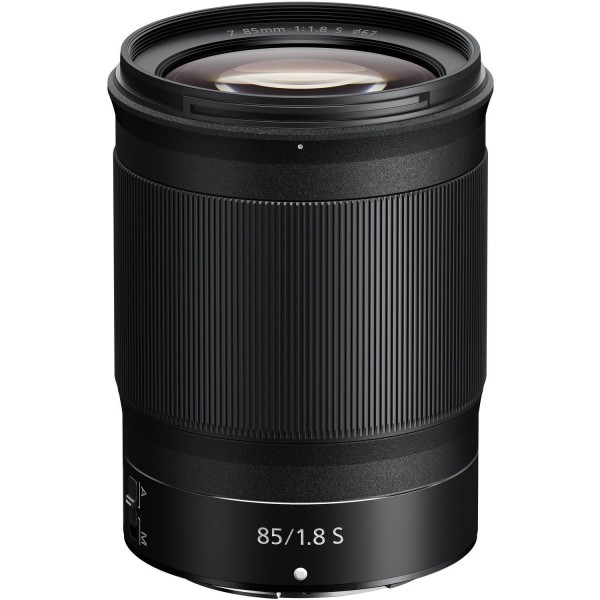
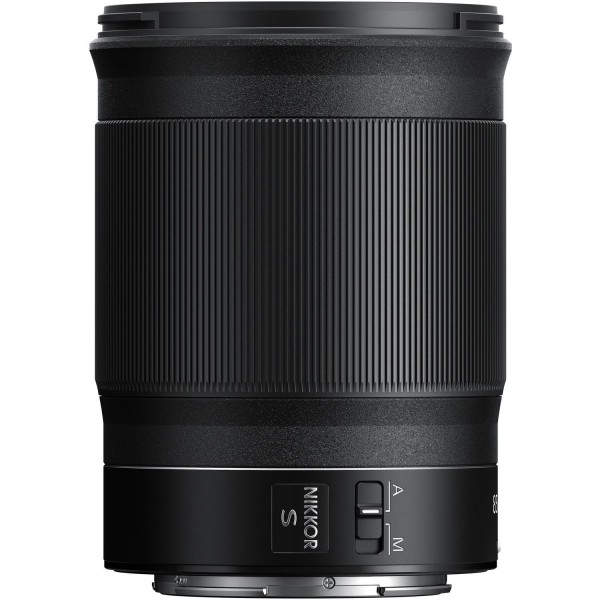
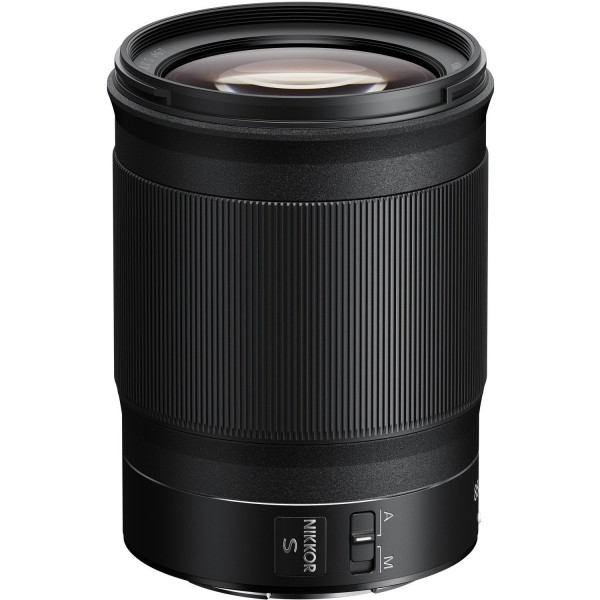
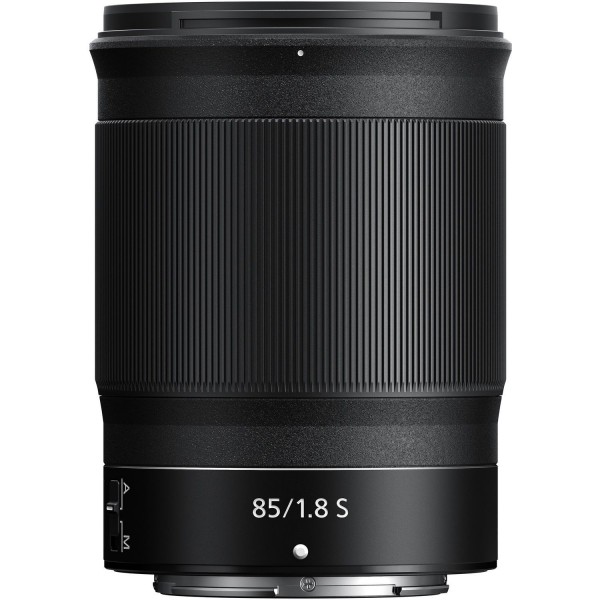
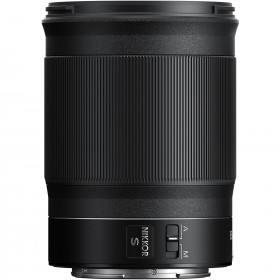
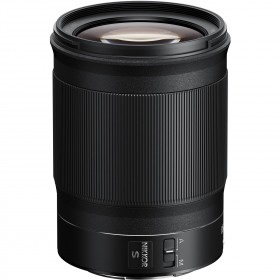
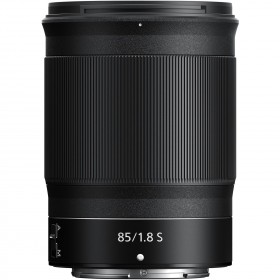
Nikon NIKKOR Z 85mm f/1.8 S
- 100% newBrand-new and authentic product
- Final priceNo unpleasant surprises! The displayed price is the final amount paid for your purchase.
- Order before 2 pm: estimated delivery Thu 17 - Fri 18 SepEstimate based on available stock, order time, business days and carrier delivery times.
- 3-year MCZ DIRECT warranty
- Free delivery with insurance includedYour order is protected from dispatch to delivery: in case of loss, theft or damage during transport, your parcel is insured up to its value.
The NIKKOR Z 85mm f/1.8 S is a Nikon Z prime lens for photographers who want a bright portrait lens with comfortable working distance. We recommend it when S-Line consistency and controlled rendering matters because it helps you keep a flattering distance and simplify busy backgrounds. Its f/1.8 aperture supports available-light work and softer backgrounds, while the 470 g weight remains manageable during a long assignment. The lens has no optical VR, and its 85 mm view needs enough room indoors. It is a sensible choice when portraits, weddings, events and stage work genuinely match the way you photograph. It also complements a zoom when you need more light, a repeatable perspective and deliberate depth-of-field control during demanding professional assignments.
Complete your set
Combine compatible accessories and save. The more items you add, the bigger the discount.


memory card
SanDisk 128GB Extreme PRO UHS-II SDXC 300 MB/s memory card

warranty extension
2-year warranty extension
NIKKOR Z 85mm f/1.8 S: a bright portrait lens with useful working distance
The NIKKOR Z 85mm f/1.8 S is designed for portraits, weddings, events and stage work. Its fixed 85 mm view gives the photographer a clear perspective and a repeatable working distance. On full frame it helps you keep a flattering distance and simplify busy backgrounds. On a DX body, the angle tightens to roughly 127.5 mm equivalent.
S-Line positioning places the emphasis on optical consistency, aberration control and finish. At 470 g, with a 67 mm filter thread and 0.80 m minimum focus, the lens fits easily into a Nikon Z system. Its limits are equally clear: no optical VR and no zoom flexibility.
Key strengths of the NIKKOR Z 85mm f/1.8 S
- Fixed 85 mm view for a consistent perspective that supports portraits, weddings, events and stage work.
- Bright f/1.8 aperture to keep useful shutter speed in low light and separate the subject.
- 470 g weight which remains manageable for a full day of portraits, events or travel.
- 0.80 m close focus for moving from the wider scene to a detail without changing lenses.
- Nine-blade diaphragm for smoother transitions in defocused areas when stopped down slightly.
- 67 mm filter thread shared with several compact Nikon Z primes.
- Quiet autofocus design useful during ceremonies, interviews and discreet documentary work.
- S-Line construction for dependable rendering and stronger flare control.
- Customisable control ring for quick access to a selected camera function.

What the specifications change in practical use
Specifications matter once they change a photograph. At f/1.8, more light reaches the sensor, but focus tolerance becomes smaller at close distance. The 470 g weight helps portability without describing the complete camera setup. A 0.80 m minimum distance allows a close detail, but 0.12x reproduction remains well short of true macro.
There is no optical VR in the lens. Stabilisation therefore depends on the compatible Nikon Z body and can help with camera movement, not subject movement. For portraits, reportage and events, choose a shutter speed that suits the person first, then use aperture and ISO to complete the exposure.
| Specification | Practical benefit | Plan for |
|---|---|---|
| 85 mm f/1.8 | keep a flattering distance and simplify busy backgrounds | Allow more working distance than a 50 mm |
| 470 g | A manageable setup for a longer assignment | Camera and accessories still determine total weight |
| 0.80 m minimum focus | Close details without changing lenses | 0.12x does not replace a macro lens |
| Nine blades | Smoother out-of-focus transitions | Background quality also depends on placement |
| No optical VR | Simple bright-prime design | Stabilisation depends on a compatible camera body |
Which assignments suit this prime lens?
| Assignment | What the lens provides | Useful reservation |
|---|---|---|
| Portrait and weddings | 85 mm framing with f/1.8 | Check the available room |
| Available light | f/1.8 supports shutter speed or lower ISO | Stabilisation does not freeze the subject |
| Events and stage | keep a flattering distance and simplify busy backgrounds | Choose enough depth of field |
| Video | Quiet AF and a readable fixed perspective | Test focus transitions and camera distance |
| DX camera | Approximately 127.5 mm equivalent view | A tighter, more specialised frame |

85 mm: four practical ways to use it
Full frame : portrait distance, keep a flattering distance and simplify busy backgrounds. DX format : about 127.5 mm equivalent, a tighter telephoto view. f/1.8 : available light, support shutter speed or lower ISO. 0.80 m : close detail, move closer without claiming macro capability.
The working distance that makes 85 mm flattering
The NIKKOR Z 85mm f/1.8 S allows a photographer to frame a face or upper body without standing uncomfortably close. That distance tends to keep facial proportions natural and gives the subject more personal space. The narrower view also removes more of a busy background, making the lens a strong choice for portraits, weddings and expressions captured from the edge of an event.
The same quality creates a limitation indoors. A full-length portrait may require more room than a small studio or bedroom provides. Before choosing 85 mm as the only portrait lens, consider the locations used most often. A 50 mm includes more context and fits smaller spaces; the 85 mm is strongest when distance is available and isolation is wanted.
f/1.8 gives shallow depth without an f/1.2 body
At portrait distance, f/1.8 can soften the background strongly and preserve a useful shutter speed in low light. The nine rounded blades support smooth defocused highlights as the aperture closes. A sitter separated from the background will look more isolated than someone standing directly against a wall, so placement remains part of the result.
The depth of field can be too thin for a couple or a face turned away from the camera. f/2.8 often keeps both eyes and important details secure while maintaining separation. The wider setting is available when the light or creative intention needs it. Treating f/1.8 as a choice rather than a permanent default improves consistency.
S-Line correction for hair, fabric and fine portrait detail
Nikon’s S-Line positioning emphasises controlled aberrations, contrast and fine detail. The 12-element, eight-group design and Nano Crystal Coat are relevant when hair, fabric, jewellery or eyelashes must remain clean against a bright background. A portrait lens should not only blur the surroundings; it must also render the focused features convincingly.
High-resolution bodies make focusing discipline important. Eye detection can place attention correctly, but the photographer should inspect early frames, especially with glasses, veils or foreground objects. A smaller AF area may be more reliable than broad detection in a crowded scene. The lens supplies optical potential; camera setup and subject direction turn it into a dependable portrait.
Weddings, ceremonies and stage work from a respectful distance
During a ceremony, the 85 mm can isolate a reaction without moving into the aisle. At a stage performance, it frames a musician or speaker while preserving distance. It pairs naturally with a 35 mm or 50 mm: the shorter lens establishes the venue, while the 85 mm concentrates on emotion and detail.
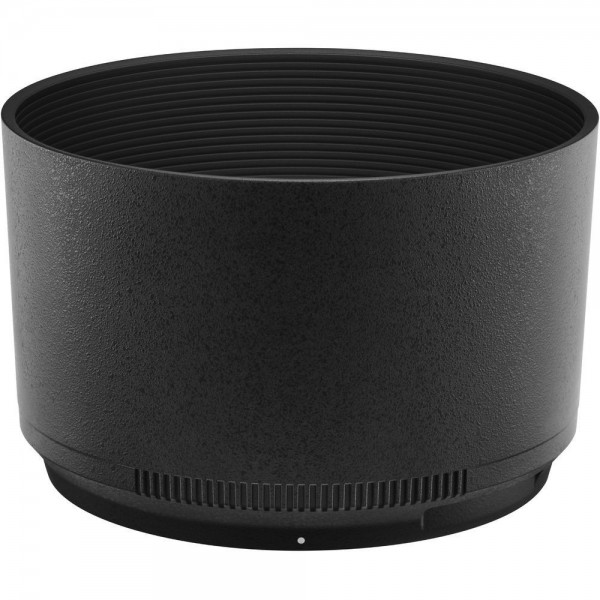
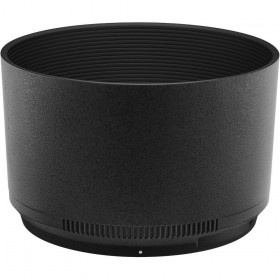
Venue lighting often mixes bright spots with deep shadows. f/1.8 helps maintain shutter speed, but exposure should protect faces and important highlights. Nano Crystal Coat is intended to reduce flare, and the HB-91 hood blocks some side light. A slight position change can still be the most effective solution when a spotlight lowers contrast.
Autofocus, eye detection and moving people
The stepping motor is designed for fast, quiet focusing. With a compatible Nikon Z body, eye detection assists with portraits and events. Results still depend on light, contrast, AF area and subject speed. At f/1.8, a person walking toward the camera can move outside the focus plane quickly, so shutter speed and continuous AF settings deserve attention.
Checking the first sequence at high magnification is a sensible habit. Glasses, hair and foreground decorations can attract focus away from the eye. If that happens, reduce the detection area or place a point deliberately. A moderate burst can then capture expression without creating hundreds of nearly identical files.
A minimum distance of 0.80 m is not macro
The lens focuses down to 0.80 m and reaches 0.12x reproduction. This is suitable for a face, a piece of clothing or a larger detail, but not for small jewellery or insects. The longer minimum distance can feel restrictive at a table. It also keeps the photographer from moving so close that portrait perspective becomes unflattering.
For true close-up work, the NIKKOR Z MC 105mm f/2.8 VR S offers macro reproduction and optical VR. The 85mm f/1.8 S should be chosen for people and subject isolation. Using the correct specialist lens is more effective than trying to make the 85 mm cover a magnification task it was not designed to perform.
Video portraits and restrained focus breathing
For video, 85 mm works for a tight interview, stage angle or detail shot. Nikon highlights very low focus breathing, helping the frame remain stable during a focus transition. The camera must be placed farther from the subject than with 35 or 50 mm, which affects microphone placement and room layout.
At f/1.8, a speaker leaning forward can leave focus quickly. f/2.8 is often a better interview compromise. The quiet motor helps when the microphone is near the camera, though final noise depends on AF speed and the room. On DX, the view becomes roughly 127.5 mm equivalent and is more specialised still.
85mm f/1.8 S, 50mm f/1.8 S or 85mm f/1.2 S
The 50mm f/1.8 S is easier in a small room and includes more of the subject’s setting. The 85mm f/1.8 S gives a more distant, isolated portrait while staying at 470 g. They are complementary rather than substitutes: one tells more of the place, the other concentrates on expression.
The 85mm f/1.2 S offers another level of light and depth-of-field control, but weighs about 1,160 g and requires a larger commitment in handling and budget. The f/1.8 S is the balanced option for a portraitist who wants S-Line quality in a lens that remains practical for events and travel.
Preparing a portrait session around the working distance
Before a portrait session, check that the location gives enough room for 85 mm. A head-and-shoulders image is easy in many spaces, but a full-length portrait requires a meaningful step back. That distance can be an advantage: the subject has personal space, facial perspective remains natural and the background is easier to organise. It can also become a limitation in a small flat or crowded preparation room, where a 50 mm is likely to be more practical.
For a simple two-lens event kit, use a 35 mm to establish the venue and the 85mm f/1.8 S for expressions, reactions and details. The lenses do different jobs rather than duplicating one another. Check eye focus at the beginning, keep enough shutter speed for movement and stop down for couples standing on different planes. Those habits make the 85 mm dependable across a long day without pretending that f/1.8 is appropriate for every portrait.
How does it fit within the Nikon Z range?
Compared with the NIKKOR Z 50mm f/1.8 S, this lens prioritises S-Line consistency rather than the widest aperture. The 50 mm is more flexible indoors, while the 85 mm isolates a face more easily.
A standard zoom remains easier when framing changes constantly or the photographer cannot move. The prime becomes the better tool when its perspective already matches the intended visual language. It then provides a wider aperture, repeatable framing and a simpler lens to learn thoroughly.
| Criterion | 85mm f/1.8 S | 50mm f/1.8 S | 85mm f/1.2 S |
|---|---|---|---|
| Main framing | Isolated portrait | Natural and versatile | Very shallow portrait |
| Aperture | f/1.8 | f/1.8 | f/1.2 |
| Nikon weight | 470 g | 415 g | 1,160 g |
| Priority | S-Line consistency | S-Line consistency | Maximum light |
| Key use | Portrait and events | Portrait and daily work | Shallow-depth portrait |

Our verdict
At MCZ DIRECT, we see the NIKKOR Z 85mm f/1.8 S as a sound choice for photographers working in portraits, weddings, events and stage work who place S-Line consistency and controlled rendering first. It is not meant to replace every focal length. It offers a clear angle, a useful aperture and a consistent way of working.
We would point to the NIKKOR Z 50mm f/1.8 S instead when f/1.8 available-light capability matters more than S-Line positioning. The honest limitation is the room required indoors. If that fits your work, this prime can become one of the most frequently used lenses in the bag.