

Shopping Cart


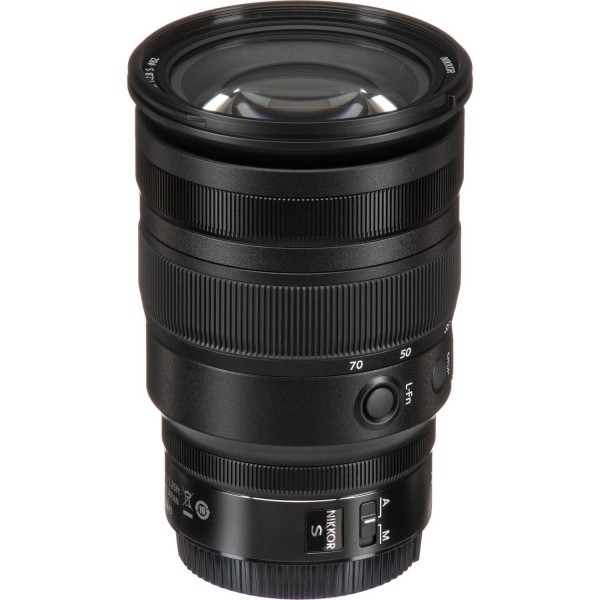
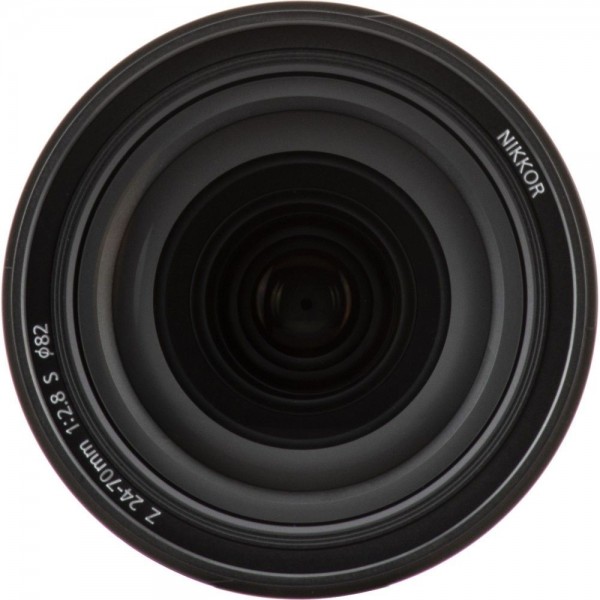
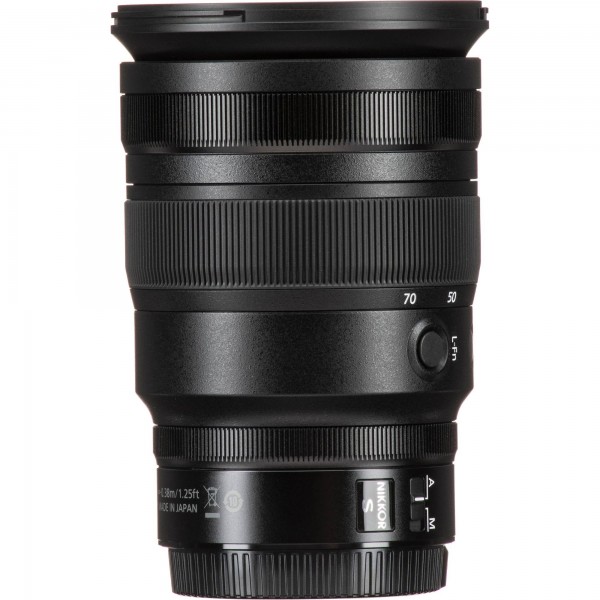
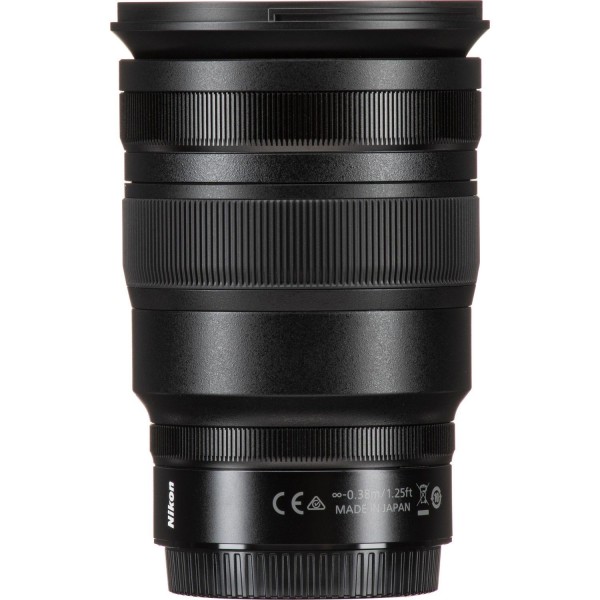
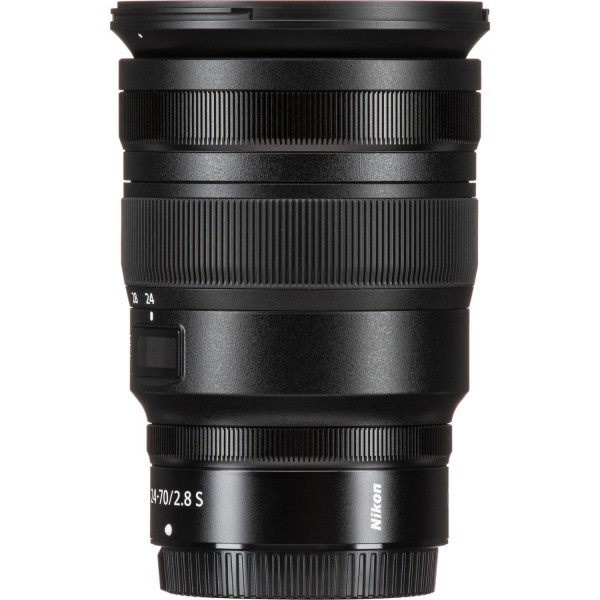
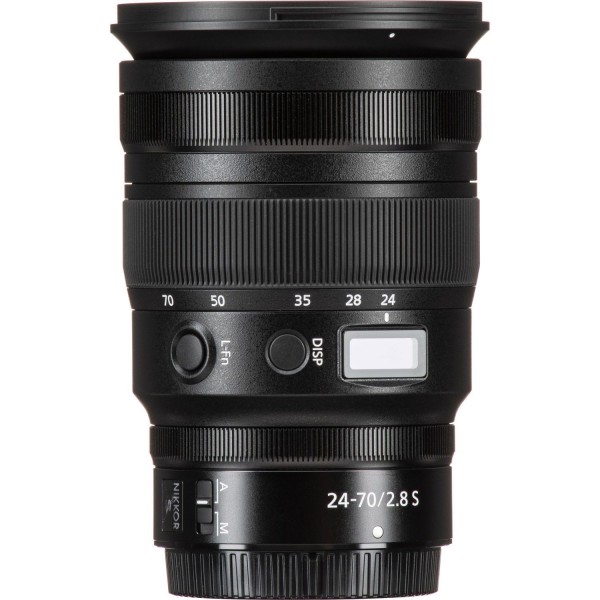
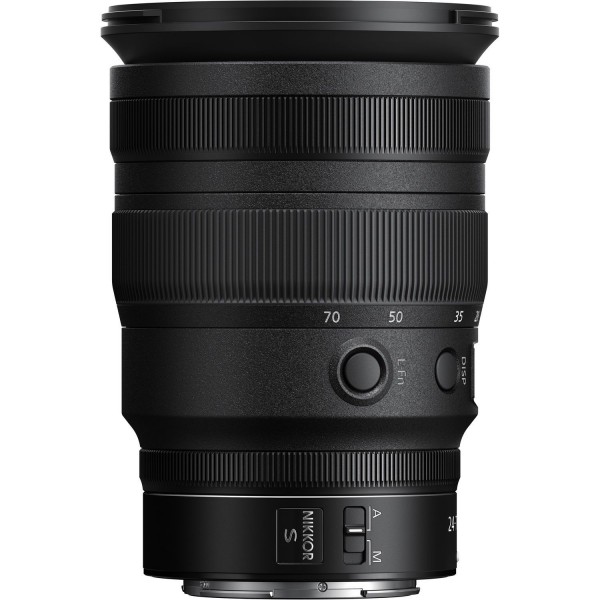
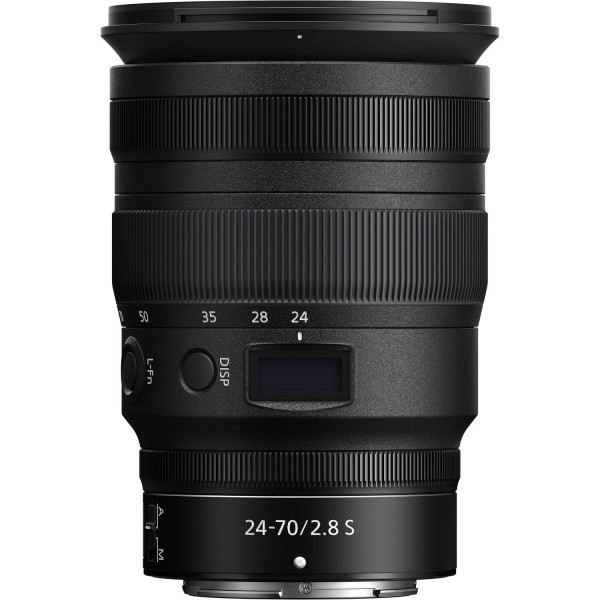
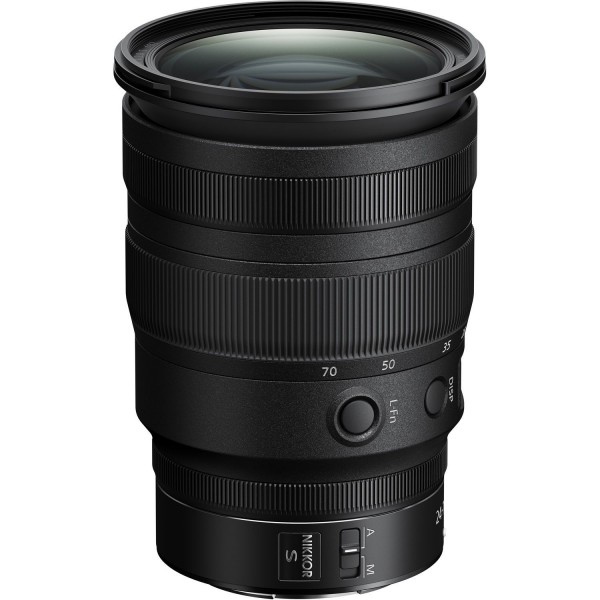
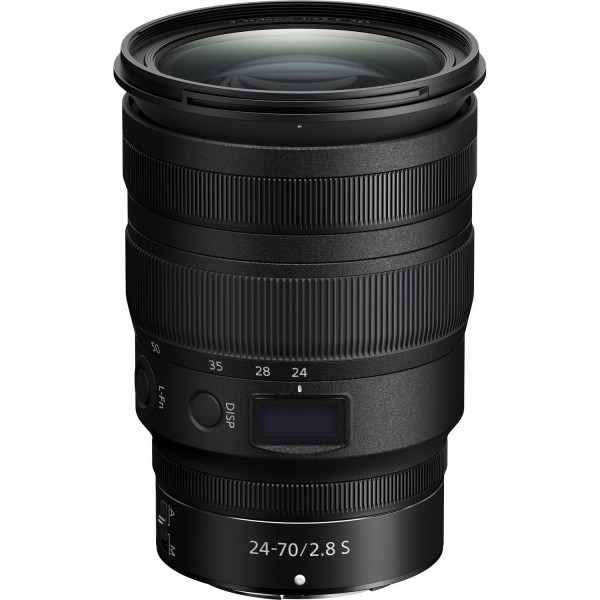

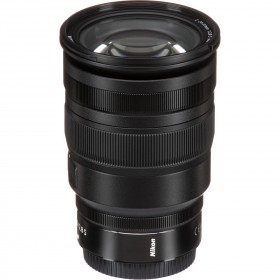
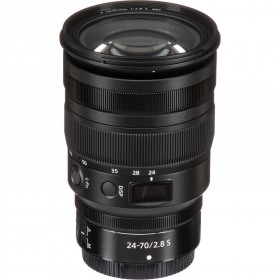
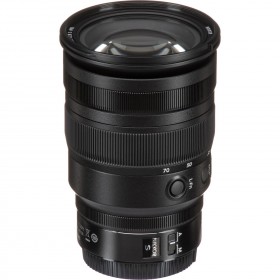
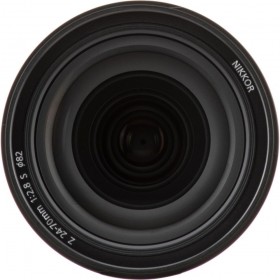
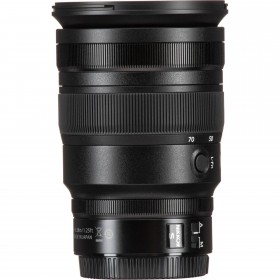
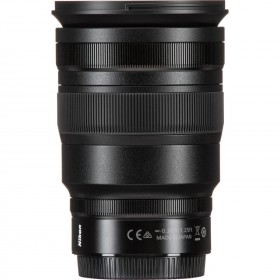
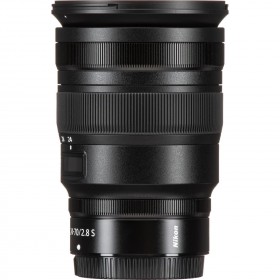
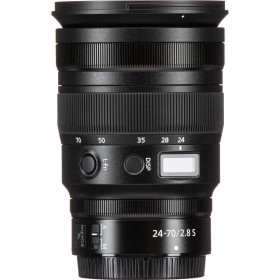
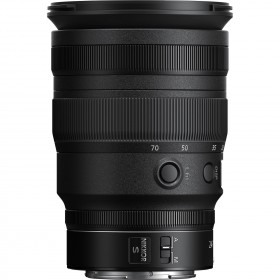
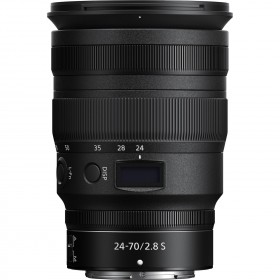
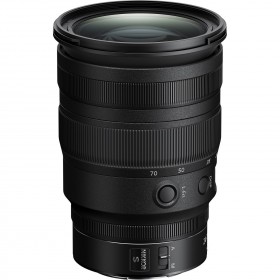
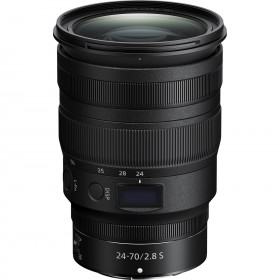
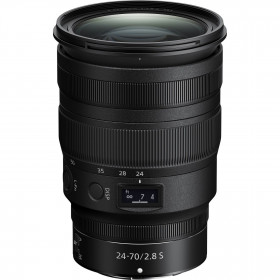
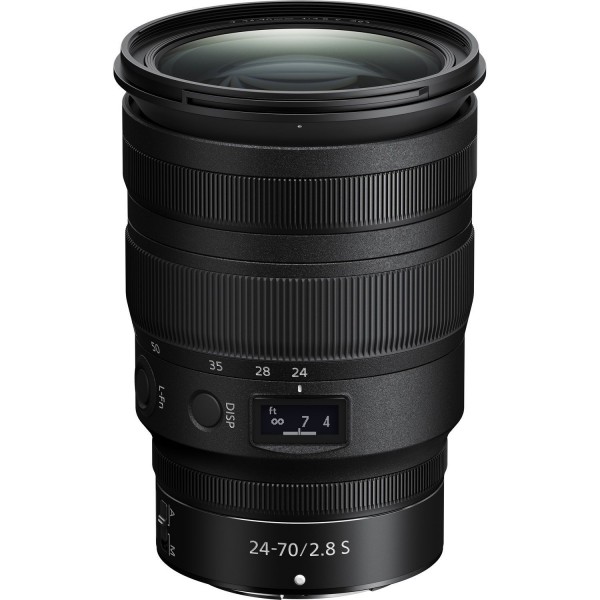
Nikon NIKKOR Z 24-70mm f/2.8 S
IN STOCK
€1,647.30
€1,734.00-5%
- 100% newBrand-new and authentic product
- Final priceNo unpleasant surprises! The displayed price is the final amount paid for your purchase.
- Estimated delivery Tue 21 - Wed 22 JulEstimate based on available stock, order time, business days and carrier delivery times.
- 3-year MCZ DIRECT warranty
- Free delivery with insurance includedYour order is protected from dispatch to delivery: in case of loss, theft or damage during transport, your parcel is insured up to its value.
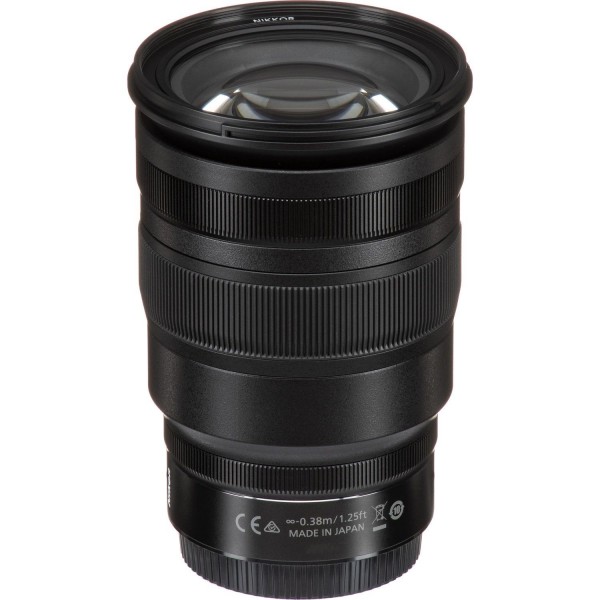
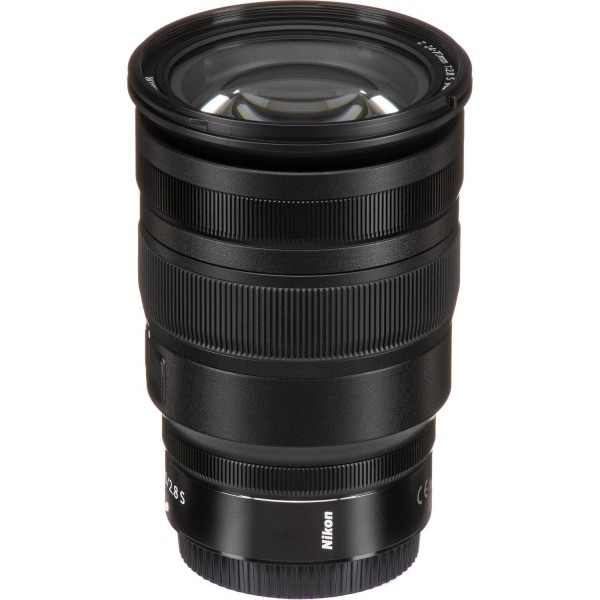
The Nikkor Z 24-70mm f/2.8 S, specifically designed for Nikon mirrorless cameras with the Z-mount system, is an outstanding standard zoom lens that excels in all genres due to its optical construction and two powerful stepping motors.
Nikon has already introduced the Nikkor Z 24-70mm f/4 S, which we found to be very convincing. The Nikkor Z 50mm f/1.8 S and Nikkor Z 35mm f/1.8 S produced remarkable results in our tests on fixed focal lengths, while with its flagship lens Nikon Z 24-70mm F2.8 S, the manufacturer chose to stick to a classic approach, without revolutionary changes or breakthroughs.
Rather than presenting a revolution, Nikon reinforces its commitment to excellence with the Nikon 24-70 mm Z 2.8 S lens - an advanced iteration of its classic products.
Introducing the Nikon Z 24-70mm F/2.8 S
The Nikon NIKKOR Z 24-70mm f/2.8 S lens is renowned for its versatility, from wide-angle to portrait, with crystal-clear image quality.
Designed with superior aspherical elements and a fast-working multi-focus system, this workhorse lens excels in both photo and video applications.
With the NIKKOR 24-70mm Z f/2.8 S lens, you're ensured precise performance across the range, no matter your shooting requirements!
Ideal for FX-format Z-mount mirrorless cameras, this product is a resounding success among professional photographers worldwide.
Its straightforward and comprehensible design contributes to the popularity of this standard zoom lens among amateur or beginner photographers, making it an ideal choice.
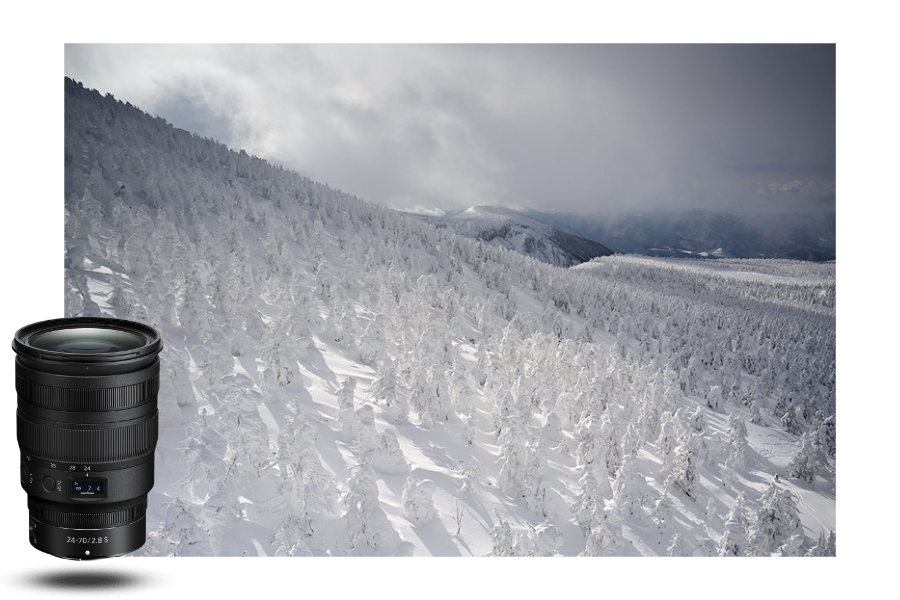
Main features of the Nikon Z 24-70mm F/2.8 S:
- Focal range 24-70mm F2.8 maximum aperture
- Weather-sealed Filter thread: 82mm
- Maximum format: 35mm FF
- Nikon Z mount
- Weight: 805g
- Diameter: 89mm
- Length: 126mm
- Minimum focus distance: 0.38m
- Max magnification: 0.22x
Why you'll fall in love with the Nikon 24-70mm Z F/2.8 S lens: Our top three reasons
- The Nikon lens features a sturdy construction and has a dust- and moisture-resistant barrel. This allows you to use the lens with confidence, regardless of the weather or environment, without worrying about its safety. Capture unforgettable memories all around the world, knowing that your lens will remain secure!
- With the nine-blade rounded diaphragm of this standard zoom lens, you'll enjoy superior out-of-focus image quality. This remarkable feature instantly elevates your photography game and gives you the freedom to experiment with various techniques without worrying about image excellence.
- This lens model is designed with a revolutionary OLED information panel, allowing you to access desired settings, such as focus distance, aperture control, and depth of field, in low-light and bright conditions. Easily adjust these key elements with utmost precision, ensuring no detail is overlooked!

Striking and precise imagery
This lens model undoubtedly offers a sophisticated optical design. With four aspherical elements, it effectively reduces spherical aberrations and distortions for sharp results and accurate colors.
Additionally, two extra-low dispersion elements minimize chromatic aberrations and fringing across the entire zoom range, resulting in vibrant images even in low light conditions.
ARNEO and Nano Crystal coatings are two distinct elements of this lens that efficiently reduce the effects of ghosting, reflections, and glare.
More specifically, ARNEO tackles incident light coming from a diagonal direction, while the Nano Crystal Coat limits effects coming from the vertical, allowing you to take photos with ease, even when working in intense lighting conditions or backlighting.
No more waiting - experience lightning-fast autofocus that captures the perfect moment every time!
Featuring two autofocus (AF) drive systems, this multi-focus lens is both fast and precise when it comes to autofocus.
Gently powered by stepper motors, the silent and effortless autofocus performance makes this lens a wise choice for any photographer or videographer looking for robust focusing capabilities in a single package.
You can also opt for full-time manual focus, which works even better thanks to its incredible internal focusing design.
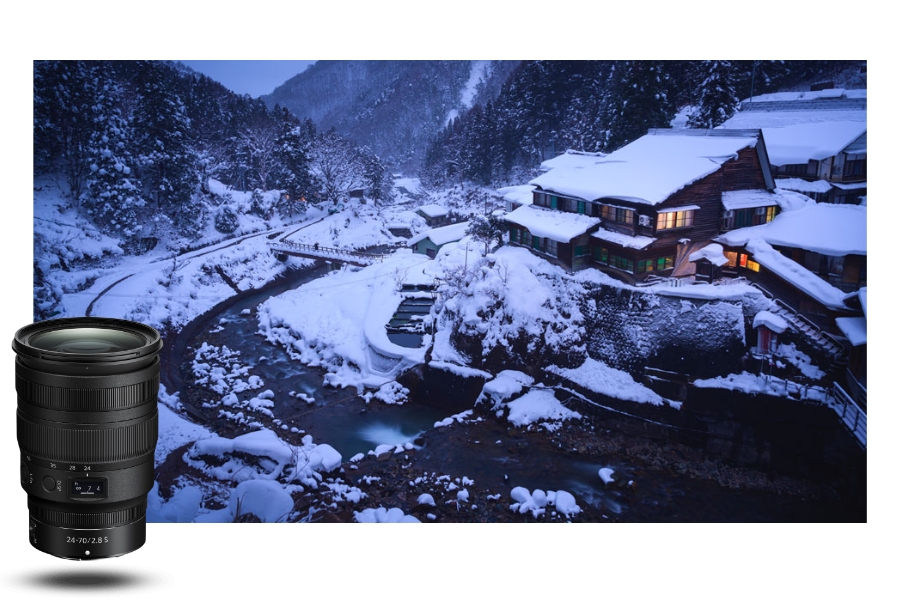
Our professional review
The Nikon standard zoom is an essential tool for all photographers looking to capture stunning images and videos in any shooting condition.
With its impressive features, this lens cannot be beaten and will always deliver exceptional results.
There's no doubt that if you're looking to add a new standard zoom lens to your photography kit, this one should be at the top of your list - don't hesitate - invest today!
What makes the Nikon Z 24-70mm F/2.8 S unique?
Featuring impressive image quality and unforgettable bokeh aesthetics, Nikon's Z 24-70mm F/2.8 S zoom offers the ideal balance between convenience, portability, and performance for all your photography or videography needs.
Whether you want to achieve a stunning background blur effect in its sought-after focal range or require constant f/2.8 aperture control regardless of the chosen focus distance, this remarkable lens will truly exceed all your expectations!
Moreover, its surprisingly lightweight construction makes carrying such a versatile lens a breeze.
The revolutionary NIKKOR Z 24-70mm f/2.8 S is equipped with an all-new multi-focus system, which includes two precision-synchronized AF drive units for fast and accurate autofocus operation.
Additionally, even when shooting at a wide aperture (maximum aperture of f/2.8), this lens delivers superior image quality with minimized distortion, chromatic aberration, and vignetting.
In conclusion, the Nikon 24-70mm Z F/2.8 S is an outstanding standard zoom lens that produces remarkable results in all settings and can be used for both photography and videography.
Its impressive blend of speed, precision, and image quality makes this lens an indispensable accessory in any photographer's arsenal.

Are you curious about what the Nikon Z 24-70mm F/2.8 S has to offer?
The Nikon Z 24-70mm F/2.8 S is a sturdy lens with a fixed f/2.8 aperture that ensures sharp shots and stunning bokeh within the desired 24-70mm zoom range. It features two ED elements, four aspherical components, ARNEO coatings, and a nano-crystal coating to enhance image quality while being weather-sealed with no chromatic aberration.
Among its other features are impressive close-focusing capability and remarkable video recording abilities; it measures 5 inches in length with a barrel diameter of 3.5 inches wide and weighs a total of 805 grams!
The Nikon Z 24-70mm F/2.8 S is a powerful zoom that delivers sharpness, image quality, and other superior features for the Nikon mirrorless system.
Investing in this fast lens will enable you to make the most of your photography experience!
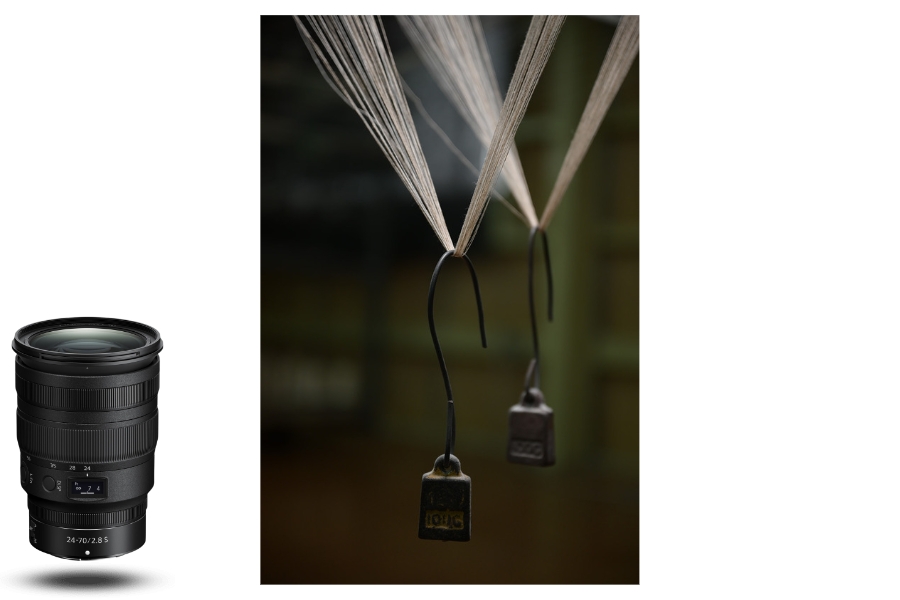
Should you invest in the famous Nikon Z 24-70mm F/2.8 S lens?
The Nikon Z 24-70mm F/2.8 S is a perfect choice for photographers looking for a versatile lens with a constant f/2.8 aperture. Thanks to its excellent optical capabilities, it provides images with impeccable sharpness and stunning bokeh effects - ideal for numerous photography and videography projects!
Moreover, it features an advanced multi-focus system composed of two AF drive units that ensure fast and accurate autofocus performance.
This lens is essential in any photographer's toolkit due to its bright maximum aperture and versatile focal range.
If you're in search of a top-of-the-line standard zoom lens to capture incredible photos and videos, the Nikon Z 24-70mm F2.8 S is an investment well worth making!
What type of mount does the Nikon Z 24-70mm F/2.8 S lens require?
The Nikon Z 24-70mm F/2.8 S is a must-have for anyone using the Nikon Z system. Its fast and constant f/2.8 aperture allows you to capture sharp images and stunning bokeh, even when shooting handheld and at high speeds!
With its field of view ranging from wide-angle to portrait, this lens will become your go-to tool for capturing breathtaking photos and videos with your Nikon Z camera.
Whether you're seeking creative freedom or simply want to optimize every shot, the Nikon Z 24-70mm F2.8 S is the ideal choice!
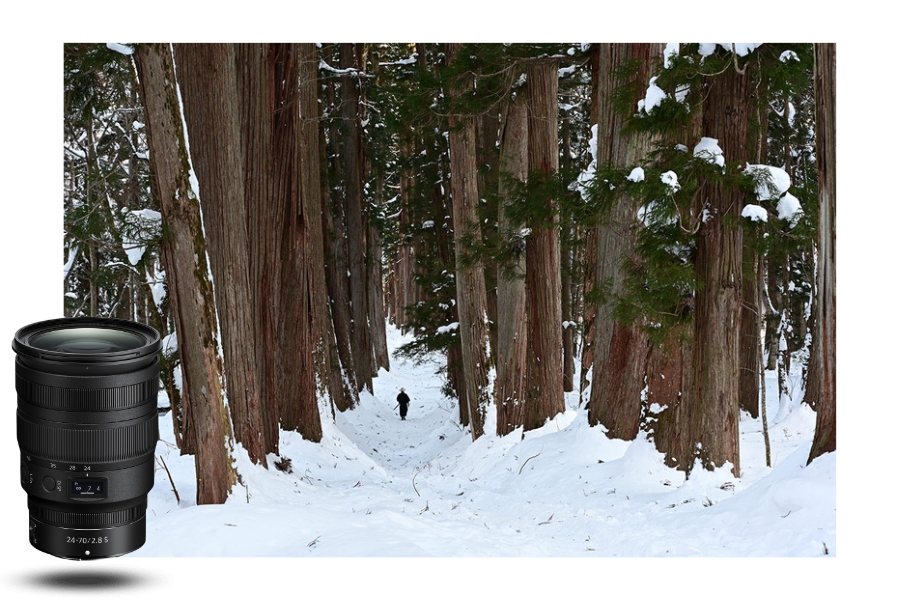
What is the clarity of the Nikon Z 24-70mm F/2.8 S when set to f/2.8?
The Nikon Z 24-70mm F/2.8 S is an ultra-sharp lens at f/2.8 that will make all your images stand out with its sharpness and beautiful bokeh!
Its performance surpasses that of its competitors - reviews have even shown that it can capture sharp handheld photos, making it ideal for portrait photography.
The exceptional sharpness of this lens across the entire frame ensures stunning results with every shot!
Does the Nikon Z 24-70mm F/2.8 S have image stabilization?
The Nikon Z 24-70mm F/2.8 S does not have image stabilization, but it is compatible with the IBIS (In-Body Image Stabilization) of the Nikon Z6 II and Nikon Z7 II cameras for up to 5 stops of shake correction on pitch, roll, and yaw axes, as well as X and Y shake corrections.
Even though this works exceptionally well, some photographers may prefer a lens with built-in optical image stabilization.
If you are one of these photographers, consider investing in the Sigma 24-70mm f/2.8 DG OS HSM Art lens that offers exactly that!

With its ultra-fast autofocus, how quickly does the Nikon Z 24-70mm F/2.8 S capture the moments you want?
The Nikon Z 24-70mm F/2.8 S features lightning-fast autofocus, allowing for full focus in just under a second.
Thanks to the lens's STM (Stepping Motor) technology, you get smooth and quiet autofocus, whether you're taking photos or shooting videos.
Reviews show that the autofocus is very quiet even in low-light conditions and outperforms most DSLR autofocus systems for both photos and videos!
What is the closest focusing distance of the Nikon Z 24-70mm F/2.8 S?
The Nikon Z 24-70mm F/2.8 S has the ability to get up close and personal with your subject thanks to its incredibly precise minimum focusing distance of 0.38 meters, regardless of the zoom or aperture range you choose!
Not only is this lens designed for maximum convenience, but it maintains a remarkable level of sharpness and clarity across both focal and aperture ranges so that you can capture amazingly detailed images every time.
Although this lens is one of the more expensive options for its focal lengths on the market, it comes with an impressive array of features that make it worth the investment. Whether capturing stunning portraits, panoramas, or urban landscapes, this lens is a must-have for any photographer looking to elevate their art to the next level.
If you're a photographer seeking exceptional sharpness and clarity in your photos, the Nikon Z 24-70mm F/2.8 S is an ideal choice.
This lens will help you capture breathtaking images with precise detail and great accuracy.

What is the weight of the Nikon Z 24-70mm F/2.8 S?
Weighing 805 grams, the Nikon Z 24-70mm F/2.8 S is a beautifully balanced lens that has been carefully designed to complement mirrorless camera bodies such as the Nikon Z9.
This impressive design has earned it rave reviews from Photography Life, Ken Rockwell, DPReview, PetaPixel, Imaging Resource, Nikon USA, DXOMARK, and Shotkit - all united in their appreciation of its weight and size!
Is the Nikon Z 24-70mm F/2.8 S weather-sealed?
The Nikon Z 24-70mm F2.8 S is designed to withstand the elements, protecting it from dust and moisture with seals at its base, control rings, buttons, and focus mode, as well as a rubber gasket on the rear part of the lens for additional protection against water or dirt ingress.
This makes it perfect for outdoor photography, regardless of the weather conditions!
For photographers seeking reliable and durable performance, the Nikon Z 24-70mm F/2.8 S is an ideal choice with top-notch weather-sealing features.
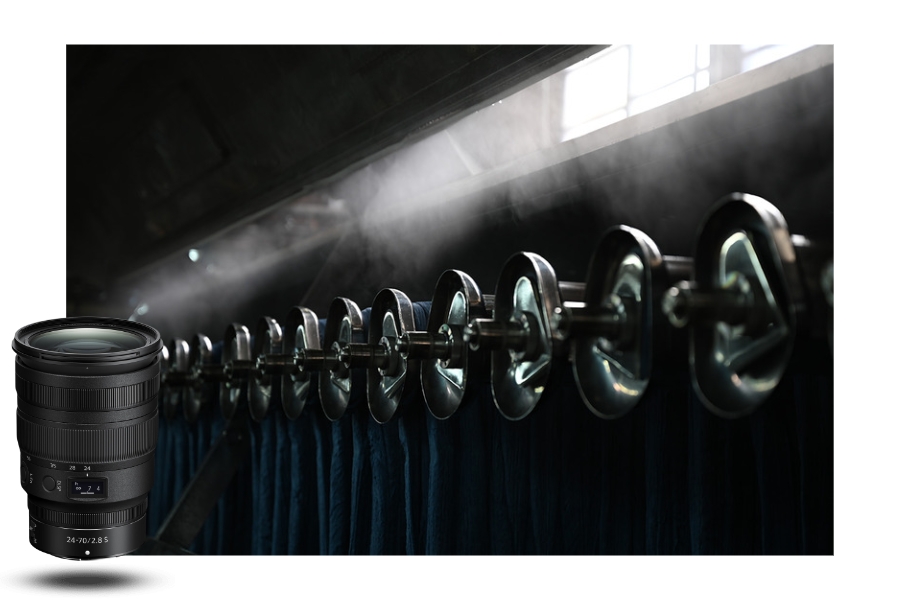
How many components does the famous Nikon Z 24-70mm F/2.8 S have?
The Nikon Z 24-70mm F/2.8 S is an impressive lens, featuring 17 elements in 15 groups with two extra-low dispersion glass components and four aspherical components.
Additionally, the ARNEO and Nano Crystal coatings work hand in hand to help reduce ghosting and flare, while the Multi-Focus Stepping Motor AF system ensures autofocus performance remains accurate and fast.
Does the Nikon Z 24-70mm F/2.8 S come with filter threading for additional customization?
The Nikon Nikkor Z 24-70mm F/2.8 S is the perfect partner for your photographic journey - it delivers sharp and beautiful images and bokeh at an ideal 24-70mm zoom range with a constant f/2.8 aperture size!
Moreover, it has never been easier to find compatible filters thanks to its 82mm filter thread, 126mm length, 89mm barrel diameter, and overall weight of 805g.
The Nikon Z 24-70mm f/2.8 S is one of Nikon's best lenses and a must-have for any photographer! It offers remarkable image quality, stunning bokeh at all focal lengths, making it an ideal asset for landscape, portrait, wedding or event photography, and much more!
If you are an aspiring photographer looking for a reliable standard zoom lens that delivers outstanding image quality and beautiful bokeh, the Nikon Nikkor Z 24-70mm F/2.8 S is your ideal choice!
Not only does it offer exceptional features at great value for money, but its versatility makes this lens one of the best investments for photographers of all levels.



Does the Nikon Z 24-70mm F/2.8 S lens allow for stunning portrait photography?
The Nikon Z 24-70mm F/2.8 S is the ideal lens for portrait photography! Featuring a constant f/2.8 aperture that delivers sharp images with beautiful bokeh within the perfect 24-70mm zoom range, you can ensure crisp details and vibrant colors even when shooting handheld at fast shutter speeds - making it an indispensable tool for capturing portraits.
Moreover, its versatile focal range allows it to capture not only landscapes but also full-body shots! Crafted with extraordinary precision and detail, this lens has been designed to make your life easier, providing you with uncompromising reliability, quality, and performance.
For portrait photography, the Nikon Z 24-70mm F/2.8 S is an excellent choice due to its aperture speed, sharp image resolution, versatile focal range, and user-friendly design.
In conclusion, the Nikon Z 24-70mm F2.8 S lens is a must-have choice for demanding photographers seeking exceptional performance and unmatched versatility.
With its versatile 24-70mm focal range and maximum F/2.8 aperture, this lens allows you to capture stunning images in a variety of situations, from grand landscapes to intimate portraits.
Designed to perfectly fit Nikon Z series cameras, this lens features advanced optical construction and a fast, silent focusing system to provide you with a shooting experience without compromise.
Furthermore, the weather-resistant construction and rugged finish ensure optimal durability for outdoor use.
So, don't hesitate and treat yourself to the performance and quality you deserve with the Nikon Z 24-70mm F/2.8 S lens. Buy now from MCZ DIRECT, your trusted camera store, to enjoy our exclusive deals and impeccable customer service.
Click on the "Add to Cart" button and order your Nikon Z 24-70mm F/2.8 S lens today to boost your creativity and take your photography skills to the next level. At MCZ DIRECT, we look forward to helping you realize your artistic potential!
- Lens mount
- Nikon Z
- Recommended use
- Landscape / architecture
Portrait / low light
Travel / versatile - Stabilization
- No
- Lens type
- All-round
- Focal length
- Standard
Wide angle - Maximum aperture
- f/2.5 - f/2.8
- Aperture options
- f/1.8 to f/2.8
- Photo use
- Architecture
Interior
Landscape
Portrait
Reportage
Travel - Lens format
- Full frame
NIKONZ2470F28S
0018208200894
Technical specifications
General
Brand
Nikon
Product type
Lens
Lens type
All-round
Lens series
NIKKOR Z S-Line
Aperture options
f/1.8 to f/2.8
Lens mount
Nikon Z
Photo use
Reportage; Landscape; Architecture; Interior; Portrait; Travel
Lens format
Full frame
Level
Suitable for professionals
Yes
Properties
Full frame
Yes
Image stabilization
No
Lens construction
17 elements in 15 groups
Magnification factor
0.22x
Focus mode
Autofocus and manual
Minimum focusing distance
38 cm
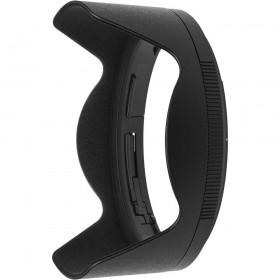
Lens hood included
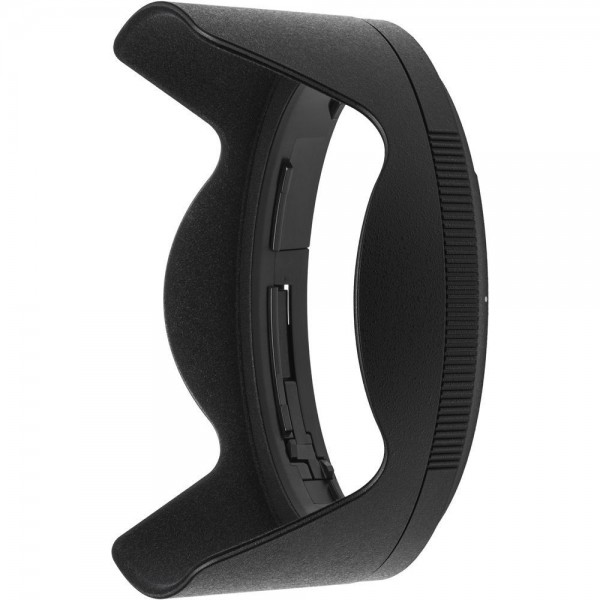
Yes
Focal length
Fixed focal length
No
Focal length
24-70 mm
Minimum focal length
24 mm
Maximum focal length
70 mm
Aperture
Minimum aperture overall
f/22
Minimum aperture
f/22
Maximum aperture
f/2.8
Diaphragm blades
9
Zoom
Zoom option
Yes
Optical zoom
2.92x
Uses
Landscape photography
Yes
Portrait photography
Yes
Travel photography
Yes
Reportage photography
Yes
Sports photography
No
Wildlife photography
No
All-round photography
Yes
Video
Yes
Physical properties
Weight
805 g
Filter size
82 mm
Length
12.6 cm
Diameter
89 mm
Dust and splash resistant
Yes
Buying guidance
Best for
Ideal for: landscape, portrait, travel, reportage, all-round use, video.
Compatibility
Nikon Z-mount lens for full-frame FX Nikon Z mirrorless cameras; also usable on DX-format Nikon Z bodies with DX crop.
Warning
Check before buying: VR stabilisation is not listed in the Nikon specifications.
Nikon NIKKOR Z 24-70mm f/2.8 S FAQ
Is the Nikon NIKKOR Z 24-70mm f/2.8 S worth the price?
Yes, if you want Nikon Z's professional standard zoom for reportage, weddings, portraits, events or video production. The Nikon NIKKOR Z 24-70mm f/2.8 S combines a constant f/2.8 aperture, S-line construction and a core focal range from moderate wide angle to short telephoto. Its price makes most sense for demanding use where quality, consistency and reliability matter.
Who is the Nikon NIKKOR Z 24-70mm f/2.8 S for?
It is for Nikon Z photographers and videographers who want a bright, high-quality main zoom. It suits professionals, hybrid creators, wedding photographers, studio work, reportage and event coverage. For travel or occasional amateur use, a lighter f/4 zoom may be more sensible.
Is the constant f/2.8 aperture really useful?
Yes, the constant f/2.8 aperture is one of this lens's main strengths. It keeps the same brightness at 24, 35, 50 and 70mm, helps indoors and produces softer backgrounds than an f/4 zoom. That is a practical advantage for weddings, concerts, portraits and low-light reportage.
Does the Nikon Z 24-70mm f/2.8 S have optical VR stabilisation?
No, this lens does not include optical VR stabilisation. On Nikon Z bodies with in-body image stabilisation, it can benefit from the camera's IBIS. On bodies without IBIS, or with moving subjects, you still need an appropriate shutter speed, good technique or support.
Is the Nikon NIKKOR Z 24-70mm f/2.8 S good for portraits?
Yes, it is very good for environmental portraits and portraits at 50-70mm. The f/2.8 aperture helps isolate the subject while keeping useful context in the frame. For stronger blur or more compression, a fast prime or a 70-200mm f/2.8 remains more specialised.
Is the Nikon NIKKOR Z 24-70mm f/2.8 S suitable for video?
Yes, it is a strong zoom for hybrid video, interviews, detail shots and reportage. The 24-70mm range covers many situations without changing lenses, and the constant aperture simplifies exposure while filming. You should still consider its weight on a gimbal or during long hand-held takes.
Nikon Z 24-70mm f/2.8 S, 24-70mm f/4 S or 24-120mm f/4 S: which should you choose?
Choose the 24-70mm f/2.8 S for brightness and professional performance; the 24-70mm f/4 S for compactness; the 24-120mm f/4 S for versatility and extra reach. The f/2.8 version is best for weddings, events and demanding low-light work. The f/4 lenses are easier to carry and often better suited to travel.
What limits should you know before buying the Nikon NIKKOR Z 24-70mm f/2.8 S?
Its main limits are price, weight, lack of optical VR and a focal range that stops at 70mm. It is an excellent standard zoom, but not the lightest or longest option. Choose it if you will genuinely use the f/2.8 aperture and S-line quality.
Reviews Nikon NIKKOR Z 24-70mm f/2.8 S
0 Rating
Customer photos
No customer photos yet
Tap to zoom
ALEX (In testing phase)