Shopping Cart
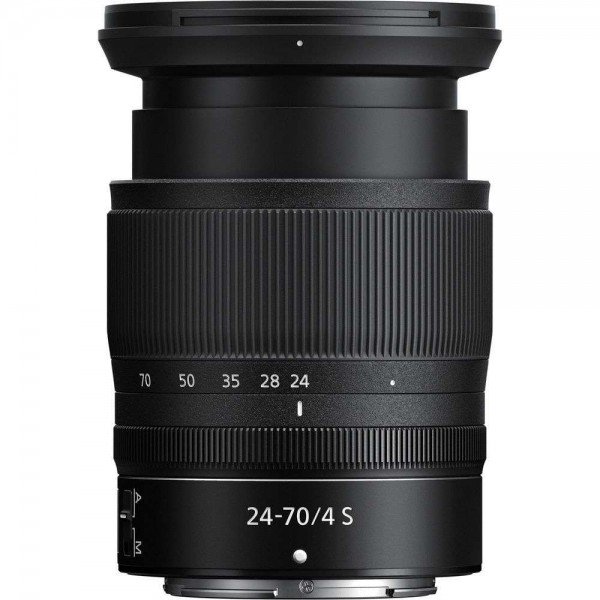
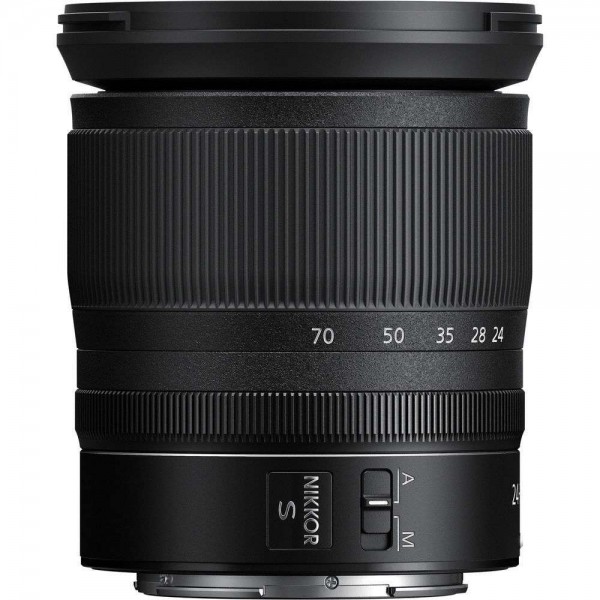
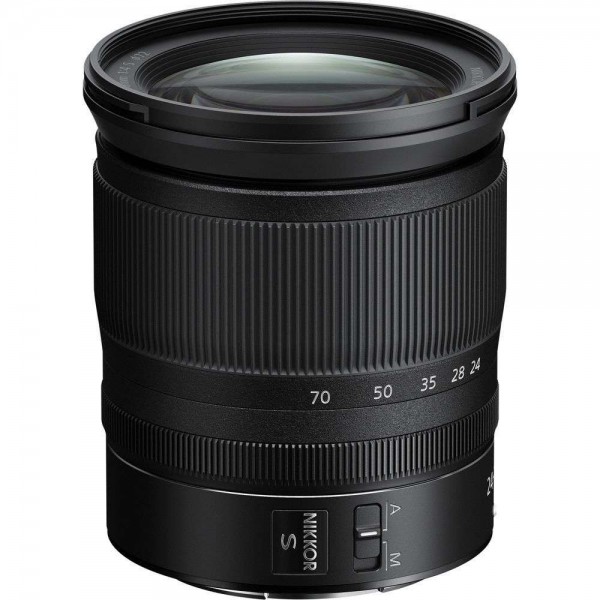
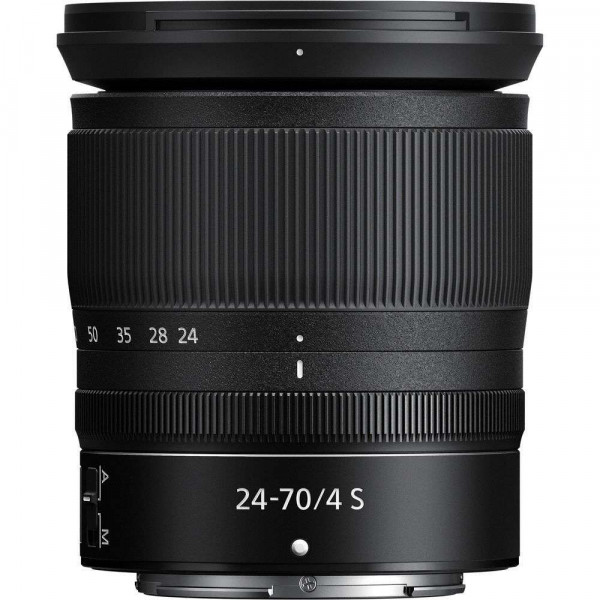



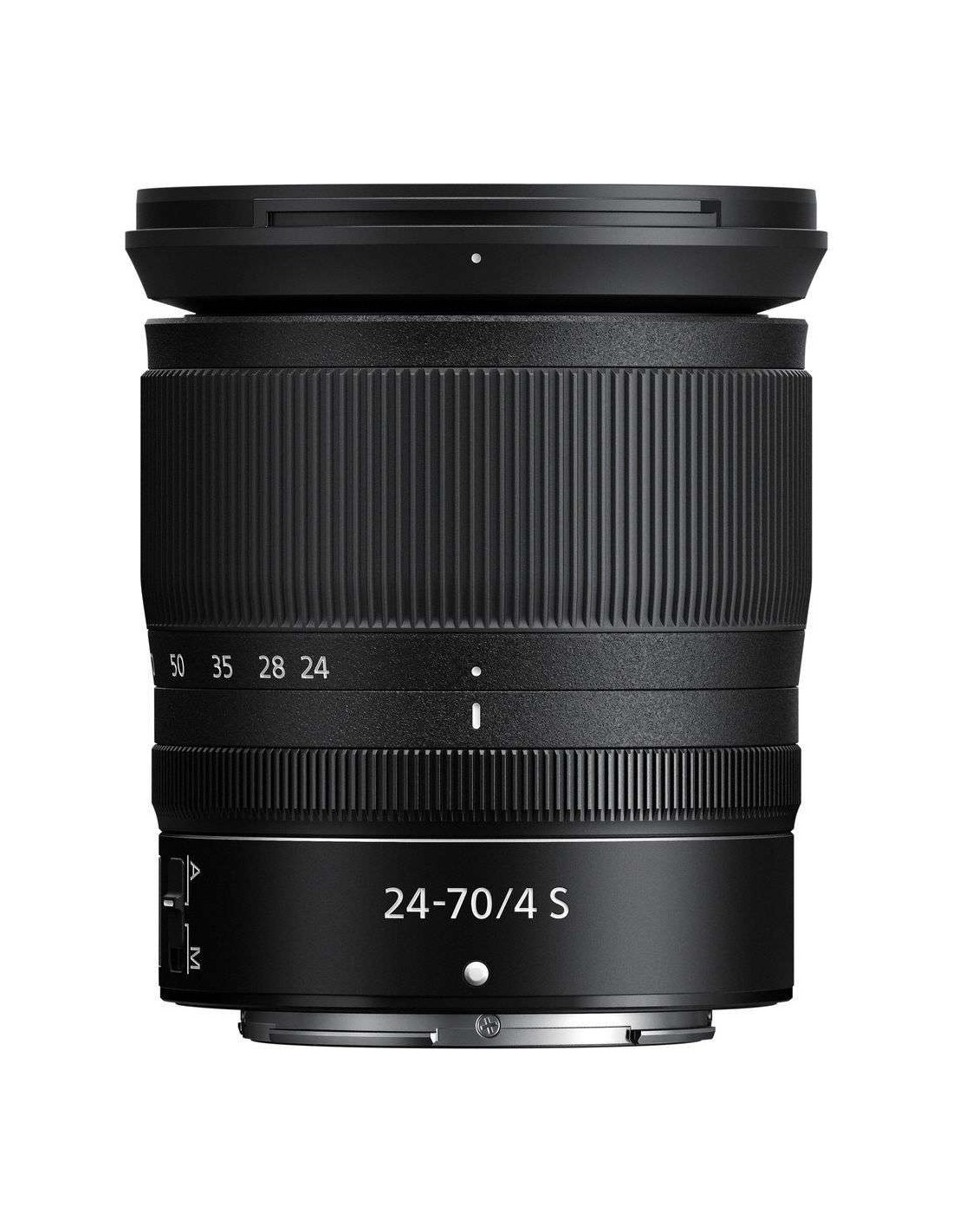
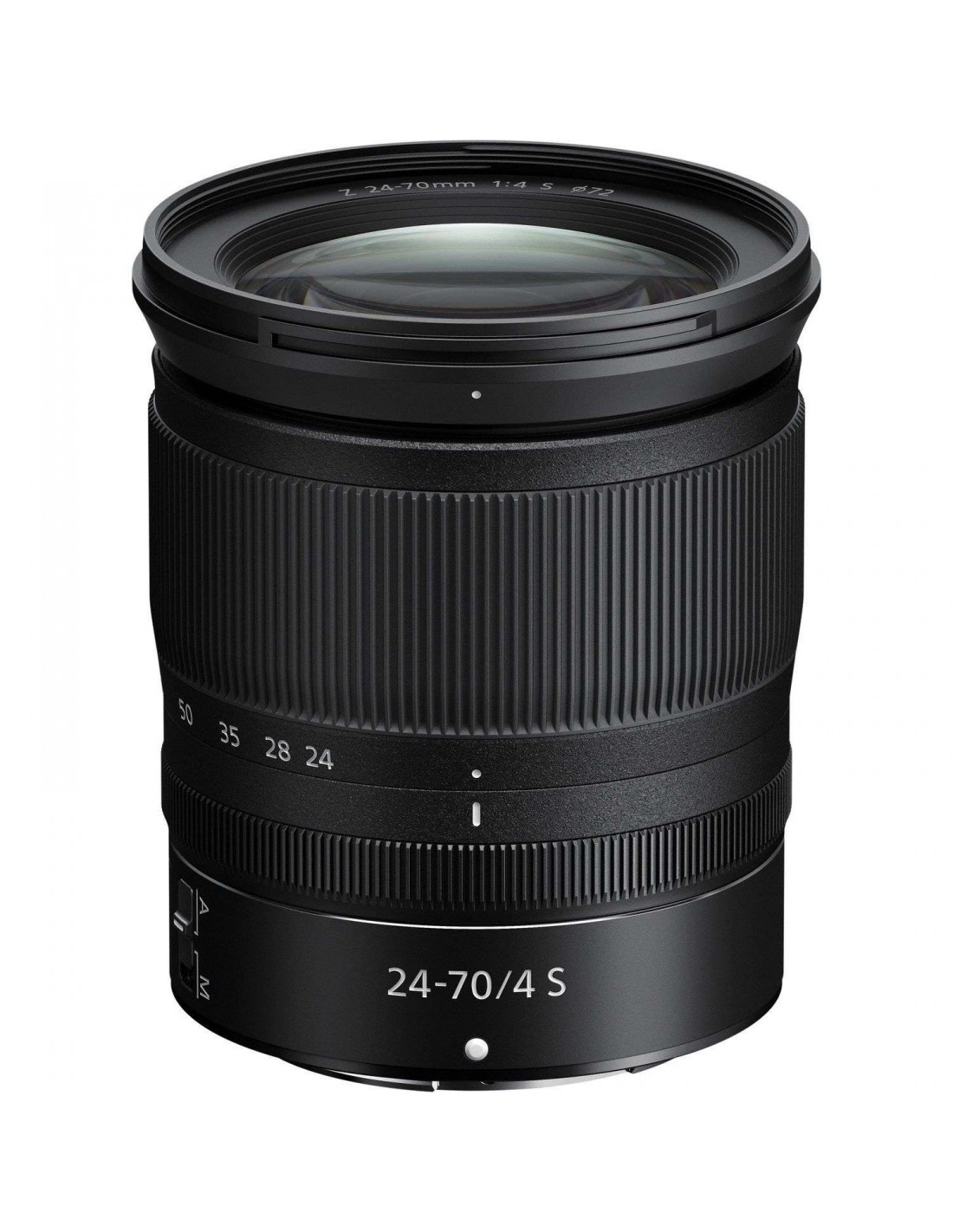


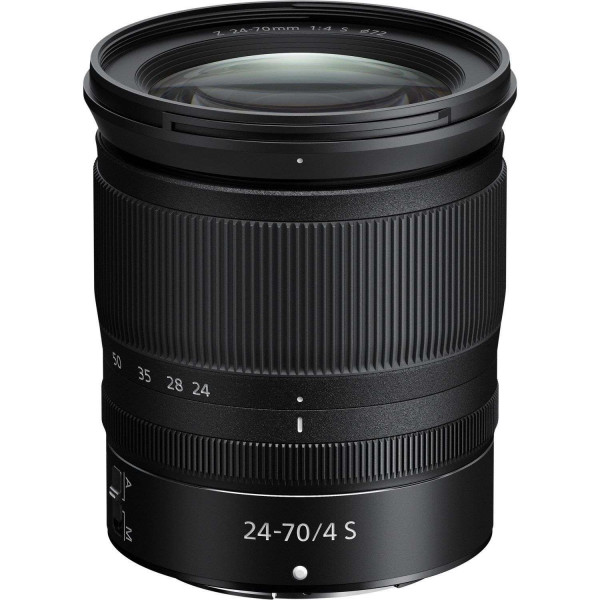
The NIKKOR Z 24-70mm f/4 S is a light standard zoom for Nikon Z photographers who want one lens for travel, everyday pictures and documentary work. Its 24-70mm range covers landscapes, street scenes and portraits, while the aperture stays at f/4 as you zoom. It weighs about 500g and retracts to take up less room in a bag. Focusing down to 0.30m is useful for food, objects and small details. It is not the best choice for very dark venues, but it suits anyone who wants a compact and dependable full-frame kit.
Combine compatible accessories and save. The more items you add, the bigger the discount.
memory card

warranty extension
The NIKKOR Z 24-70mm f/4 S covers the focal lengths used most often without turning a Nikon Z body into a cumbersome kit. At 24mm it handles landscapes, narrow streets and interiors. Between 35 and 50mm it keeps a natural perspective for documentary work. At 70mm it tightens composition around a face, detail or scene photographed from a little farther away.
Its value lies in balance rather than headline specifications. Constant f/4 keeps exposure steady through the zoom, 500g remains reasonable over a day on foot and the barrel retracts for storage. A wedding photographer working in dark venues or a portrait specialist seeking very soft backgrounds will nevertheless gain more latitude from an f/2.8 zoom.
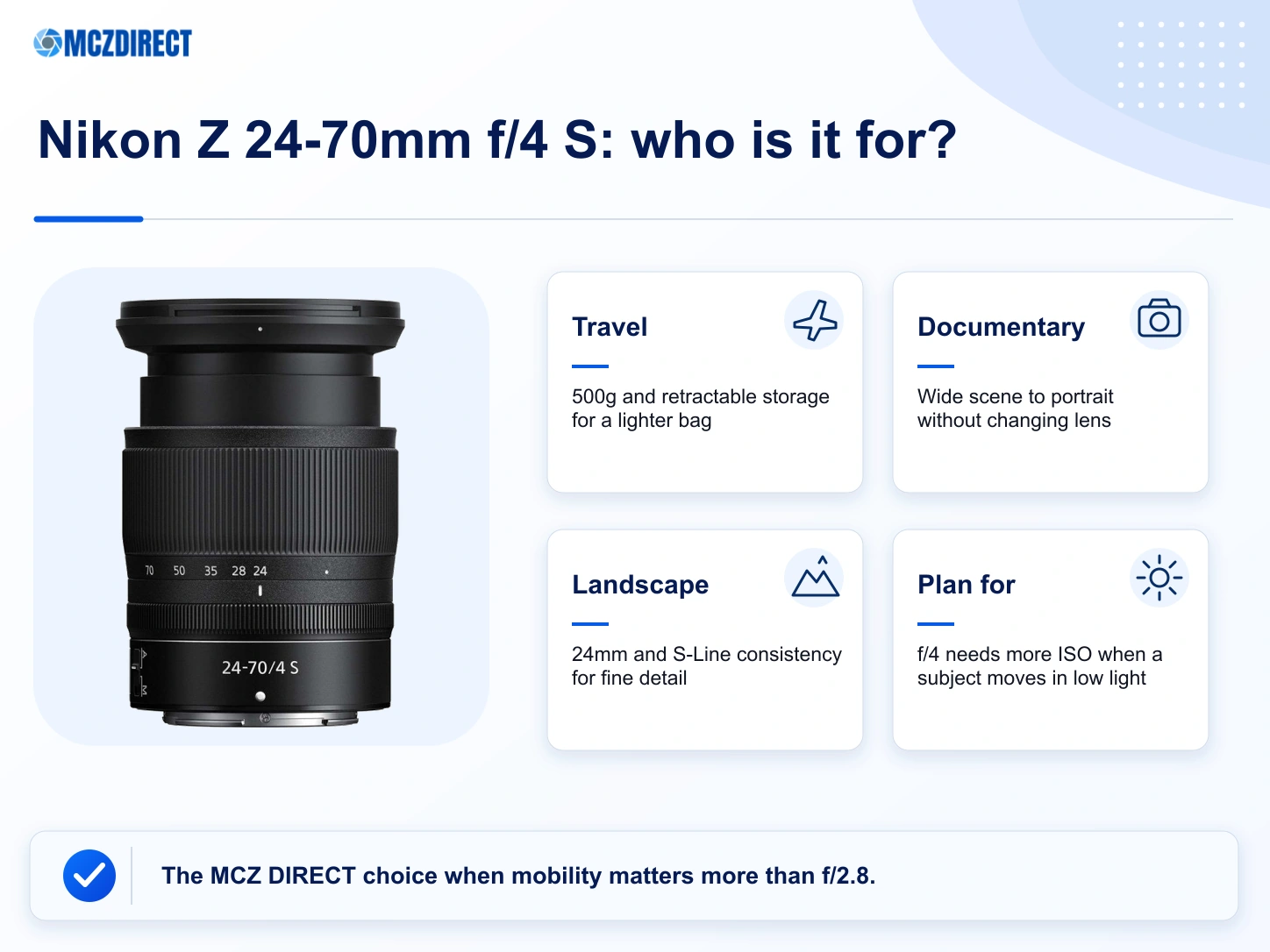
The practical difference appears after several hours. A Nikon Z6 III or Nikon Zf remains comfortable when carried across a city or landscape. Twenty-four millimetres is wide enough to describe a place without the more specialised perspective of an ultra-wide lens. At 70mm, faces gain a more flattering perspective while enough context remains for documentary portraiture.
Constant f/4 calls for a realistic low-light workflow. In-body stabilisation can help with a still subject, but it cannot stop a walking person or active child. In those situations the photographer must accept a higher ISO, add light or choose f/2.8. That limitation is clear, and it is also the reason this zoom stays substantially smaller.
| Specification | Practical benefit | Plan for |
|---|---|---|
| 24-70mm | One zoom for landscapes, street, documentary and environmental portraiture | The range ends at 70mm for distant subjects |
| Constant f/4 | Stable exposure and predictable depth of field through the zoom | One stop slower than a 24-70mm f/2.8 |
| 500g | Balanced kit for walking and long working days | The advantage is mobility, not maximum brightness |
| 0.30m and 0.30x | Useful close detail without carrying a macro lens | The distance is measured from the sensor plane |
| 72mm filters | Smaller filters that are easier to pack | Check compatibility if other lenses use 77 or 82mm |
| Assignment | What the zoom provides | Useful reservation |
|---|---|---|
| Travel and hiking | 24mm for place, 70mm for detail and only 500g to carry | Add a longer lens for distant wildlife |
| Everyday documentary | React quickly without changing lens | f/4 may require higher ISO indoors |
| Landscape and architecture | Useful width and S-Line consistency | An ultra-wide remains better in very tight spaces |
| Environmental portrait | 70mm retains context with a natural perspective | Blur is less pronounced than f/2.8 or a prime |
| Lightweight video | Constant aperture on a stabilised body | The extending zoom changes barrel length |
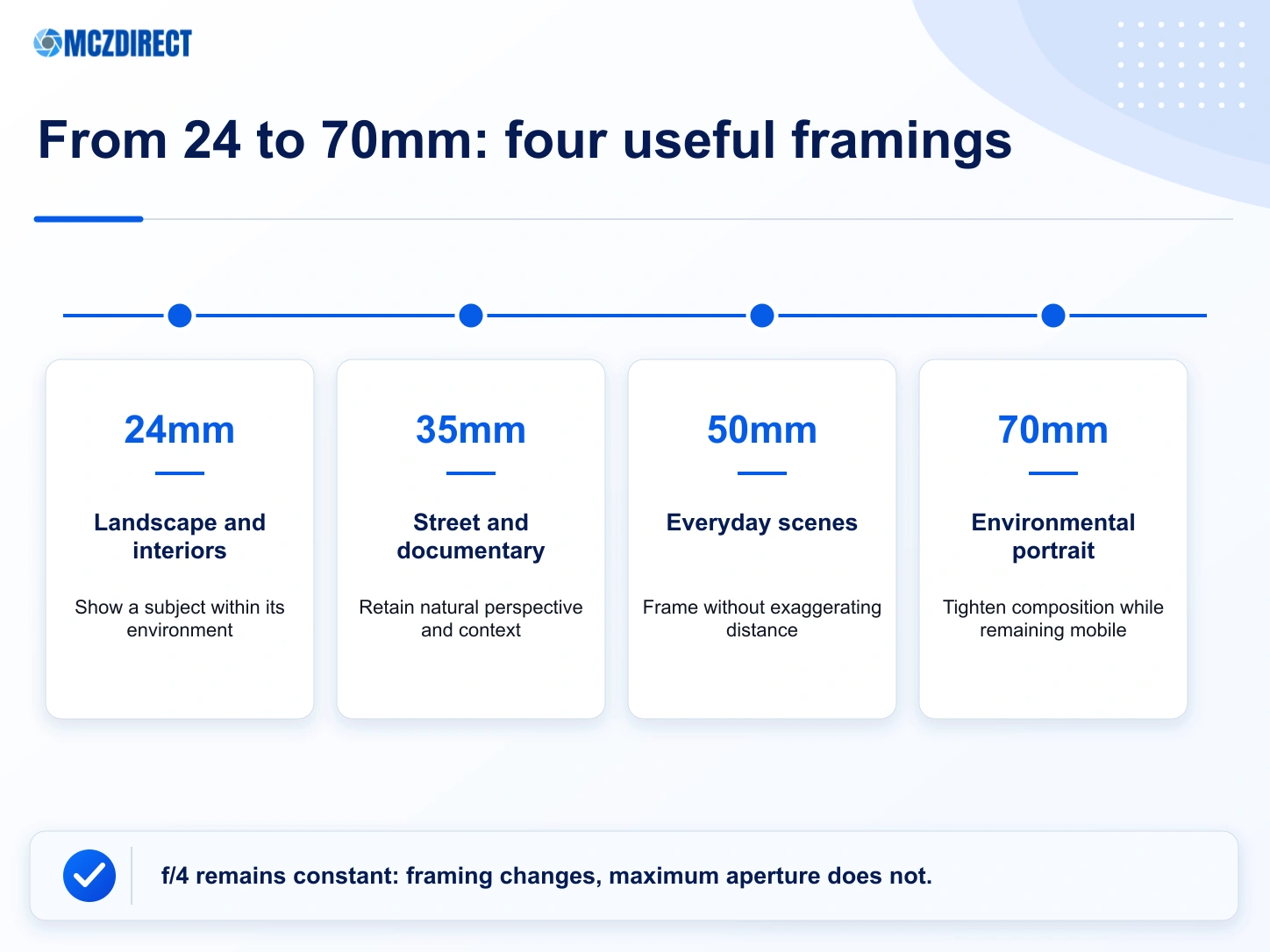
24mm : landscape and interiors, show a subject within its environment. 35mm : street and documentary, retain natural perspective and context. 50mm : everyday scenes, frame without exaggerating distance. 70mm : environmental portrait, tighten composition while remaining mobile.
The NIKKOR Z 24-70mm f/4 S makes most sense when it can remain on the camera throughout the day. At 500g it balances comfortably on bodies such as the Nikon Z5 II, Z6 III or Zf, so carrying the camera does not become a choice between comfort and image quality. The retracting barrel also leaves useful room in a small bag for a bright prime, spare battery or compact flash. That matters on a trip, but it is equally valuable for everyday documentary work, where a camera that can be reached quickly is more useful than a larger system left behind.
A light kit does not have to be a narrow one. The 24-70mm range already handles landscapes, street scenes, environmental portraits, family photographs and much of a general assignment. The useful question is what your work still lacks. A compact prime can cover very dim scenes or stronger background blur, while a telephoto is the better addition for distant details. The f/4 zoom then becomes a small, dependable centre to the kit. Each extra lens has a separate purpose instead of adding weight through overlapping focal lengths that rarely change the final photograph.
At f/4, the first decision concerns subject movement. For architecture, a twilight landscape or a still interior, in-body stabilisation on a compatible camera can allow a slower shutter speed and help keep ISO moderate. With a walking person, a child or a fast street scene, stabilisation cannot provide the same solution. It corrects movement from the photographer, not movement within the frame. Shutter speed must remain high enough for the subject, even when that means raising ISO. Understanding this distinction produces more reliable results than expecting stabilisation to solve every low-light problem.
The NIKKOR Z 24-70mm f/4 S is therefore useful in low light when the subject is relatively still, when support is available or when the camera handles higher sensitivities well. A 28-75mm f/2.8 or 24-70mm f/2.8 gives one additional stop for a dark wedding reception, stage work or fast documentary photography. At comparable settings, that represents twice as much light. The f/4 aperture is not a hidden weakness; it is the compromise that keeps this lens compact. Choose it when carrying less matters and when you are comfortable adapting technique as conditions become more demanding.
At 24mm, the lens places a subject within its surroundings. It works for a room, public square, landscape or group, although faces near the edges can appear stretched because of perspective. Around 35mm, the view becomes natural for street and documentary photography. You can remain close enough to give the picture a sense of presence while retaining enough setting to explain what is happening. This transition between 24 and 35mm is one reason a true 24mm starting point has more practical value than its small numerical difference from 28mm may suggest.
At 50mm, proportions feel calmer and the lens suits details, objects and portraits that still include part of the location. At 70mm, it becomes easier to simplify the background and frame a face without moving uncomfortably close. The f/4 aperture cannot blur a background as strongly as f/2.8 or a bright prime, but subject and background distance remain important. Place the person reasonably close and keep the background farther away, and separation can still look clean. The zoom rewards moving the camera position with intent rather than standing still and using the ring only to fill the frame.
A 0.30m minimum focus distance throughout the range makes close subjects straightforward. At 70mm, the 0.30x maximum reproduction can fill the frame with a flower, a crafted detail, food or a small object without changing to a specialist lens. On a trip this creates a useful visual rhythm: photograph a location at 24mm, then isolate a texture or decorative feature with the same zoom. The working distance is also practical enough to avoid casting the lens shadow across the subject in many situations, though very close lighting still needs careful placement.
This is not 1:1 macro reproduction. Tiny insects, document copying and subjects that need life-size detail still call for a dedicated macro lens. The 24-70 f/4 is better understood as a capable close-up travel and everyday zoom, particularly when convenience matters more than maximum magnification. Depth of field becomes shallow at close range even at f/4. Stopping down slightly and checking exactly where focus falls often improves the photograph more than simply chasing the softest possible background.
The 72mm filter thread remains manageable for a full-frame standard zoom. A polariser can reduce selected reflections on water or foliage and strengthen contrast when the light direction is suitable. A neutral-density filter can extend exposure time in daylight or help maintain the intended shutter speed for video. Avoid stacking several thick filters, especially at 24mm, because the corners may darken. One well-made filter selected for the actual scene usually protects image quality better than a permanent stack placed in front of the lens for every photograph.
The retracting mechanism introduces one small habit: the zoom must be extended before use. It soon becomes automatic, but it is worth doing in advance when a scene may develop quickly. The hood reduces stray light and adds some physical protection while walking. In the bag, retracting the lens is what delivers the real space saving. For a day of travel, prepare the lens on the camera, keep the hood ready and carry only the filters expected for the assignment. The organisation then supports the same reason for choosing this lens in the first place: useful coverage without unnecessary bulk.
On a Z5 II or Z6 III, the 500g zoom creates a well-balanced full-frame system for travel, family photography and general assignments. A Zf keeps the same compact logic while adding its particular control style. Higher-resolution bodies can use the lens for landscape and detailed work, but resolution also makes focus accuracy, shutter speed and camera movement easier to notice. The best pairing is not automatically the most expensive body. It is the camera whose autofocus, controls and file size suit the photographs that will actually be made.
Before leaving, set a sensible minimum shutter speed under Auto ISO and decide how quickly the camera should switch between stationary and moving subjects. One configuration can favour landscape and close detail; another can protect shutter speed for people. The lens itself remains straightforward, so the camera carries most of this preparation. A few deliberate settings make the compact system faster to use and preserve the reason for choosing it: dependable photographs without turning a simple travel zoom into a complicated setup.
For a full day out, it also helps to think in sequences rather than isolated focal lengths. Start at 24mm when the setting explains the photograph, move towards 35 or 50mm when the subject becomes more important, then use 70mm for an expression or detail. This approach produces a varied set of images without constant lens changes. If evening light becomes too low for moving people, adding one small bright prime is often more useful than replacing the whole compact kit with a heavier zoom. The 24-70mm f/4 S can remain the everyday lens while the prime solves the few situations where its aperture is the real limit.
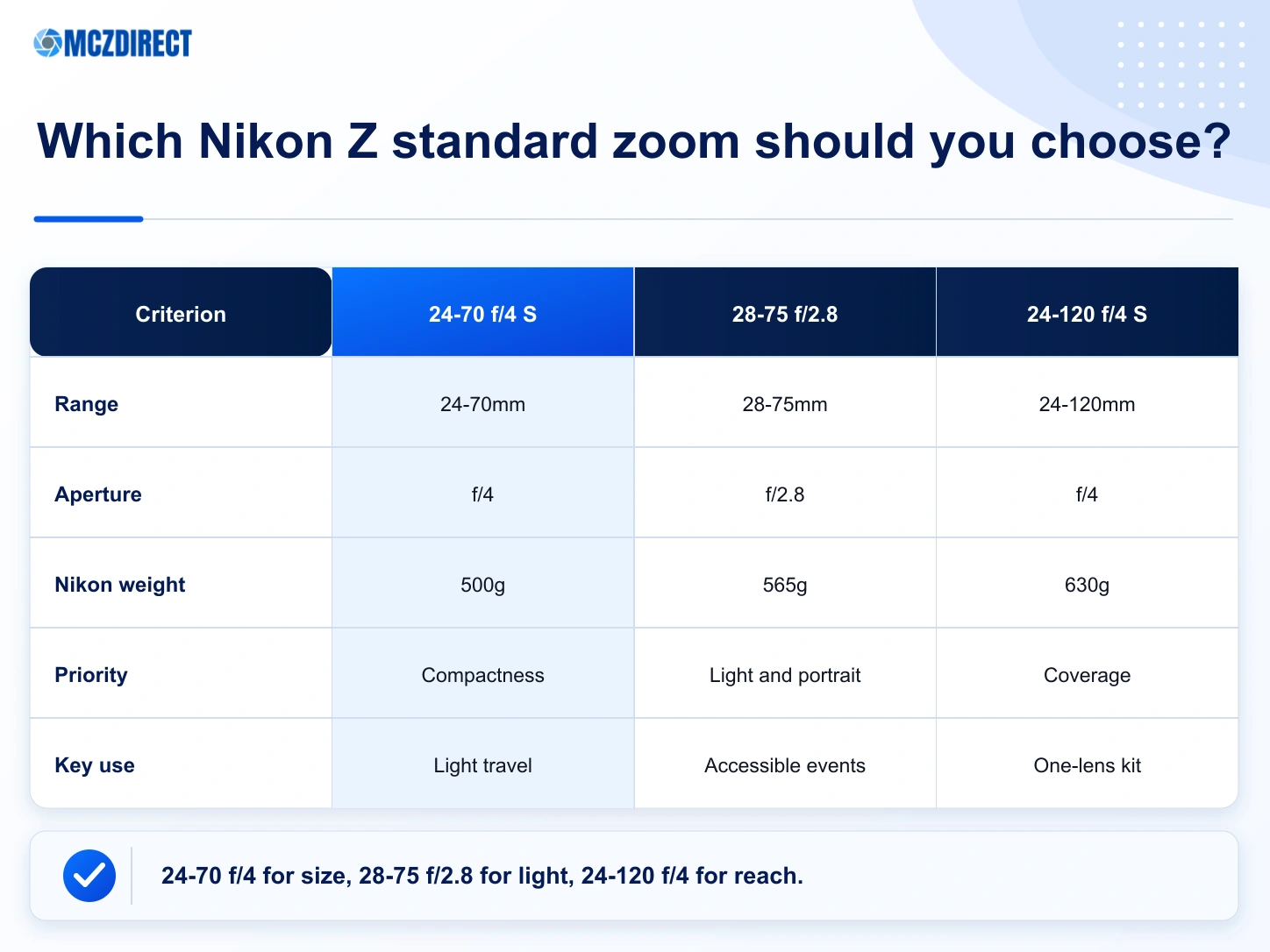
Against the NIKKOR Z 28-75mm f/2.8, the 24-70 f/4 starts at a true 24mm and stores more neatly once retracted. The 28-75 offers one extra stop, which helps retain shutter speed and soften backgrounds. The decision is therefore between width and packability on one side, available light on the other.
The NIKKOR Z 24-120mm f/4 S keeps f/4 and extends to 120mm. It covers tighter portraits and distant details but adds size and weight. The 24-70 f/4 remains attractive for a full day on foot or a small bag; the 24-120 is more complete when one lens must handle almost everything.
| Criterion | 24-70 f/4 S | 28-75 f/2.8 | 24-120 f/4 S |
|---|---|---|---|
| Range | 24-70mm | 28-75mm | 24-120mm |
| Aperture | f/4 | f/2.8 | f/4 |
| Nikon weight | 500g | 565g | 630g |
| Priority | Compactness | Light and portrait | Coverage |
| Key use | Light travel | Accessible events | One-lens kit |
At MCZ DIRECT, we see the NIKKOR Z 24-70mm f/4 S as the choice for a Nikon Z photographer who wants a capable standard zoom that is easy to take anywhere, rather than a specialist solution for very low light. It makes particular sense on a compact full-frame body and on days when the camera must stay ready without becoming tiring.
We favour it over the 24-120 f/4 when every gram matters, and over the 28-75 f/2.8 when a true 24mm view is more useful than the extra stop. Its limitation remains f/4: a dark wedding, stage performance or strongly separated portrait will be better served by f/2.8.