My basket0 items



Find your orders, invoices and saved addresses all in one place.
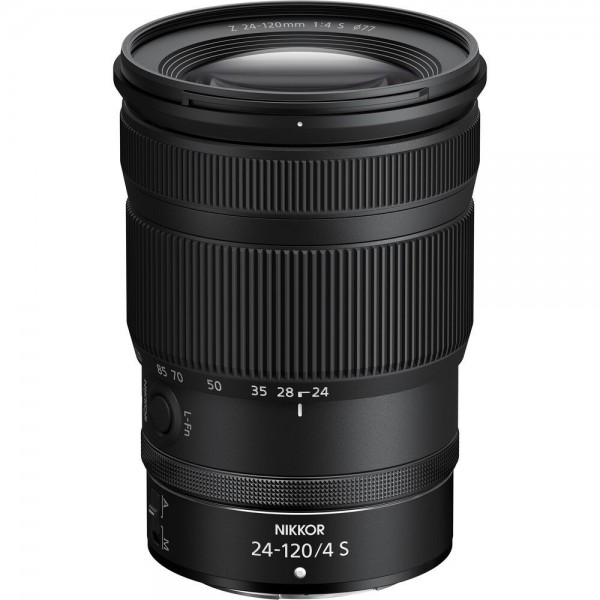
The NIKKOR Z 24-120mm f/4 S is a one-lens option for Nikon Z photographers who want to cover landscapes, travel, documentary work and portraits without frequent lens changes. Its range starts at a useful 24mm wide angle and reaches 120mm for faces, distant details and tighter views. The aperture stays at f/4 throughout the zoom, and its 630g weight is reasonable for this amount of reach. It also focuses at 0.35m for close details. It is less suited to very dark events, but it is an excellent choice for travel when a simple and complete full-frame kit matters most.
Combine compatible accessories and save. The more items you add, the bigger the discount.
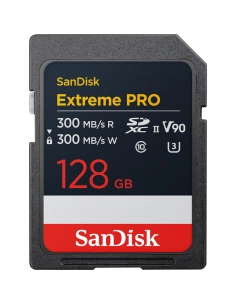
memory card

warranty extension
The NIKKOR Z 24-120mm f/4 S covers a 5x range that genuinely changes how a bag can be prepared. At 24mm it handles landscapes, architecture and interiors. From 35 to 70mm it follows documentary and everyday scenes. Between 85 and 120mm it tightens a portrait, isolates a detail or reaches a subject encountered while travelling.
Versatility still carries trade-offs. The 630g weight is measured for the range but exceeds the 24-70 f/4. Constant f/4 is predictable for video and coherent outdoors, yet less comfortable than f/2.8 for moving subjects in poor light. The 24-120 serves photographers who want fewer lens changes without moving to a slower superzoom.

While travelling, 120mm proves useful as soon as a subject cannot be approached. Architectural detail, a spontaneous portrait or a street scene can be framed without changing lens. The return to 24mm is immediate when the place must be shown. That range also avoids opening the camera in dust or light rain.
At 120mm and f/4, the background can become soft when the subject is close enough and the background distant. It is not the rendering of an 85mm f/1.8 or the speed of a 70-200 f/2.8. The 24-120 wins through availability: it is already mounted when a detail appears.
| Specification | Practical benefit | Plan for |
|---|---|---|
| 24-120mm | A 5x range from landscape to tight portrait | Less reach than a 24-200mm |
| Constant f/4 | Stable exposure and predictable video behaviour | One stop slower than f/2.8 |
| 630g | Substantial coverage without super-telezoom weight | Larger and heavier than 24-70 f/4 |
| 0.35m and 0.39x | Close detail at every focal length | No 1:1 macro reproduction |
| 77mm | Filters shared by many lenses | Larger than 72mm filters on 24-70 f/4 |
| Assignment | What the zoom provides | Useful reservation |
|---|---|---|
| One-lens travel | 24mm for place and 120mm for detail | Plan around f/4 when light falls |
| Documentary | React to changing distance without a lens swap | f/2.8 retains more shutter speed indoors |
| Landscape | 24mm and S-Line consistency for detail | Ultra-wide remains useful for extreme perspective |
| Portrait | 85-120mm tightens framing and compresses perspective | Less blur than a bright prime |
| Close detail | 0.39x at 120mm for objects and texture | Macro remains better for tiny subjects |

24mm : landscape and place, show the environment without changing lens. 35-50mm : documentary, follow a scene with natural perspective. 70-85mm : portrait, tighten framing and calm the background. 120mm : distant detail, isolate an expression, facade or object.
The NIKKOR Z 24-120mm f/4 S reduces lens changes without giving up a true wide angle. At 24mm it covers a street, landscape or interior. Between 35 and 50mm it suits everyday documentary work. At 85 or 120mm it can isolate a portrait, architectural detail or scene on the far side of a square. That continuity matters when weather changes, dust is present or reaching for another lens would lose the moment. It cannot replace every specialist focal length, but it can describe an entire travel day with unusual consistency.
The weight should be judged across the complete bag. At 630g it is heavier than the 500g 24-70 f/4 S, yet often lighter than carrying both a standard zoom and a small telephoto. If 70 to 120mm is genuinely used, the final kit may therefore be lighter. If most photographs remain below 70mm, the compact 24-70 is enough. Reviewing focal-length data from earlier images is a practical way to decide whether the extra reach will replace a second lens or simply add volume.
At 24mm, lines and frame edges need careful control. A close foreground can give a landscape depth, while a poorly placed horizon may dominate the image. At 120mm, the view changes: perspective feels tighter and distant layers appear closer together. The focal length can isolate mountain ridges, an urban detail or a person across the scene. One location can therefore be described twice, first through its scale and then through a precise element that the eye might otherwise overlook.
For portrait work, 120mm provides comfortable distance and simplifies the background. At f/4, blur depends strongly on keeping the subject close and the background farther away. A person in front of a distant setting can separate cleanly; someone against a nearby wall will show less isolation. The result is not the same as an 85mm f/1.8, but it suits travel, spontaneous portraiture and documentary work. Its advantage is having the focal length ready without predicting that a portrait opportunity will appear.
The aperture remains f/4 throughout the range, keeping exposure predictable as framing changes. In daylight it is a strong compromise. As light falls, focal length affects the required shutter speed: at 120mm, movement from both photographer and subject is more visible than at 24mm. Stabilisation in a compatible body helps with a stationary scene, but it cannot freeze a walking person or animal. A suitable minimum shutter speed must remain the priority, even when that requires higher ISO.
For a dark event or fast action, an f/2.8 zoom retains one additional stop. The 24-120 follows a different logic: availability and range rather than maximum light. During travel, a walk or documentary assignment in changing conditions, that versatility often prevents a missed composition. On a dance floor or in a theatre, its limit arrives sooner. A photographer who understands that boundary can add a bright prime for those specific moments while retaining the 24-120 for the rest of the day.
The 0.35m minimum focus distance remains constant throughout the zoom. At 120mm, 0.39x maximum reproduction can fill much of the frame with a flower, object, plate or material detail. This is particularly useful for travel because it adds close photographs to landscapes and portraits without a lens change. The longer focal length maintains practical working distance and simplifies the background. For a small product or crafted feature, it can produce a cleaner file than relying on a heavy crop later.
The lens does not replace 1:1 macro. Very small subjects, scientific reproduction and work requiring life-size detail still need a dedicated lens. Depth of field also becomes limited at 0.35m. Stopping down to f/5.6 or f/8 can make an object easier to read, provided shutter speed remains suitable. A tripod or solid support improves precision with a stationary subject. The 0.39x figure should therefore be understood as strong close-up ability rather than a complete macro claim.
The NIKKOR Z 24-70mm f/4 S gives priority to compactness. It weighs about 130g less and retracts for transport. The 24-120 adds fifty millimetres at the long end, stronger close reproduction and fewer lens changes. For a hike where every gram matters and 70mm is sufficient, the 24-70 remains logical. For travel, documentary work or a family day where distant detail appears without warning, the 24-120 provides more relaxed coverage.
The NIKKOR Z 24-200mm f/4-6.3 VR extends much farther and includes optical stabilisation. Its aperture becomes slower through the range, reaching f/6.3. The 24-120 retains f/4 and S-Line construction, which suits portraiture, changing light and regular work at medium distance. Choose the 24-200 when absolute reach and one-lens convenience dominate. Choose the 24-120 when 120mm is enough and a constant aperture matters more than the extra eighty millimetres.
The 24-120mm range provides several shot sizes without a lens change: establishing view, medium frame, portrait and detail. For an interview or travel film, that coverage reduces interruptions. The constant f/4 aperture keeps the maximum available brightness predictable while zooming, but the barrel extends and changes balance. On a gimbal, it is better to choose a focal length before the take or test the motor limits carefully. Handheld or on a tripod, the change is easier to manage. The lens prioritises framing flexibility rather than the behaviour of an internally zooming cinema lens.
There is no optical VR in the lens. It can benefit from stabilisation in a compatible camera, which reduces photographer movement but cannot correct abrupt footsteps or subject motion. At 120mm, stable technique or support becomes more important. Autofocus-transition settings should also match the scene: quick for a moving subject, gradual for an interview. With these decisions prepared, the 24-120 becomes a versatile video tool. Without them, the large range can encourage unnecessary zoom changes that make the sequence feel less consistent.
The 77mm thread is common among professional lenses and may allow filters to be shared across a kit. A polariser controls selected reflections and foliage when the light angle is suitable, while an ND filter supports video or long exposures. Using a step-up ring for a large filter on a smaller lens is usually more efficient than owning several complete sets. Stacking multiple thick filters can darken corners at 24mm. Each accessory should answer a specific photograph rather than remaining fitted through habit.
The hood reduces stray light and protects against minor contact while walking. A dedicated place in the bag prevents the zoom from rubbing against other equipment. If the lens was chosen to replace several focal lengths, filling the freed space with rarely used accessories removes part of the benefit. A spare battery, one useful filter, a clean cloth and perhaps a bright prime are often sufficient for a full day of travel or documentary work. Organisation should extend the versatility of the 24-120, not rebuild the same heavy bag it was meant to simplify.
A simple way to plan the day is to let the zoom handle daylight and changing distances, then reserve the bright prime for a specific evening need. At 24mm the zoom records the setting; around 50mm it covers natural reportage; at 120mm it reaches a portrait or architectural detail without another lens change. When light falls, a compact 35mm or 50mm prime can take over for moving people or a softer background. This two-lens approach remains easier to carry than several overlapping zooms. It also gives each lens a clear purpose, so the photographer spends less time deciding what to mount and more time responding to the scene.
Against the NIKKOR Z 24-70mm f/4 S, the 24-120 adds fifty millimetres at the long end and greater reproduction. It weighs about 130g more and does not retract as short. The 24-70 remains better for a minimal bag; the 24-120 prevents more lens changes.
The NIKKOR Z 24-200mm f/4-6.3 VR reaches much farther and includes optical stabilisation. Its aperture falls to f/6.3 at the long end. The 24-120 retains f/4, S-Line construction and a stronger balance for portraiture, changing light and close subjects.
| Criterion | 24-120 f/4 S | 24-70 f/4 S | 24-200 f/4-6.3 VR |
|---|---|---|---|
| Range | 24-120mm | 24-70mm | 24-200mm |
| Long-end aperture | f/4 | f/4 | f/6.3 |
| Nikon weight | 630g | 500g | 570g |
| Max. close-up | 0.39x | 0.30x | 0.28x |
| Priority | Balance | Compactness | Maximum reach |

At MCZ DIRECT, we see the NIKKOR Z 24-120mm f/4 S as the choice for a travel and documentary photographer who wants one zoom without giving up a constant aperture, rather than the lightest or brightest lens in the range.
We favour it over the 24-70 f/4 when 70 to 120mm genuinely avoids carrying a second lens, and over the 24-200 when f/4, S-Line construction and mid-range rendering matter more than absolute reach. Its limit is moving subjects in poor light, where f/2.8 remains easier.