

Shopping Cart

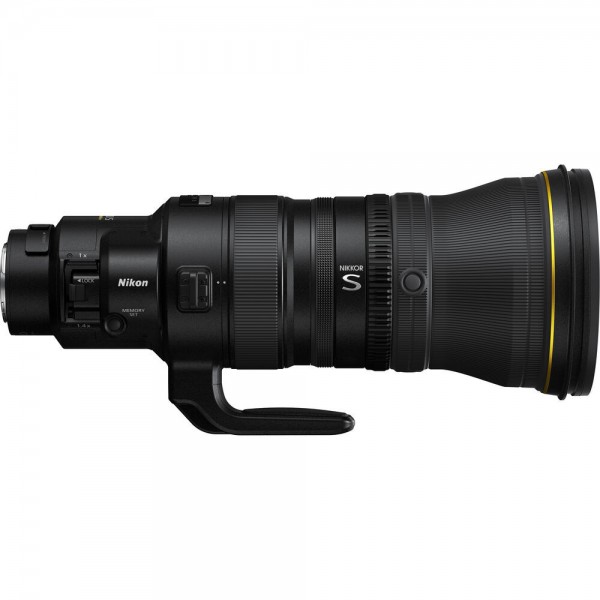
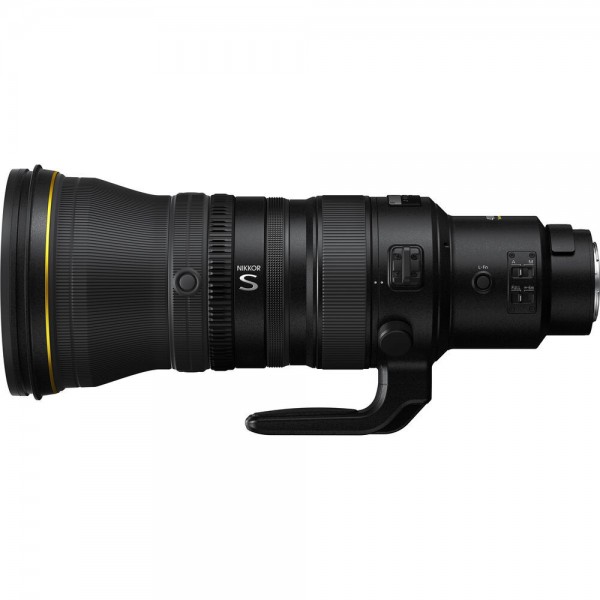
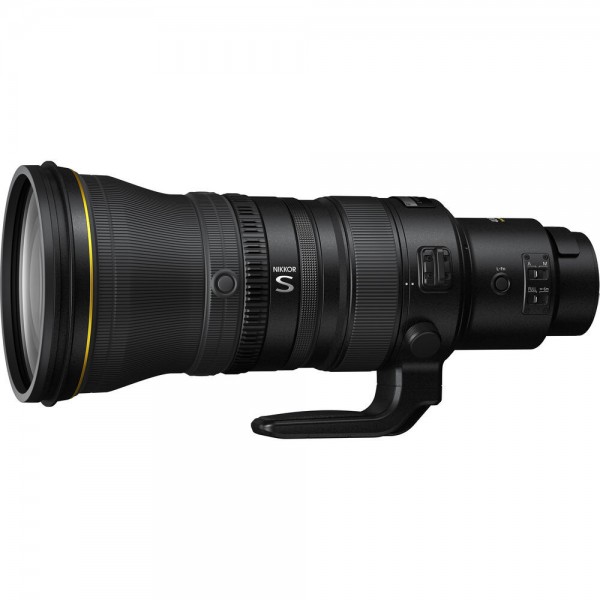
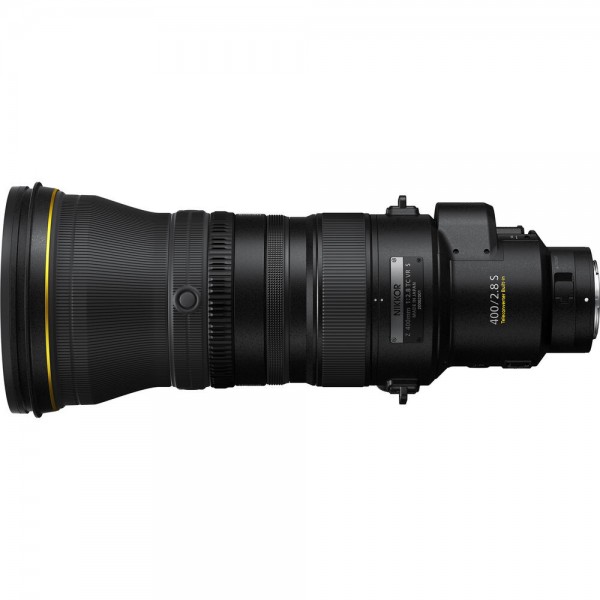
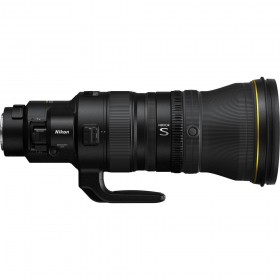
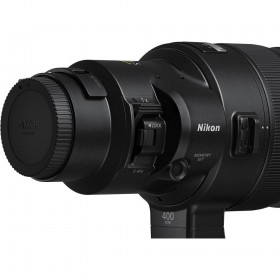
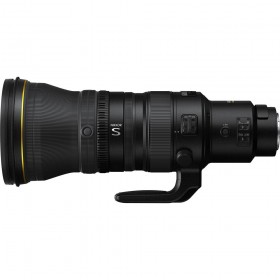
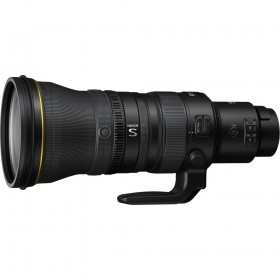
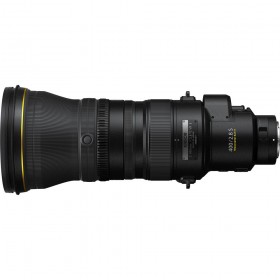
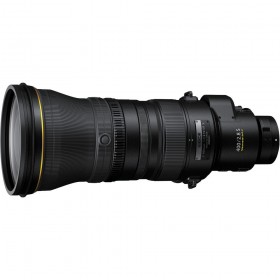



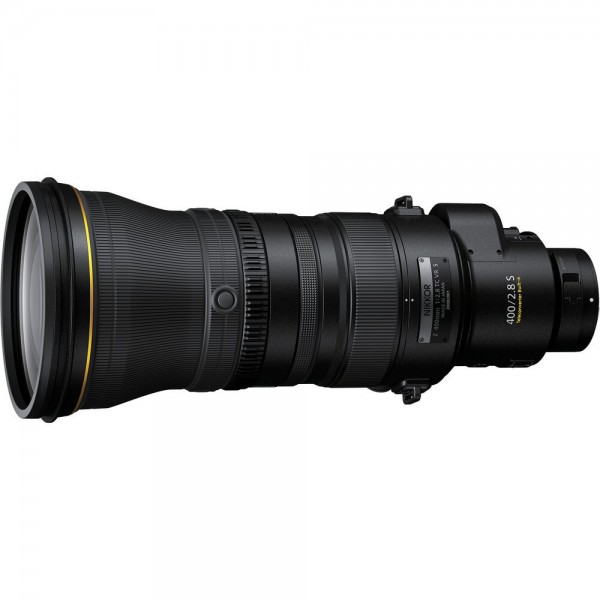
Nikon Z 400mm F2.8 TC VR S
Out-of-Stock
€11,204.30
€11,794.00-5%
- 100% newBrand-new and authentic product
- Final priceNo unpleasant surprises! The displayed price is the final amount paid for your purchase.
- 3-year MCZ DIRECT warranty
- Free delivery with insurance includedYour order is protected from dispatch to delivery: in case of loss, theft or damage during transport, your parcel is insured up to its value.
The NIKKOR Z 400mm f/2.8 TC VR S is Nikon's professional super-telephoto lens, featuring a bright f/2.8 aperture and a built-in 1.4x teleconverter, extending its reach up to 560 mm. Designed for the most extreme environments and major sporting events, it combines speed, durability, and reliability to capture exceptional images.
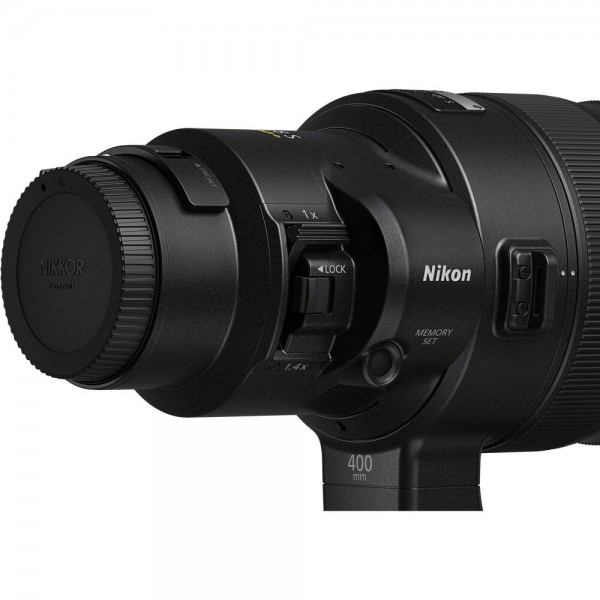
The Nikon NIKKOR Z 400mm f/2.8 TC VR S is a professional-grade super-telephoto lens designed for Nikon's Z-mount mirrorless cameras. It features a 400mm focal length, a bright f/2.8 maximum aperture, and an integrated 1.4x teleconverter, extending the reach to 560mm at f/4. This lens is ideal for sports, action, and wildlife photography, offering exceptional image quality and performance.
Key Features:
Superior Image Quality: The lens construction includes 25 elements in 19 groups, incorporating two fluorite elements, one Super ED glass element, and one SR (Short-wavelength Refractive) element. This advanced optical design minimizes chromatic aberrations and delivers outstanding sharpness and clarity across the frame.
Bright f/2.8 Aperture: The wide maximum aperture allows for excellent low-light performance and provides a shallow depth of field, creating beautiful, natural bokeh that makes subjects stand out against the background.
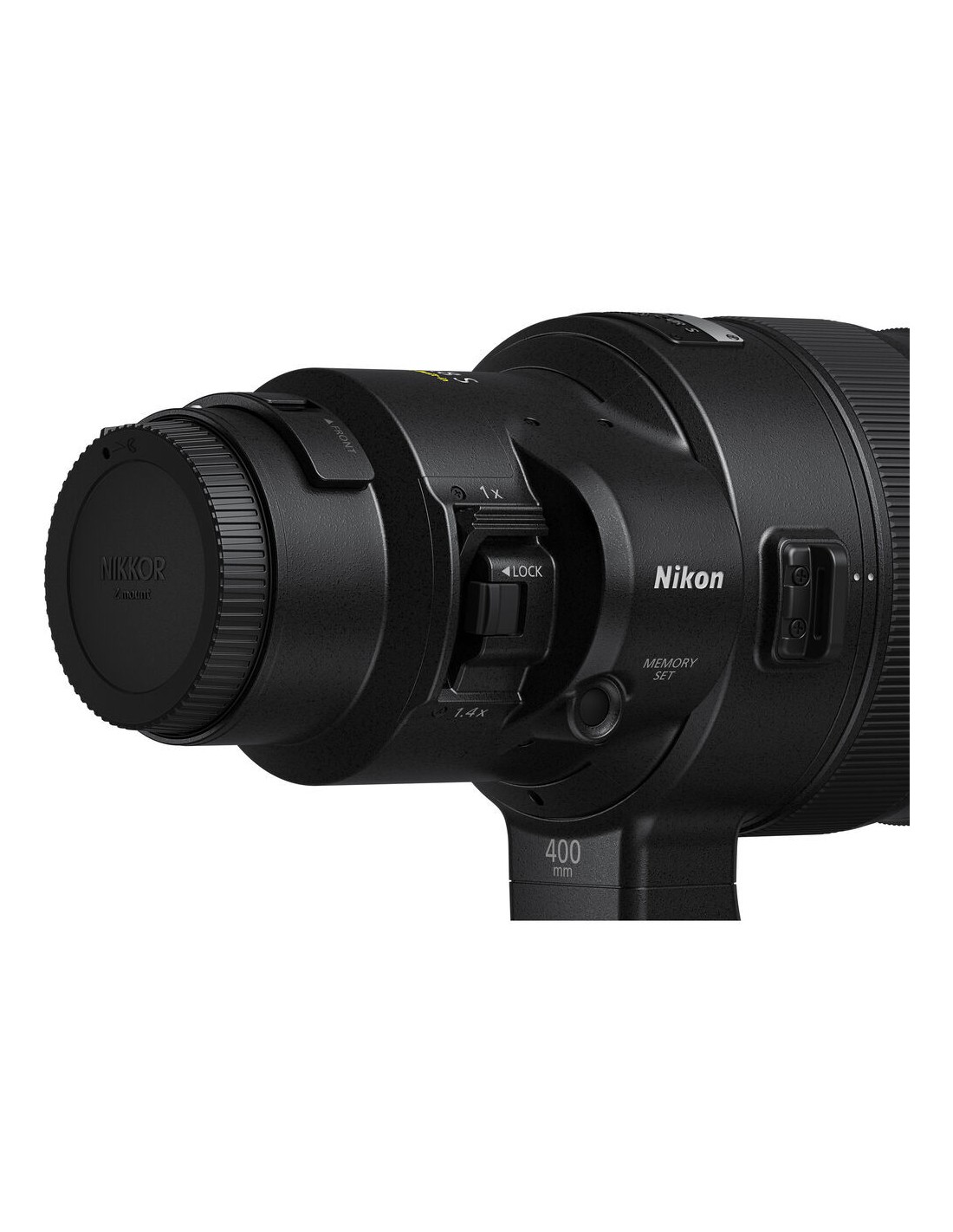
Built-in 1.4x Teleconverter: Seamlessly switch between 400mm f/2.8 and 560mm f/4 with the flick of a lever, offering flexibility without the need for additional equipment. This feature is particularly useful for quickly adapting to changing shooting scenarios.
Vibration Reduction (VR): Equipped with an optical VR system that compensates for camera shake, providing up to 5.5 stops of stabilization. This ensures sharp images even when shooting handheld or in challenging lighting conditions.
Advanced Coatings: The lens features Nikon's Meso Amorphous Coat and ARNEO Coat, which offer superior anti-reflective performance, effectively reducing ghosting and flare, even in backlit situations.
Robust Build Quality: Constructed with a magnesium alloy body, the lens is both lightweight and durable. It is designed with extensive weather sealing to resist dust and moisture, ensuring reliability in various environmental conditions. The front element is coated with fluorine to repel dirt and smudges.
Silky Swift VCM Autofocus System: Utilizing Nikon's advanced Voice Coil Motor (VCM) technology, the lens offers fast, accurate, and near-silent autofocus performance, essential for capturing fast-moving subjects discreetly.
Recommended Uses:
Wildlife Photography: The long focal length and fast aperture allow photographers to capture distant animals with stunning detail, even in low-light environments like dawn or dusk. The built-in teleconverter provides additional reach when needed, making it versatile for various wildlife scenarios.
Sports and Action Photography: The combination of 400mm reach, rapid autofocus, and effective VR makes this lens ideal for freezing fast-paced action, whether on the field or in the arena. The ability to quickly switch to 560mm can be advantageous for capturing distant subjects without changing lenses.
Bird Photography: The lens's reach and image quality are particularly beneficial for bird photographers, allowing for detailed shots of birds in flight or perched at a distance. The fast aperture aids in isolating subjects from busy backgrounds, highlighting the bird's features.
Nature and Landscape Photography: While primarily a super-telephoto lens, its sharpness and clarity make it suitable for capturing distant landscapes or isolating specific elements within a scene, providing creative opportunities for composition.
Technical Specifications:
Focal Length: 400mm (560mm with teleconverter)
Maximum Aperture: f/2.8 (f/4 with teleconverter)
Minimum Aperture: f/32
Lens Construction: 25 elements in 19 groups
Minimum Focus Distance: 2.5 meters (8.2 feet)
Maximum Magnification: 0.23x
Filter Size: 46mm (drop-in)
Dimensions: Approx. 156mm diameter x 380mm length
Weight: Approx. 2,950 grams (6.5 pounds)
Aperture Blades: 9 (rounded)
Mount: Nikon Z-mount
The Nikon NIKKOR Z 400 mm f/2.8 TC VR S stands as a testament to Nikon's commitment to optical excellence, offering professionals a powerful tool for capturing high-quality images in demanding situations. Its combination of a fast aperture, built-in teleconverter, advanced stabilization, and robust construction makes it a versatile and reliable choice for photographers specializing in wildlife, sports, and action photography.
Elevate your photography with the Nikon NIKKOR Z 400mm f/2.8 TC VR S—order now to experience unparalleled performance and image quality!
- Lens mount
- Nikon Z
- Recommended use
- Sports / wildlife
Video / stabilized - Stabilization
- No
- Lens type
- Tele
- Focal length
- Super telephoto
- Maximum aperture
- f/2.5 - f/2.8
- Aperture options
- f/1.8 to f/2.8
- Photo use
- Portrait
Sport
Wildlife - Lens format
- Full frame

NIKZ400F28TCVRS
4960759906984
Technical specifications
General
Brand
Nikon
Product type
Lens
Lens type
Tele
Lens series
NIKKOR Z S-Line
Aperture options
f/1.8 to f/2.8
Lens mount
Nikon Z
Photo use
Portrait; Wildlife; Sport
Lens format
Full frame
Level
Suitable for professionals
Yes
Properties
Full frame
Yes
Image stabilization
Yes
Lens construction
25 elements in 19 groups
Magnification factor
0.17x
Focus mode
Autofocus and manual
Minimum focusing distance
250 cm
Lens hood included
Yes
Focal length
Fixed focal length
Yes
Focal length
400 mm
Minimum focal length
400 mm
Maximum focal length
400 mm
Aperture
Minimum aperture overall
f/22
Minimum aperture
f/22
Maximum aperture
f/2.8
Diaphragm blades
9
Zoom
Zoom option
No
Uses
Landscape photography
No
Portrait photography
Yes
Travel photography
No
Reportage photography
No
Sports photography
Yes
Wildlife photography
Yes
All-round photography
No
Video
Yes
Physical properties
Weight
2950 g
Filter size
46 mm
Length
38 cm
Diameter
156 mm
Dust and splash resistant
Yes
Buying guidance
Best for
Ideal for: portrait, sports, wildlife, video.
Compatibility
Nikon Z-mount lens for full-frame FX Nikon Z mirrorless cameras; also usable on DX-format Nikon Z bodies with DX crop.
Warning
Check before buying: consider the weight for long handheld sessions; dust and drip resistance is not guaranteed in all situations.
Nikon Z 400mm f/2.8 TC VR S FAQ
Is the Nikon Z 400mm f/2.8 TC VR S worth the price?
Yes, if you truly need its f/2.8 aperture, professional autofocus performance and built-in 1.4x teleconverter. The Nikon Z 400mm f/2.8 TC VR S is aimed at sports, wildlife and action photographers who need a bright, fast and dependable lens. For occasional use, its price, weight and specialisation will be hard to justify.
Who is the Nikon Z 400mm f/2.8 TC VR S made for?
It is mainly made for professional and expert Nikon Z photographers who often shoot distant action. It suits sport, press work, wildlife, birds, airshows and scenes where light, subject separation and responsiveness matter. It is not designed as a general travel or lightweight reportage lens.
What is the benefit of the built-in 1.4x teleconverter?
The benefit is being able to switch very quickly from 400mm f/2.8 to 560mm f/4 without changing accessories. In the field, that is a major advantage: you can adjust framing when the subject moves farther away while reducing handling and dust exposure. For sport and wildlife, that speed can matter.
Does the f/2.8 aperture really matter on a 400 mm lens?
Yes, f/2.8 gives more light, more shutter-speed headroom and very strong subject separation. It helps freeze fast movement, work later in the day and isolate an athlete, bird or animal against a busy background. This is one of the main reasons to choose this lens instead of a smaller 400 mm option.
Is the Nikon Z 400mm f/2.8 TC VR S suitable for professional sport?
Yes, this is one of its natural uses. The 400 mm focal length, f/2.8 aperture, stabilisation and built-in teleconverter fit field sports, motorsport, athletics and major events very well. It still needs a strong autofocus body and real tracking technique to get the best from it.
Is the Nikon Z 400mm f/2.8 TC VR S good for wildlife and birds?
Yes, it is excellent for wildlife, especially when light changes or the subject moves quickly. At 400 mm f/2.8 it gives high brightness and strong isolation; with the built-in teleconverter it becomes a 560 mm f/4 lens for more distant subjects. For very small birds at long range, a 600 or 800 mm lens may still be more comfortable.
Can you use the Nikon Z 400mm f/2.8 TC VR S handheld?
Yes, handheld use is possible for short periods, but it is not the most comfortable option for long sessions. The lens is more manageable than older equivalent super-telephotos, and VR stabilisation helps with framing. For a full match, hide or long wildlife session, a monopod or support is still preferable.
Is VR stabilisation important on the Nikon Z 400mm f/2.8 TC VR S?
Yes, VR stabilisation is very important for steadying the viewfinder, precise framing and reducing camera shake. It helps at 400 mm and even more when the built-in teleconverter takes the lens to 560 mm. It does not replace a fast shutter speed for moving subjects, but it clearly improves shooting comfort.
Does the Nikon Z 400mm f/2.8 TC VR S work with external teleconverters?
Yes, it can be used with compatible Nikon Z teleconverters, while accounting for light loss and the very specialised setup that results. The built-in teleconverter already covers 560 mm f/4. Adding an external teleconverter can help in extreme cases, but it needs strong light, good technique and favourable air quality.
Nikon Z 400mm f/2.8 TC VR S or Nikon Z 400mm f/4.5 VR S: which should you choose?
Choose the 400mm f/2.8 TC VR S for maximum performance; choose the 400mm f/4.5 VR S for mobility and a more reasonable budget. The f/2.8 TC gives more light, a built-in teleconverter and a professional orientation. The 400mm f/4.5 is much easier to carry and enough for many uses in good light.
What limits should you know before buying the Nikon Z 400mm f/2.8 TC VR S?
Its main limits are price, size, weight and its highly specialised purpose. It needs regular use to make sense, suitable transport and often support for long sessions. If you mainly want versatility, a zoom such as the Nikon Z 100-400mm or a lighter prime will often be more logical.
Reviews Nikon Z 400mm F2.8 TC VR S
0 Rating
Customer photos
No customer photos yet
Tap to zoom
ALEX (In testing phase)