

Shopping Cart

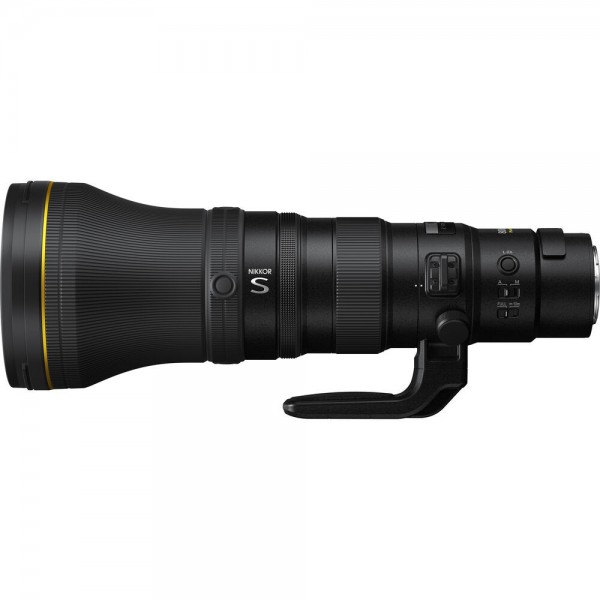
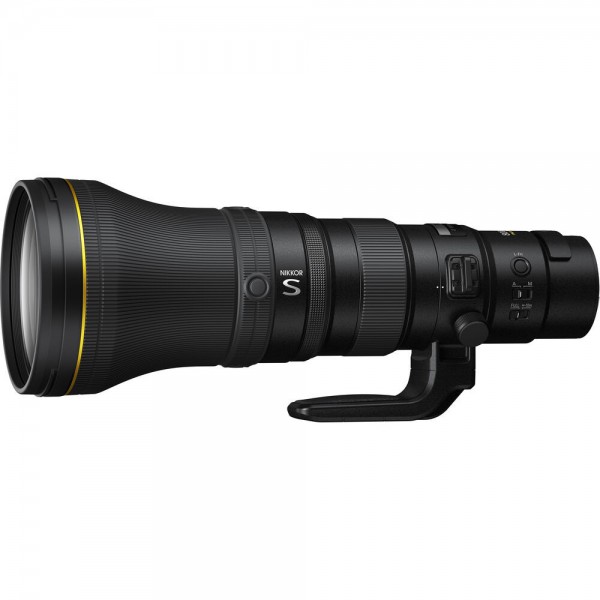
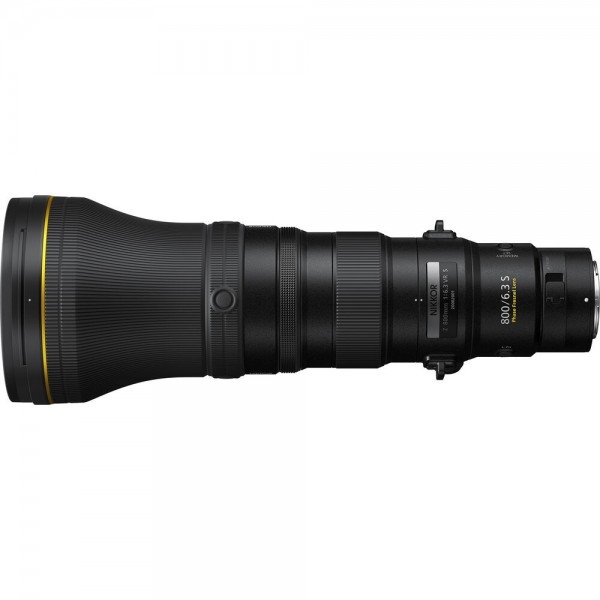
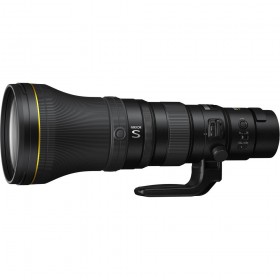
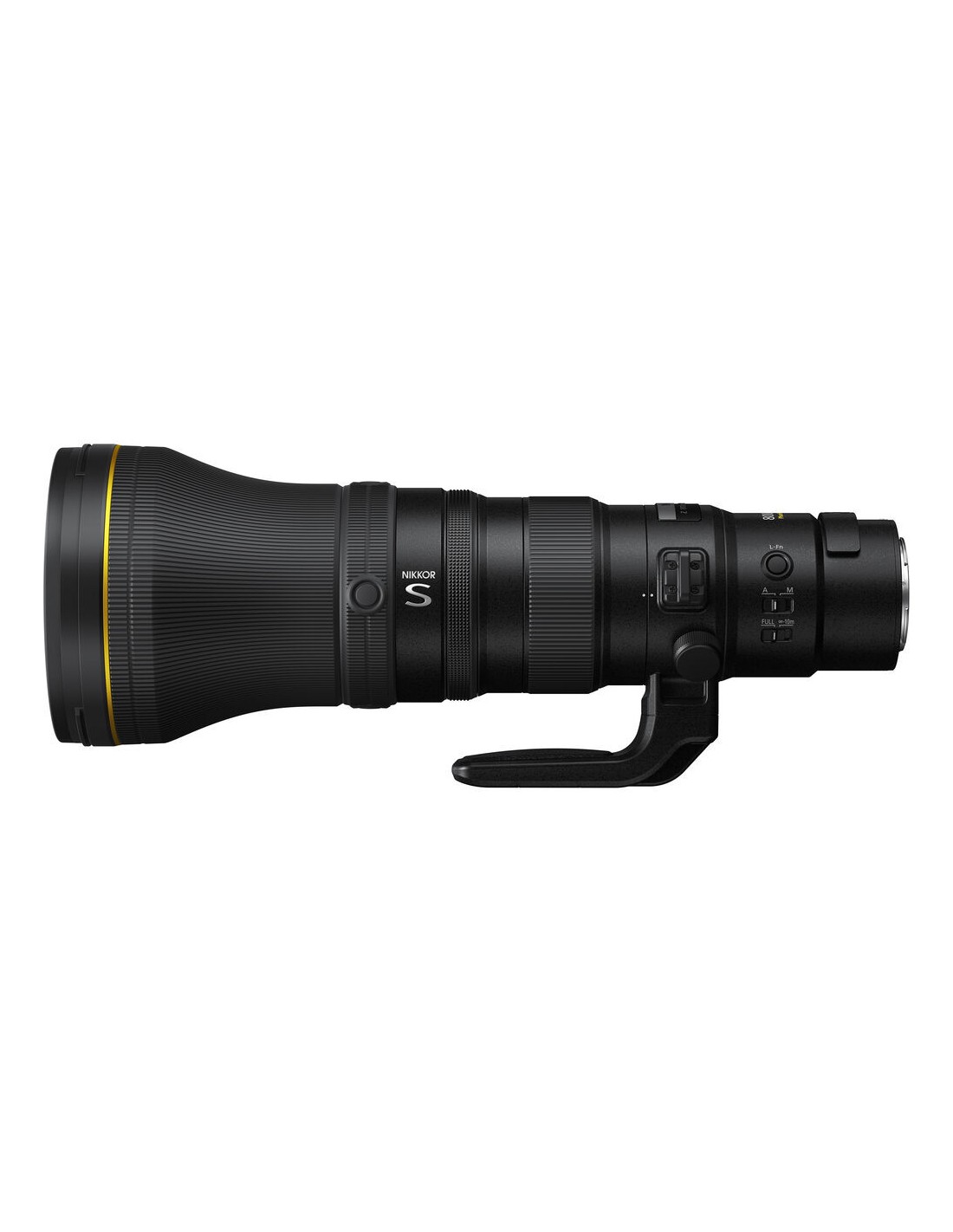


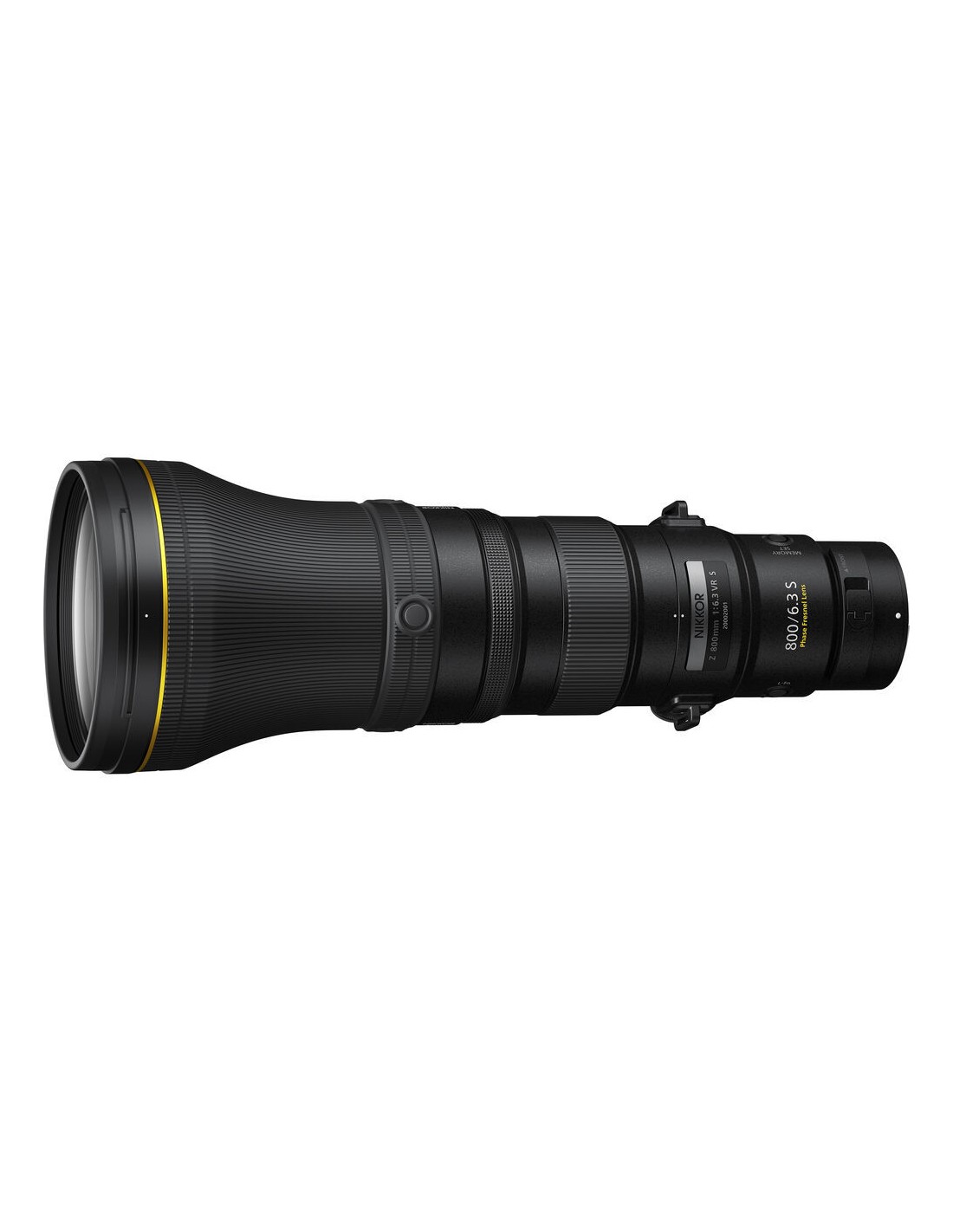
Nikon Z 800mm F6.3 VR S
IN STOCK
€4,934.30
€5,194.00-5%
- 100% newBrand-new and authentic product
- Final priceNo unpleasant surprises! The displayed price is the final amount paid for your purchase.
- Estimated delivery Fri 24 - Mon 27 JulEstimate based on available stock, order time, business days and carrier delivery times.
- 3-year MCZ DIRECT warranty
- Free delivery with insurance includedYour order is protected from dispatch to delivery: in case of loss, theft or damage during transport, your parcel is insured up to its value.
Discover the Nikon Z 800mm f/6.3 VR, a lightweight super telephoto lens offering an 800mm reach with exceptional image quality. Perfect for nature, sports, and travel photography. The fast and silent autofocus, along with the built-in optical VR function, ensures stable and precise shots. Enhance your creativity and capture stunning images with this professional telephoto lens.
The Nikon NIKKOR Z 800mm f/6.3 VR S is a super-telephoto prime lens that combines exceptional reach with remarkable portability, making it an ideal choice for photographers specializing in wildlife, sports, aviation, and distant landscapes.
Key Features:
Impressive Focal Length: With an 800mm focal length, this lens allows photographers to capture distant subjects with stunning clarity, bringing far-off scenes into sharp focus.
Bright Aperture: The f/6.3 maximum aperture balances depth of field control and light intake, enabling beautiful background separation and effective performance in various lighting conditions.
Advanced Optical Design: Incorporating a Phase Fresnel (PF) element, Extra-low Dispersion (ED) glass, and a Short-wavelength Refractive (SR) element, the lens minimizes chromatic aberrations and ghosting, ensuring high-resolution, high-contrast images.
Vibration Reduction (VR): The built-in VR system compensates for camera shake, providing up to 5.0 stops of stabilization, or up to 5.5 stops when paired with the Nikon Z 9's Synchro VR, facilitating sharp handheld shooting even at extreme focal lengths.
Lightweight and Compact: Weighing approximately 2,385 grams and measuring about 385 mm in length, the lens is significantly lighter and more compact than traditional super-telephoto lenses, enhancing mobility for on-the-go photography.
Fast and Quiet Autofocus: Equipped with a Stepping Motor (STM), the lens delivers swift, precise, and near-silent autofocus performance, crucial for capturing wildlife and other subjects where silence is essential.
Robust Build Quality: Designed with professional use in mind, the lens features extensive weather sealing to protect against dust and moisture, ensuring reliability in challenging environmental conditions.
Recommended Uses:
Wildlife Photography: The extensive reach and quick autofocus make it perfect for capturing animals in their natural habitats without disturbing them.
Sports Photography: Ideal for photographing fast-paced action from a distance, such as field sports or motorsports, where getting physically close is not feasible.
Aviation Photography: Suitable for capturing sharp images of aircraft in flight, thanks to its long focal length and effective VR system.
Astrophotography: The lens's optical quality and focal length make it a good choice for photographing celestial bodies, offering clear and detailed images of the night sky.
Technical Specifications:
Focal Length: 800mm
Maximum Aperture: f/6.3
Minimum Aperture: f/32
Lens Construction: 22 elements in 14 groups, including 3 ED glass elements, 1 SR lens, and 1 PF lens
Angle of View: 3°10' (FX format); 2° (DX format)
Minimum Focus Distance: 5 meters (16.41 feet)
Maximum Reproduction Ratio: 0.16x
Diaphragm Blades: 9 (rounded)
Filter Size: 46mm (rear filter slot)
Dimensions: Approx. 140 mm diameter x 385 mm length
Weight: Approx. 2,385 grams (5 lb 4.2 oz)
The Nikon NIKKOR Z 800 mm f/6.3 VR S stands out as a versatile and high-performance lens for photographers seeking to capture distant subjects with exceptional clarity and detail. Its combination of advanced optics, effective stabilization, and manageable size redefines what is possible in super-telephoto photography.
Elevate your photography to new heights with the Nikon NIKKOR Z 800mm f/6.3 VR S. Order now to experience unparalleled reach and image quality!
- Lens mount
- Nikon Z
- Recommended use
- Sports / wildlife
Video / stabilized - Stabilization
- Yes
- Lens type
- Tele
- Focal length
- Super telephoto
- Maximum aperture
- f/4.5 and slower
- Aperture options
- f/4 and above
- Photo use
- Sport
Wildlife - Lens format
- Full frame

NIKZ800F63VRS
4960759909091
Technical specifications
General
Brand
Nikon
Product type
Lens
Lens type
Tele
Lens series
NIKKOR Z S-Line
Aperture options
f/4 and above
Lens mount
Nikon Z
Photo use
Wildlife; Sport
Lens format
Full frame
Level
Suitable for professionals
Yes
Properties
Full frame
Yes
Image stabilization
Yes
Lens construction
22 elements in 14 groups
Magnification factor
0.16x
Focus mode
Autofocus and manual
Minimum focusing distance
500 cm
Lens hood included
Yes
Focal length
Fixed focal length
Yes
Focal length
800 mm
Minimum focal length
800 mm
Maximum focal length
800 mm
Aperture
Minimum aperture overall
f/32
Minimum aperture
f/32
Maximum aperture
f/6.3
Diaphragm blades
9
Zoom
Zoom option
No
Uses
Landscape photography
No
Portrait photography
No
Travel photography
No
Reportage photography
No
Sports photography
Yes
Wildlife photography
Yes
All-round photography
No
Video
Yes
Physical properties
Weight
2385 g
Filter size
46 mm
Length
38.5 cm
Diameter
140 mm
Dust and splash resistant
Yes
Buying guidance
Best for
Ideal for: sports, wildlife, video.
Compatibility
Nikon Z-mount lens for full-frame FX Nikon Z mirrorless cameras; also usable on DX-format Nikon Z bodies with DX crop.
Warning
Check before buying: consider the weight for long handheld sessions; dust and drip resistance is not guaranteed in all situations.
Nikon Z 800mm f/6.3 VR S FAQ
Is the Nikon Z 800mm f/6.3 VR S worth the price?
Yes, if you want a very long Nikon Z focal length for wildlife, birds, distant sport or subjects you cannot approach. The Nikon Z 800mm f/6.3 VR S gives rare reach in a format that is more mobile than a classic 800 mm super-telephoto. It remains very specialised: its value depends on a real need for 800 mm, not everyday versatility.
Who is the Nikon Z 800mm f/6.3 VR S made for?
It is made for expert or professional Nikon Z photographers who often work at very long distances. It suits bird photography, distant wildlife, airshows, outdoor sport and scenes where even 500 or 600 mm can feel short. It is not suitable for general photography, typical lightweight travel or small spaces.
Is f/6.3 bright enough on an 800 mm lens?
Yes, in good light, f/6.3 remains usable on an 800 mm lens, but you need to accept that this is not a low-light optic. The very long focal length already gives strong subject separation. At dawn, dusk or in shaded areas, however, you will often need to raise ISO and watch shutter speed carefully.
Is the Nikon Z 800mm f/6.3 VR S good for birds and wildlife?
Yes, this is one of its most obvious uses. The 800 mm reach lets you frame shy or distant subjects without approaching them, which is valuable for birds and wildlife. The trade-off is more demanding framing discipline, because finding and tracking a subject at 800 mm takes practice.
Can the Nikon Z 800mm f/6.3 VR S be used for sport?
Yes, for very distant outdoor sport, but it is not the most flexible choice. It can be interesting for athletics, motorsport, surfing, aviation or large fields. If distance changes a lot or subjects move closer, a zoom or shorter focal length will be easier to use.
Can you use the Nikon Z 800mm f/6.3 VR S handheld?
Yes, occasionally, and this is one of the advantages of its lighter design for an 800 mm focal length. VR stabilisation helps steady the frame and makes handheld work possible in some situations. For long sessions, hides or regular tracking, a monopod, tripod or suitable support is still recommended.
Is VR stabilisation essential on the Nikon Z 800mm f/6.3 VR S?
Yes, on an 800 mm focal length, VR stabilisation is a key part of comfort and success. It makes framing easier, reduces camera shake on static subjects and makes the lens more usable handheld. It does not replace a fast shutter speed for freezing movement, but it greatly helps keep the image steady.
Does the Nikon Z 800mm f/6.3 VR S work with teleconverters?
Yes, it can be used with compatible Nikon Z teleconverters, but you must account for the loss of light. This can be useful for extremely distant subjects, but the effective aperture becomes slower and needs plenty of light. In practice, autofocus, shutter speed and air quality become even more important at such distances.
Nikon Z 800mm f/6.3 VR S or Nikon Z 600mm f/6.3 VR S: which should you choose?
Choose the 800mm f/6.3 VR S if reach is your absolute priority; choose the 600mm f/6.3 VR S if you want easier framing and a slightly more flexible lens. The 800 mm brings distant subjects closer, but it is more demanding for tracking, stability and practical working distance. The 600 mm will often be easier to live with.
What limits should you know before buying the Nikon Z 800mm f/6.3 VR S?
Its main limits are the extremely long focal length, f/6.3 aperture, very specialised use and stability demands. It does not replace a versatile zoom or a 600 mm lens that is easier to frame with. Buy it for a clear long-reach need, with the right technique and support around it.
Reviews Nikon Z 800mm F6.3 VR S
1 Rating
Customer photos
No customer photos yet
Review summary
Generated by AI from customer reviews.
- La netteté des photos est jugée impressionnante.
- L’objectif est apprécié pour son poids léger pour ce type d’usage.
- Des réglages sont disponibles sur l’optique, ce qui permet de la personnaliser selon l’usage.
- Le commentaire le présente comme adapté à la photographie animalière, car il permet de rester à distance des animaux.
Tap to zoom
ALEX (In testing phase)