Shopping Cart
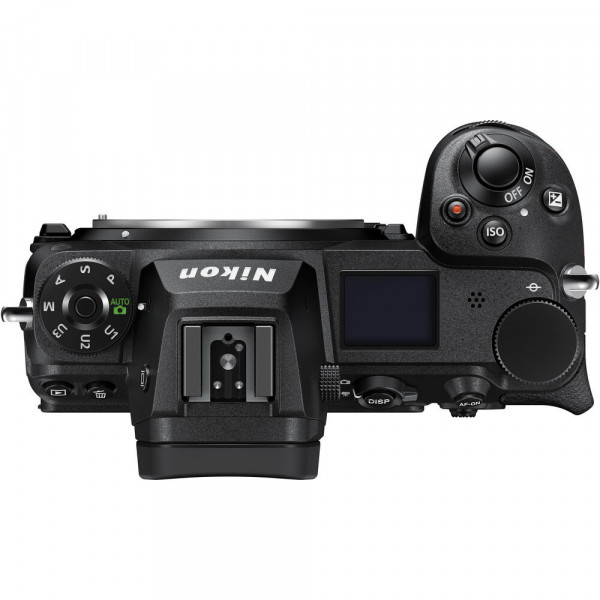


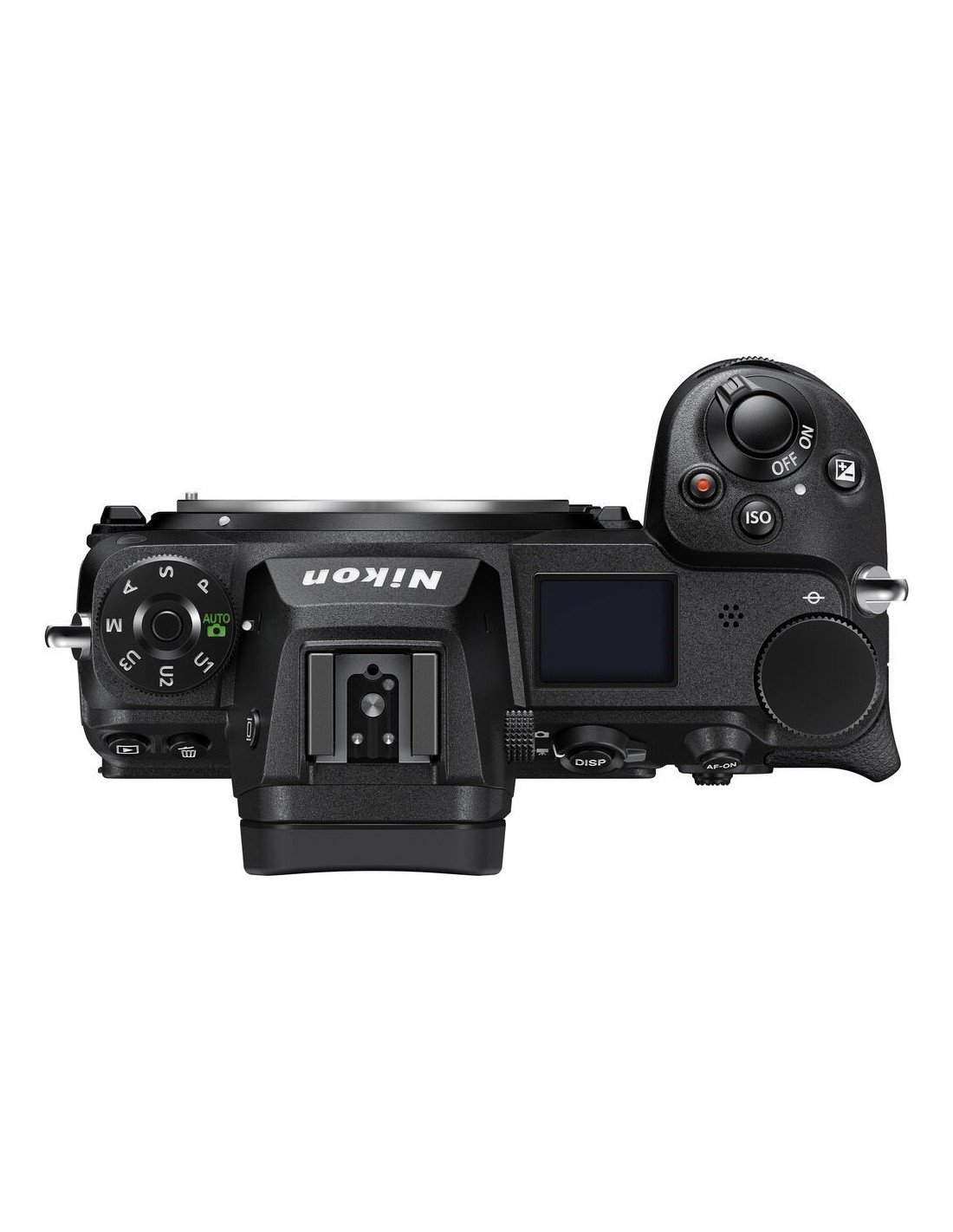
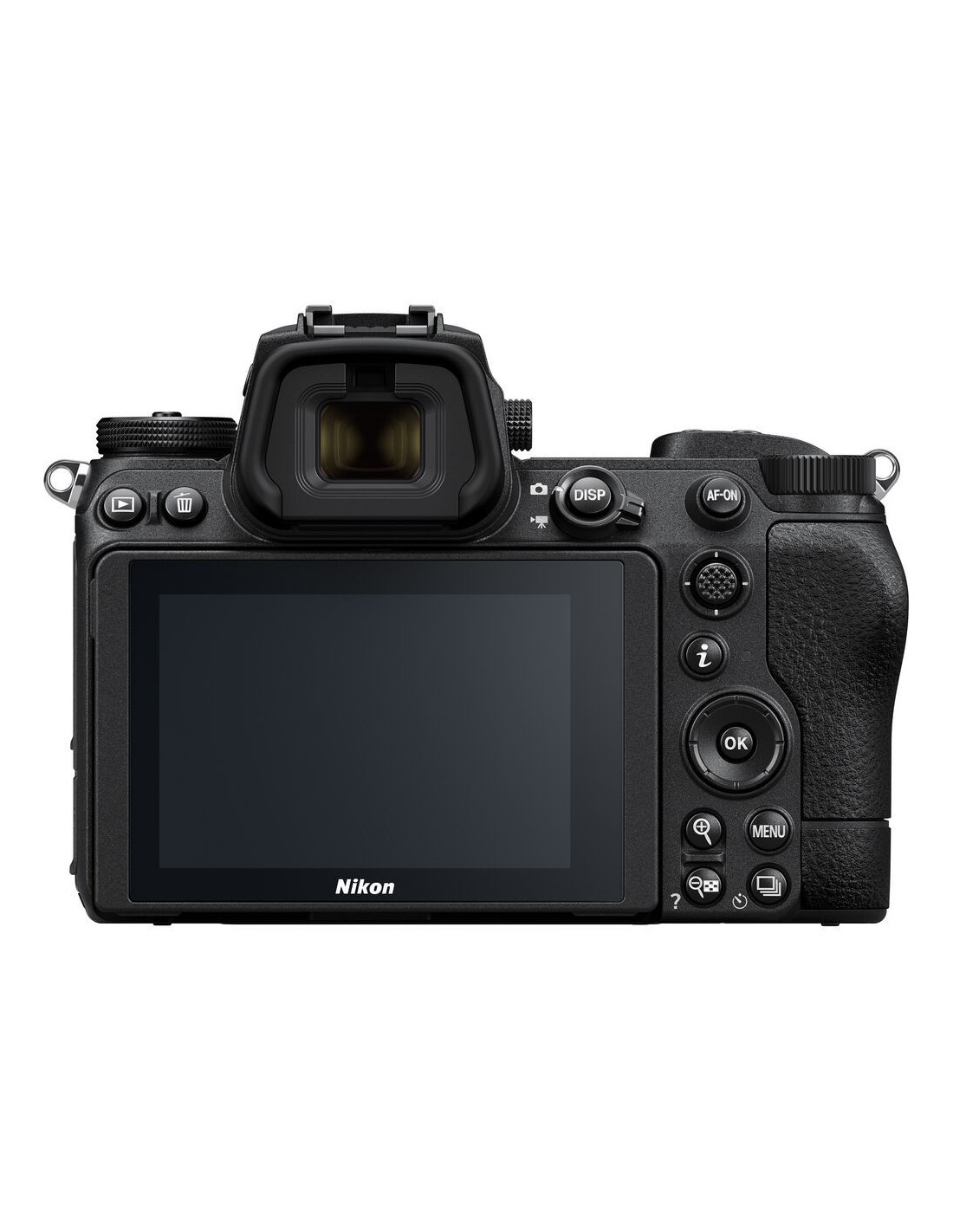
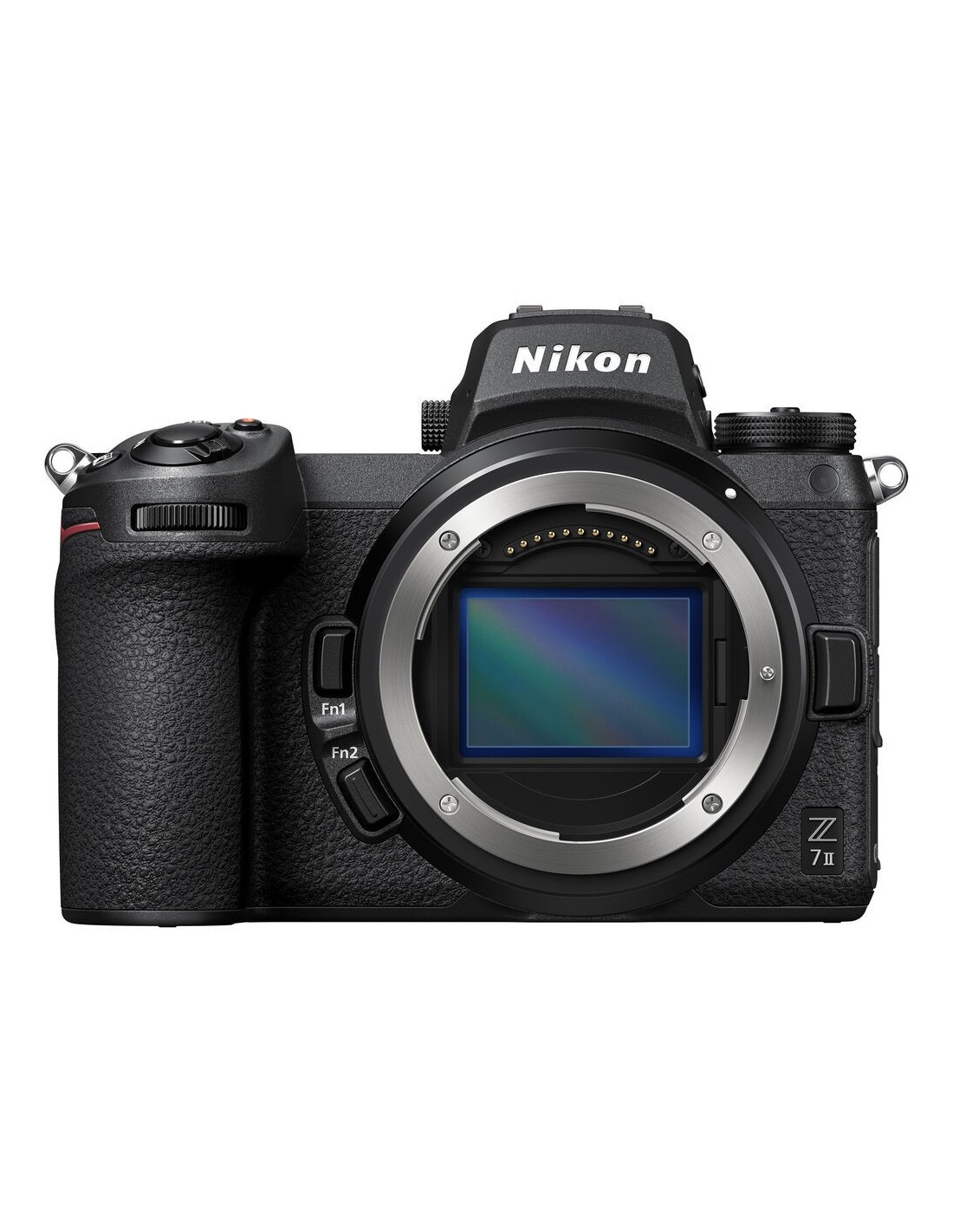


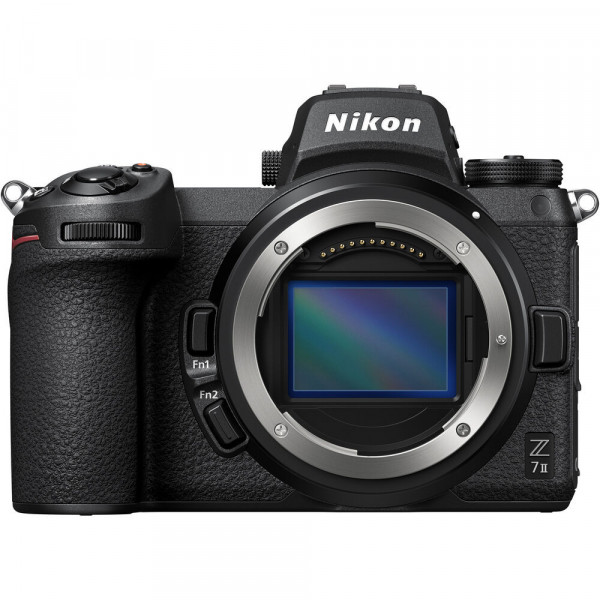
The Nikon Z7 II is a 45.7MP full-frame mirrorless camera recommended for landscape, studio, architecture and portrait photographers who value fine detail, tonal control and generous cropping latitude. Native ISO 64 is especially useful when light can be controlled, while five-axis in-body stabilisation supports careful hand-held work. Its 493-point autofocus system, bursts at up to 10fps and combined CFexpress/XQD plus UHS-II SD card slots create a dependable stills workflow. 4K video at up to 60p broadens its role, although newer Nikon bodies are better suited to demanding action and intensive video production. This body-only version makes particular sense if you already own NIKKOR Z lenses or want to build a high-resolution system around a lens chosen specifically for landscapes, portraits, studio work or travel.
Combine compatible accessories and save. The more items you add, the bigger the discount.
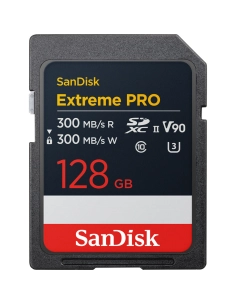
memory card
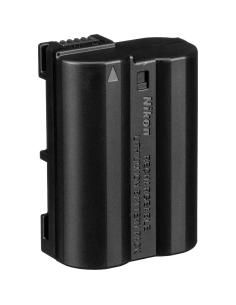
battery
Adaptateur

warranty extension
The Nikon Z7 II is a 45.7MP full-frame mirrorless camera for photographers who need to retain texture in a landscape, surface detail in a product, precise architectural lines or subtle portrait rendering. Its back-illuminated sensor has no optical low-pass filter, while native ISO 64 and five-axis in-body stabilisation support careful, detail-led photography. It can still shoot at up to 10fps and record 4K 60p, but its character is distinctly photographic rather than that of a modern action or cinema body.
This listing is for the Nikon Z7 II body only, with no lens included. It best suits photographers who already use Z-mount glass or want to select an exact lens for their work. Seven active configurations are grouped in the Nikon Z7 II body and kit category.
Its advantage is not simply the pixel count. Native ISO 64 supports clean tonal gradation in skies, reflective surfaces and controlled highlights. The difference becomes most useful in a large print, commercial image or substantial crop. It also brings a heavier workflow: fast cards, capable storage, sensible backup and a responsive computer soon matter as much as the camera itself.
Resolving power places more responsibility on the lens and technique. Slight focus error, camera movement or diffraction from a very small aperture can become visible. For photographers prepared to work with that discipline, the Z7 II offers latitude that a 24MP camera cannot reproduce in the same way.
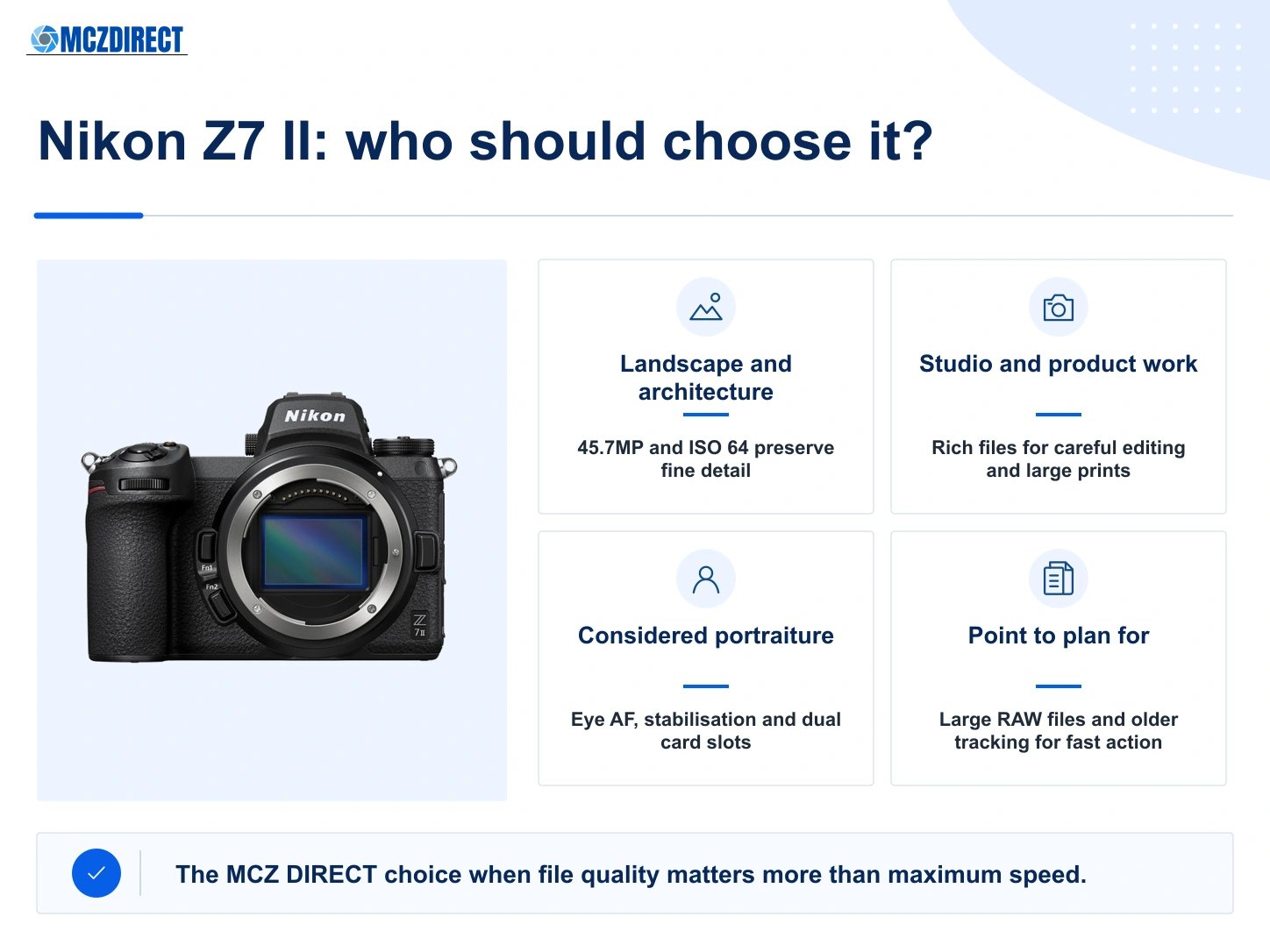
| Use | What the Z7 II contributes | What to consider |
|---|---|---|
| Landscapes and architecture | 45.7MP, native ISO 64, Z-mount optics and generous cropping latitude | Use sufficiently resolving lenses and plan storage and support around the assignment |
| Studio and product work | Fine textures, precise framing and rich files for detailed retouching | High resolution also exposes focus, lighting and lens weaknesses |
| Portraits and formal weddings | Eye detection, in-body stabilisation and dual-card security | Tracking is less advanced than on current EXPEED 7 bodies |
| Expert travel | A relatively compact body, 45.7MP files and versatile NIKKOR Z zooms | Lens weight and RAW volume matter during a long trip |
The 493-point hybrid AF system covers roughly 90% of the image area and can detect eyes in people, dogs and cats. It is well suited to portraits, formal wedding work, measured reportage and wildlife moving predictably. A 10fps burst and improved buffer can cover a short sequence. For prolonged sport, birds in flight or subjects changing direction abruptly, the faster sensor readout and newer algorithms of the Z6 III and Z8 offer a clearer advantage.
The primary slot accepts CFexpress Type B or XQD cards and the second accepts UHS-II SD. The camera can create an immediate backup, separate RAW and JPEG, divide stills from video or continue to the second card when the first is full. That flexibility is valuable at weddings, in a studio and on commercial assignments. The practical compromise is that maximum speed and simultaneous backup may involve two card formats and two readers.
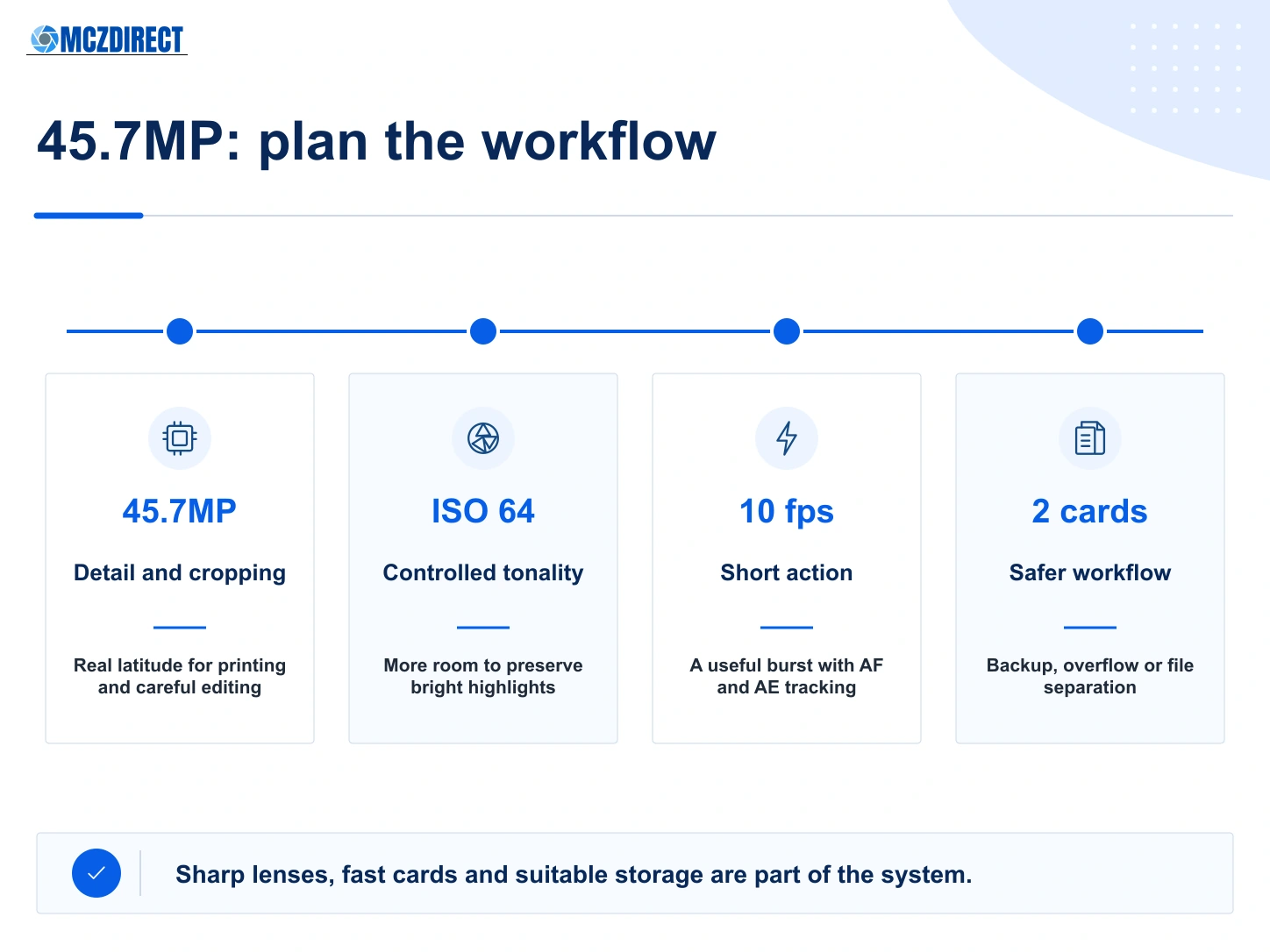
| Specification | Practical benefit | Limitation |
|---|---|---|
| 45.7MP and native ISO 64 | Fine detail, large prints and carefully controlled tones at low sensitivity | Large RAW files and precise technique are needed to exploit the resolution |
| Up to 10fps | Several frames during a brief action with AF/AE tracking | Less convincing for sustained sport than a faster-reading Z6 III or Z8 |
| 493-point AF | Wide coverage and eye focus for people and relatively predictable animals | Subject recognition is more limited than on EXPEED 7 cameras |
| CFexpress/XQD plus UHS-II SD | Immediate backup, overflow or separation of RAW/JPEG and stills/video | Two card formats may mean managing two readers |
| 615g body / about 705g ready | A high-resolution camera that remains mobile for its class | The selected lens dominates final carrying weight |
For video, the camera records 4K UHD at up to 60p and Full HD at up to 120p. It also supports 10-bit N-Log or HLG output over HDMI, with external RAW options depending on setup and updates. Interviews, landscape sequences and measured hybrid work remain perfectly realistic. A tilting rather than fully articulating screen, no internal RAW recording and an older video toolset, however, leave the Z6 III and Z8 better placed for intensive production.
Compared with the original Z7, this second generation retains the 45.7MP sensor but adds dual EXPEED 6 processors, faster bursts, a deeper buffer, the second UHS-II SD slot, 4K 60p and support for the MB-N11 vertical battery grip. This is not a dramatic image-quality reset. The practical gains are reliability, handling and continuity. For an existing Z7 user, dual-card recording and the vertical grip often matter more than any difference in the final still image.
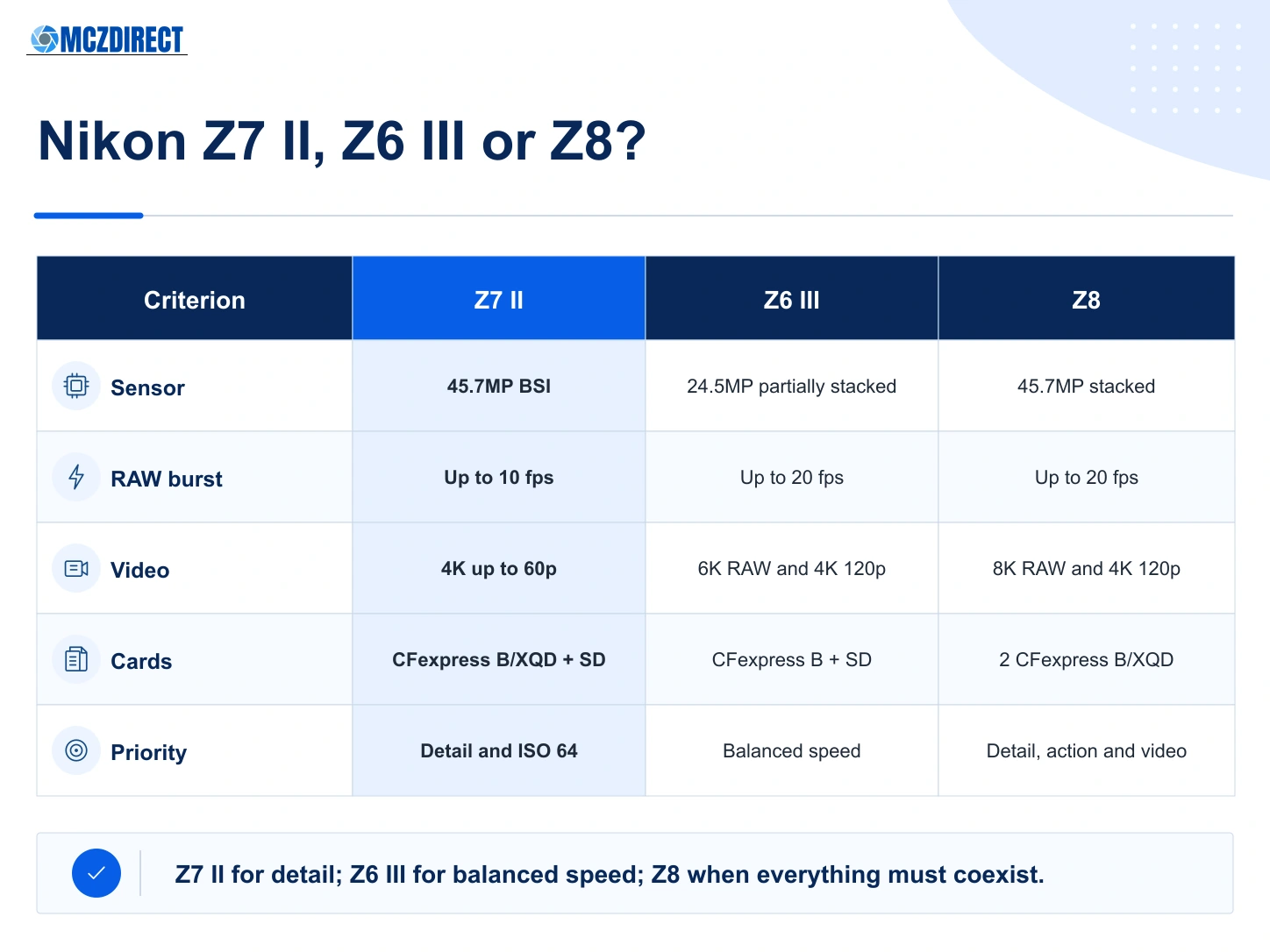
| Criterion | Nikon Z7 II | Nikon Z6 III | Nikon Z8 |
|---|---|---|---|
| Sensor | 45.7MP BSI, ISO 64 | 24.5MP partially stacked | 45.7MP stacked, ISO 64 |
| RAW burst | Up to 10fps | Up to 20fps electronic | Up to 20fps electronic |
| Internal video | 4K up to 60p | 6K 60p N-RAW | 8K 60p N-RAW |
| Cards | CFexpress B/XQD + UHS-II SD | CFexpress B/XQD + UHS-II SD | CFexpress B/XQD + UHS-II SD |
| Best fit | Landscape, studio, architecture and detailed portraiture | Hybrid work, action and video | High resolution, action and advanced production |
Body only is the coherent choice when you already own NIKKOR Z glass or a precise focal length is central to the work. Pairing it with the Z 24-50mm kit prioritises mobility. For landscapes, travel and reportage, the Z7 II with 24-120mm f/4 S provides a versatile range. Photographers covering weddings, environmental portraits and studio assignments will find the Z7 II with 24-70mm f/2.8 S better aligned with that work.
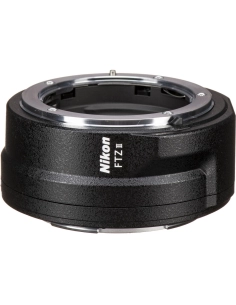
Compatible Nikon F lenses can be used with an FTZ or FTZ II adapter. You can also compare the wider Nikon Z range or browse all mirrorless cameras.
Position in the range. At MCZ DIRECT, we see the Z7 II as Nikon’s choice for photographers who put detail, native ISO 64 and file quality ahead of maximum speed. It remains especially coherent for landscapes, studio work, architecture, reproduction and carefully controlled portraiture.
Direct comparison. We recommend it over a Z6 III when 45.7MP and ISO 64 matter more than latest-generation autofocus, burst speed or 6K video. Against the Z8, the Z7 II keeps advantages in simplicity, carrying weight and cost, but the Z8 is decisively stronger for action, subject detection and video.
Honest limitation. This is no longer Nikon’s most modern option for unpredictable subjects, and its video workflow involves more compromises. For deliberate photography and rich files without moving to a larger body, it remains a very solid choice.

Nikon officially announced the Z 7II on 14 October 2020. Retail availability subsequently varied by country and sales channel.
The Nikon Z7 II uses a 45.7-million-effective-pixel back-illuminated FX CMOS sensor without an optical low-pass filter.
The camera body weighs approximately 615g without a battery or card. Nikon quotes about 705g with an EN-EL15c battery and memory card.
It suits professional work centred on detail, including landscapes, studio, architecture, reproduction and portraiture. The Z8 and Z9 are more specialised for intensive action or advanced video.
Native ISO 64 helps retain subtle tonal gradation and controlled highlights when the scene and exposure can be managed, particularly in landscapes and studio work.
The Nikon Z7 II reaches up to 10 frames per second with autofocus and exposure tracking. Speed and buffer depth depend on file type, card and camera settings.
It has one CFexpress Type B slot compatible with XQD and one UHS-II SD slot. They can be configured for backup, overflow or file separation.
Yes. It records 4K UHD at up to 60p and Full HD at up to 120p. 10-bit and external RAW options depend on the mode, firmware and recording setup.
The Z7 II adds dual EXPEED 6 processors, faster bursts, a deeper buffer, a second UHS-II SD slot, 4K 60p and compatibility with the MB-N11 vertical grip.
Yes. Nikon officially uses Z 7II, while Z7 II, Z7II, Z7 Mark II and Z7 2 are common search variants for the same model.
A useful review should examine real detail with suitable lenses, dynamic range at ISO 64, autofocus tracking, buffer depth, system weight and file volume rather than repeating specifications alone.
Choose the Z7 II for 45.7MP and native ISO 64, the Z6 III for balanced speed and video, or the Z8 when high resolution, advanced autofocus, action and video must coexist.