
Shopping Cart
What is the best digital camera in 2026?

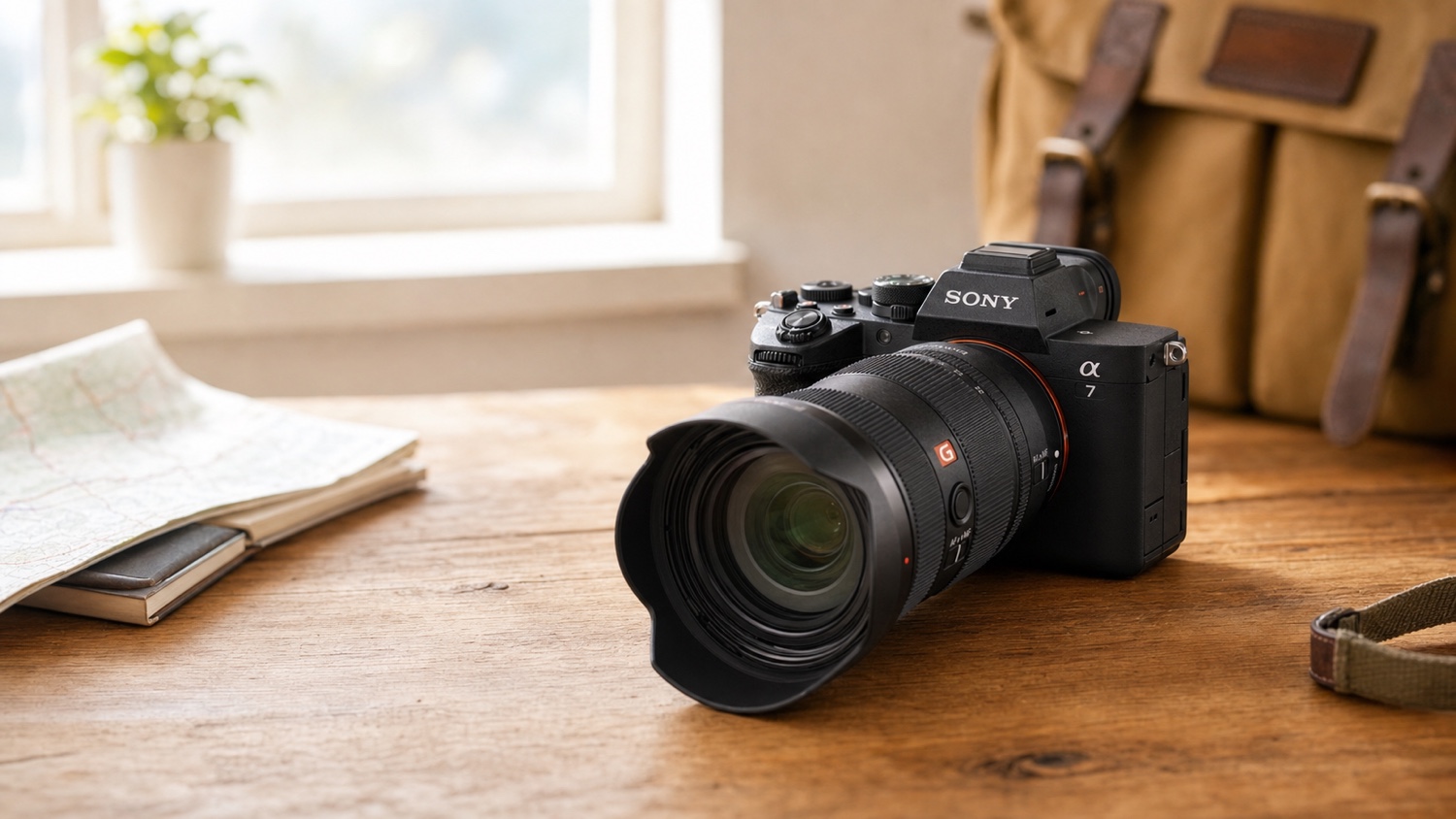
The best digital camera in 2026 depends on what you want to make. This independent-minded buying guide compares nine coherent choices for beginners, travel, portraits, wildlife, high-resolution work and video.
There is no single best digital camera for everyone in 2026. The best one is the body-and-lens combination that makes your pictures or videos easier to take, easier to keep and easier to share. For the broadest mix of photography and video, the Sony Alpha 7 V is our all-round recommendation. That answer changes quickly if you are learning, travelling light, filming yourself, photographing wildlife or making large prints.
That is why this guide starts with the job, not the specification sheet. A fast-moving child indoors, a long hike in rain, a talking-head video and a landscape intended for a large print do not ask the same things of a camera. They do not need the same sensor, lens, screen, cards or bag. A more expensive body can be the wrong purchase if it leaves no budget for the lens that creates the image.
MCZDIRECT has not independently tested every camera here in a laboratory. These choices use the manufacturers’ published specifications, the lenses available for each system and the jobs each kit can realistically do. Burst rates, stabilisation and video modes still depend on the lens, settings and scene.
| Best for | Our recommendation | Why it fits | What to know before buying |
|---|---|---|---|
| One camera for almost everything | Sony Alpha 7 V | Balanced full-frame hybrid with subject recognition and up to 30 fps electronic shooting. | It is neither the smallest nor the highest-resolution choice. |
| Learning and family pictures | Nikon Z50II | Approachable APS-C body with a built-in flash, vari-angle screen and responsive processing. | There is no in-body stabilisation. |
| Travel, walking and weather | OM SYSTEM OM-5 Mark II | A 370 g Micro Four Thirds body with 5-axis stabilisation and IP53 protection. | Very shallow blur and very high ISO are easier on larger sensors. |
| Portraits and available light | Nikon Z5II | Accessible 24.5 MP full frame with subject detection, IBIS and two SD slots. | Its 4K 60p mode uses a crop. |
| Serious sport and wildlife | Nikon Z8 | Stacked 45.7 MP sensor, fast capture options and demanding video capability. | Body, files, cards and lenses make a substantial kit. |
| Landscape, studio and cropping | Sony Alpha 7R VI | 66.8 MP full-frame resolution with a stacked sensor and high-end video modes. | Its files require a deliberate storage and editing workflow. |
| Video-led hybrid work | Canon EOS R6 V | 32.5 MP full frame, Open Gate, RAW 7K and uncropped 4K 120p. | It is aimed at video makers more than traditional viewfinder-first photography. |
| Compact video and vlogging | Canon PowerShot V1 | Fixed 16–50 mm equivalent zoom, cooling and a portable 426 g package. | You cannot change lenses and 50 mm is its longest view. |
| Photography with direct controls | Fujifilm X-T5 | 40.2 MP APS-C sensor, dials, stabilisation and colour modes for stills-led work. | It is less vlog-oriented than a fully articulating video-first camera. |
Start with the picture you make most often
Write down three real situations: family photos in an ordinary living room, birds on the far side of a lake, a long walk, or a video where you speak to the camera. Each one points to something practical: a wider lens, a telephoto, lower carrying weight or a screen that faces you. Choose the body after that.
The lens controls the view and much of the light reaching the sensor, so it matters as much as the camera. A useful standard zoom is often the best beginning for family life and travel. A bright prime lens can do more for indoor portraits than a more advanced body. Include the camera, lens, battery, card and bag when you compare weight.
A mirrorless camera accepts interchangeable lenses and shows the image through an electronic viewfinder or screen. A compact camera usually keeps one built-in lens. The first can grow with your needs; the second is quicker to carry. Pick the one that removes a problem you have now.
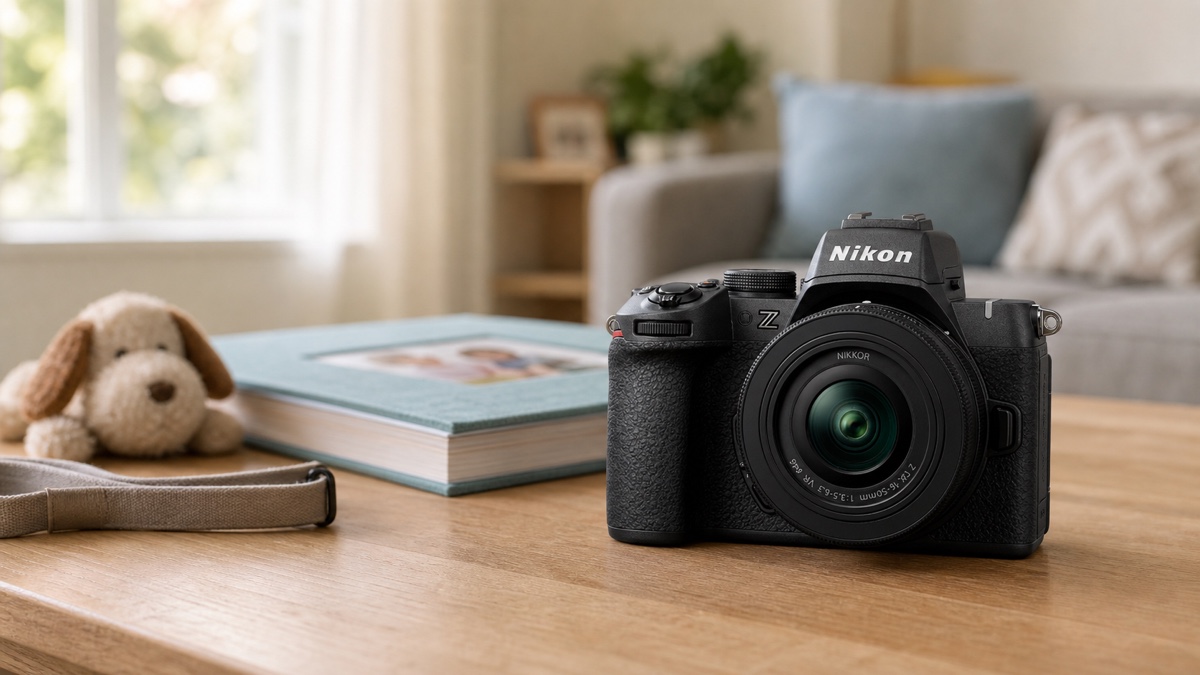
Our best all-round camera: Sony Alpha 7 V
The Sony Alpha 7 V is the most balanced recommendation here for a photographer who wants one serious camera to cover people, travel, action and video. Its 33 MP full-frame partially stacked Exmor RS sensor gives room to crop or print without turning every session into a heavy-resolution workflow. Sony specifies electronic shooting up to 30 frames per second with AF/AE tracking and a blackout-free view, while its subject recognition covers people, animals, birds, insects, cars, trains and planes.
In practical terms, that combination is valuable when the scene changes before you can. A child runs towards you, a dog turns its head or a cyclist crosses a street: recognition and responsive capture can help you concentrate on framing. The 5-axis stabilisation is useful for hand-held stills and calmer footage, but it does not freeze a moving person; shutter speed and a suitable lens still decide that. The Alpha 7 V also records 4K up to 120p, although that mode uses a Super 35 crop. Anyone planning a specific wide-angle 4K 120p shot should account for that narrower field of view.
At approximately 695 g with battery and card, it is capable rather than featherweight. It also does not replace a specialist body for a 66.8 MP landscape file, a very small travel kit or a video-first workflow. Choose it when flexibility is the priority, then put proper thought into the lens: a compact standard zoom makes it genuinely portable; a bright prime changes indoor portraits; a telephoto changes what “action” means.
Best first serious camera: Nikon Z50II
The Nikon Z50II makes the most sense for a new photographer who wants to learn without carrying a full-frame kit. Its 20.9 MP DX/APS-C sensor and EXPEED 7 processor are a sensible foundation for everyday photography. Nikon lists recognition for nine subject types, while the electronic viewfinder, vari-angle screen and built-in flash give a beginner several straightforward ways to work with a scene rather than around it.
The C30 burst mode and pre-release capture can be particularly welcome for an unpredictable birthday, a first goal or a pet that refuses to hold still. Pre-release is a timing aid, not a substitute for choosing a frame, and a fast JPEG capture mode should not be confused with an equivalent full-resolution RAW sequence. For video, it offers 4K up to 60p with a crop; that crop may be helpful for reach, but it makes a wide framing less wide.
There is no in-body image stabilisation. This does not make the Z50II unsuitable for hand-held photography; it means the lens choice carries more weight. A NIKKOR Z DX lens with VR is especially useful for hand-held video and slower shutter speeds. A full-frame body with a fast lens will offer more latitude for very dark interiors and pronounced background blur, but it is not automatically the better family camera if its size keeps it at home.
Best camera to carry far: OM SYSTEM OM-5 Mark II
A travel camera has to earn its place in the bag. The OM SYSTEM OM-5 Mark II does that through a compact Micro Four Thirds body of approximately 370 g with battery and card, 5-axis in-body stabilisation and IP53 dust- and splash-resistance. OM SYSTEM also specifies operation down to −10 °C. Those details are not glamorous, but they are meaningful on a wet coastal walk, a city break with changing weather or a long mountain day.
Micro Four Thirds is a smaller sensor format than APS-C or full frame. That can make compact lenses and a lighter system easier to build, especially when you need useful telephoto reach. Features such as Pro Capture, Live ND and hand-held high-resolution shooting offer creative options when the scene and technique suit them. Live ND can help produce a longer-exposure look without physically fitting a neutral-density filter; it does not turn every moving scene into a perfect long exposure. Hand-held high-resolution capture also rewards a cooperative subject.
The honest trade-off is depth of field and low-light headroom. If your signature is very blurred backgrounds at night, a larger sensor with a fast lens makes that simpler. If your signature is being outside with a camera you can comfortably carry all day, the OM-5 Mark II may be the more productive choice. It records 4K, but its strongest argument is the coherent lightweight outdoor system around it.
Best accessible full-frame option for portraits: Nikon Z5II
The Nikon Z5II is the full-frame choice for people who want a more spacious starting point for portraits, everyday photography and low-light scenes without immediately moving into a high-resolution specialist body. Its 24.5 MP full-frame sensor and EXPEED 7 processor are enough for substantial prints and sensible crops while keeping files manageable. Nikon lists recognition for nine subject types, two UHS-II SD card slots and 4K 30p across the full-frame area.
Its in-body stabilisation is rated by Nikon at up to 7.5 stops at the centre under stated conditions. Treat that number as a maximum measurement, not a promise that any hand-held image will be sharp. A moving subject still needs an appropriate shutter speed, and stabilisation performance varies with focal length, lens and technique. The benefit is real in the right job: a static interior, a quiet street at dusk or a hand-held portrait where you want to keep ISO under control.
For video, 4K 60p is cropped. That is not a fault if you need a tighter framing, but it matters to someone intending to film in a small room with a wide lens. Full-frame lenses can also be larger and dearer than their APS-C equivalents, so compare a complete working kit rather than body prices. The Z5II is a thoughtful step up when portraits, available light and a conventional all-round workflow matter more than maximum speed.
Best for demanding sport and wildlife: Nikon Z8
Sport and wildlife turn a camera decision into a system decision. The Nikon Z8 brings a 45.7 MP stacked full-frame sensor and EXPEED 7 processing to work where detail, subject recognition and fast sequences have to coexist. Nikon specifies 20 fps in full-resolution RAW, 30 fps in full-resolution JPEG and up to 120 fps at 11 MP. It also lists a blackout-free viewfinder, subject detection, pre-release in certain JPEG modes and N-RAW recording up to 8.3K 60p.
Those capabilities are persuasive for a bird taking flight, fast field sport or a sequence where you need room to crop. They are not a guarantee of a keeper. Long-lens technique, position, light, shutter speed, card performance and the photographer’s anticipation still decide the result. The distinction between capture modes matters too: 120 fps at 11 MP answers a different question from a full-resolution RAW burst. Read the exact mode before planning a job around a headline number.
At around 910 g with battery and card, before a long telephoto lens is attached, the Z8 is not a casual compact camera. Its 45.7 MP files need storage, a capable computer and deliberate card choices. That is the trade-off for its headroom, not a reason to avoid it. It is the right kind of demanding for a committed photographer who will use the reach, detail and speed; it is excess for an occasional family photographer who would benefit more from a lighter lens and more time shooting.
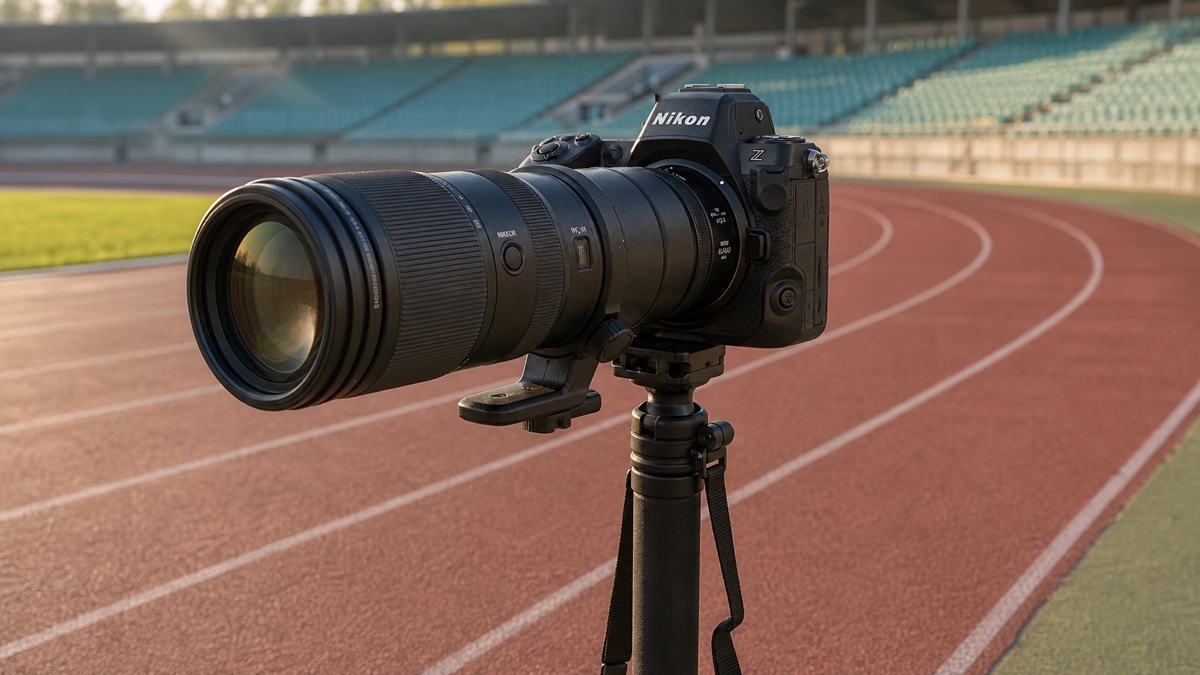
Best for detail, landscape and studio work: Sony Alpha 7R VI
The Sony Alpha 7R VI is for a photographer who knows why a 66.8 MP file is useful. Its fully stacked full-frame Exmor RS sensor, up to 30 fps full-resolution shooting with AF/AE and 8.5-stop central stabilisation claim under CIPA 2024 conditions create a remarkable technical platform. Sony also lists 8K 30p and 4K 120p recording. The body weighs approximately 713 g with battery and card, so the weight penalty is more about the complete high-quality lens kit and storage than the body alone.
High resolution is useful when you print large, photograph a landscape with fine texture, work in a studio, make a considered crop or need one image to serve several layouts. It is not a universal measure of image quality. A 66.8 MP capture cannot repair inaccurate focus, poor light or a weak lens, and its files take more space and longer to process. The stabilisation figure is a maximum measured under a standard, not permission to ignore movement in wind, water or people.
For family trips and quick sharing, this much resolution may bring more administration than benefit. For an architectural, landscape, product or commercial photographer who values detail and crops, it can be the reason to choose the system. Pair it with lenses that justify the sensor, a fast enough card strategy and a computer that will not make editing a chore.
Best for a video-first hybrid workflow: Canon EOS R6 V
The Canon EOS R6 V is the clearest recommendation here for a creator whose primary output is video but who still wants full-frame photographs. It combines a 32.5 MP full-frame sensor with RAW 7K 60p, Open Gate recording and 4K 120p without crop. Canon specifies Dual Pixel CMOS AF II subject recognition and in-body image stabilisation rated up to 7.5 stops in its stated conditions. With battery and card, it is approximately 688 g.
Open Gate uses more of the sensor area, which can be practical when one recorded clip has to be reframed for horizontal and vertical delivery. Uncropped 4K 120p offers more freedom at wide focal lengths than a cropped high-frame-rate mode. Neither feature removes the need for a sensible edit plan: RAW 7K, high-frame-rate footage and advanced codecs make demands on cards, drives, backups and the editing computer. Buy the media workflow at the same time as the body, not after a first full card.
This is not the first recommendation for a photographer who mostly works through a viewfinder and occasionally presses record. Its appeal lies in deliberately video-led production: interviews, social work, short films and projects where the final framing may vary. If that is your work, its feature set is highly coherent. If still photography is the centre of your practice, the Alpha 7 V, Z5II or X-T5 may offer a more natural starting point.
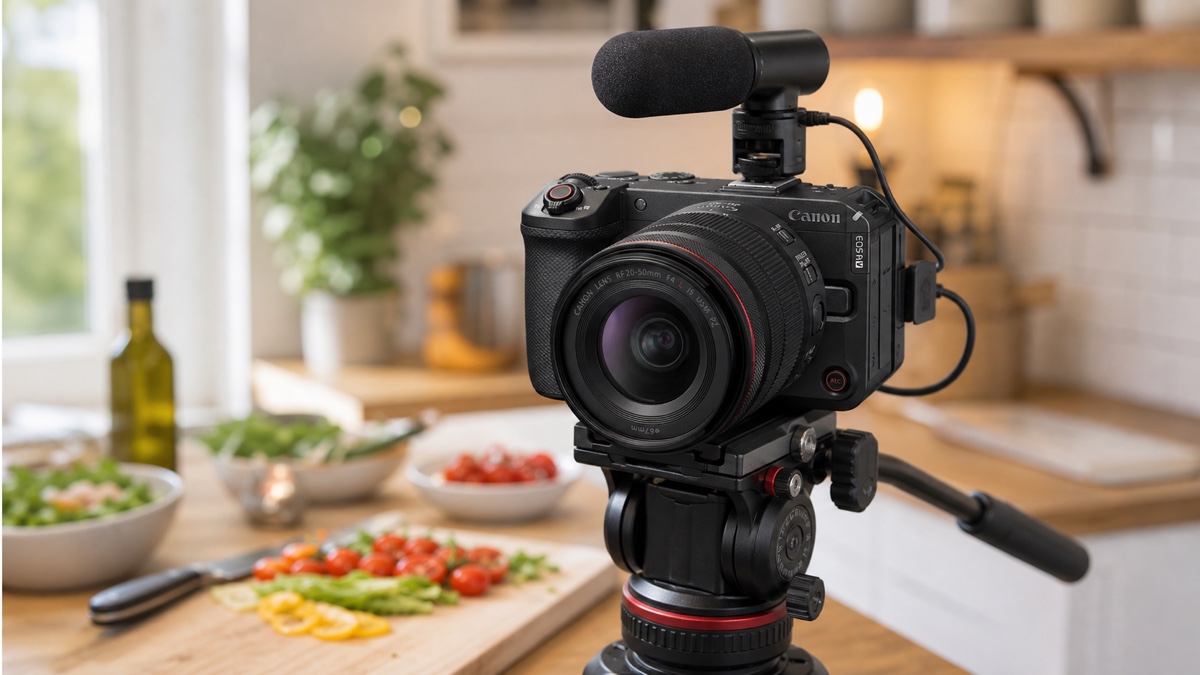
Best compact camera for video creators: Canon PowerShot V1
A camera that is always in the bag can make more work than a more ambitious camera that stays on a shelf. The Canon PowerShot V1 is built around that reality. It uses an approximately 22 MP 1.4-inch type sensor and a fixed zoom covering roughly 16–50 mm in full-frame equivalent terms. It records 4K 60p and Full HD 120p, includes active cooling and combines optical stabilisation with digital video stabilisation. It weighs about 426 g with battery and card.
The 16 mm end is useful for a person speaking to camera in a tight interior, a travel establishing shot or a simple one-person production. Cooling matters because long recording can create heat that a stills-led compact was never designed to manage. The fixed lens keeps the package simple: no lens research, no lens changes and fewer decisions before filming. That simplicity is the advantage, not a compromise to apologise for.
It also sets firm boundaries. The 50 mm equivalent end is not a wildlife or distant-event solution, and the lens cannot be replaced when you want a different perspective. A mirrorless system makes more sense for portraits with strong background separation, long telephoto work or a growing collection of specialised lenses. Choose the PowerShot V1 when compact, self-contained video is the goal—not when you want a compact body that secretly behaves like an interchangeable-lens system.
Best for photographers who want a direct experience: Fujifilm X-T5
The Fujifilm X-T5 is the recommendation for the photographer who enjoys making decisions with physical controls and wants strong APS-C image quality without a full-frame kit. Its 40.2 MP X-Trans CMOS 5 HR sensor gives generous detail for prints and crops. Dedicated dials for ISO, shutter speed and exposure compensation make the exposure choices visible before the image is taken. Fujifilm specifies in-body stabilisation up to seven stops, 19 Film Simulation modes and video up to 6.2K 30p.
Film Simulations are not a substitute for learning light or composition. They are useful starting looks that can make direct JPEG workflow more enjoyable and more consistent, especially for travel, family pictures and photographers who prefer not to edit every frame. The high-resolution APS-C sensor means lens quality still matters: a body specification does not make every lens equally detailed at every aperture.
The X-T5 is most persuasive when still photography comes first: street work, travel, portraits, everyday observations and print-minded projects. It can make serious video, but a creator who regularly films themselves will often prefer the screen movement and purpose-built video handling of a video-first camera. Choose it for the act of photography, not simply because 40.2 MP looks attractive in a comparison table.
Sensor size: useful context, not a hierarchy
Sensor format affects the kind of system you can build, but it does not rank photographers. Full frame can make shallow depth of field and low-light work easier with the right lens. APS-C can provide a capable, lighter and often more affordable system; it is particularly sensible for learning, travel and telephoto-oriented work. Micro Four Thirds can reduce the size of a weather-ready kit while offering creative computational features. A compact camera removes the lens choice entirely, which is exactly why it can be the best tool for a creator who values speed and portability.
Depth of field describes how much of the image appears acceptably sharp in front of and behind the point of focus. A blurred background can separate a portrait subject, but it is not a permanent mark of quality. More depth of field can be useful for a family group, a landscape or a travel scene. Likewise, a bigger sensor can help in low light, yet a bright lens, stabilisation, timing and realistic expectations often matter more than the format label alone.
The lens can improve your results more than a body upgrade
When choosing an interchangeable-lens camera, set aside budget and bag space for the first lens. A standard zoom is flexible for learning and travel; a bright prime lens can transform indoor portraits; a telephoto is the necessary tool for sport and wildlife; a genuinely wide lens is often more important for interiors and hand-held vlogging than a video specification. The body records the image, but the lens controls perspective, framing, light transmission and a large part of the character.
Do not compare two bare bodies in isolation. Compare the body, the lens you need most often, one spare battery, suitable cards and the storage your chosen video or resolution requires. Then hold that kit in your imagined day: can you carry it on a walk, change a lens in the weather, back up a card after an event and edit the files on your current computer? The answers are often more revealing than a specification comparison.
| Your main situation | Check first | Useful next | Common mistake |
|---|---|---|---|
| Family and children | Reliable face and eye focus, a manageable lens and enough shutter speed. | A vari-angle screen, stabilised lens and spare battery. | Expecting stabilisation to freeze a moving child. |
| Indoor portraits | A bright lens, suitable working distance and a simple light source. | Full frame or in-body stabilisation, depending on the scene. | Assuming sensor size creates a soft background by itself. |
| Travel and hiking | The weight of the complete kit and the conditions you will meet. | Stabilisation and stated weather protection. | Comparing the weight of bare camera bodies only. |
| Sport and wildlife | Working distance, telephoto reach, shutter speed and available light. | Subject tracking, fast sequences and pre-release capture. | Buying a fast body without the lens that reaches the subject. |
| Vlogging and interviews | Field of view, sound, battery life and the editing workflow. | A fully moving screen, audio connections and cooling. | Choosing by maximum video resolution alone. |
| Landscape and studio | Lens quality, light, support and the final output size. | High resolution when you will genuinely use it. | Creating large files without a print or cropping need. |
What features are easy to overvalue?
Resolution is easy to overvalue when most images are shared online or printed modestly. More megapixels are useful for deliberate crops and large output, but they create larger files and do not improve an image whose focus, light or composition is weak. Very high burst rates are easy to overvalue when the subject rarely moves fast; they also create more frames to edit. A headline 8K or RAW mode is easy to overvalue when the delivery is 4K or HD and the edit system is modest.
Stabilisation deserves the opposite treatment: it is genuinely valuable, but its quoted maximum is not an absolute promise. It helps against your own hand movement; it does not stop a running child, a bird’s wings or branches in wind. Subject recognition and autofocus are similarly useful assistants, not magic. Give the camera a clear subject, a reasonable contrast and an appropriate focus mode, then keep watching the scene.
A simple decision path
Choose the Sony Alpha 7 V if you want one capable full-frame hybrid for varied photography and video. Choose the Nikon Z50II if you are starting out, want family pictures and prefer a smaller APS-C route. Choose the OM SYSTEM OM-5 Mark II if long walks, weather and low carrying weight are central. Choose the Nikon Z5II for accessible full-frame portraits and available light. Choose the Nikon Z8 when sport, wildlife and a demanding professional-style workflow are regular work, not occasional ambitions.
Choose the Sony Alpha 7R VI when large prints, studio work, fine landscape detail or serious crops justify 66.8 MP files. Choose the Canon EOS R6 V when video production is the main reason for the purchase. Choose the Canon PowerShot V1 when a fixed-lens, cooled compact makes filming more likely. Choose the Fujifilm X-T5 when you want photography-led controls, direct JPEG possibilities and a high-resolution APS-C system.
The bottom line
The Sony Alpha 7 V is the best all-round digital camera in this 2026 selection because it combines a 33 MP full-frame sensor, responsive subject recognition, fast electronic capture and serious video in a coherent hybrid body. It is not the best answer for every person. The Nikon Z50II is a wiser first step for many beginners, the OM-5 Mark II is a smarter companion for a light outdoor kit, the Z8 and Alpha 7R VI reward specialist demands, and the Canon options answer two very different video questions.
Make the final choice with the lens in mind. A camera you understand, carry and can afford to equip properly will produce more meaningful work than a universal “best” camera bought for a feature you never use. Explore the current mirrorless camera range as complete systems, and keep the intended subject at the centre of the decision.
Sources and editorial verification
Sources reviewed and checks completed before publication.
Specifications and catalogue selection checked on 29 July 2026 against the linked official manufacturer documentation and the MCZDIRECT catalogue. This is a documentary recommendation, not a claim of independent hands-on or laboratory testing; manufacturer performance figures apply under their stated conditions.
- Sony official specifications — Alpha 7 V
- Nikon official specifications — Z50II
- OM SYSTEM official specifications — OM-5 Mark II
- Nikon official specifications — Z5II
- Nikon official specifications — Z8
- Sony official specifications — Alpha 7R VI
- Canon official specifications — EOS R6 V
- Canon official specifications — PowerShot V1
- Fujifilm official specifications — X-T5
Frequently asked questions about the best digital camera
What is the best all-round digital camera in 2026?
The Sony Alpha 7 V is our broadest all-round recommendation because it combines a 33 MP full-frame sensor, subject recognition, fast electronic capture and serious video. It is not a universal answer: a beginner, a hiker, a wildlife specialist or a video-first creator may be better served by a more focused camera.
Is full frame always better than APS-C?
No. Full frame can make low-light work and shallow depth of field easier with the right lens, but APS-C can create a smaller, lighter and very capable system. The Nikon Z50II and Fujifilm X-T5 are credible choices when size, learning or photography-led handling matter.
Which camera is best for beginners and family photos?
The Nikon Z50II is a strong starting point thanks to its APS-C sensor, vari-angle screen, built-in flash and subject recognition. Add a lens with VR if you frequently shoot hand-held, because the body does not have in-body stabilisation.
Which camera is best for travel and hiking?
The OM SYSTEM OM-5 Mark II is especially coherent for travel because its 370 g body, 5-axis stabilisation and IP53 dust- and splash-resistance help build a compact outdoor system. A larger sensor remains easier for very blurred backgrounds and very dark scenes.
Which camera is best for sport and wildlife?
The Nikon Z8 is the specialist choice in this selection: its stacked 45.7 MP full-frame sensor, fast capture modes and subject detection suit demanding action. It still needs the right telephoto lens, cards, storage and technique; high frame rates alone do not guarantee a sharp, well-timed image.
Do I need a high-resolution camera?
Only if large prints, substantial crops, studio work or fine landscape detail make the larger files worthwhile. The Sony Alpha 7R VI offers 66.8 MP, but its files demand more storage and editing power. More megapixels do not repair poor focus, light or composition.
Which camera should I choose mainly for video?
Choose the Canon EOS R6 V for a full-frame, video-led hybrid workflow with Open Gate, RAW 7K 60p and uncropped 4K 120p. Choose the Canon PowerShot V1 when a fixed-lens compact with cooling and a 16–50 mm equivalent zoom is more likely to travel with you. Plan cards, drives and editing performance before using advanced video modes.
Does image stabilisation stop moving subjects?
No. Stabilisation mainly counteracts camera movement in your hands. It can help a static scene at a slower shutter speed, but a running child, bird or athlete still needs a shutter speed fast enough to stop their movement. Published stabilisation figures are manufacturer maxima measured under stated conditions.
Leave a comment