
Shopping Cart
Which Canon EOS R camera should you choose: APS-C or full frame?

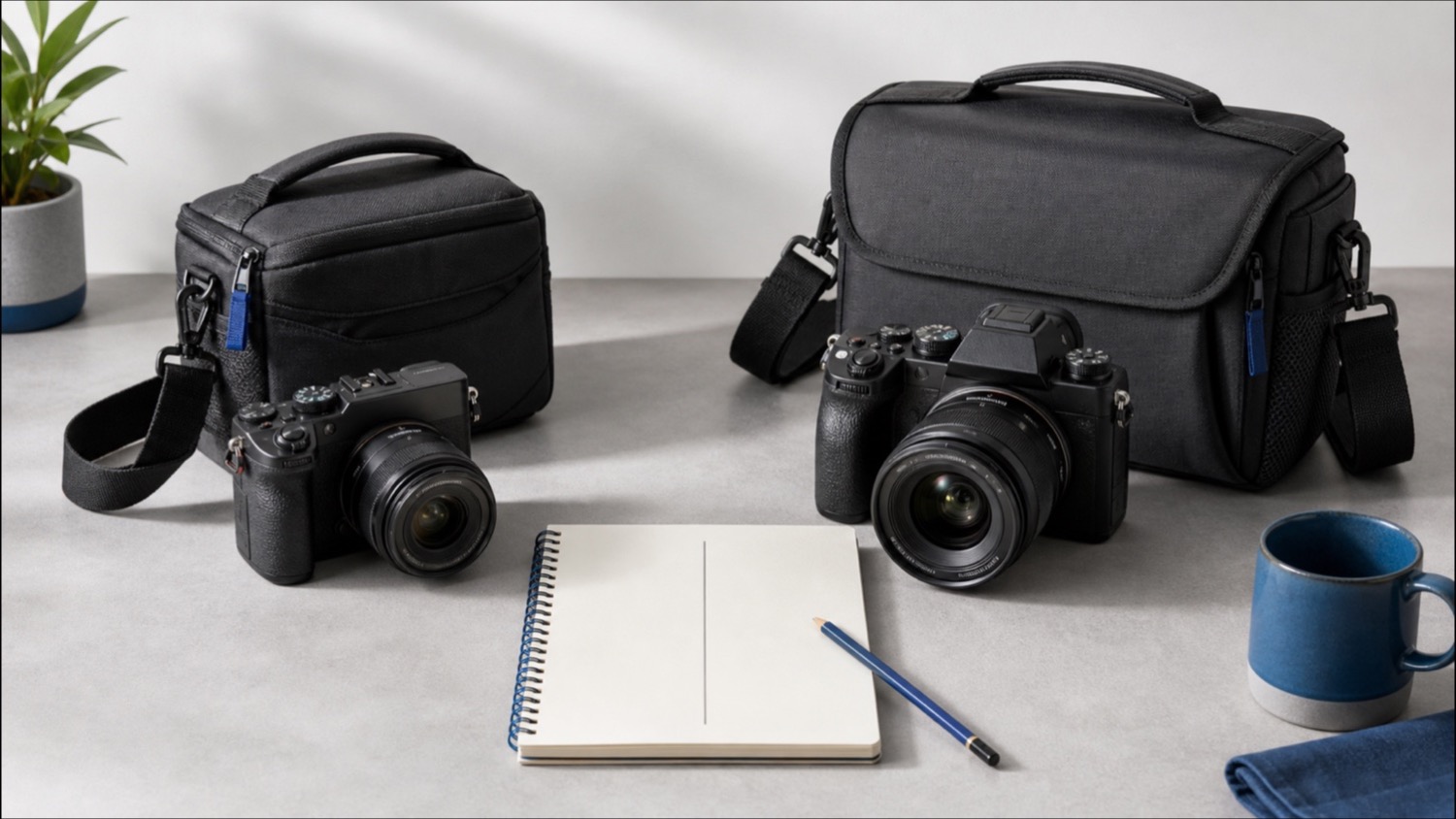
Choose a Canon EOS R around your subjects, lens and complete kit: APS-C for compactness and reach, full frame for specific portrait, low-light and hybrid needs.
Choosing a Canon EOS R is not a question of whether APS-C or full frame is “better”. It is a question of which camera-and-lens kit makes your usual photographs easier. An APS-C body can work well for a family day out, travel or a bird that never comes close. Full frame can make portraits, evening events and controlled background blur easier. Both use Canon’s RF mount. Start with the picture you want to bring home, then choose the format that asks for the fewest compromises.
Canon EOS R APS-C or full frame: the short answer
For a first interchangeable-lens camera, a light travel kit or everyday family photography, the Canon EOS R10 is usually the sensible starting point. Its APS-C sensor keeps the kit compact and gives a tighter view with telephoto lenses. Choose a full-frame EOS R8 when portraits, evening scenes or a deliberately blurred background matter more than having the smallest bag. Neither decision is a measure of ambition or ability.
| Your main need | Often the most suitable direction | Check before deciding |
|---|---|---|
| First camera, family and travel | APS-C: EOS R10 | The kit lens, grip and the weight you will really carry |
| Birds, distant wildlife or daytime sport | APS-C: EOS R7 | Telephoto lens, autofocus behaviour and shutter speed |
| Portraits, travel and available-light photography | Full frame: EOS R8 or EOS R6 Mark II | Lens aperture, battery life and stabilisation needs |
| Frequent hybrid photo and video work | Full frame: EOS R6 Mark II or Mark III | Cards, storage, editing computer and the video modes you use |
| Solo video | EOS R50 V or EOS R6 V, according to workflow | Audio, stabilisation, framing and post-production |
This is a direction, not a ranking. A camera is useful when it lets you work quickly and confidently. The right lens, a spare battery and a body that you enjoy taking out will usually do more for your photographs than a format label.
If you have already chosen a format and want a body-by-body comparison, read our guide to choosing a Canon EOS R camera. This page stays focused on the APS-C versus full-frame decision.
What sensor format actually changes in a photograph
A full-frame sensor is approximately 36 × 24 mm. Canon APS-C is smaller and uses a 1.6× crop factor. Crop factor compares the field of view: the portion of the scene recorded by the camera. From the same position with the same lens, APS-C records a narrower part of the scene. The lens does not become more powerful and its focal length does not change.
A 50 mm lens on Canon APS-C gives roughly the same angle of view as an 80 mm lens on full frame. That is handy when a child is playing football at the far end of a field, or when a heron refuses to come any closer. For a wide travel view, the same relationship means you need a shorter APS-C focal length to include the same surroundings.
At comparable framing, full frame can also make a shallower depth of field easier: less of the scene appears sharp in front of and behind the subject. It is useful for a portrait with a soft background, but it is not automatically more attractive. A family group, a travel scene or a landscape often benefits from having more of the picture in focus. Aperture, shooting distance, the lens and the distance to the background all remain important.
Compare complete kits, not bare bodies
The body is only one part of the decision. Compare two kits that make the same picture. If you want an everyday view and a little reach for holidays, look at the body, the zoom, a battery, cards and the bag together. A very small body paired with a lens that feels too large, or a lens you leave at home, is not a small kit in practice.
This matters especially when moving between formats. Full frame may ask for a different focal length to make the same picture, and a bright lens can affect weight more than the camera body. APS-C can make a compact kit easier to pack. Full frame can still be very light with the right pairing. The useful question is: can you comfortably use this combination for the whole day?
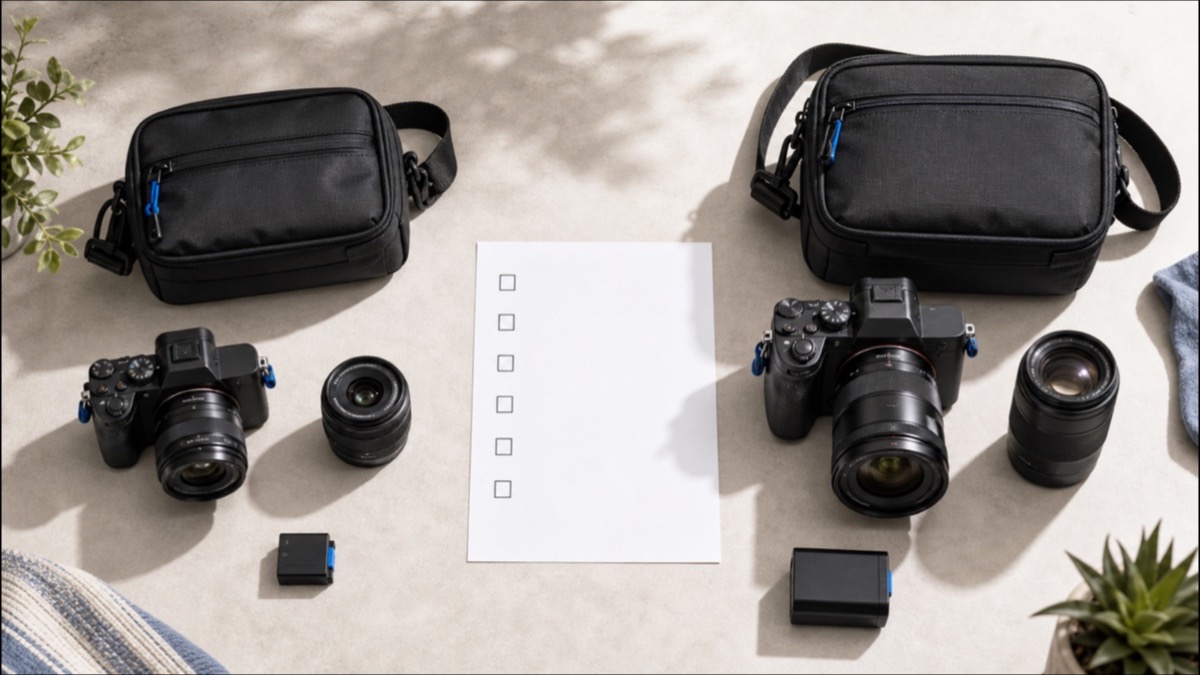
Before choosing, put your three most common situations into plain language: “indoors with children after school”, “city break with one lens”, “small birds from a hide”, or “interviews and vertical clips”. That makes it much easier to spot the feature that is essential and ignore the impressive feature that will never be used.
EOS R10 or EOS R8 for a first camera and travel?
The EOS R10 is the friendlier all-round starting point when you want to learn photography, cover family moments and travel light. It has a 24.2-megapixel APS-C sensor, a body of roughly 429 g and fast bursts up to 15 frames per second with the mechanical shutter or 23 with the electronic shutter. Its 4K video options are useful for everyday clips. The honest limitation is that a kit camera does not remove the need to choose lenses carefully, and its small body will not suit every hand or long day without planning battery use.
The EOS R8 is a different answer, not an upgraded R10. Its 24.2-megapixel full-frame sensor, roughly 461 g body and electronic burst up to 40 frames per second make it attractive for someone who values portraits, travel scenes in lower light and softer backgrounds. It also records 4K up to 60p. Check the grip, battery routine and absence of in-body stabilisation before assuming that lighter means easier for every trip.
Choose R10 when the lighter APS-C system and its tighter telephoto view solve your actual problem. Choose R8 when the way you photograph makes full-frame framing and depth-of-field control worth building around. For both, visit the Canon mirrorless camera range with a lens choice in mind rather than starting from the most advanced body.
EOS R7 or full frame for sport and wildlife?
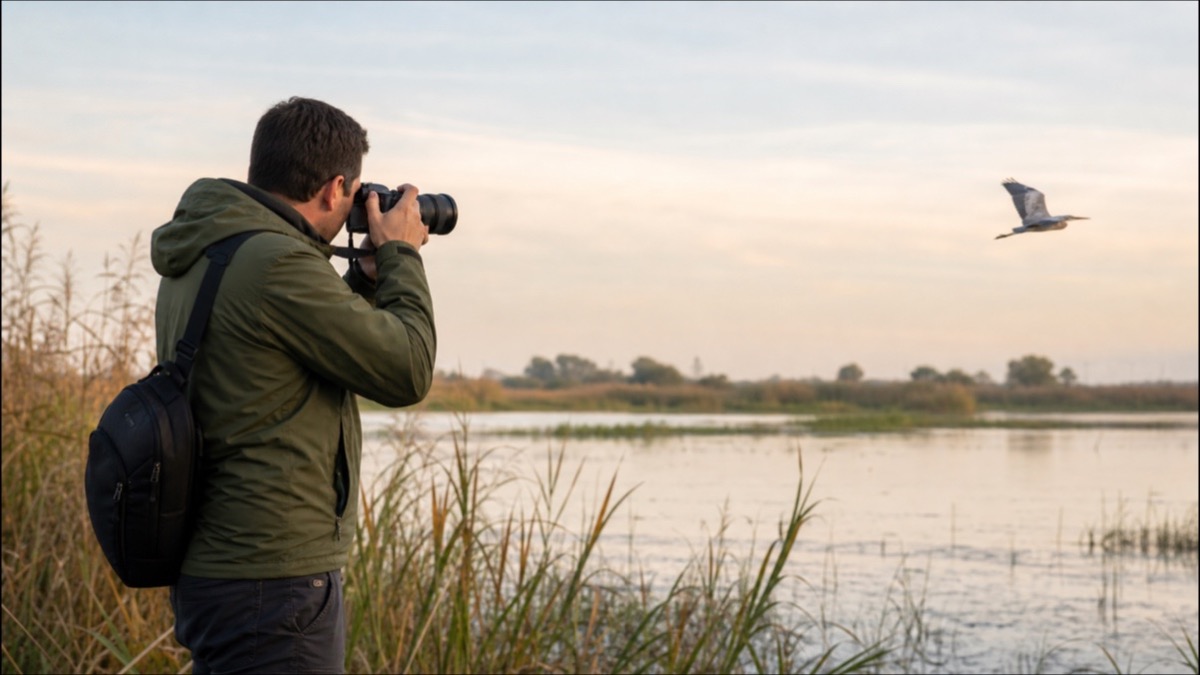
For wildlife and sport, the EOS R7 is a serious APS-C option, not a compromise reserved for beginners. Its 32.5-megapixel sensor, in-body stabilisation and bursts up to 15 frames per second mechanically or 30 electronically suit distant or moving subjects. At the same focal length, its tighter field of view can help place more of the frame on a bird or player.
That advantage is not free reach. Detail still depends on the lens, focus, subject movement and how many pixels actually land on the subject. A full-frame body may give a wider view for finding an erratic animal and a different low-light margin. The EOS R6 Mark III brings 32.5 megapixels, strong stabilisation and advanced hybrid tools; the EOS R5 Mark II adds 45 megapixels and a stacked sensor for demanding speed and detail work. Both also ask more of cards, storage and editing.
For most people, the first priority is a telephoto lens you can hold steadily and carry. A sharp photograph at the right shutter speed beats an ambitious body with an unsuitable lens. Manufacturer burst figures are maxima: the available rate depends on mode, settings, cards and the shooting conditions.
Portraits, weddings and low light: when full frame helps
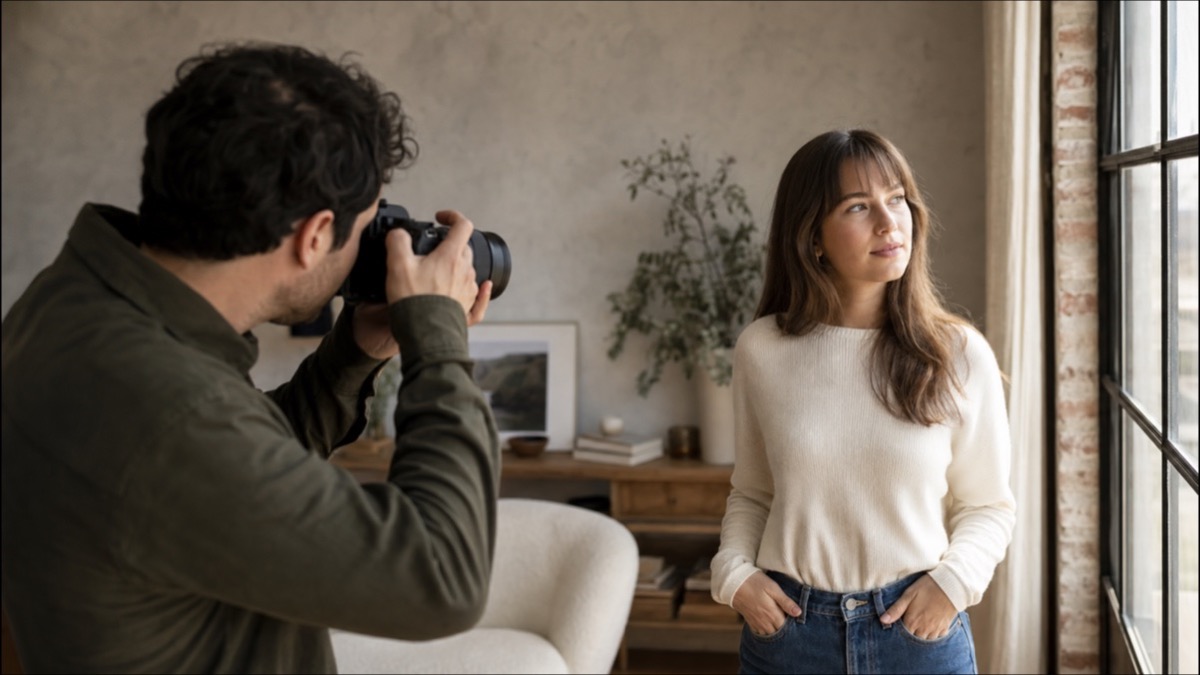
Full frame is particularly persuasive when you often make portraits, photograph celebrations indoors or want more control over the background. With an equivalent picture and aperture setting, it can make background separation easier. It can also provide more low-light headroom when comparing cameras of a similar generation. “Headroom” means more room to maintain image quality before noise becomes distracting; it is not a promise that every full-frame camera wins every comparison.
The EOS R6 Mark II is a particularly balanced choice for regular portraits, events and photo-video work. Its 24.2-megapixel full-frame sensor, in-body image stabilisation rated up to eight stops in suitable combinations, 40-frame-per-second electronic burst and 4K 60p are useful tools. It is not made obsolete simply because newer bodies exist. It may be the wiser choice when its resolution and video files already fit your work.
For a moving person, stabilisation cannot freeze their motion: shutter speed still does that. For a static evening street scene, it can be very helpful. The lens is equally important. A modest full-frame zoom and a bright APS-C lens can lead to different, but equally useful, answers. Compare the exposure and the desired depth of field rather than assuming sensor size settles the question.
Landscape and travel: do not choose by sensor size alone
For travel, APS-C has a real appeal: it can make a complete kit less tiring while still preserving the detail most travellers need. It can also give useful depth of field for street scenes, family groups and landscapes. An EOS R10 or R7 with a well-chosen lens may be the camera you happily carry from breakfast to sunset.
Full frame can make very wide views easier to build and can offer flexibility for particular landscape files, especially on a high-resolution model. But a landscape photographer also needs the right wide-angle lens, a secure support when the light is poor, filters when appropriate and enough storage. A 45-megapixel file from the EOS R5 Mark II is valuable when the final output and workflow can use it; it is needless friction if you only share modest-size images and never crop.
Look at the focal lengths you will use, not at format in isolation. If you photograph architecture, check whether the system offers the genuinely wide view you need. If you walk for hours, weigh the lens, not just the body. This is why the Canon RF lens range deserves as much attention as the camera comparison.
EOS R50 V or EOS R6 V for video?
For solo video, format is only one part of the story. The EOS R50 V is an APS-C, video-led camera of about 370 g. It offers 4K up to 60p, 6K oversampling for selected 4K modes, Canon Log 3 and Full HD at 120p. Canon Log 3 is a flatter recording profile designed to preserve editing flexibility; it is useful only when you are ready to colour-grade the footage. The R50 V is a good fit for a compact creator setup, but not automatically the best general stills camera.
The EOS R6 V is a specialised full-frame video route. Its 32.5-megapixel stills capability, in-body stabilisation, 7K 60p RAW, Open Gate and 4K 120p serve a more demanding production workflow. Open Gate uses the full sensor area, giving more freedom to crop for horizontal and vertical delivery. RAW and high-resolution files require fast cards, substantial storage and a capable editor; they are not a free upgrade for short social clips.
For video, decide in this order: sound, framing, stabilisation, recording time, files, editing and then sensor format. A well-recorded interview with good audio will feel more professional than an oversized file with poor sound.
Moving from APS-C to full frame: do you need new lenses?
Canon EOS R APS-C and full-frame bodies share the RF mount. RF lenses work on both. RF-S lenses are designed for APS-C; on a compatible full-frame body they use a cropped image area, so they are not usually the long-term way to exploit the larger sensor. This does not make RF-S a bad purchase. It simply means you should buy it for the kit you need now, not for an imagined future kit.
Existing Canon EF and EF-S DSLR lenses can also be used with an EF-EOS R adapter when the exact combination is compatible. Mechanical fit is not the whole answer. An adapted lens may change balance, and an EF-S lens on full frame has the same crop consideration. Check the intended framing, autofocus behaviour and the way the complete kit feels in your hand.
If you expect to change format soon, make a lens plan before buying. Keep RF lenses that already give you the views you use. Add dedicated RF-S lenses when their compactness and coverage are useful today. That approach is more honest than buying awkward lenses merely to tick a “future-proof” box.
Four assumptions to leave behind before buying
“APS-C is only for beginners.” The EOS R7 is a clear counterexample. Sensor size is a tool, not a level of photographer. A skilled photographer with a compact APS-C kit can make work that a larger camera would not help them make.
“Full frame is always better in low light.” It has a potential format advantage, but lens aperture, sensor generation, resolution, shutter speed and the final image size matter. For a running child or a bird in flight, the shutter speed you need may matter more than stabilisation.
“APS-C adds zoom.” It adds a narrower field of view with the same lens. That can be useful, but it does not create optical magnification or rescue an unsharp image.
“The body determines the result.” A well-matched lens, comfortable handling and a kit you actually take with you decide more photographs than a specification list. Make the whole system earn its place in your bag.
The MCZ DIRECT method in six questions
Use these questions to turn specifications into a decision. The aim is not to find a winner for every photographer. It is to identify the limitations you can live with and the ones that would spoil your usual work.
| Ask yourself | Why it matters |
|---|---|
| What do I photograph most often? | It tells you whether you need compactness, reach, low-light flexibility or a video workflow. |
| How far away is the subject? | It determines the focal length and whether APS-C’s tighter view helps. |
| Do I need a very soft background? | It clarifies whether full-frame depth-of-field control is useful rather than merely desirable. |
| What will I carry for a whole day? | It exposes the real body-and-lens weight, batteries and bag size. |
| Which video files can I genuinely edit? | It keeps advanced modes in proportion to your cards, storage and computer. |
| Which lens solves the picture first? | It prevents a body-only purchase that misses the framing, brightness or handling you need. |
If two bodies still look close after this exercise, choose the simpler system that meets the need. You can compare the relevant cameras in the Canon EOS R category once you know which lens and workflow are non-negotiable.
MCZ DIRECT verdict
Choose APS-C when the compact kit, tighter telephoto view or useful depth of field suits your real photography. The EOS R10 is a practical entry point for family and travel; the EOS R7 is a purposeful option for sport and wildlife. Confirm that the wide-angle and bright-lens choices you need are available.
Choose full frame when portraits, available-light work, background control or a demanding hybrid workflow give you a clear reason. The EOS R8 is a light route into the format. The R6 Mark II and Mark III make more sense when your regular work benefits from stabilisation, stronger handling and their video tools. The R5 Mark II and R6 V only earn their complexity when your output and editing workflow can use it.
For everyone else, choose the complete kit. A Canon EOS R body and lens that fit your subjects, your hands and your day will serve you better than a format chosen for its status.
Sources and editorial verification
Sources reviewed and checks completed before publication.
MCZ DIRECT editorial analysis verified on 26 July 2026 from official Canon specifications and the public MCZDIRECT catalogue. No comparative hands-on test or absolute ranking is claimed. Quoted burst speeds and stabilisation figures are manufacturer maxima and depend on mode, lens, cards and shooting conditions.
- Canon official guide — APS-C vs full frame
- Canon official documentation — EOS R system
- Canon official guide — Canon lens features
- Canon official product page — EF-EOS R mount adapter
- Canon official product page — EOS R10
- Canon official product page — EOS R7
- Canon official product page — EOS R50 V
- Canon official product page — EOS R8
- Canon official product page — EOS R6 Mark II
- Canon official product page — EOS R6 Mark III
- Canon official product page — EOS R5 Mark II
- Canon official product page — EOS R6 V
Frequently asked questions about Canon EOS R APS-C and full frame
Which Canon EOS R is best for a beginner: APS-C or full frame?
For most beginners, the EOS R10 is the straightforward place to begin. Its APS-C sensor, autofocus and compact body suit family photography, travel and learning with interchangeable lenses. Full frame is not a necessary first step; choose it when its particular portrait, low-light or lens advantages match your plans.
Should I choose the Canon EOS R10 or EOS R8?
Choose the EOS R10 when you want an APS-C kit that stays compact and gives a tighter view with telephoto lenses. The EOS R8 is a light full-frame alternative for photographers who value portrait rendering, wider framing choices and available-light flexibility. Compare the lens, battery routine and handling as well as the sensor.
Is the EOS R7 or EOS R6 Mark III better for wildlife?
The EOS R7 is often the practical wildlife choice because APS-C gives a tighter view with the same telephoto lens and its 32.5-megapixel sensor offers room for distant subjects. The EOS R6 Mark III brings full-frame handling and advanced hybrid tools. The better answer depends on the lens, light, subject distance and the files you need, not sensor format alone.
Does full frame always give better low-light images?
No. A full-frame sensor can offer more low-light headroom when comparable cameras, lenses and output are considered, but sensor generation, lens aperture, shutter speed and final image size affect the result. For a moving subject, the shutter speed required to stop motion may matter more than in-body stabilisation. Compare a complete camera-and-lens combination.
Can I use RF lenses on a Canon APS-C EOS R camera?
Yes. RF lenses fit both Canon APS-C and full-frame EOS R bodies. On APS-C, they retain their stated focal length but show a narrower field of view, equivalent to about 1.6× on full frame. Native choices are available through the Canon RF lens range; select them for the framing, aperture and balance you need now.
Can I use an RF-S lens on a full-frame Canon EOS R body?
Compatible full-frame EOS R bodies can use an RF-S lens in a cropped area of the sensor. It will fit, but it does not use the whole full-frame image area and normally leaves fewer pixels for the final image. RF-S remains a sensible choice for an APS-C kit when its compactness and coverage are right for your current photography.
Do I need to replace all my lenses when moving from APS-C to full frame?
No. Canon RF lenses work across both EOS R formats. RF-S lenses are the ones that use crop mode on full frame. Existing EF and EF-S DSLR lenses may also work through an EF-EOS R adapter, subject to the exact lens and body. Before changing format, check the intended framing, balance and whether the lens still suits the kit you want to carry.
Leave a comment