
Shopping Cart
Which Canon EOS R camera should you choose in 2026? Complete guide

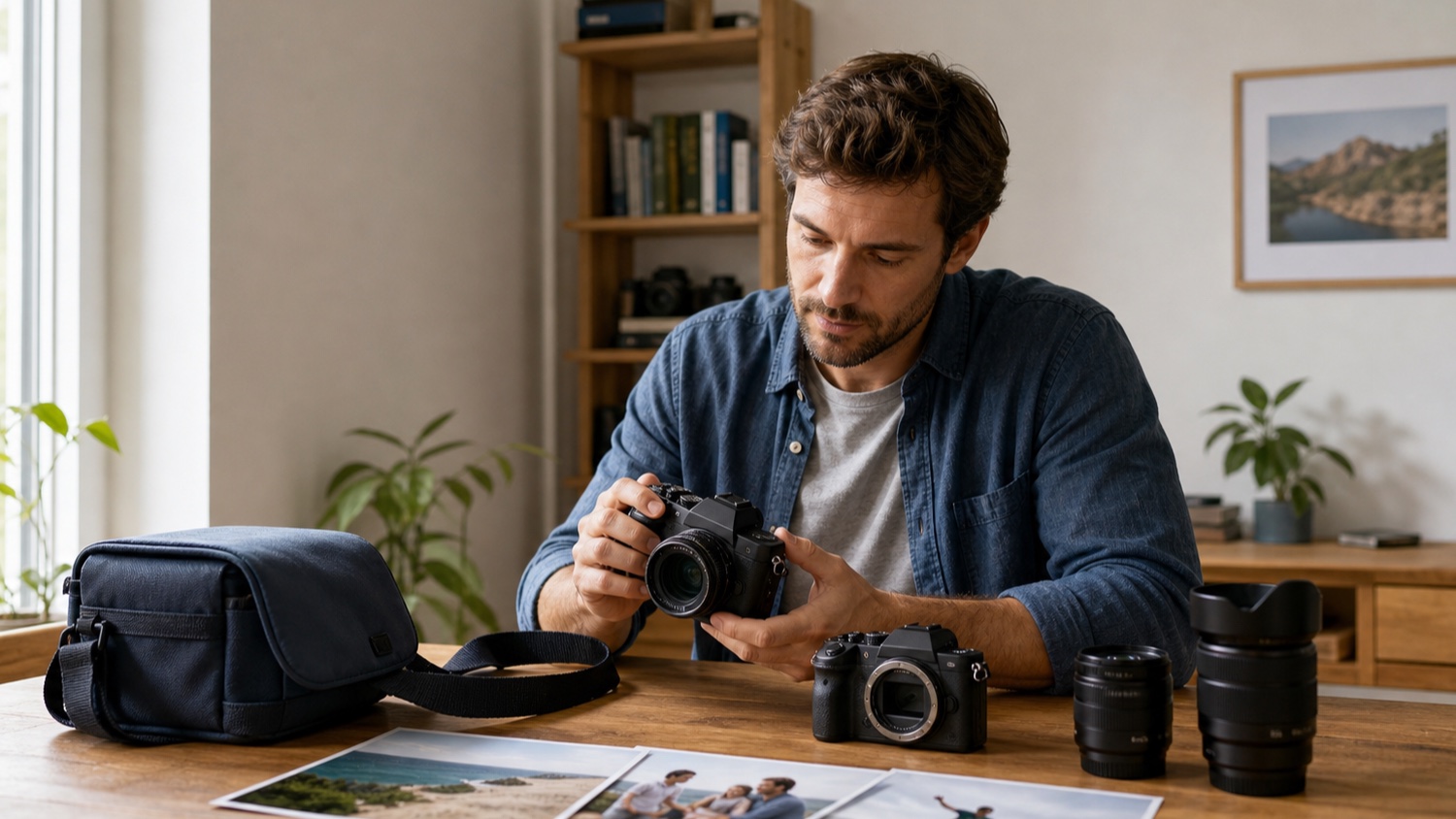
Choose a Canon EOS R around the photographs and video you make, the lens you need and the full kit you will actually use.
Family photographs can go soft the moment children start moving. A player can look tiny from the edge of a pitch. On a trip, a camera that seemed ideal online can feel too heavy once a lens and spare battery are attached. Canon’s EOS R range covers all of these situations, from a first interchangeable-lens camera to specialist tools for press and sport. The useful question is not which body sits highest in the range. It is which one lets you make the photographs or videos you have in mind, with a lens, weight and file workflow you can live with.
Which Canon EOS R should you choose? The short answer
Start with the main job. The EOS R10 is a sensible first camera for family life and travel. The EOS R7 is aimed more directly at distant sport and wildlife. The EOS R8 brings full-frame shooting into a light body. The EOS R6 models suit photographers who regularly move between stills and video. The R5 Mark II, R3, R1 and R6 V only make sense when their resolution, grip or video tools answer a real need.
| Camera | What it helps with | A good fit for | What to accept |
|---|---|---|---|
| EOS R10 | Learning, travel and family pictures in a compact APS-C kit. | First Canon mirrorless camera, family and travel. | Check battery life, cards, lens choice and comfort if you shoot heavily. |
| EOS R7 | Tighter framing with the same lens, plus resolution for sport and wildlife. | Distant or fast subjects with APS-C. | APS-C changes the framing and the lenses that make sense. |
| EOS R8 | Light full-frame photography for portraits, travel and occasional video. | Portraits, travel and a light stills-video kit. | Assess the grip, battery, cards and stabilisation of the whole kit. |
| EOS R6 Mark II | Stabilised stills, events, portraits, action and 4K video. | Regular all-round photography. | Compare it with the R6 Mark III by your need for resolution and video files, not the generation number. |
| EOS R6 Mark III | More cropping room and newer video options in an all-round body. | Advanced mixed photo-video work. | Its extra formats help only when your editing workflow uses them. |
| EOS R5 Mark II | Detail, cropping and speed for demanding stills-video work. | Weddings, landscape, wildlife and intensive production. | It produces files that need suitable cards, storage and computer power. |
| EOS R3 / EOS R1 | Long action sessions with an integrated vertical grip. | Press, sport and sustained professional work. | They are large, heavy and specialised. |
| EOS R50 V / EOS R6 V | Solo video or more advanced video production. | Creators, from compact APS-C to specialised full frame. | They are not the default choice for general photography. |
Before comparing cameras, describe the pictures you need to make
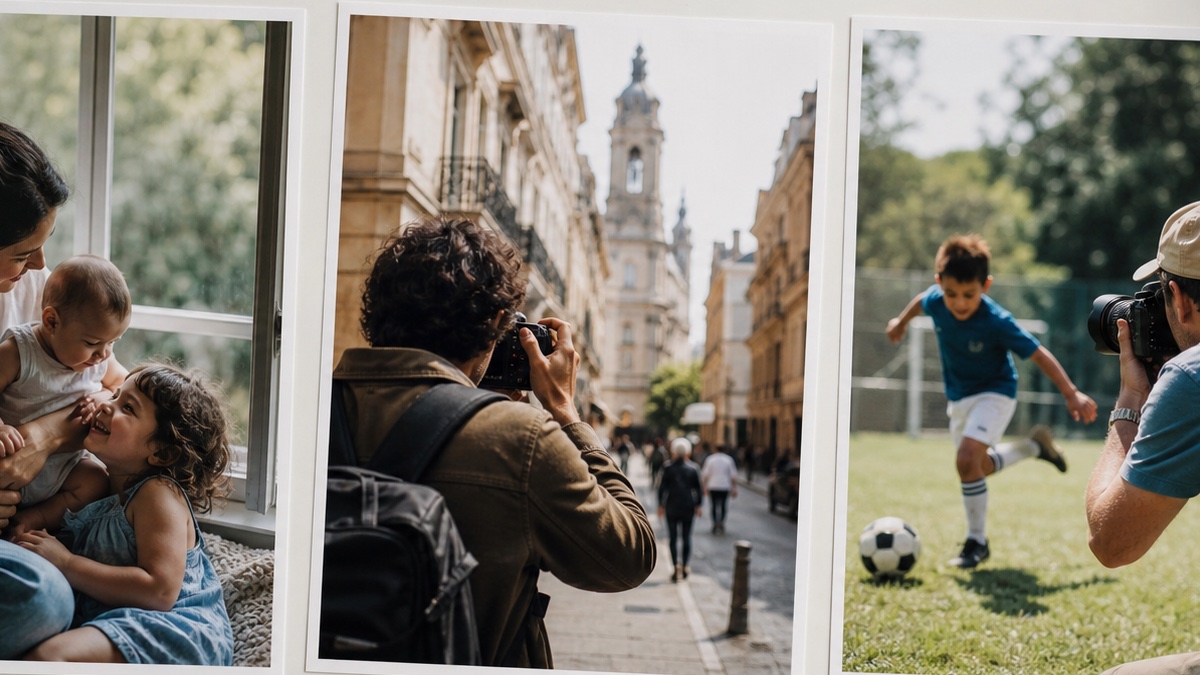
Write down three real situations. “Family photos” might mean children running in a garden, a birthday indoors or a calm portrait beside a window. “Travel” might mean a wide landscape at dawn, a busy street, or a one-handed photograph while carrying a bag. These details will guide the choice more reliably than a megapixel count.
Then consider distance. A landscape or a table full of people needs a wide view. At a match or with a bird, you may not be able to walk closer, so the lens needs to frame more tightly. A burst is a rapid sequence of pictures. It can help catch a gesture, but it does not replace anticipation or the right lens. Autofocus is automatic focusing; it needs to hold a child, animal or athlete sharp as the subject moves. Stabilisation reduces blur from your own hand movement, but it cannot freeze a running person.
Finally, think about the result you need. A photograph shared on a phone, a large print, a heavy crop and an edited video do not demand the same margin. If you film yourself, a fully articulating screen, the angle of the first lens, sound and stabilisation may matter more than a very high-resolution mode you will never select.
APS-C, full frame and the RF mount in plain language
The sensor is the surface that receives light. An APS-C sensor is smaller than a full-frame sensor, which is close to the 24 × 36 mm film frame. With the same lens from the same place, APS-C records a narrower part of the scene. That can be useful when framing a distant animal, but it is not a magical magnification and it changes which focal lengths are practical.
The RF mount is the mechanical and electronic connection between an EOS R body and its lens. RF lenses fit this mount. RF-S lenses are designed for APS-C. If you already own compatible EF or EF-S DSLR lenses, Canon’s EF-EOS R adapter can allow their use on an EOS R body. Check the exact body, lens and adapter combination before building your kit.
Do not compare bare bodies alone. Compare an R10 with the zoom you would carry on holiday, an R8 with the lens you would use for portraits, or an R7 with the telephoto you need for wildlife. The weight, balance and framing of the full kit often matter more than the sensor format by itself. Browse compatible options in the Canon lens category.
For a first camera, travel and family photography
The EOS R10 is a straightforward place to begin when you want to learn without carrying an oversized kit. Its 24.2-megapixel APS-C sensor, Dual Pixel CMOS AF II autofocus and quoted bursts of up to 15 frames per second with the mechanical shutter or 23 with the electronic shutter suit family life, travel and moving children. A shutter controls when the camera records the image; a mechanical shutter uses moving parts, while an electronic shutter records through the sensor. The R10 also offers 4K 30p made from a 6K capture and a 4K 60p option. “60p” means 60 video frames per second, which can make movement appear smoother. With battery and card, it weighs about 429 g.
Choose the lens first, then judge the kit’s weight, battery life and cards. Very high resolution, advanced RAW video and an integrated vertical grip can wait for many beginners.
The EOS R8 suits someone who wants a light full-frame body for portraits, travel and mixed stills-video work. It has 24.2 megapixels, Dual Pixel CMOS AF II, an electronic burst quoted up to 40 frames per second, 4K 60p and Full HD 180p. With battery and card, it weighs about 461 g. Its sensor size is not the whole answer: assess its grip, battery life, cards and the stabilisation of the complete system.
For a trip with one zoom, the kit that is easiest to take out and use tends to matter most. The R8 can be a good fit for a portrait or low-light project, provided the chosen lens does not turn it into a heavy combination.
For sport and wildlife
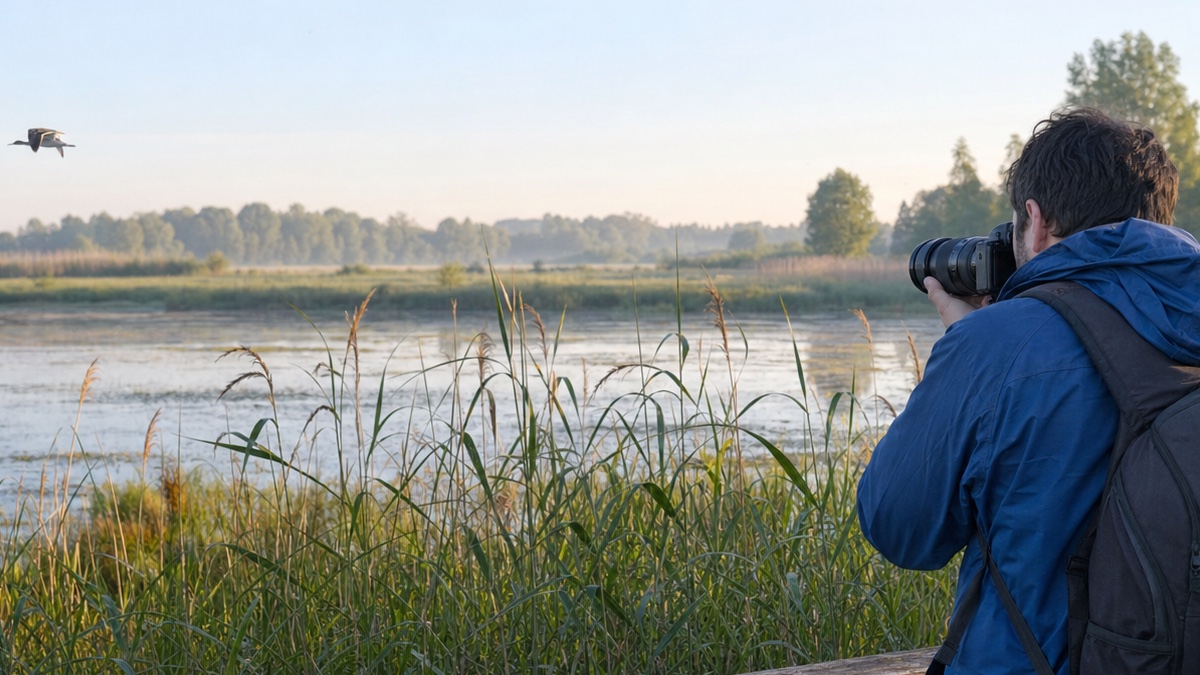
For a bird, a dog in motion or a match from the touchline, the EOS R7 is the clearest APS-C option. Its 32.5 megapixels, Dual Pixel CMOS AF II and quoted bursts of up to 15 frames per second mechanically and 30 electronically provide room to track and crop. Its in-body stabilisation is quoted at up to seven stops, or up to eight with certain RF lenses. A stop is a standard exposure step; here, Canon uses it to state a maximum hand-held compensation figure. The lens and shooting conditions affect the result.
The R7 frames more tightly with the same lens. That is its advantage and its constraint: choose lenses with APS-C framing in mind. A maximum burst speed does not guarantee a whole run of sharp images. The subject, lens, card and settings still make a difference.
Need a more advanced full-frame all-rounder with more resolution? The EOS R6 Mark III has 32.5 megapixels and a quoted burst up to 40 frames per second. The EOS R3 and EOS R1, both with integrated vertical grips, are better treated as tools for press, sport and intensive professional work.
For portraits, landscape, weddings and events
Portraits are not only about full frame. Your distance from the person, the background and the lens all matter. The EOS R8 is the lighter full-frame entry point. For an event or wedding, the EOS R6 Mark II adds in-body stabilisation and handling better suited to regular use. It remains a sound option when 24.2 megapixels and 4K 60p already cover what you deliver.
The R6 Mark III adds more resolution, two card slots and newer video formats. RAW video retains more image information for editing, which increases demands on cards, storage and computer power. Open Gate records the full available sensor area so that different crops can be made later. Those benefits matter if you crop frequently, deliver several video shapes or need a second card as part of your working method.
For landscape, large prints, substantial cropping or demanding photo-video production, the EOS R5 Mark II combines 45 megapixels with a back-illuminated stacked full-frame sensor, a quoted burst up to 30 frames per second with pre-continuous shooting, and 8K RAW video up to 60p. A stacked sensor reads image data very quickly, which supports its speed-focused design. Pre-continuous shooting keeps pictures from just before the shutter is fully pressed, which can help with unpredictable action. The resulting files still require cards, storage and a computer suited to the project.
For video and content creation
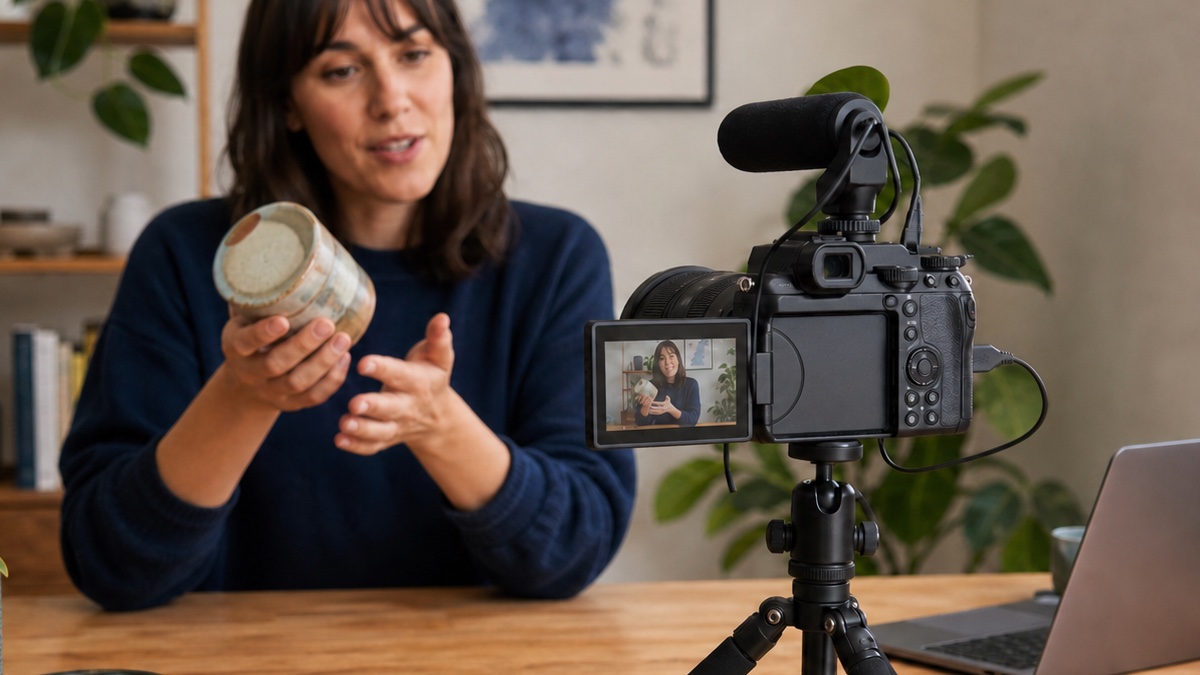
Do you film yourself, make travel pieces or create for social platforms? The EOS R50 V is designed primarily for interchangeable-lens video. Its APS-C sensor, 4K 60p, a 4K mode derived from a 6K capture, Full HD 120p, articulating screen, front record button and streaming functions point in that direction. With battery and card, it weighs about 370 g. Canon Log 3 is an image profile that leaves more room for colour grading, the adjustment of colour and brightness during editing. It is useful only if you plan to edit the footage afterwards.
The EOS R6 Mark II and Mark III make more sense when stills and video genuinely share the same working week. The R5 Mark II earns its place when high-resolution photographs and video already fit a workflow that can handle the files. In every case, check the required cards, storage, computer, sound and stabilisation before choosing on video resolution alone.
The EOS R6 V is a separate case: a video-led full-frame hybrid with 7K RAW 60p, Open Gate, vertical video, 4K 120p and in-body stabilisation. It can also make 32.5-megapixel stills and reach 40 frames per second, but the decision should begin with your filming needs: sound, recording, connections and post-production. It is not the default stills choice simply because it is newer or looks more complete on paper.
EOS R6 Mark II or EOS R6 Mark III?
The useful difference is not the Roman numeral. The EOS R6 Mark II keeps a 24.2-megapixel full-frame sensor, 4K 60p, Dual Pixel CMOS AF II and in-body stabilisation quoted up to eight stops. It remains well suited to portraits, events, action and a simple editing workflow.
The R6 Mark III moves to 32.5 megapixels and adds 7K RAW, Open Gate and two card slots. Choose it when you crop often, need to record files to two cards, or edit those formats. Otherwise, the R6 Mark II remains capable and may keep storage and editing simpler.
EOS R3 or EOS R1?
These are both full-frame action cameras with integrated vertical grips. The EOS R3 has 24 megapixels, a quoted burst up to 30 frames per second, stabilisation quoted up to eight stops, 6K RAW and Eye Control with people, animal and vehicle tracking. Eye Control can select a focus point with your eye in compatible situations.
The EOS R1 has 24.2 megapixels and a quoted 40 frames per second. It adds Action Priority, a mode intended to prioritise recognised action, Eye Control, cross-type autofocus and 6K RAW up to 60p. Cross-type autofocus uses information in more than one direction. At about 1,015 g for the R3 and 1,115 g for the R1, including battery and card, they need a genuine professional reason to justify their size.
Body only or a kit with a lens?
Choose body only if you already own a compatible lens that covers your first use. A kit makes sense when its lens allows you to begin straight away: check the exact lens name, focal length, aperture and combined weight. Focal length is the number in millimetres that determines the angle of view; aperture controls how much light enters the lens. Do not assume a kit covers every situation without checking these two points.
For family life or travel, a flexible zoom can avoid lens changes. For portraits, a lens suited to the space you have matters more than a more ambitious body. For wildlife, check the framing produced by the telephoto on APS-C or full frame. Before ordering, return to the Canon EOS R category and compare real kits, not only bodies.
What is essential now, and what can wait
| Decide now | Assess for your use | Can wait when starting out |
|---|---|---|
| Handling, lens, kit weight, autofocus for the subject, battery and storage. | In-body stabilisation, two card slots, higher resolution, bursts and advanced video tools. | 7K or 8K RAW, an integrated vertical grip and highly specialised sport functions. |
Two card slots can be part of a workflow that needs a second copy, but they are not essential for every outing.
The MCZ DIRECT method in five questions
- What do you photograph most: people, landscape, sport, animals or video?
- What light do you work in most often?
- What weight are you comfortable carrying for a full day?
- Will the files be simply shared, cropped, printed or edited into video?
- Which lens needs to be on the camera for your first outing?
If an answer is still vague, do not fill the gap with one more feature. Choose the body and lens that make your next session easier. You can build the system further once your photography shows you a real limit.
MCZ DIRECT verdict
For a first camera, family life and travel: the EOS R10 is the most coherent starting point if you want to learn with a compact APS-C kit. The EOS R8 becomes relevant when light full frame answers a genuine portrait, travel or low-light project; its limit is the practical organisation of the kit.
For sport and wildlife: the EOS R7 is the logical APS-C choice for tighter framing, useful resolution and speed. The EOS R6 Mark III better serves an advanced full-frame need. Keep the R3 and R1 for intensive professional action work, because their integrated grips and weight are not neutral.
For portraits, events, weddings and mixed stills-video work: choose between the R8, R6 Mark II, R6 Mark III and R5 Mark II by the weight you accept, the resolution you need, your cards and the video editing you plan. The R6 Mark II remains valid when 24.2 megapixels and 4K 60p already cover your work. The R5 Mark II earns its place only when its cropping room, resolution and files are part of the project.
For solo or specialised video: the EOS R50 V supports compact interchangeable-lens creation, while the EOS R6 V answers a full-frame video-led production need. Their limit is clear: choose them for the way you film, not as an automatic replacement for a general stills camera.
The right Canon EOS R is the one that makes your regular scenes possible with the lens, weight and workflow you are prepared to manage. Compare current bodies and kits in the MCZ DIRECT Canon EOS R selection, then leave aside the functions that do not yet serve your images.
Sources and editorial verification
Sources reviewed and checks completed before publication.
MCZ DIRECT editorial analysis verified on 26 July 2026 from official Canon specifications and the public MCZDIRECT catalogue. No comparative hands-on test or absolute ranking is claimed. Quoted burst speeds and stabilisation figures are manufacturer maxima and depend on mode, lens, cards and shooting conditions.
- Canon official documentation — EOS R system
- Canon official product page — EOS R10
- Canon official product page — EOS R7
- Canon official product page — EOS R8
- Canon official product page — EOS R6 Mark II
- Canon official product page — EOS R6 Mark III
- Canon official product page — EOS R5 Mark II
- Canon official product page — EOS R3
- Canon official product page — EOS R1
- Canon official product page — EOS R50 V
- Canon official product page — EOS R6 V
- Canon official product page — EF-EOS R mount adapter
Frequently asked questions about choosing a Canon EOS R
Which Canon EOS R is best for a beginner?
The EOS R10 is the most straightforward starting point for learning, family photography and travel. Its APS-C sensor, autofocus and compact body cover many situations. Check that the kit lens gives you the framing you need and that the camera feels comfortable in your hands.
Which Canon EOS R is good for wildlife photography?
The EOS R7 is often the logical place to start for wildlife. Its APS-C sensor gives tighter framing with the same lens, and its speed helps with moving subjects. The R6 Mark III, R3 and R1 meet more advanced full-frame or professional needs. Lens choice, subject distance and tracking still decide many of the results.
Which Canon EOS R should I choose for portraits?
The EOS R8 offers a light route into full frame and works well for portraits and travel. The EOS R6 Mark II adds in-body stabilisation and more substantial handling for frequent use. Portrait results still depend strongly on the lens, your distance from the person and the background.
What is the difference between the Canon EOS R10 and EOS R8?
The EOS R10 uses an APS-C sensor and is aimed at a compact, flexible first kit. The EOS R8 uses a full-frame sensor, which can suit particular portrait, low-light and background-control needs while remaining light. Compare body and lens together: framing, total weight and the wider system are not the same.
What is the difference between the EOS R6 Mark II and EOS R6 Mark III?
The EOS R6 Mark II has 24.2 megapixels, in-body stabilisation, a fast burst and 4K 60p video. The EOS R6 Mark III moves to 32.5 megapixels and adds 7K RAW video files with more editing data, plus Open Gate, which records the full sensor area for later crops. Choose the Mark III when those files and tools serve your work; the Mark II remains a versatile option.
Is the EOS R5 Mark II worth it for an enthusiast?
It can be, when an enthusiast genuinely needs detail, cropping room, speed or advanced stills-video production. The EOS R5 Mark II has 45 megapixels and 8K RAW video, which also create demanding files. For occasional family photography, a simpler body may leave more room in the budget and bag for the lens that matters most.
Which Canon EOS R is right for video?
The EOS R50 V is designed for solo video and compact content creation. The R6 Mark II and Mark III suit genuine mixed stills-video use. The R5 Mark II is for more demanding production, while the EOS R6 V is a specialised full-frame video option. Check sound, cards, storage and editing hardware as well as resolution.
Can I use EF lenses on a Canon EOS R camera?
Compatible Canon EF and EF-S lenses can be used on EOS R bodies with a Canon EF-EOS R adapter. This can be useful if you already own DSLR lenses. Confirm the exact lens and adapter, the framing of an EF-S lens on a full-frame body, and the weight and balance of the complete kit. You can also compare native options in the Canon lens category.
Leave a comment