
Shopping Cart
Which focal length should you choose in 2026?

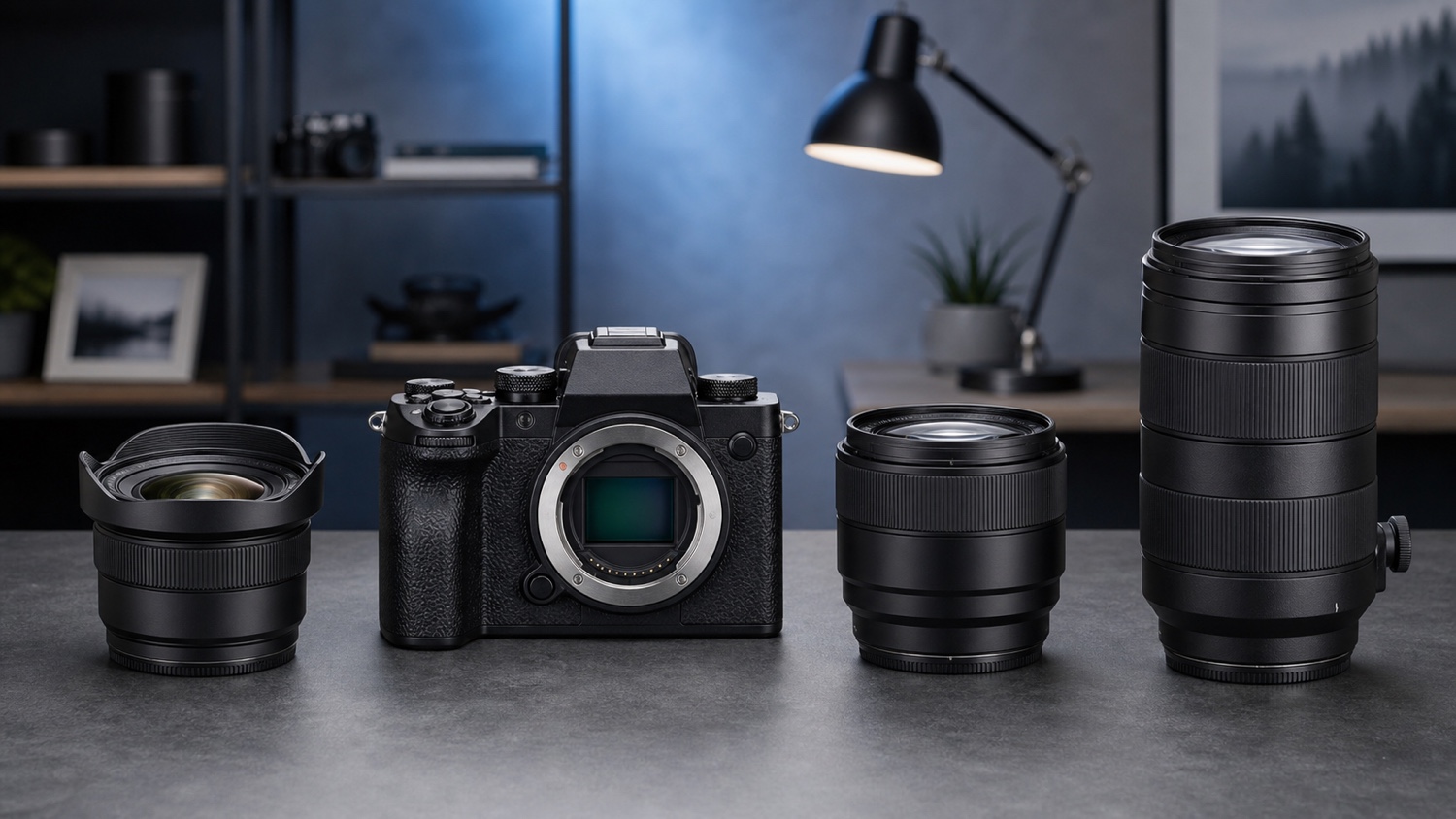
A portrait that feels too tight, a cropped family group or a distant sports subject: focal length chiefly decides how much of the scene you can frame from where you stand.
The right focal length saves two familiar frustrations: backing into a wall to make a portrait, or finding a bird lost in the middle of the frame. Start with the space you have and the story you want to show. A 24mm lens can include a journey and its setting; an 85mm lens can bring attention to a face. Neither number is inherently better.
Quick starting points by use
Focal length is the number in millimetres that, on a given sensor, sets how wide the view is. Full-frame equivalent is the shared guide for comparing that framing across sensors; where the table mentions macro, also check reproduction ratio, which indicates how large a small subject appears in the image, and working distance, the space between lens and subject.
| Main use | Framing reference | Deciding question |
|---|---|---|
| Vlogging, interiors, architecture | About 14–28mm | How much must fit from the space available? |
| Landscape, travel, documentary | About 20–50mm | Should the image describe the place or simplify it? |
| Portraits | About 35–135mm | Environmental, half-length or tight headshot? |
| Sport and stage | About 70–400mm | How far away, and can you change position? |
| Wildlife | About 200–800mm | How large is the subject and what distance is safe? |
| Macro, products and food | About 50–200mm | What magnification and working distance are needed? |
Treat these ranges as a starting point. The useful lens is the one that lets you frame the scene from where you can actually stand, with enough surrounding context or enough closeness for your purpose.
1. Focal length, angle of view and perspective are different things
Focal length is an optical property of a lens, measured in millimetres. On a given sensor, it sets its angle of view, the portion of the scene that appears in the picture. A smaller number covers a wider view; a larger one covers a narrower area.
Perspective mainly comes from where you stand. Without moving, changing from 24mm to 85mm simply crops out more around the subject. If you step back to restore the same framing, the new distance changes the visual relationship between face and background. It is therefore more accurate to say that a telephoto lens works from farther away than to say it alone “compresses” a scene.
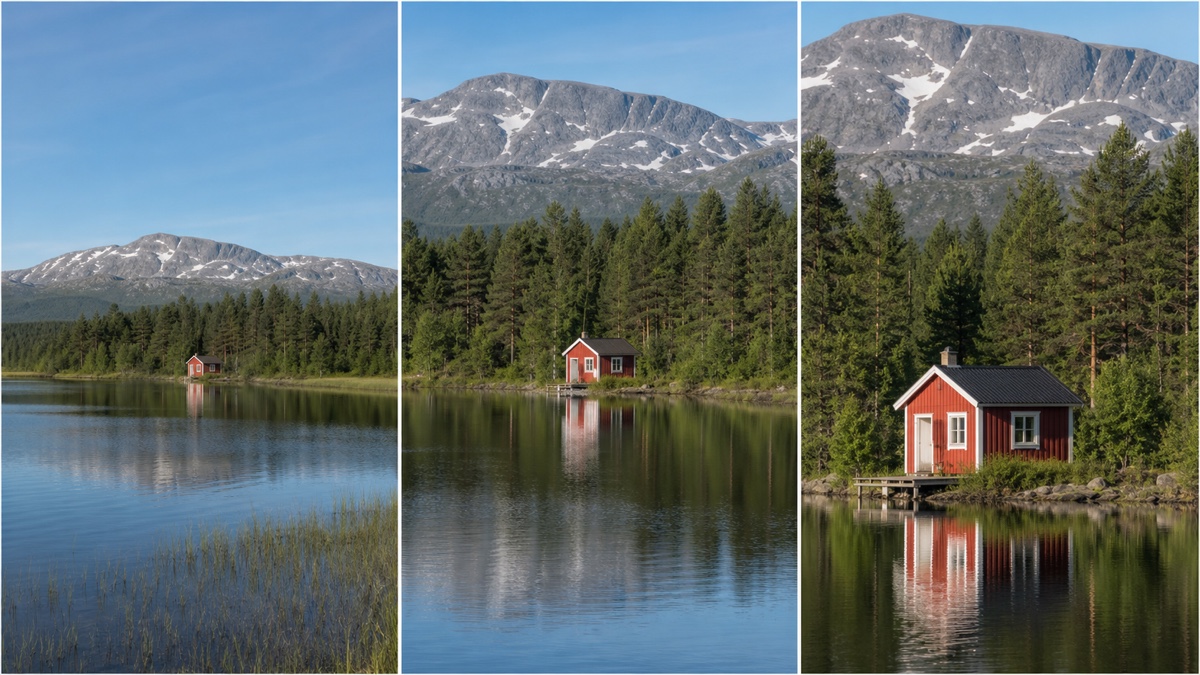
In practice: choose the position that gives the perspective you like, then use the focal length that frames the scene from that position.
2. Full-frame equivalent makes formats easier to compare
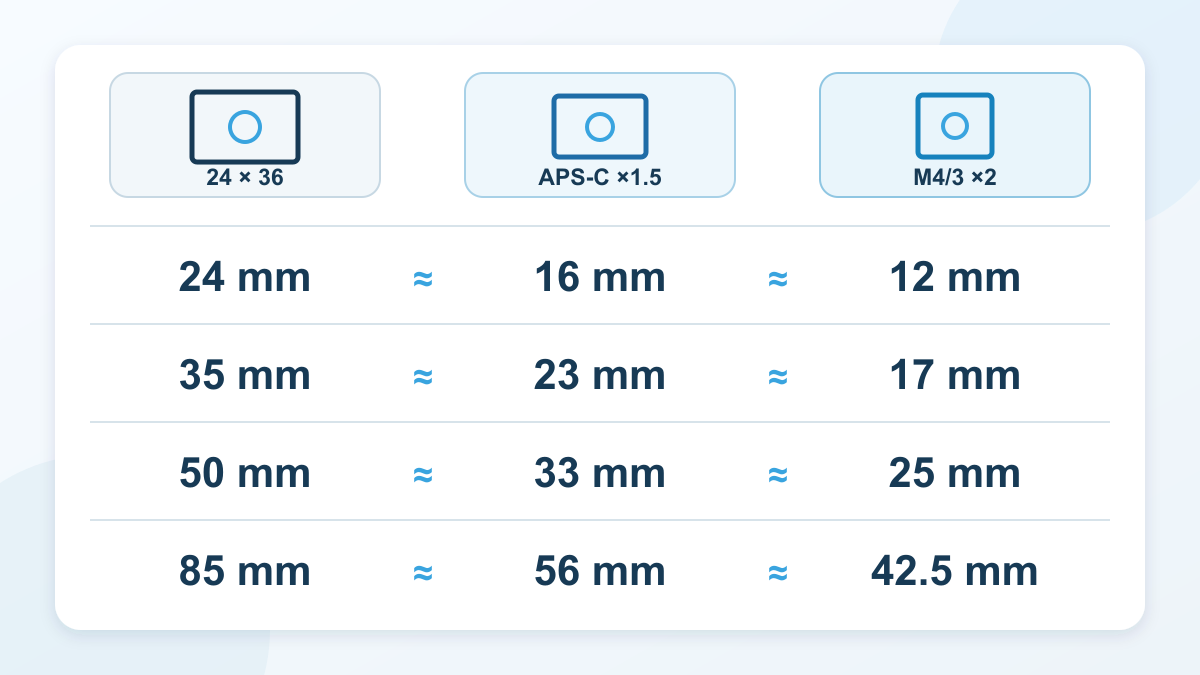
The same millimetre marking does not give the same angle of view on every sensor. Full-frame equivalent is a shared reference: it describes a lens’s framing as if it were used on a 24 × 36mm sensor. It does not alter the lens or the photograph; it simply makes comparisons clearer.
To find it, apply the sensor’s crop factor. It is around 1.5× for most APS-C cameras, 1.6× for Canon APS-C and 2× for Micro Four Thirds. A 23mm lens on 1.5× APS-C therefore frames roughly like 35mm on full frame; a 25mm Micro Four Thirds lens is close to 50mm. The physical focal length printed on the lens does not change.
| Full-frame reference | 1.5× APS-C | 1.6× Canon APS-C | 2× Micro Four Thirds |
|---|---|---|---|
| 24mm | 16mm | 15mm | 12mm |
| 35mm | About 23mm | About 22mm | About 17mm |
| 50mm | About 33mm | About 31mm | 25mm |
| 85mm | About 56mm | About 53mm | 42.5mm |
| 300mm | 200mm | About 188mm | 150mm |
This equivalent only describes angle of view. By itself, it says nothing about aperture, minimum focusing distance or lens quality.
3. Ask these questions before choosing
A zoom changes focal length without changing lenses. A prime lens has one angle of view, although it may be more compact or brighter depending on the model. Neither is compulsory: decide whether you need to reframe quickly or can compose at a steadier pace.
- What needs to appear around the subject? A landscape or travel scene often needs context; a small detail may need very little.
- Where can you stand? A small room, a grandstand or a safety barrier can be the real limitation.
- How large should the subject look? A nearby child, a runner on a track and a bird in a tree call for different focal lengths.
- Will the framing change quickly? A zoom helps with an unpredictable scene. A prime lens suits you if you prefer to anticipate and move yourself.
Try this: describe the photograph you want, such as “two people at a table with the room around them”. That is more useful than the broad label “family photography”.
4. Portraits: find a distance that feels comfortable
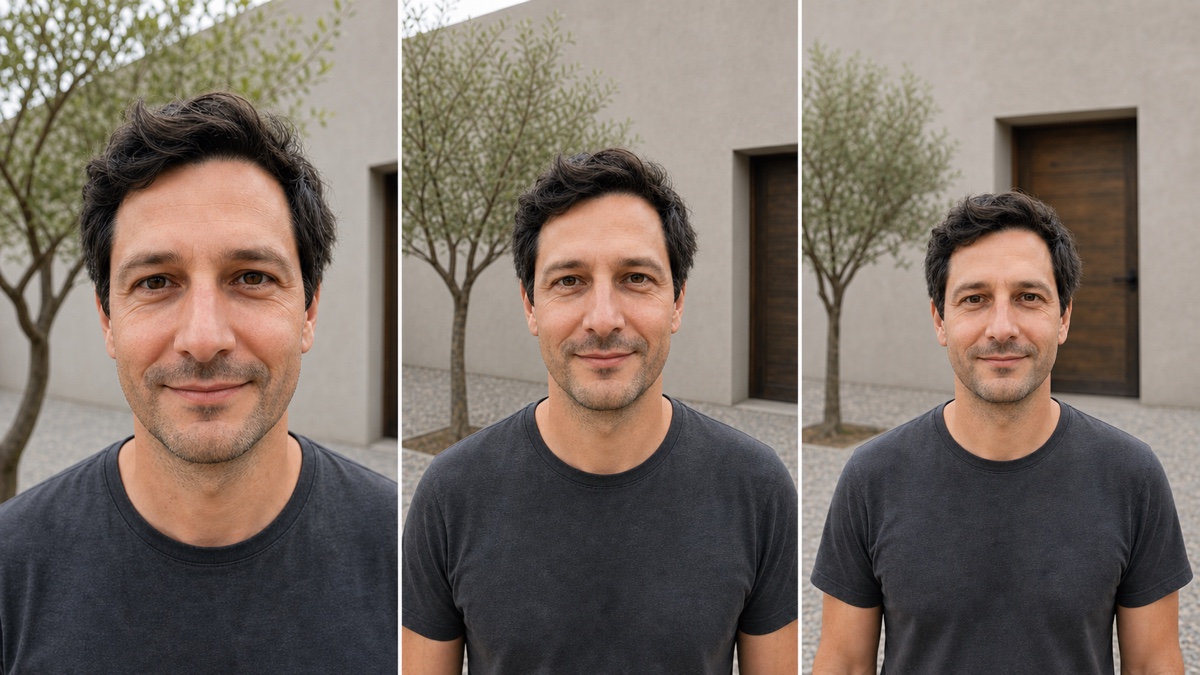
For a portrait that includes the setting, 35–50mm full-frame equivalent is often practical. Around 50–85mm, it is easier to frame a half-length portrait or a face without standing too close. From 85–135mm, the background occupies less of the picture and you can work from a comfortable distance, provided there is enough room.
A long focal length does not automatically make a face more flattering. Your distance from the person is the key. In a small home, 85mm can be impractical for a full-length portrait; 35mm or 50mm may make the session easier. Aperture, marked by a value such as f/1.8, matters too: a smaller number can help blur a background, but it makes accurate focusing more important.
Before buying a lens for more blur, try placing the person farther from the background. It is often more effective and much less restrictive than changing lenses.
5. Travel, street and family: choose useful flexibility
On a trip, you can move quickly from a building to a person to a small detail. A 24–70mm-equivalent range covers many of those scenes. Around 24–35mm it keeps the place in the picture. Between 35mm and 50mm it offers a more contained, familiar view. Longer settings isolate a face or detail more easily.
For a day with children, a zoom lets you react without changing lenses. A compact prime can be a good choice if you enjoy travelling light and accepting one consistent view. That is not a compromise; it is a different rhythm. Test it by locking your current zoom at that focal length for an outing.
6. Landscapes and architecture: use wide angle when it adds something
A 14–24mm equivalent can rescue a photograph in a tight interior or when there is no room to step back. It does not replace composition: it increases the apparent space between layers and can make distant features look tiny. A 35–70mm view often simplifies a landscape, isolates a line or gives a distant hill more presence.
For architecture, keep the camera as level as possible if you want to limit converging verticals. Tilting a wide-angle lens up exaggerates the effect. That can be deliberate, but it is not an unavoidable property of wide angle.
7. Sport, performances and wildlife: balance reach with tracking
Distance often determines the focal length. Near a pitch, 70–200mm may cover close and middle-distance action. A small bird far away can call for 300–600mm or more. Before thinking about power, think about how large the subject needs to be in the viewfinder.
A long focal length makes the subject appear larger, but it also makes tracking harder. The frame narrows, weight increases and small camera movements are more visible. Autofocus is the system that keeps the subject sharp; stabilisation reduces small camera shakes, but cannot stop a moving subject. Shutter speed is the time during which the image is recorded: to freeze action, it needs to be fast enough. A 600mm lens that is too difficult to handle can yield fewer sharp photographs than a 400mm lens you control well.
At the edge of a pitch: identify the lane where the action will pass, then frame a little wider than you think you need. You are more likely to keep the player in the picture when they speed up or change direction.
| Question | What it reveals | Possible consequence |
|---|---|---|
| How large should the subject appear? | Wide shot, half length, face or detail | Broad view or tighter framing |
| Where can the camera be? | Room size, venue position or safe wildlife distance | The practical wide or telephoto limit |
| Will framing change quickly? | Subject and photographer mobility | Flexible zoom or prime lens |
| How much context belongs in the image? | The setting’s role in the story | Descriptive view or isolated composition |
8. Macro, products and food: check magnification
A lens is not macro simply because it is long. The useful specification is the maximum reproduction ratio, or magnification. A 1:1 ratio means the subject is projected at life size on the sensor. It matters for a ring, a flower or the fine detail of a product.
A short macro lens means working close to the subject. A longer macro lens gives more working distance, the gap between the front of the lens and the subject; that helps with lighting or avoids disturbing an insect. For food and tabletop items, leave room for lights as well as for yourself.
9. Video and vlogging: measure the frame after crop
When filming yourself at arm’s length, a 16–24mm full-frame equivalent often leaves enough room around you. Still, check the video mode you will use. Some cameras crop the image, giving a narrower view than their photo mode.
For an interview, 35–85mm lets you choose between visible setting and a tighter shot. Also check focus breathing: the slight change in framing some lenses make when focus shifts from one distance to another. It can be subtle, but it shows in certain video shots. Focus noise and stabilisation may matter more than a few millimetres.
10. Astrophotography and specialist work
A short focal length shows a broad section of sky and works well for the Milky Way. A longer lens enlarges the Moon or a small section of sky, but needs a sturdier support, more precise technique and sometimes motorised tracking. At a concert or in a theatre, venue rules and your position can determine the range before personal preference does.
Some uses sit outside this guide. In architecture, shift is a lens movement used, among other things, to correct a building’s lines without strongly tilting the camera. The image circle is the area the lens projects behind it; it must be large enough for the sensor and, in some cases, for that movement. In cinema, focusing precision may also matter more than a familiar focal length. Start with the technical constraint, then select the angle of view.
11. Try the focal length before buying
With your current zoom, keep one focal length for an entire outing. Notice when you lack width, when the subject remains too small and when you cannot move. Focal-length data in your previous pictures can help, but it cannot show the photographs you chose not to take.
Finally, count the whole kit. A long lens may need a monopod or different bag; an ultra-wide lens may not accept the same filters. Those details are optional for some people, but decisive if you travel for long periods or shoot handheld.
Checklist and MCZ DIRECT verdict
| Situation | Starting direction | Risk to check |
|---|---|---|
| Sport near the line | Moderate telephoto zoom | Frame becomes too tight as play approaches |
| Stage from the audience | Telephoto matched to the permitted position | Light level, movement and venue rules |
| Large animal in habitat | Long standard to telephoto | Losing the environment by framing too tightly |
| Small distant bird | Super-telephoto | Weight, shake, heat haze and tracking |
- I have defined the framing and space available.
- I converted millimetres for my sensor when needed.
- I understand the difference between focal length and camera position.
- I chose a zoom or prime for the way the scene unfolds.
- For portraits, I considered distance, aperture and background.
- For sport, I checked tracking, weight and shutter-speed needs.
- For macro, I checked the reproduction ratio.
- For video, I checked crop and focus breathing.
- I tried a similar focal length in my normal conditions.
- The required accessories make sense for my use.
If you are starting out, choose a flexible range that covers the pictures you make most often: travel, family or everyday portraits. If you already have a kit, add a focal length that solves a real limitation, such as no room to step back, a subject that stays too small or a genuine need for macro. A specialist lens earns its place when it lets you make pictures you could not make before.
Once your range is clear, use the filters in the MCZ DIRECT camera lens category to compare compatible models only. If mount, aperture or lens types still feel abstract, begin with our general lens-buying guide.
Sources and editorial verification
Sources reviewed and checks completed before publication.
MCZ DIRECT editorial analysis fact-checked on 25 July 2026 against official Canon, Fujifilm, Nikon, OM SYSTEM and Sony documentation. Focal-length ranges are full-frame-equivalent starting points, not prescriptions. No comparative field test or model ranking is claimed.
- Sony — Focal length and angle of view
- Sony — APS-C focal-length conversion
- Sony — Standard lenses
- Sony — Focus breathing and compensation
- Nikon — Understanding Focal Length
- Nikon — Super-Telephoto Lenses for Landscapes
- Nikon — Wildlife Without Super-Telephoto Lenses
- Canon — Focal length and field of view
- Canon — Perspective
- Canon — Depth of field
- Canon — RF lineup and APS-C conversion
- OM SYSTEM — Micro Four Thirds sensor specifications
- Sony — Shutter speed and motion blur
- Fujifilm — Lens options for close-up and macro
Questions about choosing a focal length
Which focal length is suitable for an all-purpose lens?
A range covering roughly 24–70mm in full-frame-equivalent terms handles many travel, family and documentary scenes. Comparable framing is approximately 16–50mm on 1.5× APS-C or 12–35mm on Micro Four Thirds. Check whether you genuinely use both ends of the range.
Which focal length should I choose for portraits?
As full-frame equivalents, 35–50mm often suits environmental portraits, 50–85mm half-length work and 85–135mm tight headshots. The best value depends on available space, camera-to-subject distance and how much context belongs in the frame. Aperture and background distance also influence separation.
Do landscapes always require a wide-angle lens?
No. A wide lens can include an expansive scene or strong foreground, but a standard or telephoto lens can isolate shapes, select apparent layers and simplify a composition. Choose according to the part of the landscape that carries the image, not a genre rule.
Which focal length works for sport or wildlife?
Begin with subject size, distance and your permitted position. A 70–200mm full-frame equivalent can be enough near the action; 300–600mm or longer helps with a small distant subject. Also assess autofocus, shutter speed, weight, stabilisation and safe working distance.
How do I convert a focal length for APS-C?
Multiply the actual focal length by the sensor’s format factor to obtain a full-frame angle-of-view reference: about 1.5× for most APS-C systems and 1.6× for Canon APS-C. A 35mm therefore frames approximately like 52.5mm or 56mm. The physical focal length does not change.
Does a long focal length compress perspective?
Perspective depends on camera position. A long focal length narrows the view from a fixed position. To keep the subject the same size, the photographer steps back; that change in distance alters the apparent relationship between foreground and background.
Which focal length should I choose for macro?
Start with maximum reproduction ratio and working distance. A longer macro lens may leave more clearance at comparable magnification, helping with lighting or live subjects. Focal length alone guarantees neither 1:1 reproduction nor a better photograph.
Which focal length suits vlogging and video?
For short-distance self-filming, a 16–24mm full-frame equivalent is a common reference, adjusted for the video mode’s crop. For interviews, roughly 35–85mm changes how much setting remains visible. Also check focus breathing, motor noise, stabilisation and support balance.
Leave a comment