
Shopping Cart
Which Nikon Z camera should you choose in 2026? Complete guide

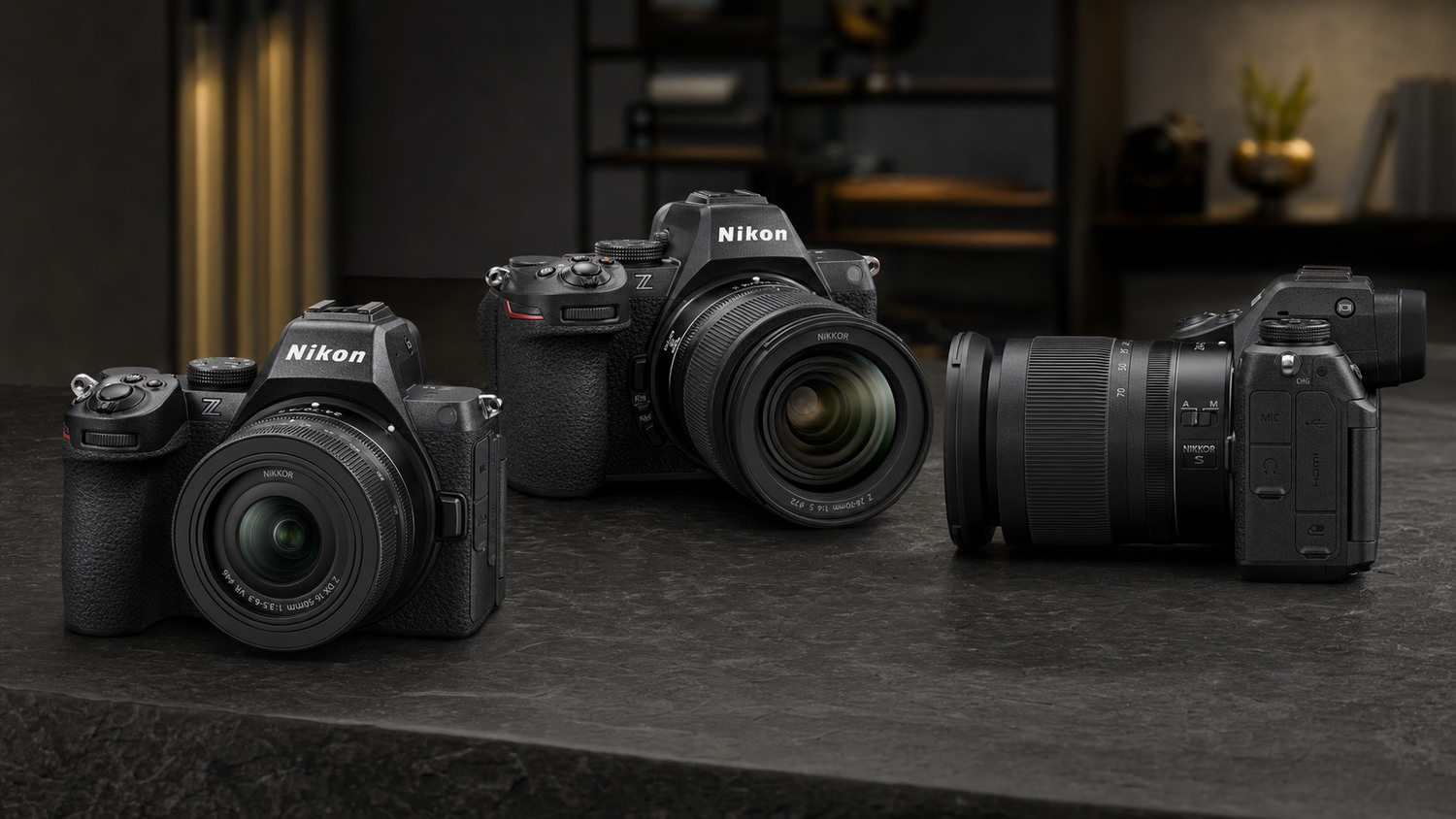
Choose a Nikon Z for the pictures you make, the lens you need and the weight you will carry, not a ranking.
A light Z50II, a full-frame Z5II and a faster Z6III can all come on the same family trip. Their differences show up when the room is dark, a child runs, a bird is distant or the bag has been on your shoulder all day. Do not look for one winning Nikon Z. Start with the pictures and clips you want to make, then choose the camera and lens that remove the right difficulty.
Which Nikon Z should you choose? The quick answer
The Z50II is a compact first mirrorless camera for family, travel and light content creation. The Z5II is a stabilised, versatile route into full frame. The Zf suits photographers who enjoy direct dial control. The Z6III is built for a broader mix of action and advanced video. Z7II, Z8 and Z9 make sense when resolution, demanding production or professional endurance are part of the job. Z6II remains a sensible option when its feature set fits the work.
| Priority | Useful model | Who it suits | Limit to accept |
|---|---|---|---|
| First kit, travel and family | Z50II | DX users wanting to travel light | Lens choice and burst limits still matter. |
| Portraits and everyday full frame | Z5II or Zf | Travel, people and direct controls | FX lenses can make the kit larger. |
| Action and hybrid work | Z6III | Events, wildlife and video | Fast modes require an appropriate workflow. |
| Detail or professional output | Z7II, Z8 or Z9 | Landscape, studio or intensive action | Files, cards and weight need a reason. |
Begin with the pictures you want to make
Separate a picture you enjoy seeing from one you need to get right. At a birthday party, you may need to find a face quickly in a dim room. On a trip, the camera needs to come out of the bag without becoming a decision. For a landscape, you can slow down. That rhythm often says more about the right camera than a long list of specifications.
Name three real scenes rather than saying you shoot “a bit of everything”. An indoor portrait, a city walk, a running dog, a landscape and a school concert make different demands. Note subject distance, light, movement, how long you carry the kit and what happens to the files afterwards. Sharing online, printing large, cropping heavily and editing video are different projects.
DX and FX change part of the framing. DX is the smaller sensor format used in Z50II; FX is Nikon full frame. With the same lens from the same place, DX records a narrower part of the scene. It can help a distant animal occupy more of the frame, but it does not create optical zoom or move you closer. Compare the lenses that provide your actual framing rather than comparing bodies by name.
Compare a camera-and-lens kit, not bare bodies
Picture each kit in your own bag before comparing it on a screen. A general-purpose zoom can make a family day easier because it avoids a lens change. A telephoto adds something for a match or a distant bird, but it needs room and a steady hold. The best kit is not the one that covers every imaginable situation; it is the one you will take out when the picture happens.
The Nikon Z mount is the mechanical and electronic connection between a Z camera and lens. NIKKOR Z DX lenses are designed for DX; NIKKOR Z lenses made for FX cover the full-frame sensor. Buy a kit when its lens handles your first use. Buy body-only when you already own the compatible lens you need.
Many Nikon F-mount lenses can be used through the FTZ II adapter, with restrictions that vary by lens. Check the exact lens, retained autofocus, available stabilisation and balance. Focal length is the millimetre value on a lens and sets its angle of view. Aperture, shown as f/1.8 or f/4, controls how much light enters; a smaller f-number opens wider but may add lens size and weight.
Check the Nikon lenses before settling on a body, then compare genuine kits in the Nikon mirrorless category.
For a first camera, travel and family
For a day of sightseeing, begin with the lens you will actually mount. A zoom that moves from a building to a portrait without being changed may solve a more useful problem than a few extra megapixels. If most of your family pictures happen indoors in the evening, a brighter lens and spare battery can matter more than reaching the highest burst rate.
The Nikon Z50II is the straightforward DX choice for learning, holidays and family pictures. It has a 20.9-megapixel sensor, electronic viewfinder, vari-angle screen and detection for nine subject types. It records up to 4K/60p with a crop, offers 10-bit N-Log and reaches up to 30 frames per second in specified modes and formats with pre-release capture.
A burst is a rapid sequence of pictures. Pre-release capture saves frames just before a full shutter press, which can help with an unpredictable moment. Neither feature guarantees a sharp sequence: lens choice, light and your timing still matter.
The Z5II is worth considering when full frame, stabilisation and a route towards FX lenses answer a genuine portrait, travel or everyday need. It has 24.5 megapixels, two SD UHS-II slots and in-body stabilisation rated by Nikon at up to 7.5 stops in the centre under stated conditions. That is a maximum claim, not a promise. Its 4K/60p is cropped, so check the real angle if you film.
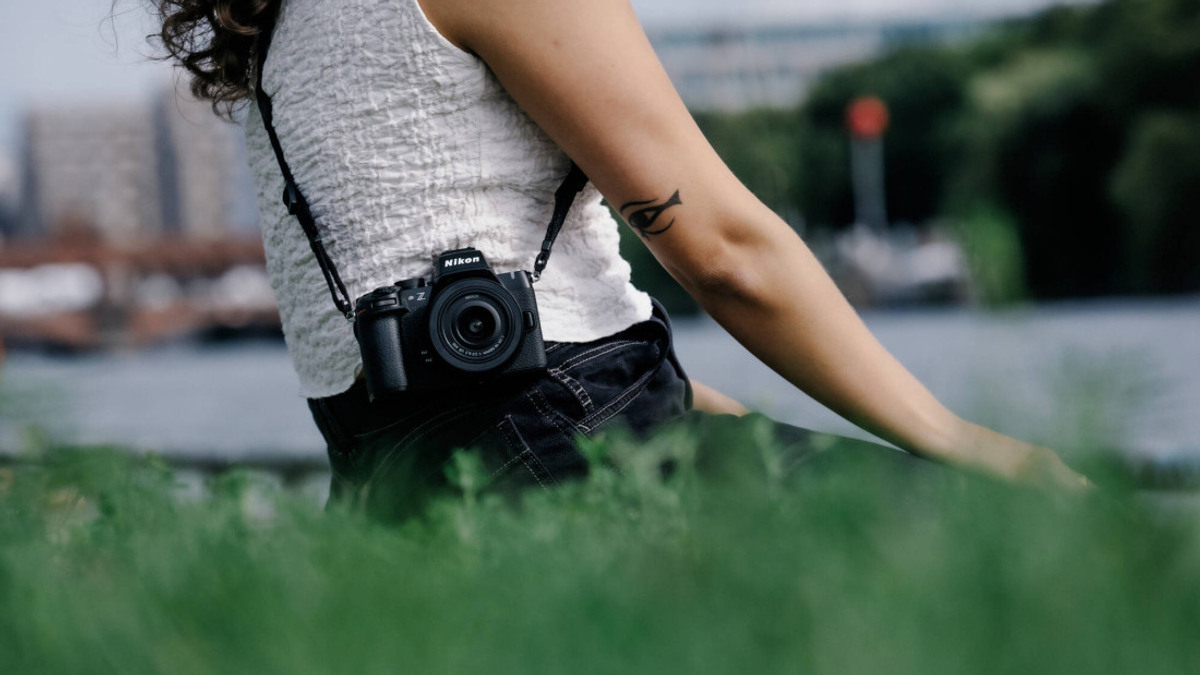
For portraits, street work and events
For a wedding reception or an evening in the street, do not expect stabilisation to do the work of shutter speed. It can help you keep a still background sharp, whereas a moving person still needs an exposure short enough to stop the movement. This is why the lens, the available light and the way you work matter before a model’s position in the range.
The Z5II is a calm, stabilised full-frame option for people and everyday photography. Stabilisation reduces blur from your hands when the subject is still; it cannot freeze someone walking. For portraits, lens aperture, your distance from the person and the distance to the background remain important.
The Nikon Zf combines a 24.5-megapixel FX sensor, EXPEED 7, vari-angle screen and film-inspired dials. It can suit photographers who prefer direct exposure controls. The grip shape and dial layout deserve a real check: a classic look is not an automatic photographic advantage.
The Z6III adds a more responsive balance for changing events, action and video. Its 5.67-million-dot electronic viewfinder can reach 4,000 nits. That helps in bright conditions; it is less decisive for a quiet portrait session.
For sport and wildlife
Give yourself a practical margin when tracking action. Framing a little wider than feels perfect can make it easier to keep a runner or bird inside the picture when it changes direction. Cropping later is sometimes preferable to losing the subject entirely. That is also why a lighter telephoto you can follow smoothly may be more useful than the longest lens you can carry.
Z50II can be a light starting point because DX gives a tighter view with the same telephoto lens. Autofocus is the automatic focusing system that needs to follow a moving animal or athlete with the camera. A suitable telephoto, the light and anticipation matter more than an isolated burst-rate figure.
Z6III reaches up to 20 frames per second in RAW with electronic shutter and 14 with mechanical shutter, depending on Nikon conditions and formats. It records internally up to 6K/60p; 4K/120p uses DX mode. The Z8 adds 45.7 megapixels, fast autofocus and up to 8.3K/60p N-RAW in a body of about 960g with battery and card.
The Z9 is for professional sport, news and production, with integrated vertical grip, two CFexpress Type B slots and about 1,340g with battery and card. It is not the rational beginner choice because it sits higher in the range.
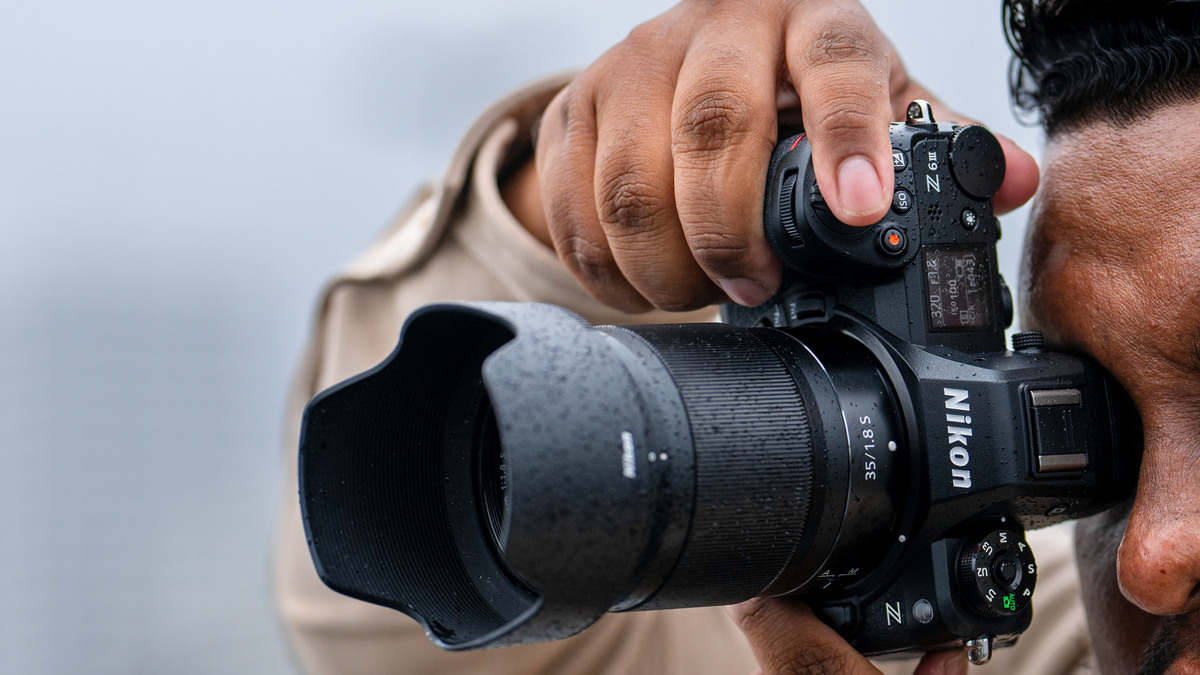
For landscape, architecture and studio
A high-resolution file does not choose the viewpoint for you. In architecture, keeping the camera level can matter more than adding pixels. In landscape, foreground, wind and early light often matter more than moving from 24.5 to 45.7 megapixels. Higher resolution earns its place when you genuinely need a large print, a significant crop or very fine detail in a still subject.
The Z7II offers 45.7 megapixels, dual card slots and USB-C power for landscape, architecture, studio, large prints and carefully composed subjects. More pixels are useful only when the lens, focus and subject allow them to be used.
Z8 brings that resolution with newer autofocus and video without an integrated vertical grip. Z5II or Z6III may be enough if you mostly share images, rarely crop deeply and do not need large output. High-resolution files also affect cards, storage and computer time.
For video and content creation
Z50II provides a vari-angle screen, 4K and N-Log for lighter creation. N-Log is a lower-contrast video profile that leaves more room for colour grading after filming. It is helpful when you edit footage; it is not required for a simple upload.
Z5II offers full-frame 4K/30p and cropped 4K/60p. Z6III records up to 6K/60p internally and 4K/120p in DX. Z8 and Z9 reach up to 8.3K/60p N-RAW. N-RAW preserves more video data for post-production, which demands more from cards, storage and computer. Check sound, recording duration, heat and editing before choosing a format.
Nikon Z5II, Zf or Z6III?
All three have 24.5-megapixel FX sensors, but they feel different. Z5II is the practical stabilised full-frame choice with two SD slots. Zf is for someone who genuinely enjoys its dials and classic handling. Z6III prioritises speed, bright viewfinder and more advanced video.
Ask what currently slows you down: carrying the kit, changing settings, following action or editing video. Zf will not make a portrait more personal by itself, Z6III does not make 6K necessary, and Z5II is not inadequate because it is simpler.
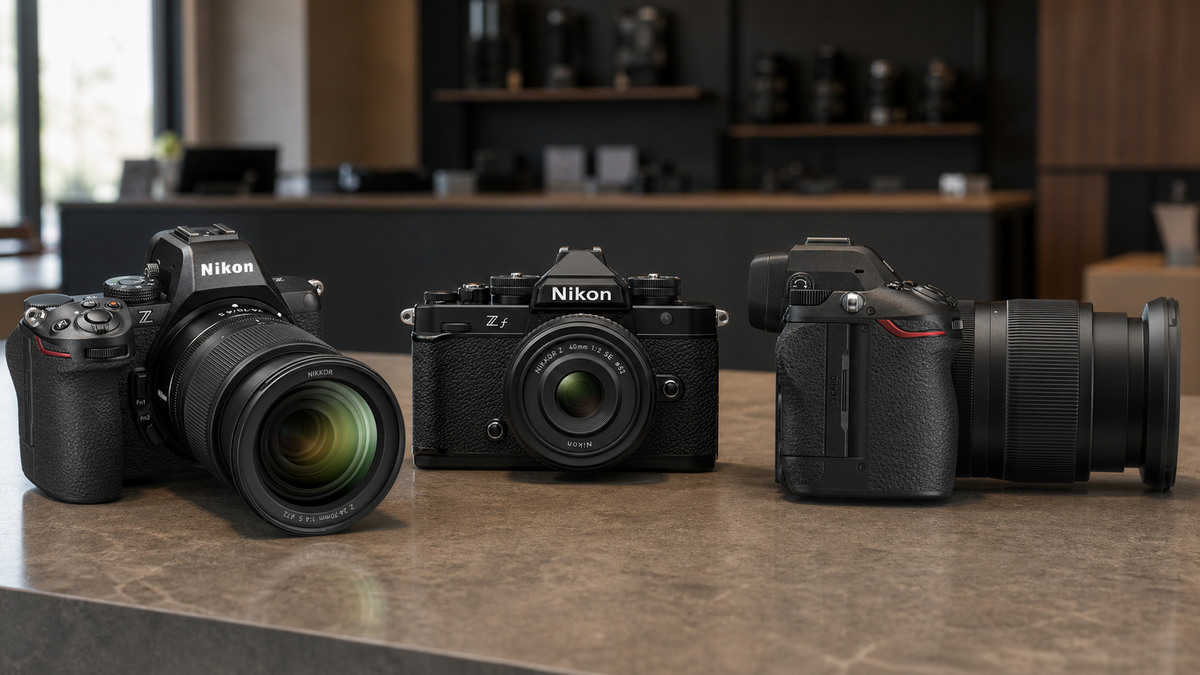
Nikon Z7II, Z8 or Z9?
Z7II is primarily about detail for more settled subjects. Z8 combines 45.7 megapixels, fast autofocus and advanced video in a body without vertical grip. Z9 brings the same resolution with integrated grip, endurance and transmission features for sport, news and professional output.
Z9 is not “better for everything”. Its size, weight and two CFexpress Type B cards are justified when that work is real. For travel, a landscape project or occasional events, Z7II or Z8 may answer a very different brief.
Is Nikon Z6II still a good choice?
It can be especially sensible when you already know the kind of photographs you make and do not need the newer modes. A photographer who edits short clips, makes portraits and takes a few event pictures does not automatically gain from moving to a more demanding workflow. On the other hand, if subject tracking or advanced video is the problem you meet every week, compare the Z6II honestly with Z5II and Z6III rather than assuming one answer fits every use.
Yes, when its functions cover your work. The Z6II has a 24.5-megapixel FX sensor, two EXPEED 6 processors, Nikon-rated 5-stop stabilisation, up to 14 frames per second in RAW under Nikon conditions and full-frame 4K/30p. Its 4K/60p uses a DX crop.
Its autofocus, subject tracking and video are older than EXPEED 7 models. That does not make it obsolete. Compare handling, cards, lens and the video modes you actually need against Z5II or Z6III.
What matters now and what can wait
Start by removing features you are unlikely to use in your first year. An integrated vertical grip does not automatically help on a city break. 8K video is not a safety net if the computer already struggles with simple files. A spare battery, reliable card and lens that covers your usual scenes solve problems from the first outing.
| Essential now | Useful for some work | Can wait for a first kit |
|---|---|---|
| Lens, total weight, handling, subject-appropriate autofocus, battery and cards. | Stabilisation, dual slots, 45.7MP, bursts and N-Log/N-RAW. | 8K, vertical grip and professional transmission modes. |
Ask five questions: what do you photograph most, in what light, with what all-day weight, for what final output, and with which lens? Honest answers stop advanced functions becoming expensive baggage.
MCZ DIRECT verdict
If you are between two models, make one small test on paper: write the lens you would mount first, the bag you would carry and the scene you would take next weekend. A choice that still makes sense in that short list is usually more durable than one based on a feature you hope to need later. Nikon Z is a system, so a well-chosen lens can remain useful when your body eventually changes.
There is also room to begin simply. A family photographer does not need to settle every future wildlife or studio question on the first purchase. Start with the body and lens that make today’s pictures easier, keep notes on what feels limiting, and let those real limits guide the next addition to the kit.
For a first Nikon Z, family work and travel, Z50II is the clearest DX choice; its limit is choosing lenses with DX framing in mind. For a first versatile full-frame camera, Z5II makes sense if FX lenses and cropped 4K/60p fit your plan. Zf is right for photographers who truly want its dial-based approach, not for a promise of style.
For action, events and advanced video, Z6III is the broader choice when you will use its modes and workflow. For high resolution, choose Z7II, Z8 or Z9 according to subject movement, weight and endurance. Z6II remains valid when its feature set is enough. Compare the real options in the MCZ DIRECT Nikon mirrorless selection.
Sources and editorial verification
Sources reviewed and checks completed before publication.
MCZ DIRECT editorial analysis verified on 26 July 2026 using Nikon documentation and the public MCZDIRECT catalogue. No comparative field test or absolute ranking is claimed. Burst and stabilisation values are Nikon maximum claims under stated conditions.
- Nikon official guide — Nikon Z camera range
- Nikon official product page — Nikon Z50II
- Nikon official product page — Nikon Z5II
- Nikon official product page — Nikon Zf
- Nikon official product page — Nikon Z6III
- Nikon official product page — Nikon Z6II
- Nikon official product page — Nikon Z7II
- Nikon official product page — Nikon Z8
- Nikon official product page — Nikon Z9
- Nikon official comparison — Z6II, Z6III, Z8 and Z9
- Nikon official range — NIKKOR Z lenses
- Nikon official product page — FTZ II mount adapter
Nikon Z frequently asked questions
Which Nikon Z for beginners?
The Nikon Z50II is the clearest starting point for a compact DX kit, especially for family and travel. Check that the supplied lens covers your first pictures and that the complete kit is comfortable to carry.
Which Nikon Z for travel?
Z50II suits photographers who want a light kit that comes out of the bag easily. Z5II makes more sense when full frame and in-body stabilisation serve a genuine need, provided that you are comfortable carrying potentially larger FX lenses.
Which Nikon Z for portraits?
Z5II provides a versatile, stabilised full-frame base. Zf is another option when you genuinely enjoy its dials and handling. With either camera, the lens, available light and distance between the subject and background shape the portrait more than the body’s appearance.
Which Nikon Z for sport or wildlife?
Z50II is a relatively light starting point with tighter DX framing. Z6III and Z8 serve more advanced tracking and response needs. A suitable telephoto lens, enough light and good anticipation remain just as important as the camera’s maximum burst rate.
Z5II versus Z6III?
Both use 24.5-megapixel FX sensors. Z5II favours versatile photography, stabilisation and two SD cards. Z6III adds more speed, a brighter viewfinder and advanced video formats that only make sense when your cards, storage and editing computer can support them.
Is Zf suitable for beginners?
Yes, a beginner can use Zf when its direct dials and grip feel comfortable. The visible controls may even help some photographers understand exposure settings. Its classic design does not replace learning or a lens chosen for the pictures you want to make.
Is Z6II still worthwhile?
Yes, Z6II remains sensible when its autofocus, cards and video modes cover your work. EXPEED 7 cameras are newer for subject tracking and advanced video, but that does not make Z6II obsolete for portraits, settled subjects and occasional events.
Can Nikon F lenses be used?
Many Nikon F-mount lenses can be used on Nikon Z cameras through the FTZ II adapter. Compatibility varies by lens, so check the exact model, retained autofocus, available stabilisation and the balance of the finished camera-and-lens kit.
Leave a comment