

Shopping Cart
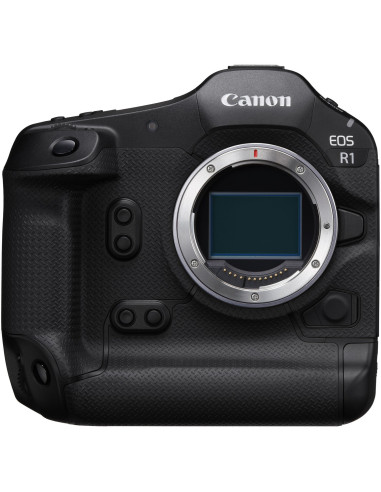
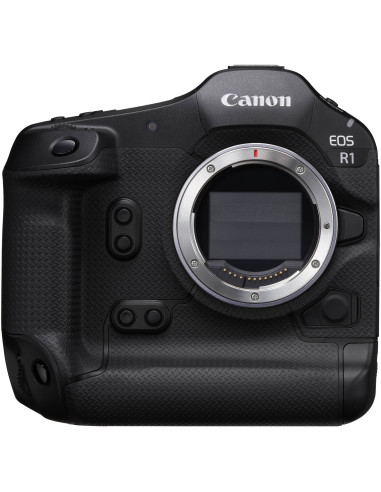
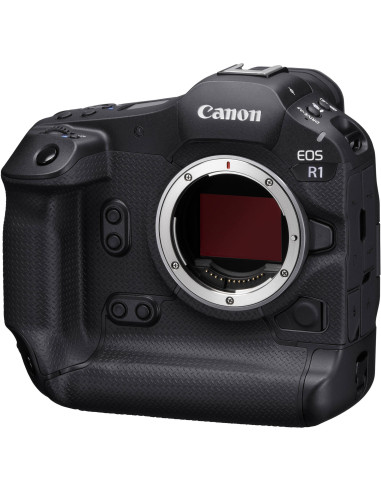
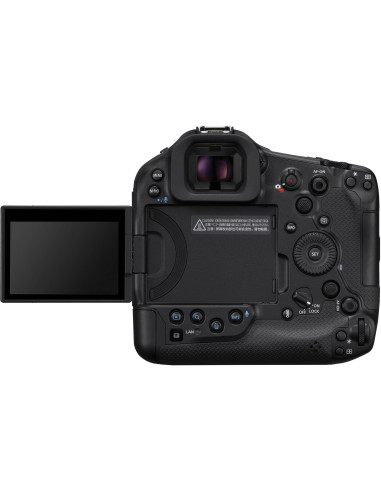
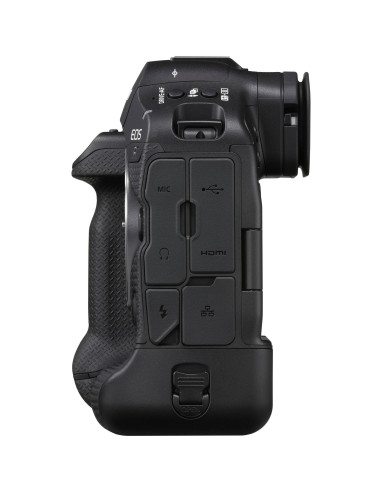
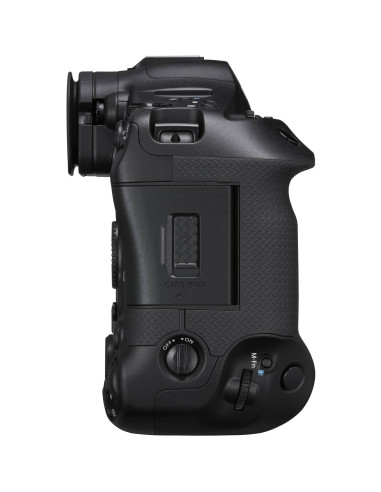
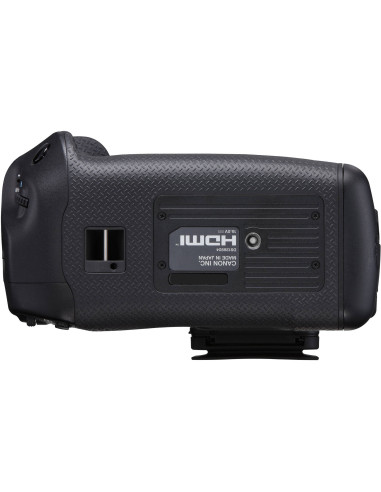
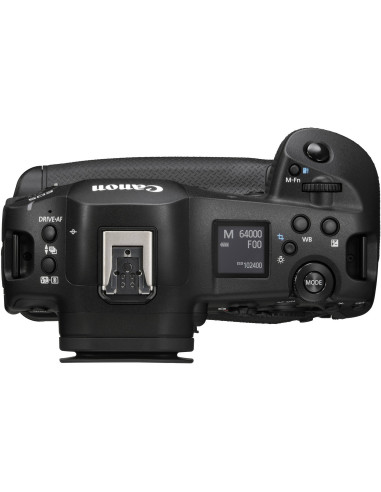
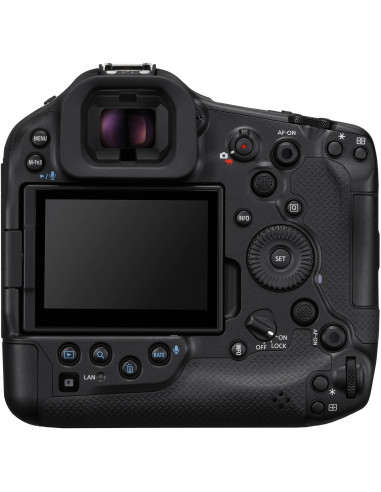
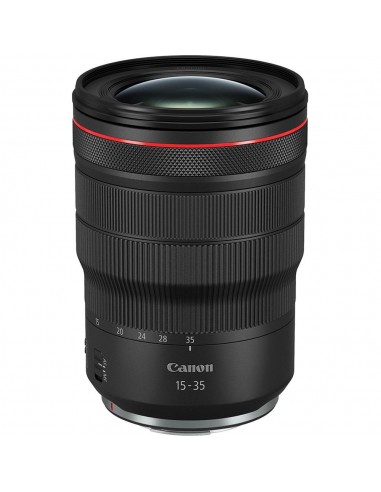
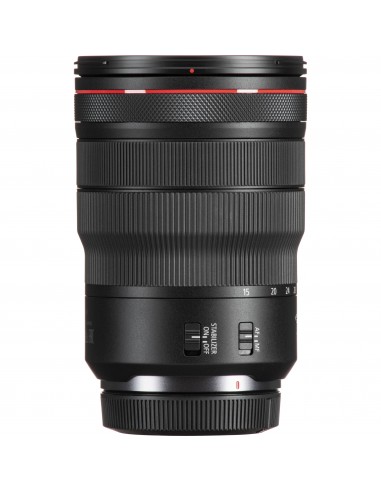
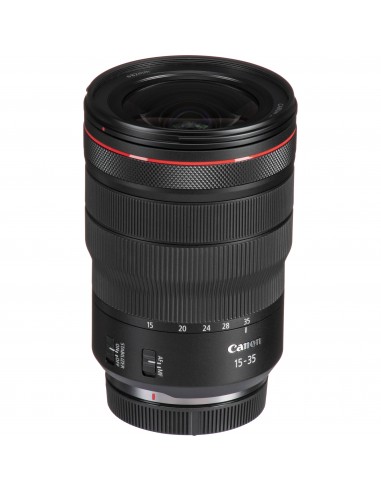
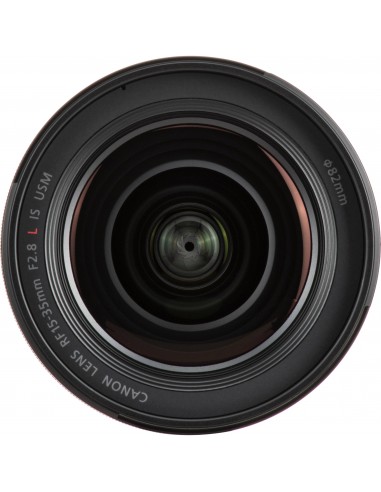
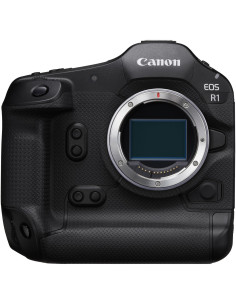
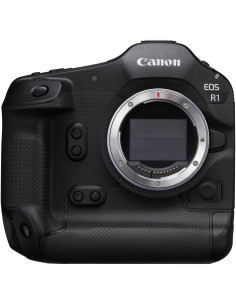
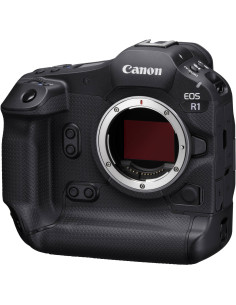
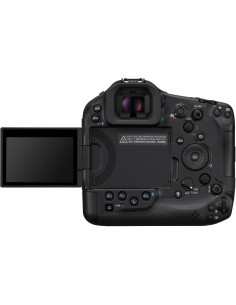
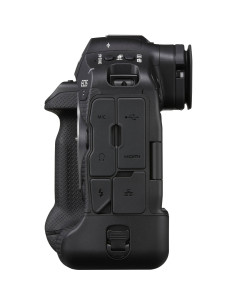
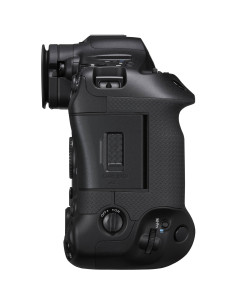
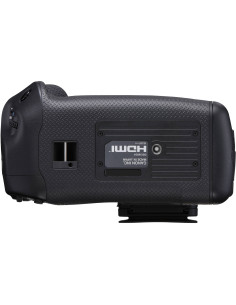
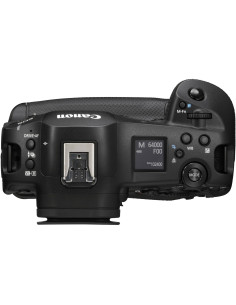
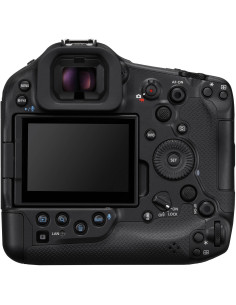
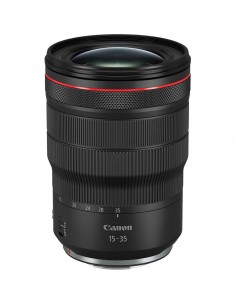
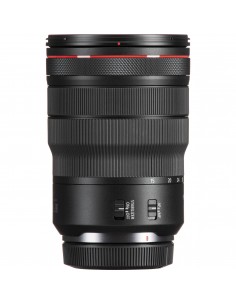
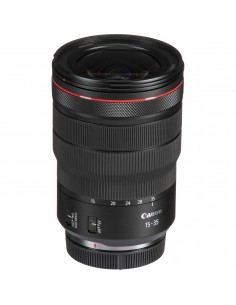
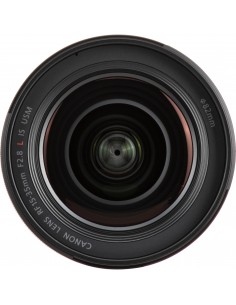


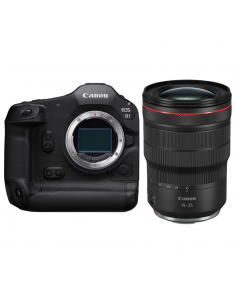

The Canon EOS R1 with RF 15-35mm F2.8 L IS USM is a professional full-frame kit recommended for photographers and filmmakers who need a wide view for architecture, interiors, documentary work, weddings or landscapes without giving up speed. The EOS R1 can follow fast action at up to 40 fps, while the lens moves from an immersive 15mm view to the more natural perspective of 35mm at a constant F2.8 aperture. Optical stabilisation helps when working handheld with relatively still subjects or carefully controlled video. This pairing makes sense when the location is part of the story and changing lenses would interrupt the moment. It is less suitable as a single-lens solution for tight portraits or for anyone prioritising a lightweight travel setup.
Combine compatible accessories and save. The more items you add, the bigger the discount.
Accessory
Accessory
Accessory

warranty extension
This kit combines a camera built to react quickly with an ultra-wide zoom that keeps the location visible around the subject. It is aimed at architecture, interior, documentary, wedding and landscape photographers who often work close to the scene and cannot afford to lose a moment while changing lenses.
The pairing is at its best when a wide image still contains movement. The EOS R1 handles tracking and short-lived action, while the RF 15-35mm F2.8 L IS USM lets the photographer shift from an immersive 15mm view to the calmer perspective of 35mm.
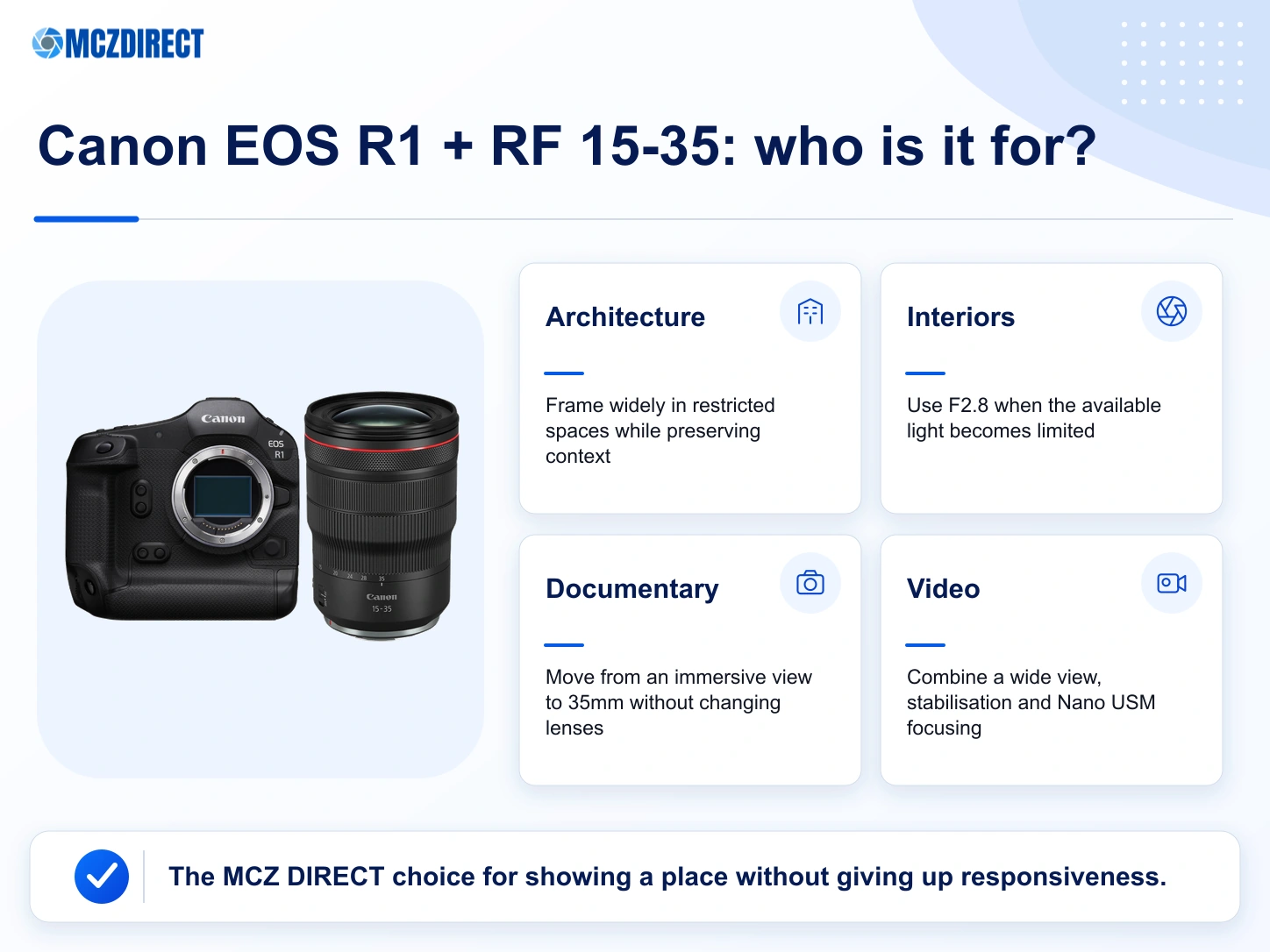
The camera contributes a 24.2MP stacked full-frame sensor, responsive autofocus and electronic bursts up to 40 fps. The lens covers the focal lengths most useful when a room, crowd or building needs to remain part of the image. Together they create a kit for assignments where both context and timing matter.
The Canon EOS R1 body is the more sensible option if you already own a professional RF wide-angle. This bundle is for photographers who want the 15-35mm available as a primary working lens from the outset.
At 15mm, the frame pulls in a large amount of the surroundings. It can make a compact interior readable, show the scale of a building or place the viewer close to the action. The trade-off is stronger perspective: faces near the edges can stretch, and tilting the camera makes vertical lines converge.
Around 24mm, the view stays broad but becomes easier to organise. At 35mm, the lens feels more natural for documentary work, street photography and environmental portraits. The ability to move between these viewpoints is the central reason to choose this zoom rather than a single ultra-wide prime.
| Component | Practical benefit | Where it matters |
|---|---|---|
| EOS R1: 24.2MP stacked sensor | Balances readout speed, usable detail and manageable files. | Documentary, events and mixed stills-video production. |
| Up to 40 fps | Records more stages of a very brief movement. | Entrances, dance, close action and unrepeatable reactions. |
| RF 15-35mm F2.8 L IS USM | Moves from an immersive view to natural documentary framing. | Architecture, interiors, landscapes, weddings and film. |
| Five-stop optical stabiliser | Reduces blur caused by camera movement. | Static interiors, twilight, landscapes and careful handheld video. |
| Two CFexpress Type B slots | Support backup, file separation and relay recording. | Long assignments using bursts and high-quality video. |
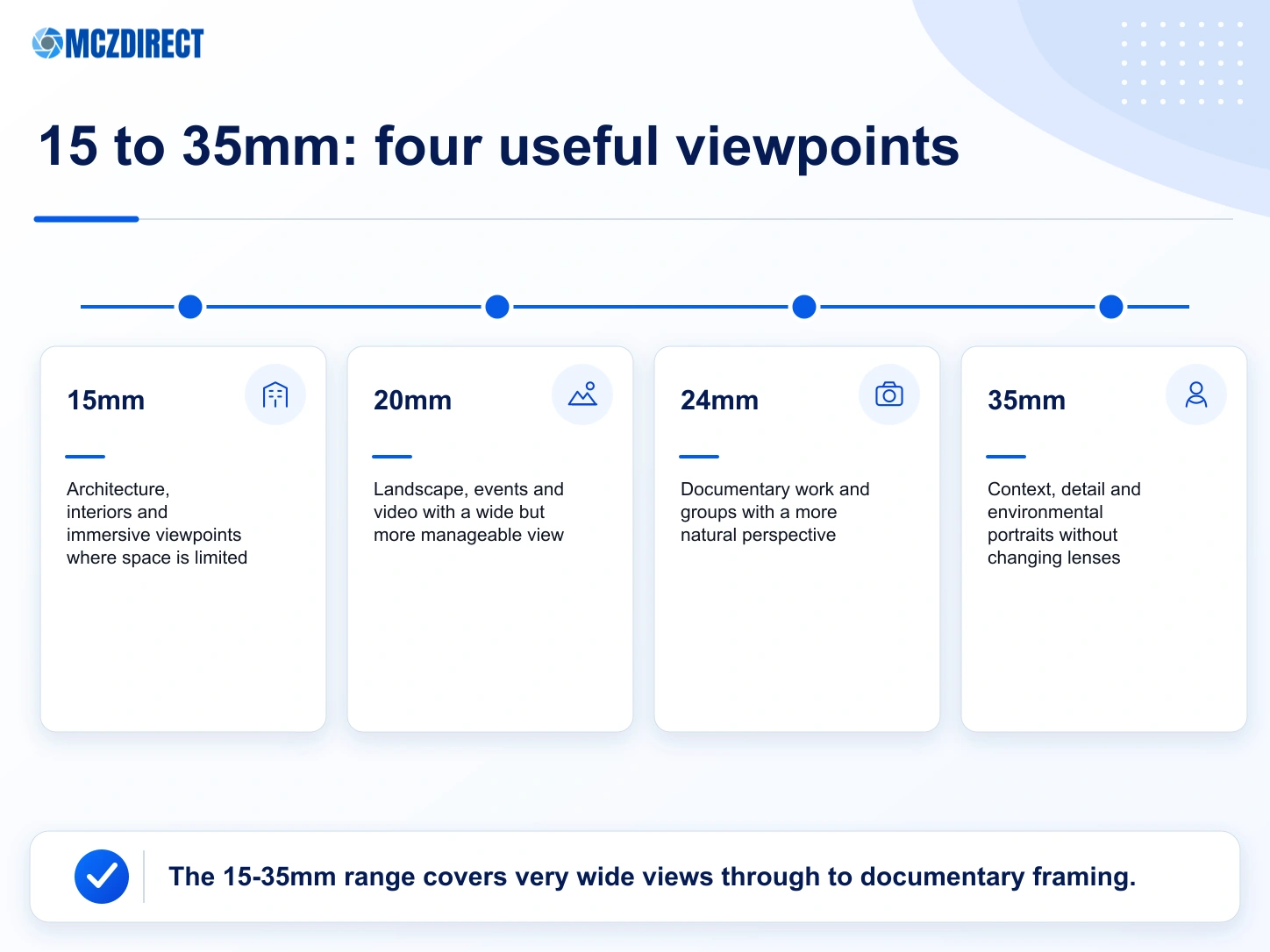
Fifteen millimetres can solve a practical problem when a wall, corridor or fixed shooting position removes the option to step back. Keeping the camera level is still essential. A wide lens will not correct converging verticals created by pointing the body upwards, so camera height and position deserve as much attention as focal length.
The RF 15-35mm also works with Canon’s lens-correction system. Those profiles contribute to the final rendering, particularly at the widest setting. Its 0.28m minimum focusing distance and 0.21x maximum magnification at 35mm also make it possible to isolate an architectural or decorative detail while retaining some of the location. Photographers producing high-resolution architectural files should check their RAW workflow, corner detail and chosen correction profile before a major assignment.
A wide zoom is useful when the place explains the moment. At a wedding, 24mm or 35mm can include the room, guests and atmosphere around the main subject. In documentary work, the photographer can remain close enough to feel present without reducing every image to a head-and-shoulders portrait.
The constant F2.8 aperture is valuable when the light changes but the framing still needs to move. Forty frames per second is not a setting to use for every scene; it becomes useful when someone crosses the frame, a group reacts or a short interaction cannot be repeated.
Canon rates the lens stabiliser at five stops under its test conditions. It gives more freedom with a static interior, a city at dusk or a landscape photographed without a tripod. The F2.8 aperture also helps the autofocus system and reduces the ISO needed when available light falls.
Stabilisation cannot freeze a moving person. During a reception, dance or fast documentary sequence, shutter speed still has to match the subject. In those situations, F2.8 often matters more than the stabiliser figure because it preserves a faster exposure.
| Configuration | Choose it for | Consider |
|---|---|---|
| EOS R1 + RF 15-35mm F2.8 L | Architecture, interiors, weddings, documentary and low light. | Heavy combination with no reach beyond 35mm. |
| EOS R1 + RF 16-28mm F2.8 STM | Travel, mobile video and a lighter wide-angle kit. | Shorter range and a less intensive-use design. |
| EOS R1 + RF 10-20mm F4 L | Very restricted spaces and extreme wide views. | F4 aperture and a more specialised perspective. |
| EOS R1 + RF 24-70mm F2.8 L | General weddings and documentary work with tighter portraits. | Not as wide when space is limited. |
Wide-angle photography can contain fast action close to the camera. The EOS R1 can detect and follow people, animals or vehicles as they enter the frame, allowing the photographer to concentrate on timing and the relationship between the subject and the background. Canon specifies 1,053 automatic selection zones for stills; these should not be confused with 1,053 physical focus points.
Electronic shooting reaches 40 fps, and pre-continuous shooting can retain up to 20 frames from before the shutter is fully pressed when enabled. That safety margin is useful for abrupt movement, but it increases the editing load and card usage very quickly.
The EOS R1 records internal RAW up to 6K 60p and 4K up to 120p, depending on the selected mode. With the 15-35mm, those formats suit establishing shots, moving sequences in tight spaces, behind-the-scenes work and footage where the environment has narrative value. Nano USM keeps focus transitions quick and unobtrusive.
At almost two kilograms before accessories, the complete kit requires careful balancing on a gimbal. Optical stabilisation helps handheld work, but it does not replace smooth movement or deliberate framing. Camera motion generally looks calmer toward 24-35mm than at the most extreme 15mm setting.
The EOS R1’s 24.2MP resolution is designed around speed and a manageable professional workflow rather than extreme cropping. It provides enough detail for demanding editorial use, prints and commissioned work when the composition is established in-camera. A higher-resolution body offers more freedom if heavy architectural cropping is routine.
At 15mm, edge detail and optical corrections are more visible than they are near the centre. Stopping down can improve consistency across a static scene, while F2.8 is more useful when light or shutter speed takes priority. Checking the corners at capture remains good practice.
| Assignment | Useful function | Watch for |
|---|---|---|
| Architecture and interiors | 15mm, level camera position and lens corrections. | Vertical lines, frame edges and corner quality. |
| Weddings and documentary | 24-35mm, people tracking and F2.8. | Working distance and faces near the edges. |
| Twilight landscape | Optical stabilisation and controlled ISO. | Movement in the scene and peripheral sharpness. |
| Close action | Up to 40 fps, pre-shooting and subject tracking. | File volume and a fast enough shutter speed. |
| Wide-angle video | 6K RAW, 4K 120p and Nano USM. | Gimbal load and exaggerated perspective during movement. |
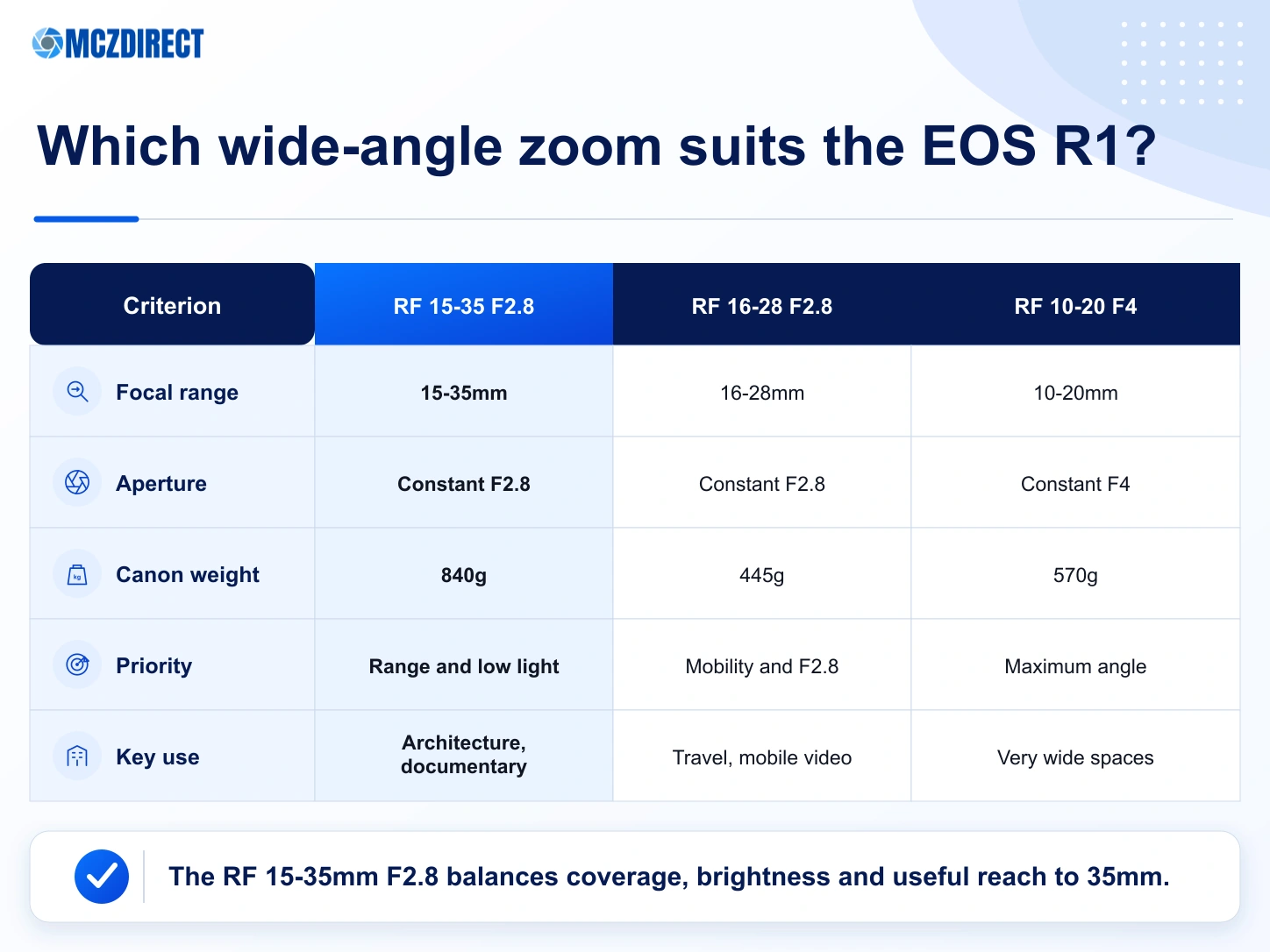
The EOS R1 with RF 16-28mm F2.8 IS STM keeps F2.8 in a much lighter package, though it stops at 28mm and is aimed at a different level of intensive use. The EOS R1 with RF 10-20mm F4 L IS STM reaches far wider for very tight interiors, but loses one stop of light.
The 15-35mm sits between them as the versatile professional option. It offers more everyday reach than the 10-20mm and a broader working range and L-series build than the 16-28mm. Choose the standalone Canon RF 15-35mm F2.8 L IS USM if you already own the body.
The 15-35mm makes the environment part of the picture, but it cannot produce a tight portrait from across a room. The EOS R1 with RF 24-70mm F2.8 L IS USM keeps the same maximum aperture and covers a more conventional wedding or documentary range.
The EOS R1 with RF 24-105mm F4 L IS USM reaches further with one lens, while giving up a stop of light. The practical question is how often your final work genuinely needs 15mm rather than 70mm or 105mm.
The EOS R1 weighs approximately 1,115g with a battery and card, and the RF 15-35mm adds 840g. The working combination therefore reaches roughly 1.96kg before a microphone, filter or support. It balances appropriately on the integrated-grip body, but the load becomes noticeable during a long event or on a stabiliser.
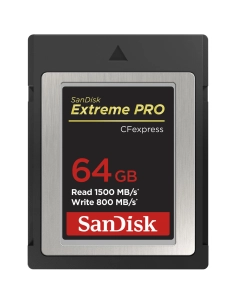
Two CFexpress Type B slots can be configured for backup, file separation or relay recording. Long 40 fps bursts and 6K RAW video require cards, readers and storage fast enough to support the workflow. The body removes one bottleneck; it does not remove the need to plan the rest of the chain.
At 15mm, subjects close to the edge can appear stretched and tilted camera angles exaggerate converging lines. At 35mm, the zoom still does not replace a short telephoto for tight portraits. Its F2.8 aperture and professional construction also make it heavier than compact alternatives.
At MCZ DIRECT, we see this as one of the most coherent EOS R1 configurations for architecture, interiors, immersive documentary work, weddings and wide-angle video. The Canon EOS R1 category is the better place to compare the other lens pairings when reach, macro work or lower weight matters more.
At MCZ DIRECT, we position this kit for professionals who regularly build an image around the location: architecture, interiors, immersive documentary work, weddings and wide-angle film. We would not recommend it as a universal one-lens kit for photographers who often need tight portraits from a distance.
Compared with the RF 16-28mm F2.8 STM, the 15-35mm L offers a broader range and a more work-focused build, but carries substantially more weight. Compared with the RF 24-70mm F2.8, it is the better decision when 15mm is essential and 70mm is rarely required. Its clearest limitations are the total load and the discipline needed to manage perspective at the edges.
Choose the Canon EOS R1 with RF 15-35mm F2.8 L IS USM when your assignments require a genuinely wide view, a constant aperture and professional response without changing lenses in the middle of the scene.

It is primarily for professional architecture, interior, landscape, documentary, wedding and video work where a wide view is used regularly.
The lens provides a fast ultra-wide view, while the EOS R1 adds responsive tracking, burst speed and a professional recording workflow.
Yes. Fifteen millimetres helps in restricted spaces. Keeping the camera level and checking verticals and lens corrections remain important.
It works well for establishing shots, ceremonies, dance floors and close documentary coverage. A longer lens is still useful for tight portraits.
Fifteen millimetres creates an immersive frame with extensive surroundings. At 35mm, perspective feels more natural for documentary work and environmental portraits.
Canon rates its optical stabilisation at five stops under test conditions. It reduces camera movement, but it cannot freeze a moving subject.
No. It records internal RAW up to 6K 60p and 4K up to 120p, depending on the selected recording mode.
The body is about 1,115g with battery and card and the lens is 840g, giving a working weight of roughly 1.96kg before accessories.
It has two CFexpress Type B slots. Suitable high-performance cards are needed for long bursts and the most demanding video modes.
Perspective is strong near the edges at 15mm. Keep people closer to the centre or move toward 35mm for a more natural result.
The 15-35mm prioritises range, L-series construction and intensive use. The 16-28mm is considerably lighter for a mobile kit.
Choose the 15-35mm for architecture and immersive views. The 24-70mm is more versatile for general documentary work and portraits.
