My basket0 items











Find your orders, invoices and saved addresses all in one place.
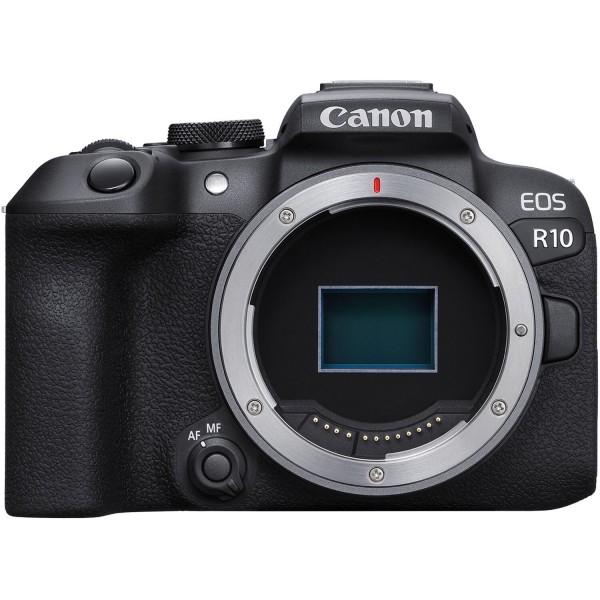
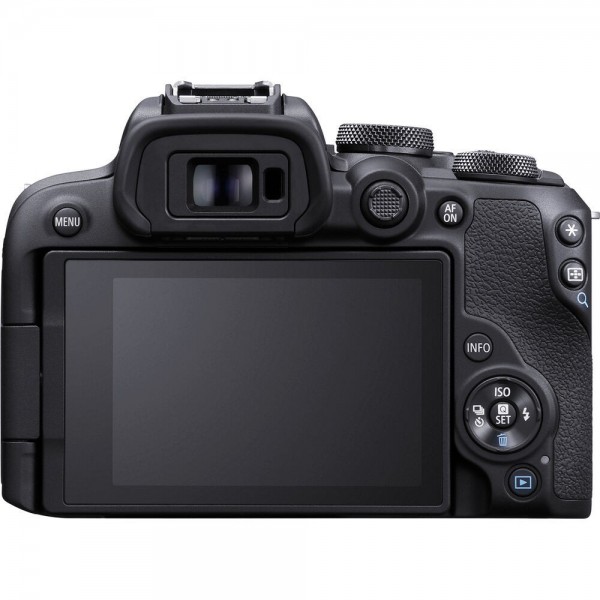
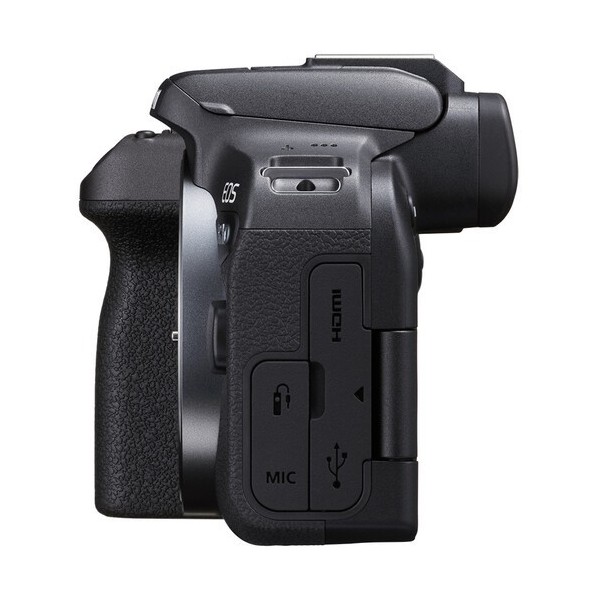
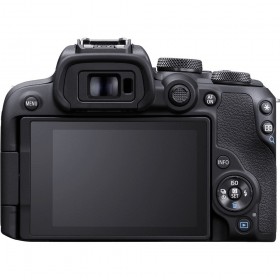
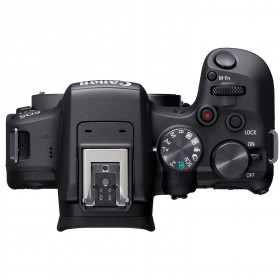
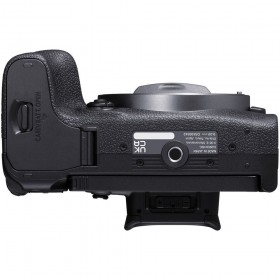
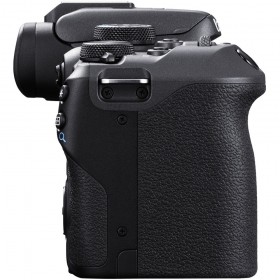
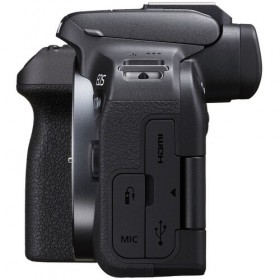
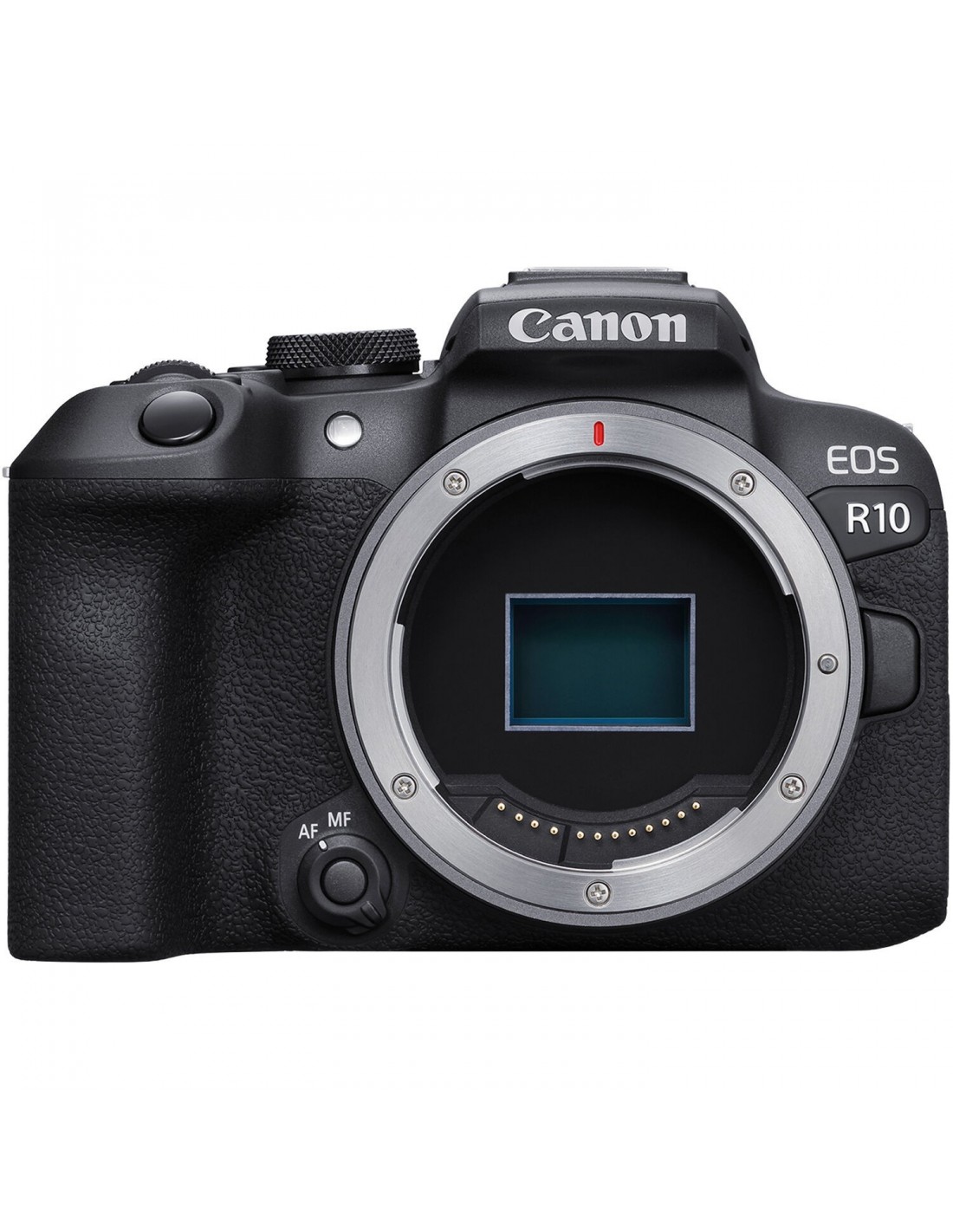
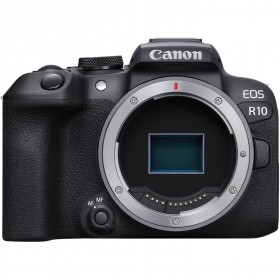
The Canon EOS R10 is a 24.2MP APS-C mirrorless camera for photographers who want a light, fast system that leaves room to grow, and we recommend it for travel, family, portraits and a first step into action photography. Its autofocus recognises people, animals and selected vehicles, while bursts reach 15 fps mechanically or 23 fps electronically. For video, 4K 30p prioritises detail through 6K oversampling; 4K 60p is smoother but uses a strong crop. This is the body-only version, intended for an RF or RF-S lens chosen around the actual assignment. With a viewfinder, vari-angle screen and approachable controls, it is an overall sensible choice for moving beyond a phone or an older DSLR without carrying an unnecessarily heavy kit for everyday use.
Combine compatible accessories and save. The more items you add, the bigger the discount.
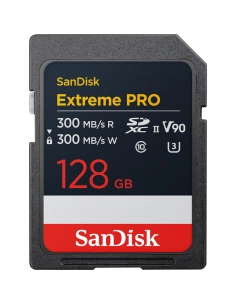
memory card
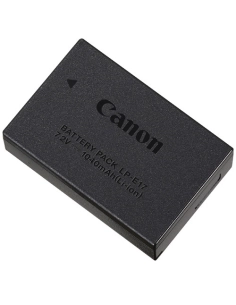
battery
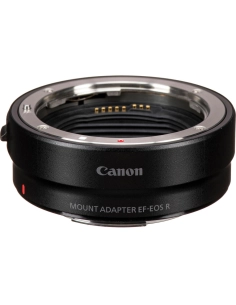
Adaptateur

warranty extension
The Canon EOS R10 body only is aimed at photographers moving beyond a phone or an older DSLR who want faster focusing and more direct control without immediately accepting the weight and cost of a full-frame system. Its 24.2MP APS-C sensor, Dual Pixel CMOS AF II and quick bursts make a capable combination for travel, family, portraits and moving subjects.
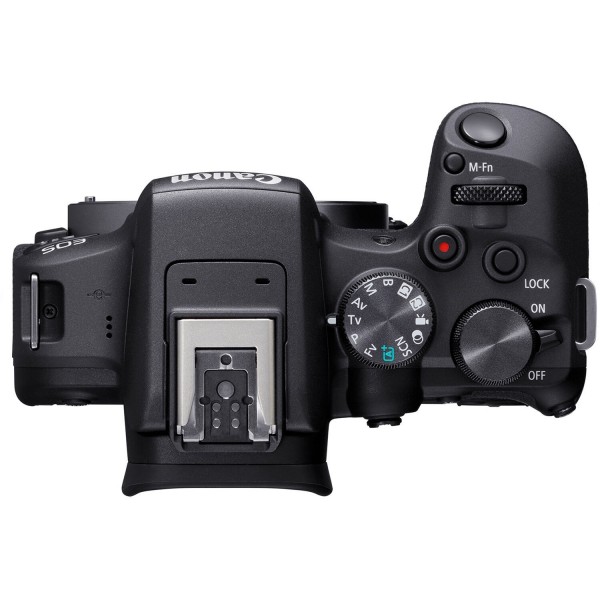
This is not merely a simplified small camera. The viewfinder, vari-angle screen, custom controls and subject tracking provide room to build sound photographic habits. This page covers the body. The Canon EOS R10 category shows the active lens combinations when a complete kit is the better starting point.

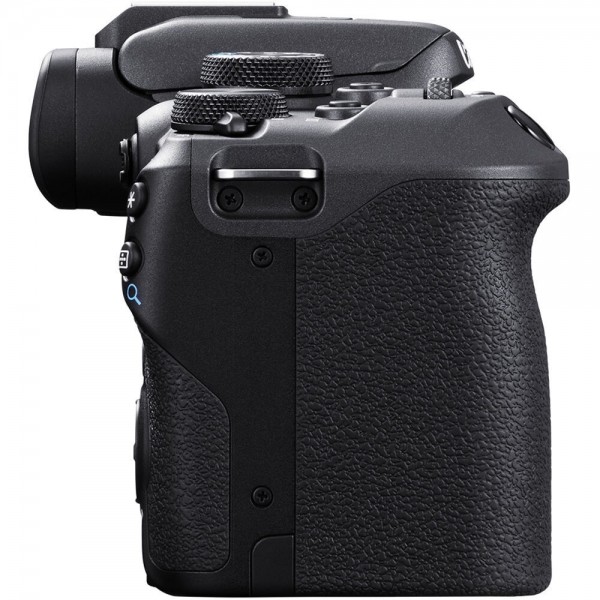
For travel, its first advantage is felt in the bag. The camera weighs approximately 429g with battery and card. Add a compact RF-S lens and it remains easy to keep ready throughout the day. The 1.6x APS-C factor narrows the field of view, helping with distant subjects but requiring a suitably wide lens for interiors, architecture or arm's-length video.
For family events, street photography and amateur sport, eye and face tracking reduce the amount of focus correction required as a person moves. Photographers coming from Canon DSLRs can also use EF and EF-S lenses through the EF-EOS R mount adapter, after confirming the retained functions with each lens.
| Use | What the R10 contributes | What to consider |
|---|---|---|
| Travel and family | 429g shooting weight, vari-angle screen and approachable controls | Choose a compact lens to retain the body weight advantage |
| Sport and animals | People, animal and vehicle tracking with 15 fps mechanical or 23 fps electronic bursts | Electronic shooting can distort very fast motion |
| Portraits and daily life | 24.2MP, eye tracking and a broad choice of RF or RF-S lenses | Rendering and background blur depend mainly on the selected lens |
| Stills and video | 6K-oversampled 4K 30p, 4K 60p and a vari-angle screen | 4K 60p uses a strong crop and the sensor has no IBIS |
The R10 recognises people, dogs, cats, birds and selected vehicles. Recognition does not replace an appropriate AF area or shutter speed, but it makes tracking easier when a subject shifts position in the frame. That is useful for a running child, a moving animal or a short sequence of sport.
Bursts reach up to 15 fps with the mechanical shutter and 23 fps electronically. Electronic shooting is fast and quiet, although very rapid movement can show rolling-shutter distortion and some artificial lighting can produce bands. For an unrepeatable moment, a fast UHS-II SD card and a realistic buffer check are more valuable than quoting the maximum frame rate alone.
| Feature | Practical benefit | Limitation to understand |
|---|---|---|
| 24.2MP APS-C sensor | A useful balance of detail, file size and moderate cropping latitude | The 1.6x factor also narrows the view of wide-angle lenses |
| 15 / 23 fps bursts | More frames from which to select the right gesture or expression | Maximum speed varies with lens, battery and settings |
| One UHS-II SD card | A familiar fast medium for bursts and 4K video | No simultaneous backup to a second card |
| 382g body, 429g ready to shoot | Easy to carry and hold for longer periods | The final working weight depends mainly on the lens |

4K 30p is oversampled from a 6K readout. It is the sensible mode for interviews, tutorials, travel sequences and controlled scenes when detail takes priority. 4K 60p renders movement more smoothly and allows moderate slow motion, but Canon uses only 64% of the sensor width. The field of view becomes substantially tighter.
The EOS R10 has no sensor-shift in-body stabilisation. It can use optical stabilisation in a compatible lens and digital stabilisation for video. A stabilised lens or support is preferable for walking footage. For static shots, stills at a suitable shutter speed or tripod work, the limitation is far less significant.
Body only makes sense when an appropriate RF, RF-S, EF or EF-S lens is already owned, or when the required focal length is clear. The R10 with RF-S 18-45mm keeps the starter kit compact. The R10 with RF-S 18-150mm covers more situations while travelling. For birds and outdoor sport, the R10 with RF 100-400mm follows a much more telephoto-led approach.
Consider the complete combination rather than choosing a body in isolation. Working weight, focal range, aperture and lens stabilisation often change daily use more than secondary differences in a specification sheet.
| Criterion | EOS R50 V | EOS R10 | EOS R7 |
|---|---|---|---|
| Priority | Video and face-to-camera creation | Versatile stills and video | Action and advanced APS-C work |
| Viewfinder | No | Yes, 2.36m dots | Yes, 2.36m dots |
| Electronic burst | Up to 15 fps | Up to 23 fps | Up to 30 fps |
| In-body stabilisation | No | No | Yes |
| Card slots | 1 UHS-II SD | 1 UHS-II SD | 2 UHS-II SD |

The Canon EOS R50 V is built primarily for video creation and face-to-camera work, and it has no viewfinder. The R10 is more natural when eye-level stills and occasional video share the workload. The Canon EOS R7 adds in-body stabilisation, two SD cards, 32.5MP and a more complete control layout for regular wildlife or sport.
A Canon EOS R8 moves to full frame and works differently in low light, but it also changes focal-length choices and the overall system budget. Compare these bodies within the Canon EOS R range or the broader selection of mirrorless cameras before judging the body price alone.
Canon announced the EOS R10 on 24 May 2022 alongside the EOS R7. They were the first APS-C bodies in the EOS R system. The product on this page is the original Canon EOS R10, not an unannounced R10 Mark II. This distinction keeps current model searches separate from speculation about a different future reference.
The R10 is not a full-frame camera. Its APS-C sensor applies a 1.6x field-of-view factor. That format underpins the balance of compact size, apparent reach and system cost. It is particularly well judged for learning and progressing while leaving room to add more ambitious lenses later.
Positioning. At MCZ DIRECT, we place it as Canon's most balanced APS-C choice for an enthusiast who wants a viewfinder, a useful burst rate and modern autofocus without immediately moving to the R7.
Direct comparison. We recommend the R10 over the R50 V when eye-level stills matter as much as video. Against the R7, it remains relevant when lower weight and simpler operation matter more than IBIS, dual cards and additional controls.
Honest limitation. The lack of in-body stabilisation, single SD card and strong 4K 60p crop need to be accepted. With a carefully chosen lens, the R10 remains an approachable camera for learning, improving and covering varied subjects without building an oversized system.

This offer is for the Canon EOS R10 body only. Pair it with an RF or RF-S lens, or use a compatible adapter for an EF or EF-S lens.
No. The R10 uses a 24.2MP APS-C sensor with a 1.6x field-of-view factor, favouring compact size and apparent reach.
Canon announced the EOS R10 on 24 May 2022 alongside the EOS R7. They introduced APS-C bodies to the EOS R system.
No. The sensor is not stabilised. The camera can use optical stabilisation from a compatible lens and digital stabilisation for video.
Yes. Canon states that 4K 60p uses 64% of the sensor width. Motion is smoother, but the field of view becomes much tighter.
Yes. 4K 30p is produced from a 6K readout, making it the better choice when detail matters more than frame rate.
The R10 reaches up to 15 fps with the mechanical shutter and 23 fps electronically, depending on conditions, lens and settings.
Canon quotes approximately 382g for the body and 429g with battery and memory card. Working weight then depends mainly on the lens.
The camera accepts SD, SDHC and SDXC cards with UHS-II support. A fast card is recommended for 4K and high-speed bursts.
Canon rates approximately 430 shots with the screen or 260 with the viewfinder in power-saving mode under CIPA conditions. A spare is sensible for a long day.
Choose the R10 for lower weight and simpler operation. Choose the R7 when IBIS, dual cards, 32.5MP and more complete controls are required.
This page covers the Canon EOS R10 announced in 2022. It should not be confused with searches or speculation about a different future Mark II model.