Shopping Cart
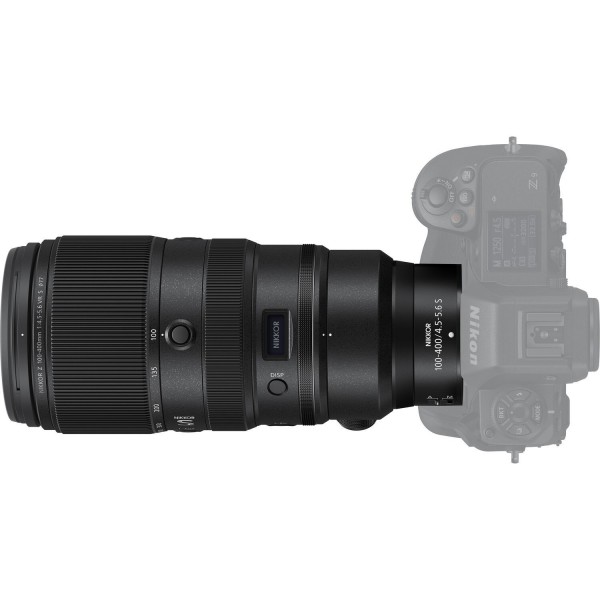
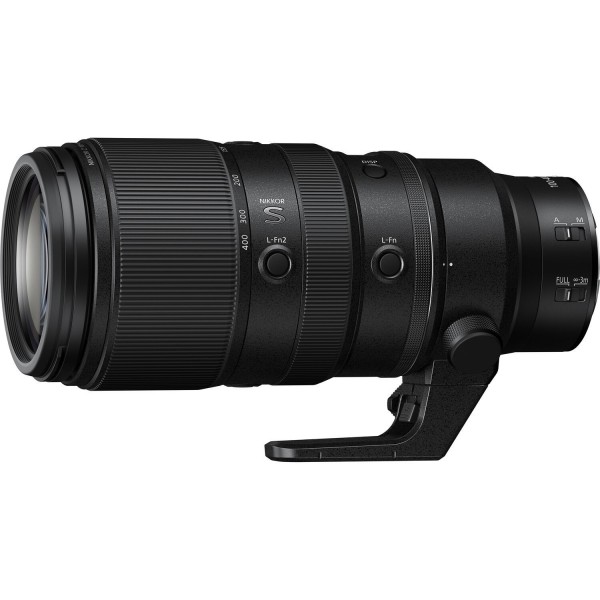

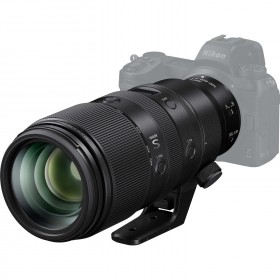
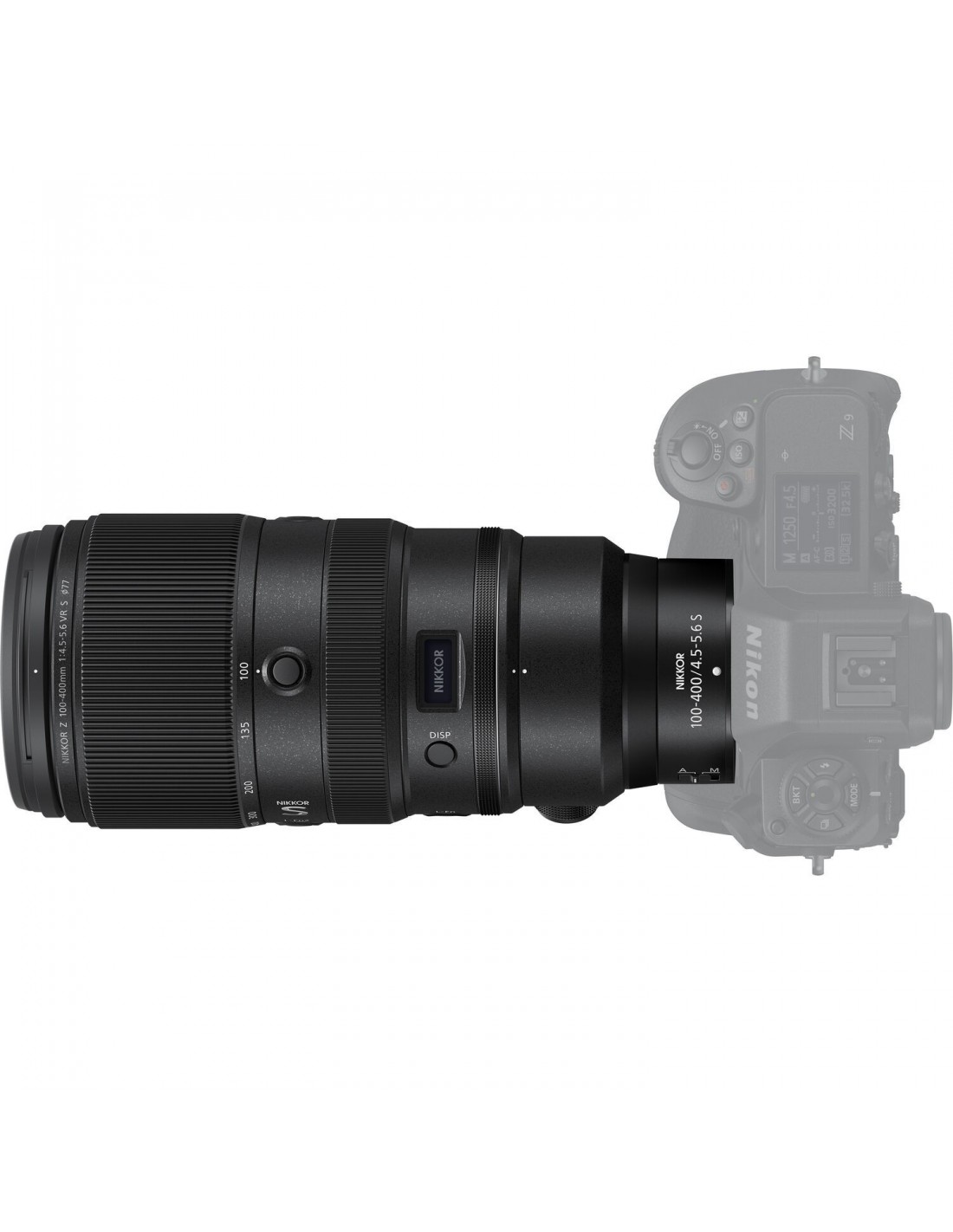

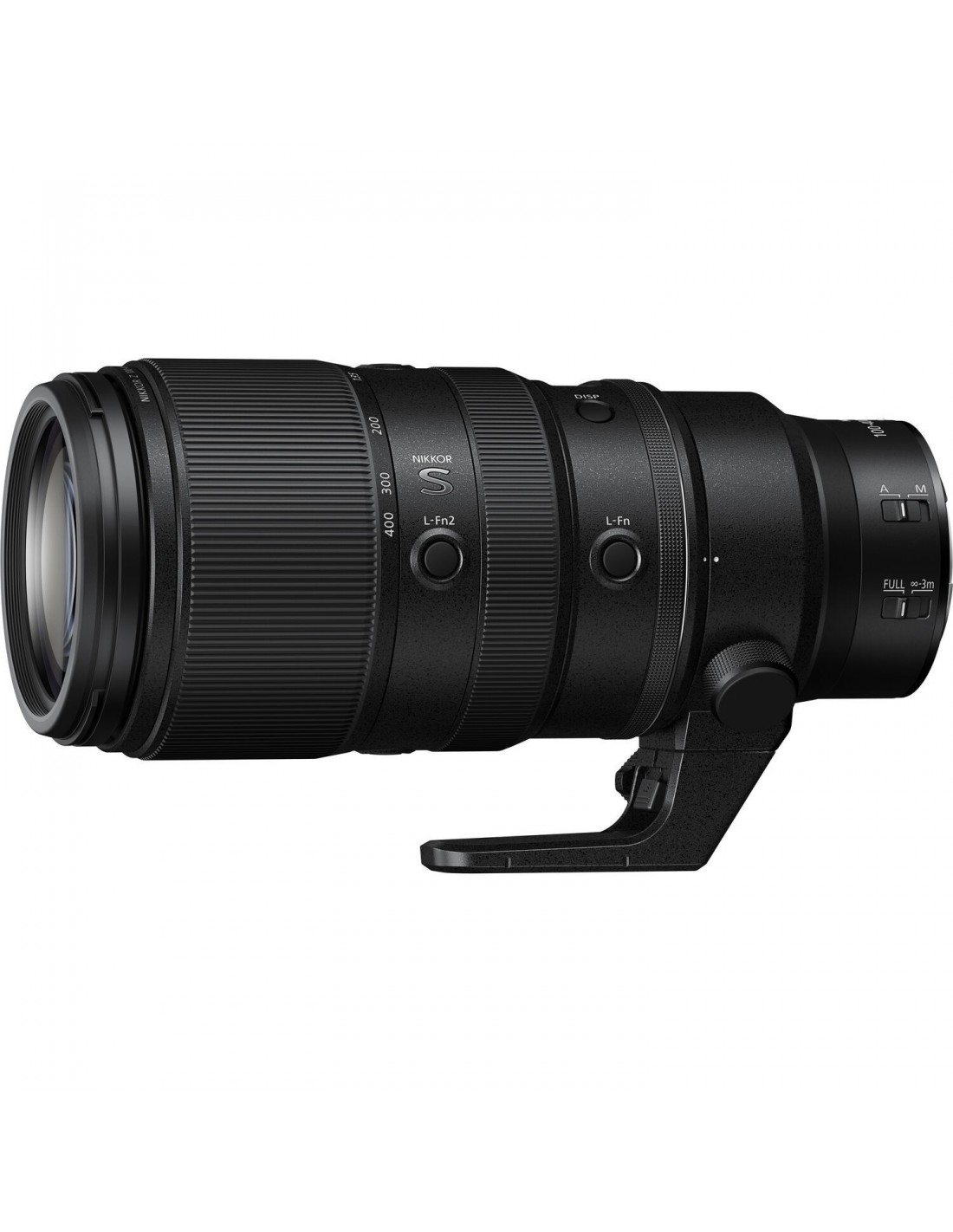


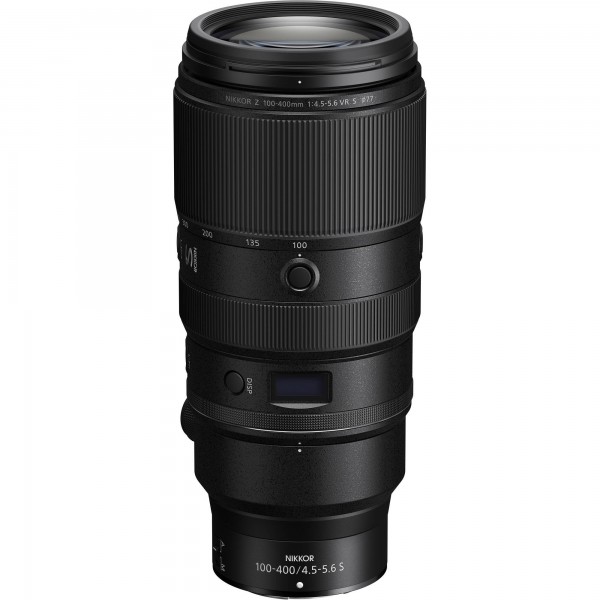
The NIKKOR Z 100-400mm f/4.5-5.6 VR S is a full-frame telephoto zoom for wildlife, outdoor sports, aviation and landscape photographers who need to change framing quickly. We recommend it when subject distance varies and a 600mm lens would be too specialised. The range moves from a relatively broad view to tight framing, while optical VR settles the view. Close focusing adds useful flexibility for flowers and details. Compatible Nikon Z teleconverters can extend it to 560 or 800mm occasionally. Its f/4.5-5.6 aperture needs more light than f/2.8 and the weight remains substantial, particularly through a long session outdoors. It is a balanced practical field choice for varied outdoor work where reach, proximity and responsive composition matter more than maximum brightness.
Combine compatible accessories and save. The more items you add, the bigger the discount.
memory card

warranty extension
The 100-400mm range responds when distance changes: an approaching animal, action around a circuit, aircraft varying in size or a landscape detail. It avoids choosing between a short telezoom and a very long lens before seeing the scene.
The trade-off is about 1,355g without collar and an aperture changing from f/4.5 to f/5.6. In daylight reach often wins; indoors or late, f/2.8 keeps an advantage. VR, close focus and Z converter support make it a complete field lens.
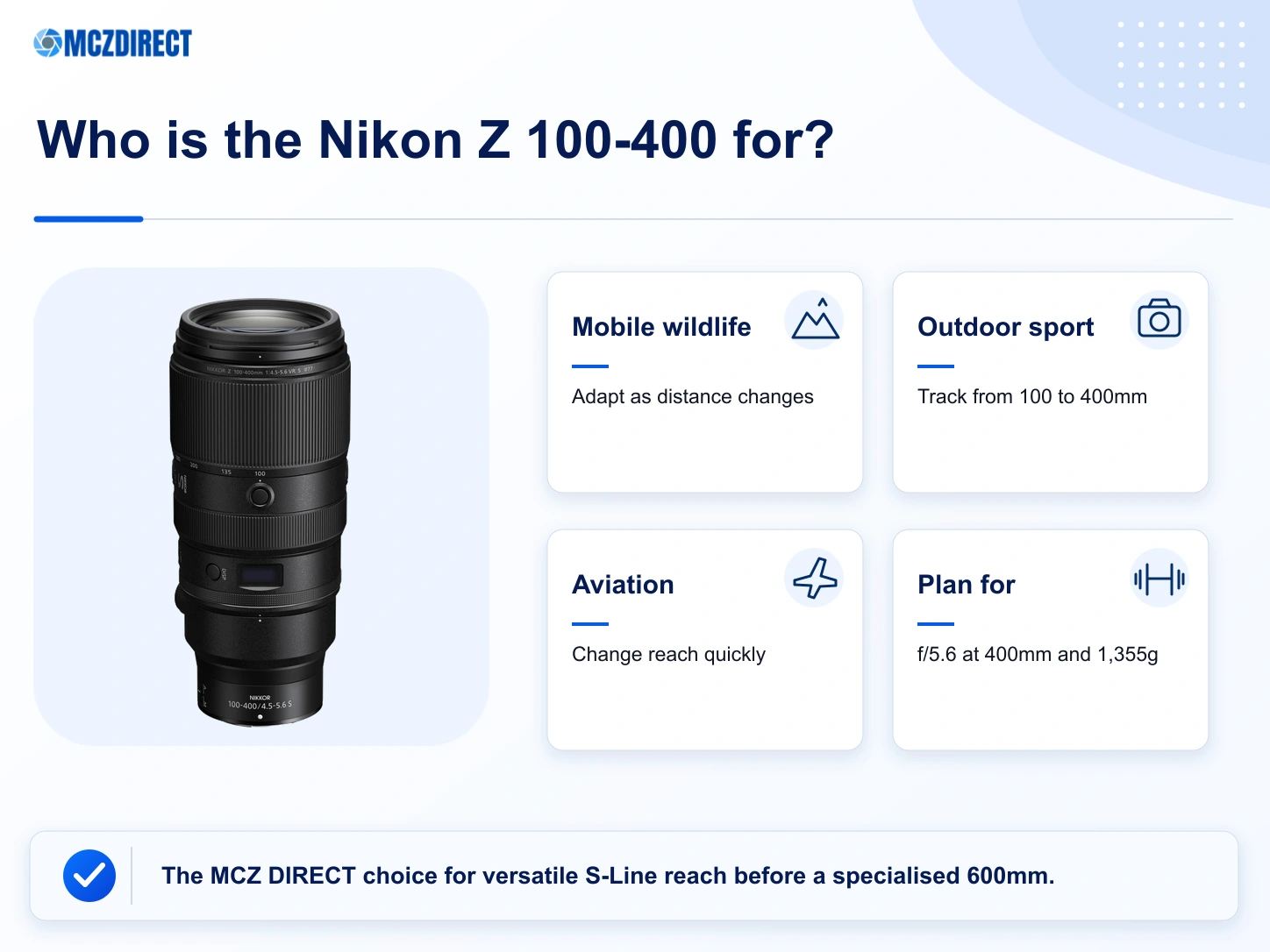
At 100mm, finding the subject and retaining context is easier. At 400mm the frame isolates expression, wildlife or landscape detail. This variation is more useful than a fixed long lens when action approaches.
VR steadies the view, not subject movement. It supports a perched bird or landscape; sport, aircraft and running animals still need appropriate shutter speed. Variable aperture requires ISO attention as light falls.
| Specification | Practical benefit | Plan for |
|---|---|---|
| 100-400mm | Context to tight framing | f/5.6 at long end |
| 5.5-stop VR | Stable view | Nikon test rating |
| 1,355g | Reach in a transportable lens | Support on long sessions |
| 0.75-0.98m | Close work | Thin depth at 400mm |
| Z converters | 560 or 800mm | Reduced light |
| Assignment | What the lens provides | Useful reservation |
|---|---|---|
| Mobile wildlife | Find then tighten | 400mm may be short for small birds |
| Outdoor sport | Flexible distant framing | Less suited to dark halls |
| Aviation | 100-400 according to aircraft size | Haze can limit detail |
| Landscape | Isolate distant layers | Tripod helps stopped down |
| Close nature | 0.38x for flowers | Not 1:1 macro |
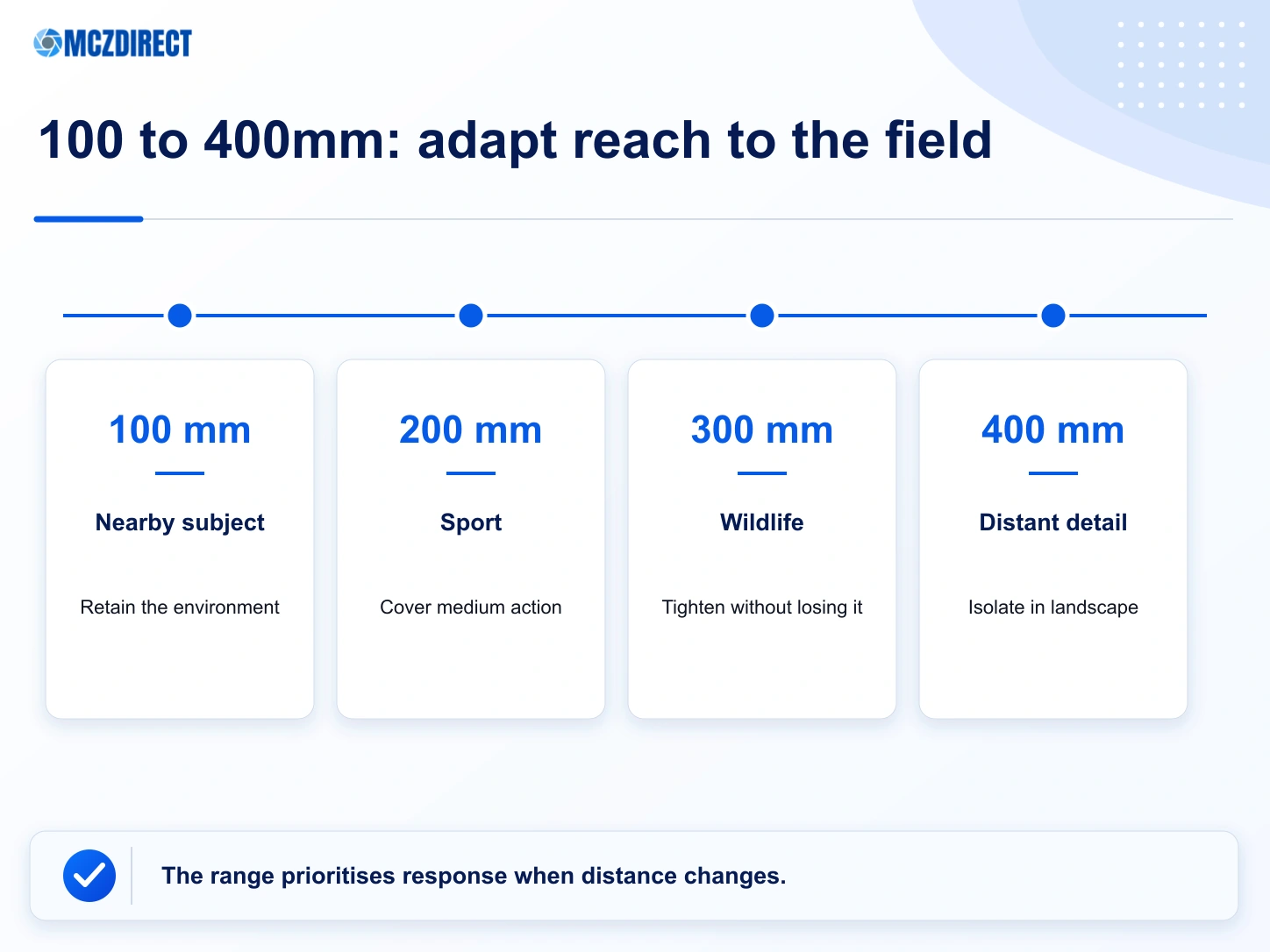
100 mm : nearby subject, retain the environment. 200 mm : sport, cover medium action. 300 mm : wildlife, tighten without losing it. 400 mm : distant detail, isolate in landscape.
At 100mm, show an animal in its environment and find movement easily. Moving towards 300 or 400mm progressively tightens the view without another lens. This suits mammals, accessible birds and outings where distance never stays constant.
Begin shorter to acquire the subject, establish tracking and then zoom. At 400mm the field is narrow. VR settles the view but shutter speed must still follow running wildlife or flight. Protect subject movement before pursuing the lowest ISO.
The 100-400mm range adapts to circuits, pitches and air displays. At 100 or 135mm it covers a wider scene; at 400mm it isolates distant action. A short zoom rotation changes framing quickly and the balance is easier than a much longer supertelephoto.
Aperture changes from f/4.5 to f/5.6. Daylight normally makes this manageable; evening pushes ISO sooner. An indoor 70-200 f/2.8 is often better, while outdoors the extra reach may produce more useful frames.
Nikon rates VR at up to 5.5 stops under its test conditions. It settles the view, helps place the AF area and supports still subjects. It cannot stop wings, legs or vehicles. Action still needs subject-led shutter speed.
With a perched animal, stable posture and a short burst can use slower speeds. With a trajectory, keep speed high and pan from the torso. A monopod supports waiting time while leaving the zoom hand free.
Minimum focus is about 0.75m at 100mm and 0.98m at 400mm. A 0.38x ratio frames flowers, larger insects, textures and equipment details with comfortable working distance.
At 400mm close up, depth is very thin. Stop down for a three-dimensional subject while retaining shutter speed. Wind can move a flower despite VR. True 1:1 work remains better with a macro.
The 1.4x reaches 560mm and the 2x 800mm with reduced aperture. They help when a bird or aircraft remains small, particularly in good light and stable air. Heat and haze may limit detail before focal length does.
Cropping keeps aperture but reduces resolution. A converter keeps more subject pixels with less light. If 600mm is required constantly, choose the 180-600. If most work stays within 100-400mm, an occasional converter preserves versatility.
At roughly 1,355g without collar, the lens is substantial but transportable for its reach. A proper strap, breaks and support under the barrel protect the mount. The collar balances the system on monopod or tripod.
A hide benefits from support; a hike needs quick access. Handheld, monopod and tripod roles can change through one day. The zoom remains useful in all three.
Move from an establishing view to a tight frame without stopping recording. Deliberate, smooth zooming works better than abrupt correction. Quiet AF and smooth aperture behaviour support discreet transitions; long static shots still favour a tripod or fluid head.
Test focus speed and tracking sensitivity before production. At 400mm every movement shows. Leave room ahead of the subject rather than framing too tightly from the start.
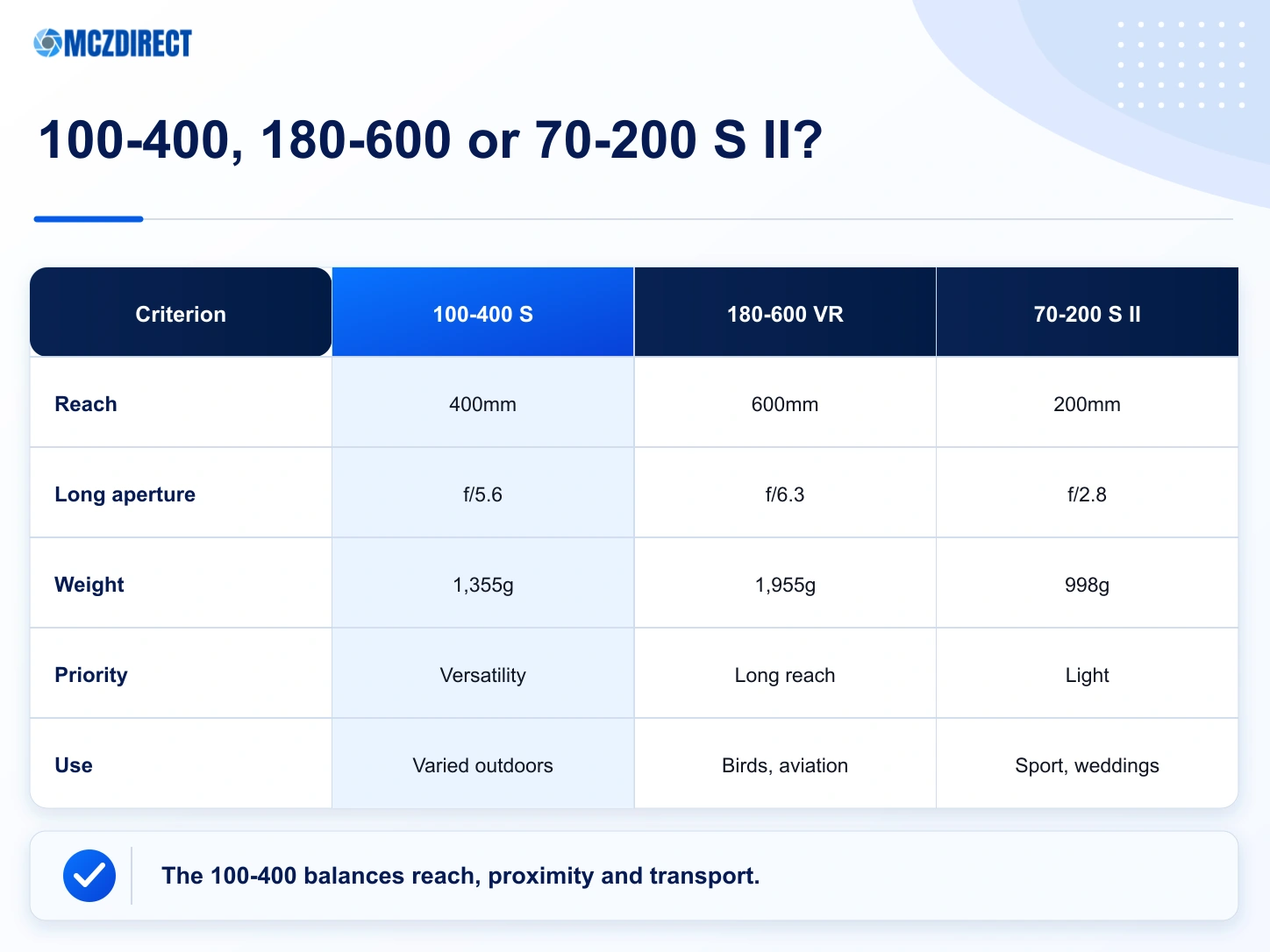
The 180-600 reaches 600mm directly and is stronger for distant birds, but it is larger, heavier and starts at 180mm. The 100-400 packs more easily, finds subjects at 100mm and focuses closer.
The 70-200 f/2.8 is brighter and lighter for indoor sport, weddings and portraits but stops at 200mm. The 100-400 is the middle ground for varied outdoor work.
A 100-400mm often follows subjects that move towards and away from the camera. Begin with an AF area large enough to acquire the animal or athlete, then reduce distractions when the background becomes busy. Camera subject detection can help, but the photographer still decides where the system should search. Starting focus before the decisive moment gives the lens time to follow distance rather than asking it to recover after the subject has crossed the frame.
At 400mm, a small movement shifts the subject significantly in the view. Keep both eyes open when acquisition is difficult and open the zoom towards 100 or 150mm to find the subject again. Once tracking is stable, tighten gradually. This method is usually faster than searching at maximum focal length and makes better use of the short zoom rotation.
At about 1,355g without the collar, the lens can be carried on foot but benefits from a considered system. A strap attached to a suitable support point, a backpack with quick side access and a hood ready for use reduce the effort of repeatedly unpacking. Carrying the camera in hand for every kilometre may exhaust the arms before the best light arrives.
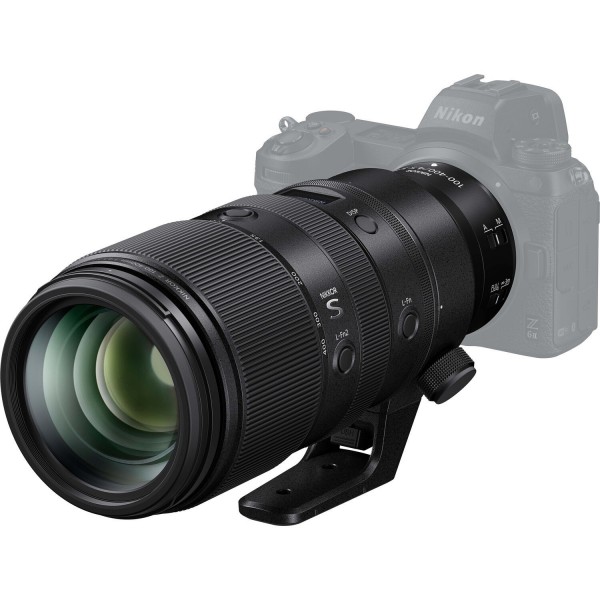
During a pause, support the lens rather than letting the mount take repeated shocks. The tripod collar can be removed to save some weight or retained for monopod work. A monopod is useful at a fixed viewpoint, while handheld work remains faster for a subject appearing from different directions. The right support changes with the route, not with an abstract idea of what a telephoto photographer should use.
The 0.38x maximum reproduction ratio gives the lens a second role. Flowers, larger insects, leaves, signs and equipment details can fill much more of the frame than with many long zooms. Working distance keeps the photographer away from a fragile subject and makes the background easier to simplify. At 100mm, the surrounding context is easier to retain; at 400mm, the angle becomes narrow and separation stronger.
This flexibility does not replace a 1:1 macro. Fine product reproduction and very small subjects still need more magnification and often a flatter field. Close at 400mm, depth is thin and wind may move a flower outside the focused plane. Stop down, keep enough shutter speed and focus on the most informative detail. The result is convincing proxi-photography rather than laboratory reproduction.
The 77mm thread is shared with many professional zooms, so a polariser or neutral-density filter may already fit the kit. A polariser can control reflections on leaves or water, but its effect changes with direction and it costs light. At 400mm, reaching the filter inside the hood may be awkward, so prepare the angle before the subject arrives when possible.
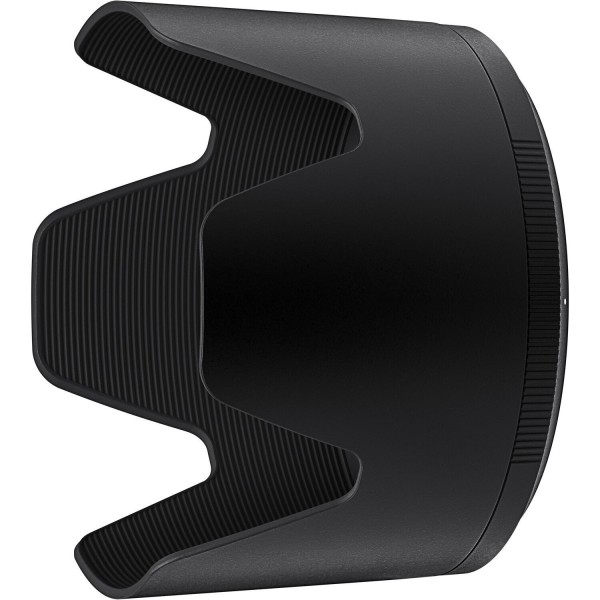
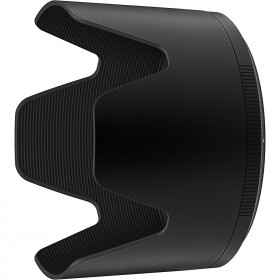
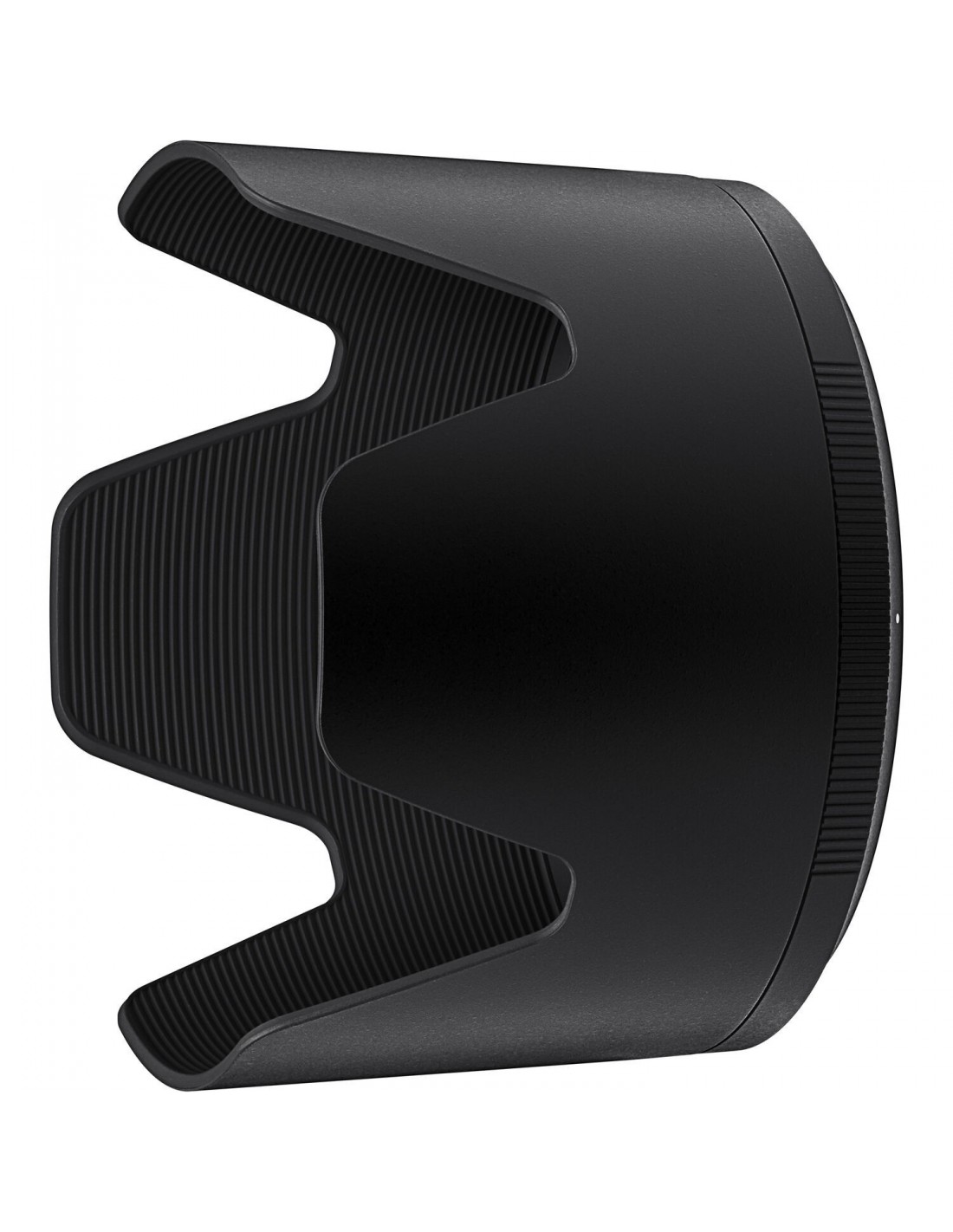
The hood helps with stray light and protects the front of the lens. In rain or blowing dust, no lens should be treated as maintenance-free. Wipe moisture carefully, avoid changing lenses in exposed conditions and let the equipment dry before sealing it in a bag. These basic habits protect contrast and controls more effectively than relying on a weather-resistance label alone.
The 1.4x converter extends the lens to 560mm and is the more practical option for many photographers because the loss of light is moderate. The 2x reaches 800mm but makes autofocus, shutter speed and atmospheric quality more demanding. Both can help when access is restricted, yet neither guarantees more visible detail if heat haze or subject movement already limits the image.
Compare a converter file with a crop from the bare lens at the intended output size. If the crop keeps enough resolution, the simpler setup may be preferable. If the subject is repeatedly too small and light is good, optical extension can preserve more pixels on it. When 600mm is the normal requirement rather than an exception, the 180-600 offers a more direct working range.
Use the first available subject to confirm shutter speed, focus placement and VR behaviour. Review a short burst at full magnification and look at the eye or another precise detail. If only the background is sharp, reconsider the AF area; if every frame shows the same directional blur, raise the shutter speed or improve support.
This check takes less than a minute and is more useful than waiting until the end of the outing. It also reveals whether the chosen aperture gives enough depth at close distance. Once the setup is reliable, attention can return to behaviour and composition rather than constant menu changes.
The 180-600 reaches 600mm directly and is stronger for distant birds. The 100-400 is smaller, starts shorter and focuses closer, making it more versatile for hiking and approaching subjects.
The 70-200 S II offers f/2.8 and lower weight for halls, weddings and medium action. The 100-400 prioritises outdoor reach.
| Criterion | 100-400 S | 180-600 VR | 70-200 S II |
|---|---|---|---|
| Reach | 400mm | 600mm | 200mm |
| Long aperture | f/5.6 | f/6.3 | f/2.8 |
| Weight | 1,355g | 1,955g | 998g |
| Priority | Versatility | Long reach | Light |
| Use | Varied outdoors | Birds, aviation | Sport, weddings |
At MCZ DIRECT, we see the 100-400 as the outdoor photographer’s choice when subject distance is unpredictable. It covers wildlife, aviation, sport, tight landscapes and detail without immediately requiring a 180-600.
We prefer the 180-600 for distant small birds and the 70-200 f/2.8 for halls or weddings. The honest limit is f/5.6 at 400mm. When light and practice suit it, the range and close focus make this an exceptionally complete field zoom.