• -5%
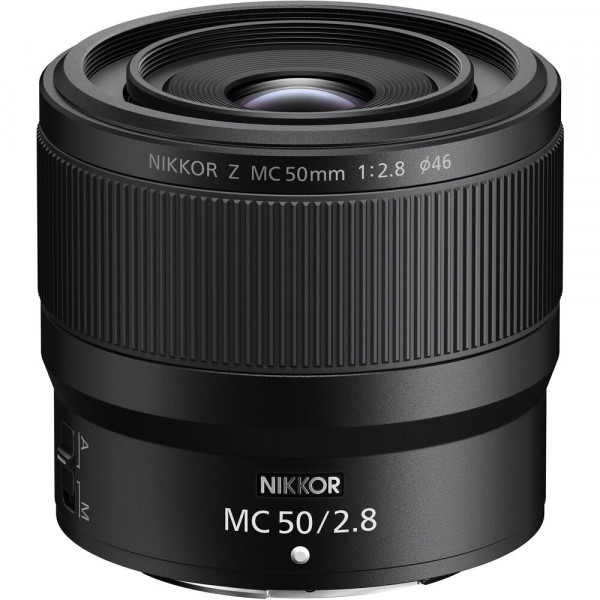
Nikon Nikkor Z MC 50mm f/2.8 Macro lens, featuring RF mount, close-up design, and smooth focusing ring
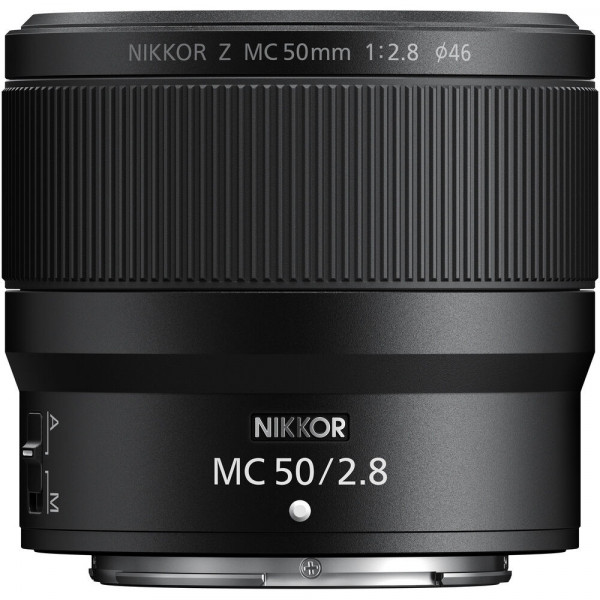
Nikon Nikkor Z MC 50mm f/2.8 Macro lens front view with focus switch
Nikon Nikkor Z MC 50mm f/2.8 Macro lens, featuring RF mount, close-up design, and smooth focusing ring
Nikon Nikkor Z MC 50mm f/2.8 Macro lens front view with focus switch

Nikon Nikkor Z MC 50mm f/2.8 Macro

IN STOCK
€563.35 €593.00-5%
  • 100% newBrand-new and authentic product
  • Final priceNo unpleasant surprises! The displayed price is the final amount paid for your purchase.
  • Order before 2 pm: estimated delivery Mon 17 - Tue 18 AugEstimate based on available stock, order time, business days and carrier delivery times.
  • 3-year MCZ DIRECT warranty
  • Free delivery with insurance includedYour order is protected from dispatch to delivery: in case of loss, theft or damage during transport, your parcel is insured up to its value.
100% BRAND NEW - FINAL PRICE - DELIVERED TO YOUR DOOR WITHIN 6-14 DAYS

The NIKKOR Z MC 50mm f/2.8 is a compact full-frame macro lens for Nikon Z photographers who want to reproduce a small subject life-size on the sensor, and we recommend it for objects, flowers, collections, food and scanning. Its true 1:1 reproduction reveals detail beyond the simple close-focusing ability of a standard zoom. At 260g, it can also stay in the bag as a normal 50mm lens for everyday scenes or environmental portraits. At the 0.16m minimum focus distance, however, the front of the lens sits very close to the subject and depth of field becomes extremely shallow. This is an approachable, versatile route into genuine macro work, provided skittish insects and a long working distance are not the main priority.

Compatible pack

Complete your set

Combine compatible accessories and save. The more items you add, the bigger the discount.

1 5.00%2 8.00%3 10.00%4+ 12.00%
Main productNikon Nikkor Z MC 50mm f/2.8 Macro

Nikon Nikkor Z MC 50mm f/2.8 Macro

€563.35
Compatible
SanDisk 128GB Extreme PRO UHS-II SDXC 300 MB/s memory card

memory card

SanDisk 128GB Extreme PRO UHS-II SDXC 300 MB/s memory card

€210.00€199.50
Compatible
2-year warranty extension

warranty extension

2-year warranty extension

€45.07
0% off
No accessory selectedUse the standard buy box to buy the product alone.
€563.35
 

Nikon Z MC 50mm f/2.8: true 1:1 macro in a compact lens

The NIKKOR Z MC 50mm f/2.8 does more than focus closely. At 1:1, a 10mm subject produces a 10mm image on the sensor. That ability suits a coin, flower, collection detail or film original that needs to be reproduced accurately.

A 50mm focal length and 260g weight make it much easier to carry than a 105mm macro. The compromise is working distance. At maximum reproduction, the front of the lens is close to the subject. This is manageable with a controlled object and less convenient with an insect that may move away.

Key strengths of the NIKKOR Z MC 50mm f/2.8

  • 50 mm range to record a small subject life-size on the sensor while retaining a compact 50mm lens for ordinary pictures.
  • f/2.8 maximum aperture for precise viewing before stopping down for macro depth.
  • 260 g weight matched to the intended use and the length of a working day.
  • True 1:1 reproduction to record a small subject life-size on the sensor.
  • Focus from 0.16 m to reach maximum reproduction with a controlled technique.
  • 1.00x maximum reproduction for macro, reproduction and small objects.
  • 46 mm filter thread to check against the filters already in the bag.
  • 9-blade diaphragm for more gradual transitions when the background is distant.
  • Native Nikon Z mount to retain compatible autofocus, corrections and controls without an adapter.
Recommended uses, strengths and main limitation of the NIKKOR Z MC 50mm f/2.8
The MCZ DIRECT choice for object macro, reproduction, food, flowers, collections, scanning and everyday photography when you need to record a small subject life-size on the sensor while retaining a compact 50mm lens for ordinary pictures.

What the specifications change in practical use

Macro depth of field becomes extremely shallow. Stopping down, placing the sensor parallel to the important surface and adding diffused light are often more useful than simply selecting f/2.8. A tripod or firm support helps with reproduction and focus stacking.

Away from macro, 50mm gives a natural full-frame perspective for food, streets, details and environmental portraits. On a DX body, the view resembles 75mm, useful for tighter framing but less flexible in a small room.

NIKKOR Z MC 50mm f/2.8: specifications translated into practical consequences
SpecificationPractical benefitPlan for
50 mmrecord a small subject life-size on the sensor while retaining a compact 50mm lens for ordinary picturesworking distance becomes short at 1:1 and the lens has no optical VR
f/2.8Clear viewing and ordinary use away from macroShutter speed must follow subject movement
260 gA realistic load for the intended workInclude the camera and accessories
0.16 mReach true 1:1 reproductionDepth becomes extremely shallow
No optical VRA simpler compact designStabilisation never freezes subject movement

Which assignments suit this lens?

NIKKOR Z MC 50mm f/2.8: recommended uses and useful limitations
AssignmentWhat the lens providesUseful reservation
object macro50 mmworking distance becomes short at 1:1 and the lens has no optical VR
reproduction260 g and native mountChoose shutter speed before relying on stabilisation
Objects and reproductionTrue 1:1 and a standard 50mm viewPlan light, support and depth
Flowers and foodFocus from 0.16 mAllow for short working distance
VideoDiscreet autofocus and predictable framingTest support, shutter and AF transition
Practical framing and uses across the focal range of the NIKKOR Z MC 50mm f/2.8
Focal length changes framing; shutter speed, distance and light decide the result.

50mm macro: four practical reference points

50mm FX : objects and everyday work, a standard full-frame perspective. 75mm equiv. DX : portrait and detail, tighter framing on a DX body. 0.30m : ordinary close-up, work without maximum reproduction. 0.16m and 1:1 : true macro, record the subject life-size on the sensor.

What true 1:1 reproduction means

At 1:1, a 10mm object produces a 10mm image on the sensor. The NIKKOR Z MC 50mm f/2.8 can therefore reveal a coin, textile, jewellery detail or flower at a scale a standard zoom cannot reach. Sensor resolution complements this ability, but it does not replace optical magnification or carefully placed focus.

True macro changes working method. As reproduction approaches 1:1, depth of field becomes extremely shallow. Stopping down, supporting the camera and keeping the sensor parallel to the important surface become central. A flat subject can then remain sharp across the frame. A three-dimensional object may need several focus positions combined into a stack.

Planning for a very short working distance

The 0.16m minimum distance is measured from the sensor, not from the front element. At 1:1, free space in front of the lens is only around five centimetres. That is manageable for coins, stamps, controlled flowers and collections. It becomes more difficult with a nervous insect or when the lens blocks the light.

A diffused source from the side or a small reflector usually works better than direct frontal light. Hood use may also need to change at maximum reproduction. If a subject needs more room for lighting or must not be disturbed, the MC 105mm f/2.8 VR S supplies a more comfortable working distance. The MC 50 prioritises compactness and a close relationship to the subject.

Depth of field, diffraction and focus stacking

At macro distance, even f/8 or f/11 may not render an entire object sharp. Closing further increases depth but eventually softens the finest detail through diffraction. Choosing the important plane, aligning the camera and focus stacking a static subject often gives a better result than using one exposure at the smallest aperture.

Wind and subject movement can make a stack impossible. A single frame with a suitable shutter speed and focus placed on the essential feature is then more reliable. Macro is an active compromise between depth, fine detail and motion. The lens provides magnification; the photographer decides how much of the subject needs to be sharp for the picture to read clearly.

Copy work, digitising and small-product photography

A 50mm macro is practical for documents, prints, film and objects arranged on a table. The camera should be parallel to the subject so one edge does not fall outside the focus plane. Even light from two sides controls brightness and reflections. With glossy materials, moving and diffusing the lights is usually more effective than trying to remove every reflection in post-production.

Final quality depends on alignment, support and the camera as much as the lens. A timer or remote release prevents movement. Film needs a flat holder and a uniform backlight. The 1:1 capability gives useful framing freedom, while colour accuracy and flatness still require separate attention. In this setting the MC 50 becomes a practical reproduction tool, not merely a creative close-up lens.

A normal 50mm lens once the macro work is finished

On full frame, the MC 50 gives a natural perspective for streets, food, environmental portraits and everyday details. At 260g, it can remain in a small bag. Its f/2.8 aperture is slower than the 50mm f/1.8 S, but adequate for daylight and calmer scenes. Close focusing creates a useful continuity between the whole scene and its smallest elements.

On a DX camera, framing is similar to 75mm. That suits portraits and details, although it needs more room indoors. For dim light, strong background separation and faster ordinary-distance focusing, the 50mm f/1.8 S is preferable. The MC 50 wins when 1:1 macro is a genuine part of the work rather than an occasional curiosity.

No optical VR and the realities of close-range stability

The MC 50 has no optical stabilisation. On a stabilised full-frame Nikon Z body, IBIS can help with ordinary pictures and some close-ups. Its effectiveness falls at high magnification, where a tiny movement changes both composition and focus. A tripod, firm support or disciplined stance remains valuable when precision matters.

Stabilisation cannot freeze a flower in the wind or a hand that moves. Shutter speed must match the subject. A short handheld burst can improve the chance of exact focus, but it does not replace controlled breathing and careful placement. For a static object, support and more generous light allow a lower ISO and enough aperture to describe the form.

MC 50, MC 105 or 50mm f/1.8 S?

The MC 105mm f/2.8 VR S also reaches 1:1, while adding working distance, optical VR and S-Line construction. It is stronger for insects, jewellery and demanding studio work, at a stated 630g. The MC 50 weighs 260g and fits much more easily into an everyday bag, provided the photographer accepts much closer working distances.

The 50mm f/1.8 S is not a macro lens. Its much lower reproduction is offset by a faster aperture for portraits and low light. The roles are distinct: MC 50 for lightweight access to genuine 1:1, MC 105 for greater working distance, and 50 f/1.8 for people and everyday scenes. Similar focal-length labels should not obscure those different intentions.

Building a repeatable tabletop macro setup at home

A compact macro lens becomes far more useful when the working area is easy to reproduce. A solid support, a plain background and one diffused light can handle coins, watches, flowers, craft pieces and items prepared for an online catalogue. Marking the camera and subject positions helps maintain consistent scale and perspective across a series. For reflective objects, moving a large white diffuser usually changes the result more cleanly than adding more small lights. The short working distance of the MC 50 must be included from the beginning so the lens does not block the source or cast its own shadow across the subject.

Focus should be placed on the feature that identifies the object, then aperture chosen for the required depth. If one frame cannot hold the whole subject sharp, a stationary setup makes focus stacking practical. A remote release or self-timer removes the movement caused by pressing the shutter. For film or documents, the sensor and original need to remain parallel and illumination must be even from edge to edge. None of these steps are complicated, but together they turn the 1:1 capability into reliable output. That repeatability is the strongest reason to choose a true macro over an ordinary lens that merely focuses fairly close.

A first session is best kept simple: one subject, one background and one light position. Reviewing the files at full size then reveals whether softness came from focus placement, movement, depth of field or uneven illumination. Correcting one cause at a time quickly builds a method that can be repeated with confidence.

How does it fit within the Nikon Z range?

Working distance becomes short at 1:1 and the lens has no optical VR. That reservation explains why the NIKKOR Z MC 105mm f/2.8 VR S or NIKKOR Z 50mm f/1.8 S may fit a particular assignment better.

The decision is not simply about the longest range or fastest aperture. Compare the load actually carried, the subjects photographed most often and how many lens changes are acceptable during a day.

Which Nikon Z lens should you choose against the MC 50mm f/2.8?
CriterionMC 50 f/2.8MC 105 f/2.8 VR S50 f/1.8 S
Central useCompact macroMacro with working distanceFast general photography
Reproduction1.00x1.00x0.15x
Nikon weight260g630g415g
Minimum focus0.16m0.29m0.40m
Choose it forObjects, reproduction and walk-aroundInsects, jewellery and studioPortraits and low light
NIKKOR Z MC 50mm f/2.8 compared with the closest Nikon Z lenses
NIKKOR Z MC 50mm f/2.8: choose it when you need to record a small subject life-size on the sensor while retaining a compact 50mm lens for ordinary pictures.

Our verdict

At MCZ DIRECT, we recommend it as a first true macro lens or a lightweight tool for objects and document reproduction. A 1:1 ratio combined with 260g is unusual, and the lens remains useful away from a studio.

The MC 105mm f/2.8 VR S is more comfortable for insects, jewellery and subjects that need greater working distance. The 50mm f/1.8 S is stronger for portraits and low light. The MC 50 makes sense when true macro must remain compact and accessible.

Lens mount
Nikon Z
Recommended use
Macro / product detail
Portrait / low light
Travel / versatile
Stabilization
No
Lens type
Macro
Focal length
Standard
Maximum aperture
f/2.5 - f/2.8
Aperture options
f/1.8 to f/2.8
Photo use
Macro
Portrait
Product
Reportage
Travel
Lens format
Full frame
NIKZMC50F28
0018208201037

Technical specifications

General
Brand
Nikon
Product type
Camera lens
Lens type
Macro
Lens series
NIKKOR Z
Aperture options
f/1.8 to f/2.8
Lens mount
Nikon Z
Photo use
Macro; Product; Portrait; Travel; Reportage
Lens format
Full frame
Level
Suitable for professionals
Yes
Properties
Close up lens
Macro
Full frame
Yes
Image stabilization
No
Lens construction
10 elements in 7 groups
Magnification factor
1.00x
Focus mode
Autofocus and manual
Minimum focusing distance
0.16 m
Lens hood included
Yes
Focal length
Fixed focal length
Yes
Focal length
50 mm
Minimum focal length
50 mm
Maximum focal length
50 mm
Aperture
Minimum aperture overall
f/22
Minimum aperture
f/22
Maximum aperture
f/2.8
Diaphragm blades
9 rounded blades
Zoom
Zoom option
No
Uses
Landscape photography
No
Portrait photography
Yes
Travel photography
No
Reportage photography
No
Sports photography
No
Wildlife photography
No
All-round photography
Yes
Video
No
Physical properties
Weight
260 g
Filter size
46 mm
Length
6.6 cm
Diameter
74.5 mm
Dust and splash resistant
Yes
Buying guidance
Best for
Ideal for: portrait, all-round use.
Compatibility
Nikon Z-mount lens for full-frame FX Nikon Z mirrorless cameras; also usable on DX-format Nikon Z bodies with DX crop.
Warning
This lens has no built-in optical VR; stabilization depends on the compatible Nikon Z camera used.

Nikon Nikkor Z MC 50mm f/2.8 Macro FAQ

Who is the NIKKOR Z MC 50mm f/2.8 for?

It is intended for Nikon Z photographers who want to explore true 1:1 macro without carrying a long specialist lens.

Is the NIKKOR Z MC 50mm f/2.8 suitable for travel?

Yes, particularly for object macro, reproduction, food, flowers, collections, scanning and everyday photography. Its 260 g weight should be considered alongside its 50 mm range.

What is its focal range?

Nikon specifies 50 mm on a full-frame camera.

What is the maximum aperture?

Maximum aperture is f/2.8. It should be considered alongside subject movement and the shutter speed required.

Does the NIKKOR Z MC 50mm f/2.8 have stabilisation?

It has no optical VR and can use in-body stabilisation on compatible cameras.

What is the minimum focus distance?

Nikon specifies 0.16 m.

What is the maximum reproduction ratio?

Maximum reproduction is 1.00x, which is true life-size 1:1 macro.

Which filters fit the NIKKOR Z MC 50mm f/2.8?

It accepts 46 mm screw-in filters.

What is the main limitation?

The point to plan for is working distance becomes short at 1:1 and the lens has no optical VR.

What is included in the box?

Lens, LC-46B front cap, LF-N1 rear cap and HN-41 hood

Reviews Nikon Nikkor Z MC 50mm f/2.8 Macro

0 Rating

0.0
out of 5 stars

0 Rating

Customer photos

No customer photos yet
  • Reviews (0)
ALEX (In testing phase)
Hello! Welcome to our online store 👋 Would 👍 🐦‍🔥you like help with products, orders, or shipping?
Product added to compare.