

My basket0 items


Find your orders, invoices and saved addresses all in one place.
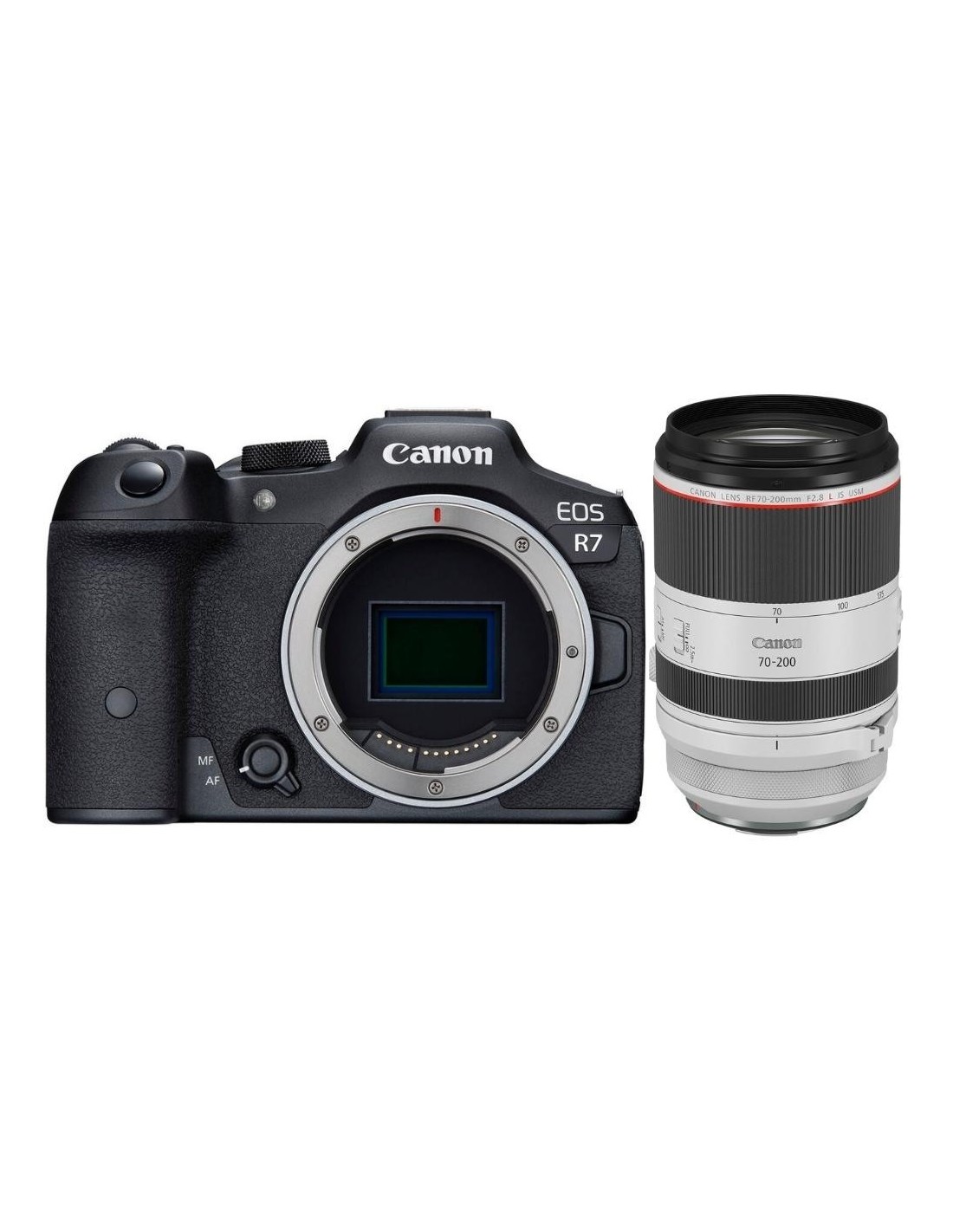
The Canon EOS R7 with RF 70-200mm F2.8 L IS USM is a kit for sport, performances and portraits when you need to frame people from a distance and keep a bright aperture available. On the R7's APS-C sensor, the lens gives a field of view comparable to approximately 112–320mm on full frame. Its constant f/2.8 maximum aperture can help when action continues as the light falls. The lens is substantial, and its view starts too tight for many small rooms. If a lighter bag is your priority, compare the R7 with the 70-200mm f/4 L.
Combine compatible accessories and save. The more items you add, the bigger the discount.
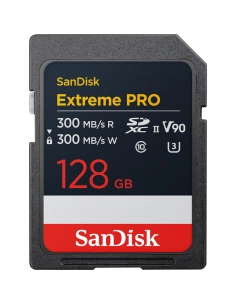
memory card
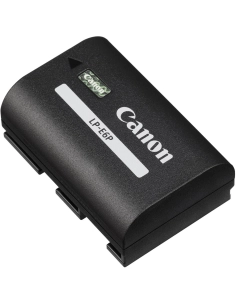
battery
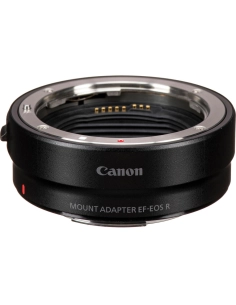
Adaptateur

warranty extension
A player breaks towards the goal just as the light begins to fade. From the touchline, the Canon EOS R7 with RF 70-200mm F2.8 L IS USM lets you follow the action and adjust the frame without changing lenses. Its f/2.8 maximum aperture stays available throughout the zoom range, giving you an extra stop of light compared with a 70-200mm f/4. That can be useful for indoor sport, evening events and portraits where the subject is moving and you cannot simply slow the shutter.
On the R7's APS-C sensor, 70–200mm frames like approximately 112–320mm on full frame. It is a telephoto view even at the shortest setting, and the lens weighs about 1,070g before adding the camera. If you need a broad group picture in a small room, plan a wider lens. If your main subject is a small bird far away, compare the longer 100-400mm kit as well.
The f/2.8 maximum aperture is available at both 70mm and 200mm. In aperture priority or manual mode, you can keep that setting while changing the frame without the lens's maximum opening becoming smaller as you zoom. Exposure may still change as a player moves from a bright area into shade, so keep an eye on the shutter speed and ISO.
Compared with f/4, f/2.8 admits one stop more light at the maximum aperture. In the same scene, with the other exposure choices equivalent, that can allow a shutter speed twice as fast or an ISO one stop lower. In a sports hall, the faster speed may help control movement; at an evening performance, a lower ISO may be useful if the subject is relatively still.
An extra stop is not a promise that every image will be sharp. A dancer's hand can still move too fast, and a player crossing in front of the subject can confuse autofocus. Take a test frame under the actual light, inspect the important detail and adjust the settings as the action changes.
The f/2.8 lens is heavier than Canon's RF 70-200mm F4 L IS USM, which Canon lists at about 695g. If you mainly photograph daylight sport and carry the camera for hours, the lighter f/4 version may be the more comfortable choice. If dim venues and fast movement are routine, the brighter aperture is easier to justify.
The R7's APS-C sensor records a narrower part of the image than a full-frame sensor with the same lens. Using Canon's approximate 1.6 crop factor, 70–200mm gives a field of view comparable to roughly 112–320mm on full frame. The physical focal length and aperture remain unchanged; the equivalence is a guide to framing.
At 70mm, you can include a player and some of the court, or a performer with part of the stage, provided you have enough distance. At 200mm, you can move towards a tighter portrait or isolate a moment across the pitch. The zoom gives you room to respond as the distance changes, but its shortest view remains relatively tight.
That is important at an event where a group wants a photograph in a small room. With a wall behind you, 70mm on the R7 may not include everyone. A wide or standard lens is the practical answer. This listing combines the R7 with the telephoto, so plan any wider coverage separately.
The tighter APS-C view does not make a distant subject physically closer or remove haze between you and it. If a bird remains a tiny part of the frame at 200mm, the 100-400mm gives a tighter view at its long end from the same position. Cropping the R7's detailed files can help with composition, but it cannot recover detail that was never captured.
In a sports hall, start by watching the pace of the game and the direction of the light. A player waiting for a serve needs a different shutter speed from a player jumping or changing direction. The f/2.8 aperture gives you more flexibility than f/4 at the same ISO, but it is the shutter speed that addresses the movement.
Begin at a wider setting on the lens to find the player and leave room for the action. Zoom in when the movement and distance become predictable. A tight frame can be powerful, but if the ball or the player's hands are repeatedly cut off, pull back and give the sequence more space.
The R7's person-detection autofocus can help follow a player. Select the appropriate mode, start tracking before the decisive moment and check which subject the camera has chosen. A teammate crossing in front or a busy crowd can still cause the focus to move. Try a more specific focus area or change your position when possible.
Some indoor lights flicker or produce banding with certain shutter settings. Electronic shutter can also distort fast-moving subjects. Make a few test images under the venue's actual lighting and compare the mechanical shutter if you see a problem. A high burst rate is useful only if the frames are usable.
At the side of a pitch, 70mm can show a player with part of the action around them. As play moves farther away, turn towards 200mm to concentrate on an expression or a contest for the ball. Keep both the direction of play and the background in mind; a clean frame is easier to find when you anticipate where the next moment will happen.
When daylight fades, f/2.8 gives you an extra stop compared with f/4. You can use that margin for a faster shutter speed, a lower ISO or a balance between the two. It does not replace good light, and floodlights may vary across the field. Check a player in each area rather than assuming the same exposure will fit the whole pitch.
The R7 offers continuous shooting at up to 15 frames per second with the mechanical shutter and up to 30 fps with the electronic shutter, depending on settings and conditions. These are maximum figures, not a guarantee that every frame will be focused or that a burst will continue indefinitely. Short sequences timed around the action are often easier to review and leave the camera ready for the next play.
For an outdoor event that also needs a team photograph, this telephoto may be too tight from the available position. Plan a wider lens or a location where you can step back. The 70-200mm is at its best here when you can photograph individuals and action from a reasonable distance.
The longer range lets you photograph a person without standing immediately in front of them. At 70mm on the R7, a head-and-shoulders portrait already has a relatively tight view; at 200mm you can work from farther away and simplify the background. Talk to the subject as you move so that the distance does not make the session feel disconnected.
At f/2.8, the background can become soft, particularly when the person is separated from it. The effect depends on focal length and the distances between camera, subject and background. If a bright sign is distracting, move the person or change your own angle; blur alone may not remove it.
A wide aperture gives a shallow focus plane at close portrait distances. The R7's eye detection can help, but check that the intended eye is sharp, especially if the person turns their head. For two people standing at different distances, a smaller aperture may give both a better chance of being in focus.
Full-length portraits require more room than a shorter lens. In a garden or a large hall that may be straightforward; in a small studio, test the distance before the session. The telephoto is useful for portraits with space around you, while a shorter lens makes it easier to include the person and the room from nearby.
At a theatre or concert where photography is permitted, the 70-200mm can isolate a performer from the background without requiring you to approach the stage. At the shorter end, include the performer and part of the setting; towards 200mm, look for a gesture or expression. Avoid assuming that more zoom always makes a better image: sometimes the instrument or another person in the frame explains the moment.
Stage lighting changes quickly. A face may move from a spotlight into darkness between two frames, so review the exposure when the opportunity allows. The f/2.8 aperture provides useful light-gathering capacity, but a moving performer still needs an appropriate shutter speed. A tripod or stabilisation cannot freeze a hand or a turning head.
At a wedding or reception, this lens can capture a quiet exchange across a room. It is less useful for a whole table or a group when you cannot step back. If those broad pictures are required, a second lens or another position is part of the plan rather than an afterthought.
The R7's two card slots offer options for organising files during an important event. Set the recording arrangement before the assignment and make a test image. Bring enough card capacity and a charged battery for the way you work; burst sequences and video can fill storage more quickly than a small number of portraits.
For a deer near the edge of a field or a larger bird at a reasonable distance, the 70-200mm can give you a useful frame while leaving room for the surroundings. Start wider to find the animal, then tighten the composition as you understand how it is moving. Keeping a little habitat in the photograph can make the subject easier to read.
For small birds far away, 200mm may not be enough. The R7's APS-C view is narrower than full frame, but it does not change the lens into a 400mm optic. The RF 100-400mm offers more reach for those situations, with a variable maximum aperture that reaches f/8 at 400mm. The 70-200mm f/2.8 offers the brighter aperture and a wider starting view.
Watch for branches, heat haze and backlight between you and the animal. Moving a few steps to obtain a clear line of sight can improve an image more than a heavier crop. Keep a respectful distance and avoid disturbing nesting or feeding wildlife.
If an animal is stationary, you may be able to use a slower shutter speed than when it takes flight. Stabilisation helps with camera movement, while shutter speed addresses subject movement. Raise ISO when needed and check the result before the animal leaves the scene.
The lens has optical image stabilisation and the R7 has in-body stabilisation. They help reduce blur caused by camera shake, which is useful for a still portrait, a quiet performer or a landscape detail at longer focal lengths. The result depends on the shutter speed, focal length, conditions and technique; no quoted figure guarantees a sharp frame in every situation.
Support the lens from underneath and hold a comfortable stance. At 200mm, small movements are visible through the viewfinder, so a steady position makes it easier to keep the subject framed. A monopod can support the approximately 1,070g lens during a long match or performance, while still letting you follow the action.
Stabilisation does not freeze a moving player. If the walls behind a performer are sharp but their hand is blurred, increase the shutter speed and adjust the exposure. The f/2.8 aperture gives you some margin, but the correct setting still depends on the speed of the movement and the available light.
A tripod can be useful for a fixed video shot or a landscape detail where the composition should not change. For fast sport, it may restrict your movement unless the support suits the location. Choose equipment according to the position and the work, not just the length of the lens.
The RF 70-200mm F2.8 L uses Canon's Dual Nano USM autofocus motors. With the R7's Dual Pixel CMOS AF II, you can select subject-detection modes for people, animals or certain vehicles. Start following early and keep enough room around a moving subject for a change in direction.
A small subject behind branches or a player surrounded by others may require a different focus area. Watch the indication in the viewfinder and make a test frame when possible. No tracking system can guarantee that the camera will choose the right face in every crowded scene.
At f/2.8, close portraits can have a shallow depth of field. If the intended eye is sharp but the other details fall away more than you want, stop down or adjust the subject's position. For moving subjects, choose an autofocus mode and shutter speed that match the action rather than relying on the aperture alone.
The lens also focuses on more distant static subjects. For a landscape or an object at an event, a single carefully placed focus point may be more useful than tracking. Use the controls that fit the picture you are making, then review the result at a useful magnification.
Canon specifies a minimum focusing distance of approximately 0.7m, measured from the camera's sensor plane. The distance from the front of the lens to the subject is shorter. This can be useful for a flower, a craft detail or an object at an event when you have enough room to position the camera.
At a close distance and f/2.8, only part of the subject may be sharp. That may suit a decorative detail, but a label or an entire object may need a smaller aperture and more light. Move the camera so the important surface is closer to parallel with the sensor when that helps.
For a tiny insect or an engraving that needs high magnification, a dedicated macro lens is the more relevant tool. The 70-200mm is chosen for its telephoto range and bright aperture; close focusing is a useful additional option rather than a substitute for a specialised macro setup.
The R7 records 4K video, with frame rates and image coverage depending on the selected mode. From a fixed position, the 70-200mm can frame a speaker, a performer or a detail of a match without placing the camera next to the subject. Begin at 70mm to locate the action, then zoom only when the composition is stable.
The constant f/2.8 aperture can be useful in a dim venue. For an interview where a person leans forward and back, you may prefer a smaller aperture to give focus more margin. Make a short test recording and check the critical detail at a useful size before a long take.
The lens's Dual Nano USM motors are designed for smooth and quiet focusing. Microphone placement remains important: a quiet focus motor cannot remove the sound of a crowd or a loudspeaker. Listen to a test clip and place the microphone for the sound you want.
At 200mm, even a small camera movement becomes visible. A tripod, monopod or another suitable support can make a long shot easier to watch. Cropped recording modes or digital stabilisation can narrow the view further, so check the actual framing before the event starts.
Canon lists the RF 70-200mm F2.8 L IS USM lens at approximately 1,070g, excluding the R7. A comfortable strap, a bag that supports the attached lens and a monopod when appropriate can make a long assignment easier. The f/4 version weighs less; the question is whether the brighter aperture is useful often enough to justify carrying the difference.
Canon describes the lens as designed to resist dust and moisture. It is not waterproof. Protect the equipment in heavy rain, avoid putting it directly on wet ground and dry it carefully after a damp event. Weather resistance helps with ordinary field use but does not remove the need for care.
The R7 has two SD card slots compatible with UHS-II. Configure the recording roles before a job and confirm that both cards are recognised. Choose cards that suit your burst and video modes, and take enough capacity for the length of the assignment.
If you need a wide scene as well as close action, plan a second lens or a different kit. This 70-200mm starts with a tight view on the R7; it is not a one-lens answer for a small room and a distant stage. A charged battery and a suitable bag matter whichever combination you choose.
The closest alternative is the R7 with RF 70-200mm F4 L. Both lenses cover the same physical focal lengths. The f/2.8 offers one stop more light at maximum aperture; the f/4 weighs about 695g according to Canon. We would consider the brighter kit for frequent indoor sport or evening events and the lighter one for daylight and long walks.
For small or distant wildlife, compare the R7 with RF 100-400mm. It reaches farther but its maximum aperture varies and is f/8 at 400mm. The 70-200mm starts wider and remains at f/2.8, which may suit closer action and low-light events better.
The R7 with RF-S 18-150mm is a more flexible single-lens travel choice. It starts much wider and can handle everyday scenes, though it does not reach 200mm and its maximum aperture varies. Choose this telephoto kit when distant people or action are your main subjects.
For events where the room and the people around you matter as much as a distant expression, the R7 with RF 24-70mm F2.8 L offers a less tight view while keeping a constant f/2.8 aperture. It cannot frame distant action as closely as the 70-200mm.
Already have compatible lenses? The EOS R7 body-only option lets you build around them. The Canon EOS R7 range and our guide to R7 lenses offer a broader comparison.
We would recommend this kit to someone who regularly photographs action, performances or portraits from a distance and can use the f/2.8 aperture when the light is limited. The R7's autofocus and the lens's zoom range give you useful options as a subject moves closer or farther away.
The trade-offs are the lens's weight and the tight starting view on APS-C. For daylight work and a lighter bag, compare the 70-200mm f/4 kit. If small birds at a distance are your main subject, look at the 100-400mm; if you need a wide room as well as the action, plan wider coverage.

It combines the Canon EOS R7 camera with the RF 70-200mm F2.8 L IS USM lens.
The range frames like approximately 112–320mm on full frame. The physical focal length remains 70–200mm.
No. The lens keeps an f/2.8 maximum aperture throughout its zoom range.
It admits one stop more light at maximum aperture. Under the same conditions, that can allow a faster shutter speed or a lower ISO.
It can be useful for action at a distance, especially in limited light. Shutter speed, ISO and the venue's lighting still affect the result.
No. Canon lists the f/2.8 lens at approximately 1,070g and the f/4 lens at approximately 695g, excluding the camera.
It depends on the subject and your position. For small birds far away, the 100-400mm kit gives a tighter view at its long end.
It may be difficult: 70mm gives a tight starting view on the R7. A wider lens is more practical when you cannot step back.
No. It helps reduce camera shake; moving subjects still need a shutter speed suited to their movement.
Canon specifies approximately 0.7m from the camera's sensor plane. It is not a dedicated high-magnification macro lens.
No. Its construction is designed to resist dust and moisture, but the equipment should be protected from heavy rain and water.
Yes. It has two SD card slots compatible with UHS-II. Choose cards suited to your photo and video modes.
