Shopping Cart


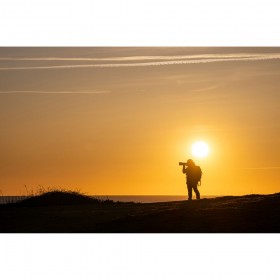
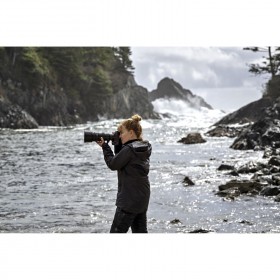
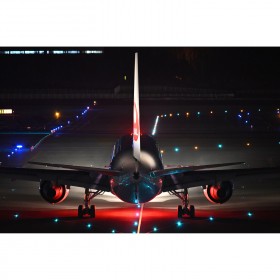
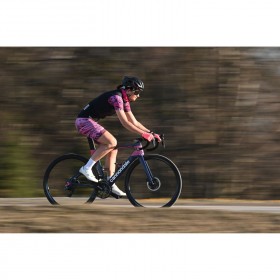
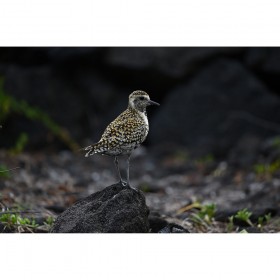
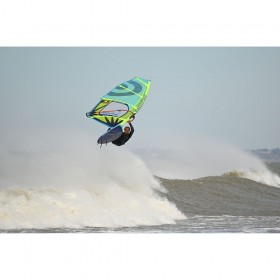
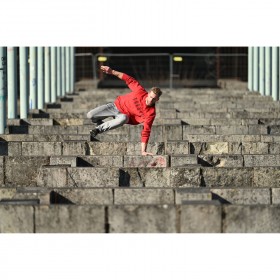
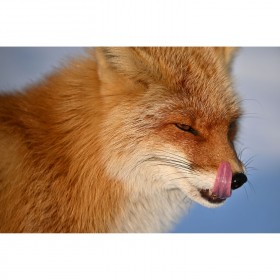
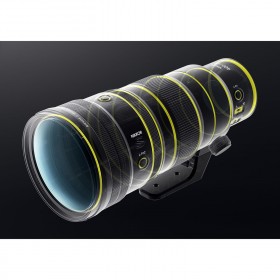
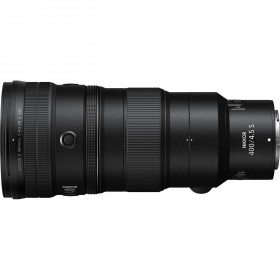
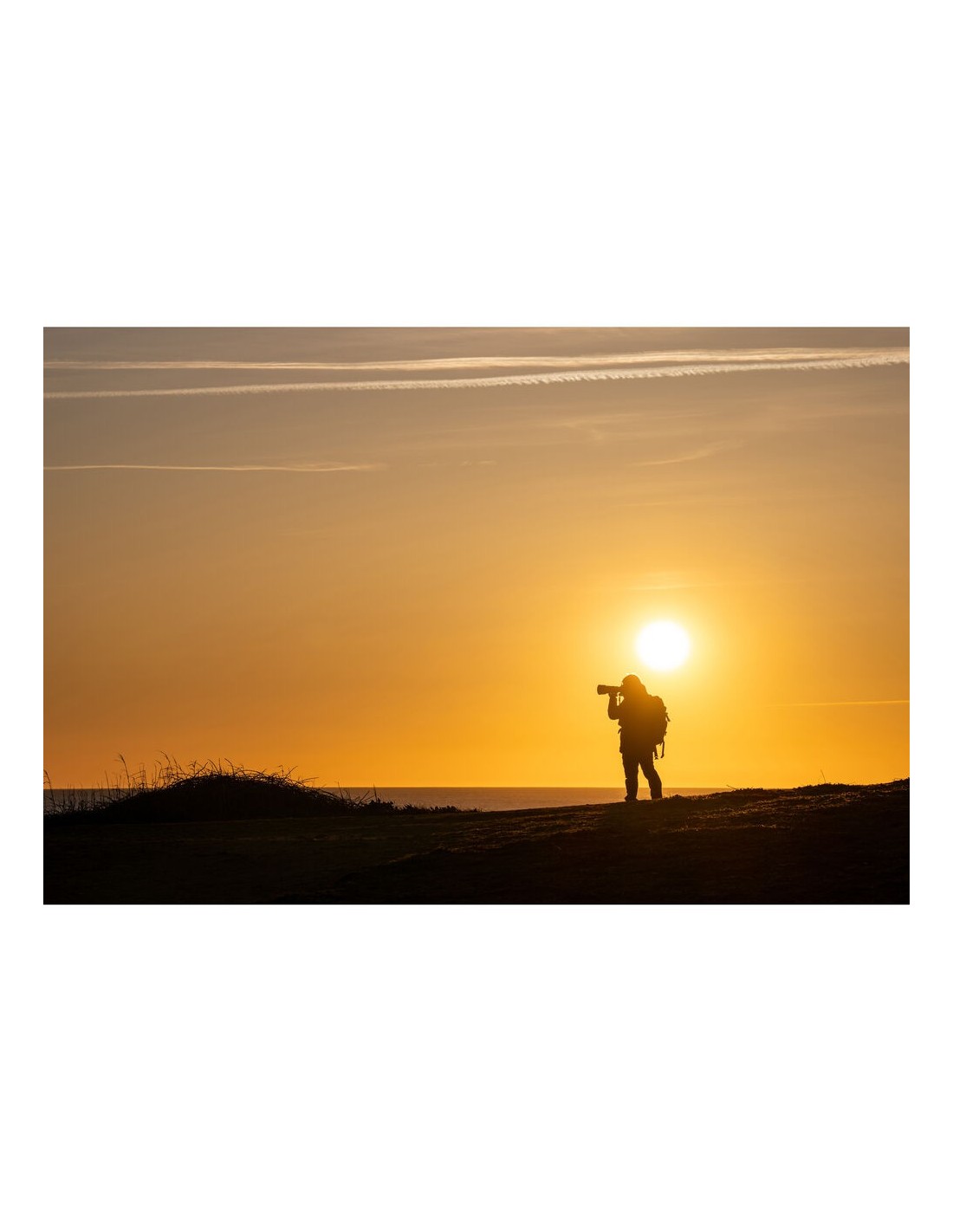


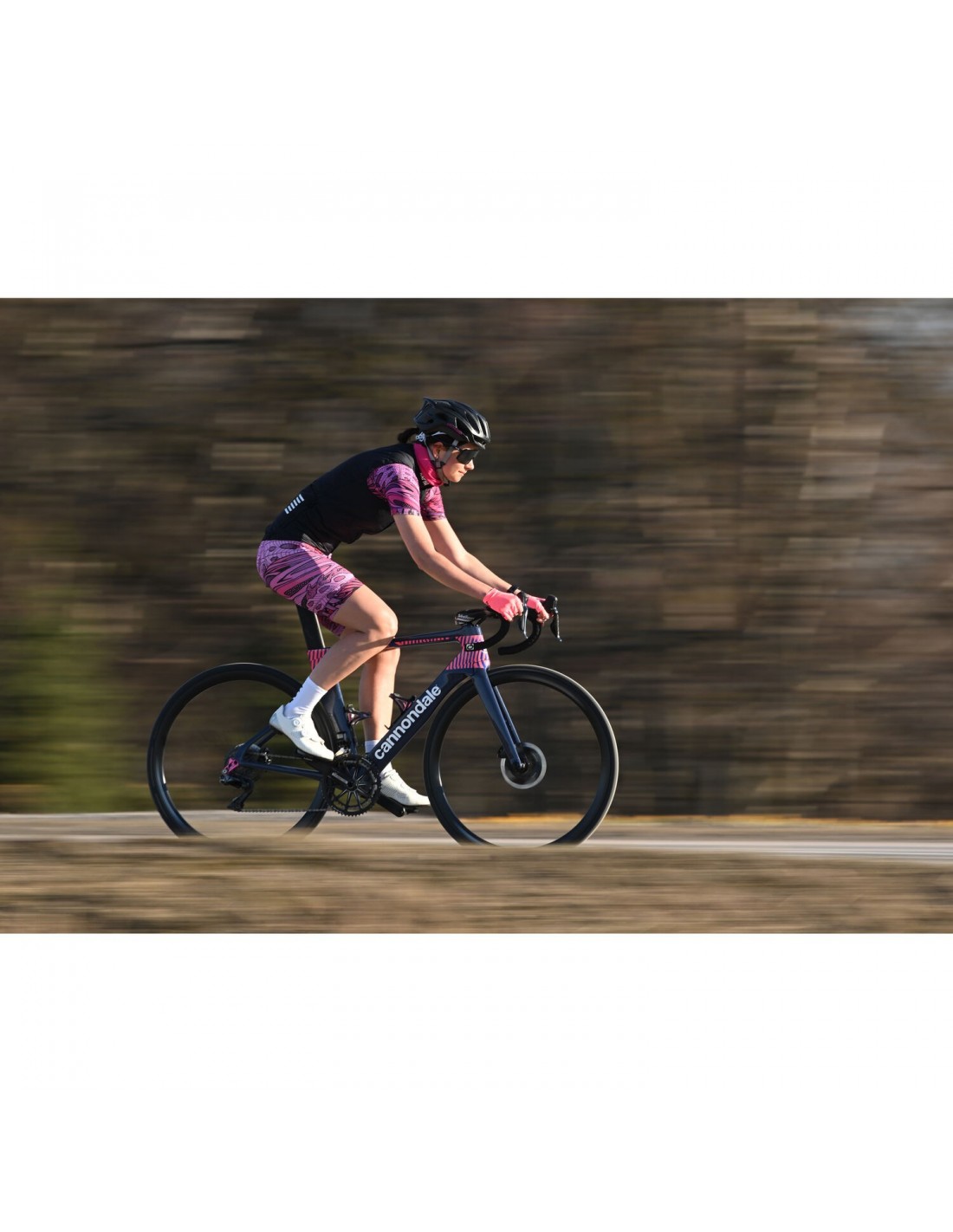


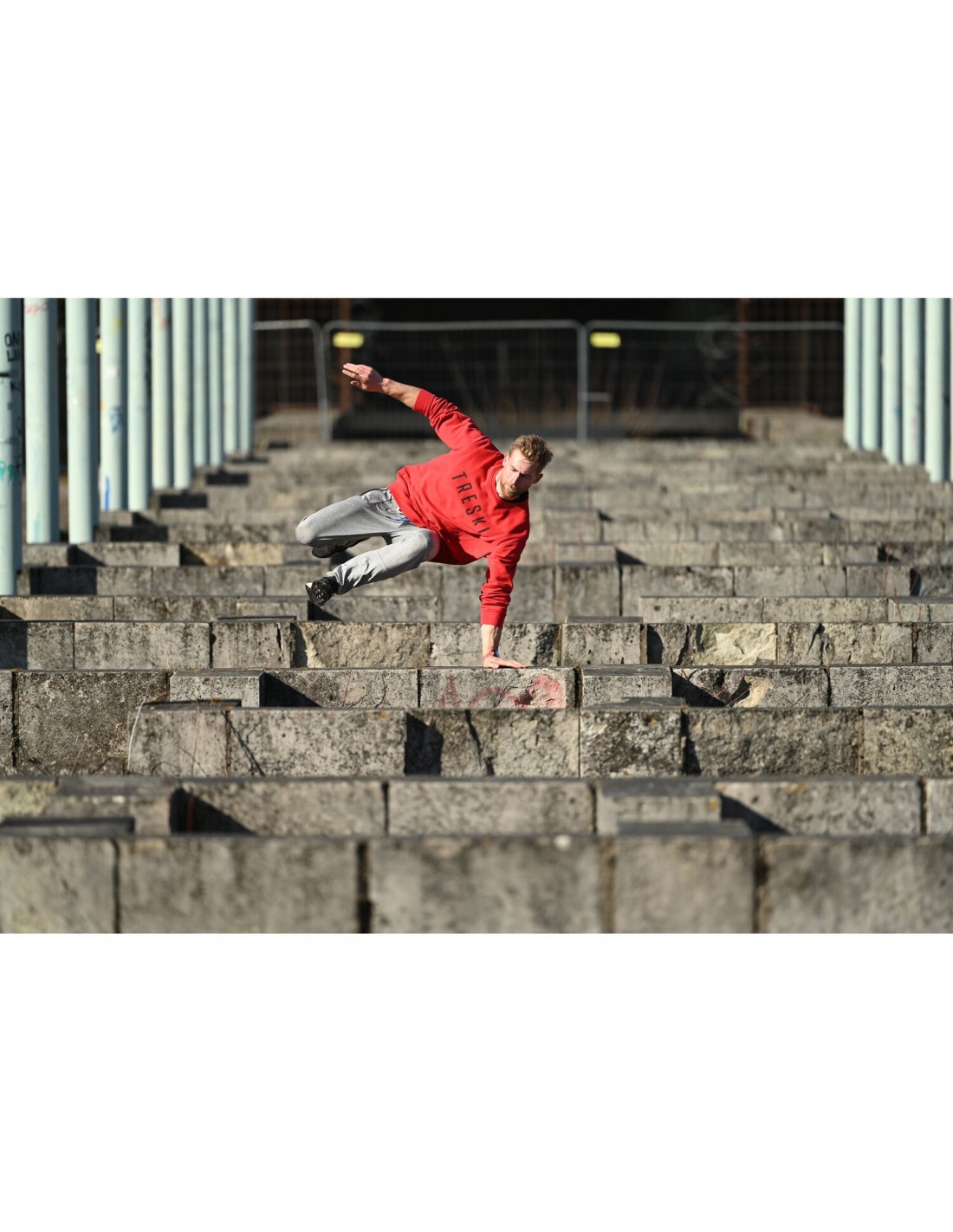
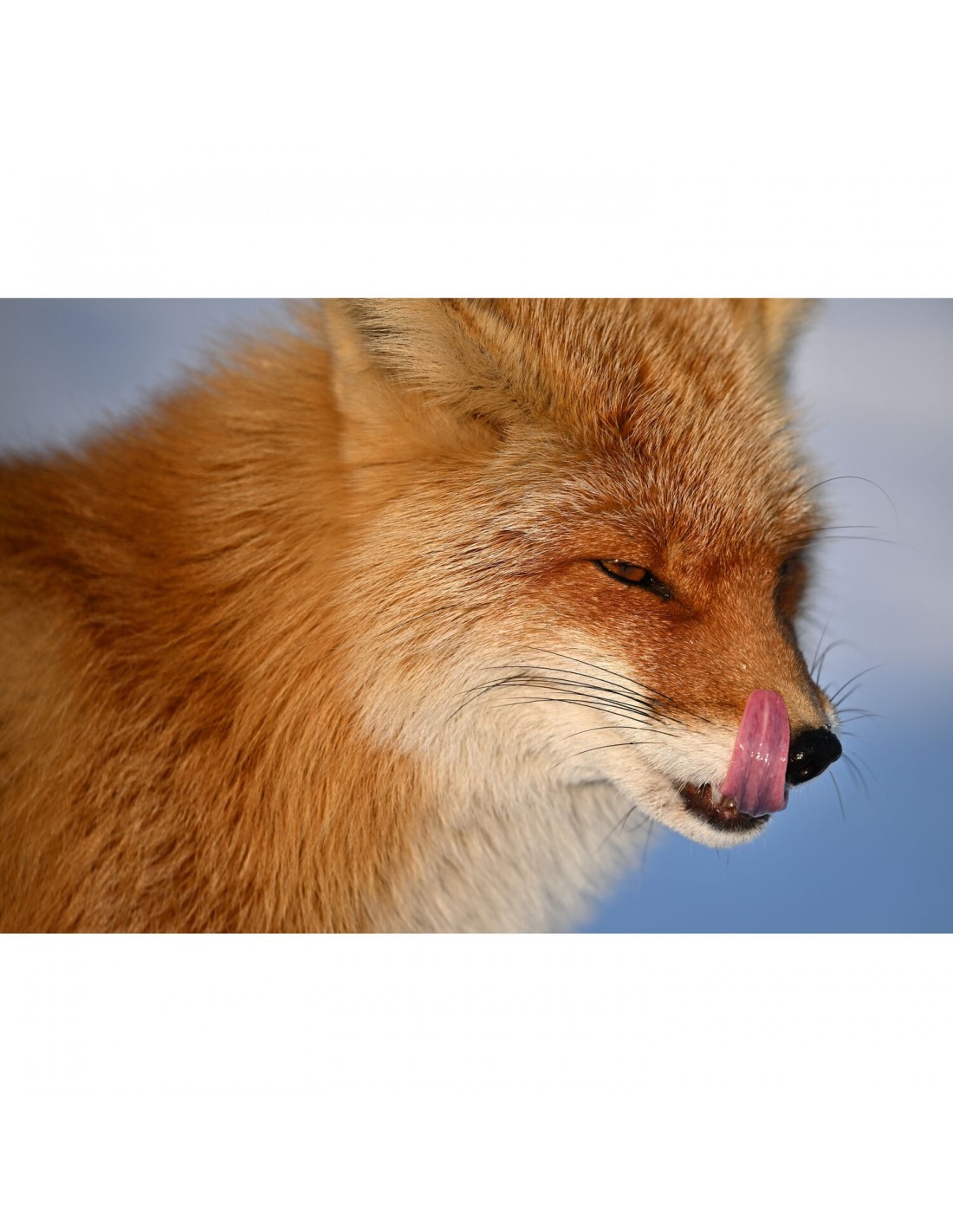
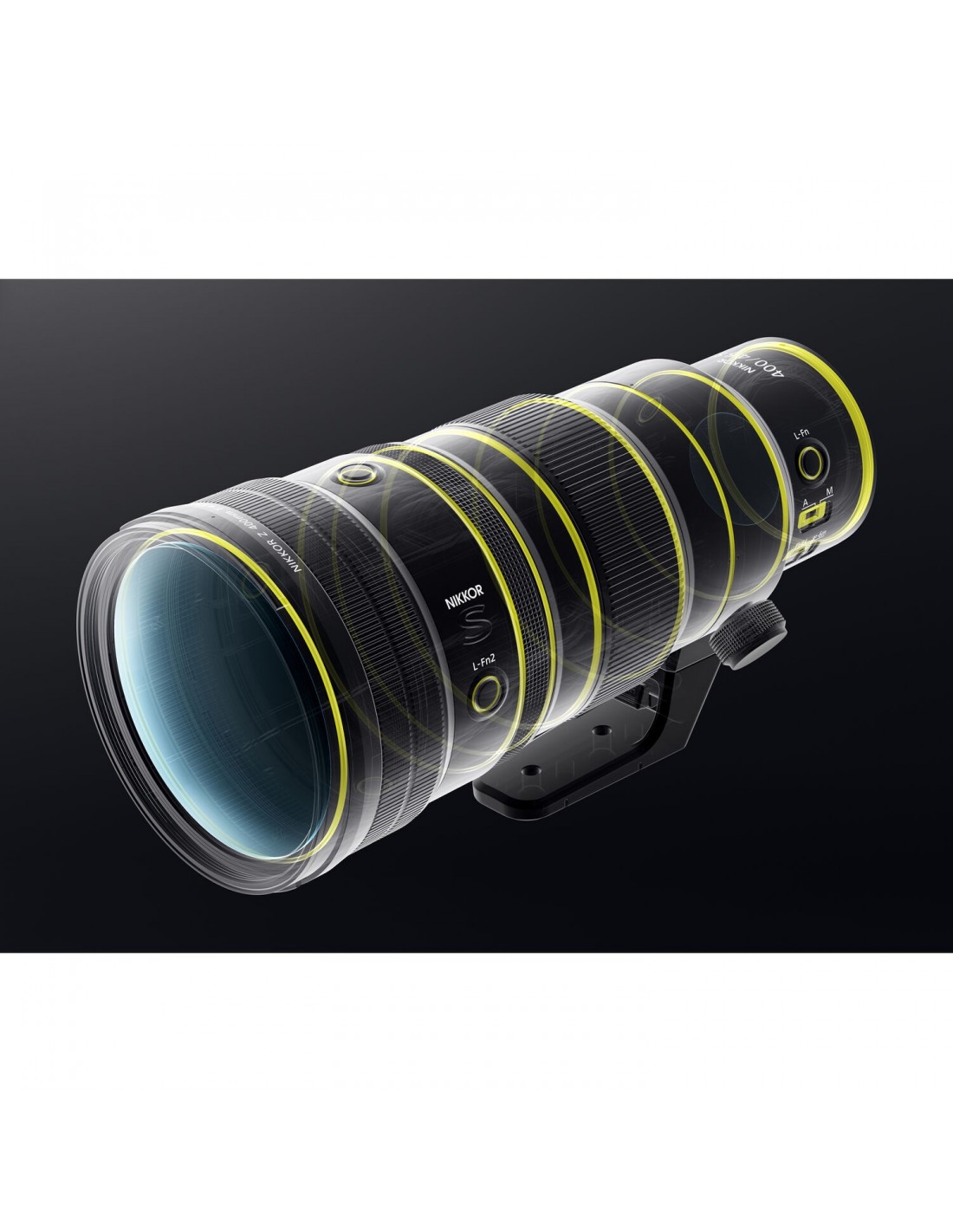
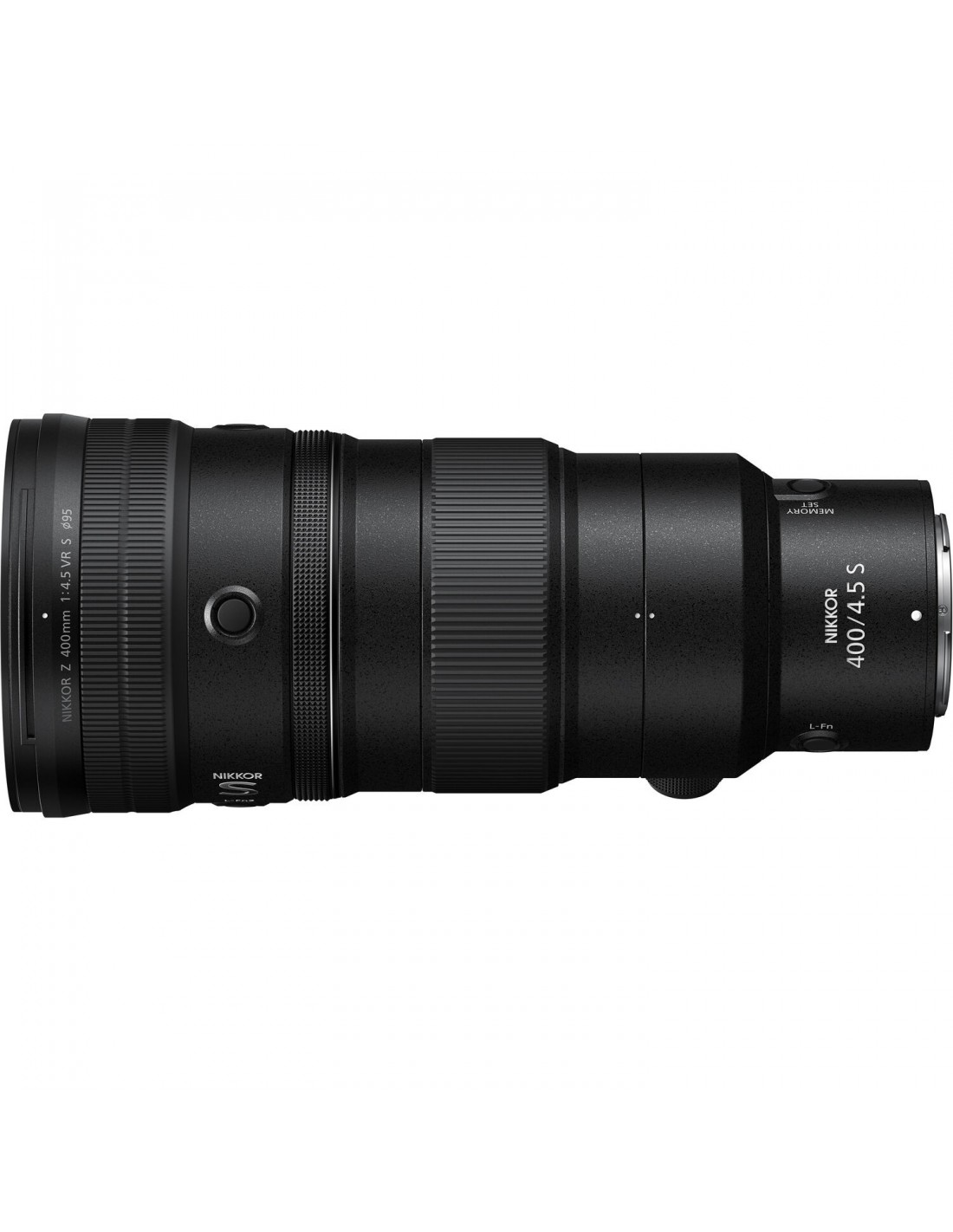

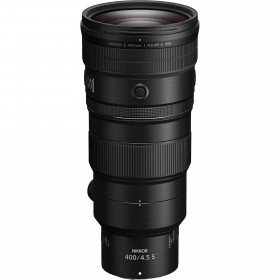

The NIKKOR Z 400mm f/4.5 VR S is a full-frame super-telephoto prime for wildlife, sports and action photographers who want long-lens rendering without carrying a 400mm f/2.8, and we recommend it when mobility matters as much as image quality. Its 1,245g weight and rearward balance make handheld tracking more practical. The f/4.5 aperture helps retain shutter speed, while optical VR steadies the view and supports relatively still subjects. Nikon Z 1.4x and 2.0x teleconverters extend the lens to 560 or 800mm. It remains responsive enough for long field sessions and rapidly changing directions. It is best for a photographer who already understands the usual subject distance and values the light weight of a prime over the framing flexibility of a zoom.
Combine compatible accessories and save. The more items you add, the bigger the discount.
memory card

warranty extension
The NIKKOR Z 400mm f/4.5 VR S answers a practical question: how can a photographer gain the framing and compression of a 400mm prime without accepting the weight, bulk and cost of a professional 400mm f/2.8? At a circuit, sports field or woodland edge, its 1,245g body can change direction quickly and remain ready for longer.
That portability does not make 400mm universal. A prime requires deliberate positioning, and f/4.5 provides less low-light headroom than f/2.8. Rearward balance, optical VR and Z teleconverter compatibility nevertheless make a coherent tool for photographers who favour handheld tracking.
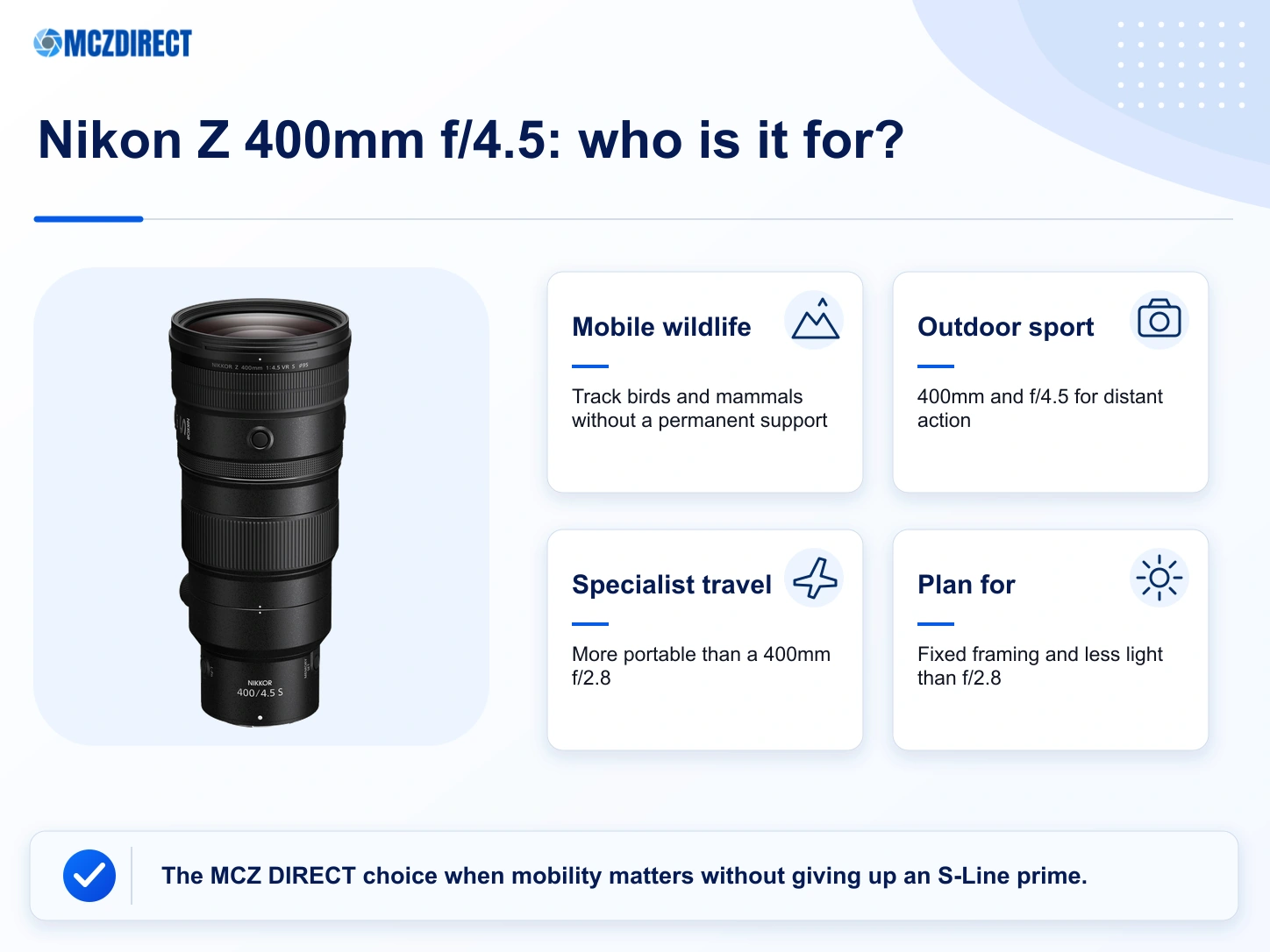
In practice, the first benefit is not reach but the time the lens can remain raised and ready. A 1,245g 400mm is easier to carry, lift and reposition than a lens near 3kg. That difference matters when a bird changes direction or a racing vehicle moves through several parts of a circuit.
VR corrects photographer movement, not subject movement. It calms the view and helps with a perched animal, but a runner or beating wing still needs an appropriate shutter speed. At f/4.5, ISO will rise earlier than with the 400mm f/2.8 TC. That is the central trade-off: dramatically less weight for somewhat less light.
| Specification | Practical benefit | Plan for |
|---|---|---|
| 400mm f/4.5 | Tight framing and compressed backgrounds for wildlife, sports and aviation | A prime requires deliberate positioning |
| 1,245g | Handheld tracking becomes realistic for longer sequences | Total kit weight still includes camera and support |
| 5.5-stop VR | A steadier view and latitude with a still subject | VR cannot stop subject motion |
| 2.5m and 0.16x | A relatively close subject can still be framed | This is not a macro lens |
| 95mm filters | Conventional front filters without a drop-in holder | Large filters take more bag space |
| Assignment | What the lens provides | Useful reservation |
|---|---|---|
| Birds in flight | Low weight and rearward balance for faster tracking | AF area selection still matters |
| Outdoor sports | 400mm covers distant action from the touchline | f/4.5 needs more ISO in evening light |
| Wild mammals | Working distance and clean separation without a 3kg lens | A zoom is easier when distance changes greatly |
| Motorsport | Mobility across different parts of a circuit | Panning still depends on shutter choice |
| Wildlife video | Quiet AF and reduced focus breathing | A prime demands precise placement |
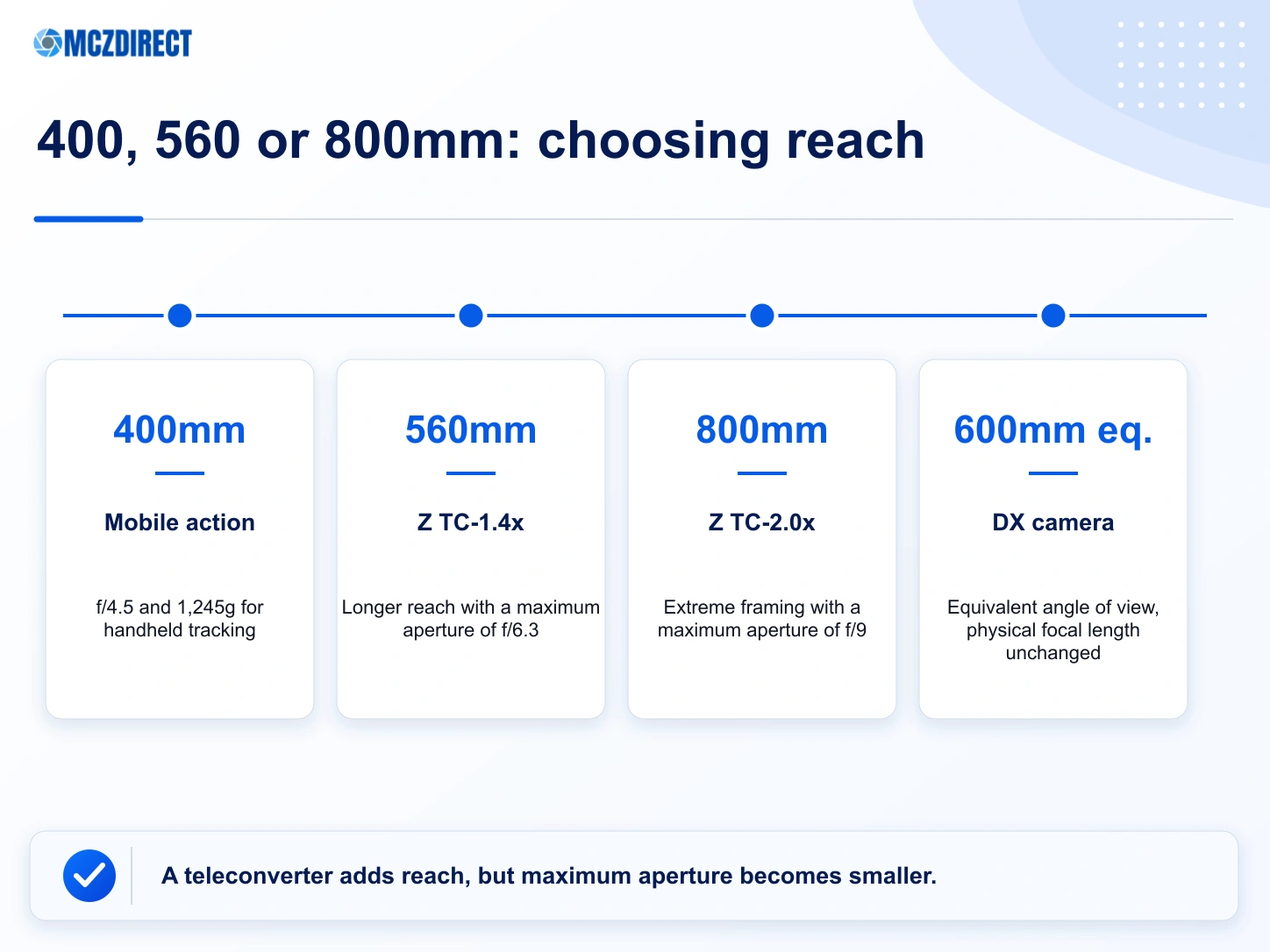
400mm : mobile action, f/4.5 and 1,245g for handheld tracking. 560mm : z tc-1.4x, longer reach with a maximum aperture of f/6.3. 800mm : z tc-2.0x, extreme framing with a maximum aperture of f/9. 600mm eq. : dx camera, equivalent angle of view, physical focal length unchanged.
At 400mm, a small change of direction can take the subject completely outside the frame. The modest weight of this lens helps, but viewfinder technique remains just as important. With a bird in flight, it is often quicker to establish the trajectory with the unaided eye, then bring the camera to the face without losing that reference point. A reasonably wide AF area can acquire the subject before a more precise tracking mode takes over. This approach is far less frustrating than searching through a narrow 400mm field after the action has already started.
For motorsport or a player at the far end of a pitch, anticipating where the action will happen is equally valuable. The 400mm f/4.5 pans naturally because the mass is manageable and the balance sits close to the camera. Leave some space in front of the subject and choose shutter speed according to the intended result. A fast setting freezes a decisive gesture, while a slower speed can convey movement through background blur. The latter needs a smooth rotation and repeatable body position; VR can steady the view, but it cannot replace an even pan.
At 1,245g, the NIKKOR Z 400mm f/4.5 VR S makes genuine handheld work practical when the photographer walks, changes position often or must react without warning. A support is still useful in the right situation. During a long hide, an entire match or a sustained wait near a regular flight path, a monopod removes much of the load from the arms while preserving rotational freedom. A properly adjusted strap also matters during transitions, keeping the combined camera and lens balanced rather than allowing the whole assembly to pull awkwardly from one point.
A tripod with a gimbal head is a better fit when the viewpoint is fixed, when recording video or when a known area must be watched for several hours. It holds the composition and lets the photographer relax between appearances. The same setup can become restrictive if wildlife emerges outside the planned axis. Support choice should therefore follow the rhythm of the assignment rather than the specification sheet alone: handheld for maximum mobility, monopod for endurance with quick reframing, and tripod for a prepared position where repeatable framing matters more than immediate relocation.
The f/4.5 maximum aperture is a sensible compromise between light gathering and portability. In daylight it normally leaves room for an action-stopping shutter speed without driving ISO unnecessarily high. As light falls, two separate problems need to be considered. VR reduces photographer movement and calms the view, but it does not slow a wing, wheel or running animal. Subject movement still dictates shutter speed, even if that means accepting more ISO. With a perched bird or stationary mammal, optical stabilisation becomes more useful because the photographer can reduce shutter speed without asking it to solve motion that it cannot control.
Background separation depends on more than aperture. A close subject, a distant background and work near maximum aperture can produce a clean, soft setting even without f/2.8. The larger-aperture 400mm retains a real advantage at dusk or in a dim stadium, however. Before choosing the f/4.5 model, consider when the lens will be used most often. It is very well matched to daytime wildlife, aviation and outdoor sport, and modern cameras can extend its useful hours, but it does not offer the same low-light reserve or subject isolation as the 400mm f/2.8 TC.
Add the Z 1.4x teleconverter and the lens becomes a 560mm f/6.3. A distant bird or small subject occupies more sensor pixels at capture, which may be preferable to an aggressive crop. The 2.0x converter reaches 800mm f/9, with a more substantial light penalty. At either magnification, focus accuracy, support technique and air quality become increasingly visible. A teleconverter cannot recover detail lost to heat shimmer or an excessive shooting distance; it enlarges the limitations in the scene as well as the subject. Use it when the atmosphere and light can support the extra magnification.
DX crop mode gives the angle of view associated with 600mm while leaving the physical focal length and aperture unchanged. It makes a tight composition easier to judge and creates smaller files, but it captures no extra detail compared with applying the identical crop afterwards. Cropping in software preserves more room around an unpredictable subject and allows composition to be refined later. These are different tools: a converter uses more pixels on the distant subject, DX mode provides an immediate tighter view and lighter workflow, while a full-frame file retains the safest margin for erratic action.
A Nikon Z8 or Z9 combines the lens with fast shooting, sophisticated subject detection and enough resolution for moderate cropping. The Z6 III creates a lighter, broadly capable system for photographers who mix action, events and video. A DX body may appeal when an immediate tighter angle of view is useful, although the 600mm-equivalent framing also makes acquisition and tracking more demanding. The best match is therefore not automatically the highest-resolution camera. File volume, AF behaviour, desired balance and the amount of time spent following erratic subjects all matter to the finished working system.
Before an outing, prepare a dedicated group of settings rather than relying on a general camera setup. AF mode, detection area, minimum shutter speed under Auto ISO, burst rate and VR behaviour should reflect the assignment. A control button on the lens can then call a function that is genuinely useful in the field. A configuration suited to a perched animal may be too restrictive for a sudden take-off, so two quickly accessible arrangements can save more photographs than another technical feature. That preparation allows the 400mm lens to deliver its real advantage: moving and responding without unnecessary delay.
A final check before leaving prevents small details from undermining the mobility that makes this lens attractive. Confirm that the hood locks correctly, the front element is clean, batteries and cards match the planned burst volume and the carrying system supports the lens rather than pulling only on the camera. Review the weather and likely light so shutter-speed and ISO expectations are realistic. At the location, spend a few minutes watching movement before choosing a position. A clear background, safe line of sight and predictable subject path often contribute more to a strong 400mm photograph than moving repeatedly in search of a marginally closer viewpoint.
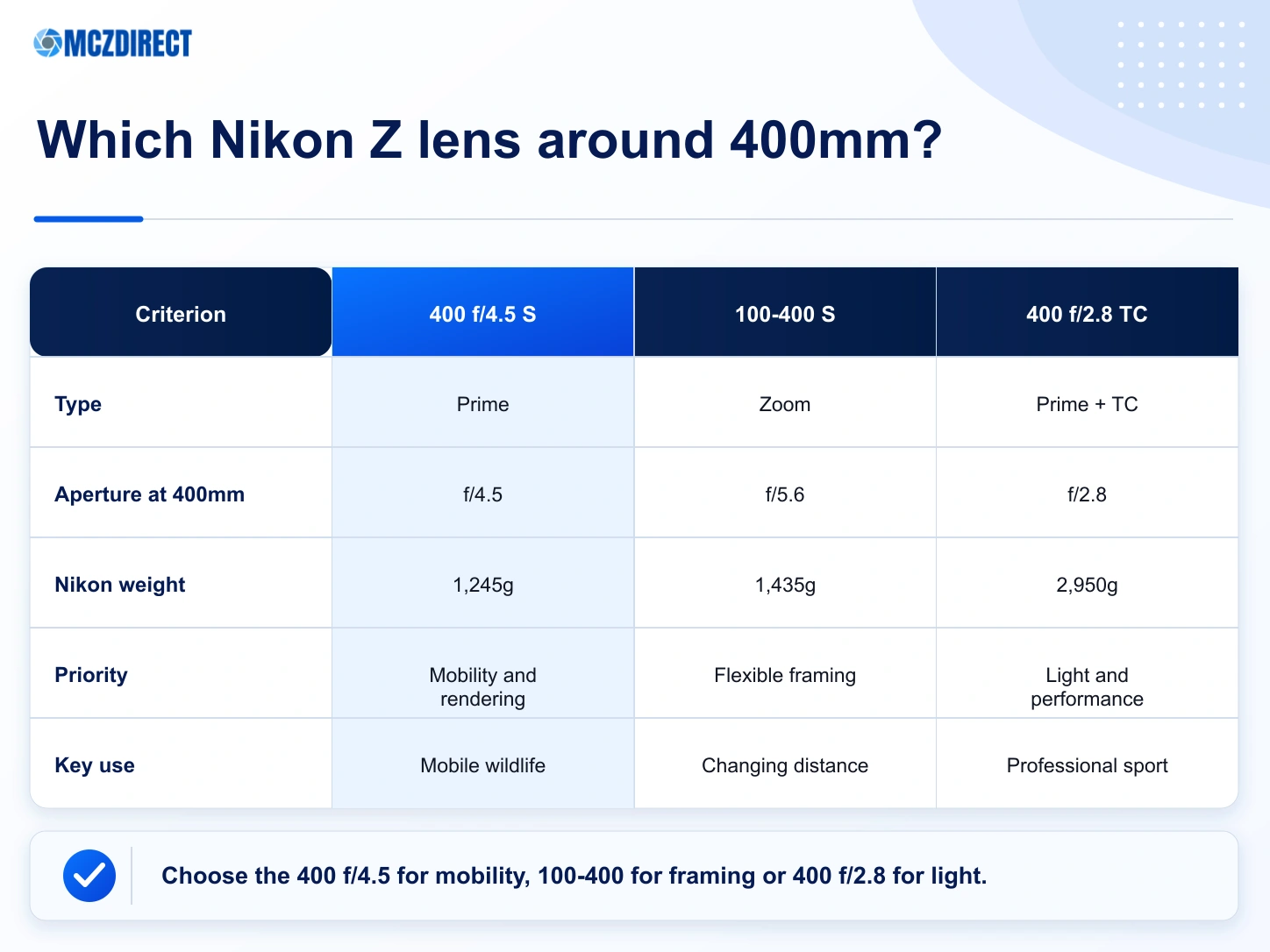
Against the NIKKOR Z 100-400mm f/4.5-5.6 VR S, the 400mm prime is one stop faster at the long end and slightly lighter. The zoom still has a decisive advantage when a subject approaches or framing must change without moving position.
The NIKKOR Z 400mm f/2.8 TC VR S belongs to another class. f/2.8 helps later in the day, maintains shutter speed and creates stronger separation; the built-in teleconverter also produces 560mm f/4. It weighs 2,950g, however. The f/4.5 lens is more sensible for walking, travel and prolonged handheld tracking.
| Criterion | 400 f/4.5 S | 100-400 S | 400 f/2.8 TC |
|---|---|---|---|
| Type | Prime | Zoom | Prime + TC |
| Aperture at 400mm | f/4.5 | f/5.6 | f/2.8 |
| Nikon weight | 1,245g | 1,435g | 2,950g |
| Priority | Mobility and rendering | Flexible framing | Light and performance |
| Key use | Mobile wildlife | Changing distance | Professional sport |
At MCZ DIRECT, we see the NIKKOR Z 400mm f/4.5 VR S as the lens for a wildlife or sports photographer who moves frequently and already knows that 400mm fits the assignment. It provides genuine 400mm prime rendering in a manageable kit rather than zoom versatility.
This 400mm moves ahead of the 100-400 when the long end is used almost constantly. It is also more rational than the 400mm f/2.8 when weight matters more than the extra stop. The limitation is straightforward: for a dim stadium or dusk hide, f/2.8 retains a clear advantage.