Shopping Cart
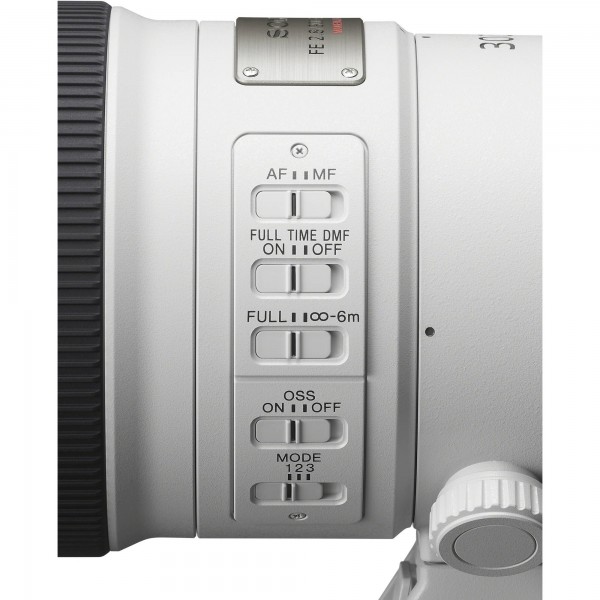
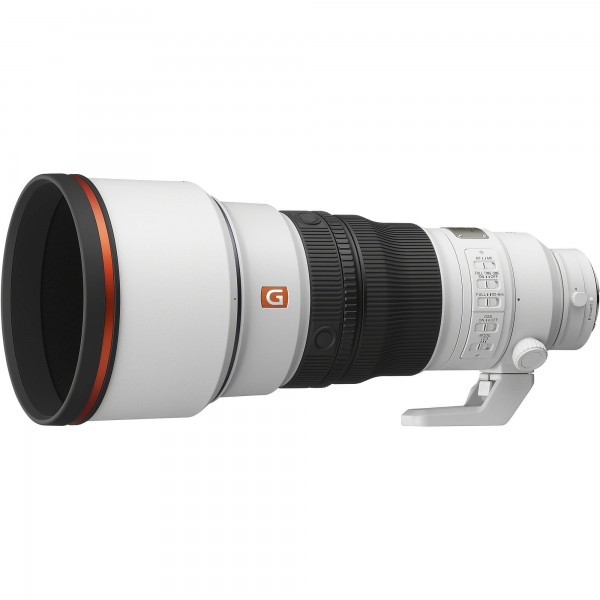
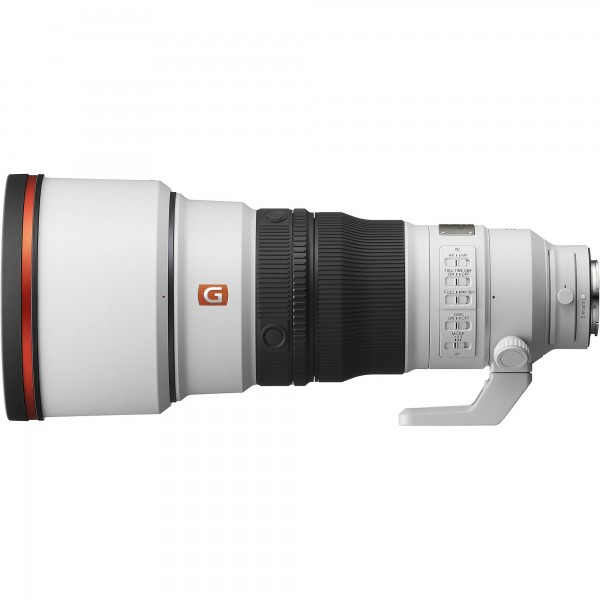
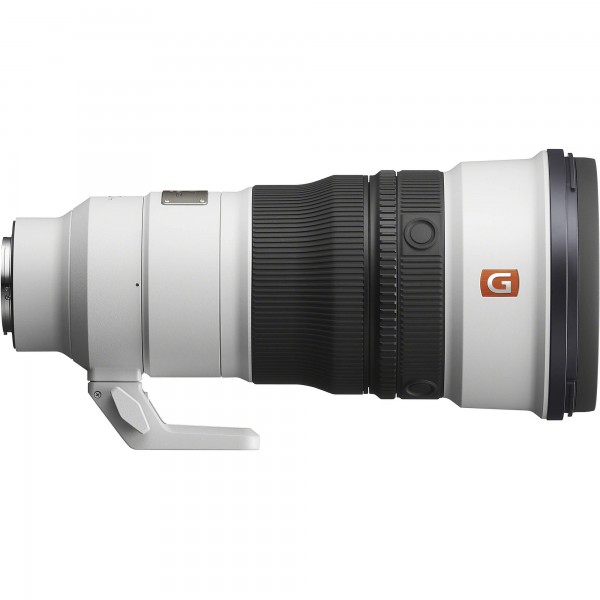
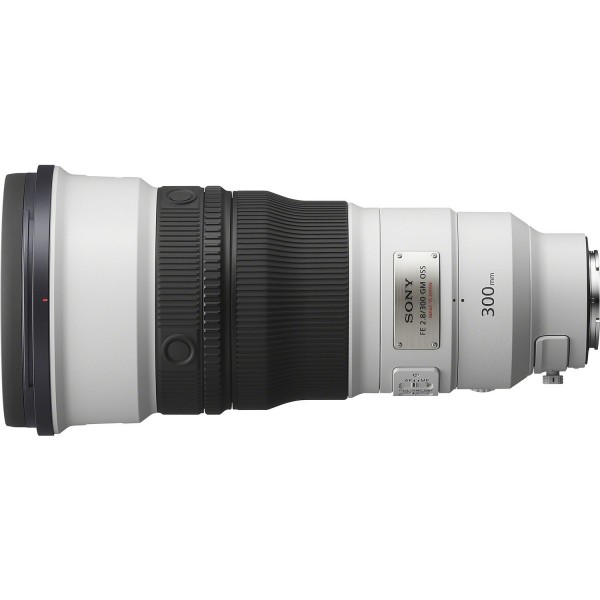
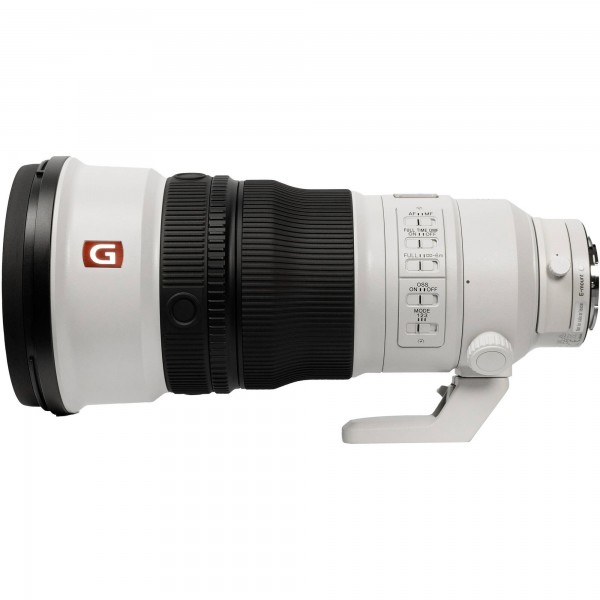
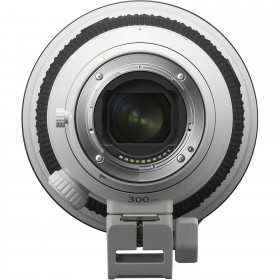
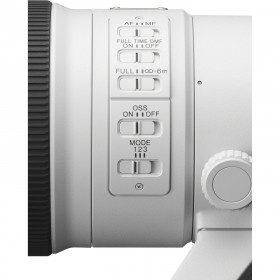
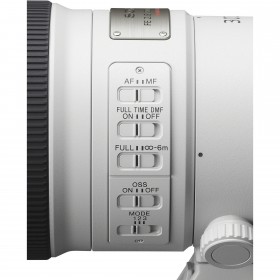
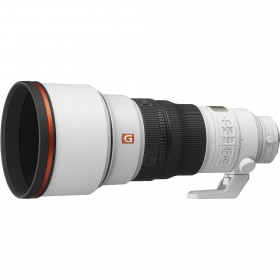
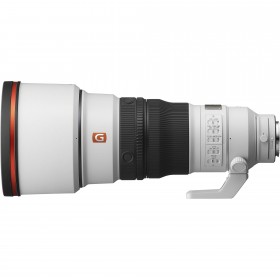
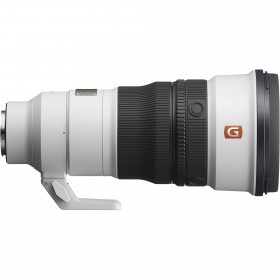
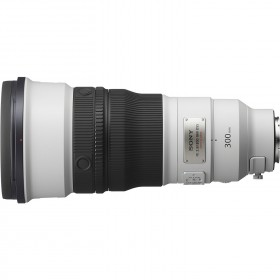
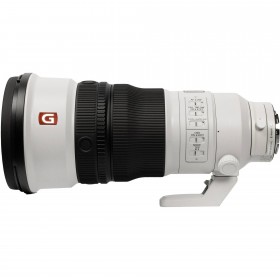

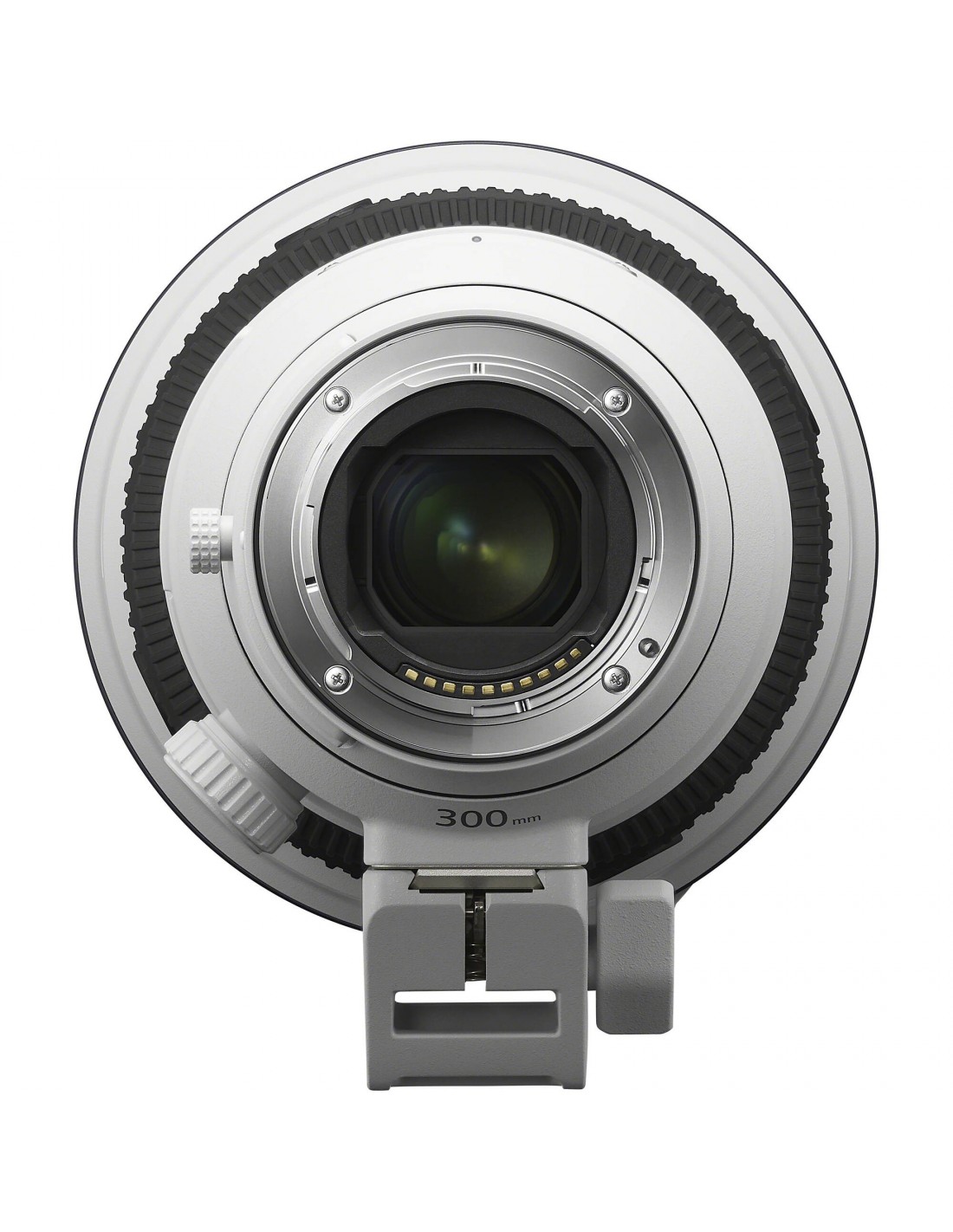

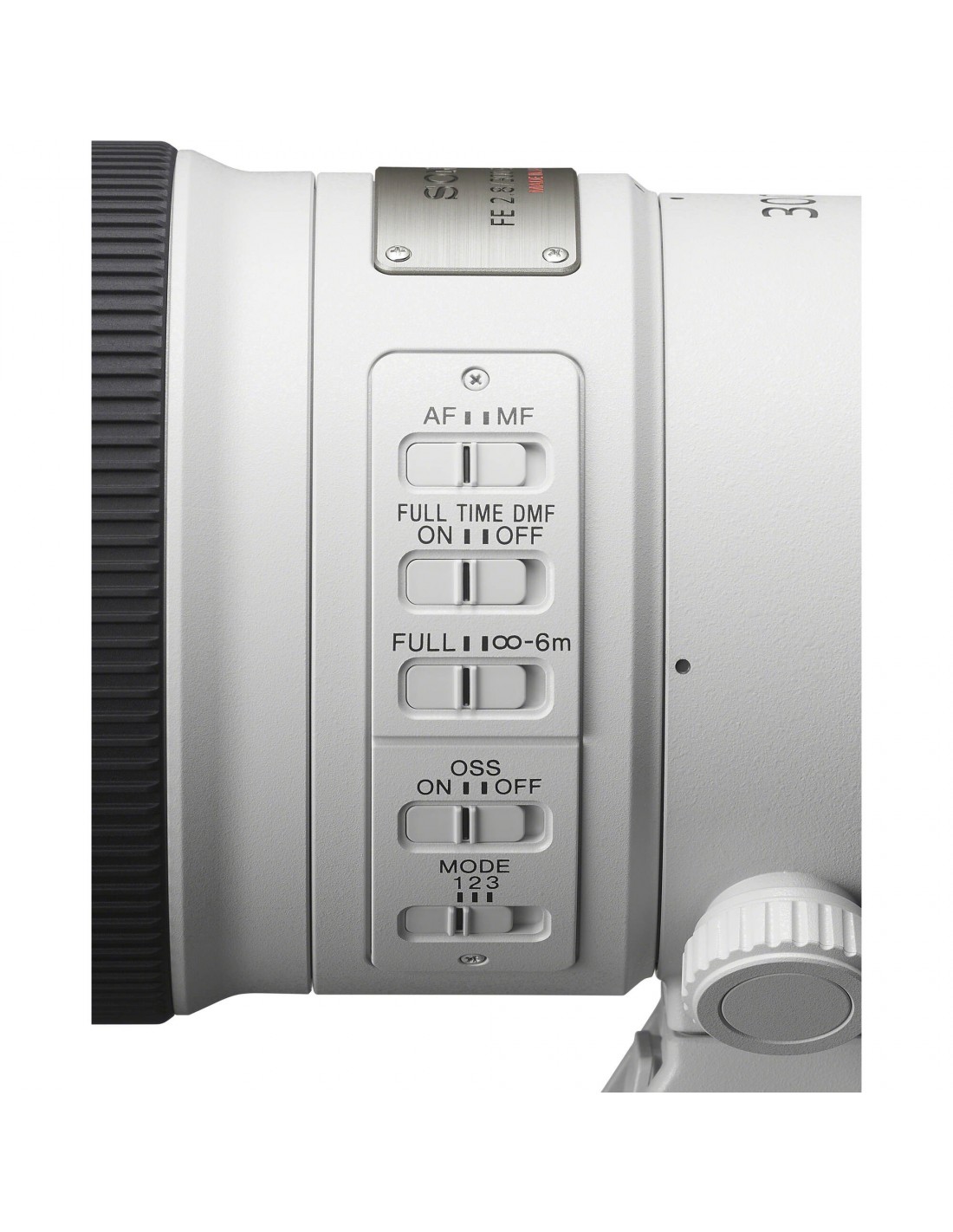
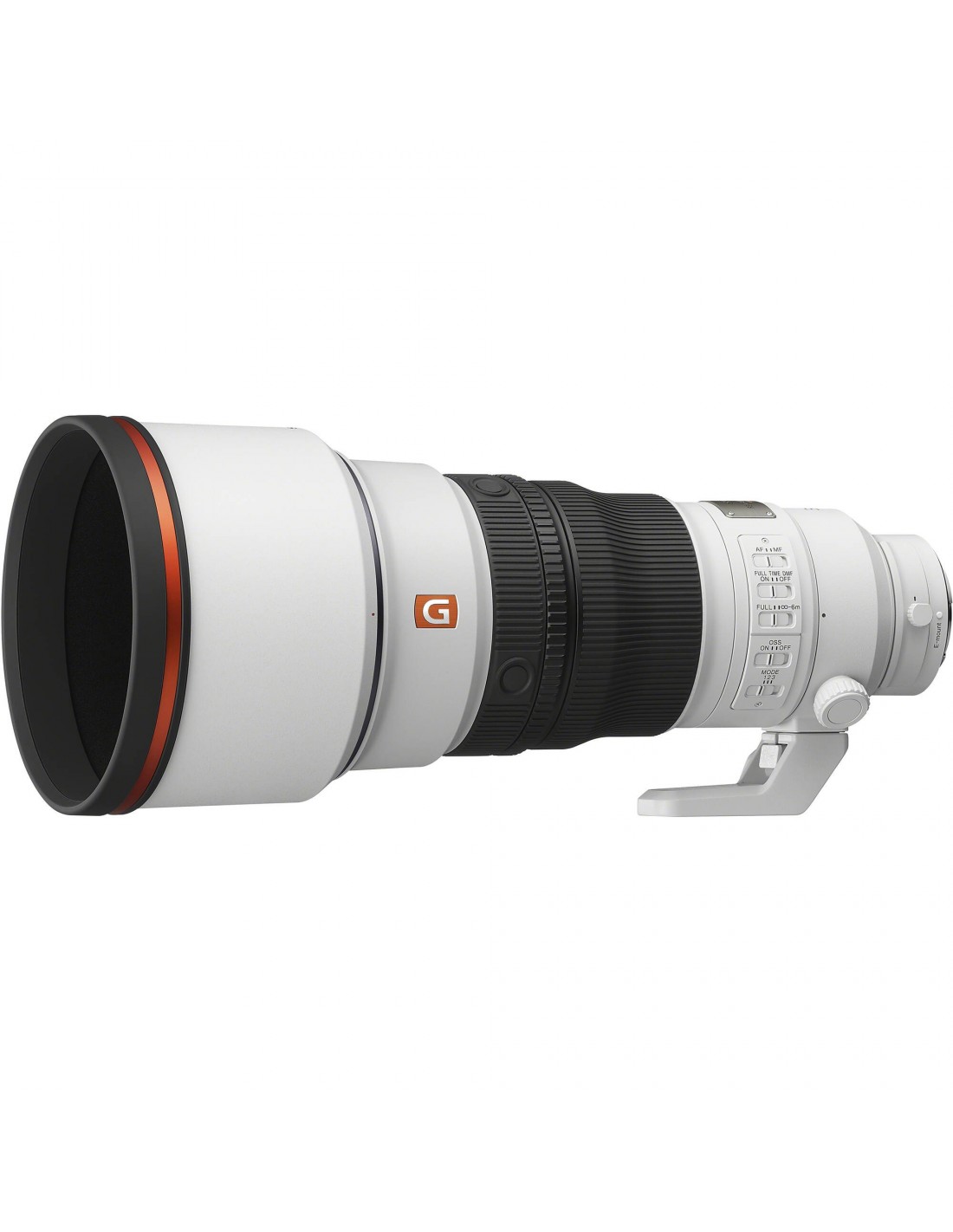
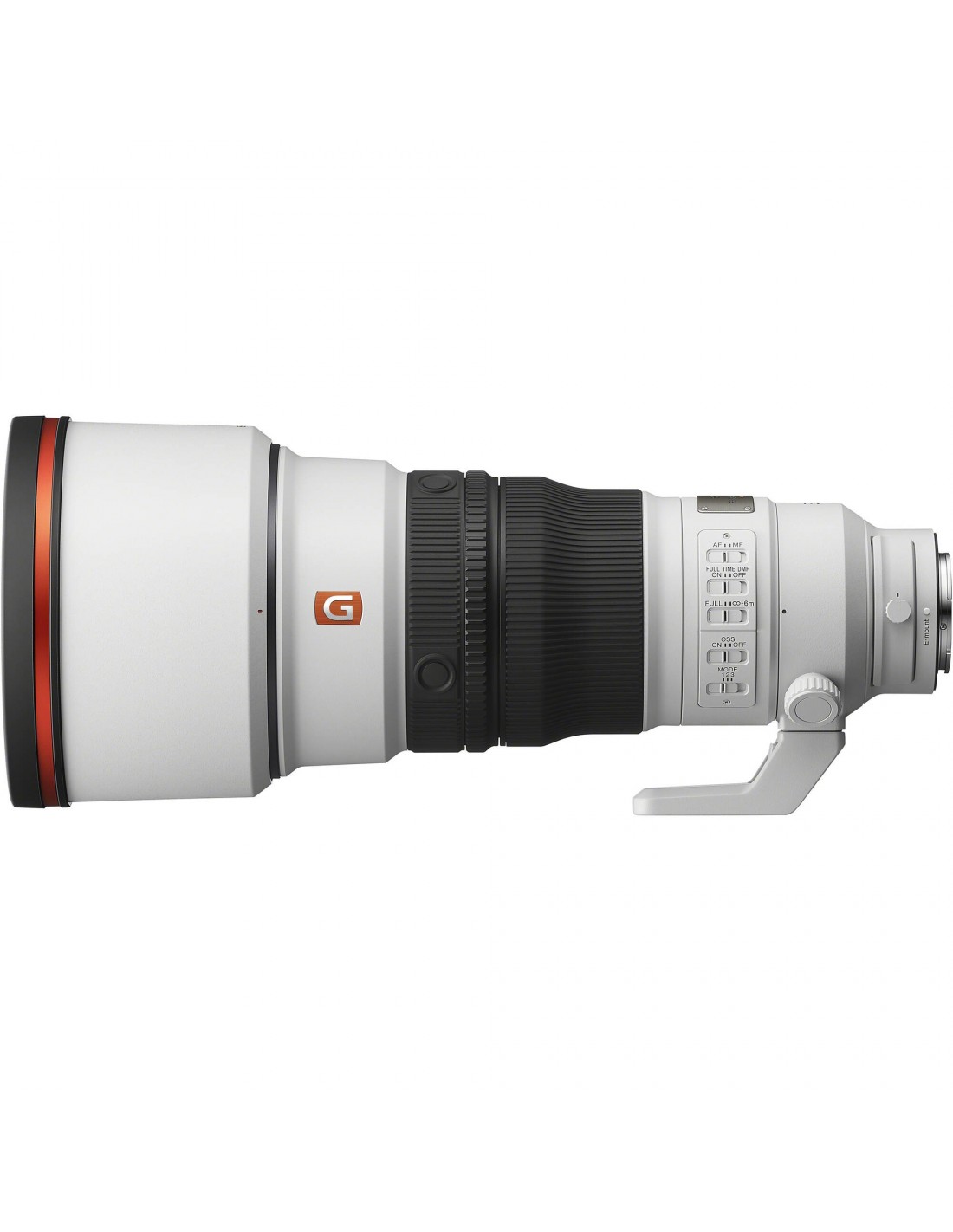
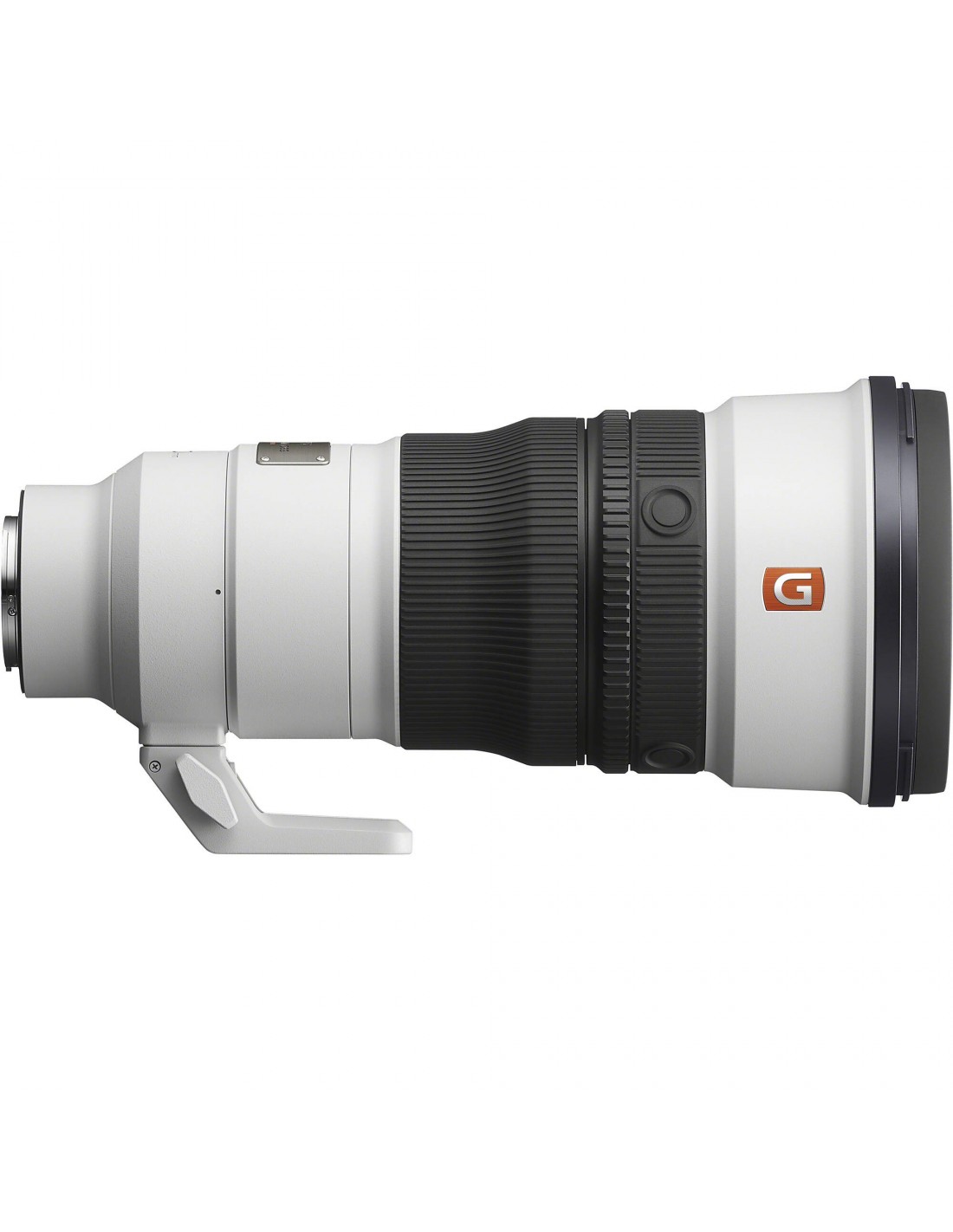
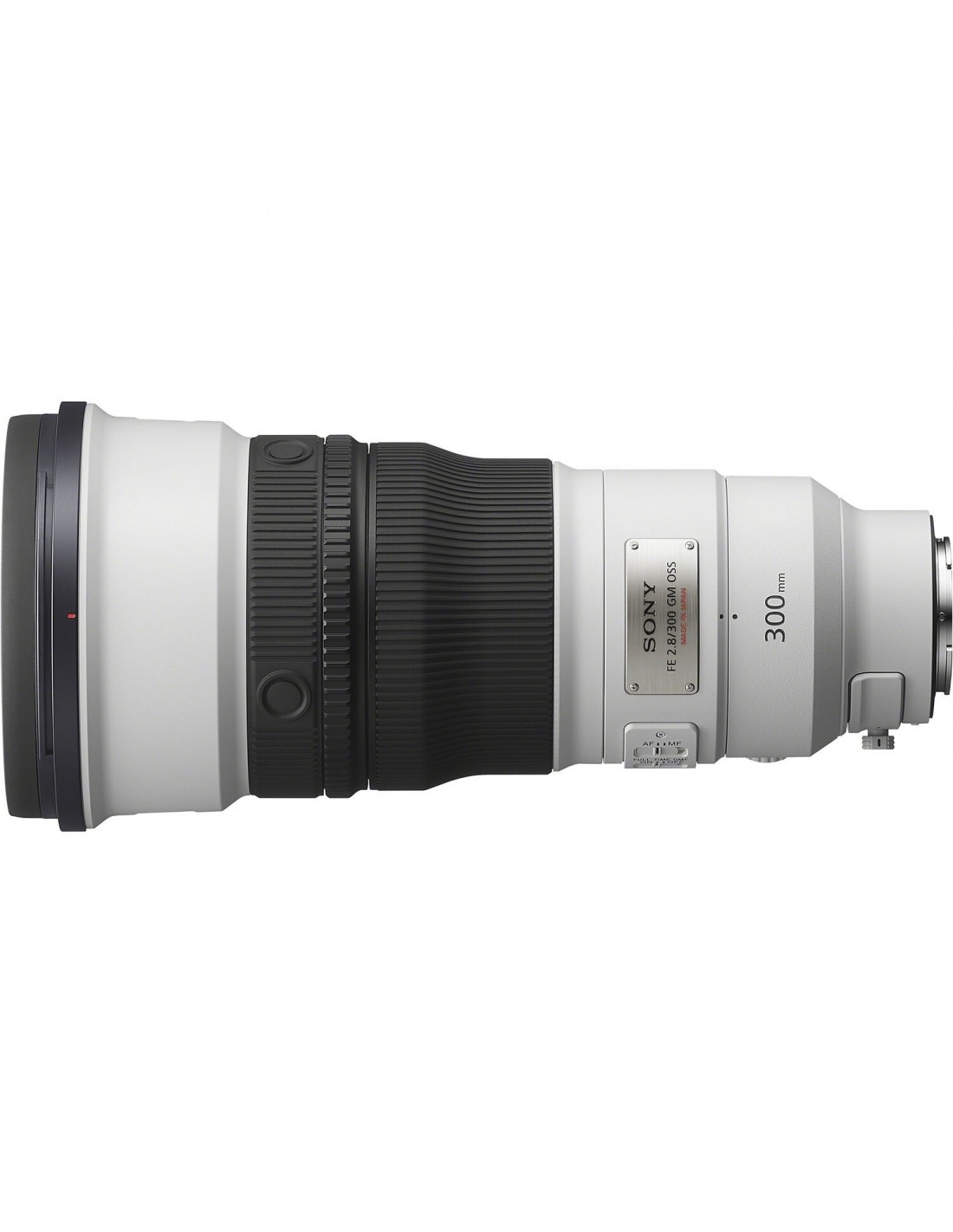
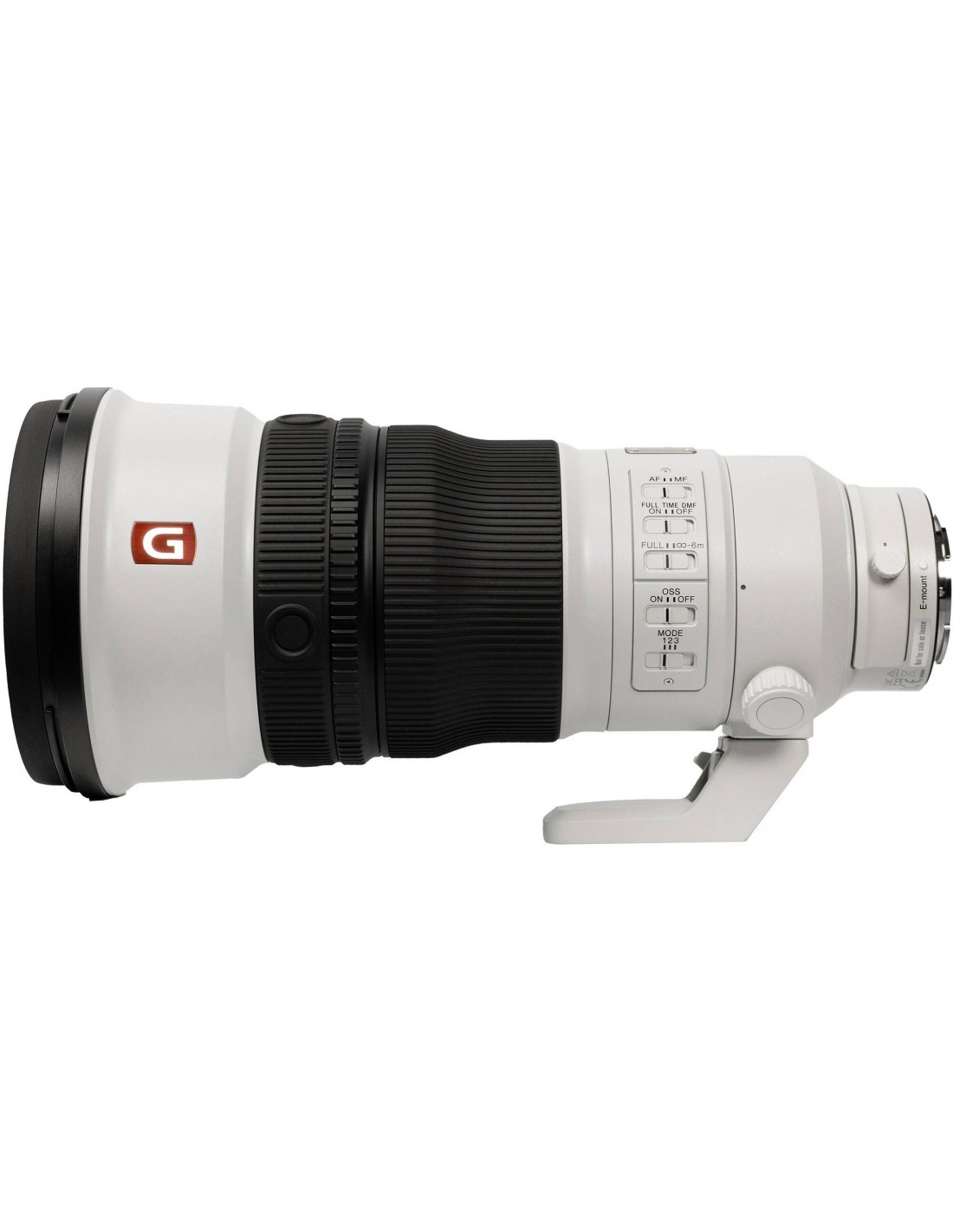


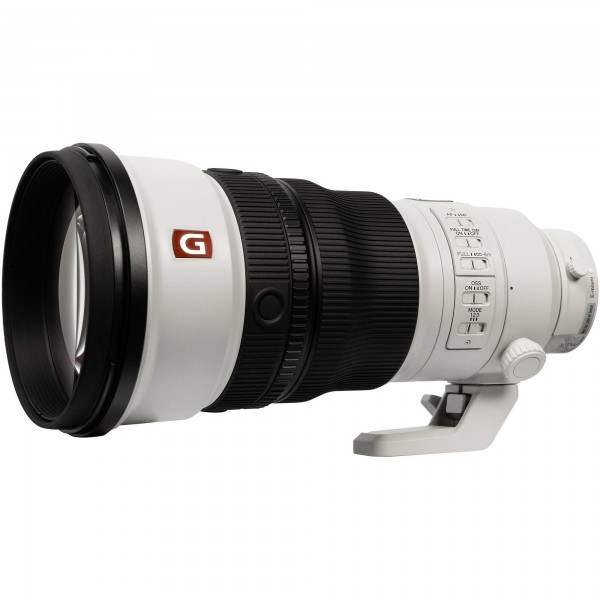
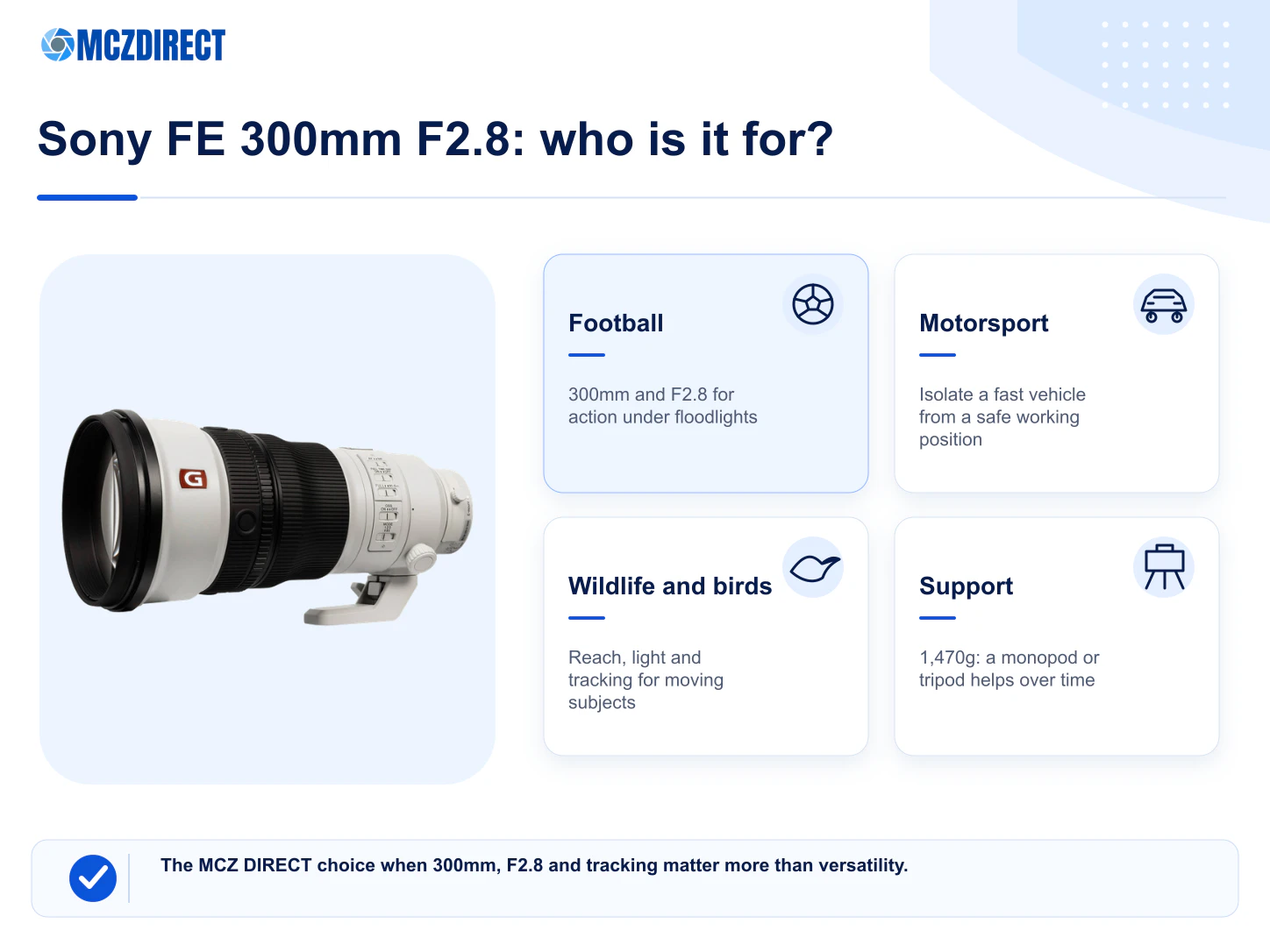
The Sony FE 300mm F2.8 GM OSS is a full-frame telephoto lens recommended for sports and wildlife photographers who want fast aperture performance without giving up mobility. Its 300mm view follows a player, racing vehicle, bird or mammal more readily than a 400mm or 600mm prime, while F2.8 supports faster shutter speeds under floodlights, at dawn or beneath tree cover. Two XD Linear Motors and Optical SteadyShot assist with moving subjects. At 1,470g without the tripod collar, with a 2m minimum focus distance and support for Sony 1.4x and 2x teleconverters, the lens can work as a fast 300mm, a 420mm F4 or a 600mm F5.6. It is a strong choice when light, subject separation and freedom to reposition matter more than zoom flexibility.
Combine compatible accessories and save. The more items you add, the bigger the discount.
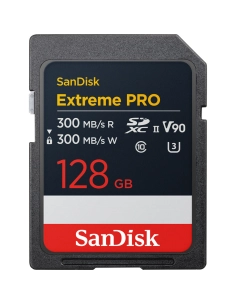
memory card

warranty extension
The Sony FE 300mm F2.8 GM OSS is intended for sports, event and wildlife photographers who need a bright prime without the usual burden of a large super-telephoto. Its 300mm angle of view is long enough for a player, racing vehicle, bird or mammal while remaining easier to aim than a 400mm or 600mm prime. The F2.8 maximum aperture supports faster shutter speeds under floodlights, at dawn or beneath tree cover, and gives useful subject separation against a busy background.
At 1,470g without the tripod collar, the SEL300F28GM changes how readily a photographer can move and work handheld. It is far less restrictive than a 400mm F2.8 over a long session. It remains a fixed focal length, however. When the subject distance changes abruptly, good positioning, cropping or a second camera with a shorter zoom may still be required.
The benefit is not simply the F2.8 number. When action is fast, the wider aperture gives more freedom to hold a short exposure without raising sensitivity unnecessarily. It can also separate an athlete from crowded seating or wildlife from tangled vegetation. Depth of field becomes shallower, so AF-area choice and tracking accuracy remain important.
| Feature | Practical benefit | Point to consider |
|---|---|---|
| 300mm F2.8 | A fast telephoto view that isolates the subject without becoming as narrow as 400mm or 600mm. | Framing cannot be widened when the subject approaches. |
| 1,470g without collar | More realistic handheld tracking and easier movement around a venue. | Working weight changes with the camera, collar, hood and carrying system. |
| Two XD Linear Motors | Focus performance designed for rapid changes in subject distance. | Results also depend on the camera, firmware, AF area and tracking settings. |
| Optical SteadyShot | A steadier view for handheld work, panning and irregular movement. | Stabilisation reduces camera shake; it does not stop subject movement. |
| 2m minimum focus | Useful for details, closer wildlife portraits and action at shorter distances. | The 0.16x maximum magnification does not replace a macro lens. |
From the touchline, 300mm works well for play around midfield and on the far side, yet remains manageable when the action starts moving back towards the photographer. It suits football, rugby, athletics, tennis from the stands, indoor sport and motorsport where safety barriers determine the shooting distance. Under floodlights or in a dim arena, F2.8 helps preserve the shutter speed needed to hold movement.
The main difference from a 400mm F2.8 is working distance. The 300mm makes it easier to find the subject and rotate quickly; the Sony FE 400mm F2.8 GM OSS fills the frame more decisively when the action remains distant. A second body with a 70-200mm can still be valuable when movement crosses the whole venue.
For wildlife, the bare 300mm is well suited to larger mammals at a moderate distance, larger birds and subjects whose path is difficult to predict. Its wider view helps initial acquisition and leaves useful room around the subject. F2.8 is particularly valuable at dawn, beneath foliage or whenever the background needs to become less distracting.
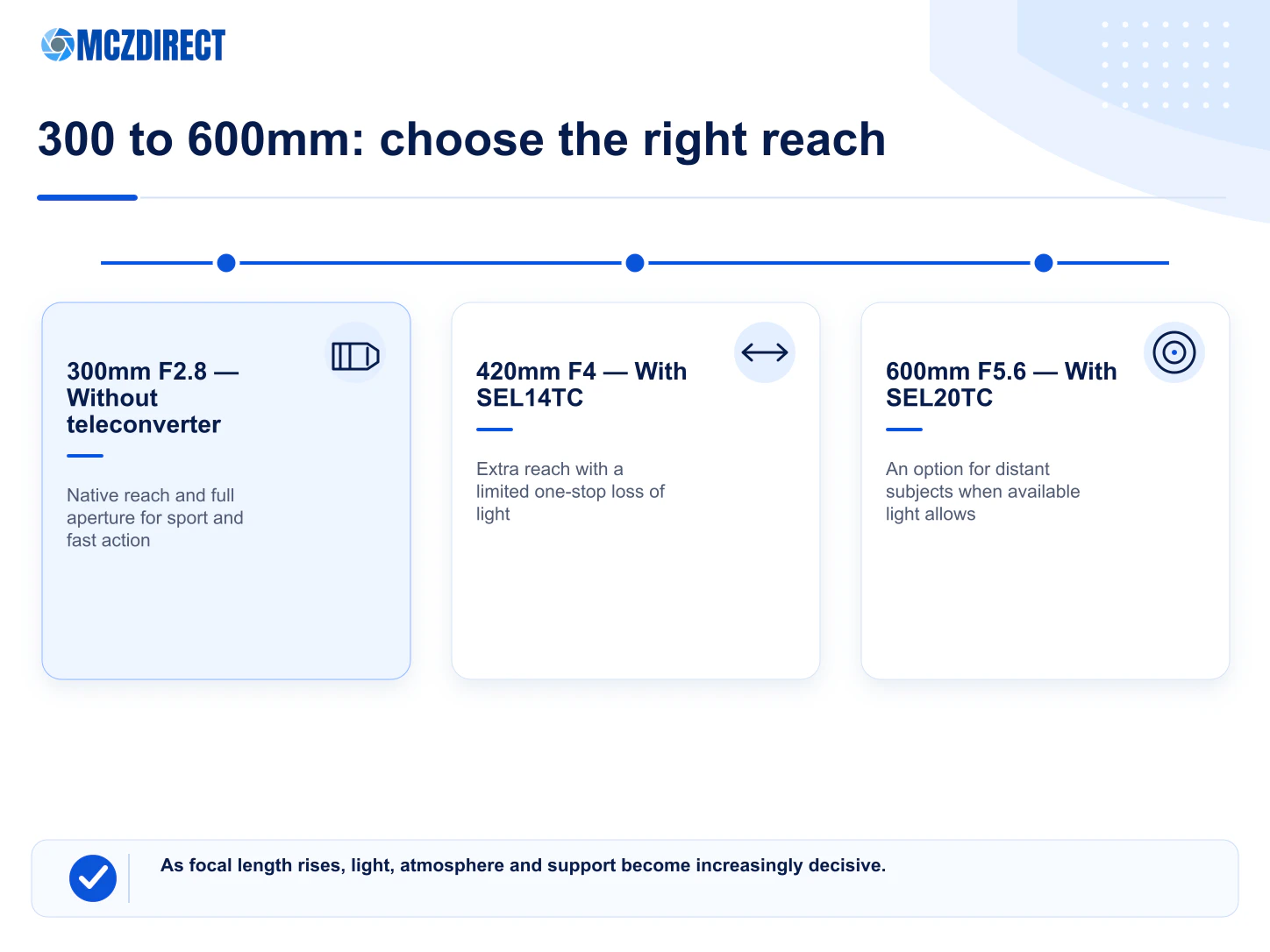
A small bird or distant animal may require more native reach. The SEL14TC turns the lens into a 420mm F4, while the SEL20TC produces a 600mm F5.6 combination. Longer focal lengths make camera movement, atmospheric shimmer and focus accuracy more visible. A teleconverter should solve a real distance problem rather than simply enlarge every subject.
| Configuration | Focal length and aperture | Best suited to | Compromise |
|---|---|---|---|
| Lens alone | 300mm F2.8 | Sport, events and wildlife at moderate distance with maximum light. | Limited reach for very small, distant subjects. |
| With SEL14TC | 420mm F4 | Football, wildlife and birds where extra reach matters without a very slow aperture. | One-stop light loss and a narrower field of view. |
| With SEL20TC | 600mm F5.6 | Birds and distant wildlife in sufficient light. | Two-stop light loss and greater dependence on light, atmosphere and stability. |
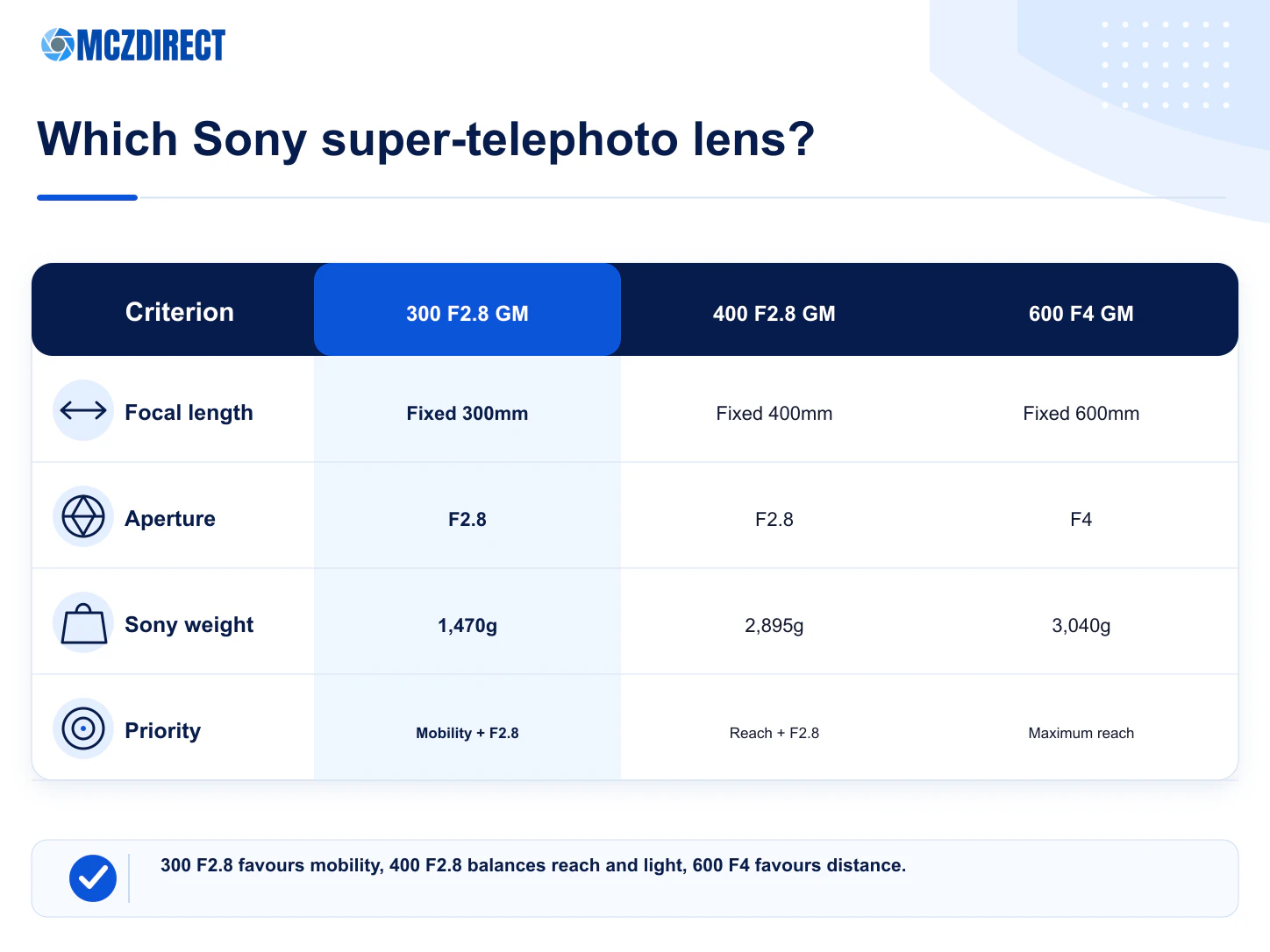
The right choice depends more on normal subject distance than prestige. The 300mm F2.8 prioritises mobility and light. The 400mm F2.8 frames more tightly without giving up F2.8. The 600mm F4 is designed around distant subjects. The 200-600mm changes framing quickly, but its F5.6-6.3 aperture needs considerably more light.
| Lens | Focal length and aperture | Sony weight | Choose it when |
|---|---|---|---|
| Sony FE 300mm F2.8 GM OSS | 300mm F2.8 | 1,470g without collar | Mobility, light and moderate-distance tracking are the priorities. |
| Sony FE 400mm F2.8 GM OSS | 400mm F2.8 | 2,895g | You need tighter framing without losing F2.8. |
| Sony FE 600mm F4 GM OSS | 600mm F4 | 3,040g | Native long-distance reach matters more than mobility. |
| Sony FE 200-600mm F5.6-6.3 G OSS | 200-600mm F5.6-6.3 | 2,115g | Zoom flexibility matters more than F2.8 and the lower weight of the 300mm. |
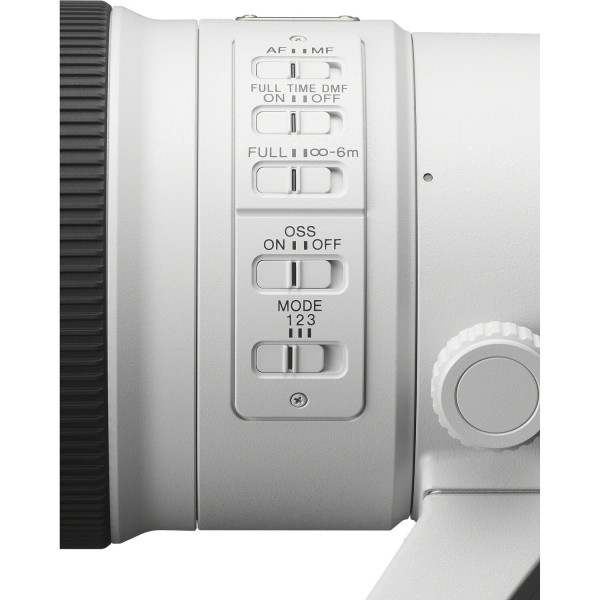
The two XD Linear Motors are supported by a focus-range limiter, four customisable buttons, a function ring and preset focus. Preset focus can recall a known distance when an athlete repeatedly enters one zone or an animal uses the same route. Exact functions and performance depend on the camera and its settings.
OSS steadies the view and helps reduce photographer movement. Dedicated settings support panning and unpredictable action. It cannot freeze the subject, so an appropriate shutter speed remains essential for a runner, ball, racing car or bird in flight.
At 1,470g without the collar, the FE 300mm F2.8 GM OSS can be used handheld for longer than a large 400mm or 600mm prime. That does not make support irrelevant. A monopod can relieve fatigue through a full match, while a tripod remains useful in a hide or during a long wait. The rearward balance helps with rotation and sudden changes in direction.
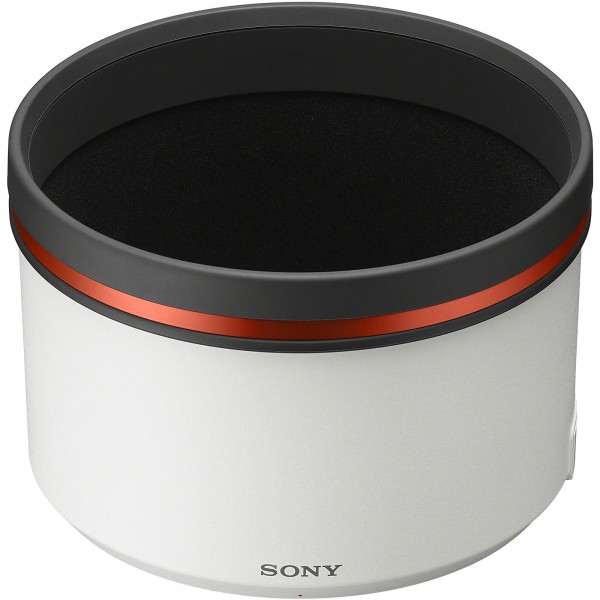
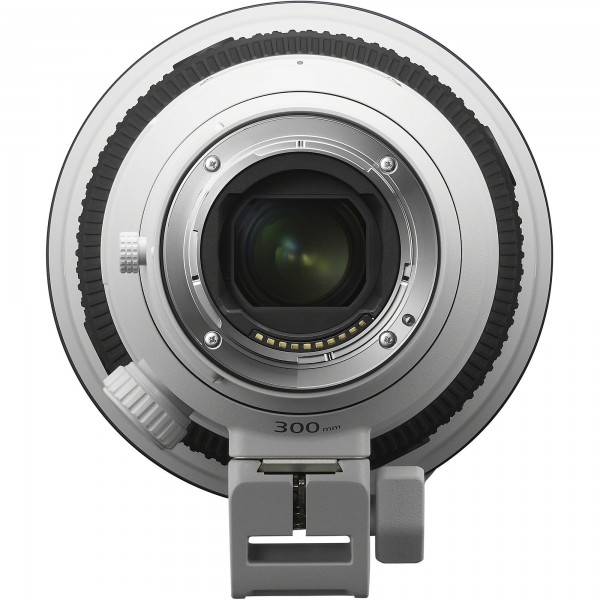
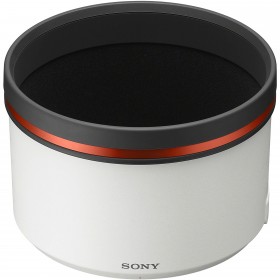
The 40.5mm filter fits into a rear drop-in holder, avoiding an impractically large front filter. The supplied ALC-SH175 hood, tripod collar, lens strap and soft case help organise transport and field use without repeating the separate in-the-box module.
The Sony Alpha 1 II combines resolution and speed for both sport and wildlife. The Sony A9 III is aimed at very fast action and situations where its global shutter provides a practical advantage. The Sony A7R VI is relevant when substantial cropping freedom matters. Other compatible lenses can be explored in the Sony lenses category.
At MCZ DIRECT, we see the Sony FE 300mm F2.8 GM OSS as the choice for a sports or wildlife photographer who genuinely wants a fast prime while remaining mobile, rather than as a universal replacement for a zoom. Its decisive quality is the combination of 300mm, F2.8 and a 1,470g lens weight.
Against the 400mm F2.8 GM OSS, we recommend it when a wider view, handheld tracking and movement around the venue matter more than the extra 100mm. Against the 200-600mm, it makes more sense when light and subject separation take priority over zoom flexibility. Adding the 1.4x converter also creates a useful 420mm F4 option.
The honest limitation is common to every 300mm prime: it can be too short for a small distant subject and too long when action comes very close. For football, indoor sport, circuits, moving wildlife or birds in difficult light, that specialisation is also exactly what makes the lens compelling.

Generated by AI from customer reviews.