Shopping Cart
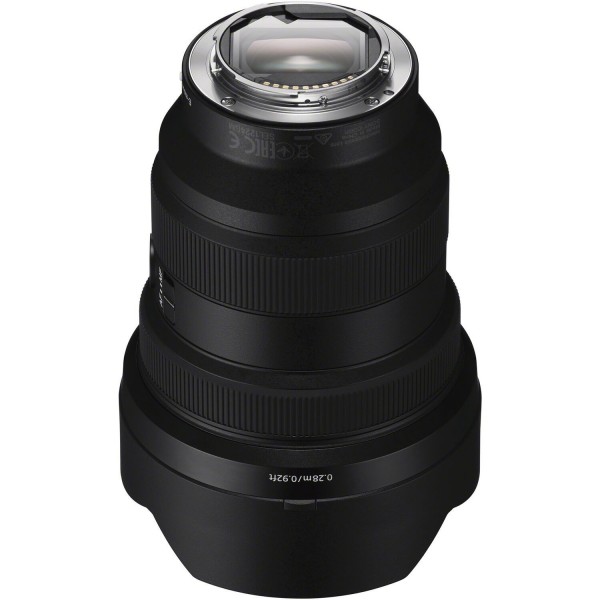
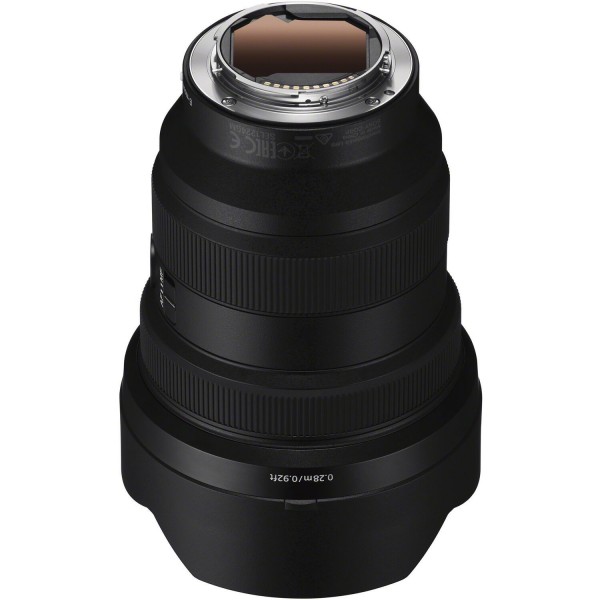
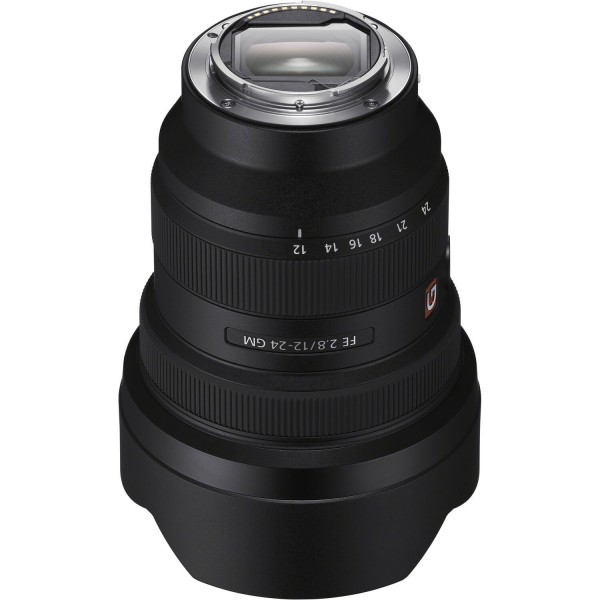
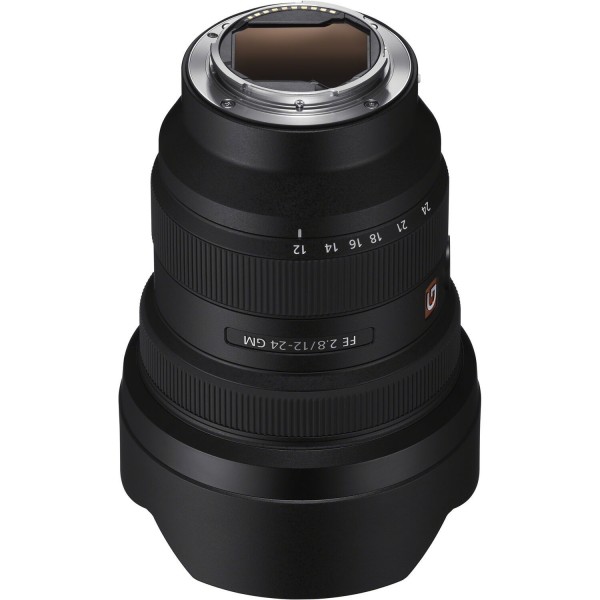
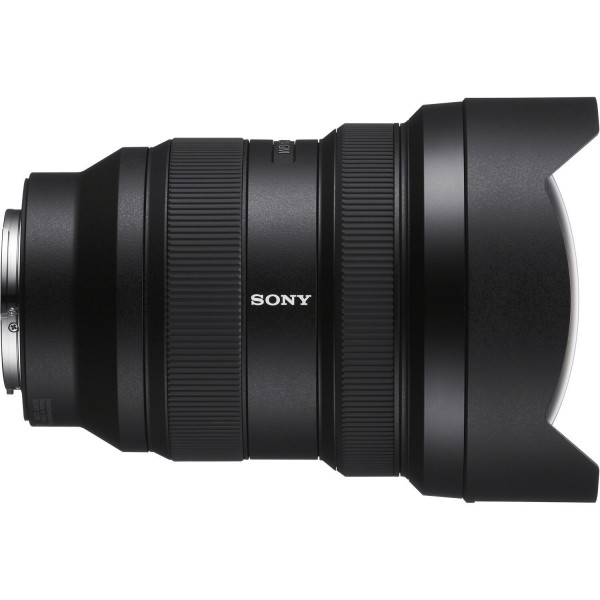
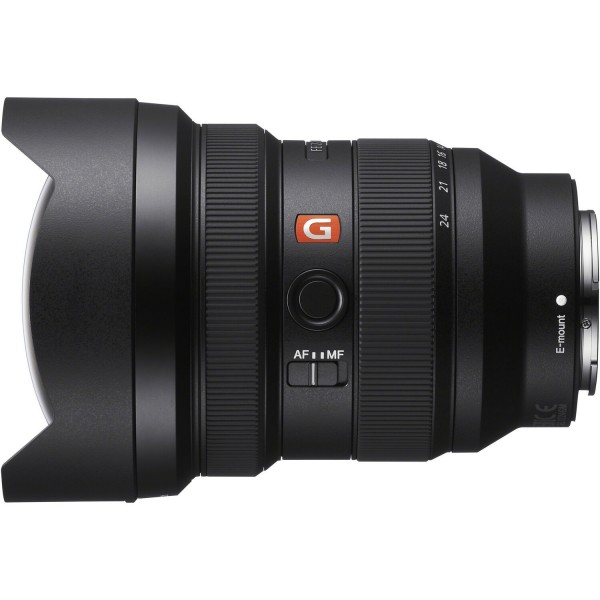

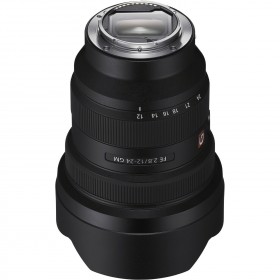
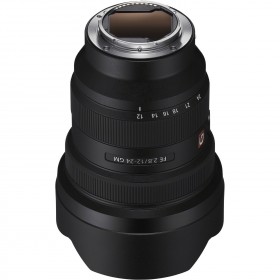
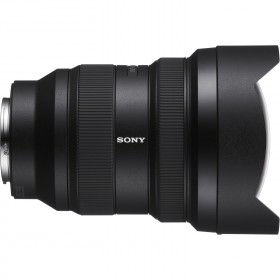
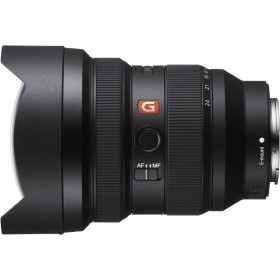
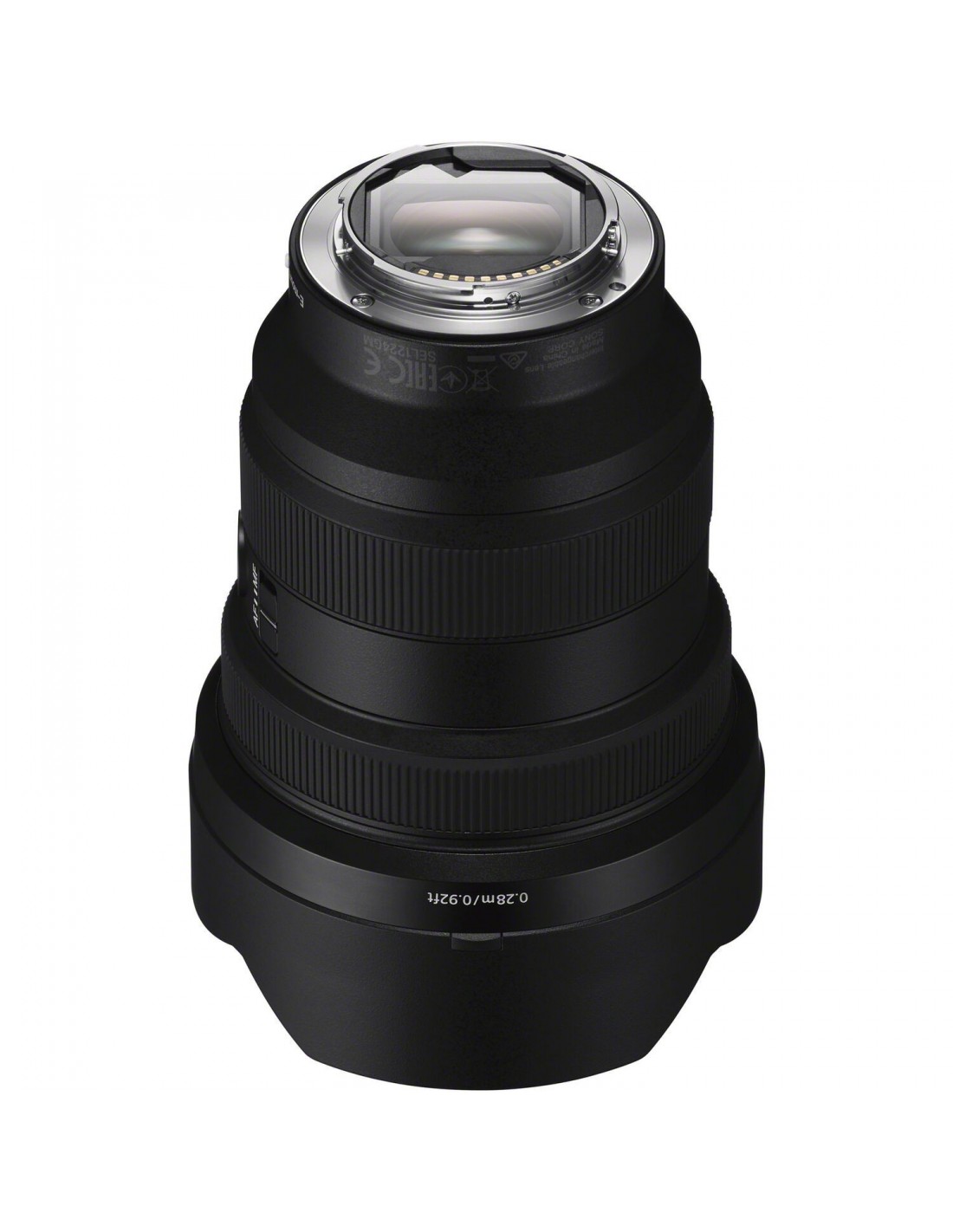
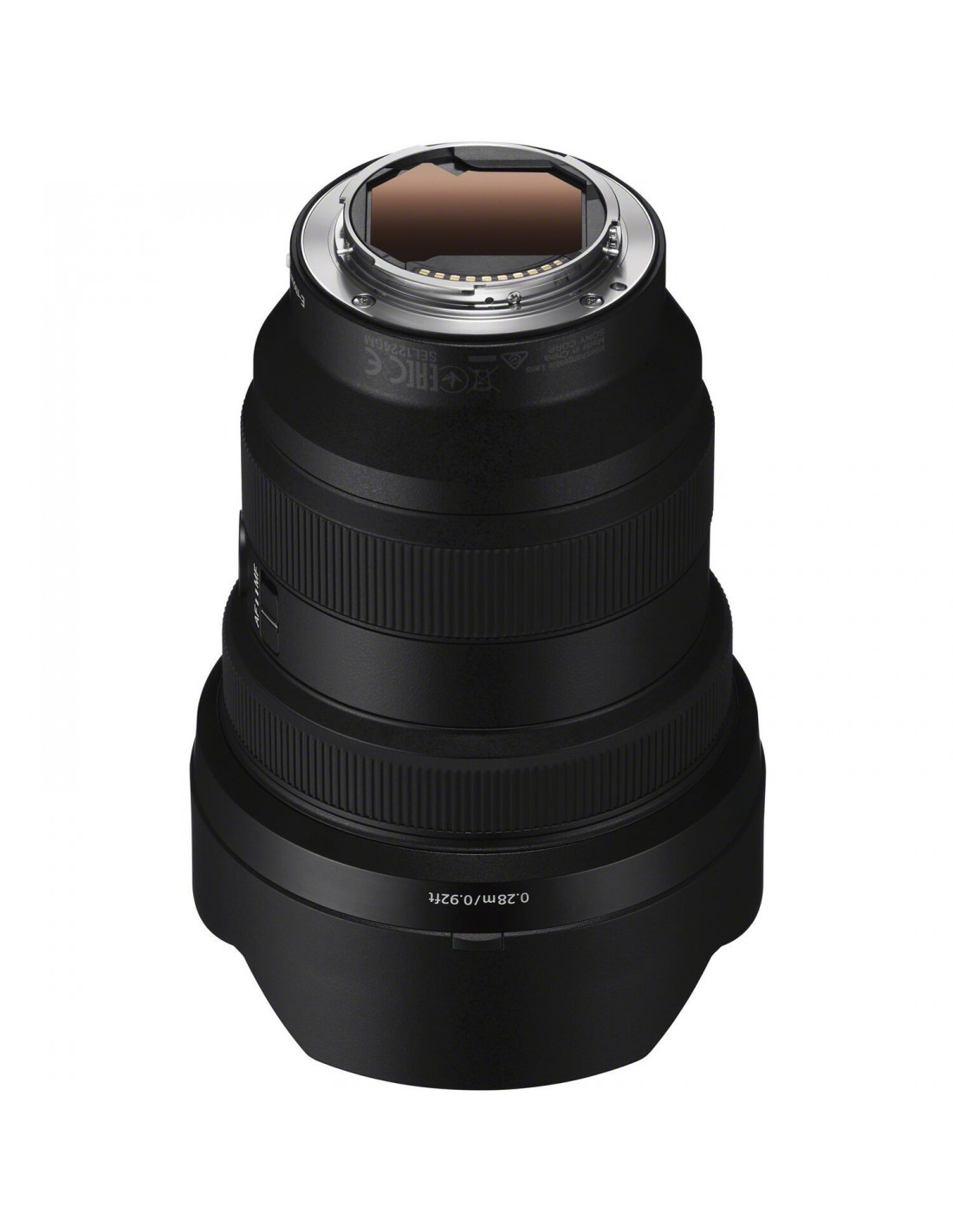
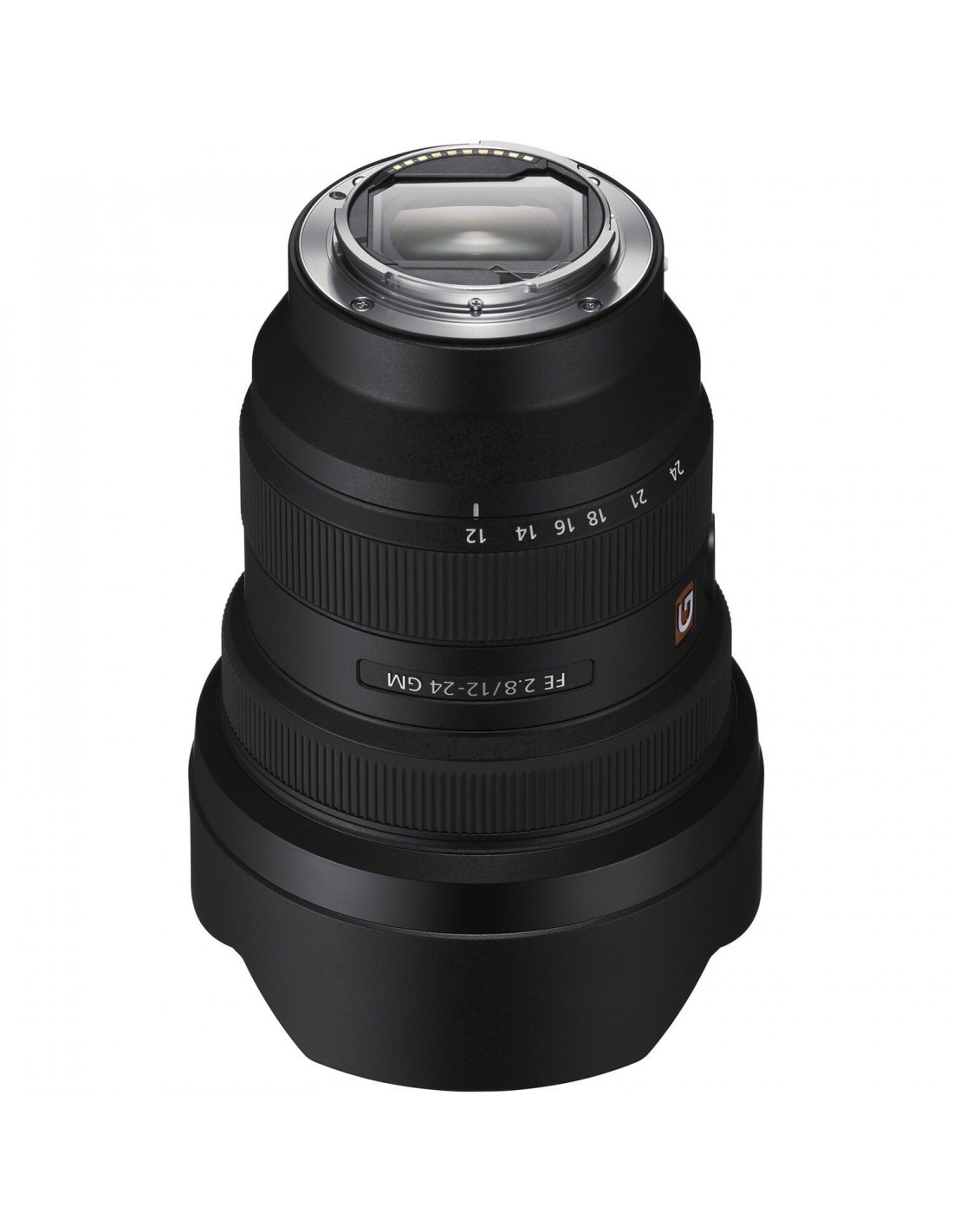
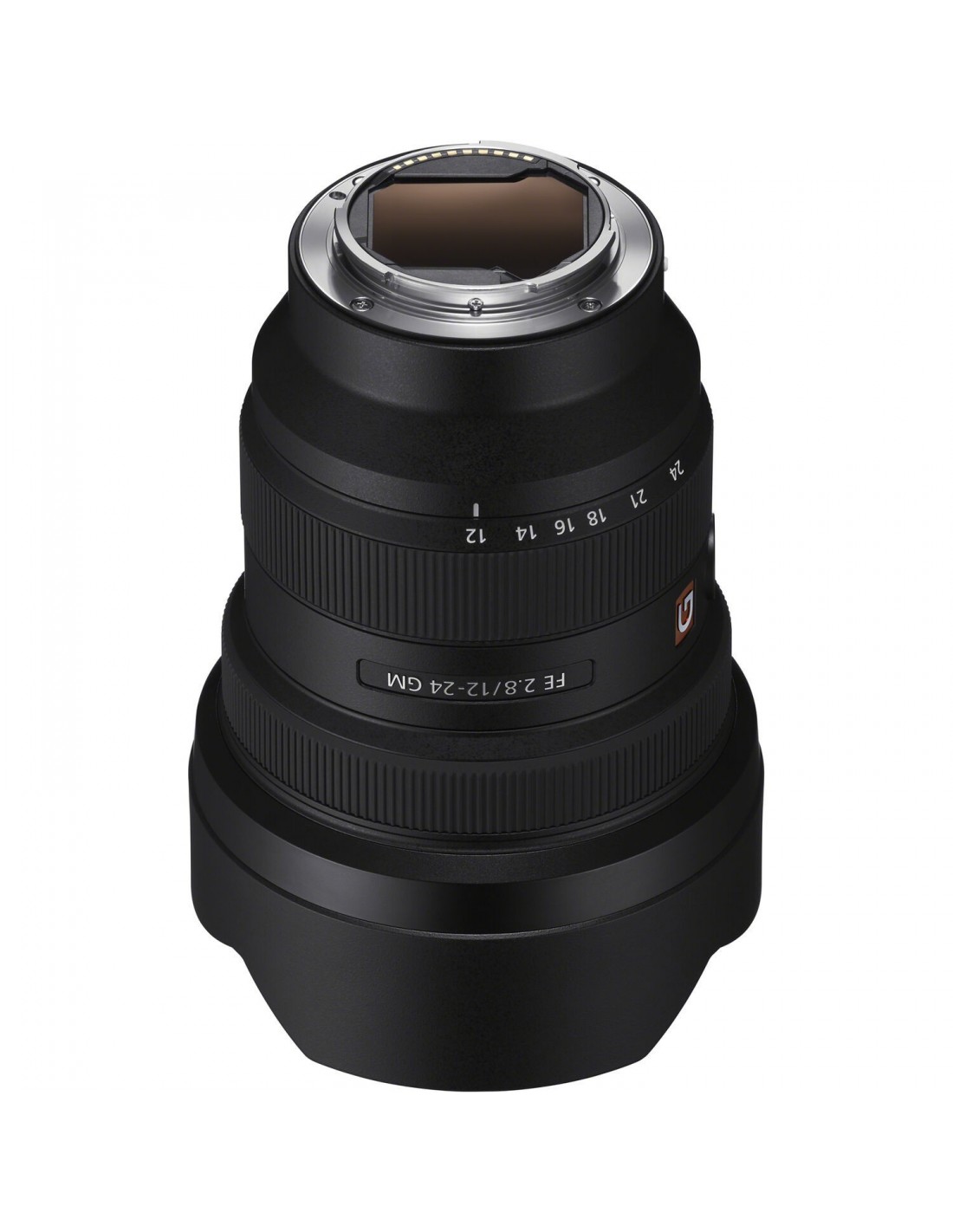

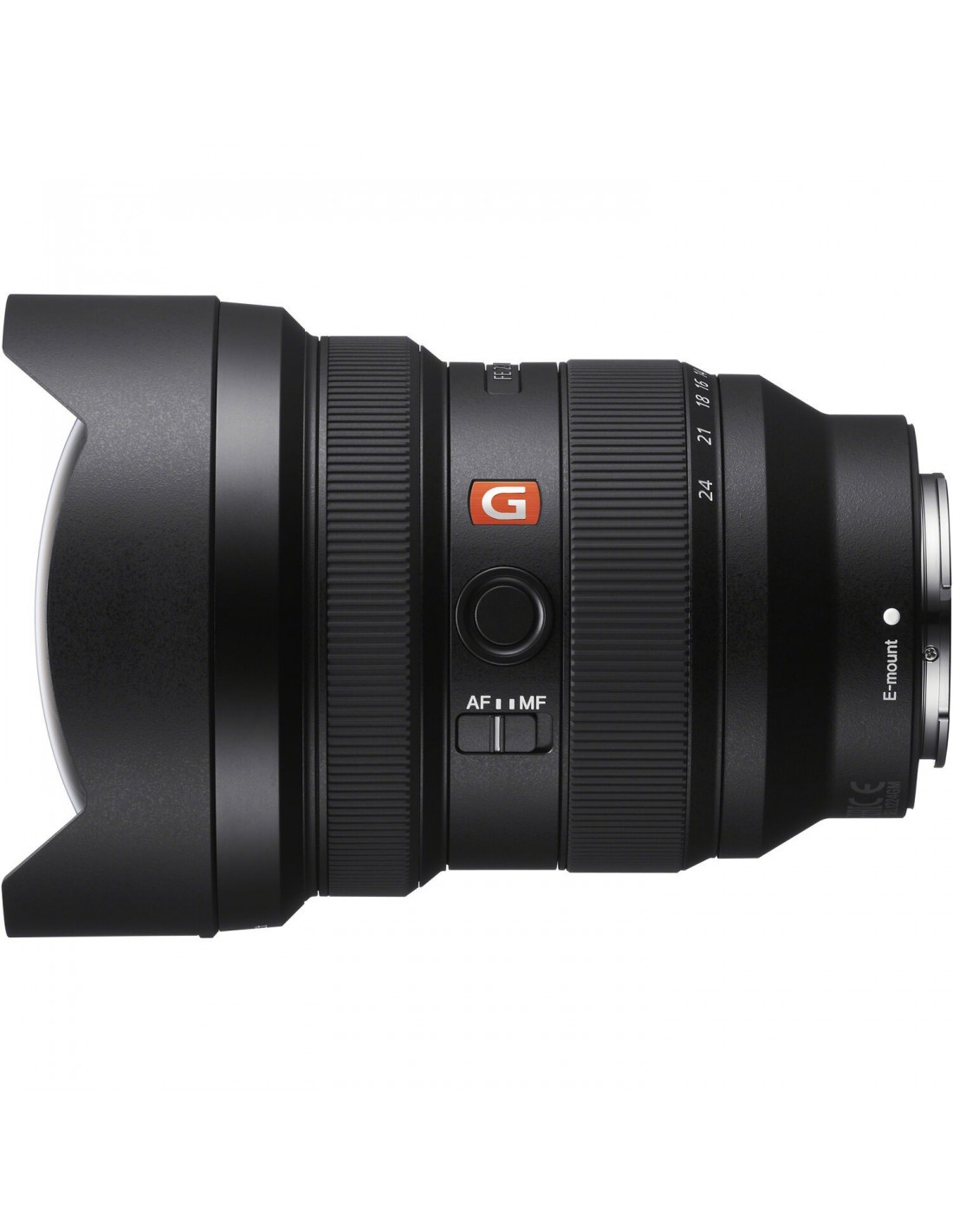
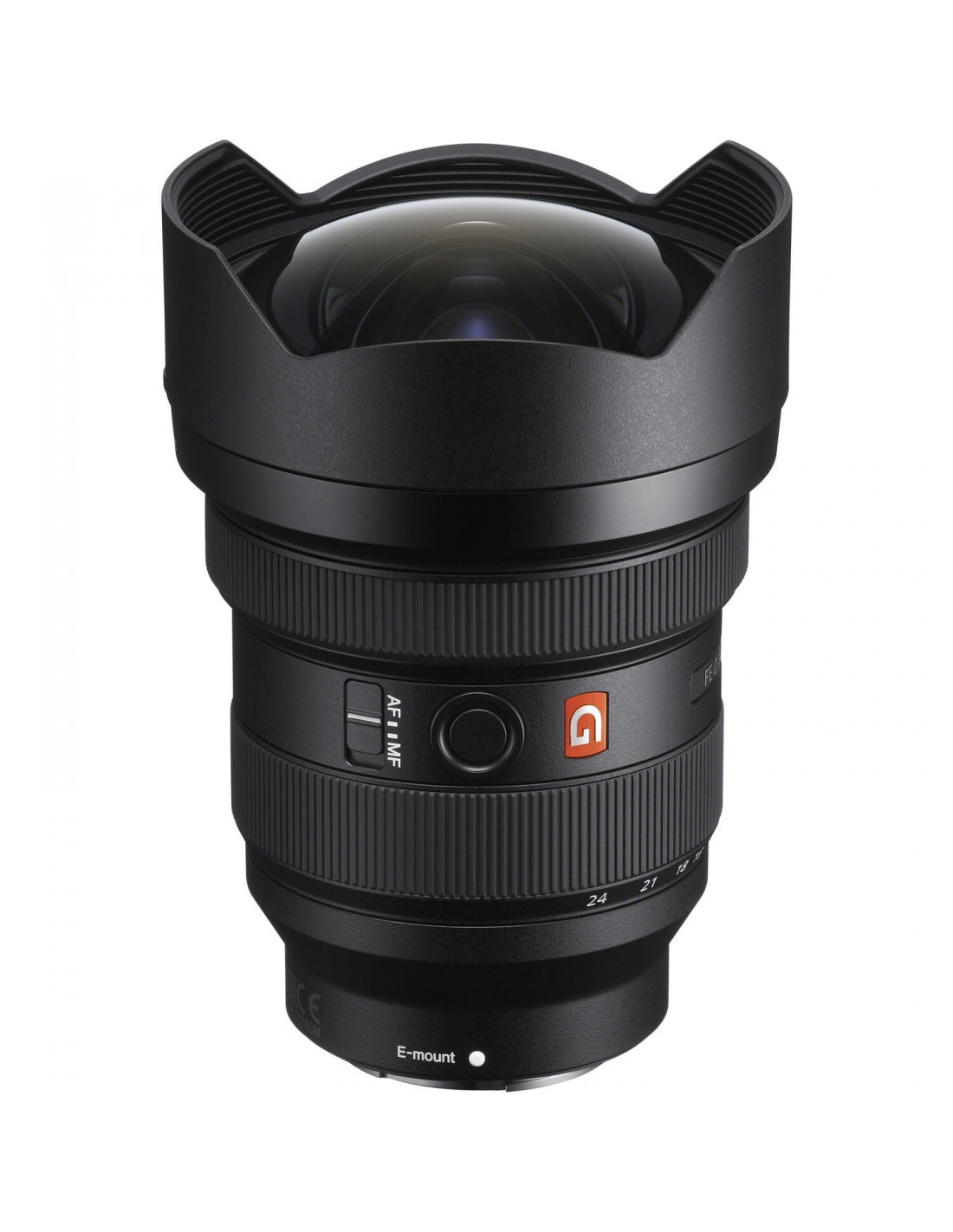

The Sony FE 12-24mm F2.8 GM is a full-frame ultra-wide zoom for architecture, interior, landscape and night-sky photographers who need a genuinely wider view without giving up a constant F2.8 aperture, and we recommend it when 16mm regularly feels restrictive. At 12mm, it can reveal a confined room or dramatic foreground with far less working distance; at 24mm, perspective becomes easier to balance for travel and environmental work. Four XD linear motors support fast focusing, while the 847g weight and bulbous front element call for suitable carrying and filter solutions. It is a strong choice for photographers who will actively use the 12mm end and value zoom flexibility over the simplicity of a fixed focal length on demanding professional assignments.
Combine compatible accessories and save. The more items you add, the bigger the discount.
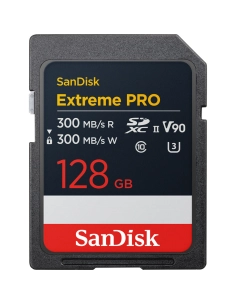
memory card

warranty extension
The Sony FE 12-24mm F2.8 GM begins where most wide-angle zooms stop. On a full-frame camera, 12mm can take in a confined interior, a monumental facade or a foreground placed extremely close to the lens without requiring the same working distance as a 16-35mm. The effect is immediately visible, but it rewards careful technique: a small tilt can exaggerate converging lines and a subject near the edge may stretch noticeably. Zooming through to 24mm provides a more natural-looking option without changing lenses.
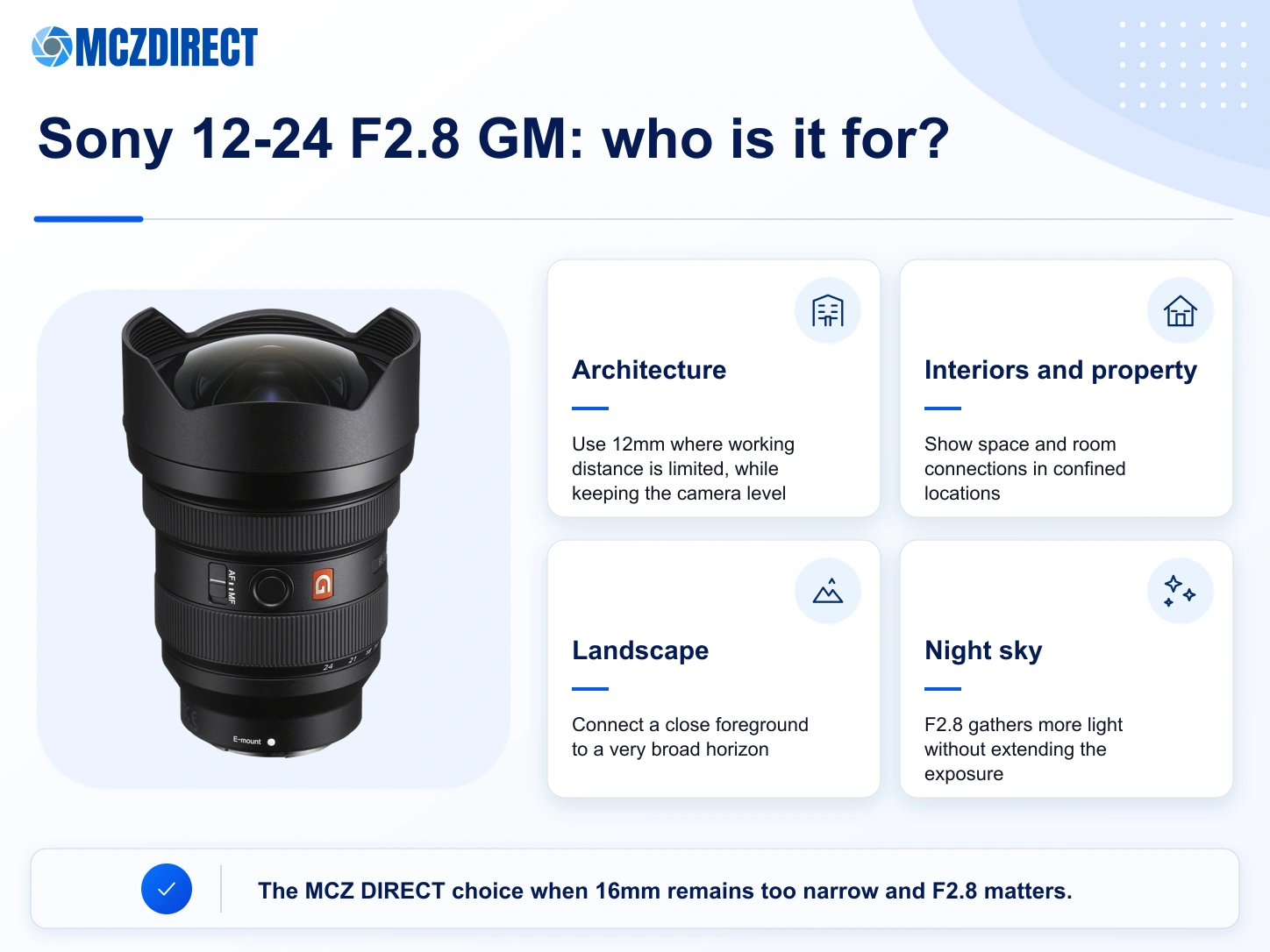
| Feature | Practical benefit | Point to consider |
|---|---|---|
| 12-24mm | Exceptional framing room in a small space or for a foreground-led composition | At 12mm, camera level and edge placement strongly influence perspective |
| Constant F2.8 | More light indoors and under the stars without losing a stop while zooming | Depth of field still remains extensive at very short focal lengths |
| 847g | A fast 12-24mm zoom in a professional-grade construction | Weight becomes noticeable over a long day or on a video gimbal |
| No optical OSS | The design relies on camera-body stabilisation where available | An unstabilised camera or long exposure calls for a tripod |
| Rear filter holder | Supports cut sheet filters using the supplied template | The bulbous front element does not accept a standard screw-in filter |
| Focal length | Natural use | Composition advice |
|---|---|---|
| 12mm | Small interiors, property work, monumental architecture and highly immersive landscapes | Keep the camera level and inspect every edge of the frame |
| 14mm | Night sky, interiors and landscapes with a strong foreground | Move closer to the main subject instead of merely fitting more into the frame |
| 16mm | Architecture, travel, landscapes and wide video with easier visual balance | A useful starting point when 12mm looks too dramatic |
| 24mm | Reportage, environmental scenes and more natural-looking landscapes | Use this end to reduce apparent stretching near the frame edges |
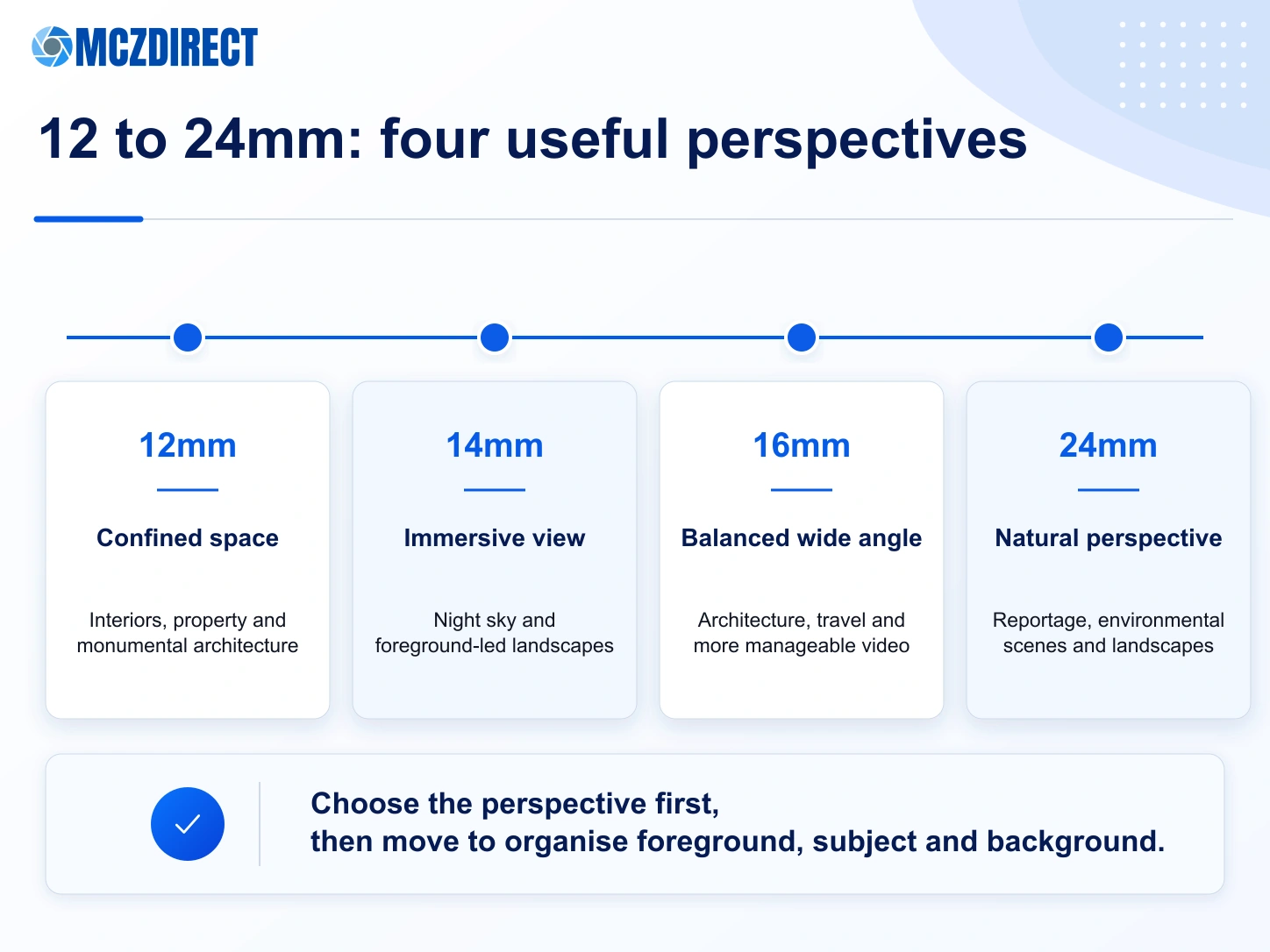
In a narrow room, corridor or at the foot of a building, 12mm includes more space without forcing the camera against a wall. For property photography, that latitude can show how rooms connect while retaining legible lines. It is not a substitute for disciplined camera placement. Keeping the sensor vertical, choosing a sensible height and avoiding people at the extreme edge remain essential. The 12-24 F2.8 gives the photographer room to work; it does not automatically correct an uncontrolled perspective.
For landscapes, 12mm can connect a very close foreground with a broad horizon. The image gains depth when every layer has a purpose and becomes empty if ultra-wide framing is used only to include more. Under the stars, F2.8 admits twice as much light as F4 at the same shutter speed and ISO. That can reduce ISO or shorten the exposure to limit apparent star movement. Demanding corners, inaccurate focus and condensation are still easy to see, so careful manual focus and a magnified check remain worthwhile.
The bulbous front element and fixed hood prevent a standard circular screw-in filter from being fitted directly. Sony supplies a template for cutting sheet filters to fit the rear holder. This works well for suitable correction or flexible ND material. A large graduated filter or polariser needs a third-party system specifically designed for this style of ultra-wide lens. A polariser should also be used cautiously at 12mm: across such a wide sky, the polarising effect can vary visibly from one area to another.
The 12-24mm range suits property walkthroughs, establishing shots, documentary work in confined spaces and movement close to the subject. Four XD motors focus quietly and F2.8 remains constant through the range. Its 847g weight should be included when choosing a gimbal, particularly once a camera and accessories are added. The lens has no optical OSS, so it relies on body stabilisation, a gimbal or physical support. At 12mm, camera movement can feel fluid, although uncontrolled tilt remains obvious on architectural lines.
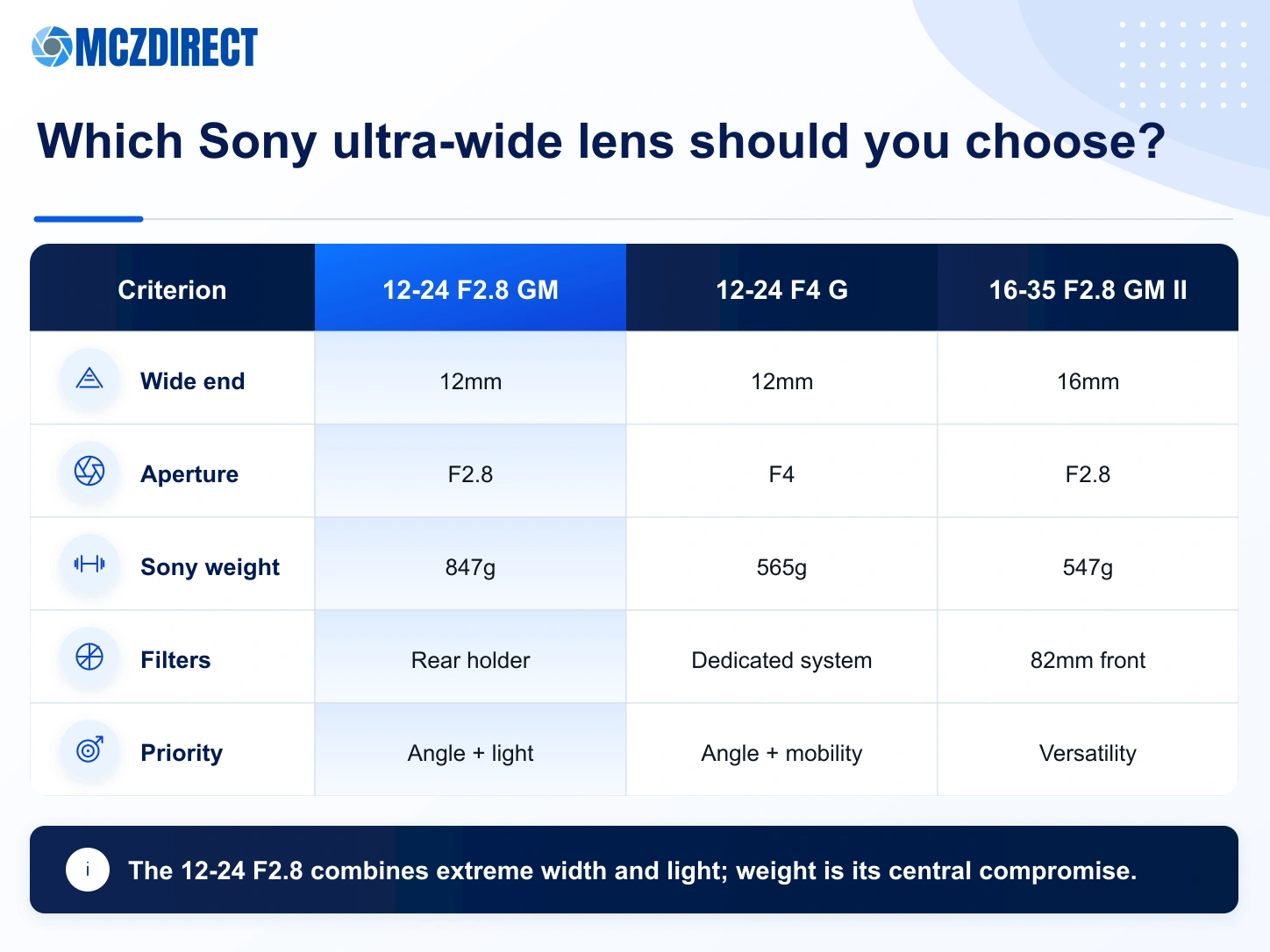
| Criterion | 12-24 F2.8 GM | 12-24 F4 G | 16-35 F2.8 GM II | 14mm F1.8 GM |
|---|---|---|---|---|
| Priority | 12mm and F2.8 in a zoom | 12mm with lower weight | Versatility and front filters | Low light and compactness at 14mm |
| Range | 12-24mm | 12-24mm | 16-35mm | Fixed 14mm |
| Maximum aperture | F2.8 | F4 | F2.8 | F1.8 |
| Sony weight | 847g | 565g | 547g | 460g |
| Filters | Rear filter holder | Dedicated system required | 82mm front thread | Rear filter holder |
The Sony FE 12-24mm F4 G retains the same extreme angle while weighing 282g less, making it sensible for daylight landscapes, travel and tripod-based architecture. The Sony FE 16-35mm F2.8 GM II does not go as wide, yet its 35mm end, low weight and 82mm thread make it a more versatile everyday choice. The Sony FE 14mm F1.8 GM gains light and compactness at the cost of a fixed focal length. The 12-24 F2.8 GM is the logical option when both 12mm and zoom flexibility are central to the assignment.
High-resolution bodies such as the Sony A7R V and Sony A7R VI help retain facade, landscape and interior detail while leaving useful correction room in post-production. The Sony Alpha 1 II offers a broader professional approach for mixed assignments. Each uses Sony E mount and provides body-based stabilisation. The Sony A7R VI with FE 12-24mm F2.8 GM kit serves the separate intent of a matched camera-and-lens package; this page remains dedicated to the lens alone. The Sony lens range is the right place to compare other focal lengths without blurring that distinction.
At MCZ DIRECT, we see the Sony FE 12-24mm F2.8 GM as the choice for an architecture, interior, landscape or night-sky photographer who is genuinely restricted by 16mm, rather than a universal wide-angle for every outing. Its strength is not simply a wider view: it retains F2.8 and reaches 24mm when perspective needs to look more natural.
Against the 12-24 F4 G, we recommend it when the extra stop justifies another 282g. Against the 16-35 GM II, it wins when 12mm matters more than 35mm and an 82mm front filter thread. Its limitation is clear: 847g, an exposed bulbous front element, no optical OSS and a dedicated filter workflow. When those points are planned for, the SEL1224GM delivers a rare combination of angle, light and compositional freedom.

It is primarily for architecture, interior, property, landscape and night-sky photographers who regularly find 16mm too restrictive.
From the same position, 12mm includes substantially more space. It also looks more dramatic and requires closer attention to camera level and frame edges.
Yes. Its angle helps frame small rooms and connections between spaces. Keeping the camera level remains important for controlled lines and a believable result.
Yes. F2.8 and its very wide view suit night-sky work. Accurate focus, a tripod and careful corner checks remain important.
It has a rear filter holder and Sony supplies a template for cutting sheet filters. Its bulbous front element does not take a standard screw-in filter.
It has no optical OSS. It can benefit from body-based stabilisation when used on a compatible Sony camera.
Choose F2.8 for night sky, interiors and lower light. The F4 G retains 12mm while weighing approximately 282g less for travel and tripod work.
Choose the 12-24 when 12mm is decisive. The 16-35 GM II is lighter, reaches 35mm and accepts standard 82mm screw-in filters.
The 12-24 offers zoom flexibility and a wider 12mm end. The 14mm F1.8 is faster and lighter when one fixed focal length is enough.
Sony specifies 0.28m throughout the range, with 0.14x maximum magnification.
Sony specifies approximately 847g. This matters during a long day, in a light bag or on a video gimbal.
Sony’s July 2026 lens catalogue lists this zoom as the FE 12-24mm F2.8 GM, reference SEL1224GM, with no GM II version.