Shopping Cart

CAMERA LENSES
Available camera lenses


- -5%
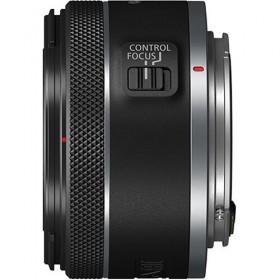
Canon RF 50mm f/1.8 STM
The Canon RF 50mm F/1.8 STM lens is perfect for landscape and portrait photographers. Compact and lightweight, it delivers exceptional image quality day and night. With its large aperture and efficient autofocus, it's the ideal lens for beginners, offering artistic and natural images.
Out-of-Stock
€189.05€199.00
- -5%
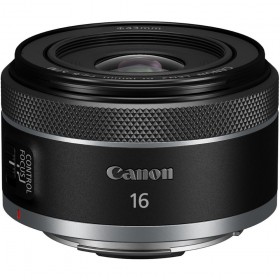
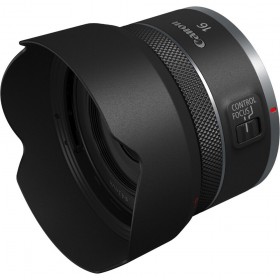
Canon RF 16mm f/2.8 STM
Discover the Canon RF 16 mm f/2.8 STM lens: compact and lightweight ultra-wide-angle, perfect for vloggers and landscape photographers. With a large f/2.8 aperture, this lens delivers exceptional image quality even in low light, with fast and silent autofocus. Ideal for capturing starry skies and night scenes.
Out-of-Stock
€284.05€299.00

- -5%
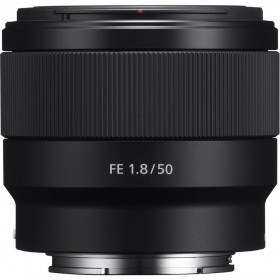
Sony FE 50mm f/1.8
Discover the Sony FE 50mm F1.8, the essential lens for sharp and bright photos. With its large f/1.8 aperture, capture stunning images even in low light, while enjoying a beautiful bokeh effect. Compact and lightweight, it's ideal for portraits and street photography. Compatible with Sony's full-frame and APS-C mirrorless cameras, it offers exceptional...
Out-of-Stock
€292.60€308.00

- -5%
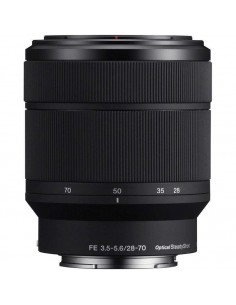
Sony SEL FE 28-70 mm f/3.5-5.6 OSS
Introducing the Sony FE 28-70mm F3.5-5.6 OSS, the standard zoom lens perfect for photographers seeking versatility and performance. Its 28-70mm focal range covers everything from landscapes to portraits. Equipped with Optical SteadyShot image stabilization, it ensures sharp photos in any situation. Lightweight and compact, it's your ideal companion to...
Out-of-Stock
€319.20€336.00
- -5%
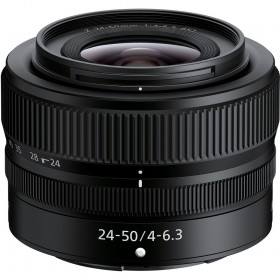
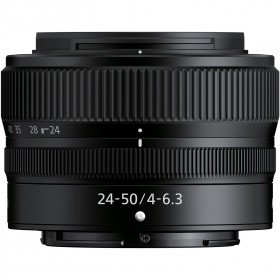
Nikon Z 24-50mm f/4-6.3
Discover the Nikon Z 24-50mm f/4-6.3, the compact and versatile lens for your photographic adventures. Lightweight and powerful, it’s perfect for travel, portraits, and landscapes. With exceptional image quality and a robust design, it adapts to all your needs. Ideal for Nikon Z cameras, it combines portability and performance. Order now and turn every...
Out-of-Stock
€321.10€338.00
- -5%
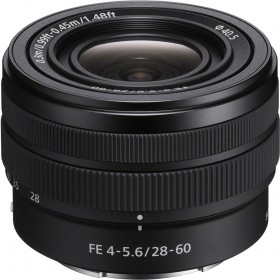
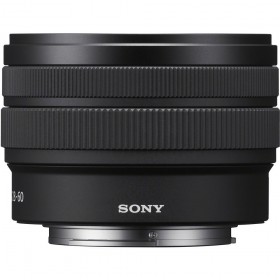
Sony FE 28-60mm F4-5.6
Introducing the Sony FE 28-60mm F4-5.6, the world's most compact and lightweight full-frame standard zoom lens. With a versatile focal range of 28 to 60 mm, it's perfect for capturing stunning landscapes, striking portraits, and dynamic street scenes. Its retractable design ensures easy portability, making it the ideal companion for your daily...
Out-of-Stock
€331.55€349.00


- -5%
Canon RF 24-105mm f/4-7.1 IS STM
The Canon RF 24-105 mm f/4-7.1 IS STM lens is compact and versatile. Perfect for travel photographers, it offers high image quality with its stabilizer and wide focal range. Lightweight and efficient, it adapts to various photographic styles, ensuring sharp and detailed photos and videos.
IN STOCK
€400.90€422.00

- -5%
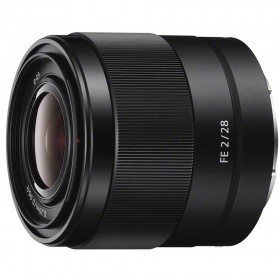
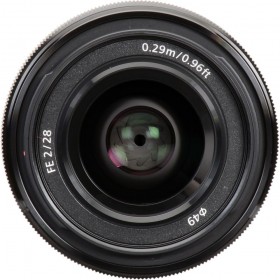
Sony FE 28mm f/2
Enhance your gear with the Sony FE 28mm f/2 lens, a bright wide-angle prime perfect for full-frame E-mount cameras. Its large f/2 aperture allows for exceptional low-light shooting, while the compact and lightweight design makes it the ideal companion for your photographic adventures. With remarkable image quality and smooth bokeh, this lens is ideal for...
Out-of-Stock
€423.70€446.00


- -5%
Sony FE 85mm F1.8
Introducing the Sony FE 85mm F1.8, the essential lens for stunning portraits. Its wide f/1.8 aperture delivers breathtaking bokeh, highlighting your subjects with exceptional sharpness. Compact and lightweight, it travels with you to capture every moment in professional quality. Compatible with Sony E-mount cameras, it's the perfect companion for...
IN STOCK
€423.70€446.00

- -5%
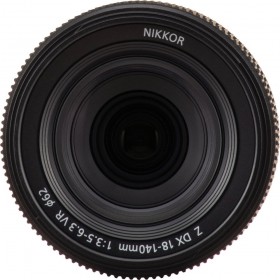
Nikon Z 18-140mm f/3.5-6.3 VR DX
Discover the Nikon Z DX 18-140mm f/3.5-6.3 VR lens, the ultimate tool for creators seeking flexibility and performance. With a versatile focal range from 18 to 140 mm, switch from stunning wide angles to impressive zooms in an instant. Lightweight, compact, and equipped with VR image stabilization, this lens delivers sharp and detailed images even in...
IN STOCK
€432.25€455.00
- -5%
- New
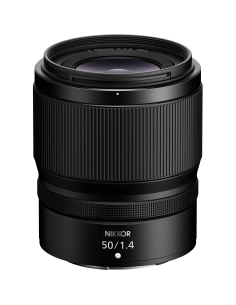
Nikon Z 50mm f/1.4
Unlock the full potential of your camera with the Nikon NIKKOR Z 50mm f/1.4. This fast, lightweight prime lens is designed for photographers and creators who refuse to compromise on quality or portability.
The ultra-bright f/1.4 aperture is a game-changer. It allows you to create dreamy, soft backgrounds (bokeh) that make your subjects pop, giving your...
IN STOCK
€449.35€473.00


- -5%
Fujifilm XF 1.4x TC WR
The Fujifilm XF 1.4x TC WR teleconverter is the essential accessory to extend the reach of your compatible XF lenses without compromising image quality. Its weather-resistant design ensures reliable performance in all conditions. Compact and lightweight, it seamlessly integrates into your gear, offering increased flexibility to capture distant subjects...
Out-of-Stock
€469.30€494.00


- -5%
Sony E 11mm F1.8
Introducing the Sony E 11mm F1.8, the ultra-wide-angle lens perfect for capturing stunning photos and videos. With its 11mm focal length (16.5mm full-frame equivalent) and bright f/1.8 aperture, it delivers dynamic images with deep bokeh. Compact and lightweight (181 g), it pairs seamlessly with APS-C cameras for enhanced mobility. Its fast and precise...
IN STOCK
€475.00€500.00

- -5%
Sony Carl Zeiss Sonnar T* FE 55mm F1.8 ZA
Discover the Sony Carl Zeiss Sonnar T* FE 55mm F1.8 ZA, a 55mm prime lens with a large F1.8 aperture, delivering exceptional image quality and beautiful bokeh. Its robust construction and fast autofocus make it the ideal choice for discerning photographers.
Out-of-Stock
€487.35€513.00

- -5%
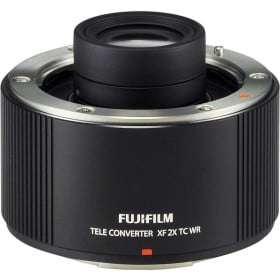
Fujifilm Fujinon XF 2x TC WR
The FUJINON XF2X TC WR teleconverter doubles the focal length of your compatible XF lenses, bringing you closer to the action without compromising image quality. Its advanced optical design, featuring 9 elements in 5 groups, maintains exceptional optical performance. Weather and dust resistant, it operates flawlessly in temperatures as low as -10°C,...
Out-of-Stock
€489.25€515.00

- -5%
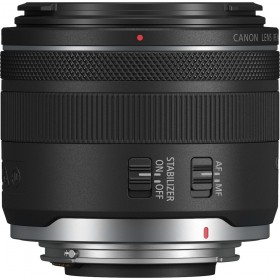
Canon RF 24mm F1.8 Macro IS STM
Discover the Canon RF 24mm F1.8 Macro IS STM, the versatile lens that will revolutionize your photography. Compact and lightweight, it excels in landscape, portrait, and macro. Its large f/1.8 aperture and optical stabilization ensure sharp images even in low light. With a minimum focusing distance of 14 cm and 0.5x magnification, explore the macro world...
IN STOCK
€503.50€530.00


- -5%
Sony FE 24mm F2.8 G
Introducing the Sony FE 24mm F2.8 G, a compact and lightweight wide-angle lens weighing just 162 g, perfect for photographers on the go. With a maximum aperture of F2.8, it delivers exceptional performance in low-light conditions and precise depth-of-field control for artistic bokeh effects. Its advanced optical design ensures superior image quality,...
IN STOCK
€506.35€533.00


- -5%
Sony FE 2.0x Teleconverter
The Sony FE 2.0x Teleconverter doubles the focal length of your compatible Sony lenses, bringing you closer to the action without compromising image quality. Ideal for sports and wildlife photography, it maintains your gear's optical performance and autofocus capabilities. Its dust and moisture-resistant design ensures reliable outdoor use. Compact and...
IN STOCK
€513.00€540.00


- -5%
Sony FE 1.4x Teleconverter
The Sony FE 1.4x Teleconverter is the perfect accessory to extend the reach of your compatible Sony lenses. It multiplies the focal length by 1.4, bringing you closer to the action without compromising image quality. Its design maintains full communication between the lens and camera, preserving fast and accurate autofocus as well as image stabilization....
IN STOCK
€513.00€540.00


- -5%
Nikon NIKKOR Z 24-70mm f/4 S
With a standard focal-length range of 24mm to 70mm, this zoom lens can effectively capture a diverse range of scenes and subjects. Its rendering performance is so impressive that it may change your perception of zoom lenses with a maximum aperture of f/4.
IN STOCK
€519.65€547.00


- -5%
Canon RF 35mm f/1.8 Macro IS STM
Discover the Canon RF 35mm f/1.8 IS Macro STM, a compact and lightweight lens ideal for portraits and macro photography. Enjoy its bright f/1.8 aperture and built-in stabilization for sharp and detailed images, even in low light. Capture every moment with exceptional precision.
IN STOCK
€445.55€469.00

- -5%
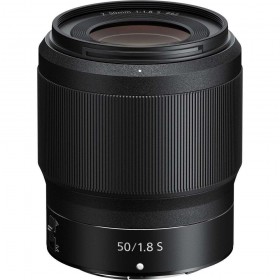
Nikon NIKKOR Z 50mm f/1.8 S
The Nikon Z 50mm f/1.8 S is an S-Line prime lens designed for Nikon Z mirrorless cameras. With a maximum aperture of f/1.8, it delivers exceptional image quality, outstanding sharpness, and pleasing bokeh. Ideal for portrait, street, and low-light photography, this compact and lightweight lens also features fast and silent autofocus, along with...
IN STOCK
€520.60€548.00
Camera Lenses FAQ
What is a camera lens and how does it work?
A camera lens is an assembly of glass elements that bends incoming light and focuses it onto the camera's sensor. Each element inside corrects a specific optical flaw - distortion, chromatic aberration, edge softness - before the light reaches the imaging plane.
Three factors define how a lens behaves:
- Focal length: measured in millimetres, it sets the angle of view (24mm for wide-angle, 200mm for telephoto).
- Aperture: it controls how much light gets in and how shallow the depth of field looks, written as f/1.8, f/2.8, f/4.
- Focusing system: autofocus motor (STM, USM, linear) or manual focus, depending on the intended use.
A well-built camera lens combines these three elements with effective anti-reflective coating. The payoff: less flare, more contrast, and a sharp image corner to corner.
Prime vs zoom lens: which should you choose?
A prime lens wins on maximum aperture, optical sharpness and compact size, while a zoom lens wins on flexibility. A 35mm or 50mm prime often weighs half as much as a zoom with the same aperture.
A single 24-105mm zoom covers landscape, portrait and street shooting without a lens change - a real advantage while travelling or shooting fast-moving events.
Three quick pointers help you decide:
- Learning the craft: start with a 50mm f/1.8 prime - light, sharp and affordable.
- One lens, every situation: go for a standard f/2.8 or f/4 zoom.
- Low light or background blur as the priority: the prime lens keeps the edge at the same price point.
Most photographers end up owning both - a zoom for versatility, one or two primes for the demanding shots.
What lens should you choose for portrait photography?
Choosing a lens for portrait work comes down to focal length and aperture first, brand second. Three focal lengths dominate this space:
- 50mm f/1.8: light, affordable, ideal for tight framing and half-body shots.
- 85mm f/1.8 or f/1.4: the classic portrait focal length, it compresses the background and flatters facial proportions.
- 135mm f/1.8: for a fully detached background with creamy bokeh, shot from a greater distance.
Wide aperture remains the deciding factor. An f/1.8 lens, or wider, separates the subject from the background with a soft, progressive blur - the exact look that sets a true portrait lens apart from a general-purpose zoom.
What makes a camera lens bright (fast aperture)?
A bright, or fast, lens lets in a large amount of light through a wide maximum aperture. The smaller the f-number, the wider the physical opening - an f/1.8 lens admits noticeably more light than an f/4.
A lens generally counts as fast once it reaches f/2.8 on a zoom, or f/1.8 on a prime. That extra brightness changes three things in practice:
- Low-light shooting: concerts, indoor events, evening scenes, without pushing ISO to noisy levels.
- Background blur: a wider aperture narrows depth of field, separating the subject from the background more clearly.
- Shutter speed: a fast lens allows quicker shutter speeds at the same ISO, useful for sport and fast-moving subjects.
A fast camera lens typically costs more than an entry-level equivalent. That extra spend pays off mainly if you shoot indoors or after dark on a regular basis.
How do you choose a lens compatible with your camera body (mount)?
Mount compatibility comes before focal length or aperture in every buying decision. Each brand locks its own system: RF for Canon, E for Sony, Z for Nikon.
Three checks matter before any purchase:
- The exact mount of your body: a Sony E lens won't fit a Canon RF body without a third-party adapter.
- Sensor format: a lens designed for APS-C can crop the image when mounted on a full-frame body.
- Autofocus compatibility: some third-party lenses (Sigma, Tamron) need a firmware update to stay compatible with the newest camera bodies.
Sigma and Tamron both build their lenses across the major mounts (Sony E, Nikon Z, Canon RF, depending on the line), often at a lower price than the native-brand equivalent, with optical quality that runs very close behind.
What's the difference between an APS-C and full-frame lens?
The difference between an APS-C and full-frame lens starts with the image circle and sensor size it is designed to cover. A full-frame sensor measures roughly 36 x 24mm, against 22-23 x 15mm for APS-C - a sensor around 1.5 to 1.6 times smaller. That size gap directly changes the field of view you get from a given focal length.
An APS-C lens mounted on a full-frame body applies a crop factor. A 50mm APS-C lens on a Canon body (1.6x factor) delivers a field of view close to 80mm on full frame; on a Sony or Nikon body (1.5x factor), that same 50mm behaves like a 75mm.
Three practical differences are worth knowing:
- Depth of field: at the same aperture, APS-C keeps more of the scene in focus, with less background blur.
- Low light: full frame captures more light per pixel, with less digital noise after dark.
- Price and weight: an APS-C lens typically costs less and weighs less than its full-frame equivalent.
What is the best camera lens brand?
There's no single best brand across the board - each of the five major camera lens brands excels in a specific area, and the right pick depends on your mount and your shooting style.
- Canon: the RF lineup is expanding fast, with L-series optics known for rugged build and Dual Pixel autofocus support.
- Sony: the widest native lens catalogue on the market, with G Master optics prized for sharpness and bokeh quality.
- Nikon: the Z S series delivers skin-tone rendering that's a favourite for portrait work, paired with solid build quality.
- Sigma: the Art line rivals native optics on sharpness, often at a noticeably friendlier price.
- Tamron: compact, lightweight zooms (28-75mm, 70-180mm) that travel and reportage photographers rely on.
Unlike a single-brand shop that can only point you toward its own range, MCZ Direct compares all five camera lens brands side by side. You choose the lens that actually fits how you shoot, not the one a single manufacturer pushes.
Where to buy camera lenses at the best price?
At MCZ Direct, every camera lens carries a competitive price, checked continuously against the market. Our stock spans Canon, Sony, Nikon, Sigma and Tamron, with availability confirmed before every order is placed.
We built this range to make it simple: buy camera lenses across five ecosystems in one place, compare specs side by side, and land on the optic that fits your camera body and your budget - no guesswork, no single-brand tunnel vision.
Our team advises every buyer on focal length, aperture and mount before checkout, so the lens you order matches your camera and your style of shooting from day one.
Looking for a Canon lens? Discover our dedicated Canon lenses range.
CAMERA LENSES
ALEX (In testing phase)