
Shopping Cart
Best landscape lenses for the Canon EOS R5 Mark II

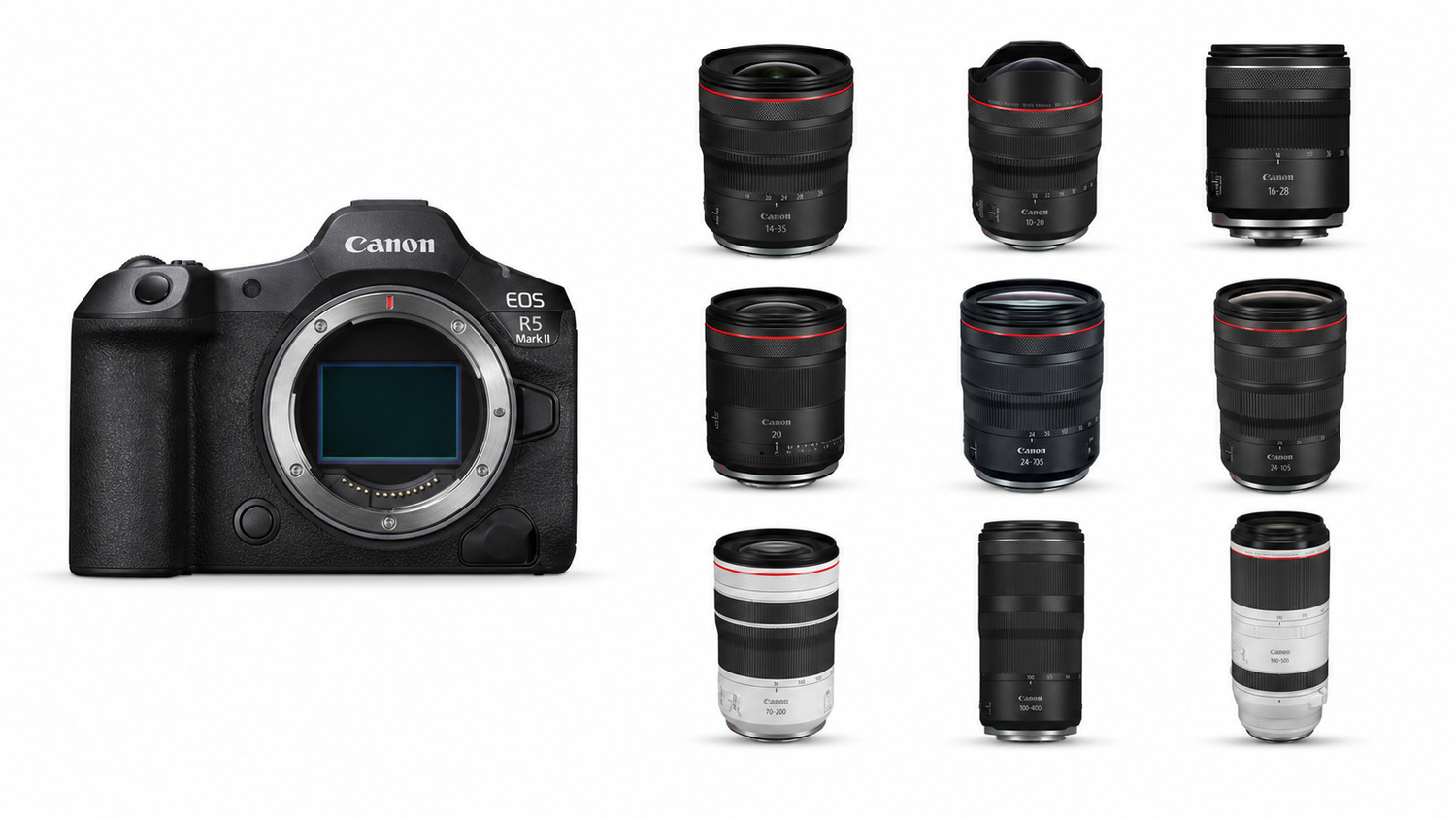
The RF 14-35mm is an excellent starting point, but the right choice depends on the view, the light and the weight you want to carry. This guide compares nine Canon RF lenses with their uses and practical limits.
You finally reach the view you had pictured. The light is right and the clouds have shape, yet the composition refuses to come together. At a wide angle the mountain looks tiny; with your standard zoom the foreground no longer fits. The camera is not necessarily the problem. In landscape photography, the lens mainly changes how the foreground, subject and background share the frame.
This guide starts with the zoom that suits the widest range of situations, then explains when it is better to include more of the scene, gather more light or isolate a distant detail. An ultra-wide lens records a very broad section of the scene; a telephoto lens frames a narrower area. The smaller the number after F, the more light the lens lets in. Raising the ISO sensitivity also brightens the photograph, but can make digital noise more visible. Stabilisation helps reduce blur caused by small movements of the photographer.
Best landscape lenses for the Canon EOS R5 Mark II at a glance
| What you photograph | Recommended lens | What it gives you | Main limitation |
|---|---|---|---|
| General landscapes and hiking | RF 14-35mm F4 L IS USM | A genuine ultra-wide view, 77mm filters and a manageable weight. | F4 is less comfortable for photographing stars. |
| Canyons, architecture and extreme perspective | RF 10-20mm F4 L IS STM | An exceptionally wide view when you cannot step back. | Composition needs care and conventional front filters do not fit. |
| Fast wide-angle work with a light bag | RF 16-28mm F2.8 IS STM | F2.8, stabilisation and a weight of around 445g. | It stops at 28mm, leaving less room to tighten the framing. |
| Starry skies and night landscapes | RF 20mm F1.4 L VCM | A wide aperture that helps keep stars sharper at a lower ISO. | The fixed focal length asks you to move and think carefully about framing. |
| Landscapes, reportage and low light | RF 24-70mm F2.8 L IS USM | A fast zoom that moves from a broad scene to a detail. | 24mm can feel tight and the complete setup is fairly heavy. |
| Travelling with one lens | RF 24-105mm F4 L IS USM | A practical range from wide views to more distant details. | It is not an ultra-wide lens. |
| Lightweight telephoto landscapes | RF 70-200mm F4 L IS USM | It simplifies busy scenes and makes distant layers appear closer. | It cannot replace a wide-angle lens in a confined space. |
| Distant details without an oversized bag | RF 100-400mm F5.6-8 IS USM | Long reach in a telephoto zoom weighing around 635g. | The maximum aperture falls to F8 at 400mm. |
| Distant mountains and landscape with wildlife | RF 100-500mm F4.5-7.1 L IS USM | Long reach and a more robust build for demanding outdoor work. | It is heavy, specialised and works best with enough light. |
Before choosing: wider does not always mean a better landscape
Focal length, measured in millimetres, tells you how wide or narrow the lens can see. A short focal length such as 14mm includes a large part of the scene. It makes nearby objects look more prominent and the background look farther away. A longer focal length such as 200mm records a narrower area and makes distant layers appear closer together.
This is why a mountain range can look disappointing at 14mm. If there is no rock, flower or path to hold the foreground together, the wide lens leaves empty space and makes the main subject look small. A 100mm or 200mm lens can instead fill the frame with ridges, layers of mist or a shaft of light crossing a valley.
The sensor in the R5 Mark II has 45 megapixels (MP) and records plenty of fine detail. That gives you room for a large print or a moderate crop, but it does not make every frame sharp by itself. At this resolution, a moving tripod, focus placed too close to the camera or leaves shifting in the wind may be easy to see. Start with composition, stability and light. A more expensive lens cannot replace careful framing.
The best choice for most landscapes
Canon RF 14-35mm F4 L IS USM: the right balance of width, filters and weight
The RF 14-35mm covers the focal lengths many landscape photographers actually use. At 14mm, you can include a nearby rock, a river or a building when there is little room to step back. Between 24 and 35mm, proportions become more natural. This end of the zoom works well when a mountain or building needs to remain an important part of the frame.
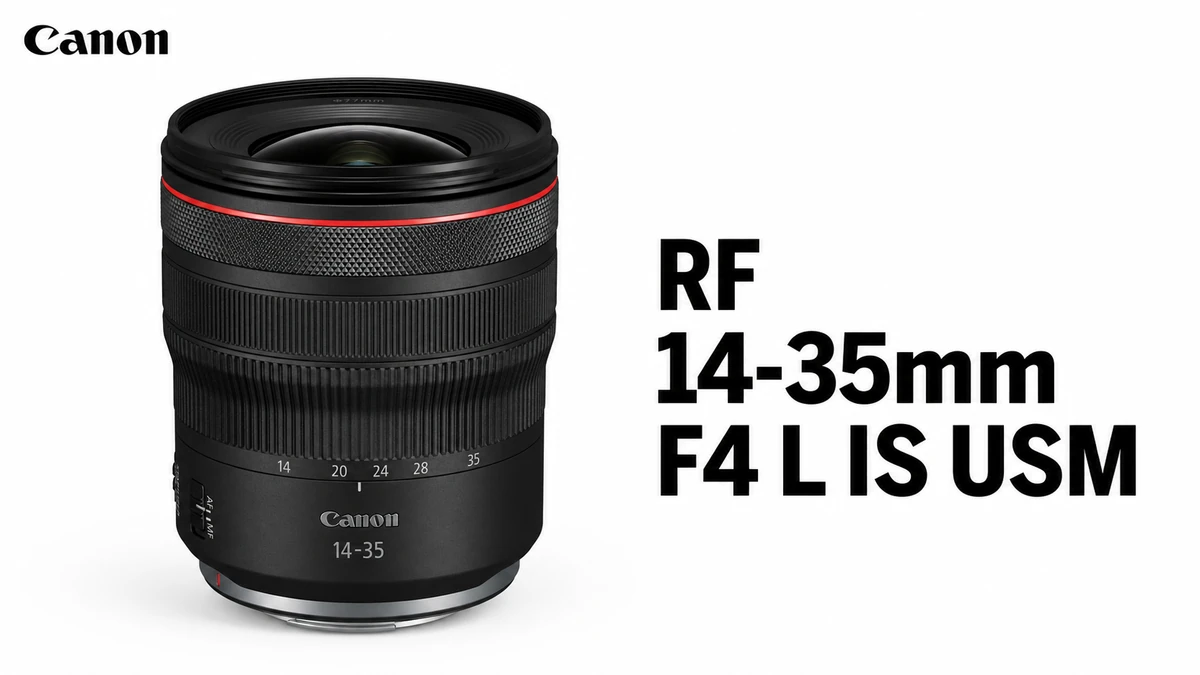
View the lens:Canon RF 14-35mm F4 L IS USM
Available as a kit:Canon EOS R5 Mark II + RF 14-35mm F4 L IS USM
The front of the lens has a 77mm filter thread, so it is easy to fit a polarising filter or a neutral-density filter. A polariser reduces certain reflections on water and foliage. A neutral-density filter, usually shortened to ND, cuts the amount of light so you can use a longer exposure and smooth a waterfall or the sea. At around 540g, the lens is also easier to carry than a large F2.8 zoom.
Its main limit appears at night. An F4 aperture gathers less light than F2.8 or F1.4. This matters little for a blue-hour landscape on a tripod. When you want to keep stars as points without pushing the ISO too far, the RF 20mm F1.4 is a better tool. For daytime landscapes, travel and architecture, the 14-35mm remains the easiest lens to recommend.
When you need to show much more
Canon RF 10-20mm F4 L IS STM: for genuinely immense spaces
At 10mm on the R5 Mark II's full-frame sensor, which measures about 36 × 24mm, the view becomes extremely wide. You can photograph the inside of a cave, a building from a narrow pavement or a canyon with the camera close to the foreground. This focal length is not simply about fitting more into the frame. It emphasises lines and creates a strong sense of depth.
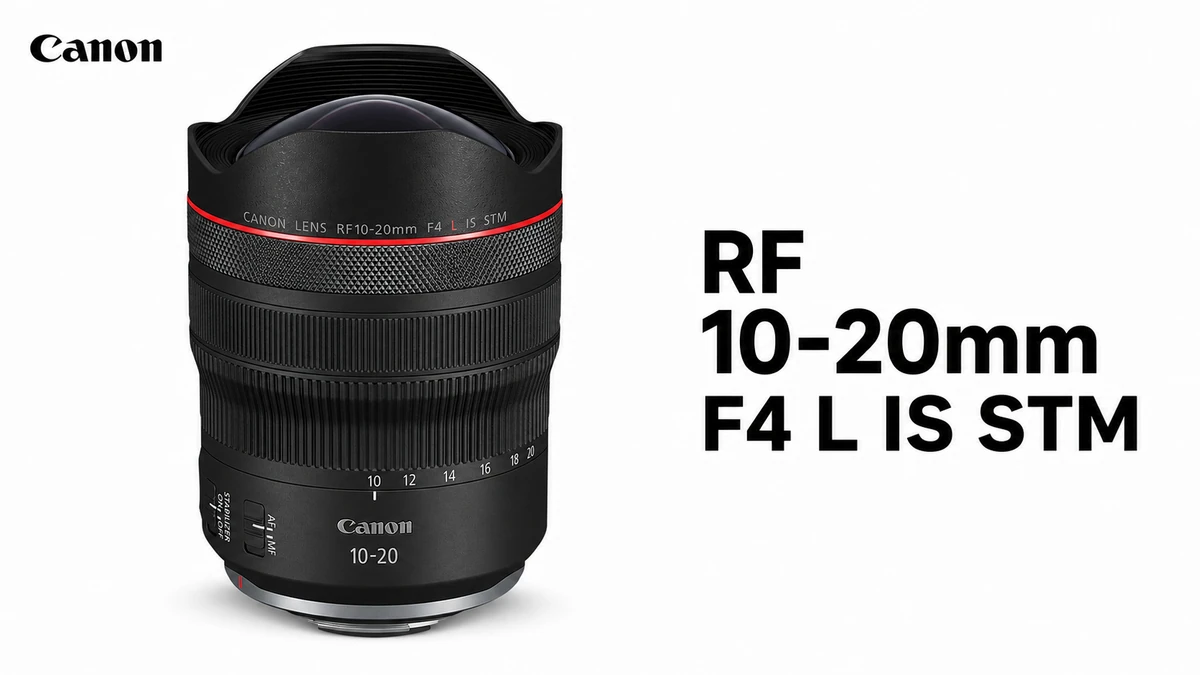
View the lens:Canon RF 10-20mm F4 L IS STM
Available as a kit:Canon EOS R5 Mark II + RF 10-20mm F4 L IS STM
The RF 10-20mm weighs around 570g and includes optical stabilisation. Its curved front element does not accept a conventional screw-in filter. Canon provides a rear holder for gel filters, but this is less direct than fitting a round 77mm polariser. If long exposures and filters are central to your work, check that this arrangement suits you before buying.
At 10mm, a subject near the edge can look stretched and even a slightly tilted line becomes obvious. Keep the camera level for architecture. In nature, move close to a strong foreground object rather than trying to capture everything from far away. This is a creative, specialised lens; it will not always replace a 14-35mm that is easier to compose with.
A fast wide-angle without filling the bag
Canon RF 16-28mm F2.8 IS STM: for travelling light and shooting into the evening
The RF 16-28mm answers a practical question: how can you get an F2.8 aperture without carrying a large professional zoom? At around 445g, it makes a fairly mobile pair with the R5 Mark II. Its range covers broad views, forests, interiors and travel scenes where 28mm is enough to give a more natural perspective.
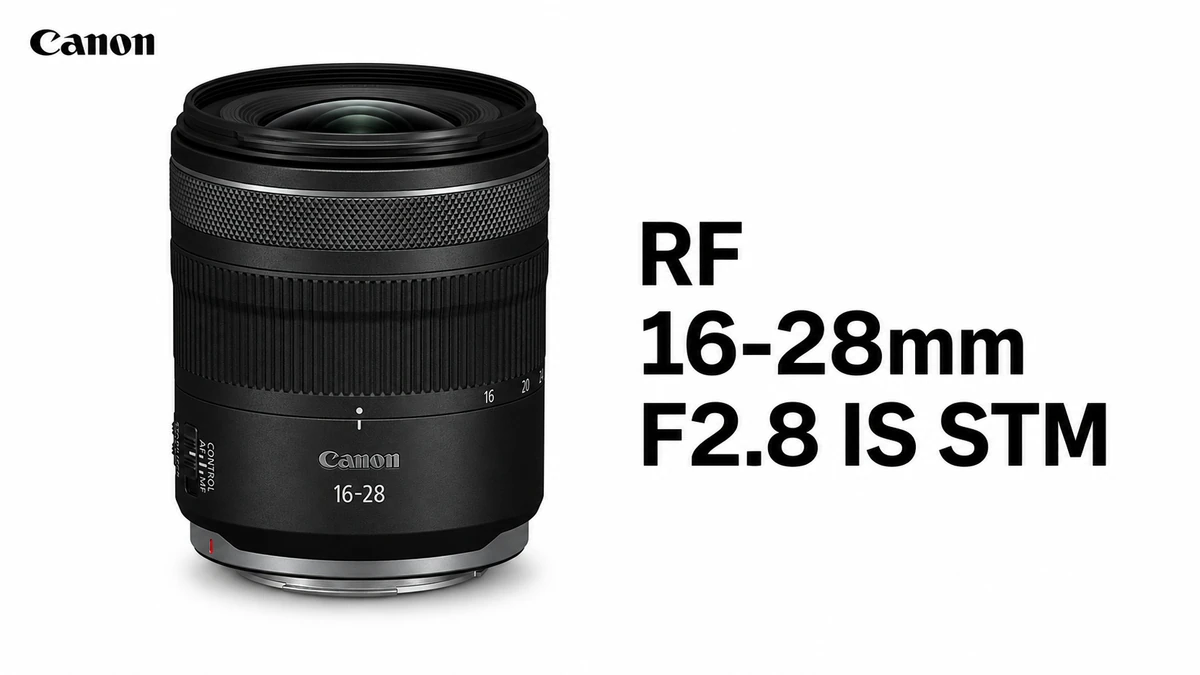
View the lens:Canon RF 16-28mm F2.8 IS STM
An F2.8 aperture gathers twice as much light as F4 at equivalent settings. You can therefore work at a lower ISO or use a shorter exposure at dusk. Its 67mm filters are also easy to find and take up less room than the large systems made for lenses with curved front elements.
Its zoom range ends at 28mm. If you often tighten the composition to 35mm without changing lenses, the 14-35mm is more flexible. If F2.8 and a light bag matter more, the 16-28mm is the more practical compromise.
For starry skies and night landscapes
Canon RF 20mm F1.4 L VCM: gather more light before the stars start to trail
When photographing stars, an exposure that is too long turns points of light into short lines because the Earth is rotating. A wide aperture gathers more light during a shorter exposure. At F1.4, the RF 20mm gathers four times as much light as a lens set to F2.8 when the other settings stay the same.

View the lens:Canon RF 20mm F1.4 L VCM
A 20mm focal length gives you a wide frame without being as demanding to organise as 10 or 14mm. The 67mm front thread accepts a conventional filter, although a polariser is rarely useful for a starry sky. Magnified manual focus on the R5 Mark II helps you check the stars before taking the photograph.
F1.4 does not guarantee a perfect image. The corners need accurate focus, and a close foreground may be blurred if you focus only on the stars. You can make one exposure for the sky and another for the ground, then blend them carefully. If you work mainly by day, a zoom remains more flexible than a fixed 20mm lens.
Standard zooms for landscapes and travel
Canon RF 24-70mm F2.8 L IS USM: the versatile professional choice
You do not need an extreme wide angle on every trip. At 24mm, the RF 24-70mm gives a broad view without exaggerating perspective as much as an ultra-wide lens. At 50 or 70mm, it lets you isolate a cabin, a tree or a patch of light. Its F2.8 aperture helps at dawn, under woodland cover or during travel reportage that continues indoors.
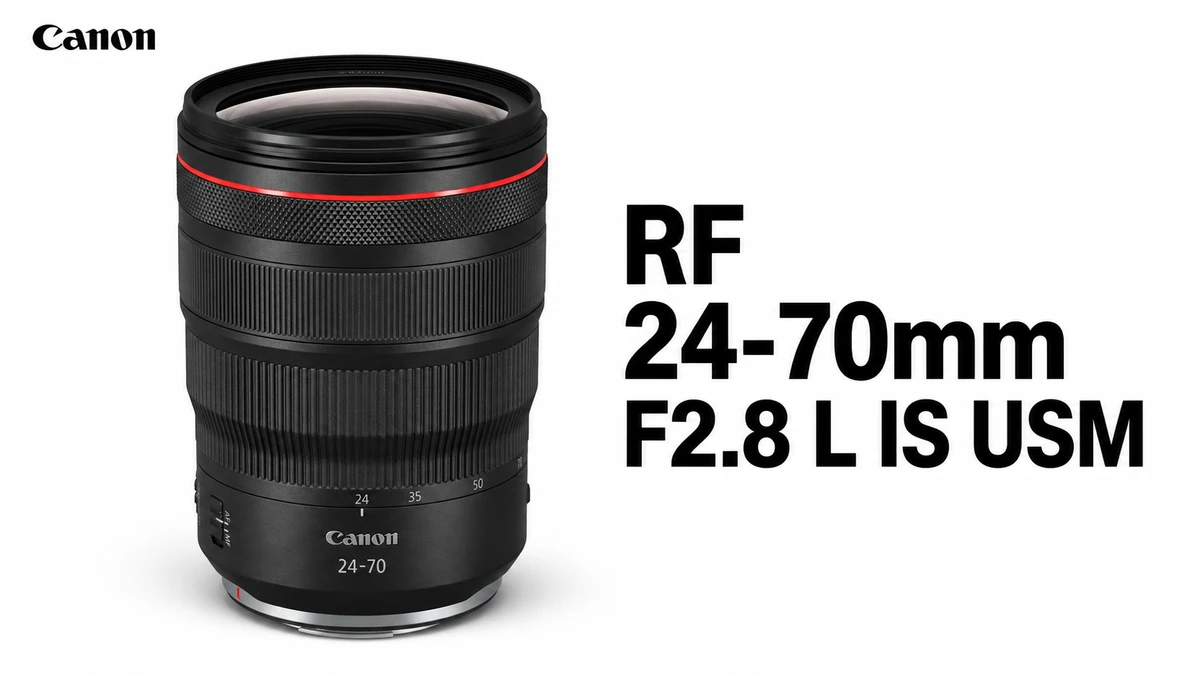
View the lens:Canon RF 24-70mm F2.8 L IS USM
Available as a kit:Canon EOS R5 Mark II + RF 24-70mm F2.8 L IS USM
It takes 82mm front filters. This is a common size on professional zooms, but the filters are larger than those used by the 14-35mm. You will also notice the weight during a long hike. Choose it when you photograph several subjects with one fast zoom. For almost exclusively daytime landscapes, the 24-105mm offers more reach and the 14-35mm offers more width.
Canon RF 24-105mm F4 L IS USM: the best single lens for travel
The RF 24-105mm lets you leave with one lens without being limited to a wide view. At 24mm, you can photograph a city, lake or valley. At 70 or 105mm, you can concentrate on one part of the scene. This range is useful when you walk for hours, the weather makes changing lenses risky or you do not yet know what view will appear around the next corner.
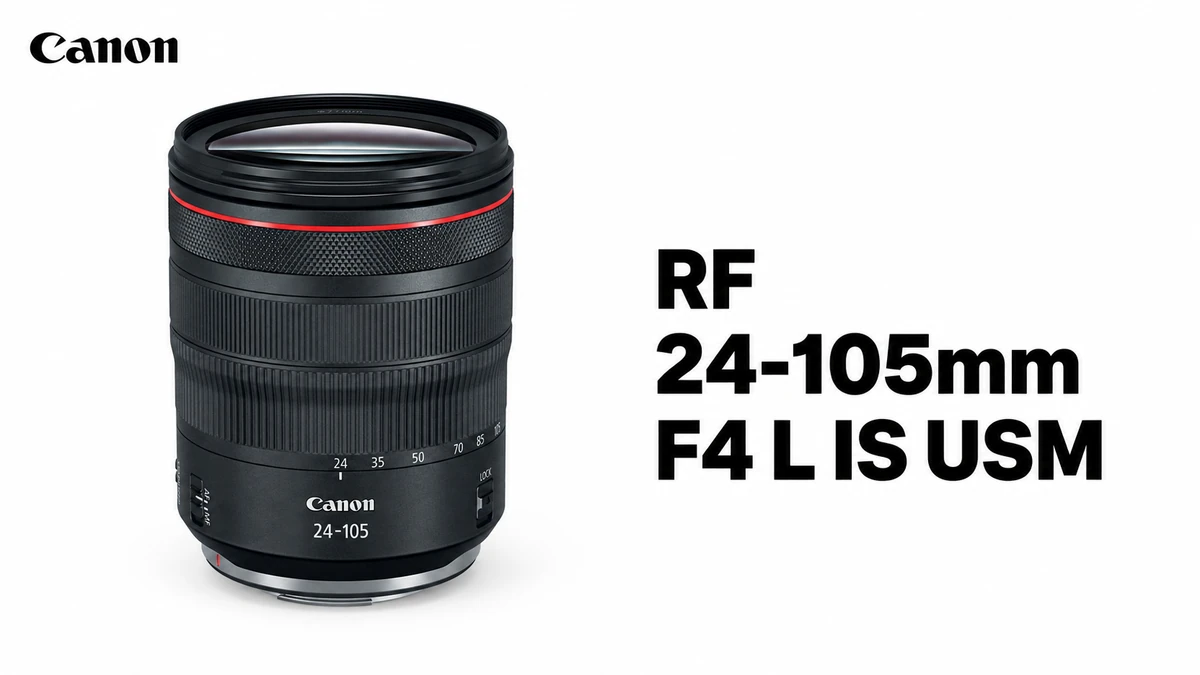
View the lens:Canon RF 24-105mm F4 L IS USM
Available as a kit:Canon EOS R5 Mark II + RF 24-105mm F4 L IS USM
Its F4 aperture remains constant through the zoom range and the lens takes 77mm filters. This size is shared with the 14-35mm and 70-200mm F4. One set of filters can therefore serve a three-zoom kit and keep the bag simpler.
At 24mm, it cannot show as much as a 14mm or 16mm lens. In a narrow street or beside a large waterfall, you may not have enough room. F4 is also less suited to stars. For travel, hiking and daytime landscapes, its versatility outweighs these limits.
Why a telephoto lens can improve your landscapes
Canon RF 70-200mm F4 L IS USM: simplify a scene and bring the layers together
In a valley, mountains, roads and villages can overlap in a confusing way. A 70-200mm lets you select a small part of the scene instead of showing everything. It makes distant planes appear closer together, an effect often called compression. The photograph becomes more graphic and the viewer can see where to look.
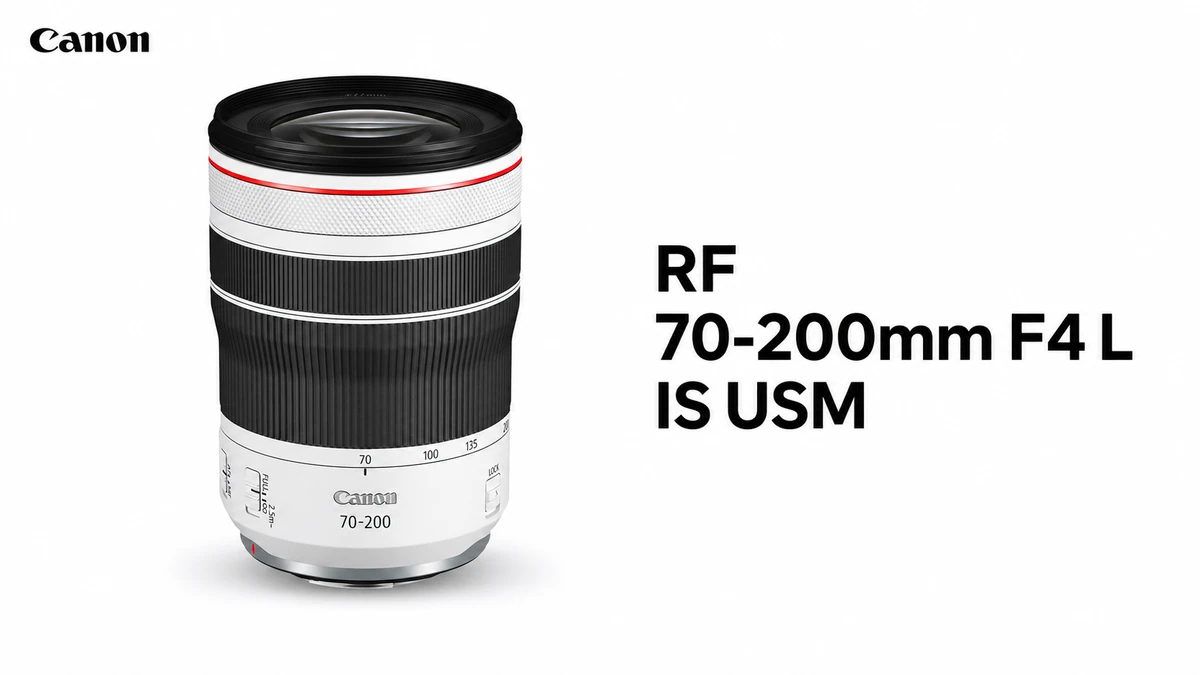
View the lens:Canon RF 70-200mm F4 L IS USM
Available as a kit:Canon EOS R5 Mark II + RF 70-200mm F4 L IS USM
At around 695g and with a 77mm filter thread, this telephoto zoom pairs neatly with the 14-35mm F4. Together, the two lenses cover 14 to 200mm with a constant aperture and the same filter size, leaving only a gap between 35 and 70mm.
Its reach ends at 200mm. That is enough for many landscapes, but not always for a very distant summit or a tiny detail on a cliff. If you regularly need a heavy crop, the 100-400mm or 100-500mm will suit you better.
Canon RF 100-400mm F5.6-8 IS USM: long reach that is still easy to carry
The RF 100-400mm is for photographers who want to explore telephoto landscapes without carrying a large white lens. It can isolate a sunlit ridge, a house in the snow, trees on a mountainside or a piece of architecture viewed from the other side of a city.
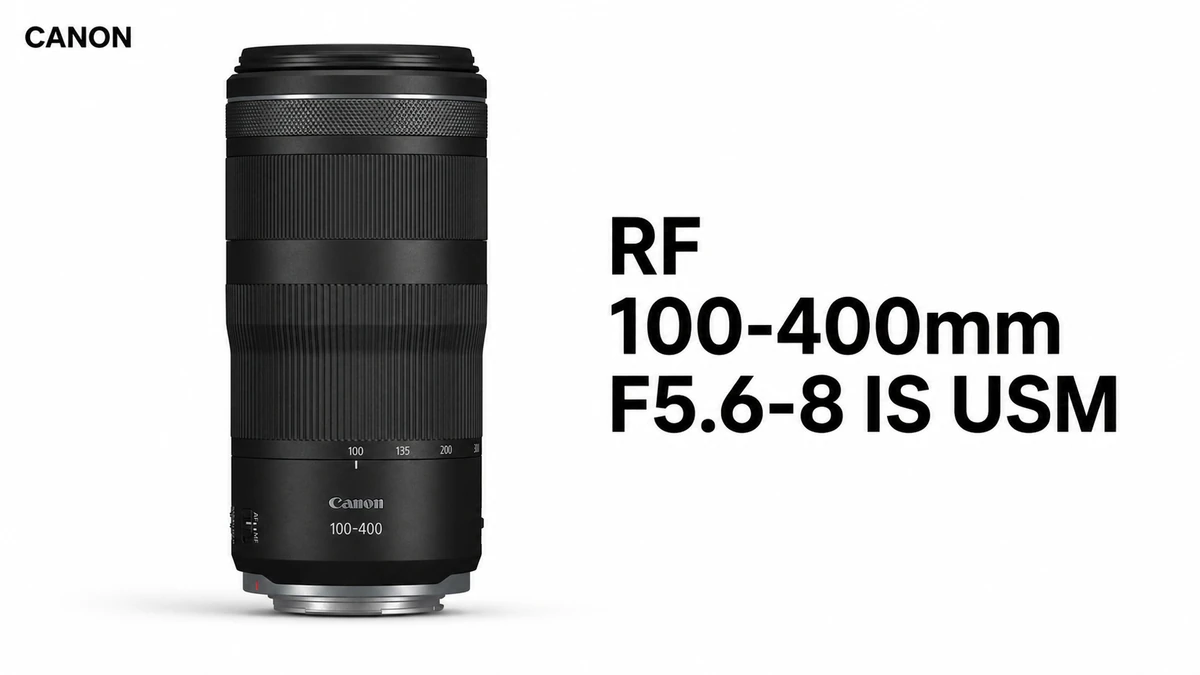
View the lens:Canon RF 100-400mm F5.6-8 IS USM
Available as a kit:Canon EOS R5 Mark II + RF 100-400mm F5.6-8 IS USM
The maximum aperture changes from F5.6 to F8. This is not a problem for a still subject in daylight. At sunrise or sunset, you may need to slow the shutter speed or raise the ISO. Stabilisation reduces blur from your movement, but it cannot freeze a branch moving in the wind.
This zoom does not have the more robust construction of the 100-500mm. It is, however, much lighter and makes a logical companion to a 14-35mm or 24-105mm. For occasional telephoto landscape work, it is often the more sensible choice.
Canon RF 100-500mm F4.5-7.1 L IS USM: for distant detail and mixed outdoor trips
The RF 100-500mm reaches farther and is designed for more demanding use. At 500mm, you can build a photograph around a small patch of light, a sequence of dunes or an inaccessible summit. Its range also works for wildlife you meet during the same outing, without changing lenses.
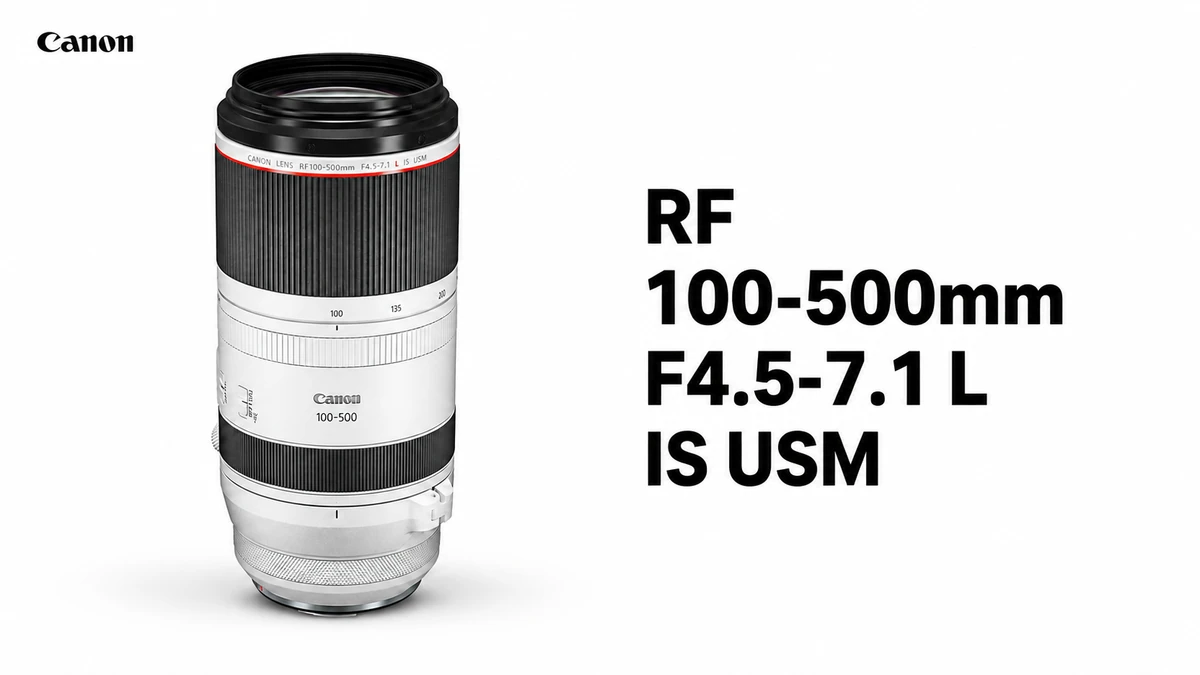
View the lens:Canon RF 100-500mm F4.5-7.1 L IS USM
Available as a kit:Canon EOS R5 Mark II + RF 100-500mm F4.5-7.1 L IS USM
Its weight of around 1.37kg changes how you prepare for a walk. A monopod or solid tripod can be useful, especially when you wait for the right light. The variable aperture also asks for reasonable light, although a still landscape lets you work at a slower shutter speed.
Do not choose it simply because 500mm sounds more complete. The 70-200mm F4 is enough for many scenes and easier to carry. The 100-500mm becomes worthwhile when distant details and wildlife form a regular part of your photography.
Filters, tripod and focus: what really changes the result
A polarising filter reduces certain reflections on water, wet rocks and leaves. It can also deepen the sky, but the effect may look uneven with an ultra-wide lens: one area of blue can become darker than another. Turn the filter slowly and check the whole frame rather than the centre alone.
An ND filter reduces the amount of light without intentionally changing the colours. It lets you lengthen the exposure to smooth water or show the movement of clouds. It does not make the photograph sharper. For a long exposure, turn stabilisation off when the camera is completely fixed and follow Canon's recommendations for the camera and lens.
When the foreground is very close, a single focus distance may not keep the whole scene sharp. The R5 Mark II offers focus bracketing: it records a series of images while moving the focus point gradually through the scene. You can then combine the frames to extend sharpness from the foreground to the background. This works best with a still scene. Moving leaves and waves can create difficult joins.
For a sunrise with a bright sky and dark ground, exposure bracketing records several brightness levels. This helps protect detail in the highlights while retaining information in the shadows. A tripod and a reasonably still scene again make the blend easier. These functions support the lens; they do not replace careful framing.
Which kit fits the way you photograph?
- One lens for travel: the RF 24-105mm F4 L IS USM. It covers most compositions and limits lens changes outdoors.
- One lens mainly for landscapes: the RF 14-35mm F4 L IS USM. It is wider, straightforward with filters and comfortable to carry.
- Two lenses for hiking: the RF 14-35mm F4 L and RF 70-200mm F4 L. They share 77mm filters and provide two very different ways to compose.
- Daytime landscapes and starry skies: the RF 14-35mm F4 L with the RF 20mm F1.4 L VCM. Use the zoom during the day and the prime at night.
- Travel and distant details: the RF 24-105mm F4 L with the RF 100-400mm. This pairing remains lighter than an all-professional setup.
- Landscapes and wildlife: the RF 14-35mm F4 L with the RF 100-500mm F4.5-7.1 L. It covers open scenery and distant subjects, with a noticeably heavier bag.
What about the Canon RF 15-35mm F2.8 L IS USM?
The RF 15-35mm F2.8 L IS USM remains an interesting professional wide-angle for landscapes, architecture and starry skies. It takes conventional 82mm front filters. Its F2.8 aperture gives it an advantage over the 14-35mm F4 at night, while its range to 35mm offers more framing freedom than the 16-28mm.
It is currently unavailable from MCZDIRECT, as is the corresponding R5 Mark II kit, so it is not included among the main choices in this guide. If it returns to stock, its F2.8 aperture and range to 35mm will make it worth considering again, provided you are comfortable carrying around 840g. The 14-35mm is lighter; the 16-28mm provides F2.8 in a smaller body; and the 20mm F1.4 is more specialised for night photography.
Verdict: which landscape lens should you choose for the Canon EOS R5 Mark II?
Choose the RF 14-35mm F4 L IS USM if you want one straightforward recommendation. It covers wide compositions, takes 77mm filters and is light enough to accompany the R5 Mark II on a hike. Its F4 limit matters mainly for starry skies.
The RF 16-28mm F2.8 IS STM is a better fit if an F2.8 aperture and low weight come first. The RF 10-20mm F4 L IS STM is made for extreme perspectives. The RF 20mm F1.4 L VCM is the specialist choice for night landscapes with stars.
If you want to carry one lens, the RF 24-105mm F4 L IS USM is the most versatile. Add a 70-200mm F4 to learn how a telephoto changes landscape composition, or move to the 100-400mm and 100-500mm when very distant details genuinely belong in your pictures.
You can explore the Canon EOS R5 Mark II body, the Canon EOS R5 Mark II kits and the full Canon RF lens category. For a selection that also covers portraits, sport, video and macro, read our general guide to the best lenses for the Canon EOS R5 Mark II. The right landscape lens is not necessarily the widest one. It is the lens that helps you remove distractions and give the subject a clear place in the frame.
Frequently asked questions about Canon EOS R5 Mark II landscape lenses
Can I keep using my Canon EF lenses with the Canon EOS R5 Mark II?
Yes, with a Canon Mount Adapter EF-EOS R. Most EF lenses retain functions such as autofocus and lens-based stabilisation when the lens provides them. The adapter does add a little length to the setup. Check the exact lens before buying an adapter; fitting an EF-S lens also puts the camera into crop mode.
Is a Canon RF-S lens suitable for landscapes on the R5 Mark II?
It will fit, but the R5 Mark II automatically switches to a 1.6× crop. This uses a much smaller area of the sensor and reduces the available resolution. An RF-S lens can be useful if you already own one, but it is rarely the best new purchase when you want the full-frame view and a genuinely wide composition.
Which aperture is a sensible starting point for a landscape?
F8 is a useful starting point when there is enough light. Make a test frame, then check both the foreground and the background. Closing the aperture extends the area that looks sharp, but very small apertures can soften fine detail. With a foreground close to the camera, focus bracketing is often more effective than stopping the lens down as far as possible.
Should I use an ultra-wide lens or stitch a panorama?
A panorama works well when the scene is distant and still. Several stitched frames can preserve plenty of detail without requiring an extremely wide lens. An ultra-wide is easier when the foreground is close, leaves or waves are moving, or you do not want to assemble files later. Both methods can cover a similar angle. Perspective depends mainly on where you place the camera, although a panorama can look different depending on the projection chosen when the frames are stitched.
Is a Canon L-series lens waterproof?
No. L-series lenses generally have a more durable build and protection against dust and moisture, but they are not waterproof. In sustained rain, use a suitable cover, avoid changing lenses and dry the equipment carefully after the shoot.
Does Canon's drop-in filter mount adapter work with RF lenses?
No. Canon's Drop-In Filter Mount Adapter EF-EOS R is designed to fit EF or EF-S lenses to an RF-mount camera. It cannot sit between the R5 Mark II and an RF lens. A bulbous-front RF lens needs the filter solution designed for that lens; the RF 10-20mm F4 L, for example, uses a rear gel-filter holder.
Sources and editorial verification
Sources reviewed and checks completed before publication.
Documentary MCZ DIRECT guide checked on 11 August 2026 against official Canon documentation and the public MCZDIRECT catalogue. MCZDIRECT sells the lenses and kits discussed. This guide does not claim an independent laboratory comparison; it connects published specifications with practical uses and stated limits. Availability may change after this check.
- Canon UK — EOS R5 Mark II: sensor, stabilisation and RF mount
- Canon — focus bracketing manual: operation, number of frames and limitations
- Canon — auto exposure bracketing manual: AEB operation and precautions
- Canon — RF lens range: official specifications for the selected lenses
- Canon — focal length and angle of view: how focal length changes the portion of the scene recorded
- Canon — perspective: how shorter and longer focal lengths affect the relationship between different planes
- Canon — depth of field: the role of aperture and the limits of very small apertures
- Canon — cropping and RF-S/EF-S lenses: how the EOS R5 Mark II's 1.6× crop works
- Canon — EF-EOS R mount adapters: using EF lenses and drop-in filters with an RF-mount camera
- Canon Camera Museum — RF 20mm F1.4 L VCM: aperture, focal length, 67mm filter size and weight
Leave a comment