Shopping Cart

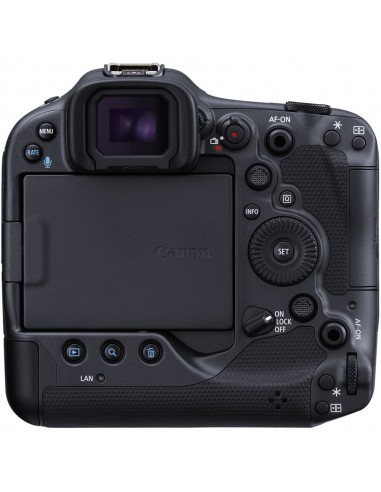
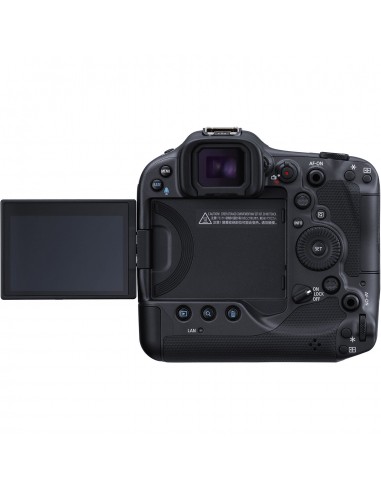
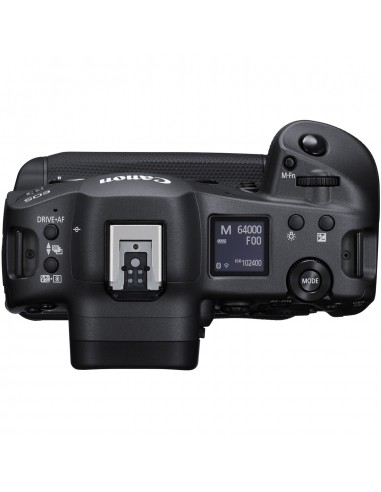
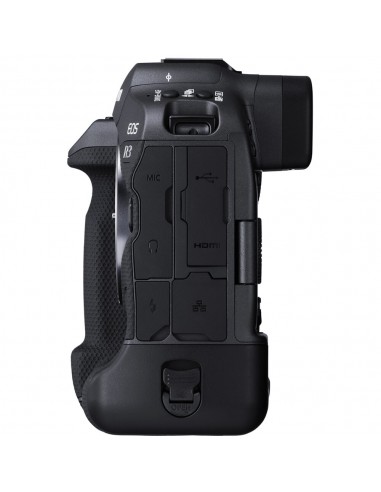
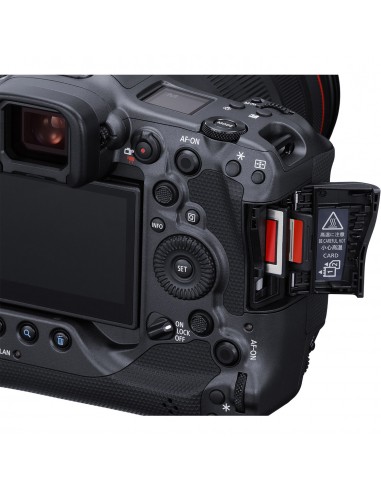

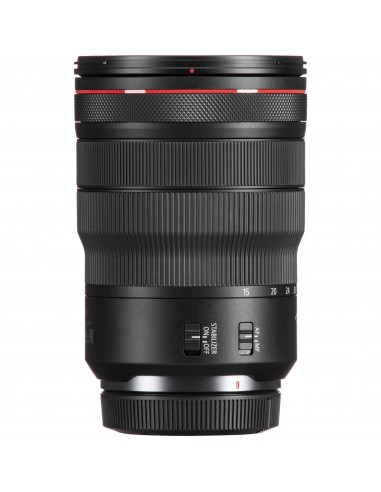
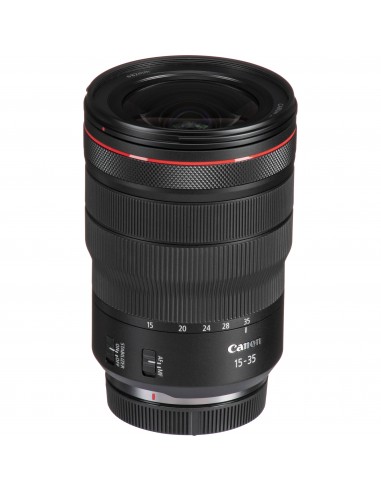
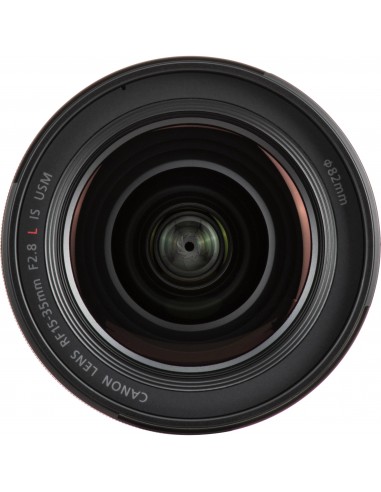

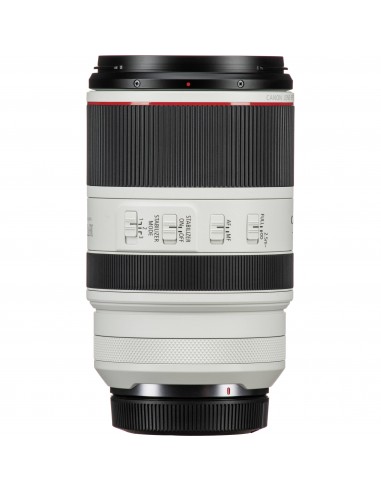
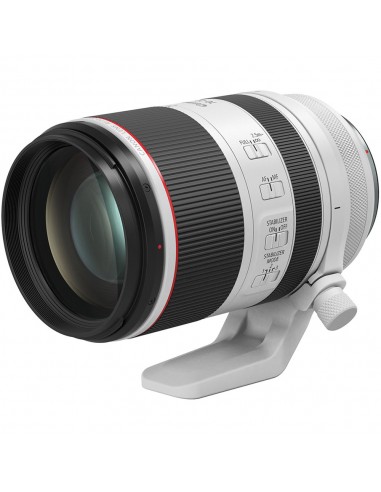

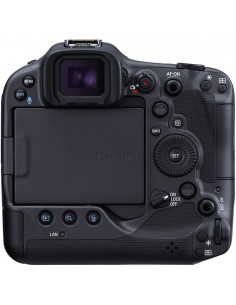
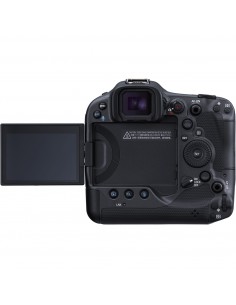
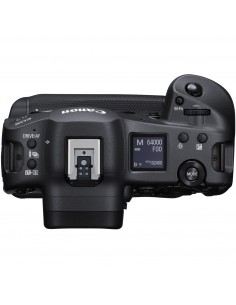
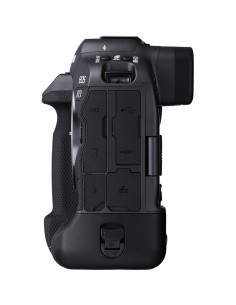
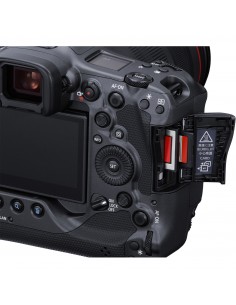
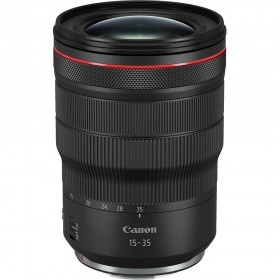
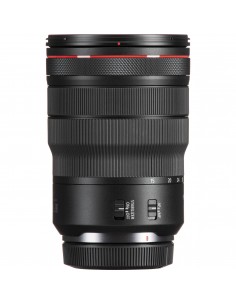
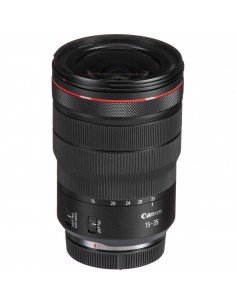
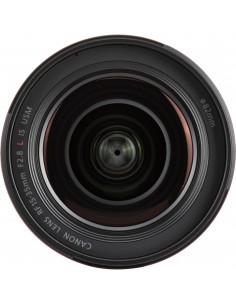
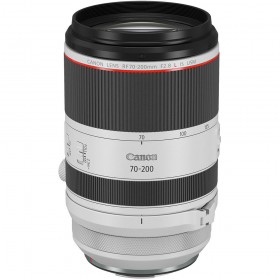
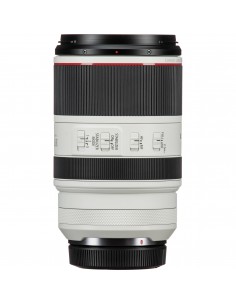
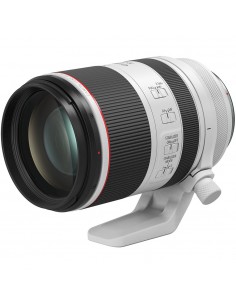
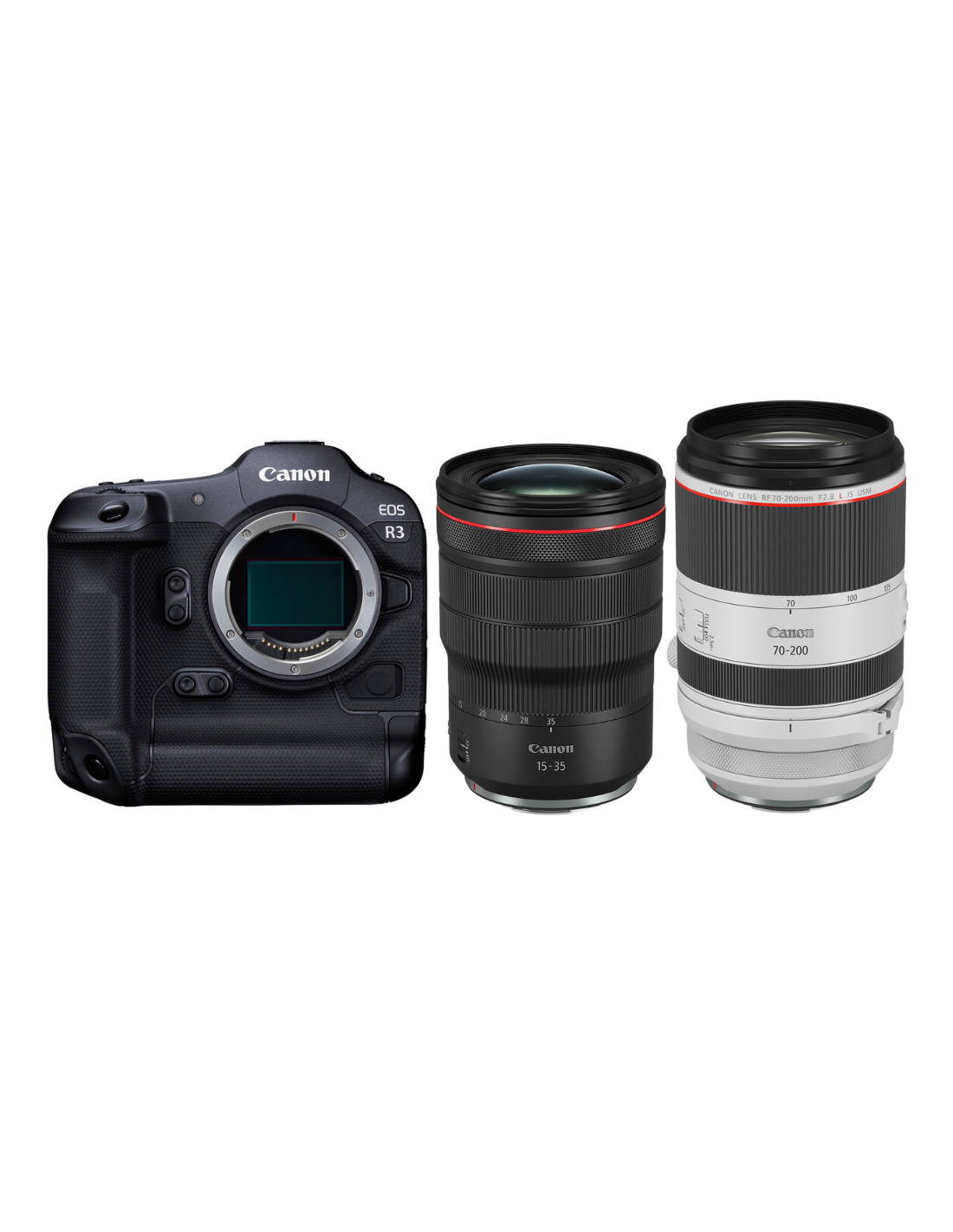
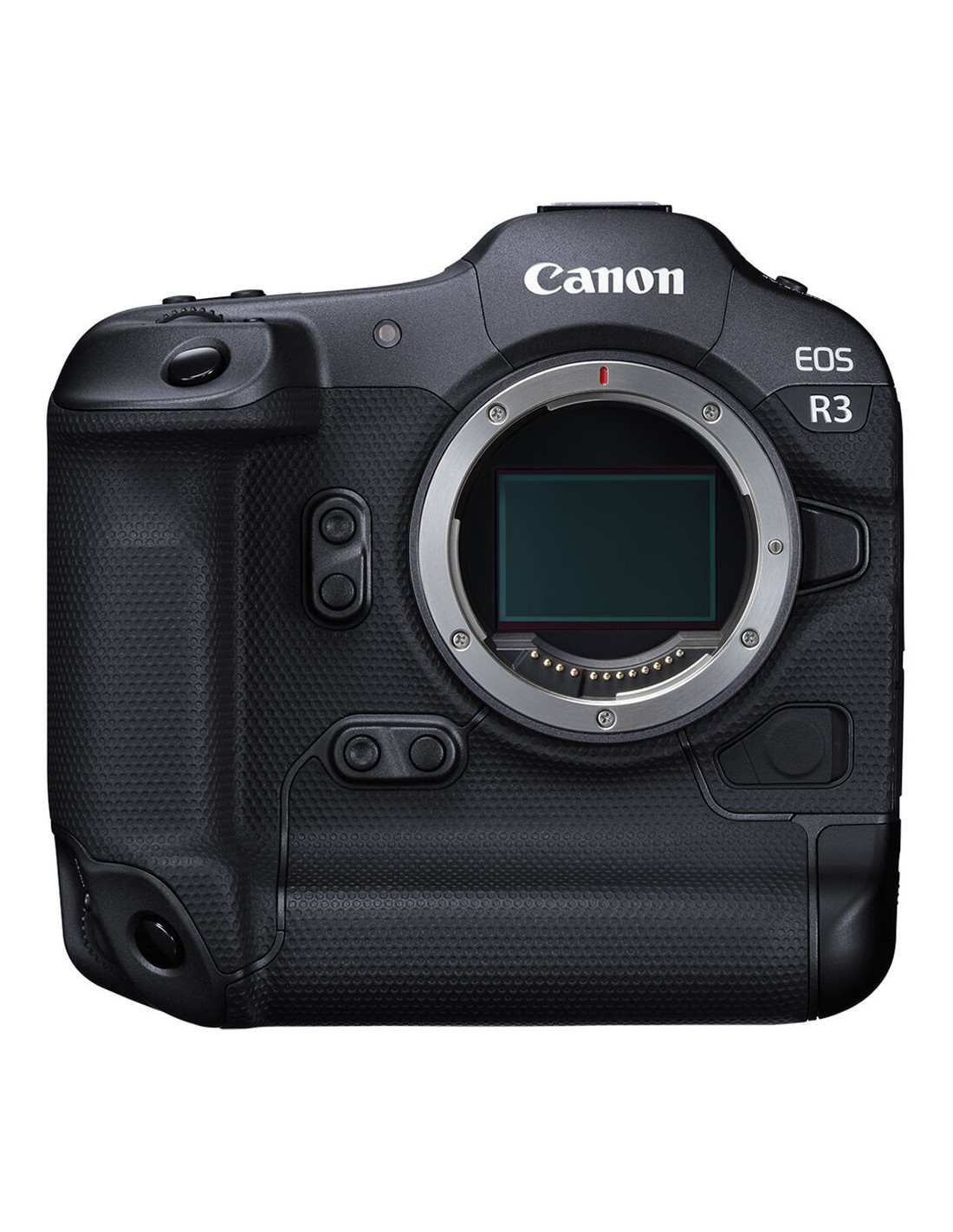


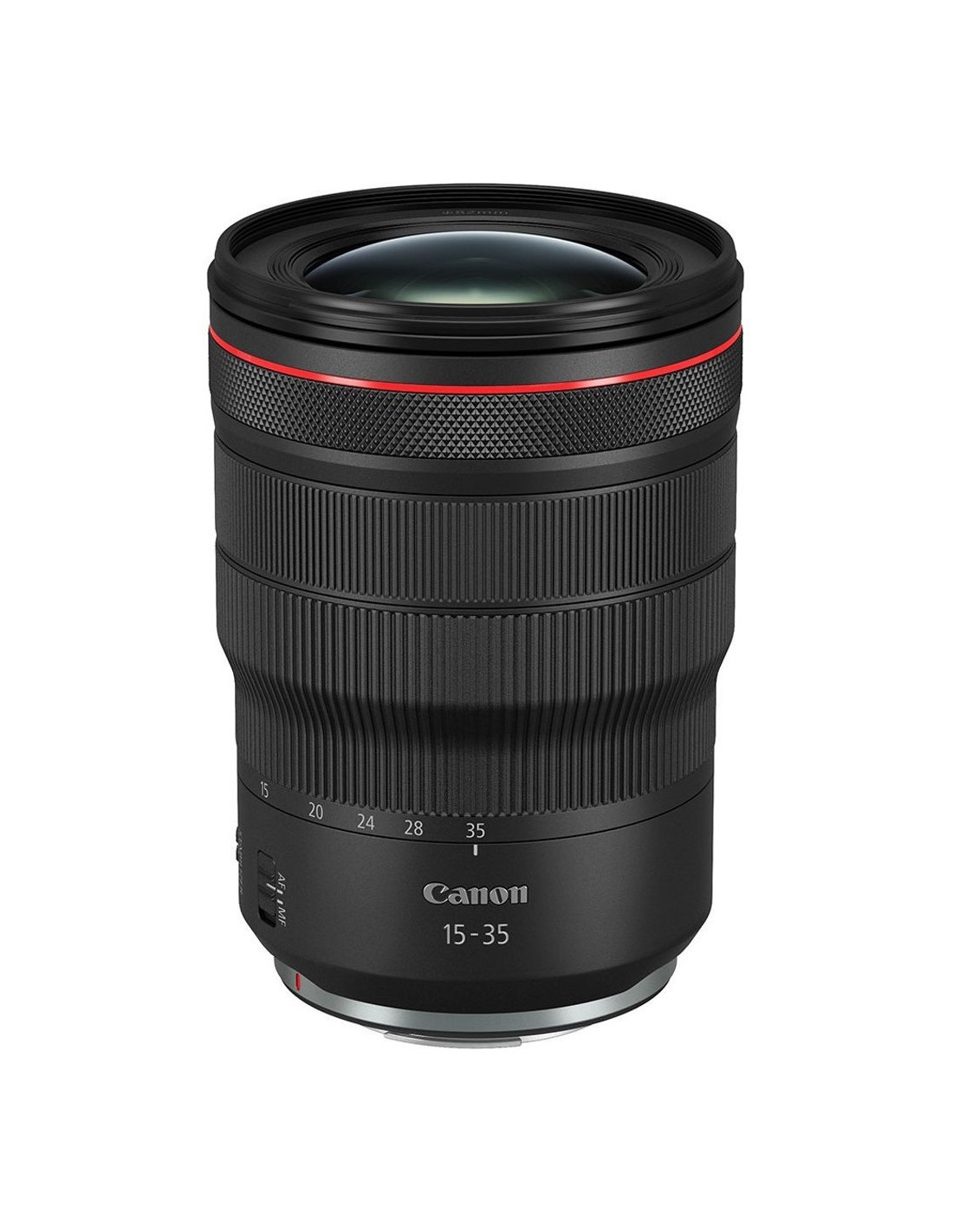


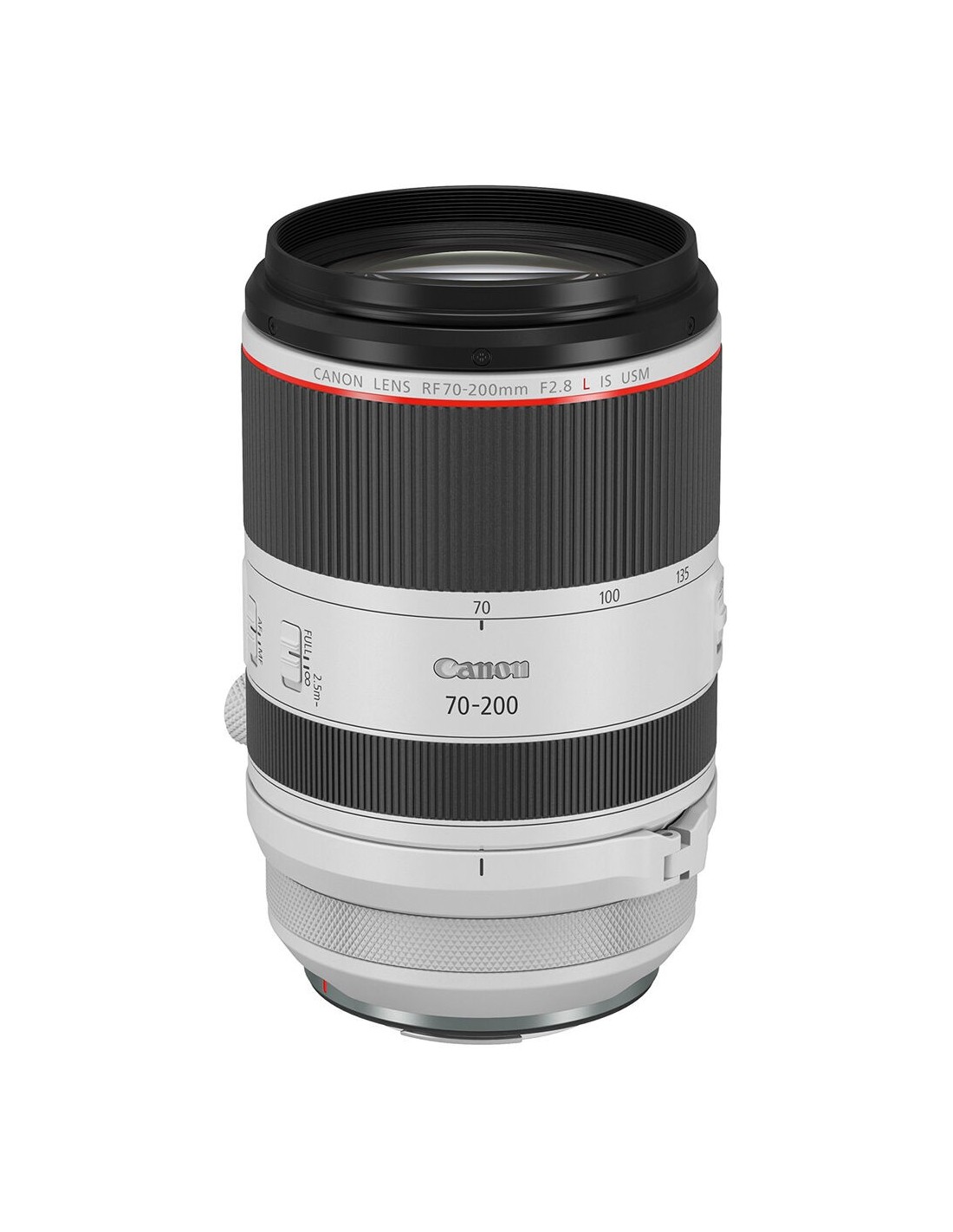



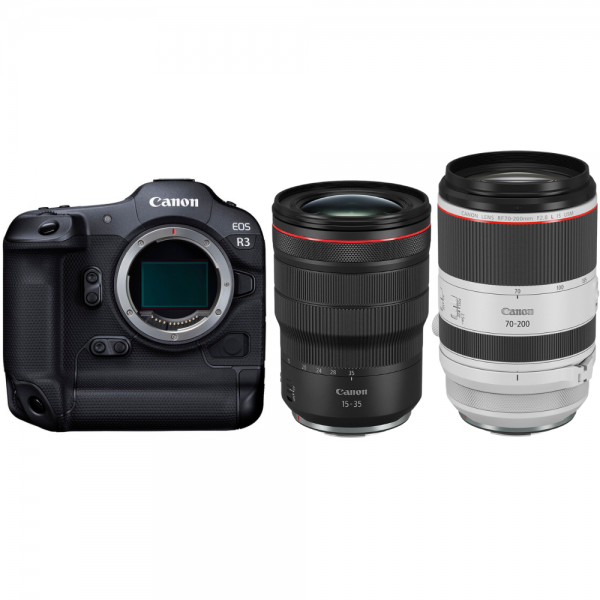
The Canon EOS R3 with RF 15-35mm F2.8 L IS USM and RF 70-200mm F2.8 L IS USM is a professional two-zoom kit for wide scenes, reportage, portraits, ceremonies, sport and stage work. The EOS R3 brings a stacked 24.1 MP full-frame sensor, up to 30 fps electronic shooting with AF/AE tracking and subject recognition. Both lenses keep a constant F2.8 aperture, while their stabilisation and Nano USM focusing support changing light and moving subjects. The range is deliberately split: 15-35mm and 70-200mm leave a real 35-70mm gap, so moving between them means changing lenses. The combined carry weight is about 2.93 kg, or about 3.06 kg with the tripod collar. It is a serious working kit, not a light travel setup.
Combine compatible accessories and save. The more items you add, the bigger the discount.
Accessory
Accessory
Accessory

warranty extension
This Canon EOS R3 kit makes sense when one working day moves between very different distances. The RF 15-35mm F2.8 L IS USM is the lens for the room, the building, the group and the subject close to the camera. The RF 70-200mm F2.8 L IS USM takes over when the photographer needs separation, reach or a position outside the action. The EOS R3 adds a stacked 24.1 MP full-frame sensor, DIGIC X processing, Dual Pixel CMOS AF II and high-speed capture. Together, the three components cover architecture, interiors, reportage, portraits, ceremonies, stage and sport with a consistent F2.8 maximum aperture on both zooms.
The logic is useful because it is honest. This is not one continuous 15-200mm range: the short zoom ends at 35mm and the telezoom begins at 70mm. A real 35-70mm gap remains, and changing from one visual role to the other requires a lens change. The kit also approaches 2.93 kg with the body, battery, card and both lenses, before accessories; adding the 70-200mm tripod collar brings the approximate sum to 3.06 kg. The Canon EOS R3 range helps place this configuration beside the other body-and-lens options, while the EOS R3 body only suits a photographer who already owns the right RF glass.

At 15mm, the RF 15-35mm F2.8 L IS USM opens the frame dramatically. That characteristic helps an architectural photographer keep converging lines and room volume under control through careful position, or lets an event photographer show the relationship between a speaker, audience and venue. At 24mm, the view becomes more natural for documentary work and groups. At 35mm, the photographer can move close to a person or object while retaining enough context to explain the situation. The constant F2.8 aperture means the exposure does not change simply because the framing changes within this zoom.
The lens focuses as close as 0.28m and reaches a maximum magnification of 0.21x at 35mm. That is useful for a menu on a table, a hand working on equipment, a detail in an interior or a foreground element that needs to lead the eye. It is not a macro specification, so small subjects should not be treated as if this were a dedicated close-up lens. Optical stabilisation, Nano USM focusing and Canon-listed weatherproof construction support a demanding workflow, but they do not replace a deliberate stance, a suitable shutter speed or sensible protection in difficult conditions. The RF 15-35mm F2.8 L IS USM on its own is the relevant comparison when the wide role is the only part of the kit you need.
The RF 70-200mm F2.8 L IS USM changes the photographer's relationship with the subject. At 70mm, it can still include the setting around a portrait, a ceremony or an outdoor action. Around 100-135mm, it narrows the frame to a face, gesture or exchange while leaving the photographer enough distance to observe. At 200mm, it selects a detail or a moment across a stage, court or field edge. The constant F2.8 aperture gives the zoom a stable maximum opening through that change of scale, which is valuable when the action does not wait for a new exposure decision.
The original RF 70-200mm F2.8 L IS USM in this kit focuses as close as 0.70m and reaches 0.23x magnification at 200mm. That allows a portrait detail, a hand, a small prop or an expression from a comfortable distance, without turning the lens into a macro optic. Its Dual Nano USM drive supports responsive autofocus, and Canon lists weatherproof construction for the professional lens. The lens weighs about 1,070g without its tripod mount, so its reach comes with a physical cost. The RF 70-200mm F2.8 L IS USM alone is the better reference for a photographer building around the telephoto role first.
| Mission | 15-35mm F2.8 | 70-200mm F2.8 |
|---|---|---|
| Architecture and interiors | Show the room, building or foreground detail from close working distances | Select a façade detail or distant architectural element without moving into the space |
| Reportage and event work | Keep people, place and action together when working nearby | Observe reactions and exchanges from a less intrusive position |
| Portrait and ceremony | Include context, groups and a cramped room | Isolate a face or gesture and work across a room |
| Sport and stage | Show the venue and action close to the camera | Follow distant subjects and select expressions or decisive moments |
| Video | Create immersive wides and close documentary movement | Keep a stable subject size from a controlled distance and compress the scene |
A constant F2.8 aperture is more than a line in a specification table. On the 15-35mm, it gives the photographer the same maximum opening when an interior view changes into a closer documentary frame. On the 70-200mm, it keeps the available light consistent while a portrait changes from 70mm to 200mm or while a stage subject moves through the frame. In a reception, a press room or a covered sports venue, that consistency leaves more attention for shutter speed, subject motion and the background rather than asking for a new maximum-aperture calculation at every focal length.
F2.8 also creates useful separation from the background, especially at the longer end of the telezoom and at a short subject distance. It does not guarantee a particular blur pattern: distance, background texture, subject size and focus placement still decide the result. Nor does it make either lens small. The wide zoom weighs about 840g and the telezoom about 1,070g; the EOS R3 is about 1,015g with battery and CFexpress card. This is a kit where the practical benefit of light and consistent apertures must be weighed against the weight on the shoulder and the space in the bag.
The two lenses cover complementary parts of a professional assignment, but they do not create a continuous 15-200mm field of view. The 15-35mm is still mounted when the photographer needs a group, an interior, a building or close reportage. The 70-200mm is the right tool when the subject is across the room, on a stage or on the far side of a playing area. Between those roles lies the 35-70mm gap. At 50mm, for example, neither lens provides the natural middle view that some photographers use for street work, documentary portraits or general walk-around scenes.
That gap can be handled in several ways, but each changes the workflow. The photographer can accept a wider or tighter composition, step back or forward where the location allows it, carry a third lens, or work with a second camera body already fitted with another focal length. The important point is that the change from 35mm to 70mm is a physical lens change, not a small turn of the zoom ring. This kit is therefore strongest when the assignment naturally alternates between wide environment and distant subject. It is less convenient when most images fall in the middle and every frame demands a different angle of view.

The EOS R3 is built for moments that do not repeat on command. Its back-illuminated stacked full-frame CMOS sensor provides about 24.1 MP, and the electronic shutter can reach up to 30 frames per second with AF/AE tracking. The mechanical shutter reaches about 12 frames per second. That combination gives a photographer more positions to choose from when a runner changes stride, a speaker turns toward the audience or two people exchange a brief look. It does not replace anticipation: a high frame rate still needs a shutter speed suited to the motion, a controlled burst and a clear idea of what the picture should say.
Dual Pixel CMOS AF II and recognition of people, animals and vehicles support the process as a subject moves through the frame, with the available behaviour depending on the selected mode. Eye Control AF offers another way to direct attention after calibration. With the 15-35mm, those tools help when a close subject moves through a crowded room. With the 70-200mm, they help maintain the chosen subject when the narrower field of view magnifies small changes in position. The result is not automatic certainty; it is more time spent choosing the moment and less time repeatedly moving the focus area by hand.
Both lenses bring optical image stabilisation, and the EOS R3 can coordinate with them. Canon's CIPA figures for this kit reach 7.0 stops at 35mm with the RF 15-35mm and 7.5 stops at 200mm with the RF 70-200mm, under the specified measurement conditions. In practice, that support is most meaningful when the photographer is trying to keep a static or relatively calm subject sharp at a slower hand-held shutter speed. It can also make a wide interior or a distant detail easier to frame without relying on a tripod for every setup.
Stabilisation does not freeze a moving person, a child, a vehicle or a player. For those subjects, the shutter speed must still follow the movement, and F2.8 helps keep more light available before sensitivity rises. The EOS R3 offers a standard ISO range of 100-102400 for stills, expandable to ISO 204800, but a large ISO number is not a substitute for an exposure decision. The wide zoom's 15mm end can make a room appear more spacious, while the telezoom's 200mm end magnifies camera movement and subject movement alike. The photographer has to match focal length, speed and support to the actual scene.
| Feature | Practical benefit | Limit to plan for |
|---|---|---|
| 24.1 MP stacked full-frame sensor | Balances responsive capture with files suited to professional delivery | It offers less aggressive cropping latitude than a much higher-resolution body |
| 30 fps electronic with AF/AE; 12 fps mechanical | Provides more timing options for a short action or expression | A high burst still requires suitable shutter speed, focus settings and disciplined editing |
| 15-35mm and 70-200mm, both constant F2.8 | Pairs wide environmental work with distant subject separation at a stable maximum aperture | The range is not continuous: 35-70mm is missing and changing roles means changing lenses |
| 7.0 stops at 35mm and 7.5 stops at 200mm with EOS R3 coordinated control | Helps reduce photographer movement in compatible hand-held exposures | Stabilisation does not freeze a moving subject |
| 0.28m / 0.21x on the wide lens; 0.70m / 0.23x on the telezoom | Supports foreground details, portraits and close subject fragments | Neither lens is a dedicated macro optic |
| About 2.93kg, or 3.06kg with the tripod collar | Provides a substantial professional two-zoom setup | Weight, bag size and carrying time become part of the assignment decision |
For architecture and interiors, 15mm can show the full relationship between walls, ceiling, furniture and the people using the space. The ability to focus from 0.28m helps build a foreground when a close object should lead into the room. At 24-35mm, the perspective becomes easier to manage for documentary work, an event detail or a small group. The photographer still needs to watch the edges of the frame and the effect of camera height: a wide zoom creates possibilities, but it also makes careless placement more visible. The F2.8 maximum aperture helps when available light is limited, while the 82mm filter size defines the accessory system for this lens.
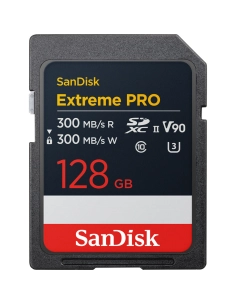
The EOS R3 also gives the kit a serious hybrid role, with internal 6K RAW up to 60p and 4K up to 120p according to mode. A wide moving shot through a venue, an immersive interior sequence or a close documentary passage can use the 15-35mm's changing angle of view without changing the camera position. The double card arrangement combines CFexpress Type B and SD UHS-II, and the body also provides USB Type-C, RJ-45 Ethernet, micro HDMI, microphone and headphone connections. The chosen card, recording mode and delivery path still need to match the production rather than being treated as interchangeable settings.
The 70-200mm makes portraits possible without placing the camera close to the subject. At 70mm, the surroundings can remain part of the story; at 135mm, the face or gesture becomes more selective; at 200mm, a stage expression or sports action can be isolated from a position that respects the space. The F2.8 aperture supports low available light and background separation, while the nine-blade circular diaphragm contributes to the shape of out-of-focus highlights. The image still depends on the photographer's choice of distance and background, not on the aperture figure alone.
For a ceremony, the telezoom can follow a person from a discreet position, but it will not cover a whole room or a group gathered close to the camera. For sport, 200mm is useful when access and distance are moderate, but it is not a promise of sufficient reach for every field or small distant subject. For nearby wildlife, it can frame an animal and its surroundings or pick out a detail without approaching further. The lens does not accept extenders, and its 77mm filter thread and approximately 1,070g body should be included in the working plan. The two-zoom kit gives a strong wide-versus-tele pairing, not an answer to every distance.
| Configuration | Best fit | Main compromise |
|---|---|---|
| EOS R3 + RF 15-35mm F2.8 | Architecture, interiors, groups and close reportage | No 70-200mm reach for distant portraits, stage or sport |
| EOS R3 + RF 70-200mm F2.8 | Portraits, ceremonies, stage and sport from a distance | No ultra-wide view for rooms, buildings and very close work |
| EOS R3 + RF 15-35mm F2.8 + RF 70-200mm F2.8 | Assignments that genuinely alternate between wide environment and telephoto distance | 35-70mm gap, two lens changes and about 3kg to carry before accessories |
| EOS R3 + RF 24-70mm F2.8 + RF 70-200mm F2.8 | A continuous 24-200mm professional zoom pair for work centered on the middle range | Less reach at the wide end than 15mm and a different weight and budget balance |

The numbers make the carrying decision concrete. The EOS R3 is approximately 1,015g with battery and CFexpress card. The RF 15-35mm adds about 840g, and the original RF 70-200mm adds about 1,070g without its tripod mount. The combined figure is therefore about 2.93kg before a strap, spare battery, cards, filters or support. With the approximately 130g tripod collar fitted to the telezoom, the sum is about 3.06kg. This mass can be appropriate for a professional assignment with clear wide and telephoto demands, but it is not a light travel kit and it will affect how long the camera remains in the hand.
The comparison with other EOS R3 configurations is useful. A single RF 15-35mm is easier when the work is mostly architecture, interiors and close reportage. A single RF 70-200mm is more focused when portraits, stage or outdoor sport dominate. A 24-70mm plus 70-200mm pair offers continuous 24-200mm coverage and reduces the middle-range gap, but it also changes the cost, weight and lens roles. The two-zoom 15-35mm plus 70-200mm option earns its place when 15mm matters as much as 200mm and the photographer accepts two lens changes, a substantial bag and roughly 3kg of equipment before accessories.
At MCZ DIRECT, we position the Canon EOS R3 with RF 15-35mm F2.8 L IS USM and RF 70-200mm F2.8 L IS USM as a serious two-zoom configuration for the photographer who needs both a broad view and a working distance. The R3 supplies the response with its stacked 24.1 MP full-frame sensor, Dual Pixel CMOS AF II, subject recognition and up to 30 fps electronic capture with AF/AE. The 15-35mm gives architecture, interiors, groups and close reportage a strong wide foundation. The 70-200mm moves the photographer back for portraits, ceremony, stage and sport. Keeping F2.8 across both zooms makes the pairing coherent when light and action change inside each range.
The limits are part of the recommendation. The kit does not cover every focal length from 15 to 200mm: 35-70mm is absent, and moving between the two roles requires a lens change. The combined carry weight is about 2.93kg before accessories, or about 3.06kg with the telezoom collar, so this is not a light travel setup. A single lens is more sensible when the assignment stays wide or telephoto. The EOS R3 with 24-70mm and 70-200mm is the better comparison when continuous 24-200mm coverage matters more than 15mm. Choose this kit when ultra-wide space and 200mm reach are both real requirements, and when the photographer accepts the weight and the changes as part of the work.
Choose this Canon EOS R3 two-zoom kit when 15mm for space and 200mm for distance both matter, and you are comfortable carrying about 3kg and changing lenses across the 35-70mm gap.

You might also like



It is for photographers who need ultra-wide coverage for architecture, interiors and close reportage as well as telephoto reach for portraits, ceremonies, stage and sport. It suits a professional workflow that accepts two lenses and substantial carry weight.
No. The RF 15-35mm ends at 35mm and the RF 70-200mm begins at 70mm, leaving a real 35-70mm gap. Moving between those ranges requires changing lenses or using another camera and lens.
Each zoom keeps a maximum aperture of F2.8 throughout its own range. Exposure does not lose a stop when you move from 15 to 35mm or from 70 to 200mm, although light, shutter speed and depth of field still depend on the scene.
The EOS R3 reaches up to 30 frames per second with the electronic shutter and AF/AE tracking. Its mechanical shutter reaches approximately 12 frames per second. The special custom high-speed mode up to approximately 195 fps has different conditions and uses One-Shot AF with focus and exposure locked from the first frame.
The body is approximately 1,015g with battery and CFexpress card, the RF 15-35mm is about 840g and the RF 70-200mm is about 1,070g without its tripod mount. The sum is about 2.93kg before accessories, or about 3.06kg with the approximately 130g tripod collar.
Canon lists EOS R3 coordinated results of 7.0 stops at 35mm with the RF 15-35mm and 7.5 stops at 200mm with the RF 70-200mm under CIPA conditions. Stabilisation reduces photographer movement but does not freeze a moving subject.
Yes. Its 15-35mm range, constant F2.8 aperture, 0.28m minimum focus and 0.21x maximum magnification at 35mm support room views, architecture and nearby foreground details. It is not a dedicated macro lens.
It is well suited when the photographer can work at a moderate distance. The 70-200mm range moves from contextual frames to tighter action, while F2.8 supports available light. Very distant or small subjects may require more reach.
No. Canon's development material states that the original RF 70-200mm F2.8 L IS USM was designed not to be compatible with extenders. This kit contains the original non-Z model, not the later RF 70-200mm F2.8 L IS USM Z.
The EOS R3 has one CFexpress Type B slot and one SD slot compatible with UHS-II. Card choice should match the selected burst or video mode, its recording rate and the intended file workflow.
It can be more convenient when continuous 24-200mm coverage matters, because it removes the 35-70mm gap. The 15-35mm two-zoom kit remains the stronger choice when 15mm for interiors and architecture is a genuine requirement.