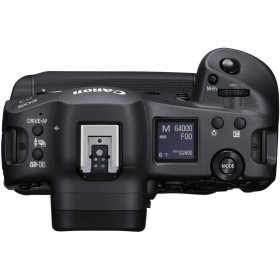
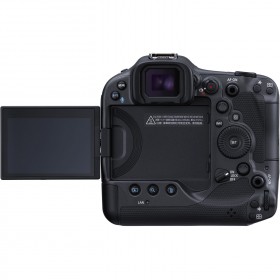
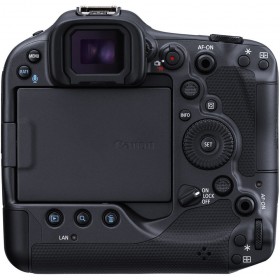
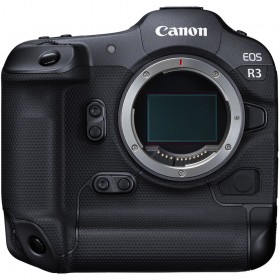

✓Free delivery with insurance includedYour order is protected from dispatch to delivery: in case of loss, theft or damage during transport, your parcel is insured up to its value.
100% BRAND NEW - FINAL PRICE - DELIVERED TO YOUR DOOR WITHIN 6-14 DAYS
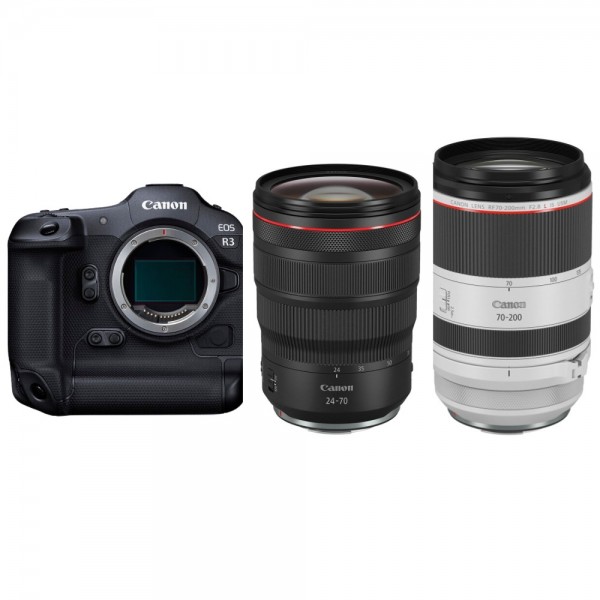
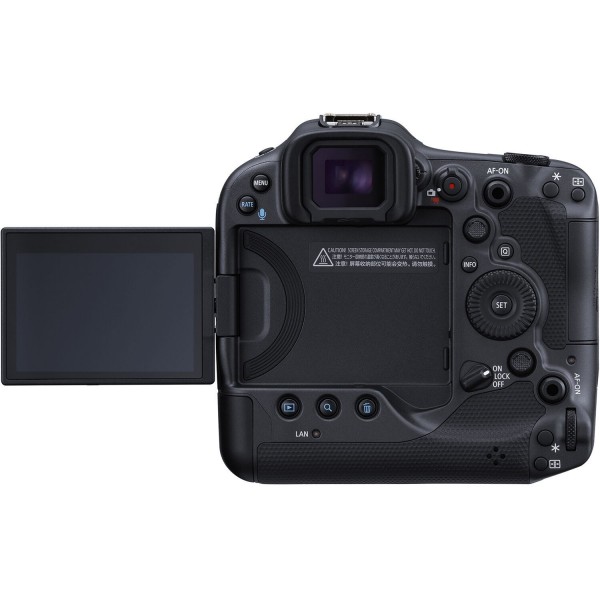
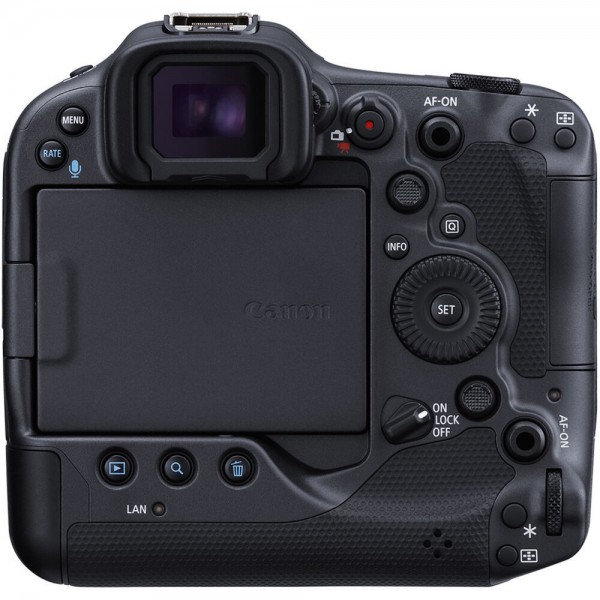
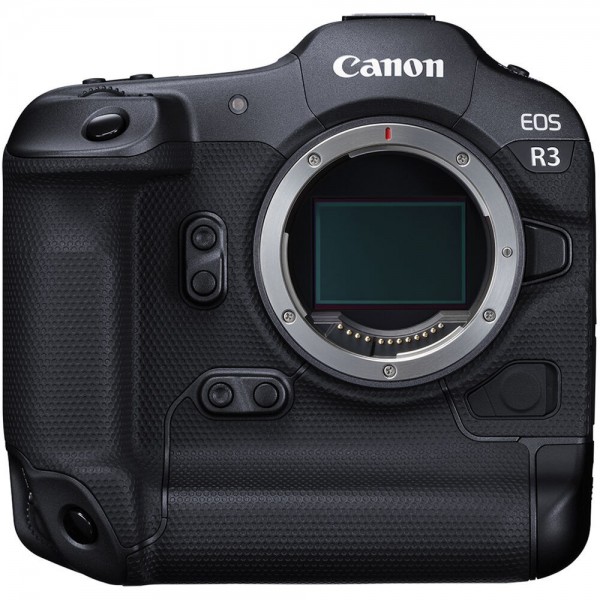
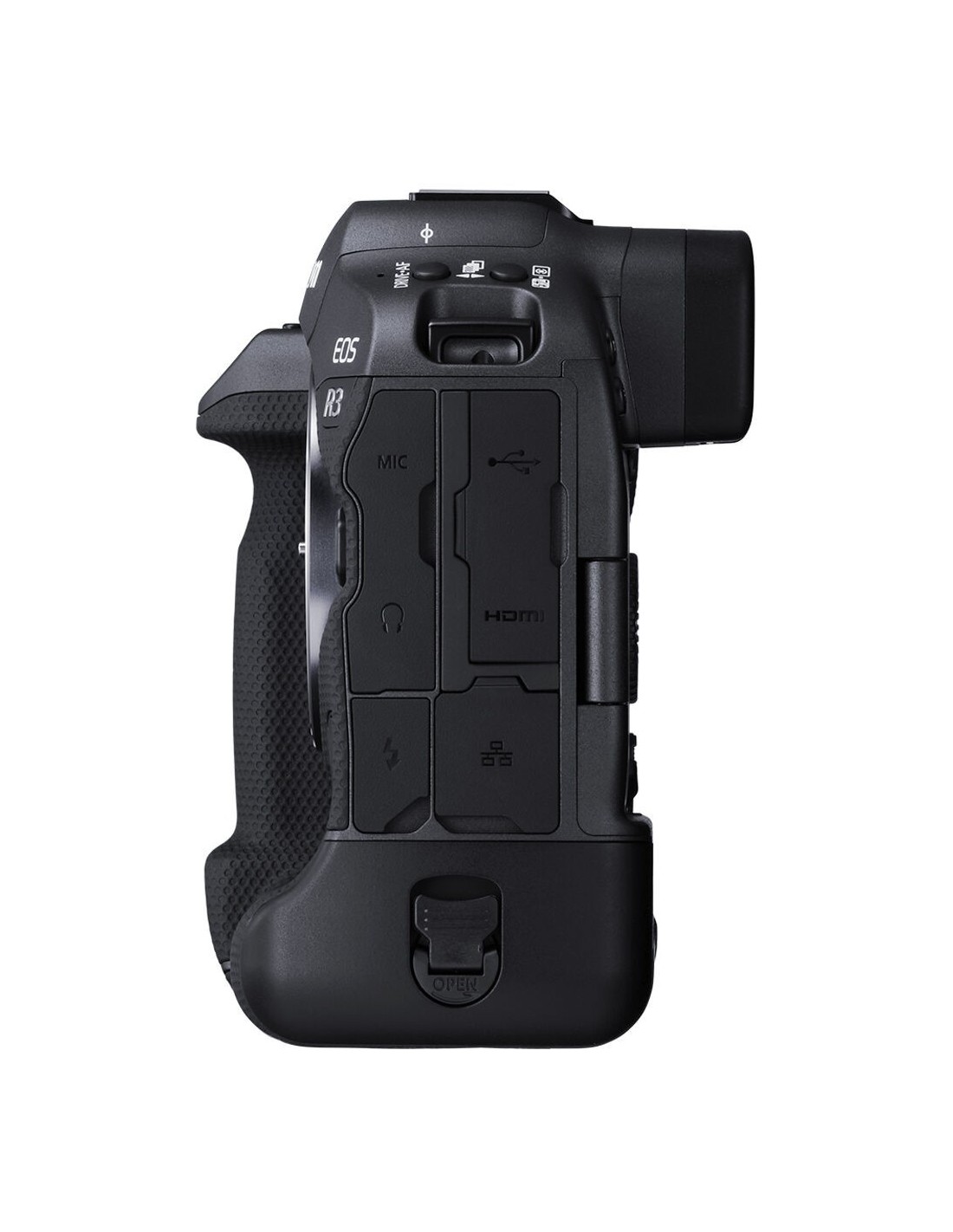
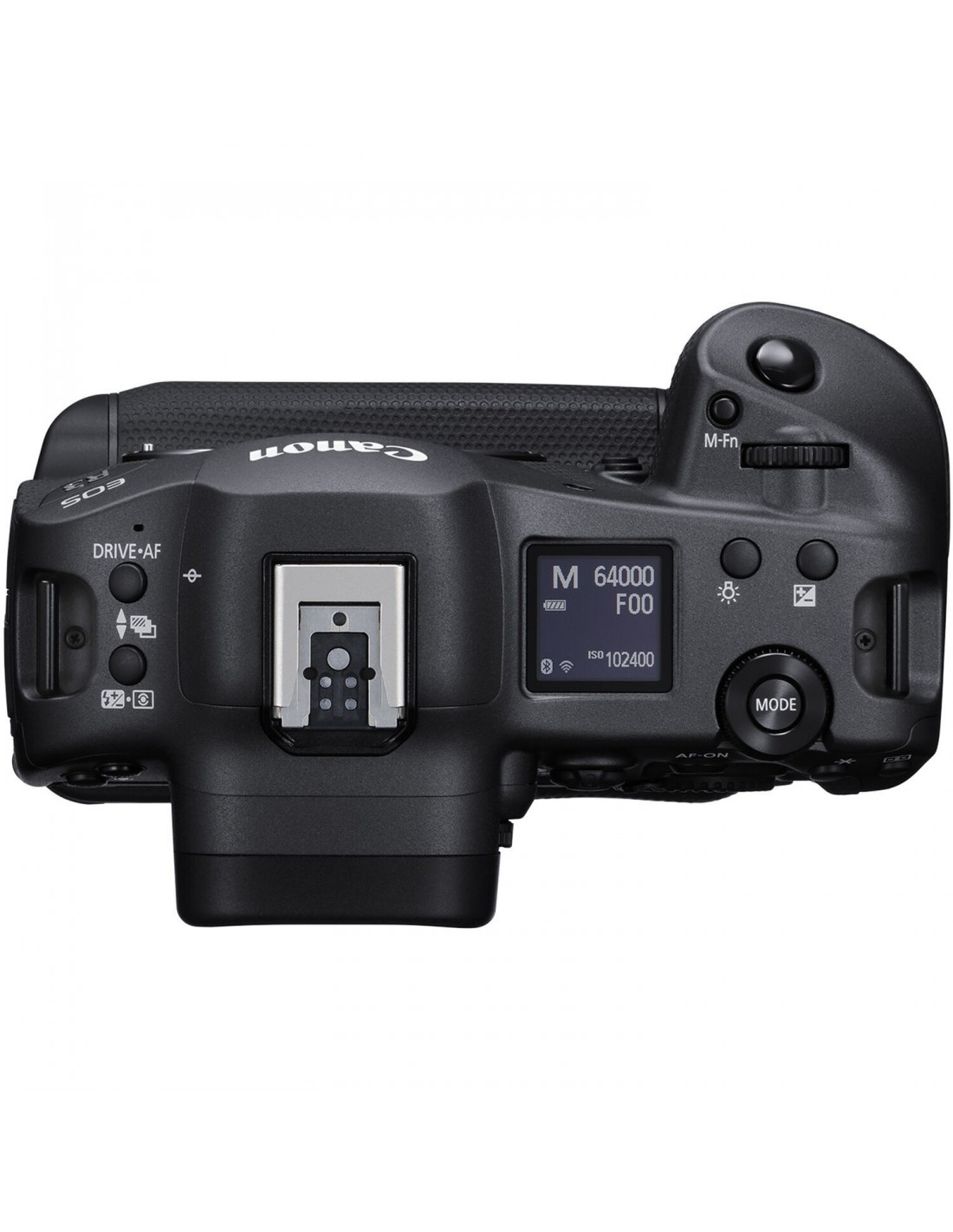
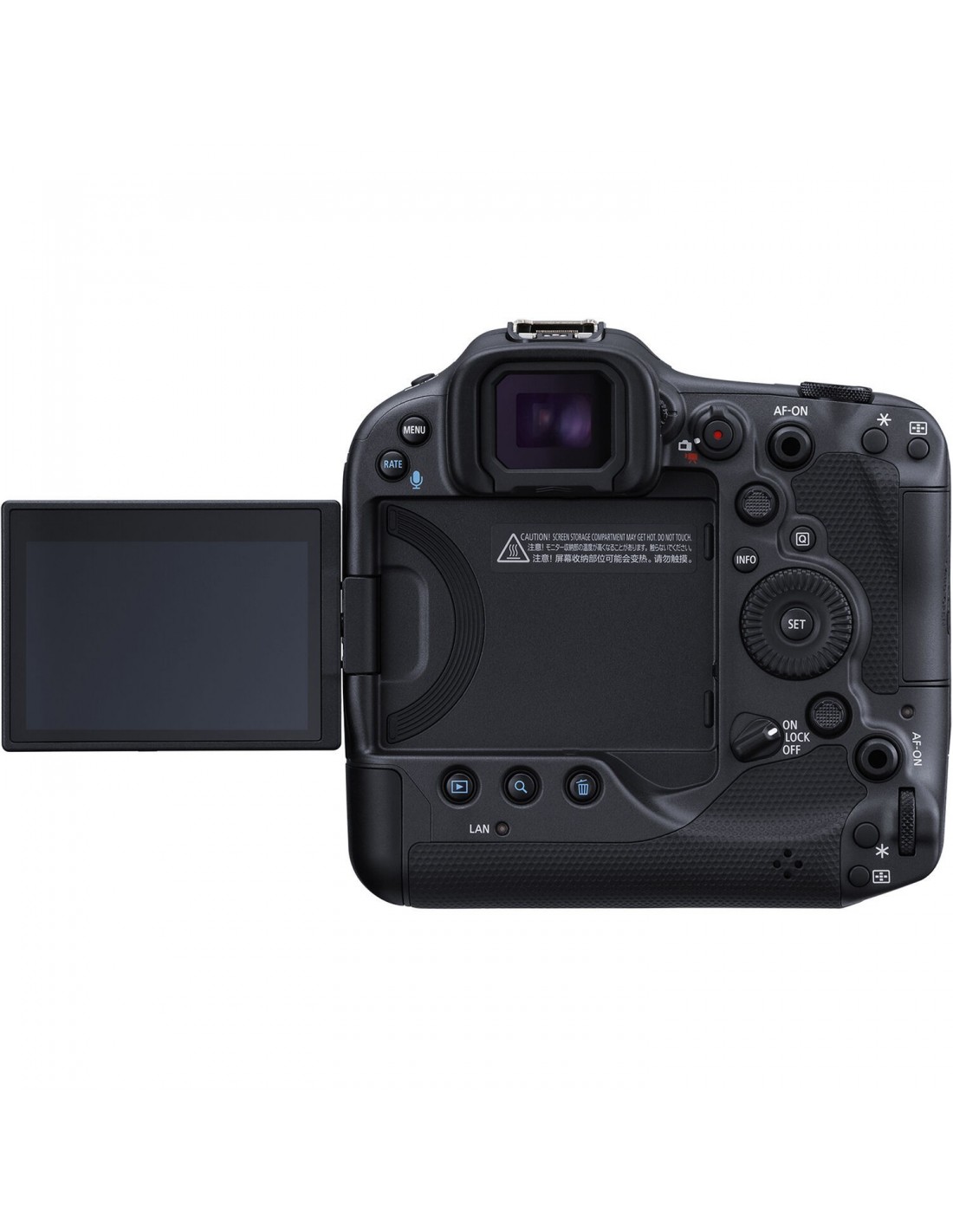
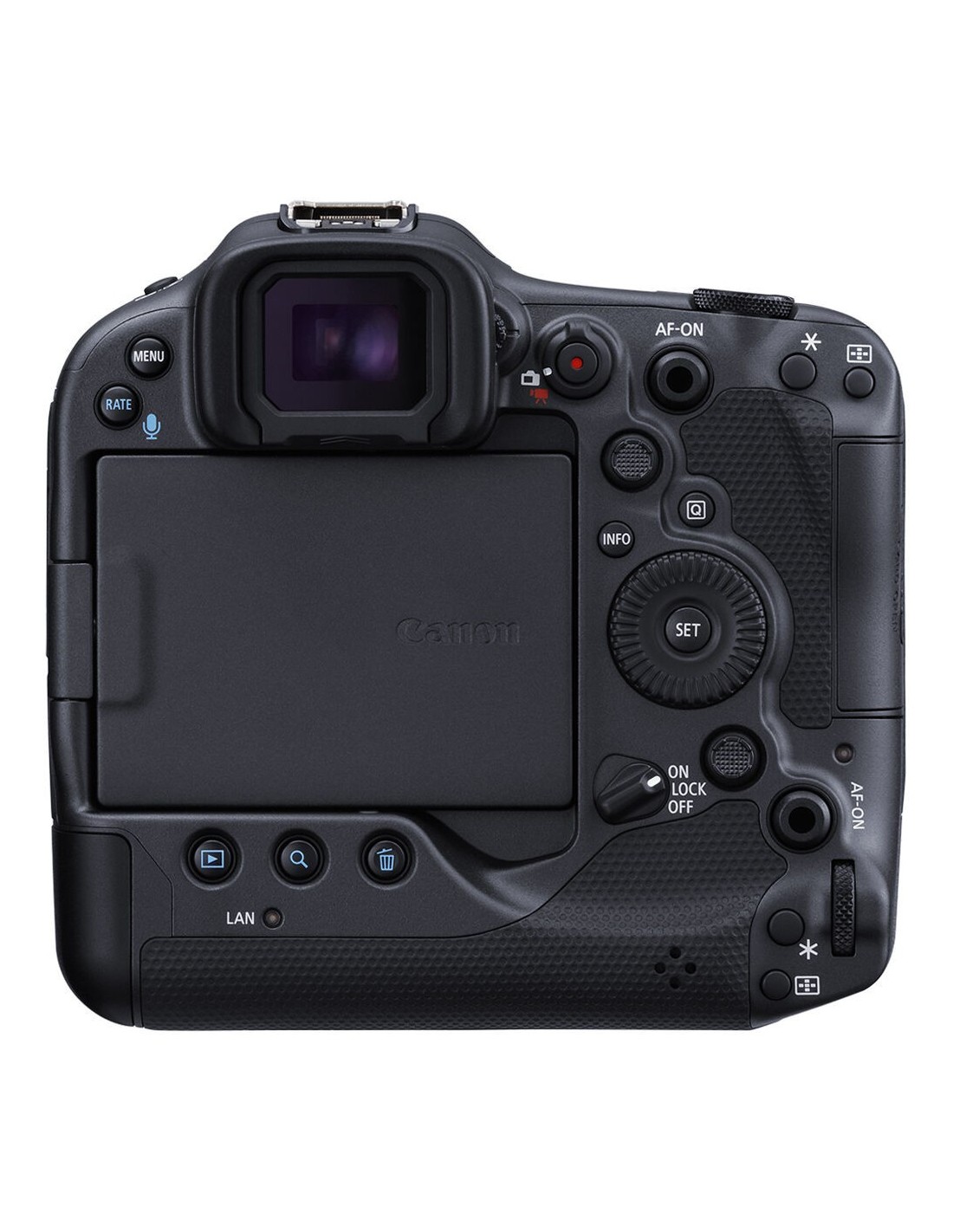
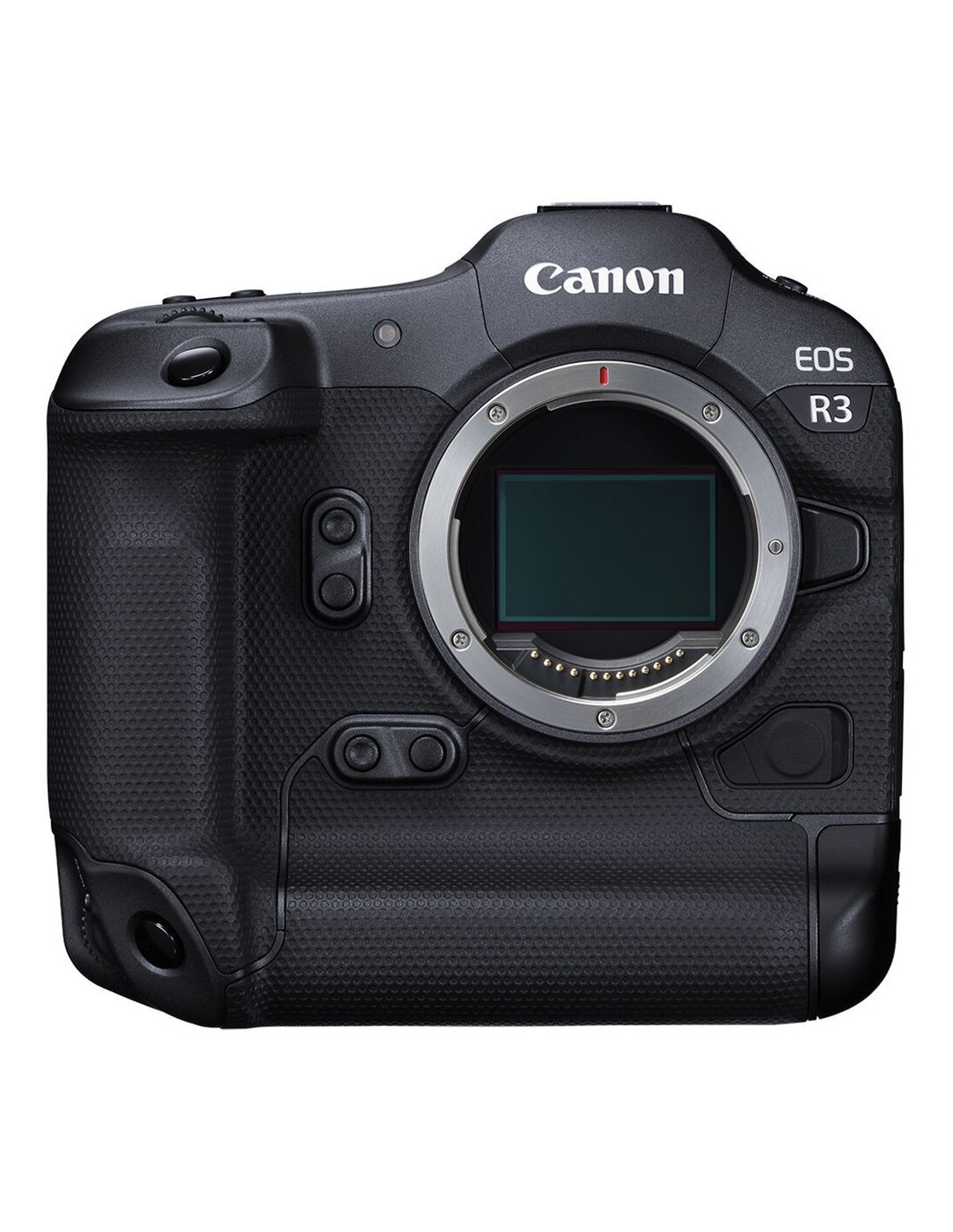
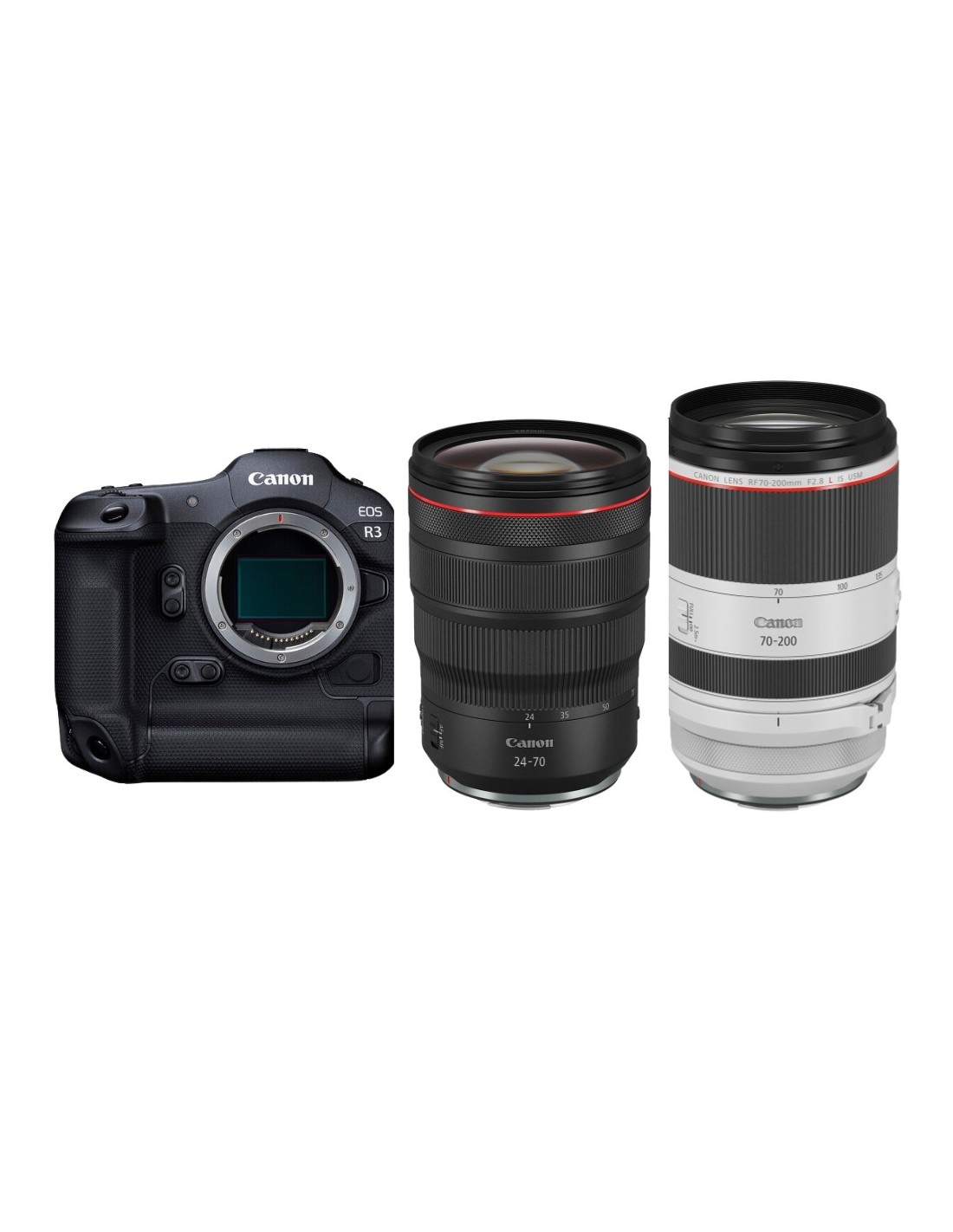
The Canon EOS R3 with the RF 24-70mm F2.8 L IS USM and original RF 70-200mm F2.8 L IS USM is for professional assignments that move from nearby context to action or people at a distance. It gives each lens a clear role: use the 24-70mm for rooms, groups and close details, then the 70-200mm when working from farther back protects the scene. The EOS R3 adds responsive subject tracking and a 24.1MP full-frame workflow for events, stage work, reportage and moderate-distance sport. This is a deliberate two-lens solution for photographers who can prepare the next phase of an assignment.
Compatible pack
Complete your set
Combine compatible accessories and save. The more items you add, the bigger the discount.
1 5.00%2 8.00%3 10.00%4+ 12.00%
Main product
Canon EOS R3 + RF 24-70mm f/2.8 L IS USM + RF 70-200mm f/2.8 L IS USM
€7,427.10
Compatible
Accessory
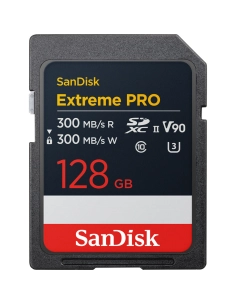
SanDisk 128GB Extreme PRO UHS-II SDXC 300 MB/s memory card
€210.00€199.50
Compatible
Accessory
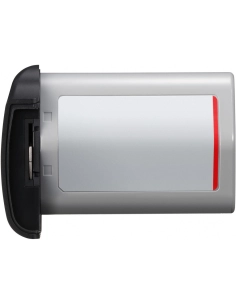
Canon LP-E19 Battery (2700mAh)
€189.00€179.55
Compatible
Accessory
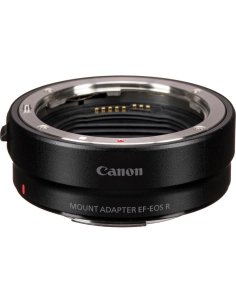
Canon Mount Adapter EF-EOS R – EF-EOS R Mount Adapter
€109.00€103.55
Compatible
warranty extension
2-year warranty extension
€594.17
0% offYou save-
No accessory selectedUse the standard buy box to buy the product alone.
A two-zoom EOS R3 kit for assignments that move from near to far
This configuration earns its place when both lenses have a job on the same call sheet. The RF 24-70mm F2.8 L IS USM handles the part of a story happening around the photographer: a room, a group, nearby people or details. The original RF 70-200mm F2.8 L IS USM takes over once working distance is useful. It can isolate a face during vows, a performer from the back of a room, or a player when access is limited. Neither lens is an afterthought in this bundle.
The two supplied ranges meet at 70mm, so the photographer can work from 24 to 200mm without a missing focal length between them. They remain two physical lenses. A change is easy to schedule before a ceremony, speech or planned portrait sequence, but less useful when one body must react to a close moment and a distant reaction in the same second. The Canon EOS R3 range lets you compare that working method with the alternatives.
One aperture point matters in this particular pairing. Both supplied zooms hold F2.8 throughout their own ranges. That keeps the same maximum aperture when the job moves from the 24-70mm to the 70-200mm, which can simplify exposure planning when light and shutter speed are already set. It does not remove the need to judge depth of field, subject movement or available light. The benefit is consistency between two original lenses, not a promise of identical images at every focal length.
Canon EOS R3 with RF 24-70mm and RF 70-200mm F2.8 key strengths
Two complementary working ranges - standard and telephoto perspectives each have a clear job on the assignment.
Constant F2.8 - keep the same maximum aperture from 24mm through to 200mm.
Two viewpoints for one assignment - use the 24-70mm for context and the 70-200mm when distance protects the scene.
Speed for brief action - the EOS R3 can reach up to 30fps electronically with AF/AE tracking.
Close-detail capability - the RF 24-70mm can handle nearby details without interrupting coverage.
Support at 200mm - the original RF 70-200mm can reach up to 7.5 stops of coordinated stabilisation on the EOS R3 under Canon's stated CIPA conditions.
Who is this kit for?
Ideal for
Wedding and event photographers who move between preparations, groups, ceremonies, speeches and reactions from farther back.
Reportage photographers who need the standard range first, then a 200mm view from a fixed or restricted position.
Stage and moderate-distance sport photographers who can prepare the telephoto before the important sequence begins.
Hybrid stills and video work with planned takes, phases or locations.
Less suited to
Travel assignments where one small lens and minimal baggage matter more than two working zoom ranges.
Architecture and interiors that regularly need a view wider than 24mm rather than a standard zoom.
Wildlife and field sport where work routinely starts beyond 200mm rather than occasionally reaching that focal length.
Single-body coverage of unpredictable action when the view must jump instantly from wide context to a distant close-up.
Four practices in which the two F2.8 zooms perform complementary roles.
Use the 24-70mm when the setting still belongs in the frame
Leave the RF 24-70mm on when the photograph needs to explain where something is happening. At 24mm, it can hold a room, small group or entrance. Around 35mm and 50mm, it follows people at a natural working distance while keeping the setting present. By 70mm, it can tighten a portrait, hand movement or table detail. That makes it the first lens for preparations, reception work, interviews and documentary-style coverage close to the subject.
Its close-focus capability helps when a ring, place setting, product detail or printed programme has to be photographed while the day keeps moving. That is a different advantage from the longer lens, which preserves distance when a closer position would disrupt the scene. If most assignments finish at 70mm, the EOS R3 with RF 24-70mm is the cleaner purchase.
Bring in the original 70-200mm when distance protects the picture
The second lens changes where the photographer can work. At a ceremony, a 70-200mm can frame expressions without becoming part of the aisle. During a speech, it can pick out the speaker or a reaction across the room. On a stage, it can work from the allocated position. At moderate-distance sport, it offers a tighter frame when moving closer is not possible. At 135mm or 200mm, this is not merely a crop of the 24-70mm view: the shooting distance and the amount of background included both change.
The supplied lens is the original RF 70-200mm F2.8 L IS USM, with Dual Nano USM autofocus. Its stated stabilisation is up to 5 stops on EOS R cameras, or up to 7.5 coordinated stops at 200mm on the EOS R3 under the stated conditions. That supports a steady camera on a still subject; shutter speed still has to match movement. Choose the EOS R3 with RF 70-200mm when this is the only range that will work regularly.
Choose the lens from the scene, not from habit
Situation
RF 24-70mm
Original RF 70-200mm
Practical decision
Room, group or close documentary work
Shows the place at 24mm and follows people through the standard range
Selects a person or detail from farther back when the room is too busy to approach
Keep the 24-70mm on while context is part of the story
Wedding or corporate event
Preparations, groups, greetings and nearby reactions
Ceremony, speeches, discreet reactions and portraits at a distance
Prepare the telezoom before the planned phase
Stage or moderate-distance sport
Venue, entrance, audience and action that comes close
A performer or athlete from a fixed shooting position up to 200mm
Have the telezoom ready when access is restricted
Portrait assignment
Environmental portrait and a close working relationship with the subject
Tighter framing from farther away with more control over the background
Decide whether the location or the subject's separation is the priority
Hybrid video sequence
Establishing view, interview setting and nearby movement
Tighter angle from the rear of a room or a selected detail
Assign a lens to each planned take in the shot list
Plan the lens change as part of the assignment, not as an interruption
A two-lens kit works best when the next phase is known before it starts. At a wedding, the standard zoom can cover the room, greetings and groups before the long lens is mounted for a ceremony or speech. At an event, the same switch can happen before a keynote or stage performance. Decide which lens is on the camera before the key moment rather than treating 70mm as a last-second decision. That preparation stops two good lenses spending too much time in the bag.
A second body with the other zoom avoids the switch, but adds cost, batteries, cards and more equipment to carry. With one body, a sequence that jumps unpredictably between a wide scene and a distant expression may favour a single compromise focal length or a different coverage plan. This kit offers a deliberate standard-to-telephoto division. It suits a photographer who would rather assign each lens a phase of the day than make one focal range do every job.
The EOS R3 supports speed, but the lenses still define the frame
The EOS R3 matters here because the kit is often chosen for moments that do not wait. Its 24.1MP stacked full-frame sensor and DIGIC X processor support electronic shooting up to 30fps with AF/AE tracking, while the mechanical shutter reaches up to 12fps. That can give more frame choices around an expression, jump or change of eye line. It also creates more material to edit, so the question is not simply how fast the camera can shoot. It is whether the selected lens is already framing the action that matters.
Dual Pixel CMOS AF II, subject recognition and Eye Control AF give several ways to direct focus, but none replaces judgement about the subject and background. The 24.1MP resolution is a practical balance for a fast workflow rather than a specialist high-resolution route for heavy crops. The 70-200mm gives a genuine 200mm frame instead of relying on aggressive cropping from the standard zoom. For hybrid work, plan cards and support around the selected recording mode rather than the stills workflow alone.
Characteristic framing from both zooms, from 24 to 200mm, with the lens change planned at 70mm.
Which EOS R3 configuration answers the real requirement?
Configuration
Coverage
Choose it when
Main compromise
EOS R3 without supplied lenses
Depends on the RF lenses already owned
An established RF kit already covers the required focal lengths
The camera purchase does not solve the lens choice
EOS R3 with RF 24-70mm
24-70mm standard range
Standard-range reportage, groups and contextual portraiture fill most of the work
There is no 70-200mm option for a distant subject
EOS R3 with RF 70-200mm
70-200mm telephoto range
Ceremony, stage or distance-first coverage is the main requirement
A tight room or wide scene still needs another lens
EOS R3 with RF 15-35mm and RF 70-200mm
15-35mm plus 70-200mm
Ultra-wide interiors and architecture matter more than the standard range
It prioritises ultra-wide work over the standard range
EOS R3 with RF 24-70mm and original RF 70-200mm
24-200mm across two lenses
The same assignment needs standard coverage first and telephoto coverage later
A two-lens workflow needs planning; the full set weighs about 2.985kg before accessories
Compare the coverage you need before paying for two lenses
The sensible alternative is not always the least expensive one. A photographer who already owns the right RF lenses may be better served by the EOS R3 without the supplied lenses, because the two zooms would duplicate equipment. Standard-range work can justify the 24-70mm configuration alone. Aisle, stage or touchline work can make the 70-200mm the priority. This configuration becomes logical only when the day repeatedly requires both viewpoints.
The closest two-zoom alternative changes the wide end. The EOS R3 with RF 15-35mm and RF 70-200mm reaches 15mm for interiors and architecture, but it is built for a different pace of work. This kit starts at 24mm, so it is less suited to a very tight interior and more suited to a day led by the standard range. It is neither the lightest travel set nor a long-telephoto solution beyond 200mm.
Our verdict
At MCZ DIRECT, we place this EOS R3 configuration with photographers who genuinely alternate between standard-range storytelling and a controlled 70-200mm view. The gain is not simply owning more equipment. It is a deliberate pairing of two original RF L zooms, with one lens chosen for the nearby part of the story and the other for the distant part.
Choose the 15-35mm and 70-200mm pairing when 15mm is essential, or a one-lens option when one range dominates the work. Choose this set when the 24-70mm will carry nearby assignments and the 70-200mm has a planned distant role. Accept the near-3kg carry weight before accessories; the kit makes sense only when that two-lens division is needed.
Choose this two-zoom EOS R3 kit when both the 24-70mm and the original 70-200mm will earn their place on the same assignment.
Photo resolution
24 to 32 MP
Camera Format
Full frame
Lens mount
Canon RF
Recommended use
All-round use
Landscape
Photo / video
Portrait
Reportage
Sport
Wildlife
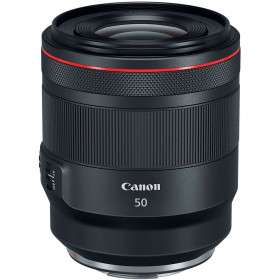
The Canon RF 50mm F1.2L USM is a professional prime lens for portrait, wedding and reportage photographers who want distinctive subject separation, and we recommend it when rendering and available-light performance matter more than low weight. Its f/1.2 aperture can produce very shallow depth of field while helping retain a practical shutter speed indoors...
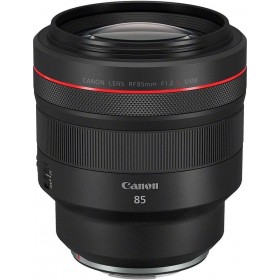
The Canon RF 85mm F1.2L USM is a professional portrait lens for Canon EOS R cameras, recommended for photographers who value strong subject separation, fine detail and a very wide aperture in available light. Its 85mm view gives faces a flattering perspective, while f/1.2 can simplify a busy background and preserve useful shutter speed as light falls....
The Canon RF 24-70mm F2.8L IS USM is a professional standard zoom for EOS R photographers and filmmakers who need one dependable lens for varied assignments, and we recommend it for its balance of speed, range and handling. It moves from a wide 24mm view to a tighter 70mm portrait without changing its maximum F2.8 aperture. Canon rates the optical...
The Canon RF 70-200mm F2.8L IS USM is a bright, compact telephoto zoom for sports, wedding, portrait and reportage photographers, and we recommend it to anyone who wants an f/2.8 70-200mm that is easy to carry. Its constant aperture helps retain a fast shutter speed as light falls and separates the subject from the background. Dual Nano USM and...
The Canon RF 100-500mm F4.5-7.1L IS USM is an L-series telephoto zoom for wildlife, sports and aviation photographers who need to follow a subject from near to far without changing lens, and we recommend it when mobility matters as much as reach. Its 100-500mm range makes it easier to frame an approaching animal, a bird in flight or action across a field....
Canon EOS R3 + RF 24-70mm f/2.8 L IS USM + RF 70-200mm f/2.8 L IS USM videos
Technical specifications
General
Brand
Canon
Product type
Mirrorless camera
Camera type
Interchangeable-lens digital camera
Product line
Canon EOS R
Product series
EOS R
Specific model
EOS R3
Release date
2021-11
Available languages
Multilingual, including English
Camera
Level
Professional sport/reportage
Processor
DIGIC X
Image ratio
3:2
Image stabilization
Yes
Autofocus
Yes
Lens mount
Canon RF / RF-S
RAW
Yes
File formats
Still image: JPEG, HEIF, RAW, C-RAW. Compression options and profiles according to Canon specifications.
Max burst speed
30 fps
Lens included
Yes
Kit configuration
Canon EOS R3 kit with RF 24-70mm F2.8L IS USM + RF 70-200mm F2.8L IS USM.
Included lens count
2
Included lens 1
RF 24-70mm F2.8L IS USM
Lens 1 model
RF 24-70mm F2.8 L IS USM
Lens 1 mount
Canon RF
Lens 1 format
Full frame
Lens 1 focal length
24-70
Lens 1 max aperture
F2.8
Lens 1 stabilization
Yes
Included lens 2
RF 70-200mm F2.8L IS USM
Lens 2 model
RF 70-200mm F2.8 L IS USM
Lens 2 mount
Canon RF
Lens 2 format
Full frame
Lens 2 focal length
70-200
Lens 2 max aperture
F2.8
Lens 2 stabilization
Yes
Uses
All-round use
Yes
Architecture
No
Landscape
Yes
Portrait
Yes
Travel
No
Reportage
Yes
Sports
Yes
Wildlife
Yes
Photo / video
Yes
Vlogging
No
Sensor
Sensor type
36 x 24 mm CMOS
Sensor size
36 x 24 mm
Crop factor
1.0x
Autofocus points
1053
Resolution
24.1 MP
Maximum resolution
6000 x 4000
Sensor cleaning
Yes
Standard ISO range
ISO 100-102400
Maximum native ISO
ISO 102400
Exposure
Metering modes
Real-time metering with image sensor, 384-zone metering: evaluative, partial, spot and centre-weighted average.
Metering zones
384
Fastest shutter speed
1/64000 s
Slowest shutter speed
30 s, Bulb
Bulb mode
Yes
AEB bracketing
Yes
Manual exposure
Yes
Self-timer
Yes
White balance settings
Auto white balance, daylight, shade, cloudy, tungsten, white fluorescent, flash, custom and colour temperature setting.
Aperture priority
Yes
Shutter priority
Yes
Display
Display type
Vari-angle touchscreen LCD monitor, 3.2-inch, approx. 4.15 million dots
Display size
3.2
Display resolution
4150000
Touchscreen
Yes
Live View
Yes
Viewfinder
Viewfinder
Yes
Viewfinder type
OLED electronic viewfinder, 5.76 million dots
Viewfinder coverage
100%
Flash
Built-in flash
No
Red-eye reduction
No
Flash sync speed
1/200 s / 1/250 s / 1/180 s
Flash modes
Canon-compatible external Speedlite flash; control via multi-function shoe depending on the model.
Flash technology
Canon Speedlite
Accessory shoe
Yes
Video
Video function
Yes
Full HD
Yes
4K UHD
Yes
6K video
Yes
7K video
No
8K video
No
Internal RAW recording
Yes
Clean HDMI output
Yes
Maximum video resolution
6K
Video frame rates
Video up to 6K depending on mode and card used.
Video compression
Compression and sampling depend on Canon EOS Movie modes.
Video file formats
Canon RAW (CRM) and MP4; codecs and colour profiles depend on the selected recording mode.
Audio
Built-in microphone
Built-in microphone
Storage
Internal memory
No
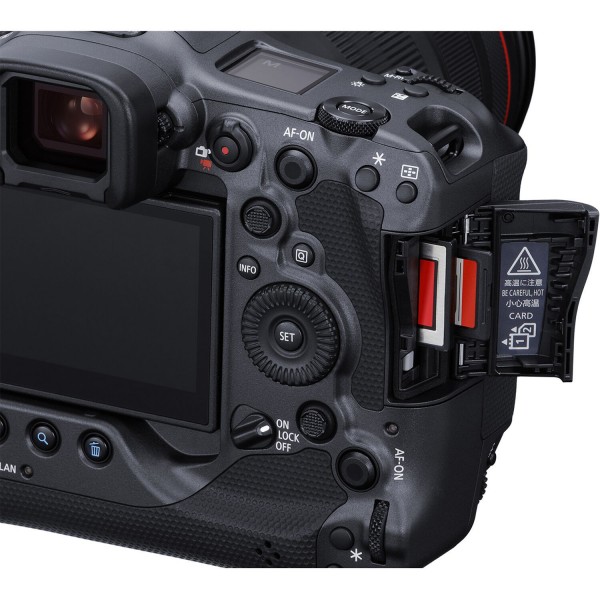
Dual card slot
Yes
Memory types
CFexpress and SD card slots according to Canon official configuration.
Card types
CFexpress and SD card slots according to Canon official configuration.
SD speed classes
Use a card that matches the selected photo/video mode.
Connectivity
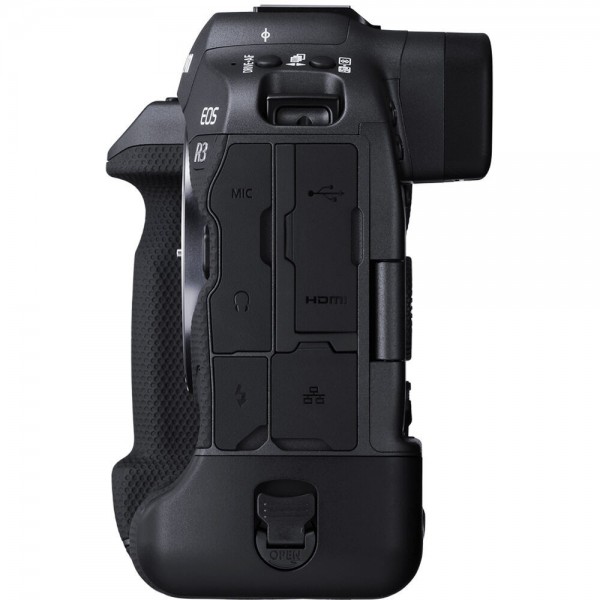
HDMI
Yes
HDMI type
HDMI output according to Canon specifications.
Microphone input
Yes
Microphone input type
External microphone input depending on Canon configuration.
Headphone output
Yes
USB
Yes
USB type
USB-C according to Canon specifications.
Ethernet
Yes
Wireless
Wi-Fi
Yes
Bluetooth
Yes
NFC
No
GPS
No
Physical properties
Depth
8.72 cm
Width
15 cm
Height
14.26 cm
Body material
Magnesium-alloy body/chassis with glass-fibre reinforced polycarbonate components.
Colour
Black
Waterproof
No
Splash resistant
Yes
Shockproof
No
Dust resistant
Yes
AF assist light
No
Tally light
No
Minimum operating temperature
0 °C
Maximum operating temperature
40 °C
Battery
Battery
Canon LP-E19 rechargeable Li-ion battery
USB charging
Yes
USB power delivery
Yes
Charger included
Yes
Buying guidance
Best for
Weddings and events, press and reportage, portraits, stage work, corporate assignments and sport at moderate distance.
Less suited to
Less suitable for light travel, ultra-wide-angle work below 24mm, distant subjects that regularly require more than 200mm, or high-resolution studio and landscape work.
Compatibility
Compatible with Canon RF/RF-S lenses; this kit includes RF 24-70mm F2.8L IS USM + RF 70-200mm F2.8L IS USM. RF-S lenses remain usable with APS-C crop depending on the body. EF/EF-S lenses require a compatible Canon EF-EOS R adapter.
Note
Both supplied lenses use the Canon RF mount and fit the EOS R3 directly. Their focal ranges meet at 70mm, but changing lenses is still necessary to move from the standard zoom to the telephoto zoom.
Included lens
Lens type
Standard zoom lens
Lens series
Canon L
Focal range
24-70mm
Optical construction
21 elements in 15 groups
Optical stabilisation
Yes
AF drive
Nano USM autofocus with full-time manual focus
Minimum focusing distance
21cm at 24mm; 38cm at 70mm
Maximum magnification
0.30x at 32mm
Maximum aperture
F2.8
Minimum aperture
F22
Diaphragm blades
9
Optical zoom
2.33x
Lens weight
900 g
Filter diameter
82 mm
Lens length
12.57 cm
Lens diameter
88.5 mm
Dust/splash resistance
Yes
Included lens 2
Lens type
Telephoto zoom lens
Lens series
Canon L
Focal range
70-200mm
Optical construction
17 elements in 13 groups
Optical stabilisation
Yes
AF drive
Dual Nano USM autofocus with full-time manual focus
Minimum focusing distance
70cm
Maximum magnification
0.23x at 200mm
Maximum aperture
F2.8
Minimum aperture
F32
Diaphragm blades
9
Optical zoom
2.86x
Lens weight
1070 g
Filter diameter
77 mm
Lens length
14.6 cm
Lens diameter
89.9 mm
Dust/splash resistance
Yes
Frequently asked questions about the Canon EOS R3 with RF 24-70mm F2.8 L IS USM and RF 70-200mm F2.8 L IS USM
Which RF 70-200mm version is supplied in this configuration?
It includes the original RF 70-200mm F2.8 L IS USM, not the later RF 70-200mm F2.8 L IS USM Z. That distinction matters when comparing retailer listings, accessories and specifications. Keep the product wording intact when comparing it with a newer Z-labelled kit. The two versions should not be treated as interchangeable simply because they share the same focal range and L-series designation.
Can the supplied original RF 70-200mm use RF extenders?
No. The original RF 70-200mm F2.8 L IS USM in this configuration is not compatible with RF extenders. Its longest focal length in this setup remains 200mm. That is enough for many ceremonies, stage positions and moderate-distance sports situations, but it is not a route to specialist long-lens coverage. Photographers who routinely need more reach should plan a different RF lens rather than add a converter later.
Is the EOS R3's 195fps mode the same as its normal continuous tracking mode?
No. The custom mode that can reach up to 195fps is a restricted option for a pre-planned instant. It requires firmware 1.2 or later, uses One-Shot AF, and locks focus and exposure. It should not be read as continuous 195fps subject tracking. For a person or action that changes distance, use the normal tracked shooting mode described in the main page rather than treating the custom option as its equivalent.
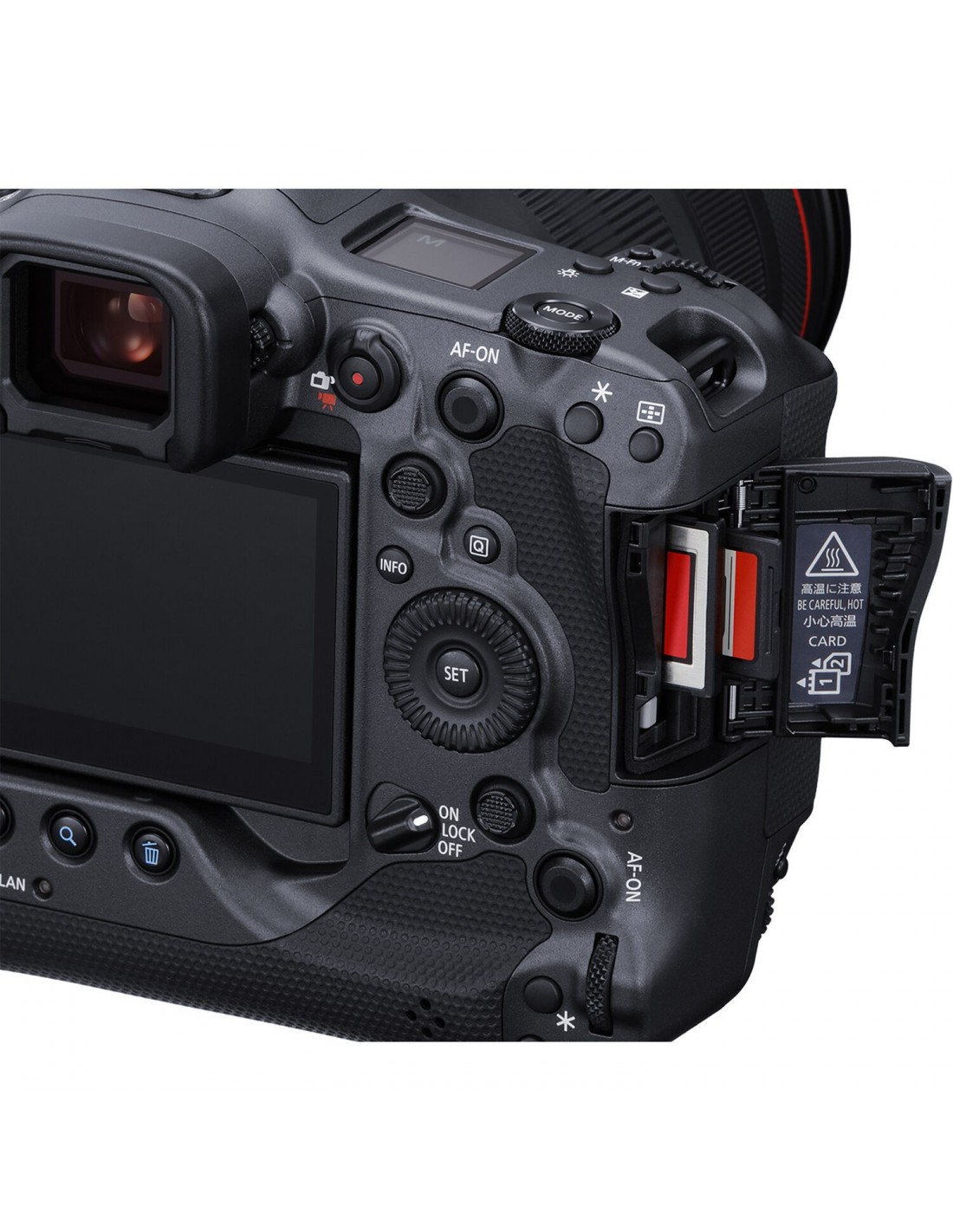
Which memory cards does the EOS R3 accept?
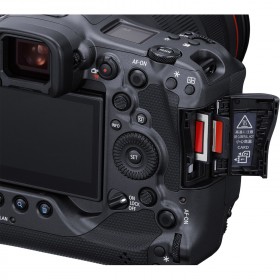
The EOS R3 has one CFexpress Type B slot and one SD slot compatible with UHS-II. The two formats can support a recording plan for overflow, backup or separate file roles, depending on the selected settings. Card speed and capacity still need to suit long continuous sequences and high-data-rate video. Choose the cards for the job and recording mode, rather than assuming any CFexpress or SD card will give the same result.
Can the two lenses share the same filters?
Not directly. The RF 24-70mm F2.8 L IS USM uses 82mm filters, while the original RF 70-200mm F2.8 L IS USM uses 77mm filters. A photographer who relies on polarising or neutral-density filters should budget for two sizes, or use a step-up arrangement where it is appropriate. This is a small detail, but it becomes relevant when both lenses are expected to work on the same long day.
How close can the supplied RF 24-70mm focus?
The RF 24-70mm focuses from 0.21m at 24mm and 0.38m at 70mm, with a maximum magnification of 0.30x at 32mm. It is therefore the more useful of the two lenses for a nearby ring, product detail or printed item. This close-focus ability is part of the reason it earns a place in the kit beyond its standard focal range: it can stay mounted when the subject suddenly moves from people to small details.
Can this EOS R3 kit record professional video?
Yes. The EOS R3 can record internal RAW up to 6K 60p and 4K up to 120p, according to the selected mode and Canon's stated conditions. The RF 24-70mm suits establishing shots, interviews and nearby movement; the RF 70-200mm gives a tighter view from farther back. For serious video work, choose cards, power and support for the selected recording format and duration, then assign the appropriate lens before each planned take.
Can the original RF 70-200mm handle close details as well as distant work?
It can focus from 0.70m and reaches 0.23x magnification at 200mm. That is useful when a tighter detail appears after the telezoom is already mounted, while preserving the photographer's working distance. It is not a substitute for the 24-70mm when the subject is very close. Treat the two close-focus behaviours as part of the same division of work: the standard zoom handles nearby detail, while the telezoom keeps the camera back.
Reviews Canon EOS R3 + RF 24-70mm f/2.8 L IS USM + RF 70-200mm f/2.8 L IS USM
0 Rating
0.0
out of 5 stars
0 Rating
Customer photos
No customer photos yet
Reviews (0)
All reviews (0)
Has image/video (0)
Excellent (0)
Good (0)
Medium (0)
Poor (0)
Terrible (0)
Latest
Latest
Oldest
High rating
Low rating
Helpful
Tap to zoom
ALEX (In testing phase)
Hello! Welcome to our online store 👋 Would 👍 🐦🔥you like help with products, orders, or shipping?
By using this chatbot, you agree that your messages may be processed by AI to provide responses. We do not store or share your conversations. For more details, please refer to our Privacy Policy.